Prato, Italy
Reclaiming a parking lot for neighborhood life
The Project
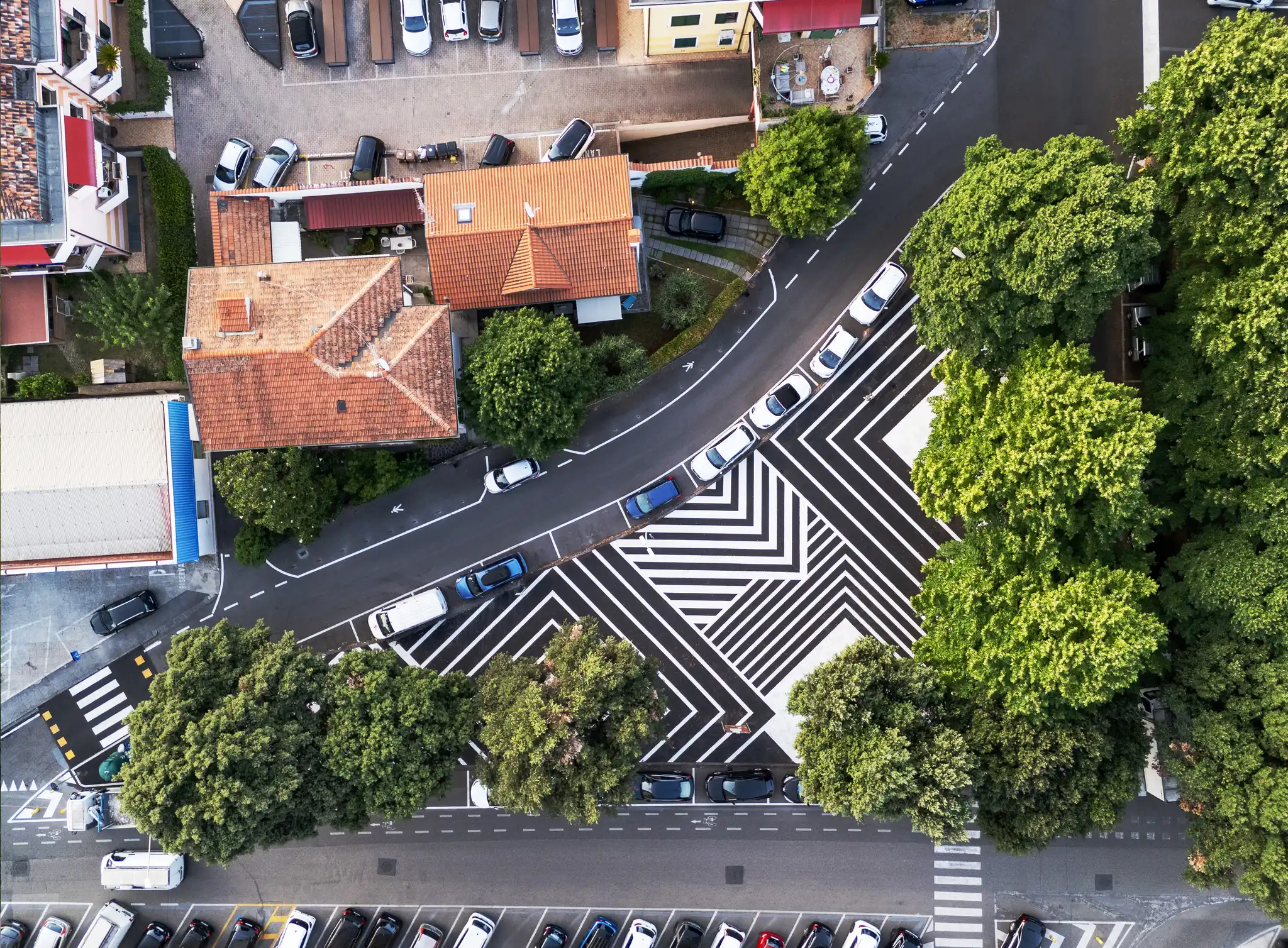
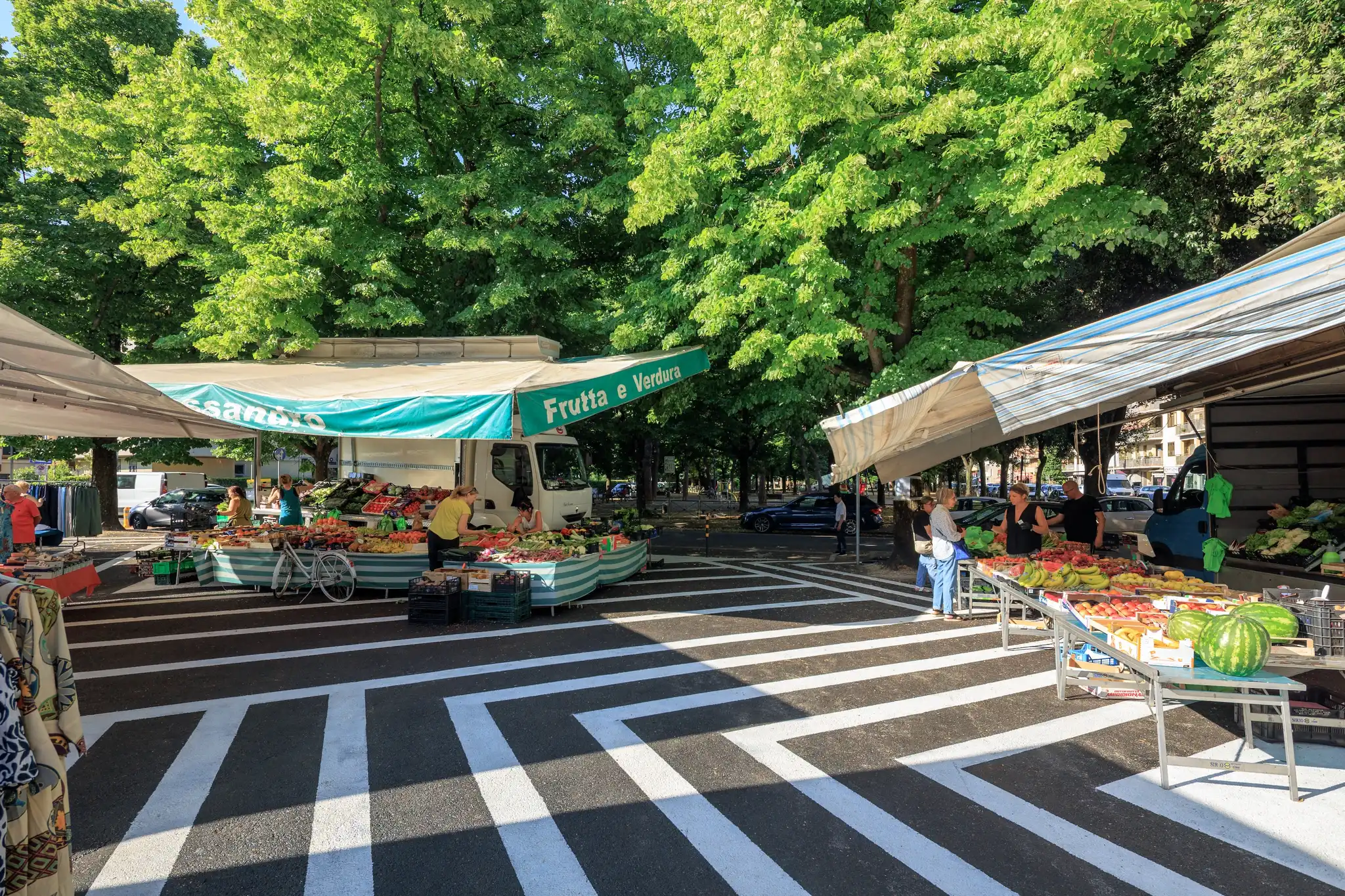
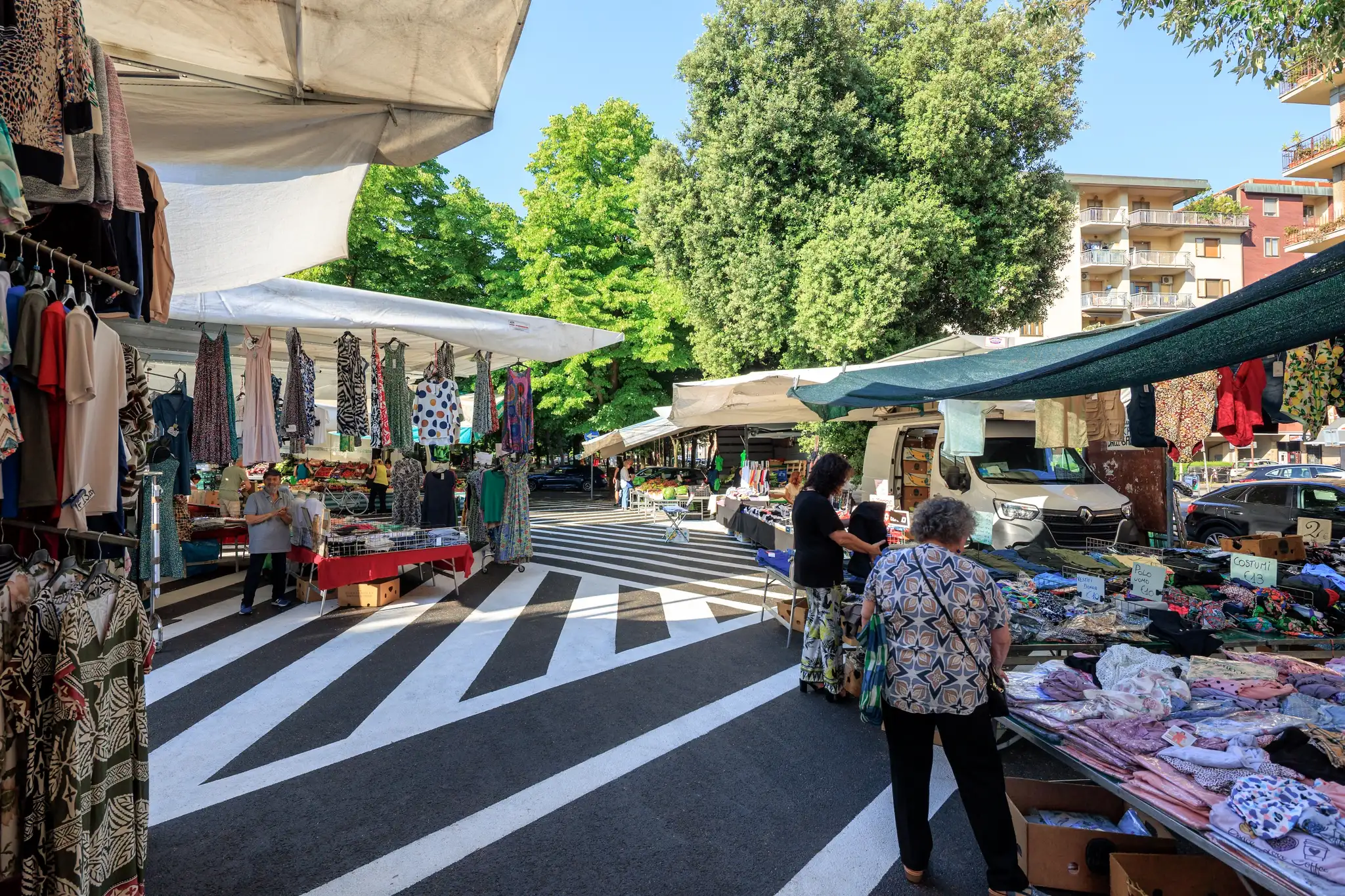
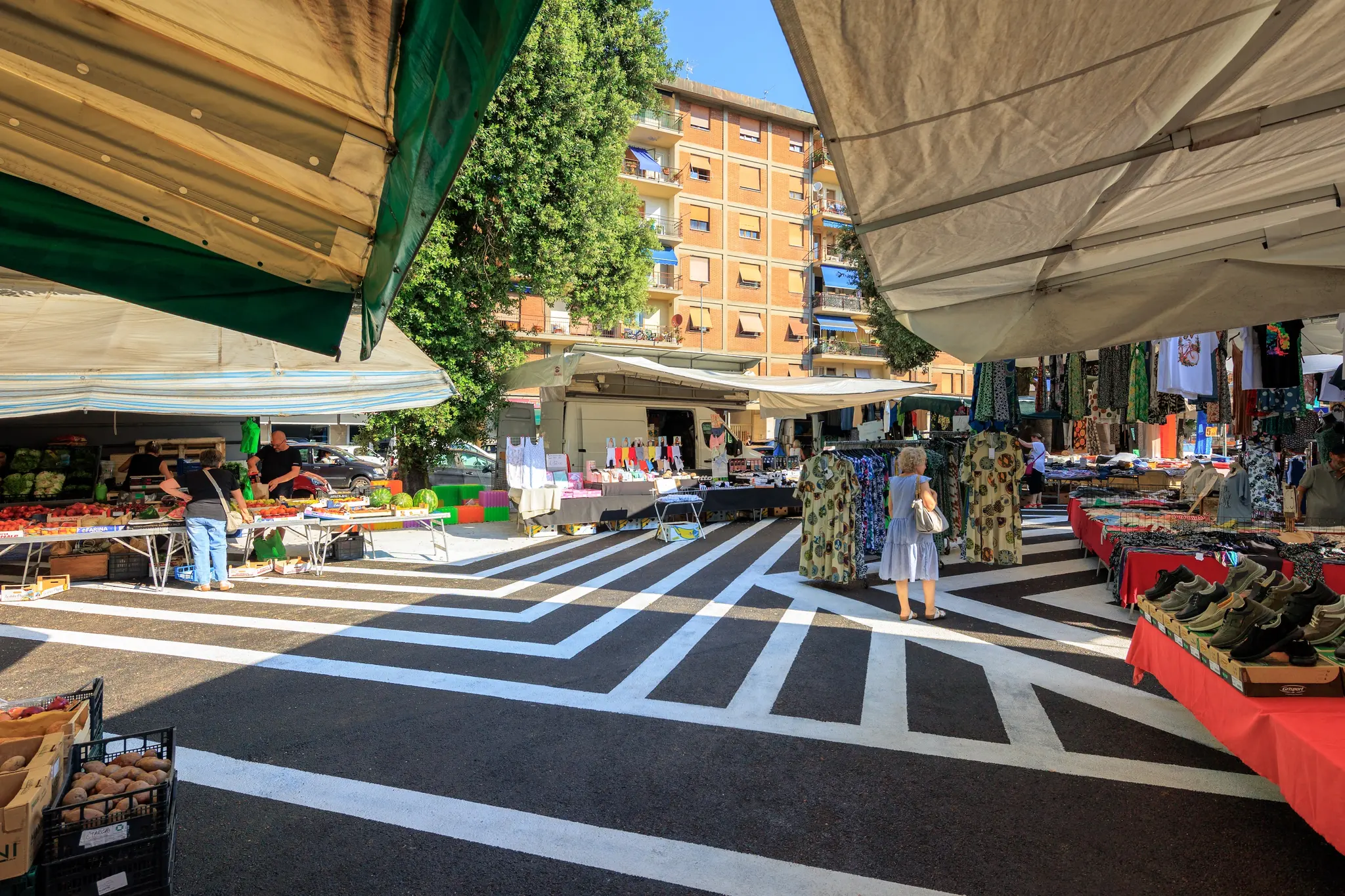
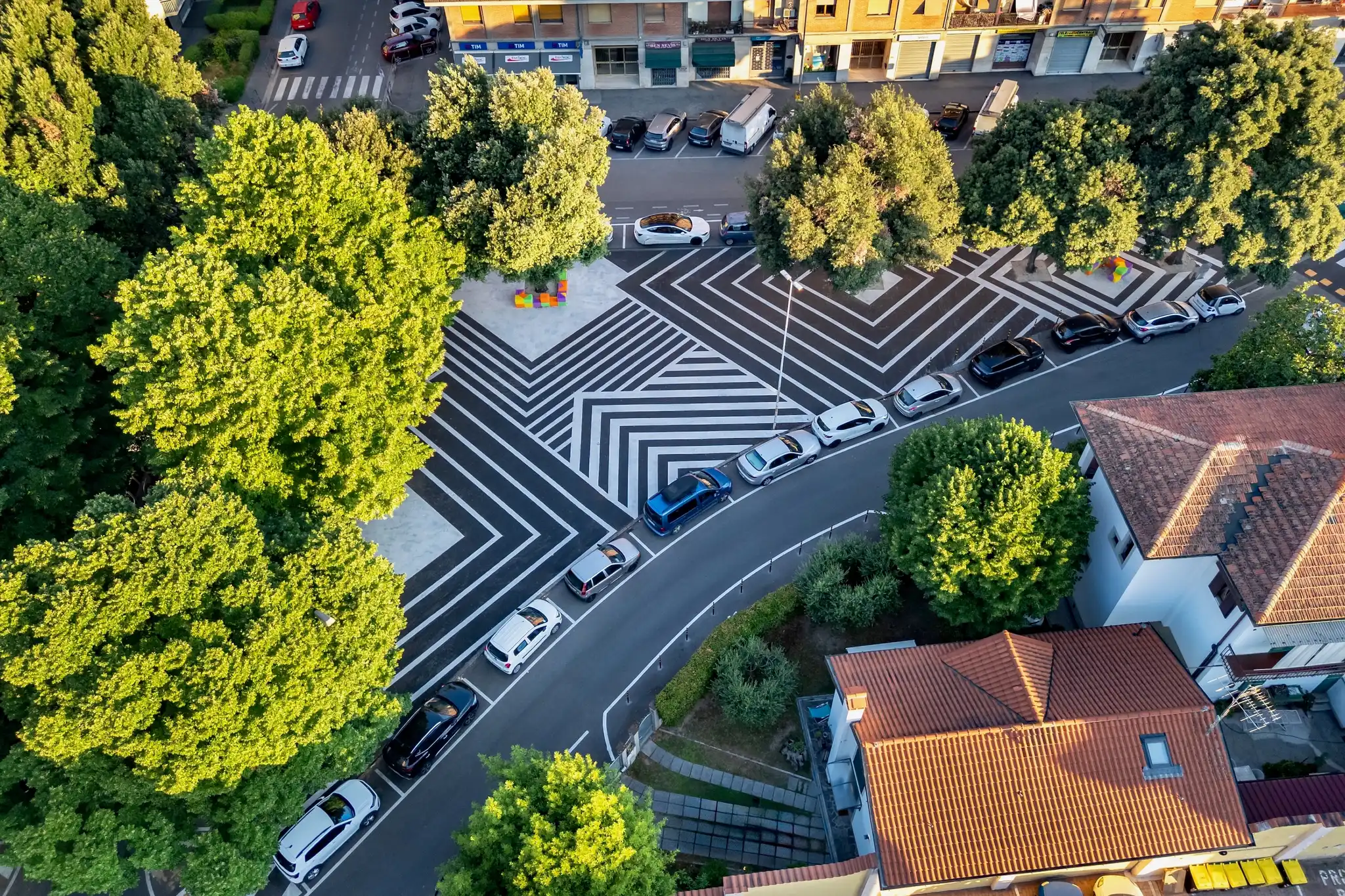
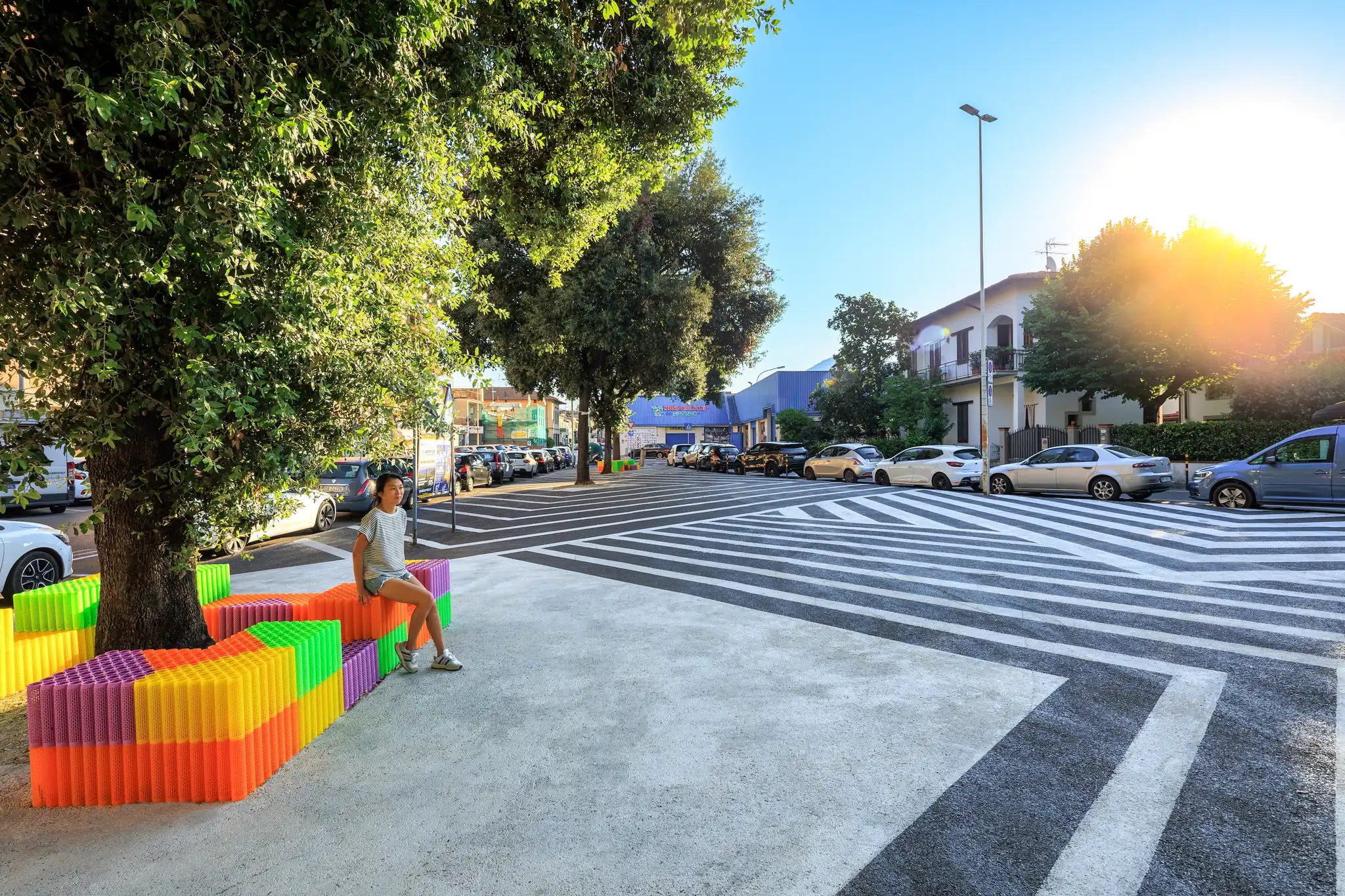
Along bustling Via Marx, this project reimagined an informal parking lot that had long posed challenges for pedestrian safety, livability, and public space access. Situated in a densely populated district with limited green areas, the site functioned as a vehicle-dominated void—disconnected from nearby pedestrian routes and lacking any inviting community infrastructure. The intervention transformed the space into a safe, welcoming extension of the neighborhood’s public realm, reconnecting residents to key walking paths leading toward the city center and demonstrating how underused asphalt can be reclaimed for people rather than cars.
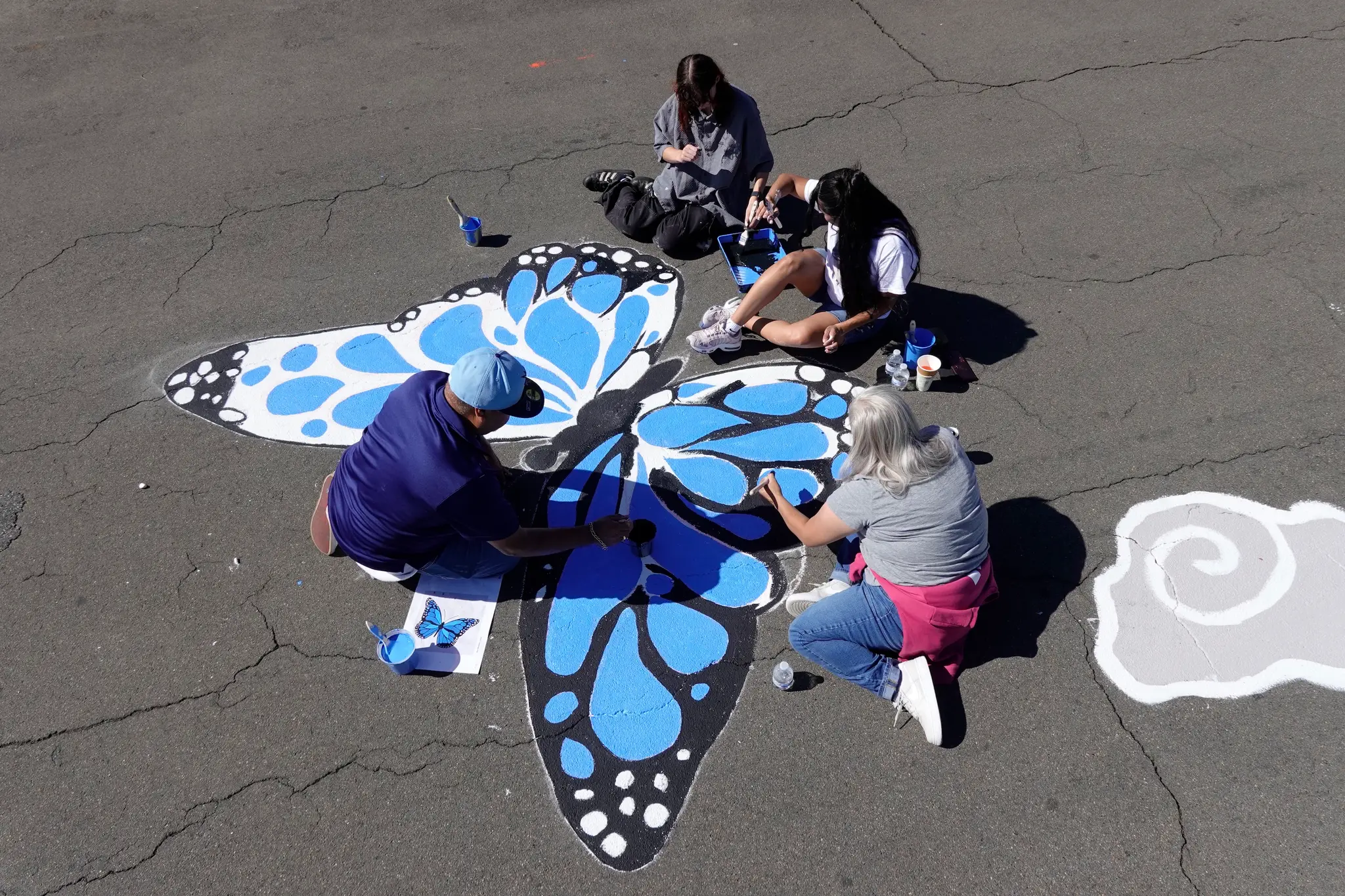
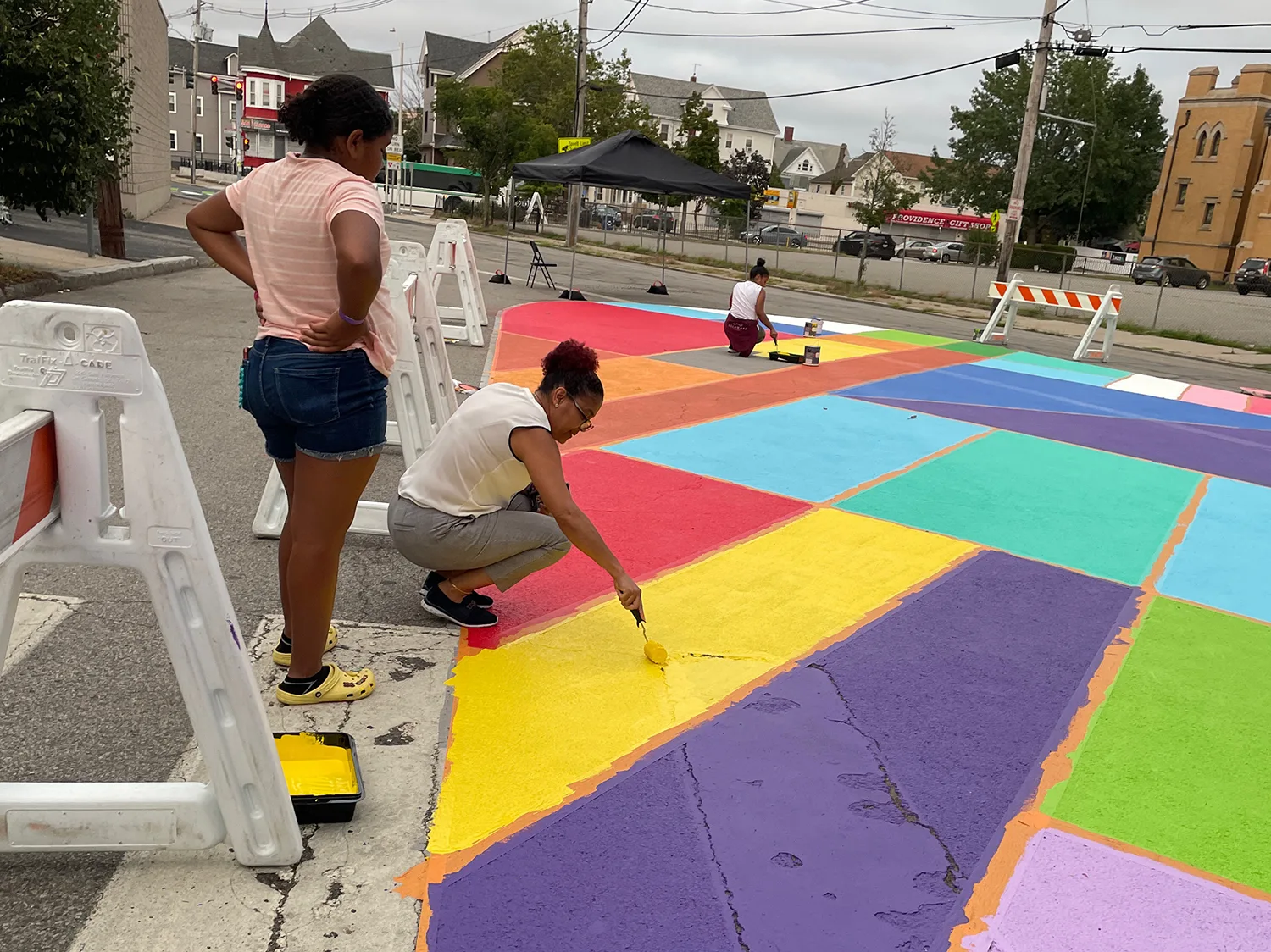
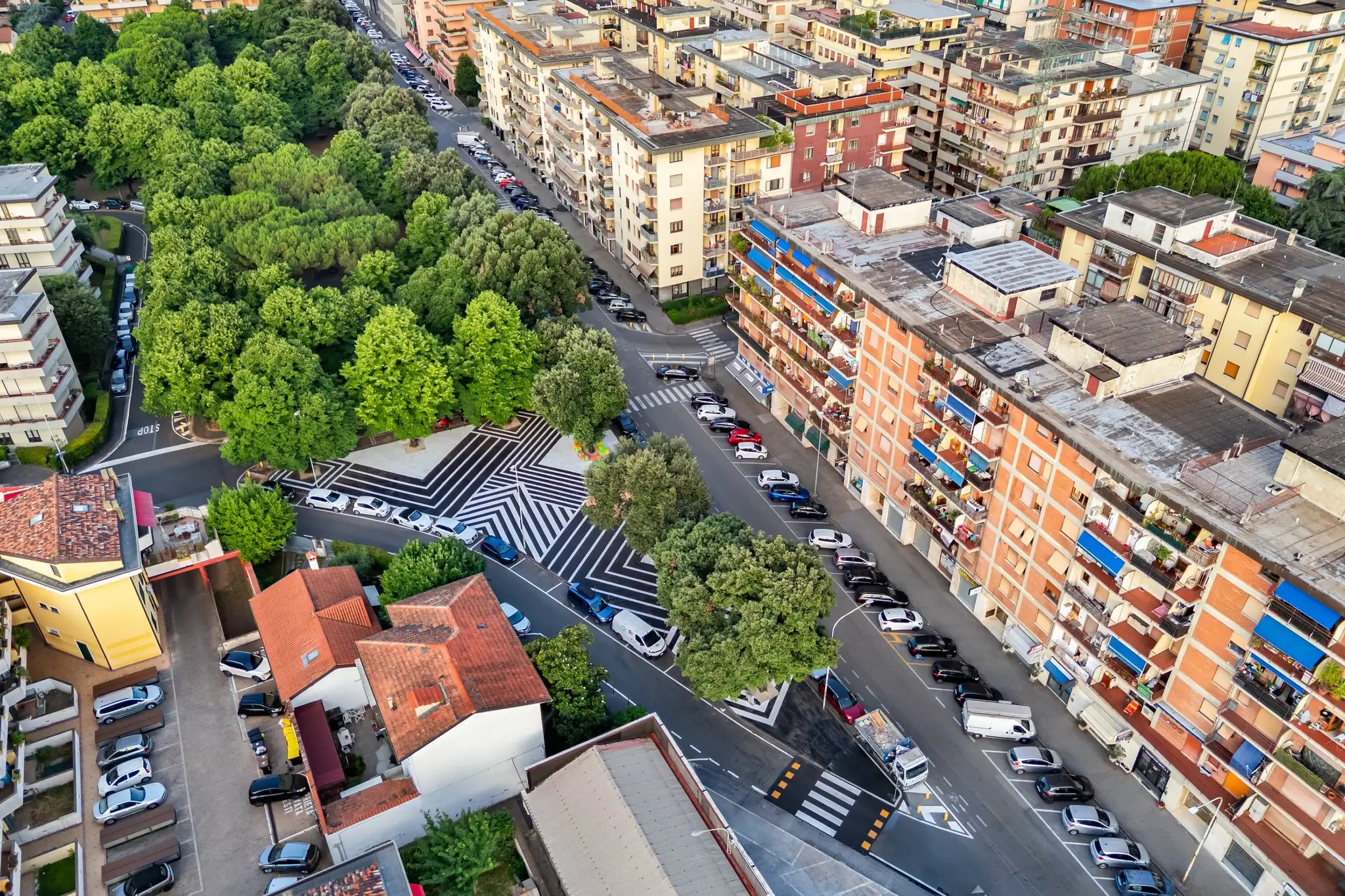
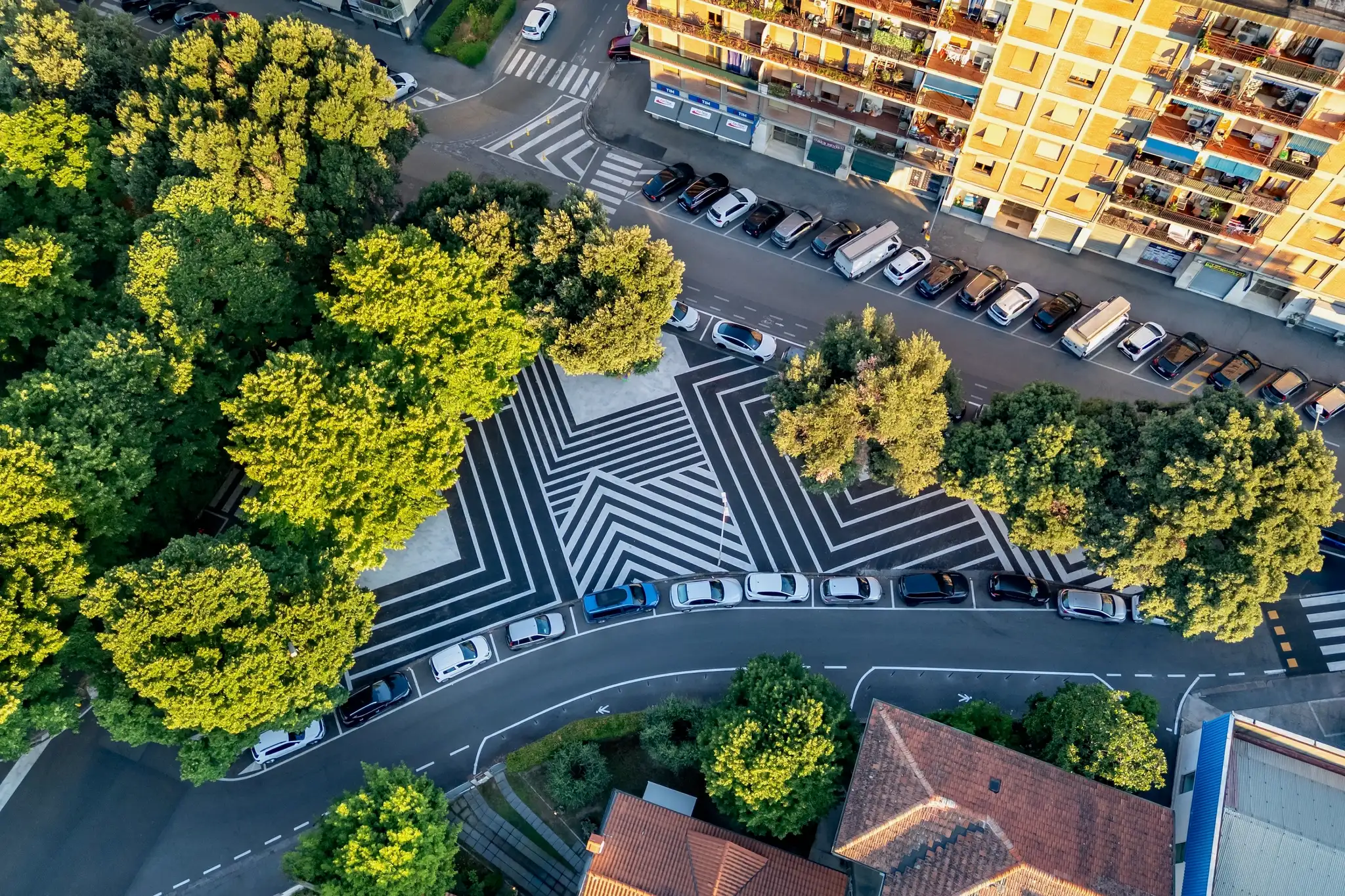
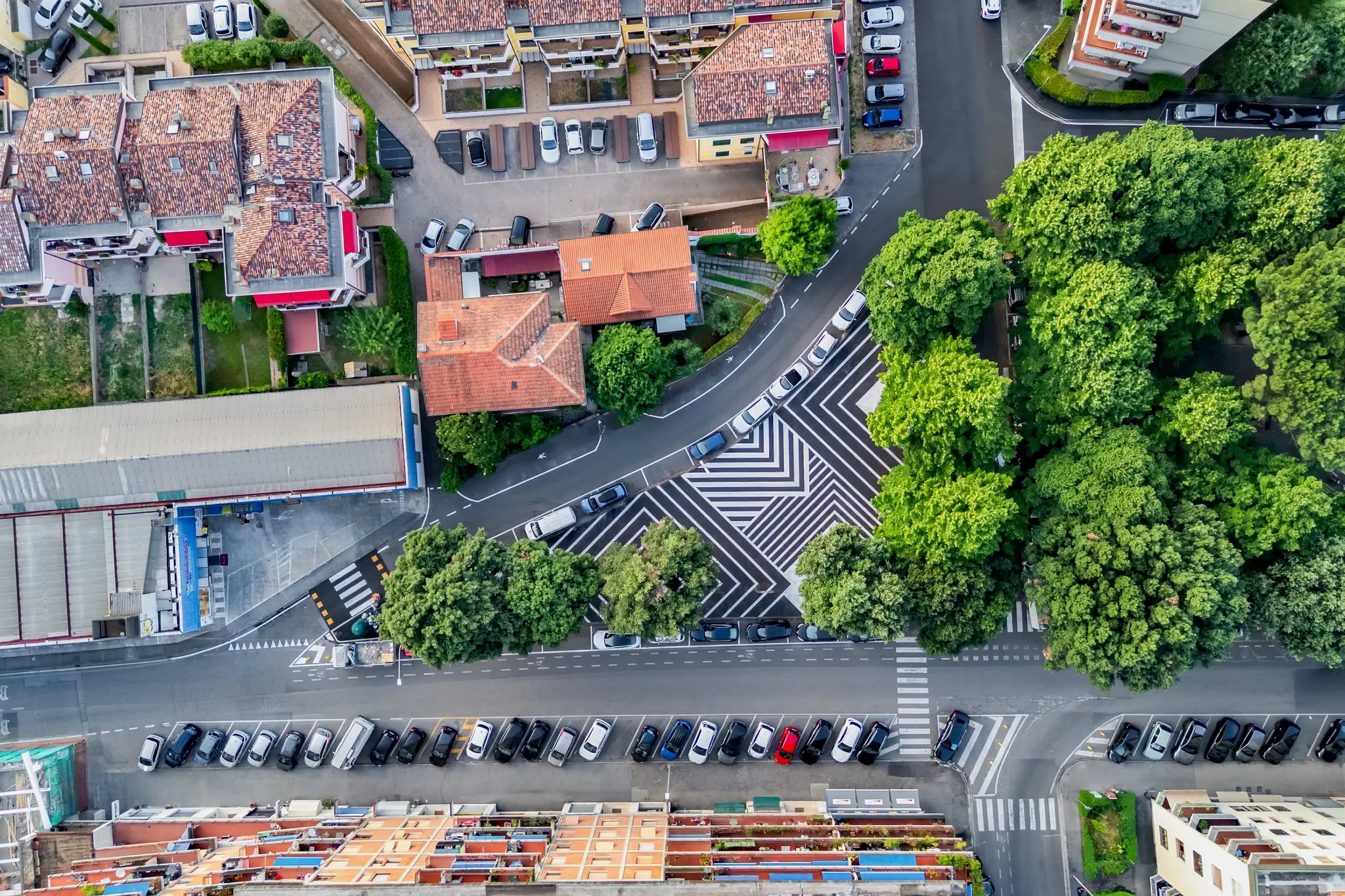
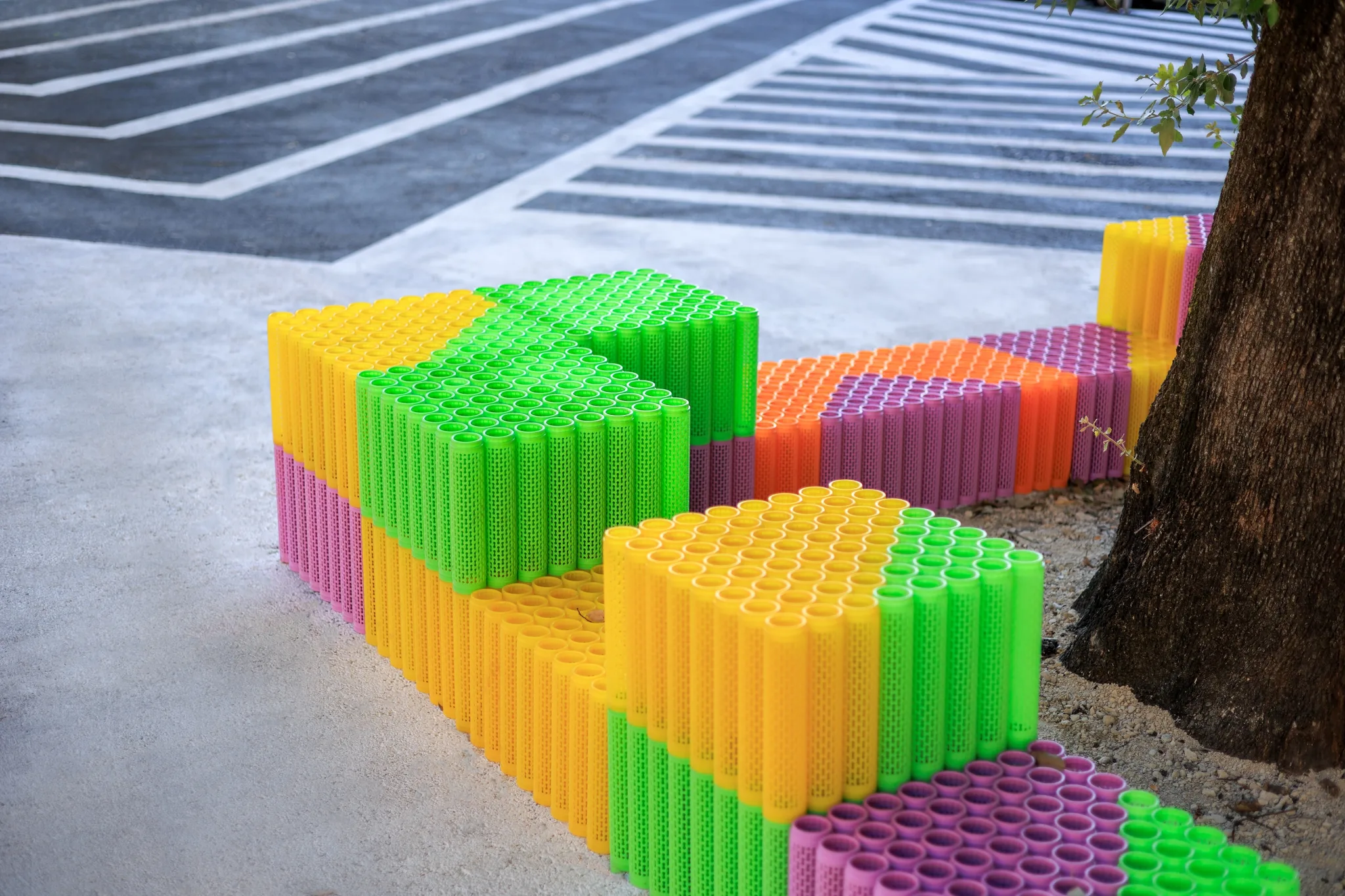
The installation introduced a vibrant ground mural, shaded seating made from repurposed materials, and new crosswalks that organized circulation and slowed vehicle movement. The renewed space now also offers a more comfortable, dynamic setting for the neighborhood’s weekly farmers’ market. Developed through public workshops, the project doubled as a catalyst for community participation. Volunteers—including students of architecture and design, with residents and design students joining the painting process and helping shape the space. By testing a new layout for Via Marx and sparking dialogue about its long-term future, the project not only delivered immediate improvements but also catalyzed ongoing stewardship.
- 4X increase in average dwell time
- 8X increase in ratio of people in groups vs on their own
For more public space activation metrics about this project, see the analysis conducted by STIPO, as well as the methodology behind it.
Use the slider to see the transformation
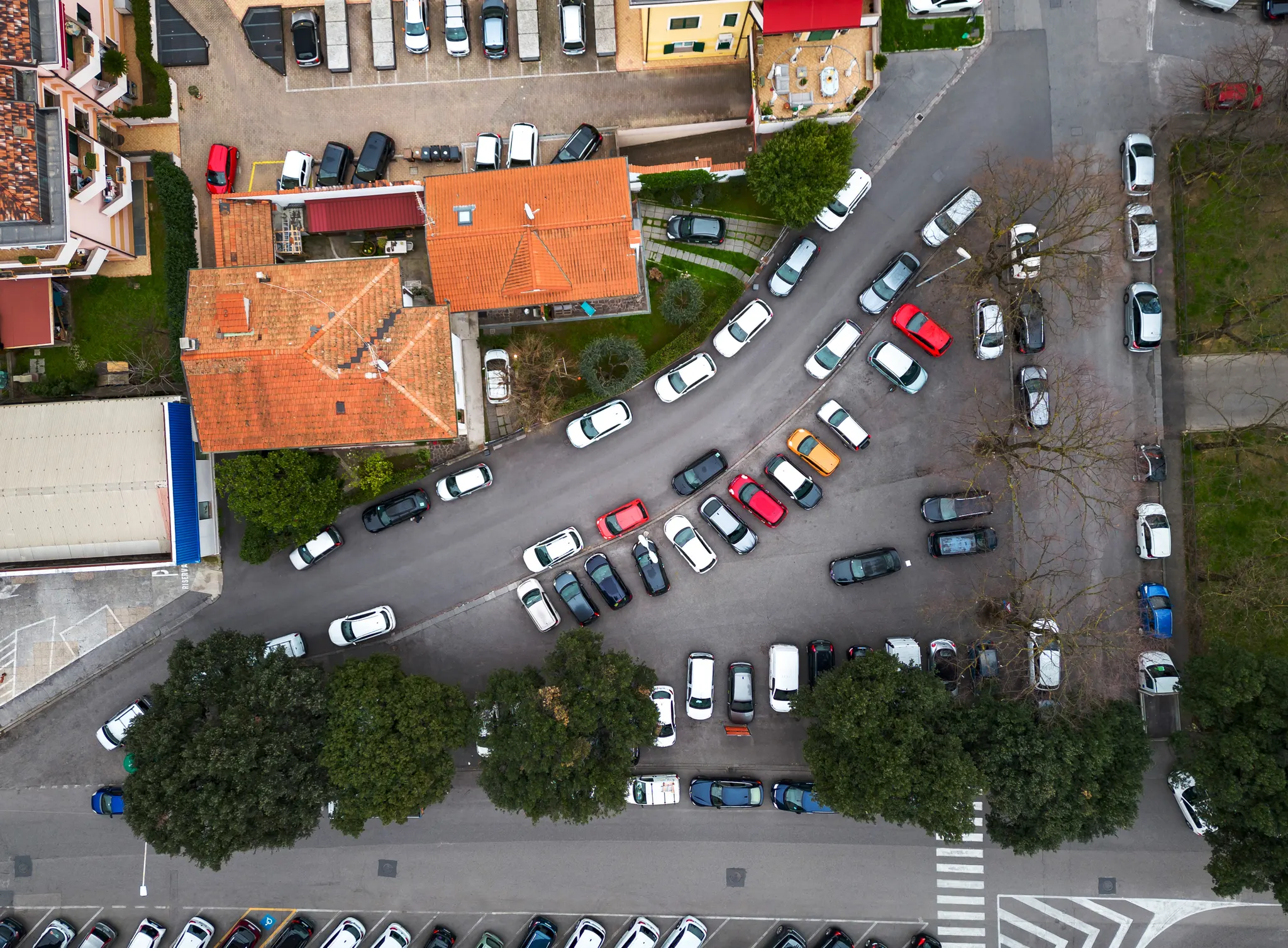
Best Practice Highlight: Turning temporary urbanism into long-term stewardship
This project demonstrates how a temporary intervention can lead to lasting forms of community participation when it is built on an existing ecosystem of local actors. The project team intentionally worked within a network of cultural organizations, neighborhood groups, and municipal partners whose relationships shaped both the design process and the outcomes. Workshops led by CUT (Circuito Urbano Temporaneo), together with public events curated by La Cultura Nuova and The Loom, created multiple entry points for residents to test new uses of the space, express concerns, and build a shared vision for the site’s future. These collaborations strengthened community ownership and generated momentum that extended beyond installation week.
This groundwork ultimately led to the signing of a Patto di Collaborazione, an agreement between the community and the municipality to care for the new square. By aligning the design process with civic collaboration and everyday participation, the project illustrates how asphalt art can serve not only as a spatial improvement but as a catalyst for governance, empowering communities to take responsibility for public space over time.
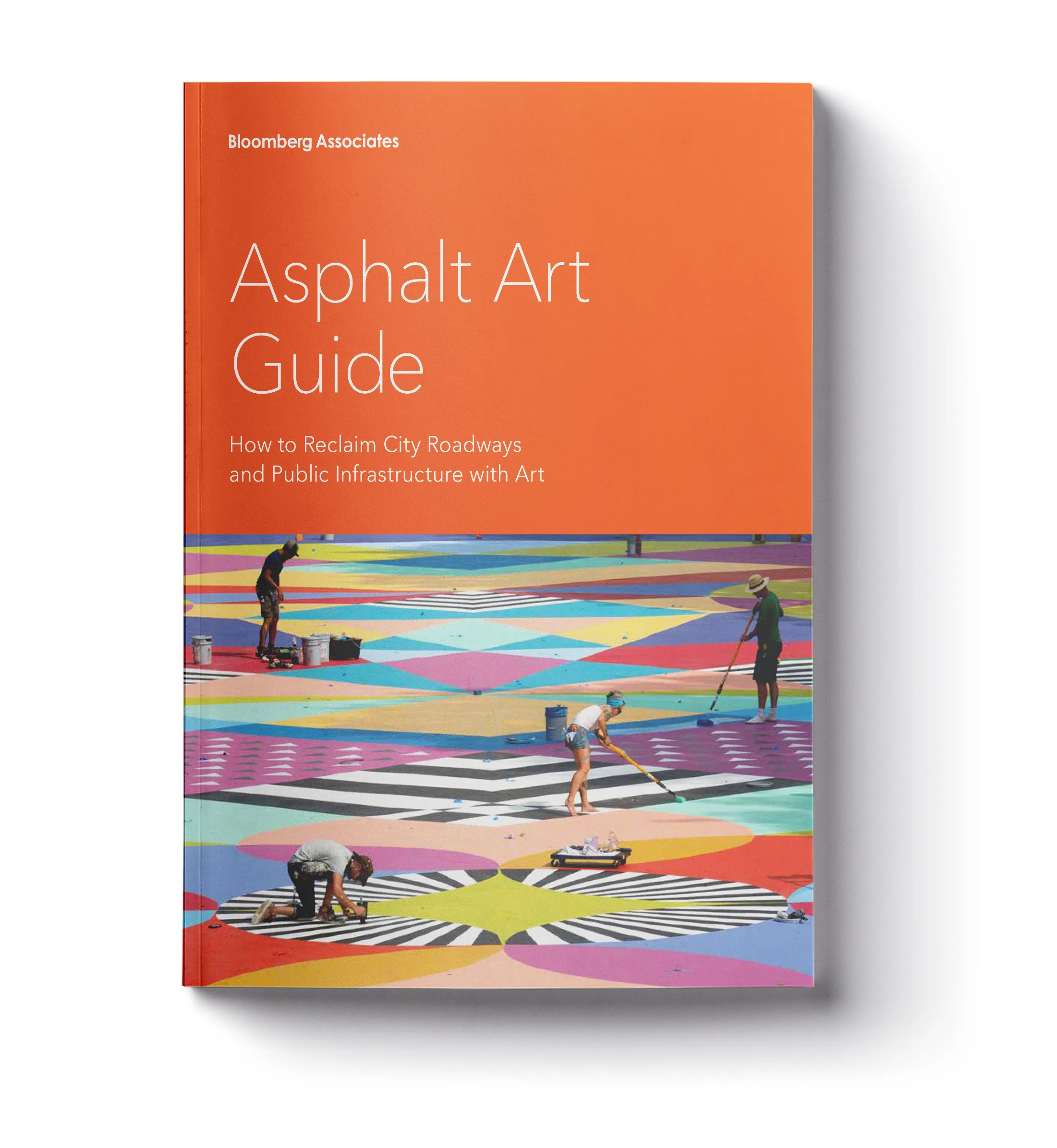
For inspiration and tips for the creation of art on roadways and public places, download the Bloomberg Associates Asphalt Art Guide which features successful plaza and roadway art activations around the world, as well as key steps for developing such projects.