St. Louis, MO
Strengthening community with traffic-calming art
The Project
Hamilton Avenue is a main thoroughfare through St. Louis’ West End Neighborhood and provides access to many residential blocks. The West End is on the north side of the ‘Delmar Divide’, a street which historically was the boundary of racial housing segregation and today is still visible as a boundary of health, income, investment, and other disparities. Residents of the West End Neighborhood have been pursuing a number of art, beatification, and planning efforts to enhance their community, including recently building a park on a formerly vacant lot along Hamilton Ave.
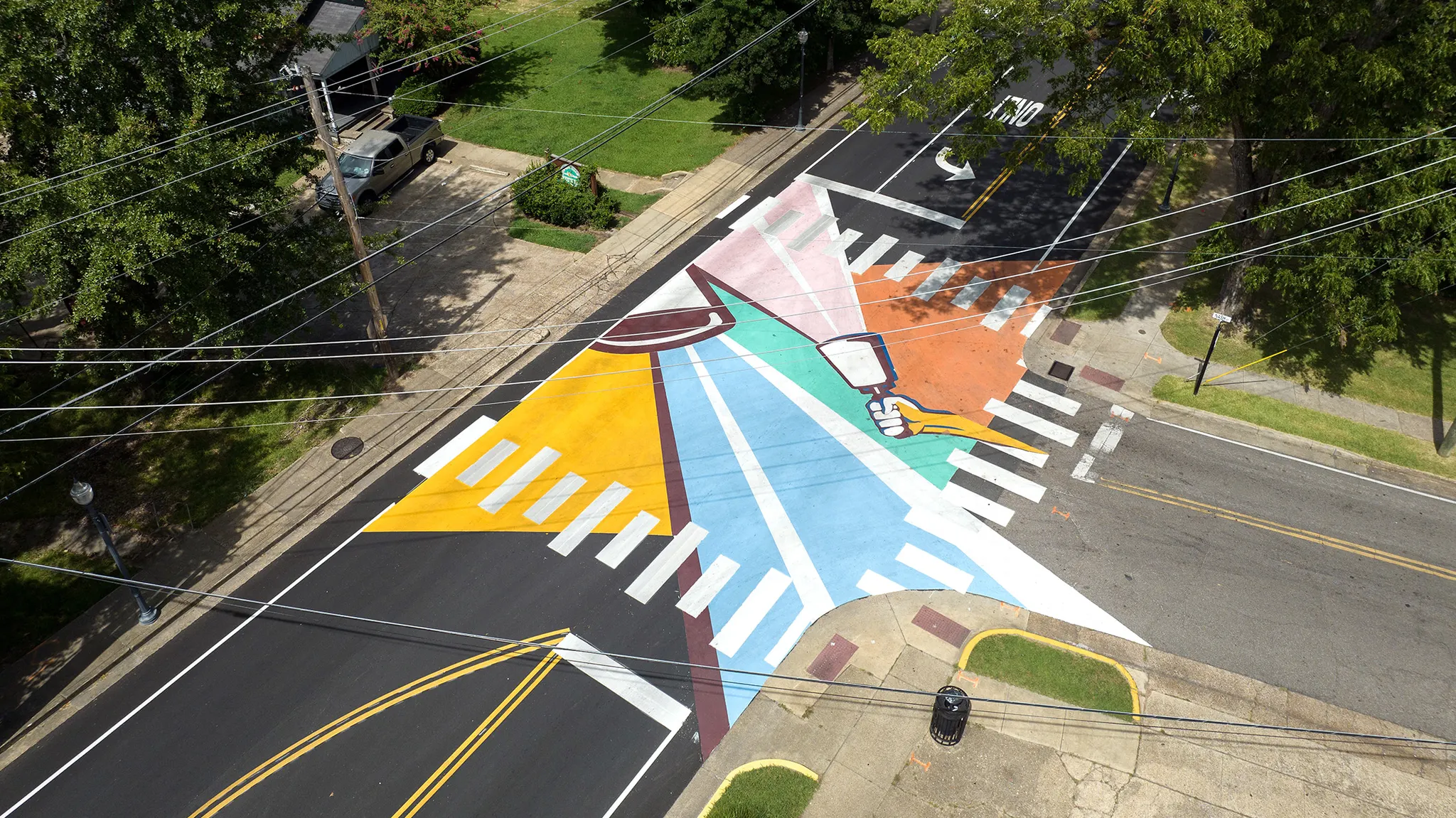
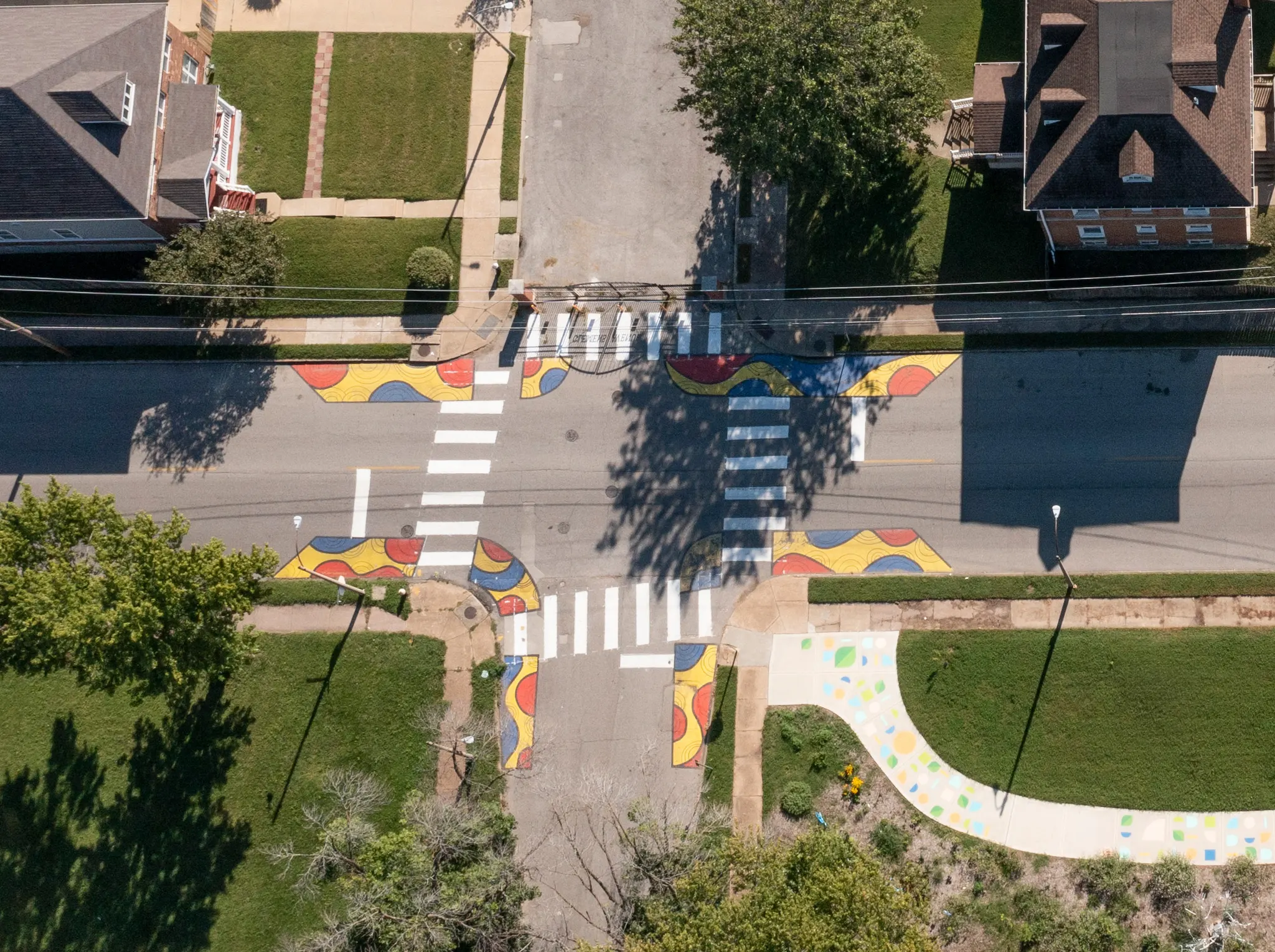
The designs for the murals were created by student apprentice teams at St. Louis ArtWorks, a paid arts-training program located near the project site that used art to teach essential life and job skills to underserved youth aged 14-19. The students developed 12 design options, of which residents chose 4 at a community meeting. Graduate students at Washington University helped with the technical aspects of positioning and sizing the designs.
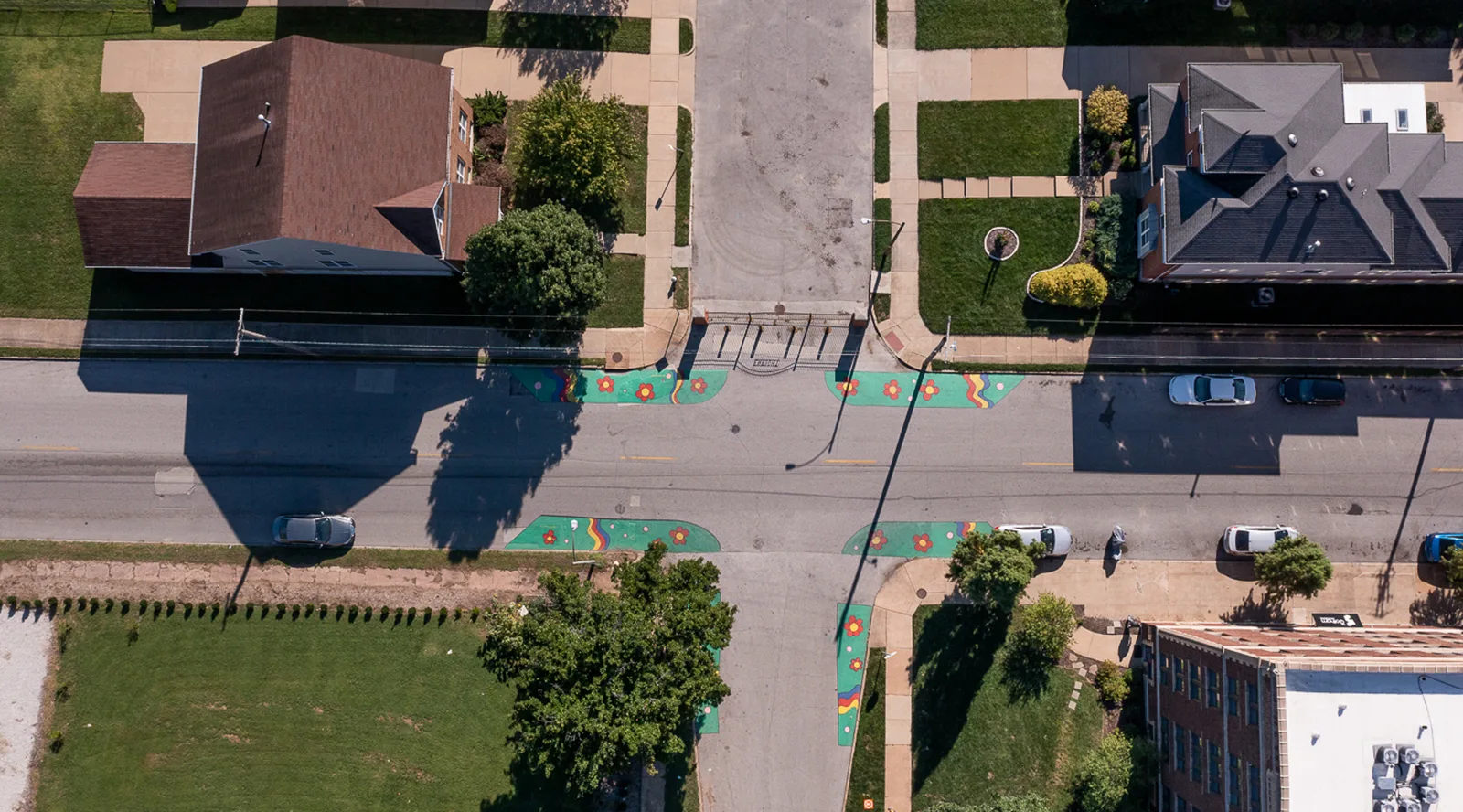
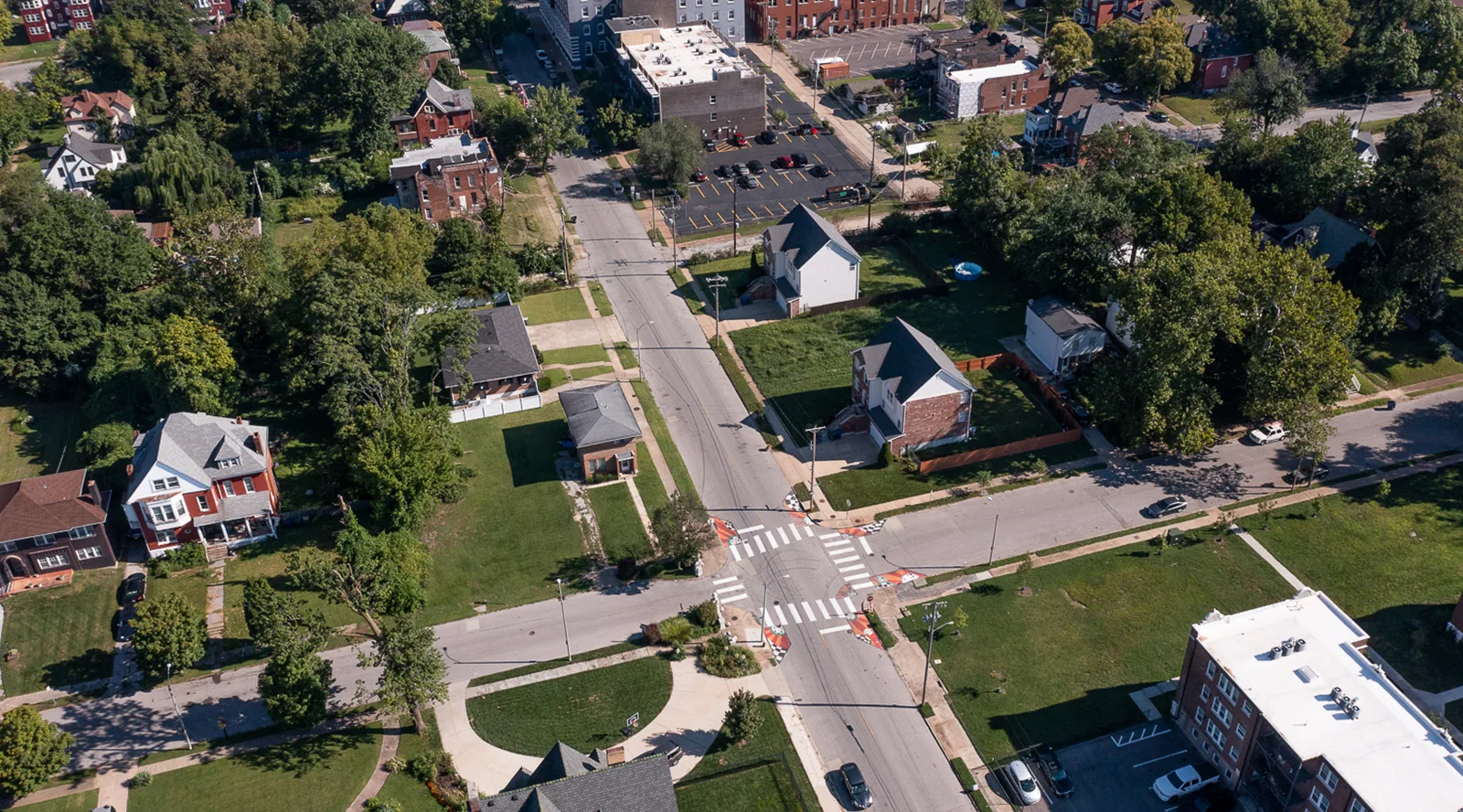
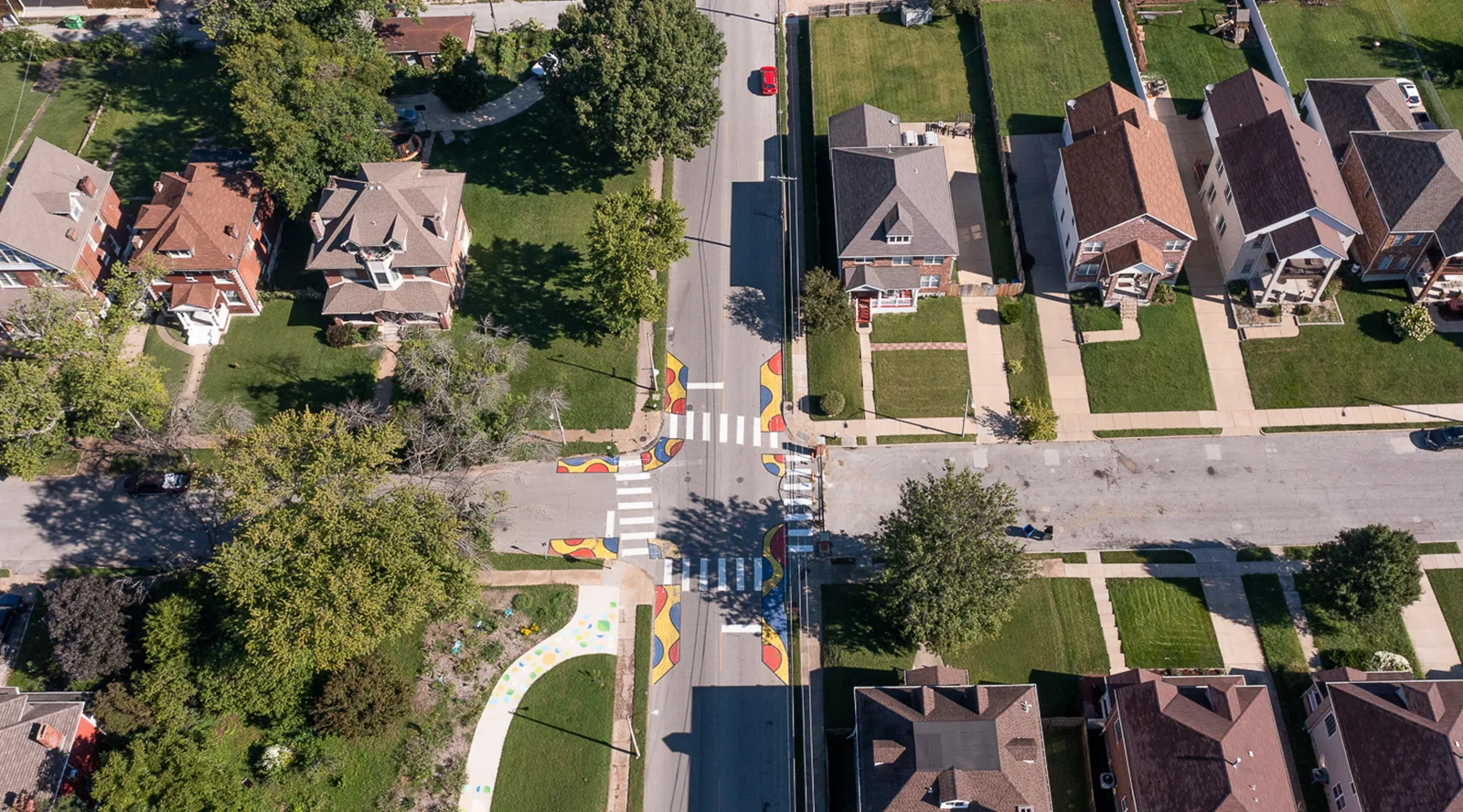
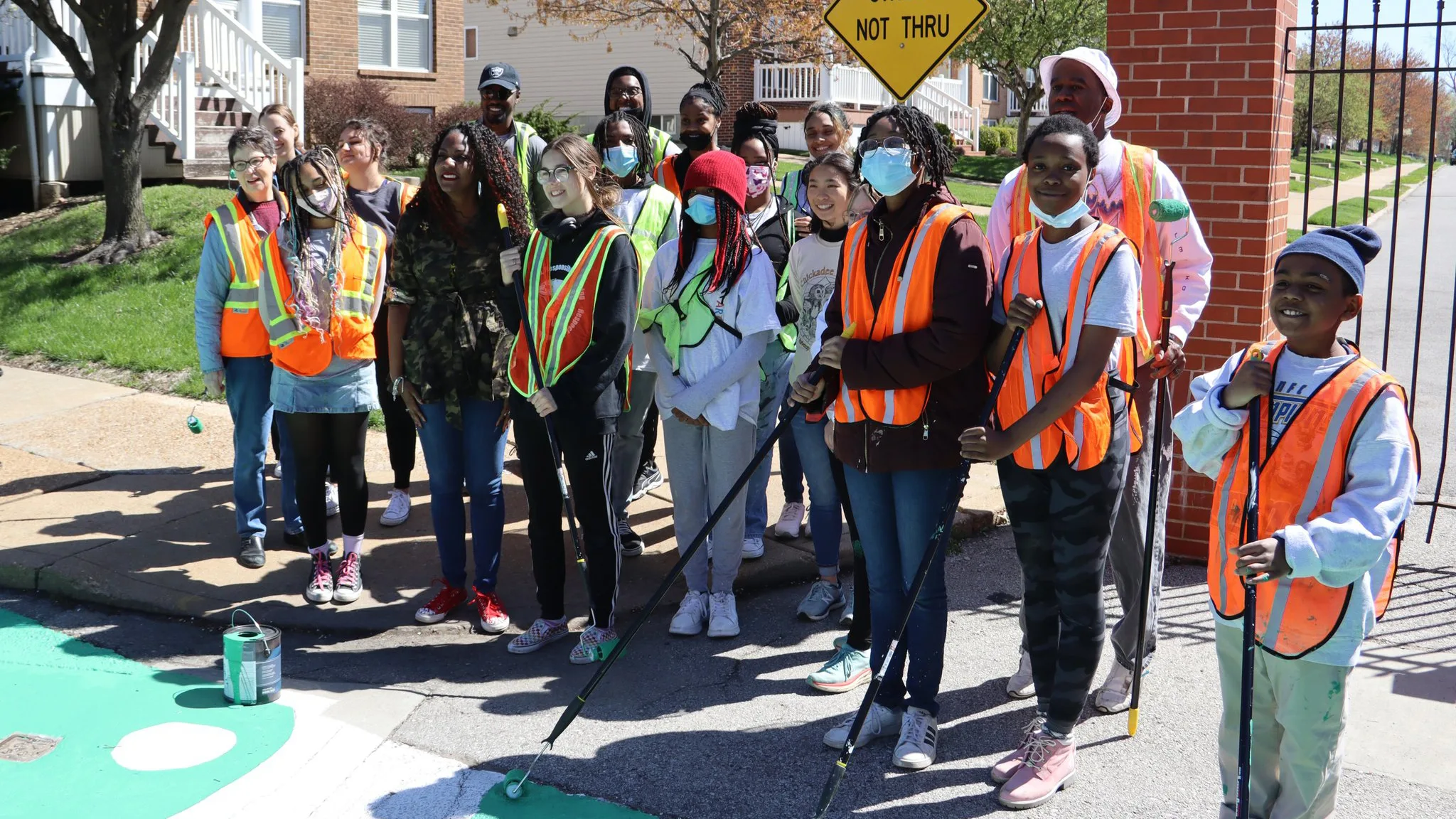
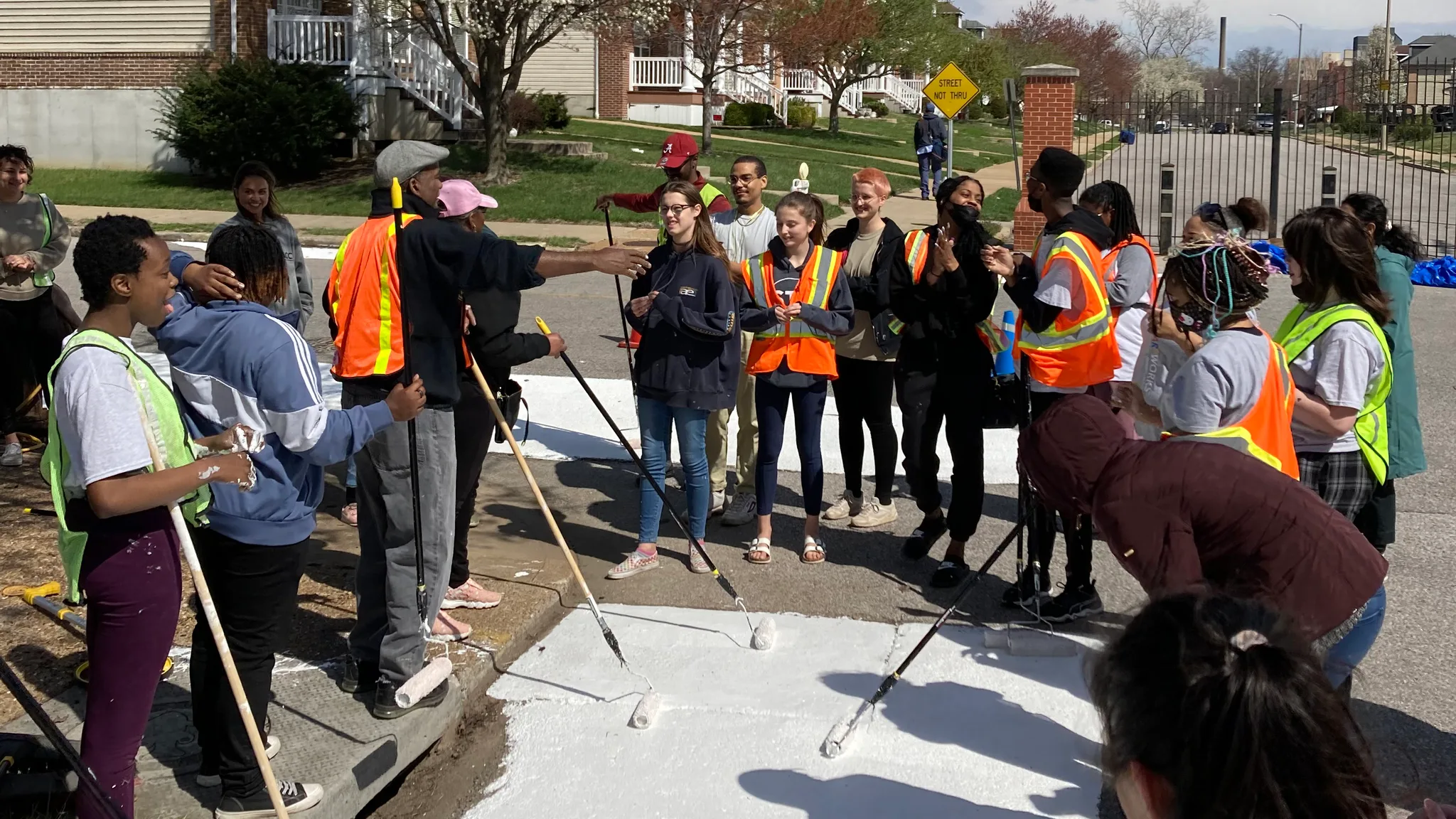
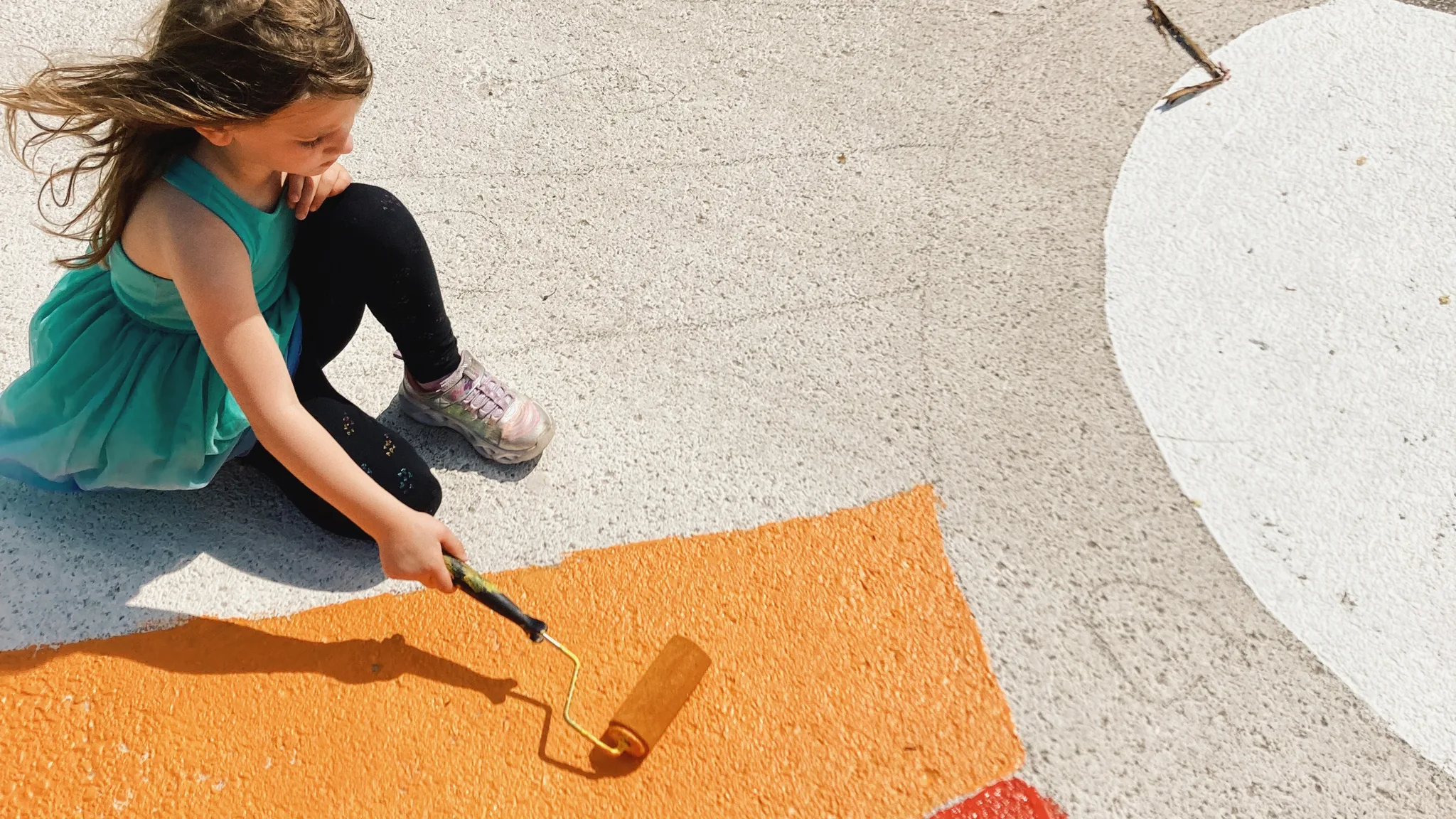
Roughly 40 volunteers participated in the installation of the murals in curb extensions, which was led by the teenage apprentices, at 4 intersections along Hamilton Avenue over the course of 4 Saturdays in spring 2022. Since the Hamilton Avenue Project was completed, $20,000 has been authorized by the City of St. Louis for the design of a second component of the project, an artistic bikeway on nearby Hodiamont Avenue.
I hope it’s contagious – that when people see the success of this community project, it will spur other ideas to use the same process to combat illegal dumping or turn a vacant lot into a pocket park.
Lisa Potts, neighborhood resident
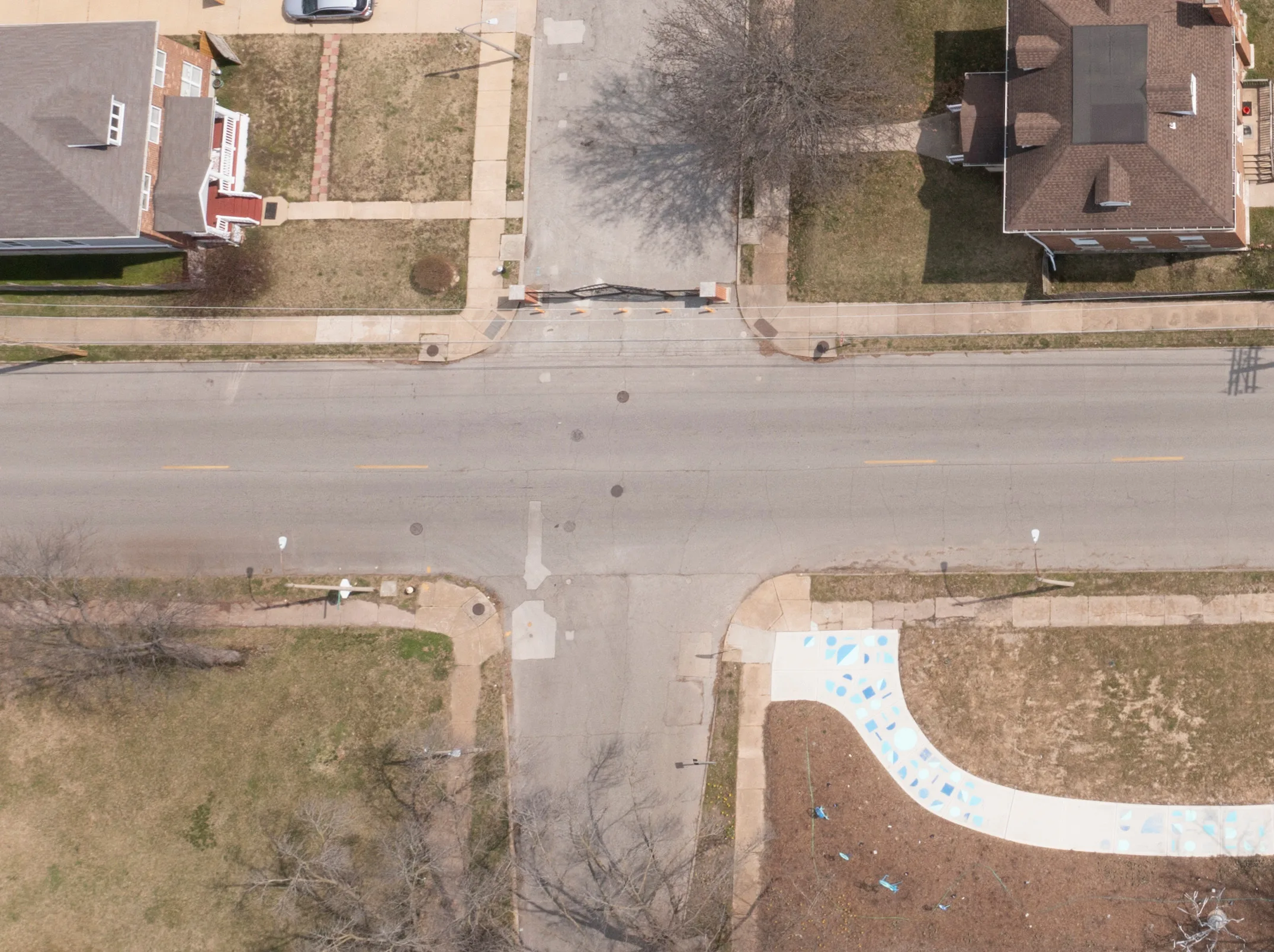
Use the slider to see the transformation
Best Practice Highlight: Leadership from within the Community
At a community movie night near Hamilton Avenue, West End resident Lisa Potts noticed how many cars were speeding and running stop signs. Enrolled in the Neighborhood Leadership Academy, a leadership training program run by the University of Missouri-St. Louis, she began to build partnerships through the program that would allow her to respond creatively and impactfully to mitigate the dangerous conditions of her neighborhood thoroughfare. She enlisted Trailnet, a St. Louis-based organization, for a pop-up demonstration of possible traffic-calming options such as curb bump-outs, protected bike lanes and street art at intersections. She formed a traffic-calming task force that worked with the local neighborhood association to make sure businesses and residents on surrounding streets had input. She gained the support of St. Louis Alderwoman Shameem Clark-Hubbard, who connected Potts with the St. Louis Street Department and Scott Ogilvie of the city’s Complete Streets program. Working with city and community partners, her team secured an Asphalt Art Initiative grant, and nearly two years after the movie night, Potts saw her vision of a safer street come to life.
Using Asphalt Art as a Traffic-Calming Measure at Four Key Intersections
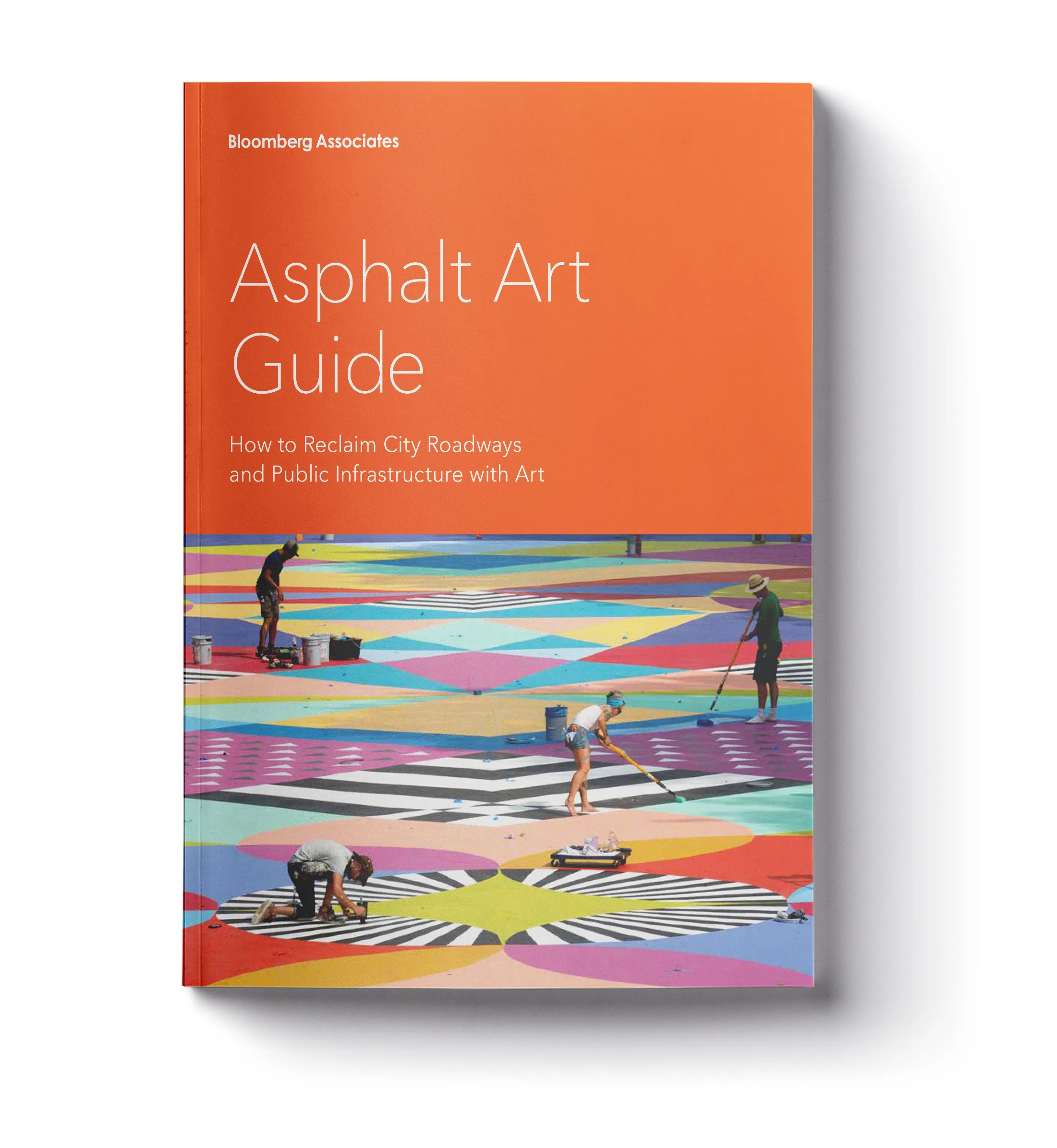
For inspiration and tips for the creation of art on roadways and public places, download the Bloomberg Associates Asphalt Art Guide which features successful plaza and roadway art activations around the world, as well as key steps for developing such projects.