New Orleans, Louisiana
Safely connecting residents to the Lafitte Greenway
The Project
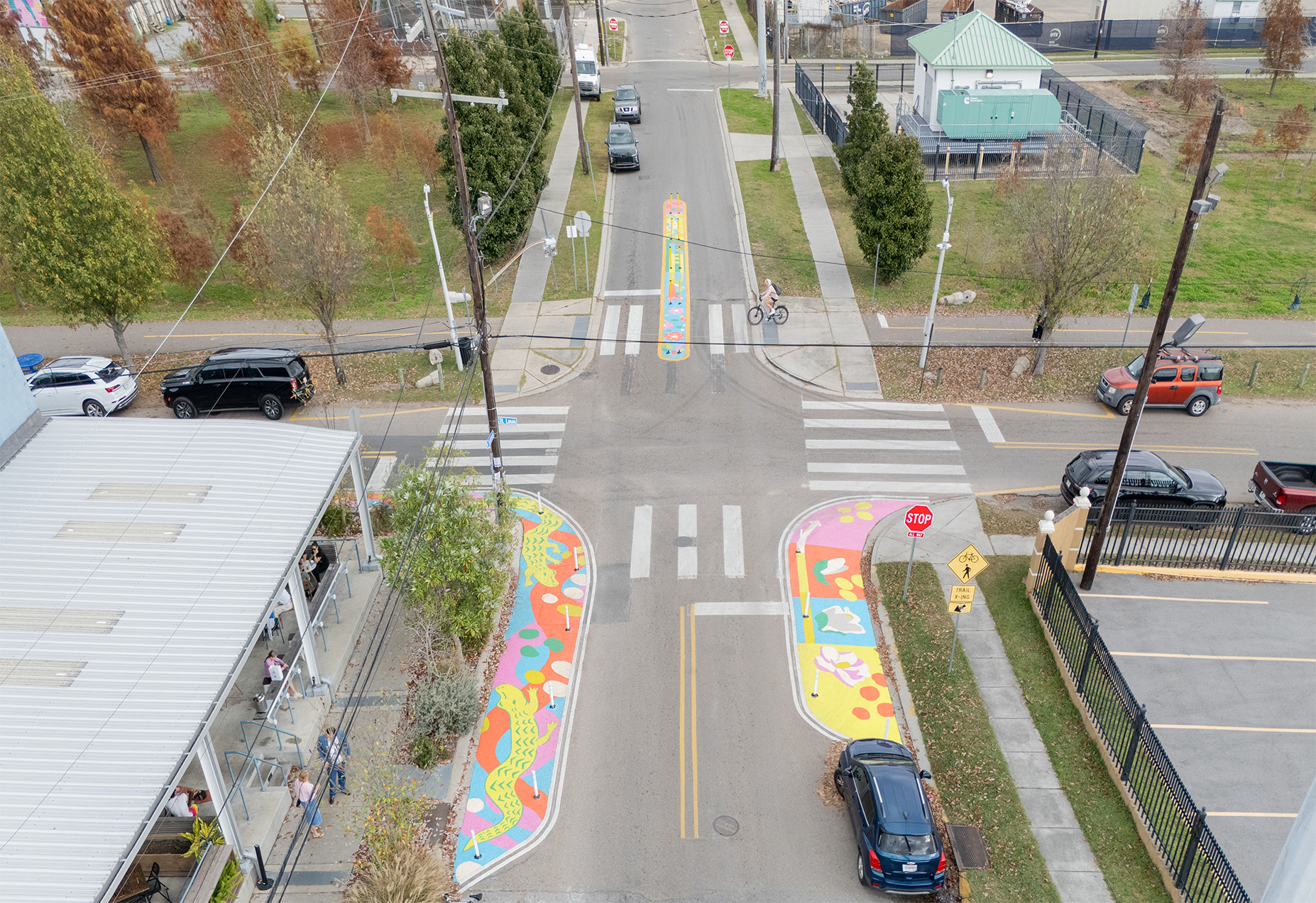
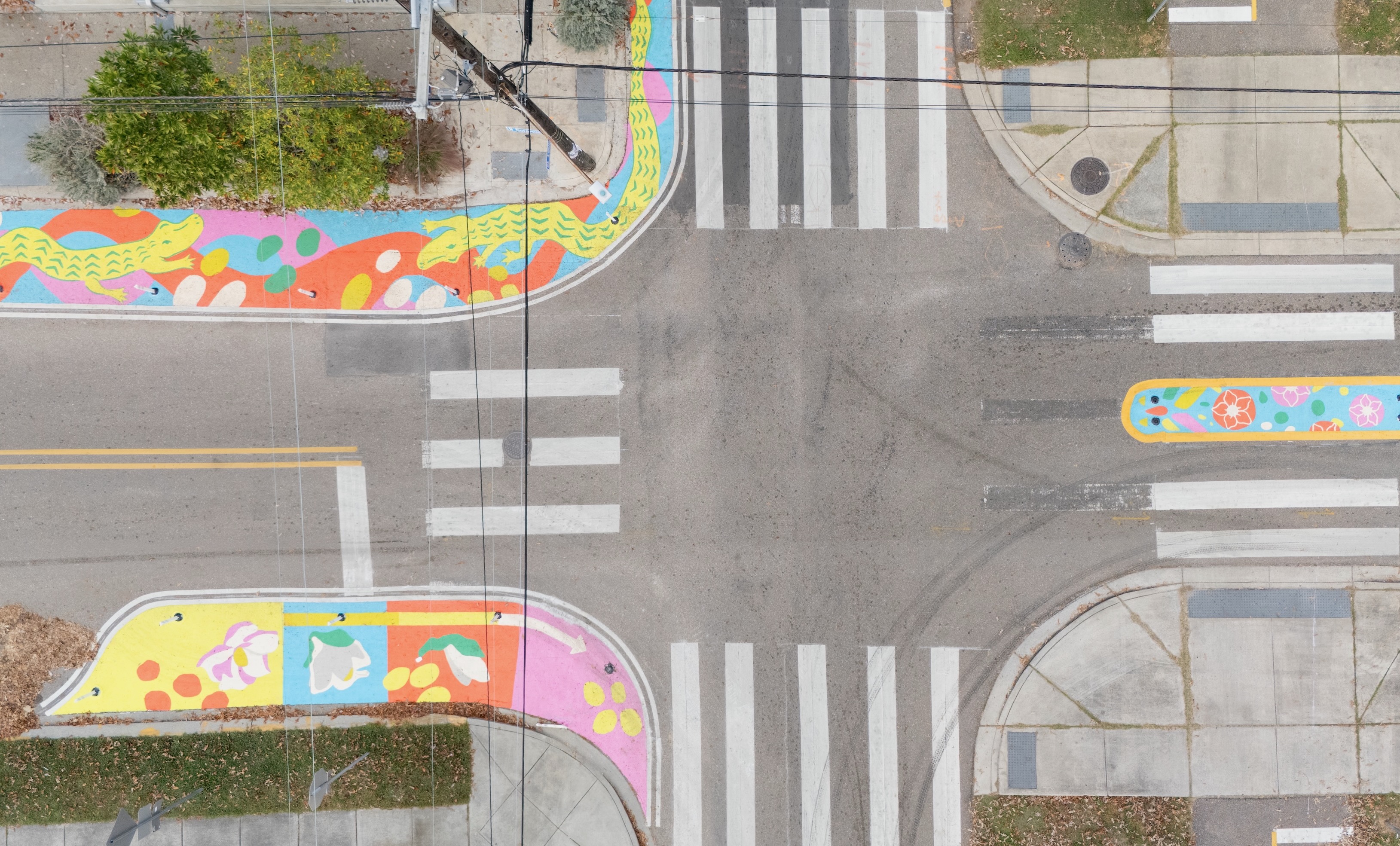
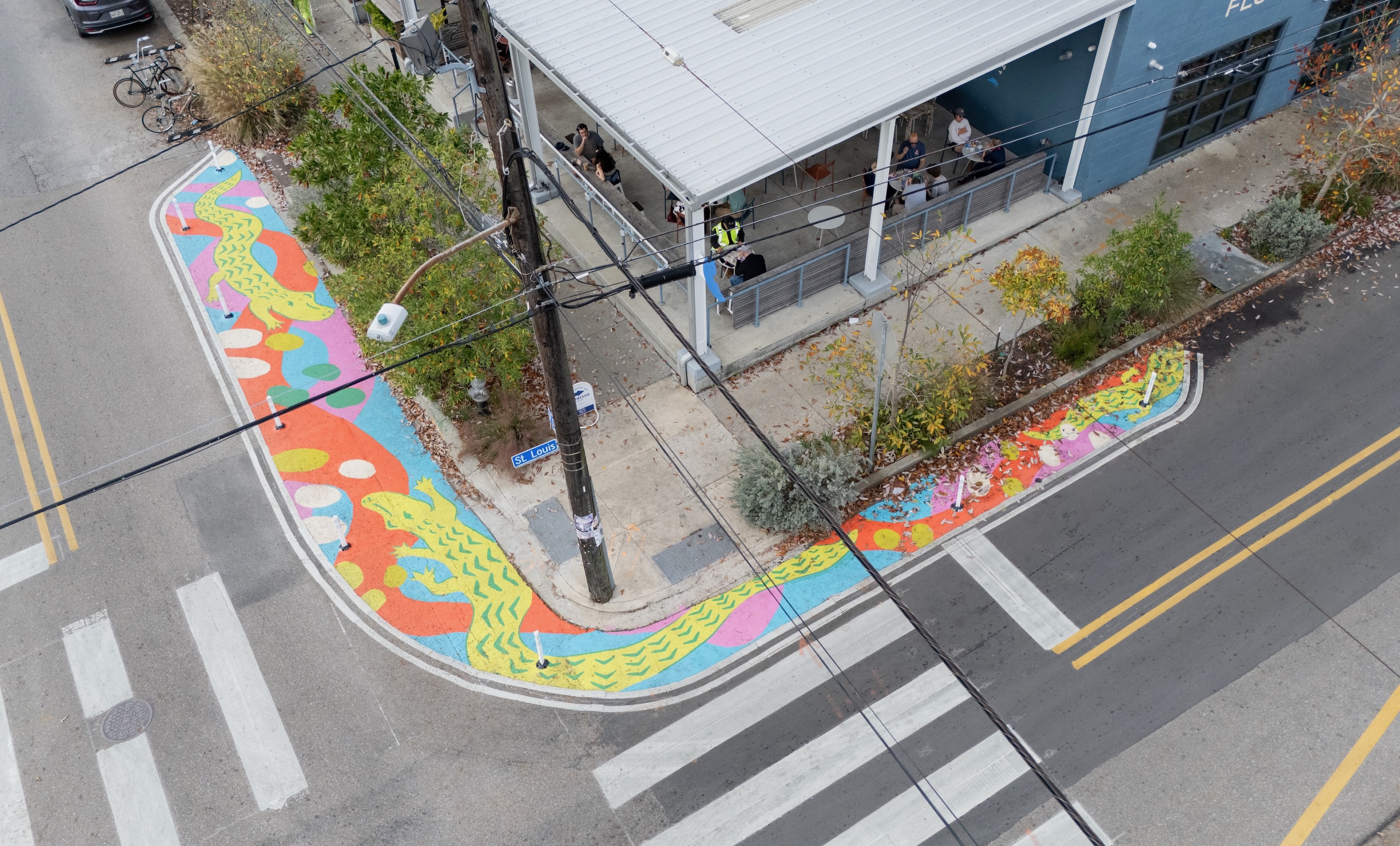
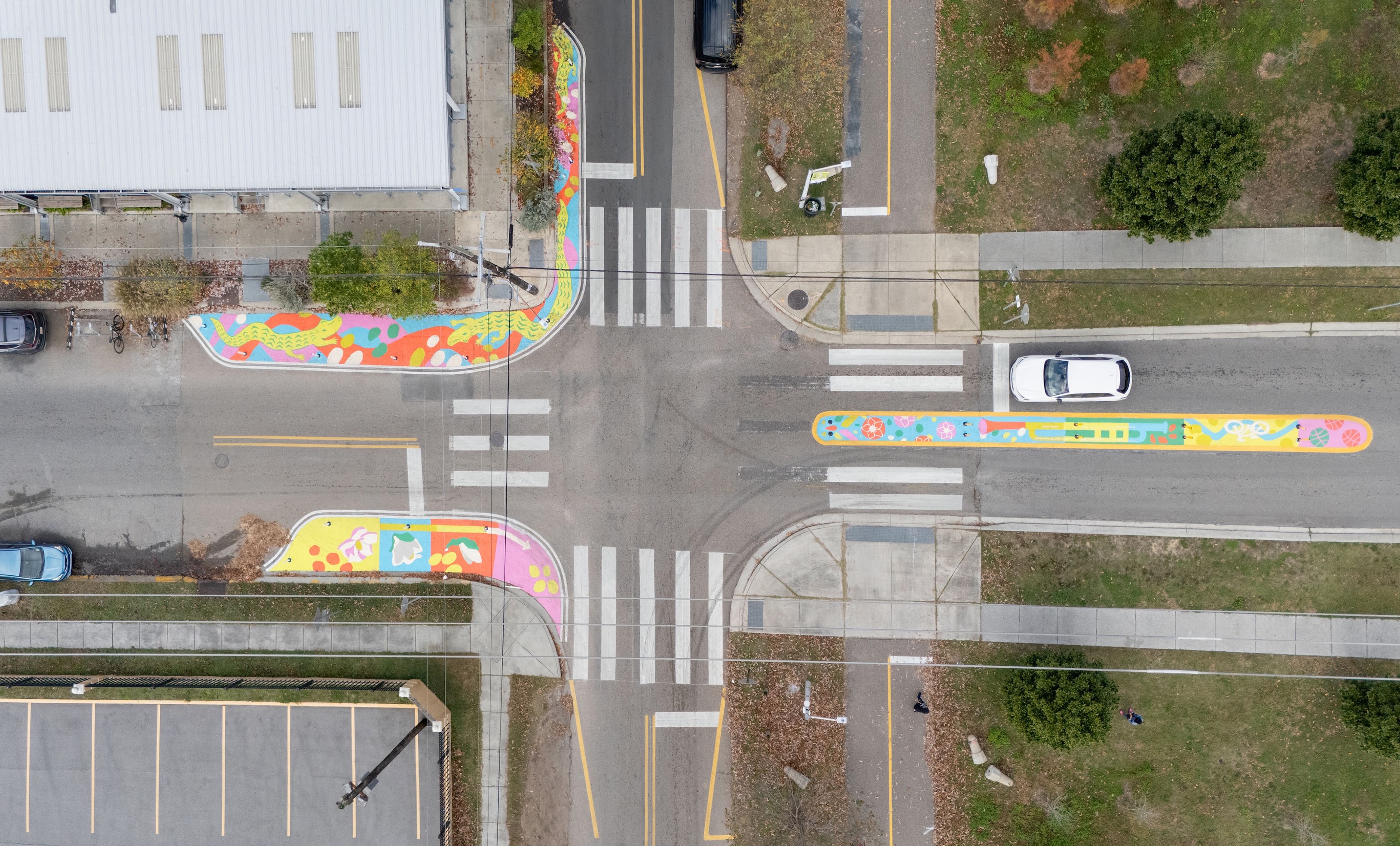
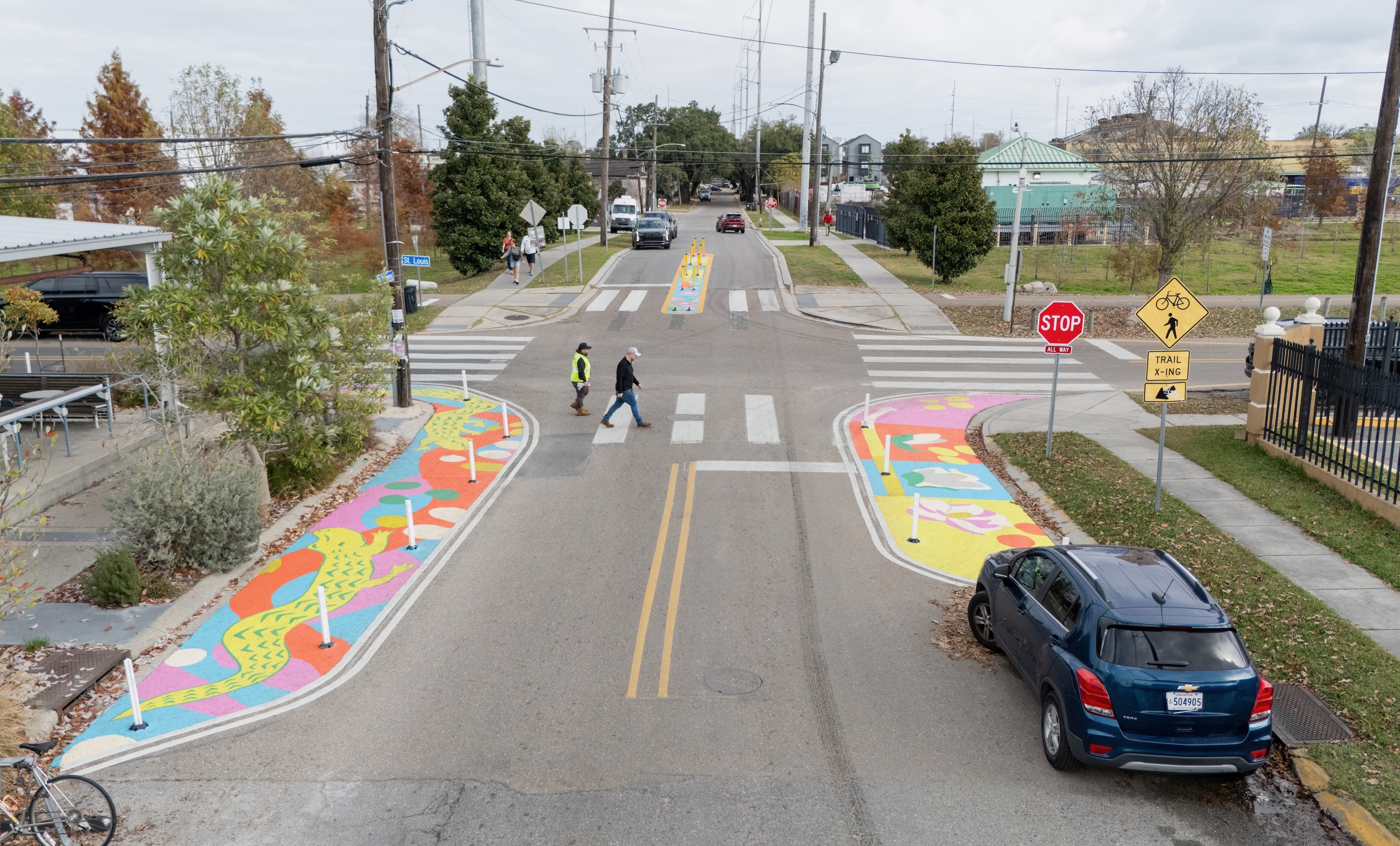
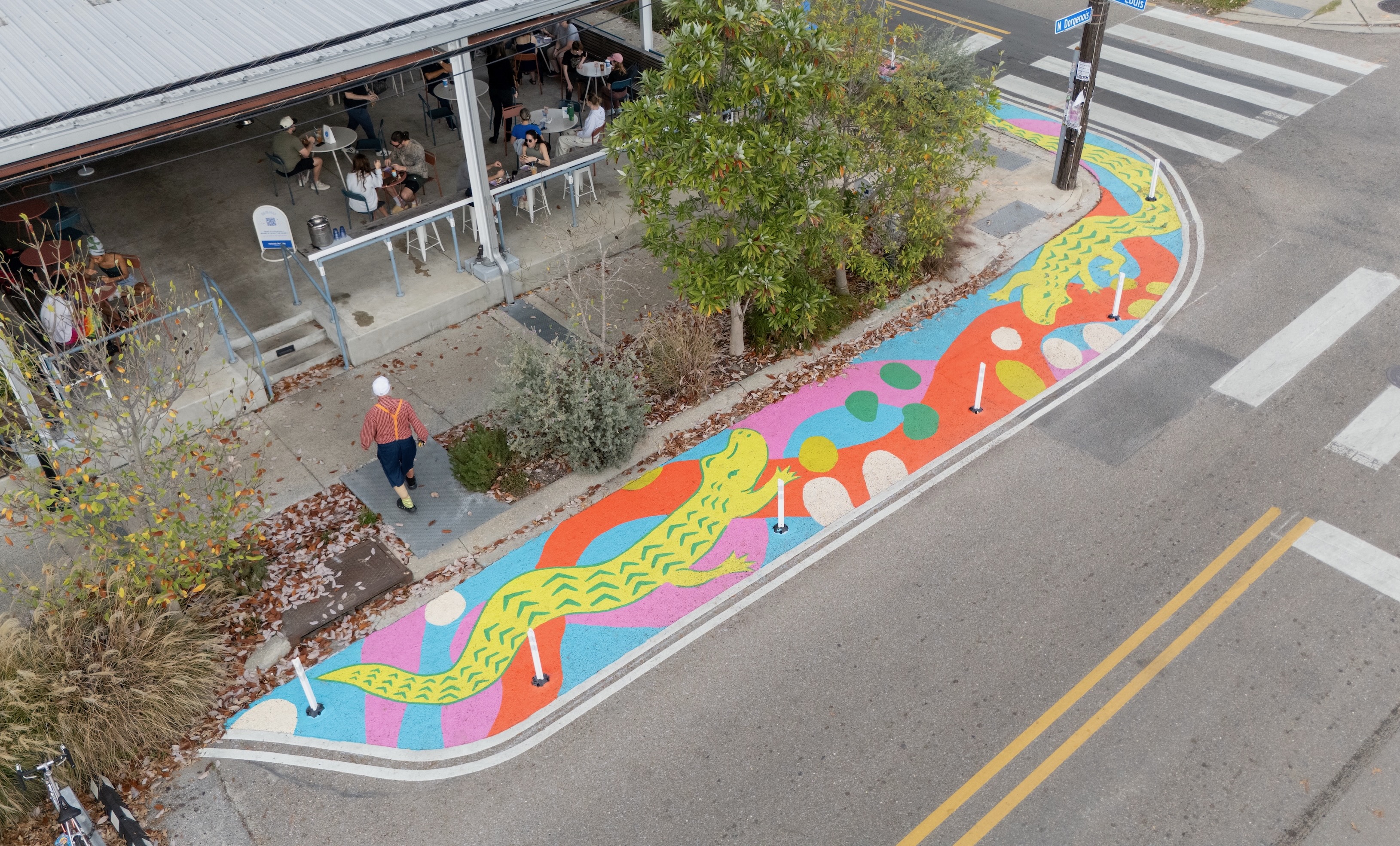
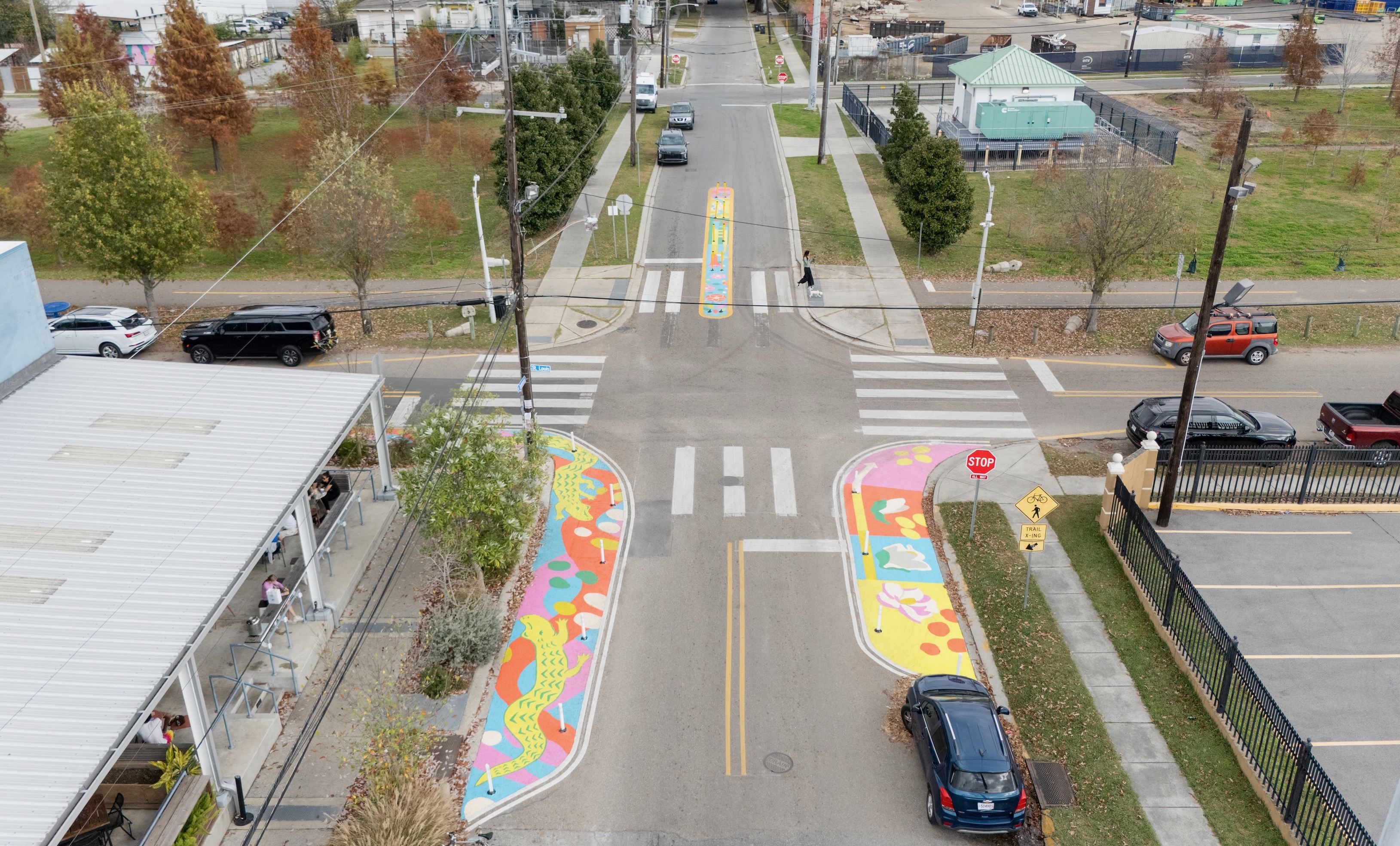
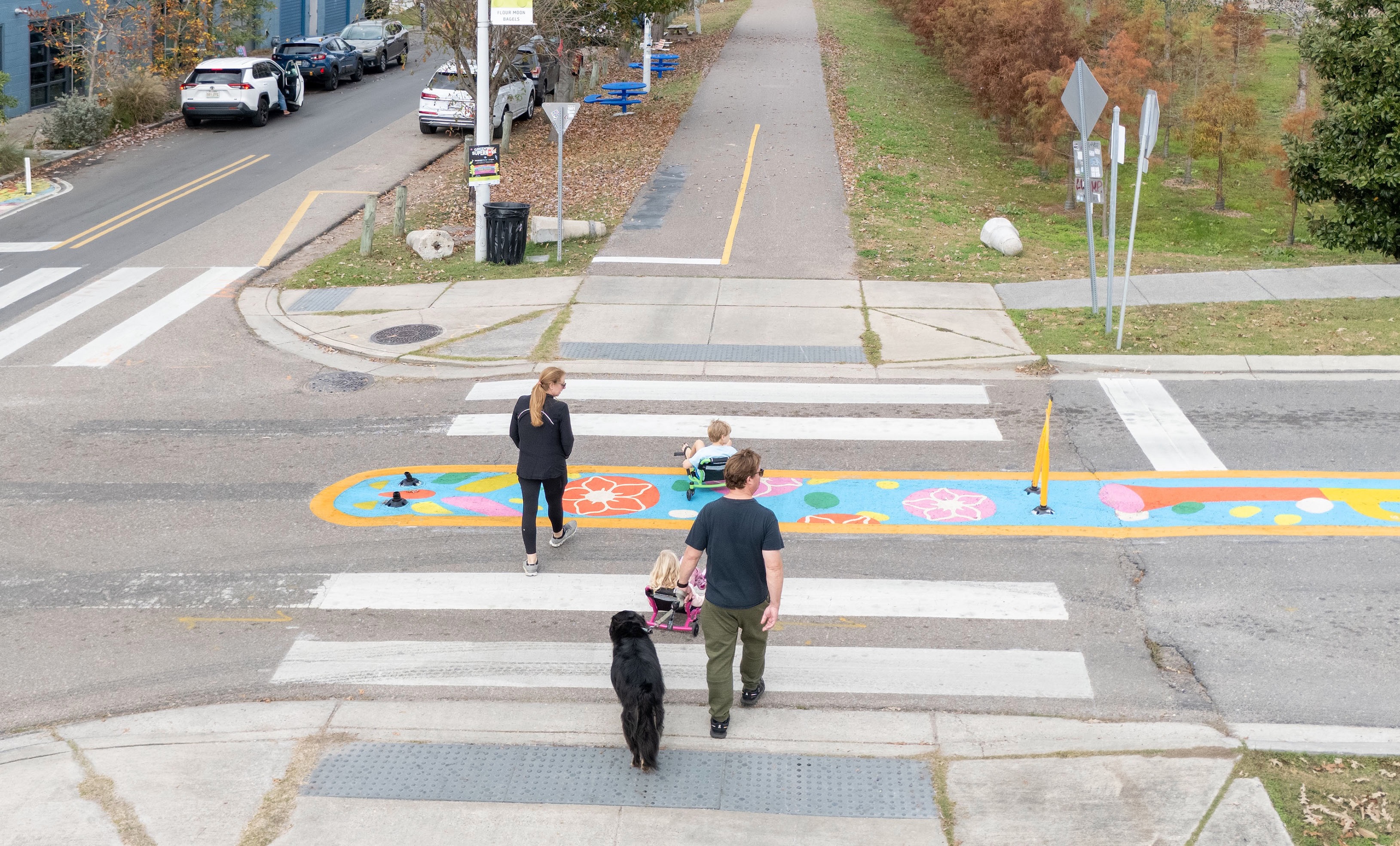
At the intersection of North Dorgenois Street and the Lafitte Greenway in New Orleans’ Treme neighborhood, this project addressed a persistently dangerous crossing point for pedestrians and cyclists. The Greenway is a vital corridor for recreation, commuting, and community life, and this intersection had been the site of frequent near-misses and collisions, with unclear traffic patterns and insufficient safety infrastructure. The project aimed to improve visibility, slow vehicle speeds, and create a safer, more legible connection to the surrounding neighborhood.
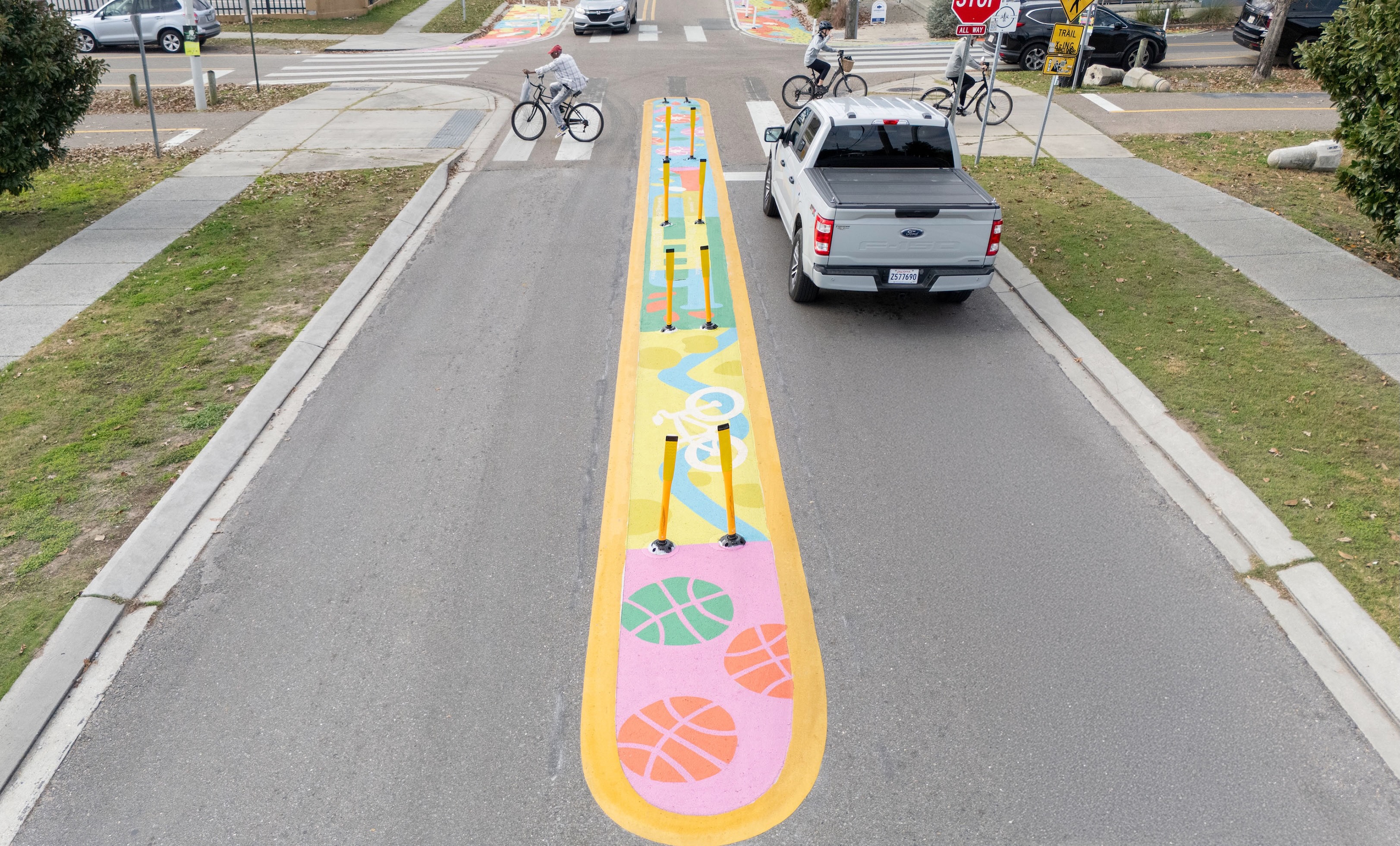
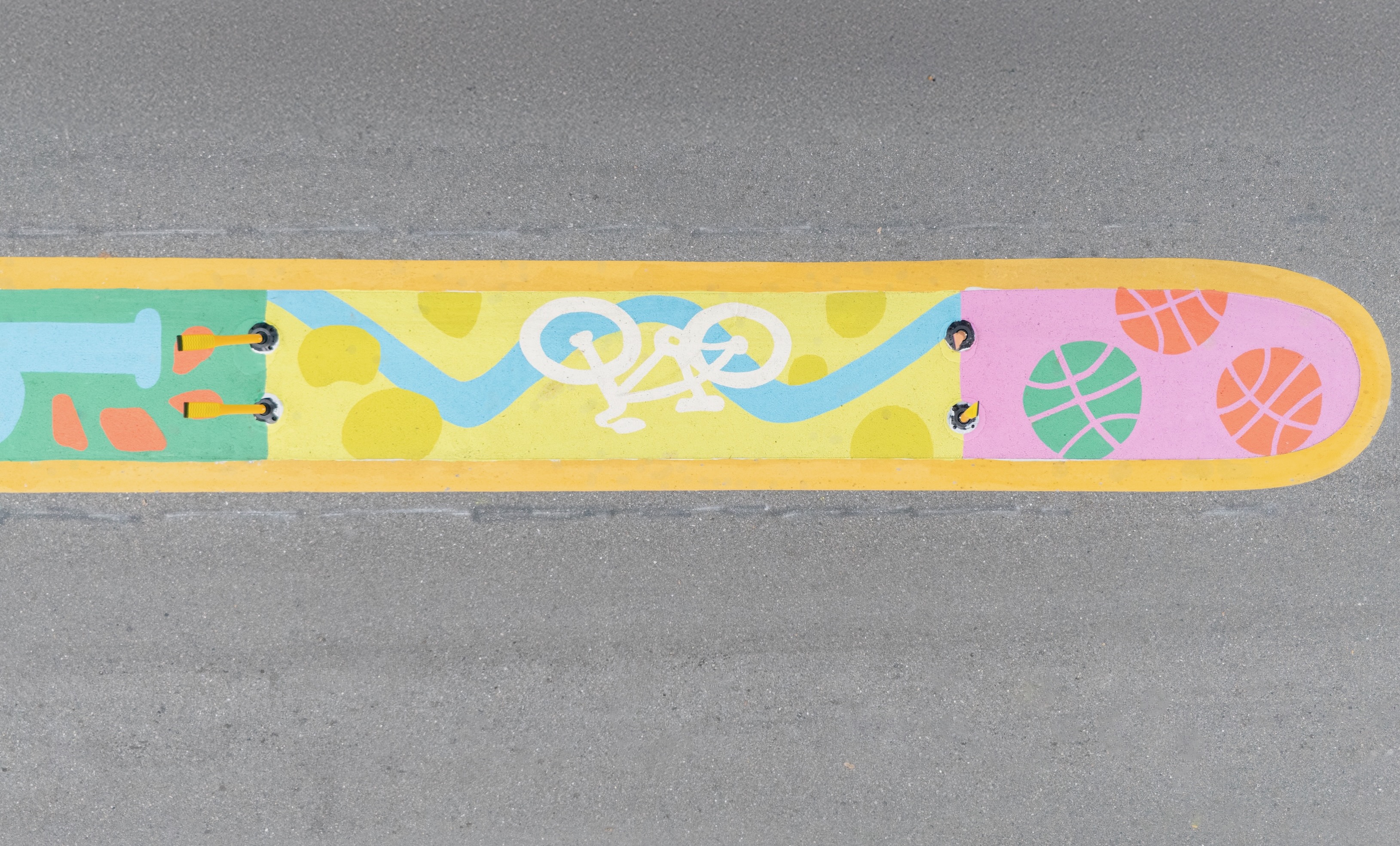
The intervention combined bold roadway murals with targeted traffic-calming measures, including new stop signs and flexposts, to clearly define the intersection and encourage safer driver behavior. Designed and installed by Arts New Orleans’ Young Artist Movement, the murals reflect community-based motifs while directly engaging 25 local youth in shaping a safer streetscape. The project creates a more welcoming gateway for the more than 1,000 daily users who pass through the site. By pairing infrastructure improvements with creative placemaking and youth leadership, the project demonstrates how asphalt art can deliver immediate safety benefits while strengthening community connection and ownership.
“The improvements immediately helped make this intersection much safer. These murals added so much vibrancy to this corner and made the Greenway more accessible and beautiful.”
Jeff Hinson, co-owner, Flour Moon Bagels
Use the slider to see the transformation

Press
Safety upgrades put in place near Lafitte Greenway intersection described as dangerous, (WDSU6, December 11 2025)
For inspiration and tips for the creation of art on roadways and public places, download the Bloomberg Associates Asphalt Art Guide which features successful plaza and roadway art activations around the world, as well as key steps for developing such projects.
Clarksdale, Mississippi
Transforming streets into canvases for food equity and community pride
The Project
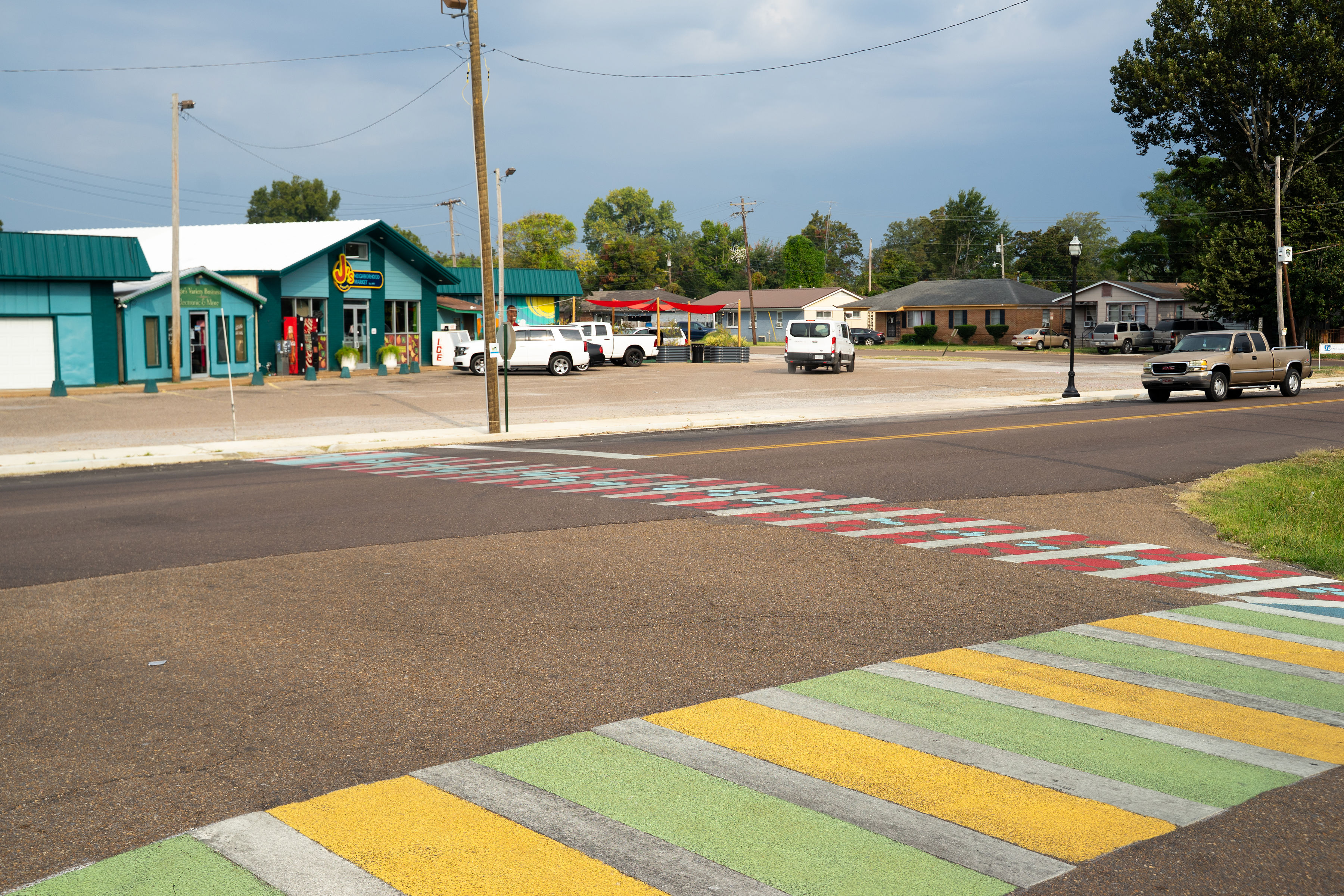
In Clarksdale’s Brickyard neighborhood, the only path connecting two public schools, a community health center, and the area’s sole grocery store had no designated crosswalks, minimal signage, and documented pedestrian safety concerns. Griot Arts partnered with the City of Clarksdale, the Partnership for a Healthier America, and local residents to transform 5,183 square feet of asphalt along the Ritchie Avenue corridor into a vibrant series of crosswalk murals and a curb extension. Led by artist Thaxton Waters with support from Aikee Mathews and Jarvis Howard, the installation engaged 25 volunteers and approximately 40 youth participants. The project created eight new designated crossings where only one or two had existed, directly addressing both food access and pedestrian safety in this predominantly low-income, African American community.
By transforming this street into a canvas, we are amplifying the stories, culture, and creativity of the community, and reclaiming space, reimagining it as a place where connection, pride, and possibility meet.
Tyler Yarbrough, Director of MS Delta Programs, Partnership for a Healthier America
Use the slider to see the transformation
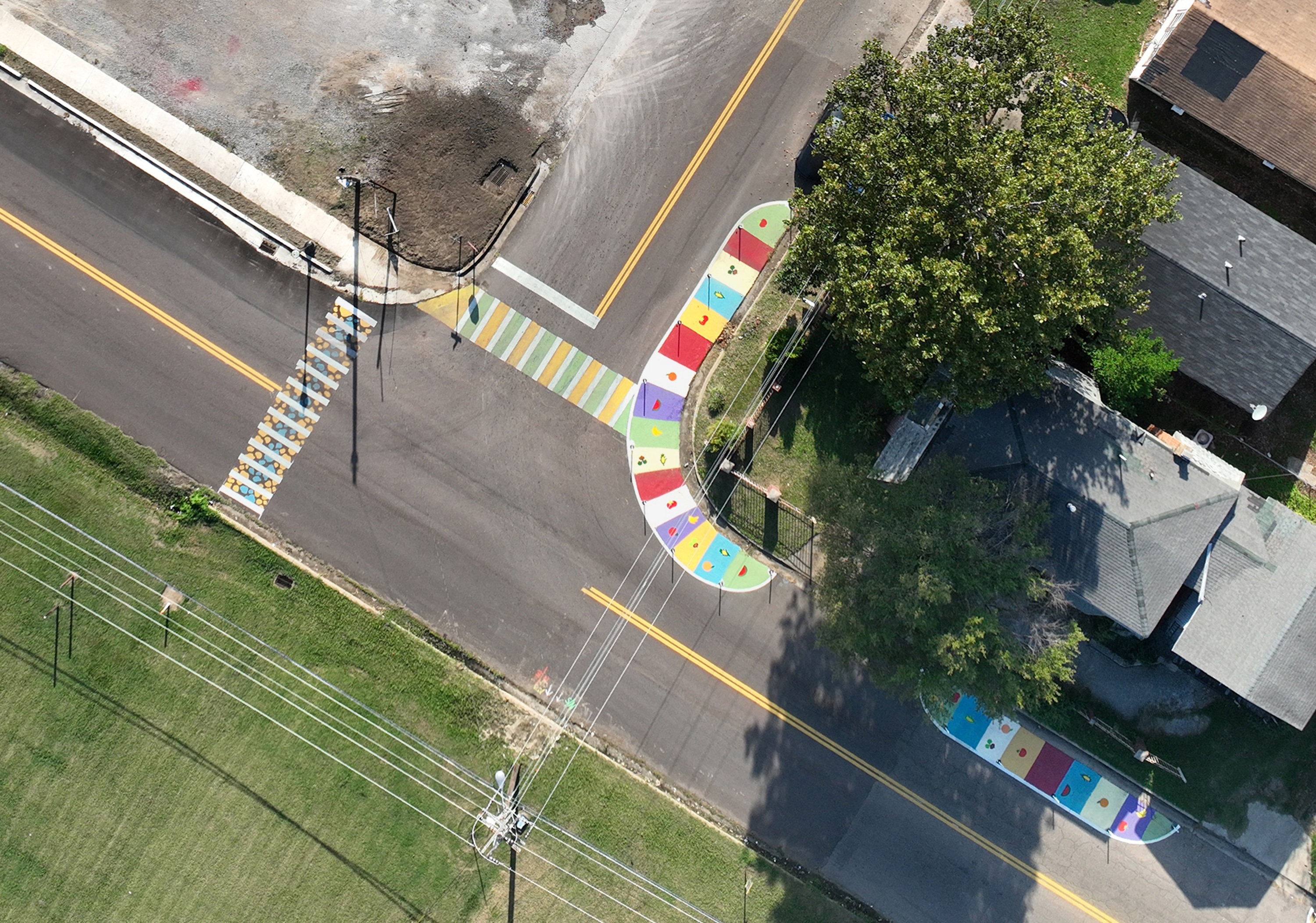
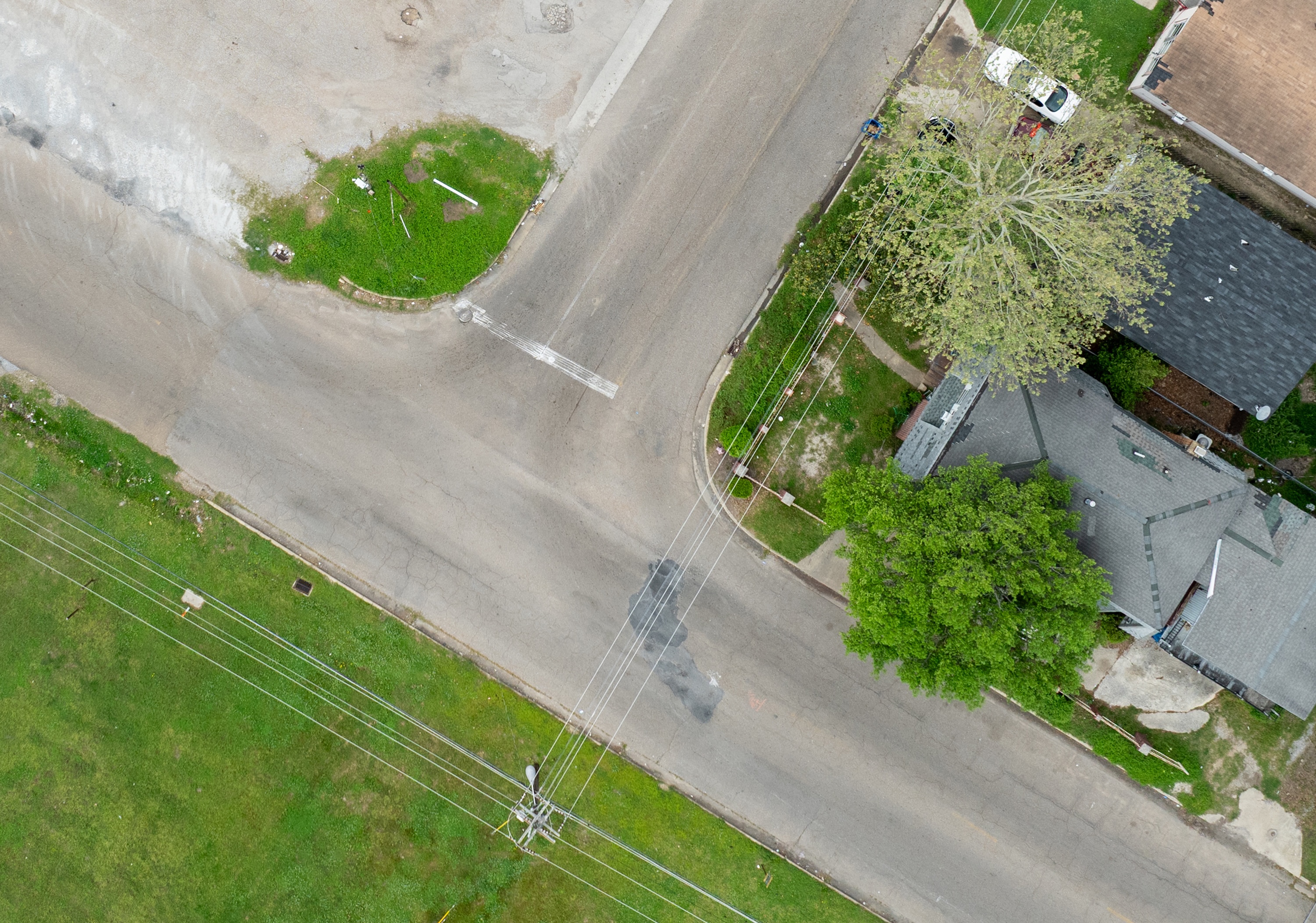
Best Practice Highlight: Community-Centered Design For Food Equity
Rather than approaching street art as a standalone beautification effort, the Food Equity Mural Project embedded its design process within an existing food access and public health strategy. By co-locating the installation along the corridor between schools, a health center, and the neighborhood’s only full-service grocery store, the project addressed multiple community needs simultaneously. The partnership with PHA’s Rootswell initiative brought an additional $15,000 in food equity funding, demonstrating how asphalt art can serve as a catalyst for cross-sector collaboration. Post-installation, the owner of J’s Grocery reported increased walk-in customers, and hospital staff and city employees have made the corridor a regular destination.


For inspiration and tips for the creation of art on roadways and public places, download the Bloomberg Associates Asphalt Art Guide which features successful plaza and roadway art activations around the world, as well as key steps for developing such projects.
San Francisco, California
Calming traffic through color on Slow Sanchez
The Project
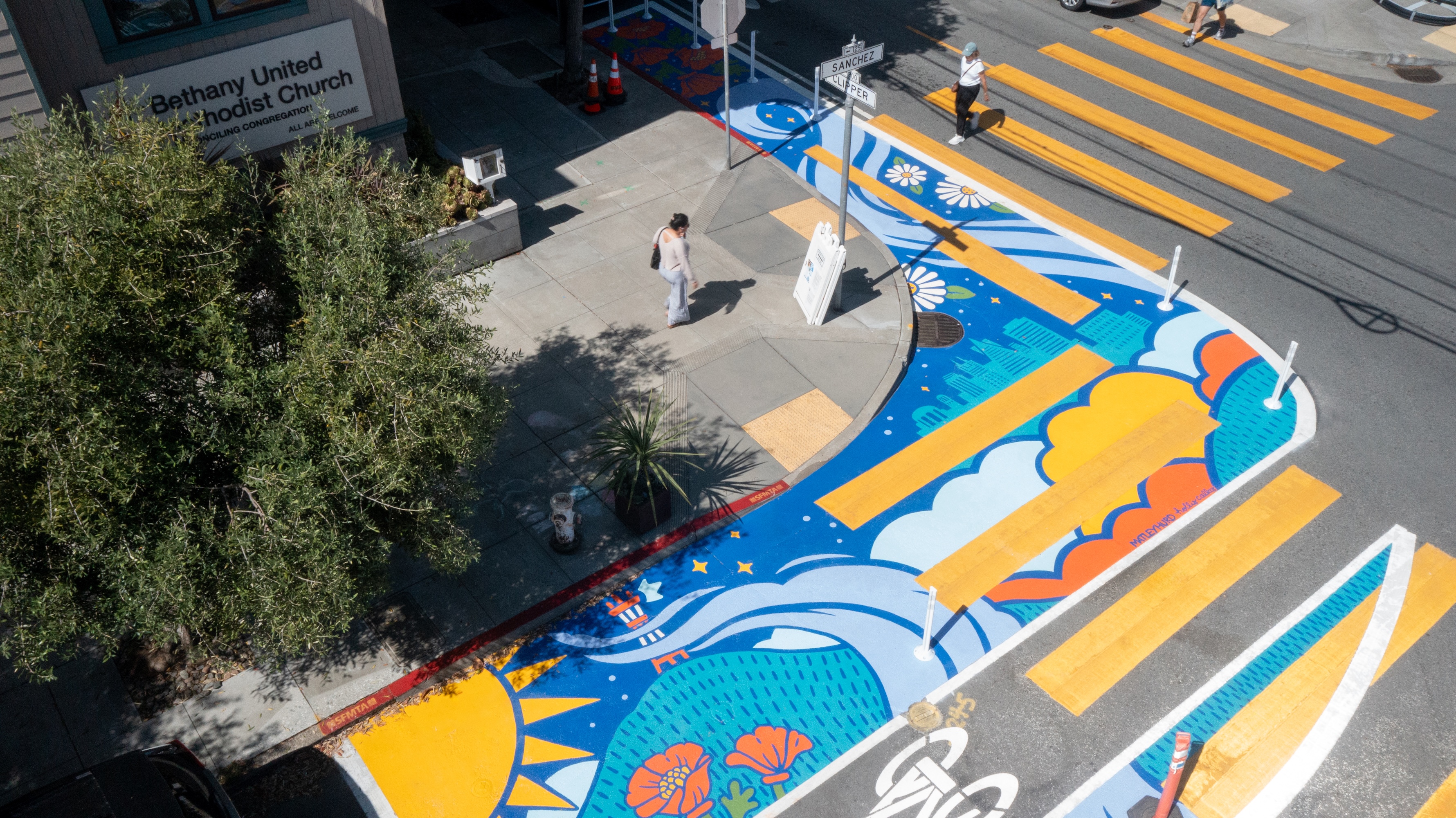
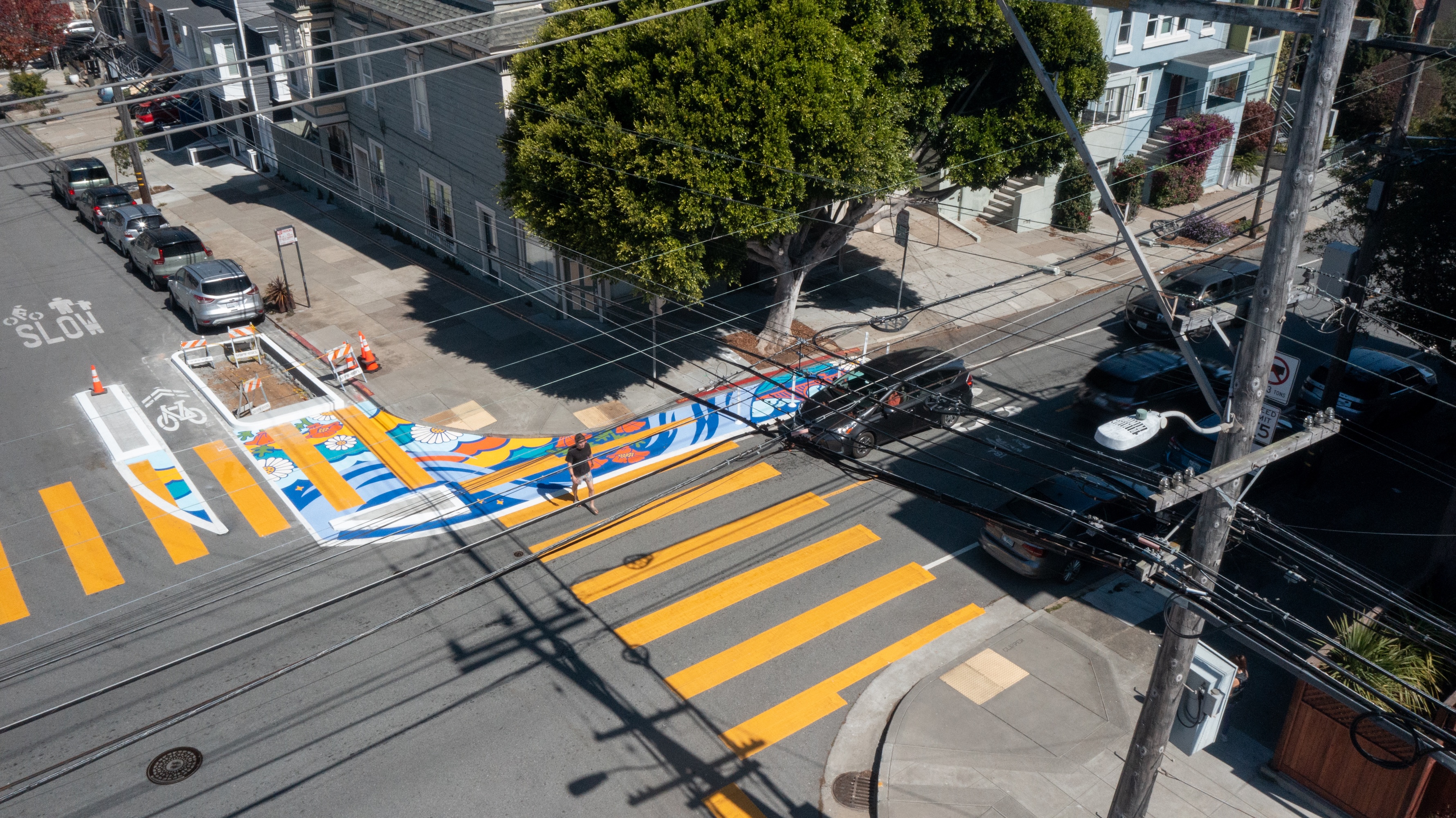
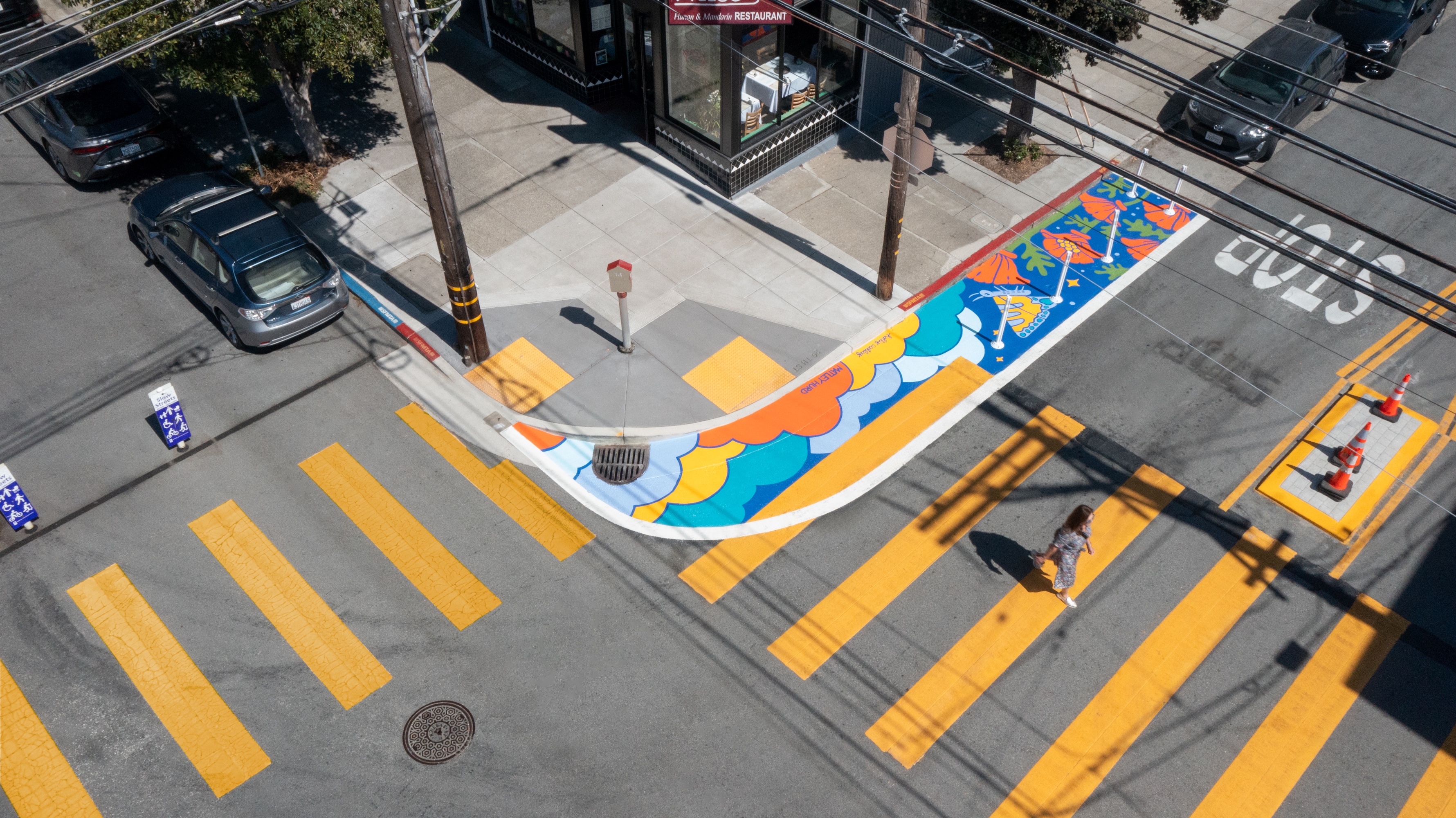
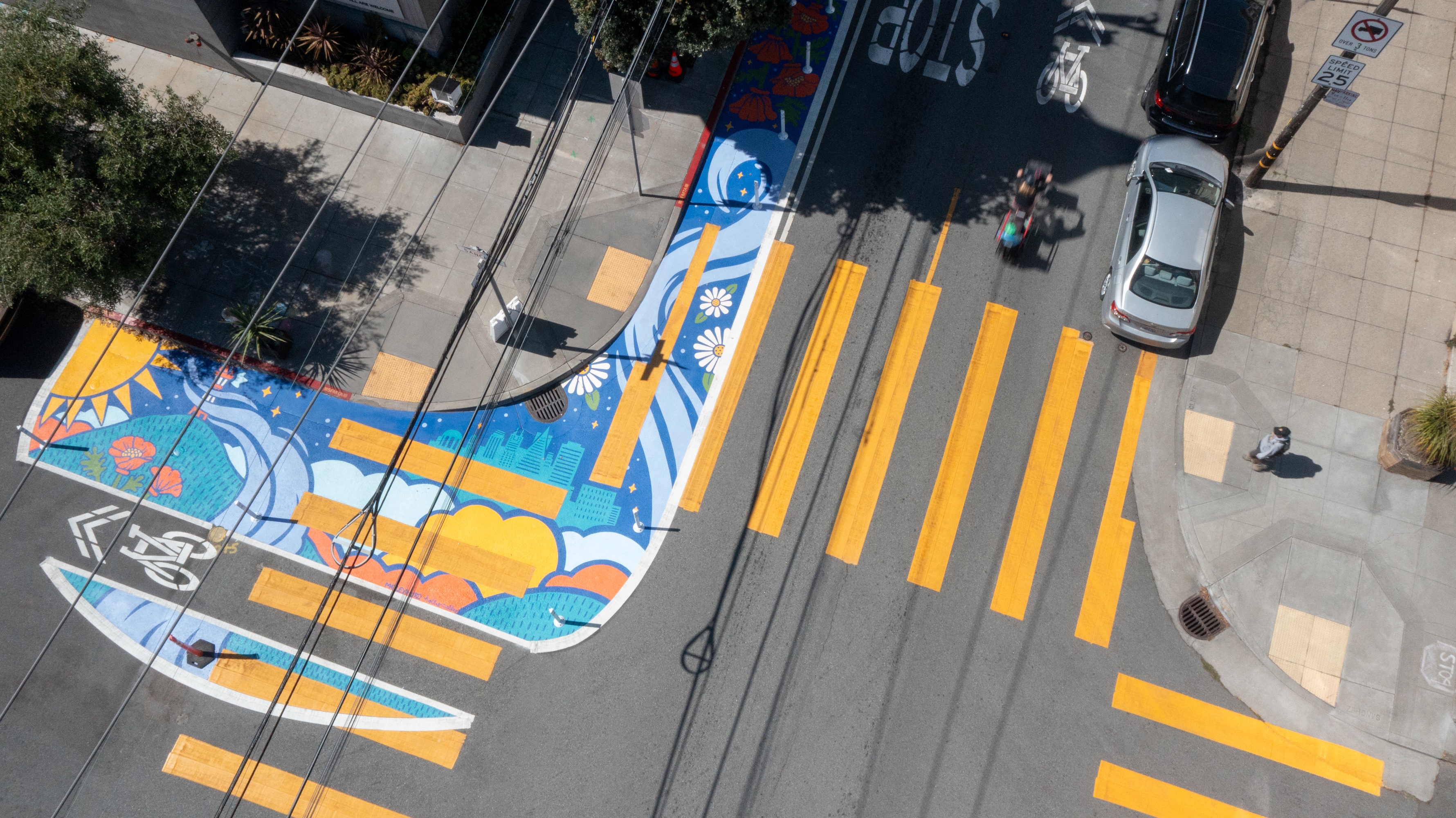
The Slow Sanchez mural was part of a larger effort to calm neighborhood vehicle traffic, provide safe travel for active modes, and uplift community identity through art. Murals were painted within the Painted Safety Zone, and were designed to highlight San Francisco culture. The SFMTA worked with community partners Friends of Slow Sanchez and Upper Noe Neighbors to engage the community and identify key safety needs. Once legislated and implemented, Friends of Slow Sanchez and Street Plans collaborated to identify local artists to design and implement a mural at two key intersections along the Sanchez, 29th and Clipper. These intersections have a combination of painted safety zones and traffic calming islands. Painted Safety Zones are painted areas that wrap around the intersection to slow vehicle turns and improve pedestrian visibility.
Integrating this project with a larger traffic calming effort in the neighborhood allowed the team to leverage strong partnerships that played to the strength of each entity – SFMTA was able to lead on the technical striping and geometric design to create a “canvas” for the artists. Artists were able to work quickly to create compelling works for the site without having to get involved in permitting or use materials budget for traffic control or roadway striping elements.
“The recent murals and traffic calming installed at Sanchez and Clipper make walkers and bikers much more visible to drivers while the murals giver everyone more to smile about!”
Chris Keene, San Francisco Resident and Activist
Use the slider to see the transformation


Press
Stylish Curbs, (Noe Valley Voice, October 2025 issue – page 7)


For inspiration and tips for the creation of art on roadways and public places, download the Bloomberg Associates Asphalt Art Guide which features successful plaza and roadway art activations around the world, as well as key steps for developing such projects.

Niagara Falls, New York
Slowing speeds with a swirl of local spirit
The Project
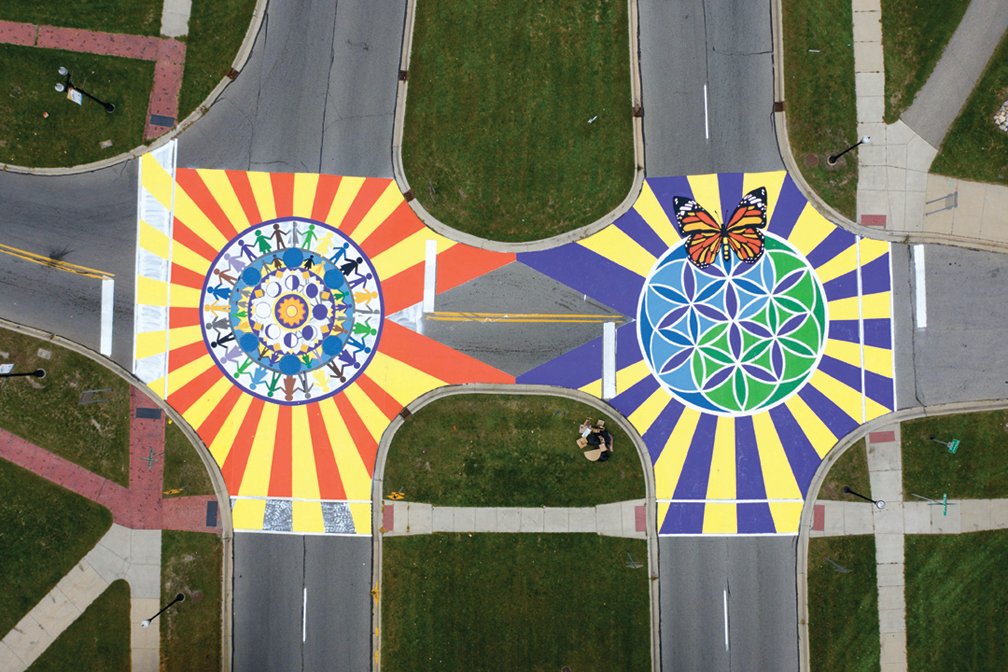
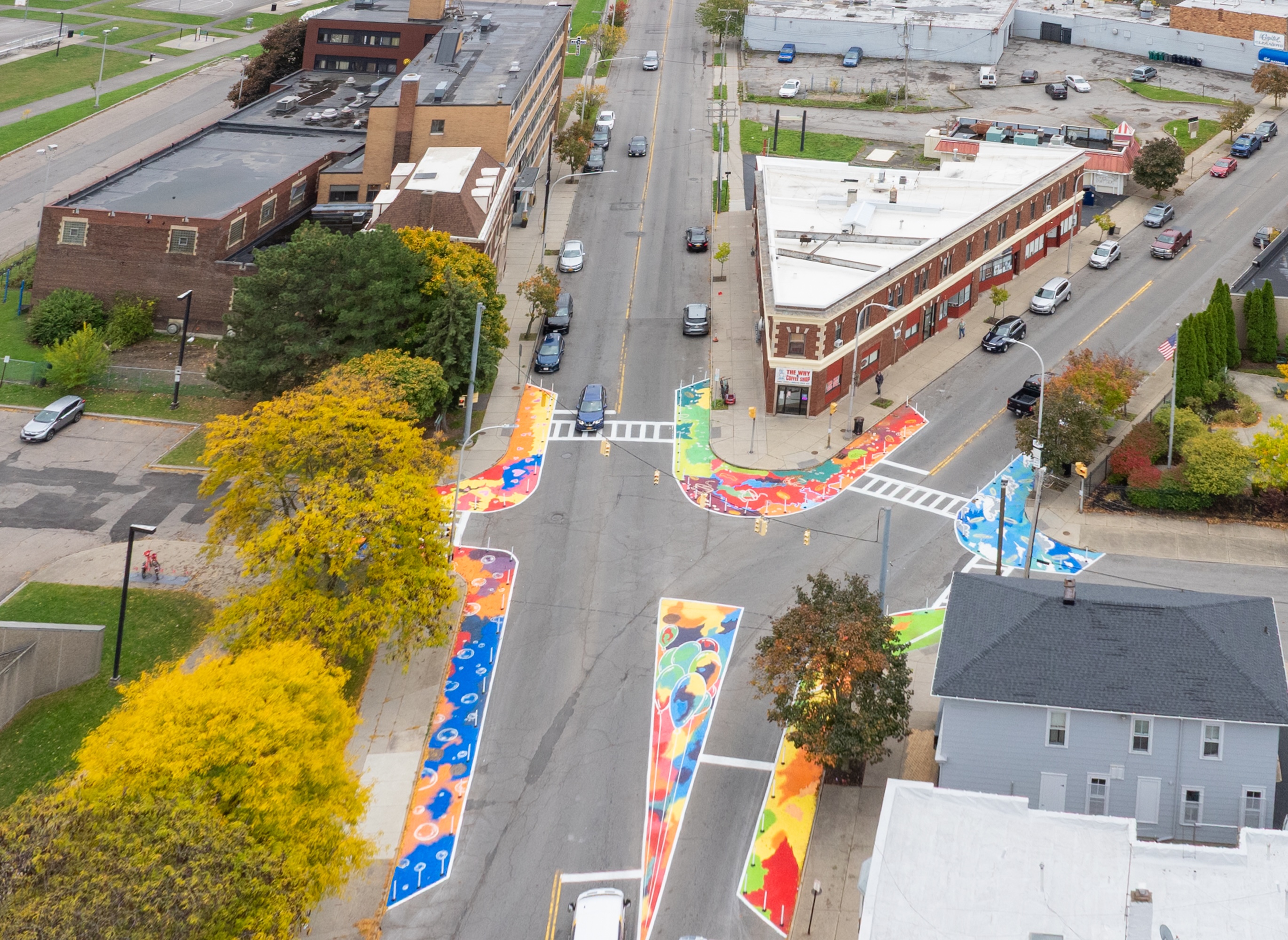
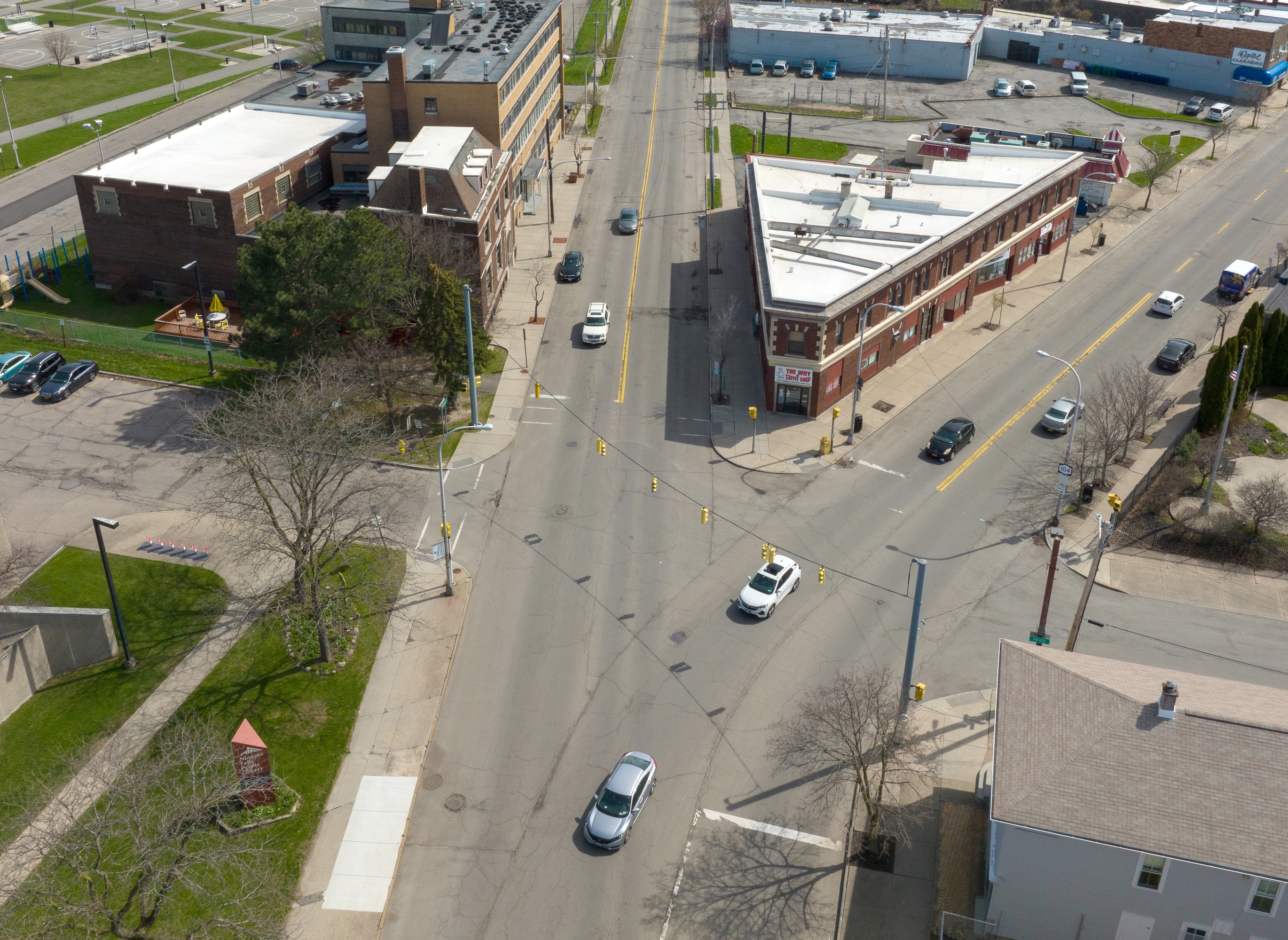
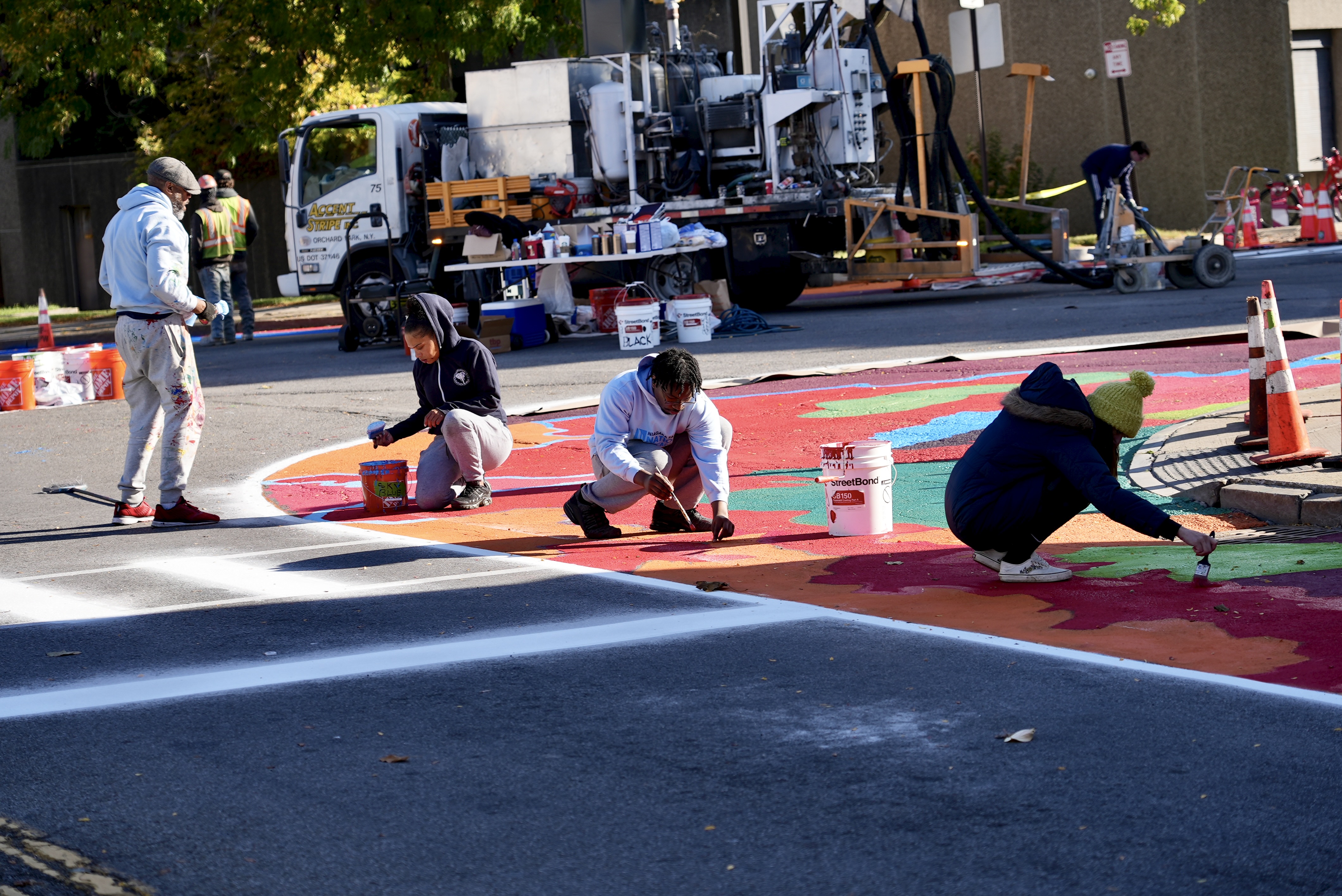
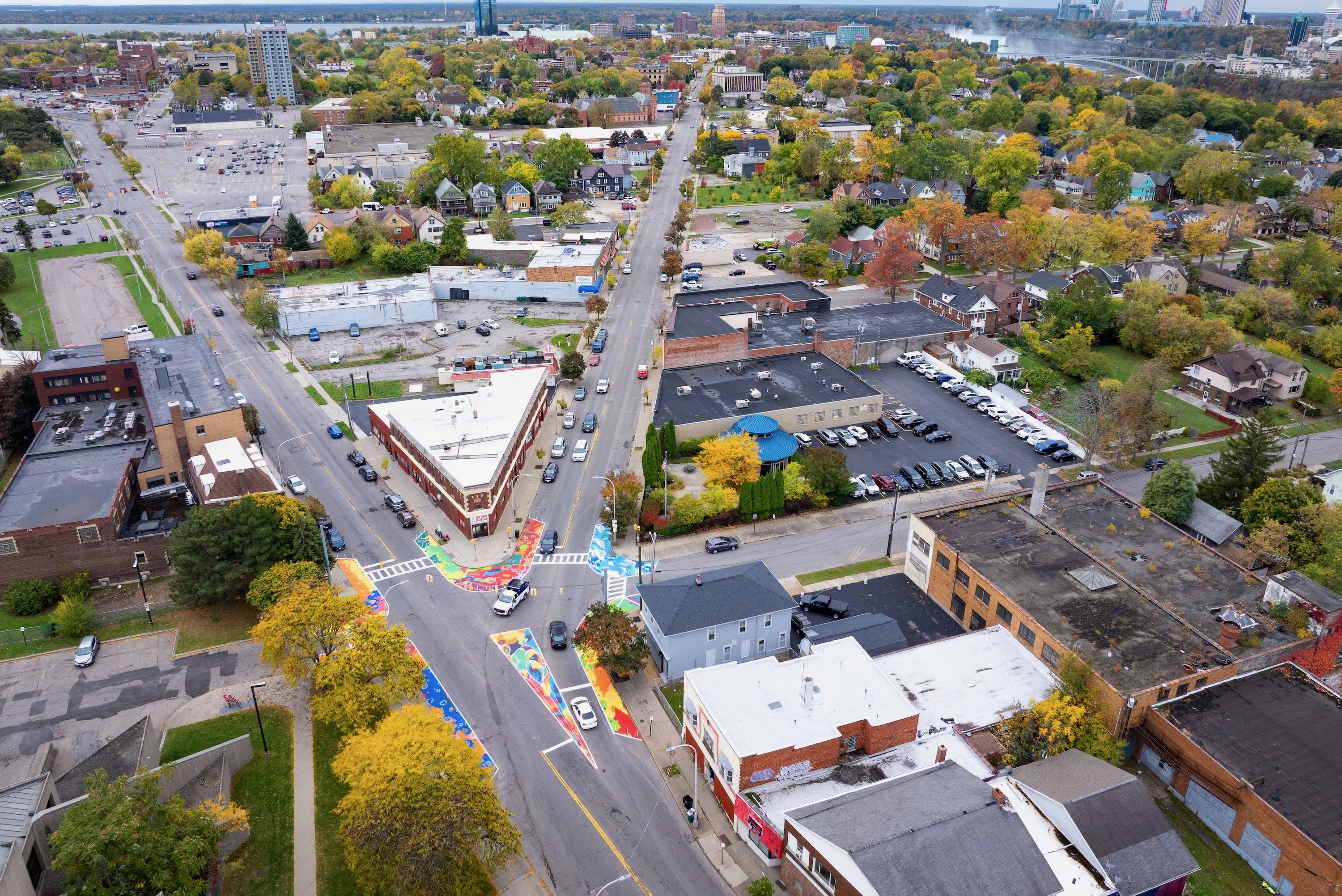
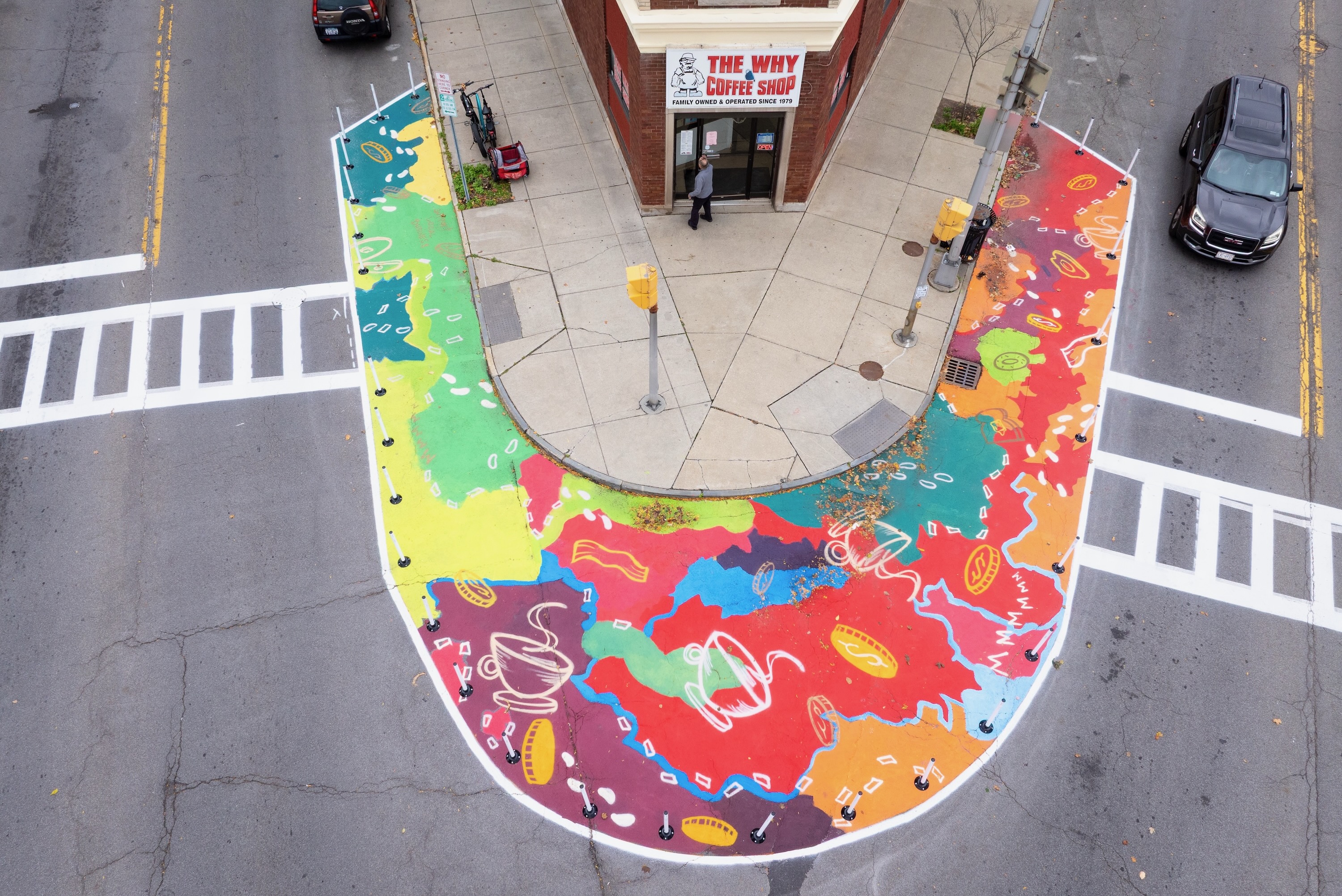
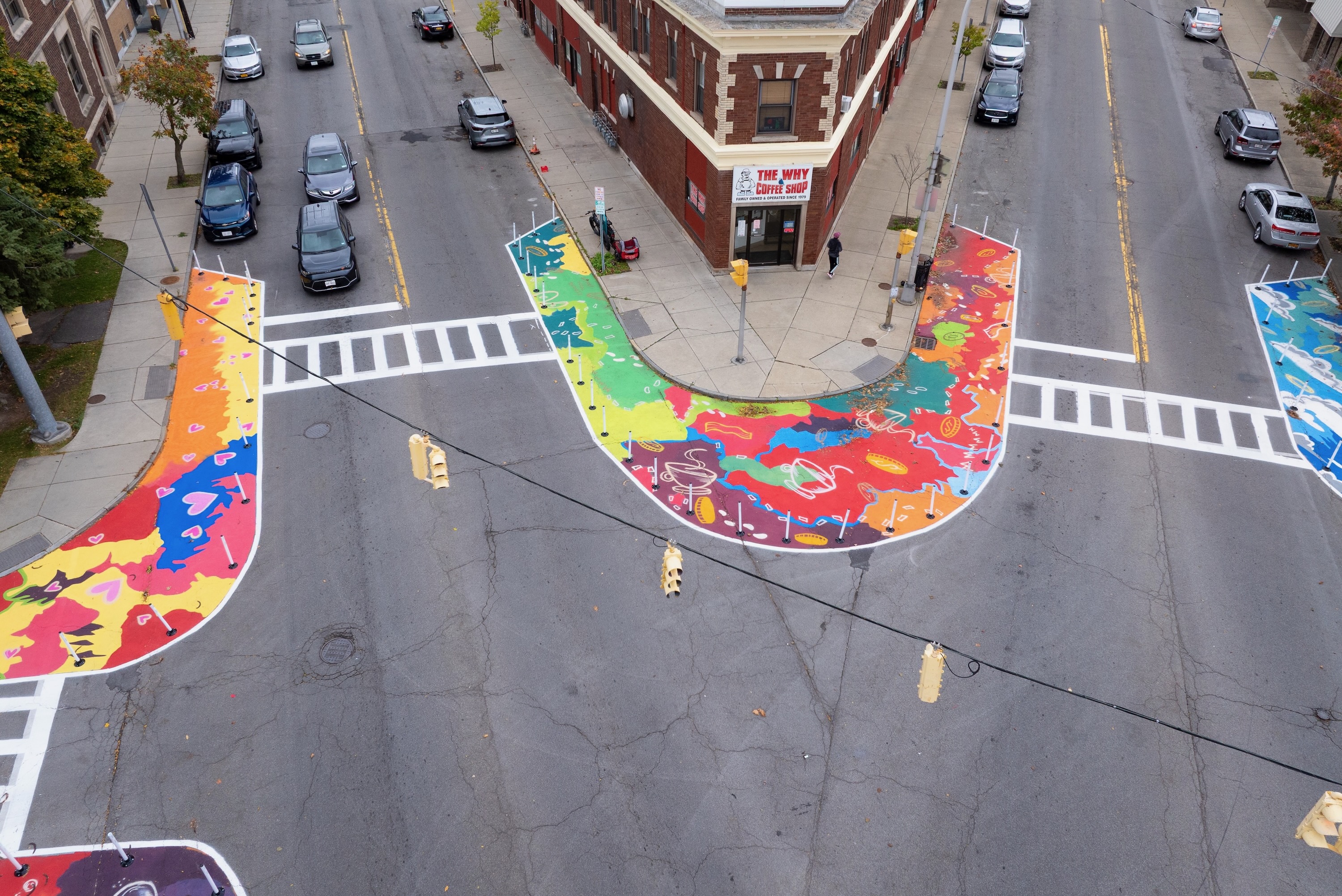
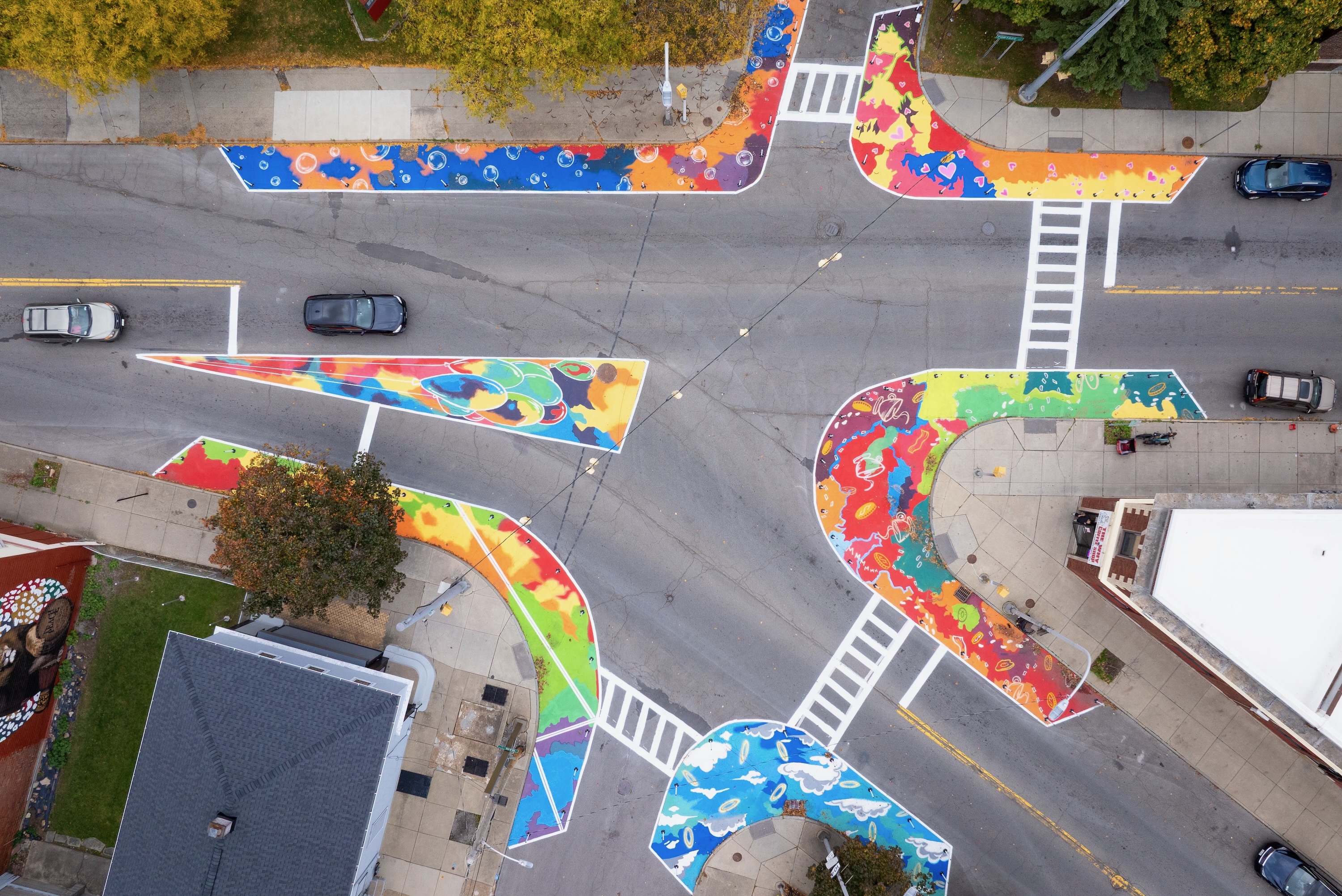
A major crossing point in the North End of Niagara Falls, a five-way intersection was reimagined to increase pedestrian safety, lower dangerous high speeds, and improve the overall wellbeing of the neighborhood. Vehicle lanes were narrowed, forcing traffic to slow as they approached the intersection. Crosswalks were installed across four lanes, where before there were no crosswalks, with shortened crossing distances to improved pedestrian safety.
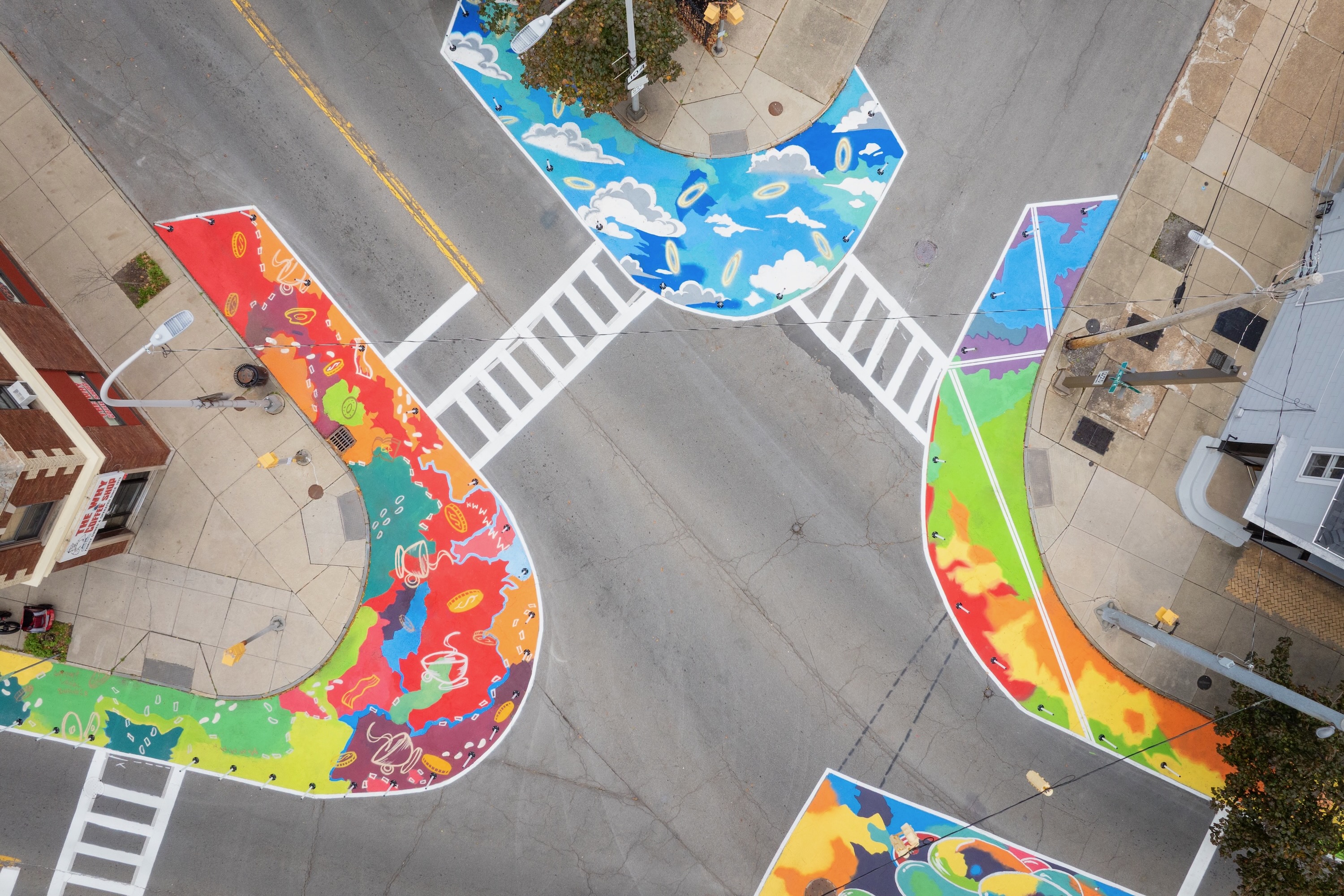
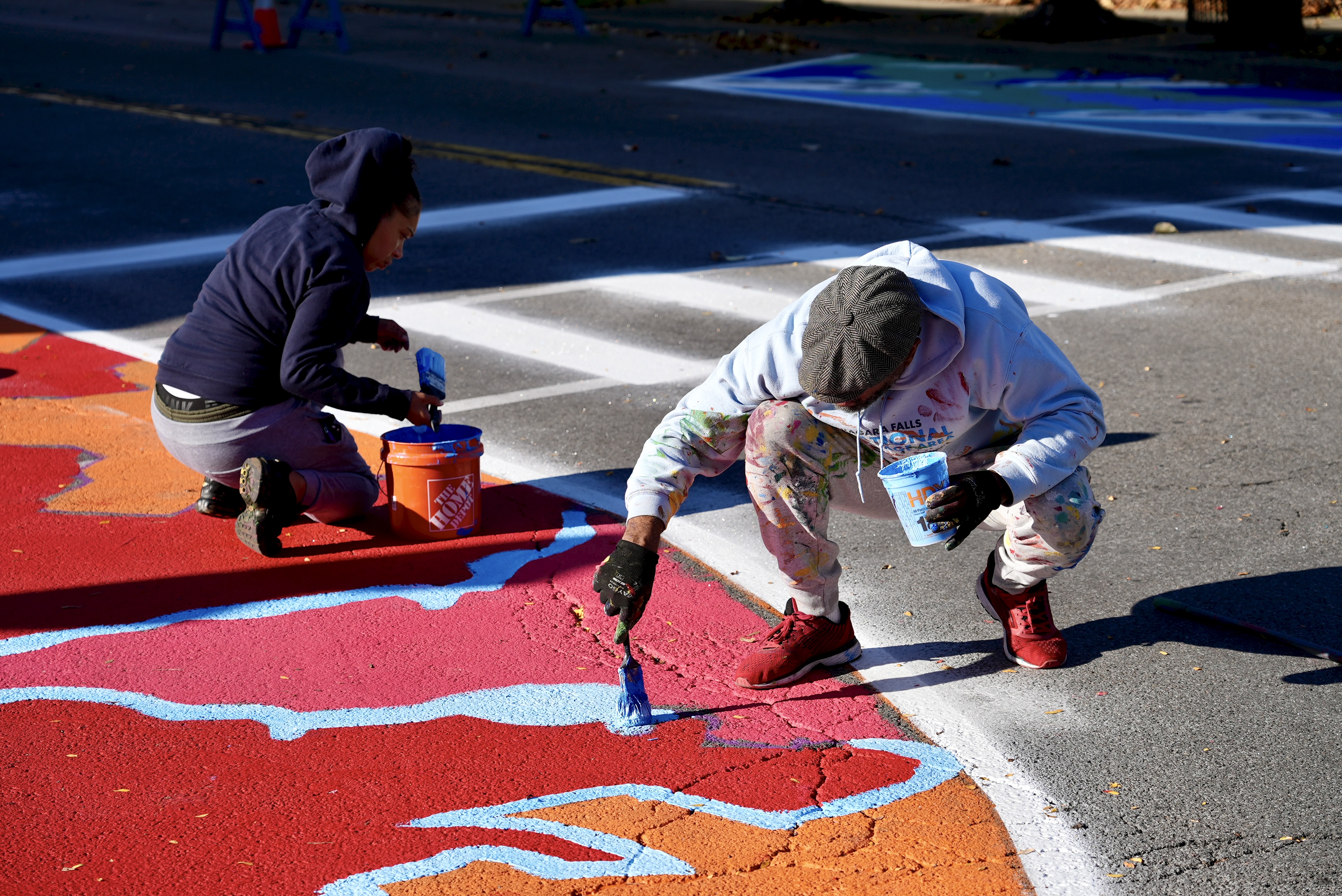
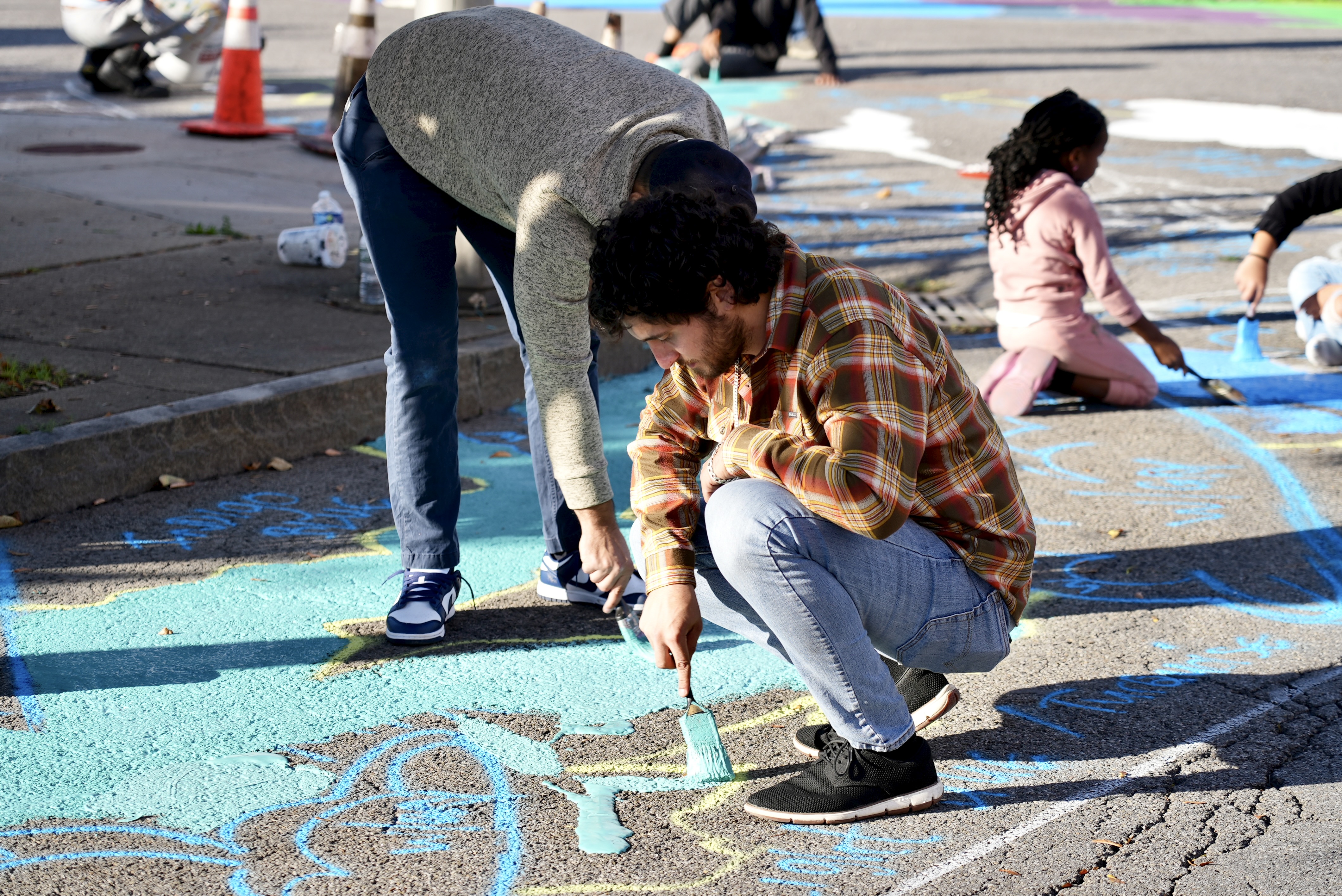
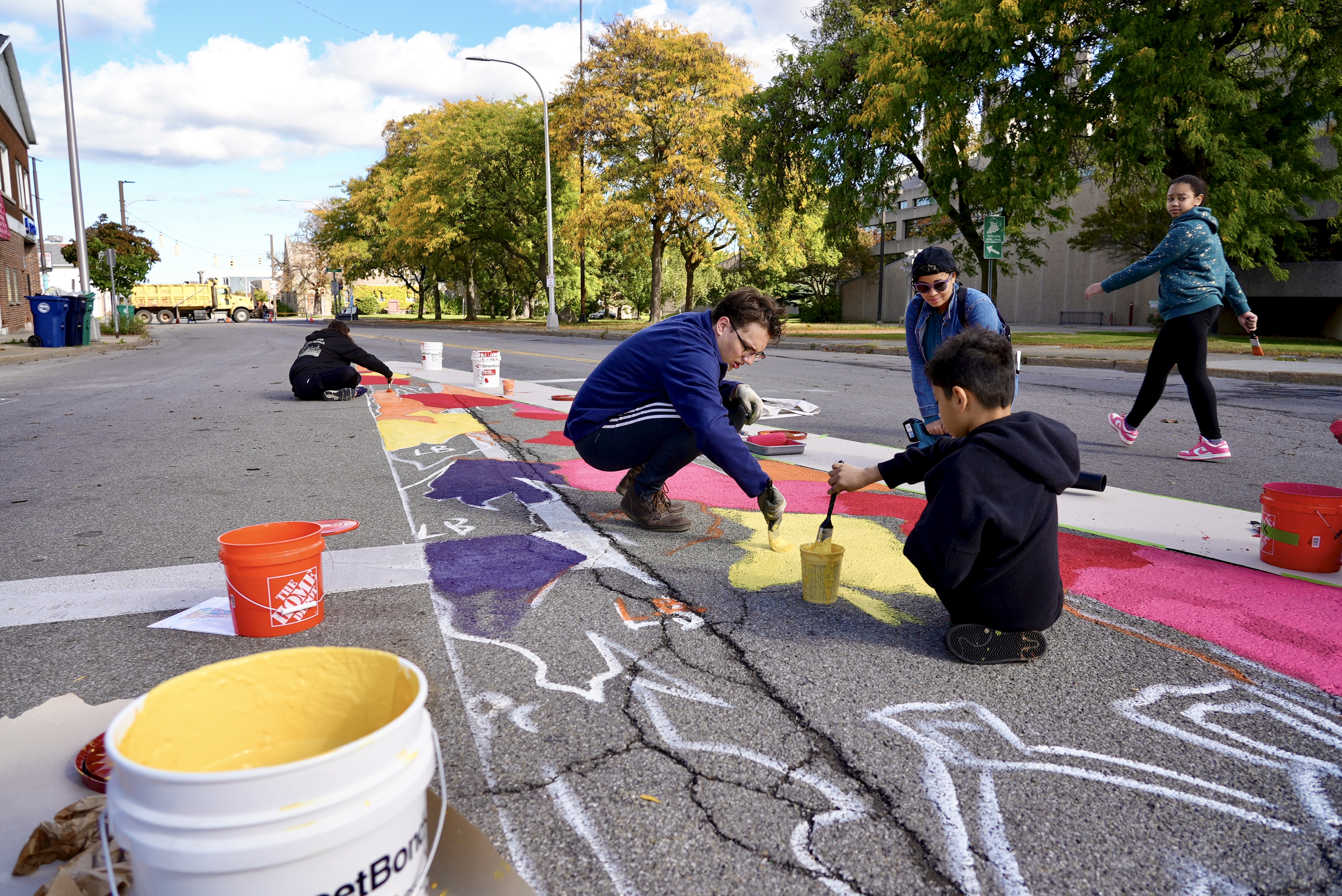
The curb extensions and center roadway mural, totaling just over 4,500 square feet and defined by plastic traffic bollards, were designed and painted under the direction of Tyshaun Tyson, the Artist Development Manager for the Niagara Falls National Heritage Area, with the help of 10 volunteers and 8 National Heritage Area staff members over the course of three days. The design was inspired by movement and the energy found in everyday urban spaces, and merges creativity with the natural flow of the neighborhood.
Best Practice Highlight: Building a sense of community ownership
The Niagara Falls National Heritage Area is an organization deeply rooted in the local community, and as such, it was important that the community take part in creating the artwork. Students from nearby Abate Elementary assisted with the installation on all three days, and nearby local business owners assisted each evening. By involving the community members who would utilize this intersection the most, they became invested in the outcome of the project and in further creating a safer and more connected neighborhood.
- 45%-53% decrease in average vehicle speed
- Recorded high speeds through intersection dropped an average of 10
miles per hour - 12% increase in pedestrian foot traffic
“We are thankful for this opportunity to collaborate with Bloomberg Philanthropies to bring such an important project to our city. As the first of its kind in our municipality, we are proud to set a new standard of pedestrian-centered traffic safety for our citizenry.”
Saladin Allah, Public Projects Coordinator
Use the slider to see the transformation
Press
‘A Big Improvement’: Niagara Falls intersection gets colorful makeover to improve traffic safety, (WKBW Channel 7, October 8, 2025)
Asphalt Art project coming to busy Niagara Falls intersection, (WGRZ Channel 2, October 1, 2025)
For inspiration and tips for the creation of art on roadways and public places, download the Bloomberg Associates Asphalt Art Guide which features successful plaza and roadway art activations around the world, as well as key steps for developing such projects.

Detroit, Michigan
Carving out calm at a chaotic intersection
The Project
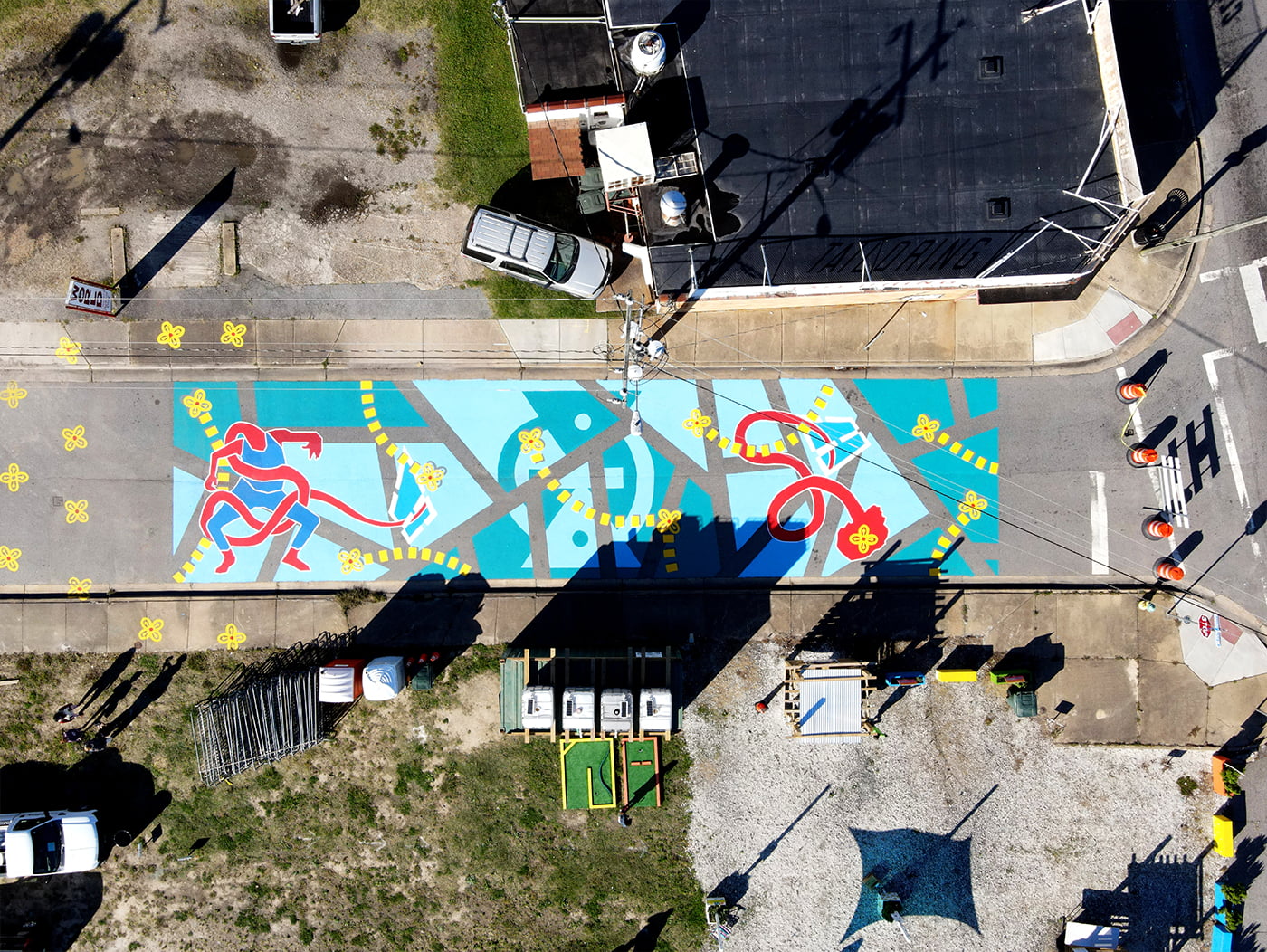
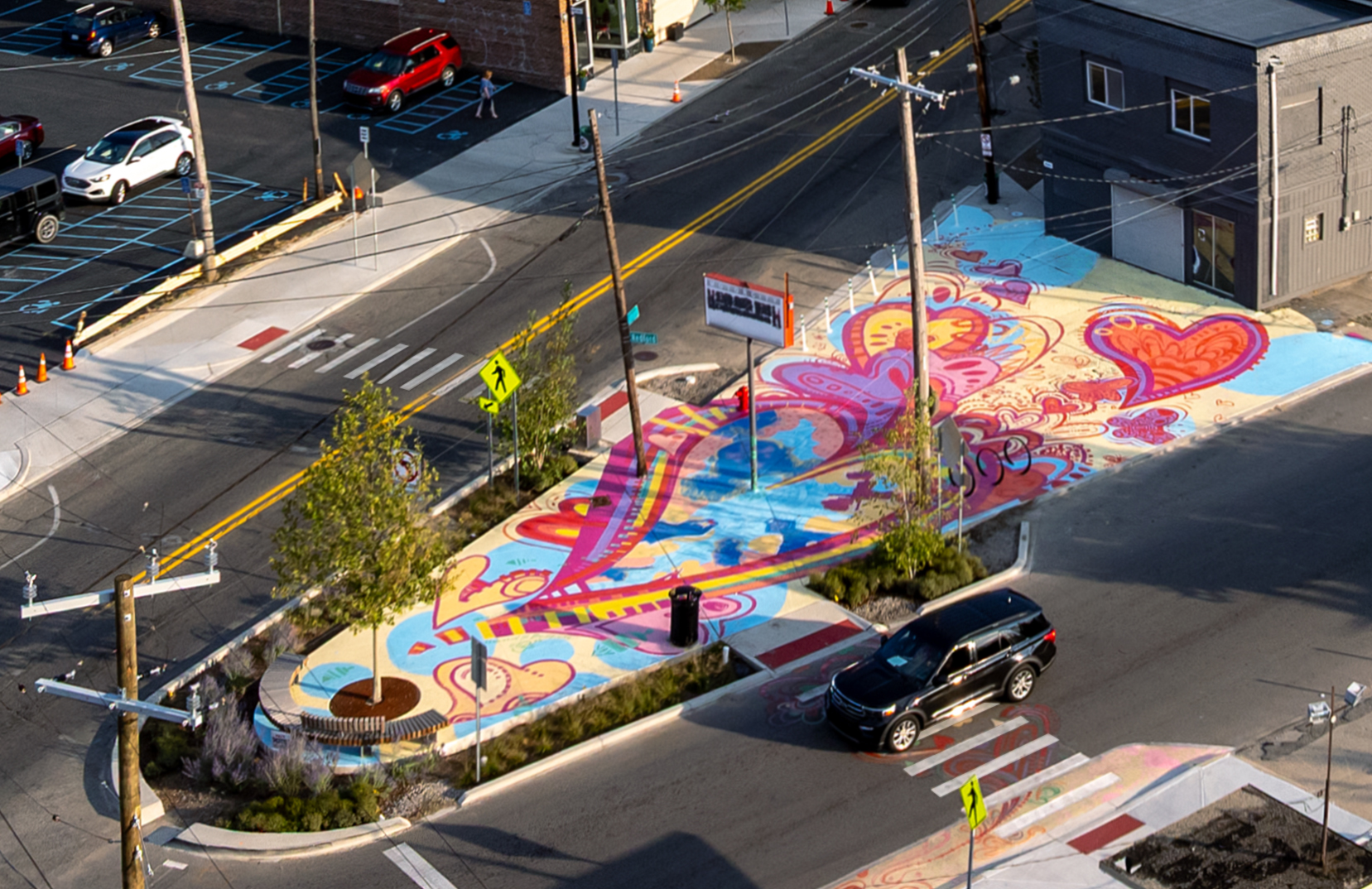
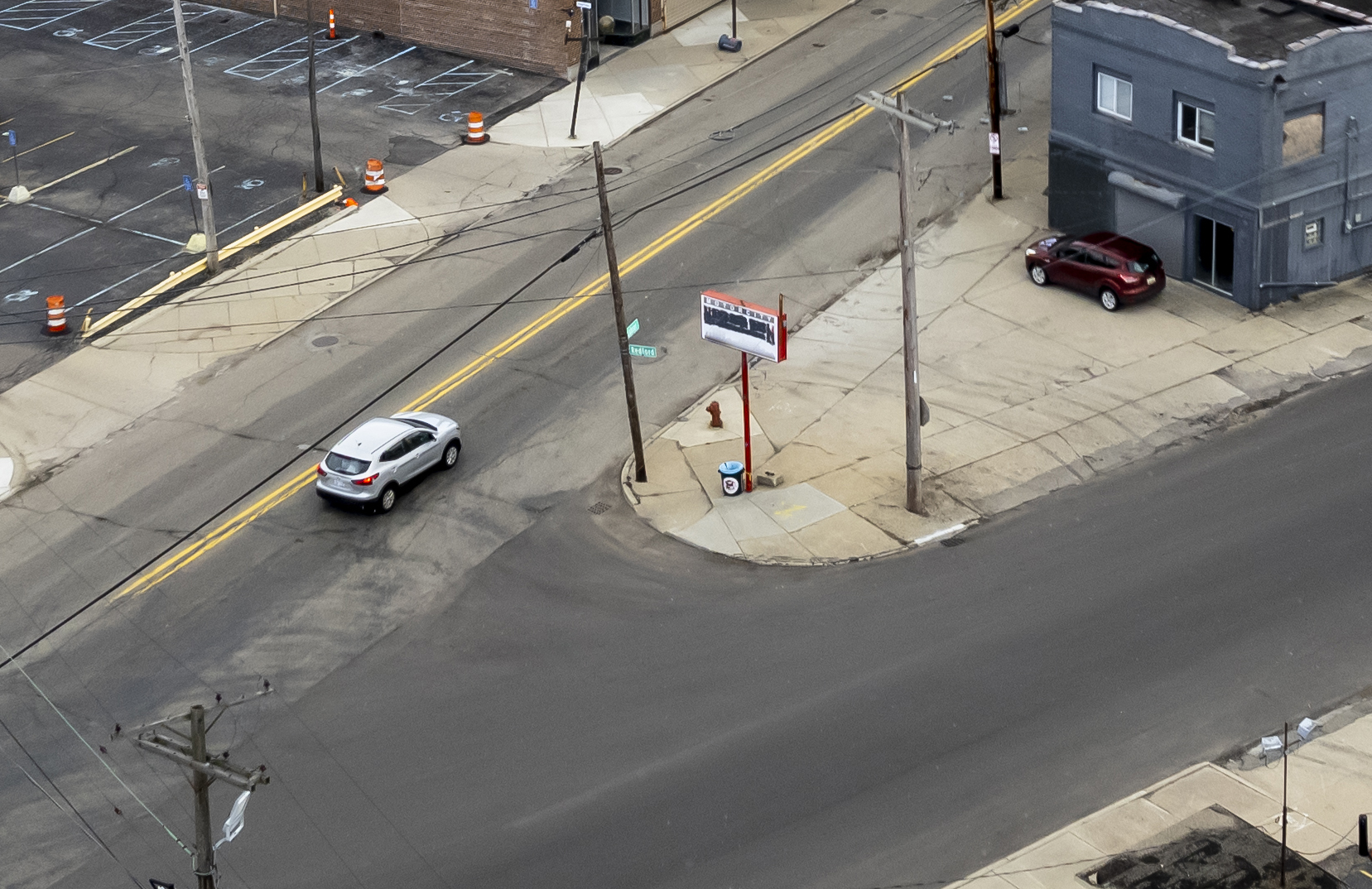
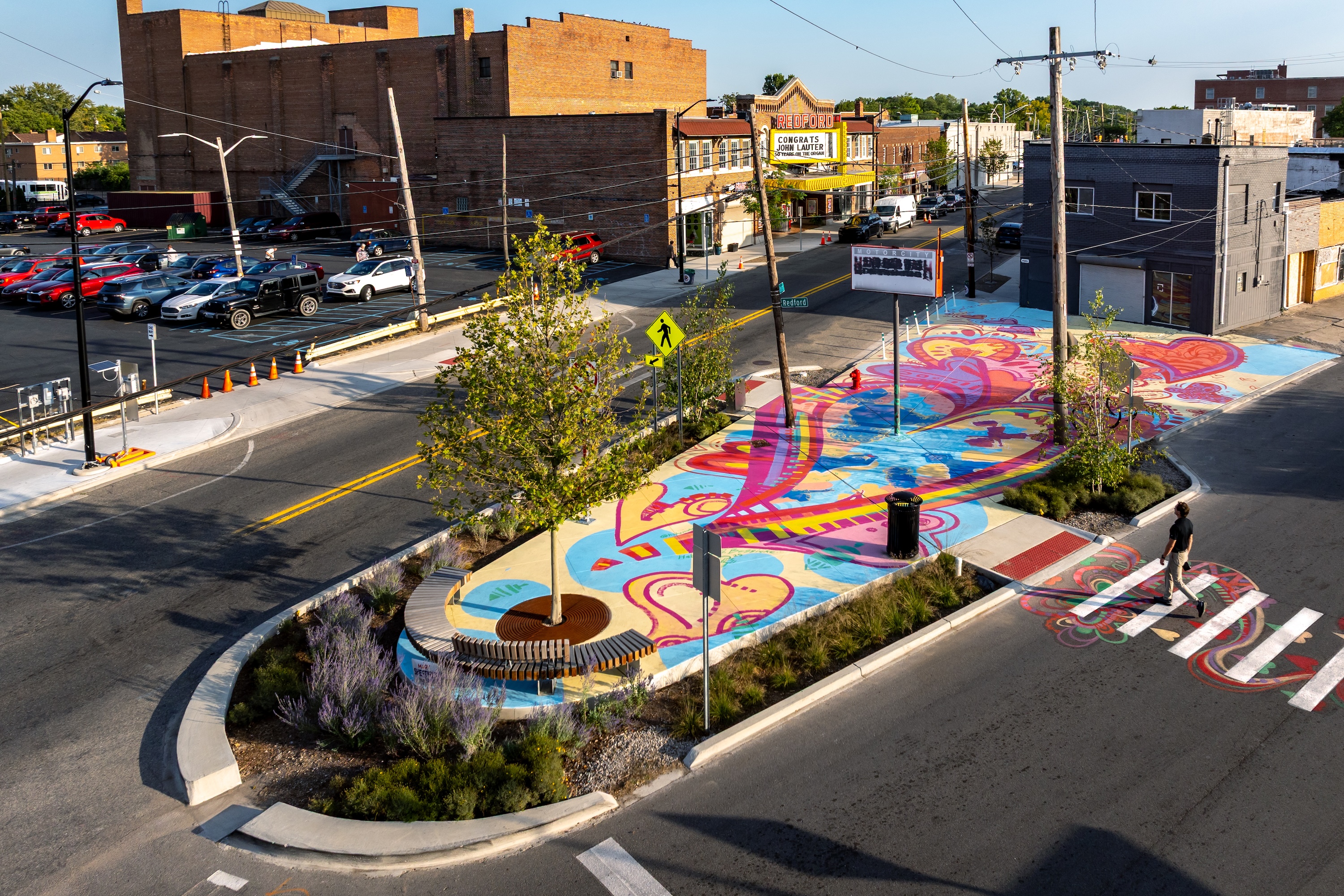
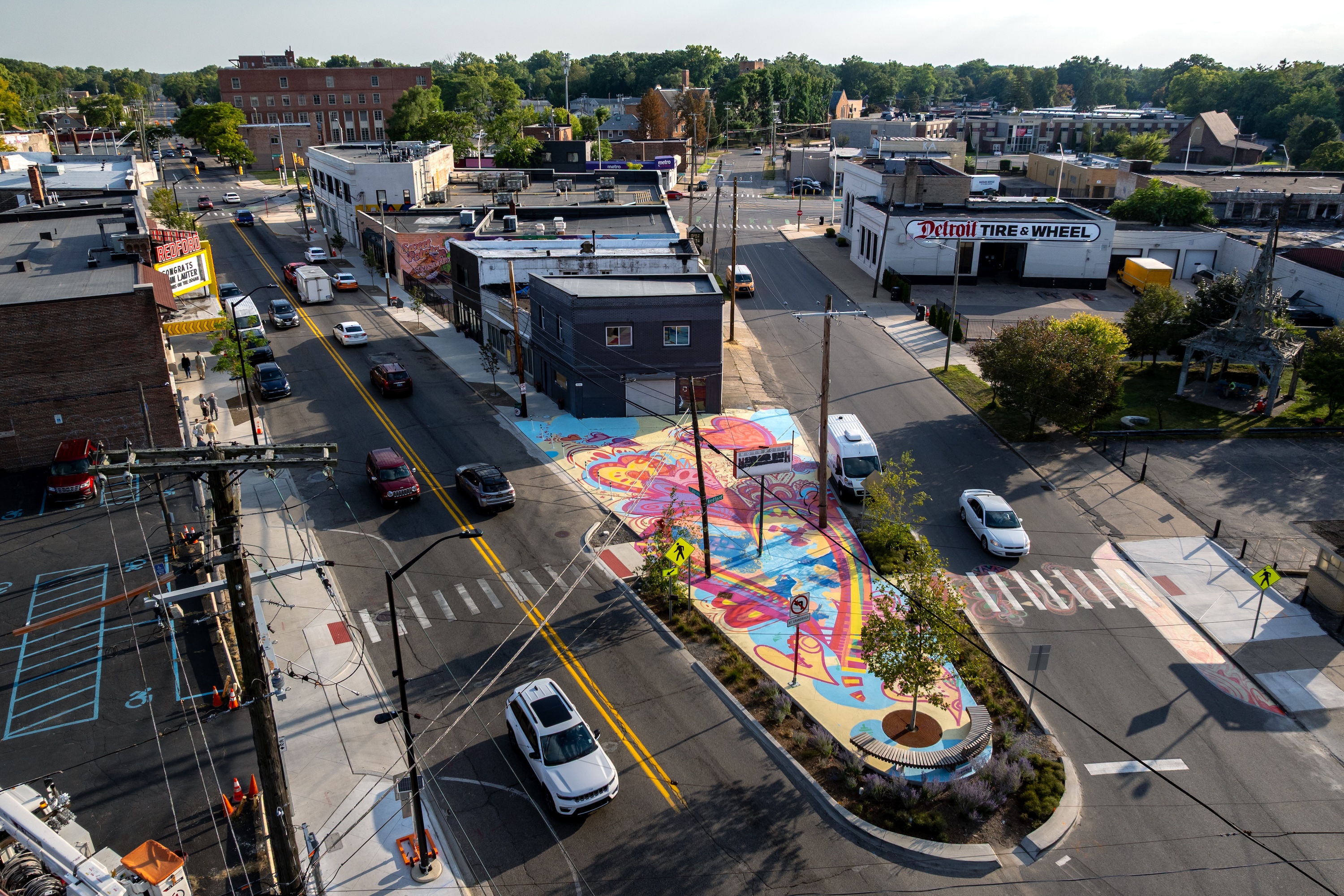
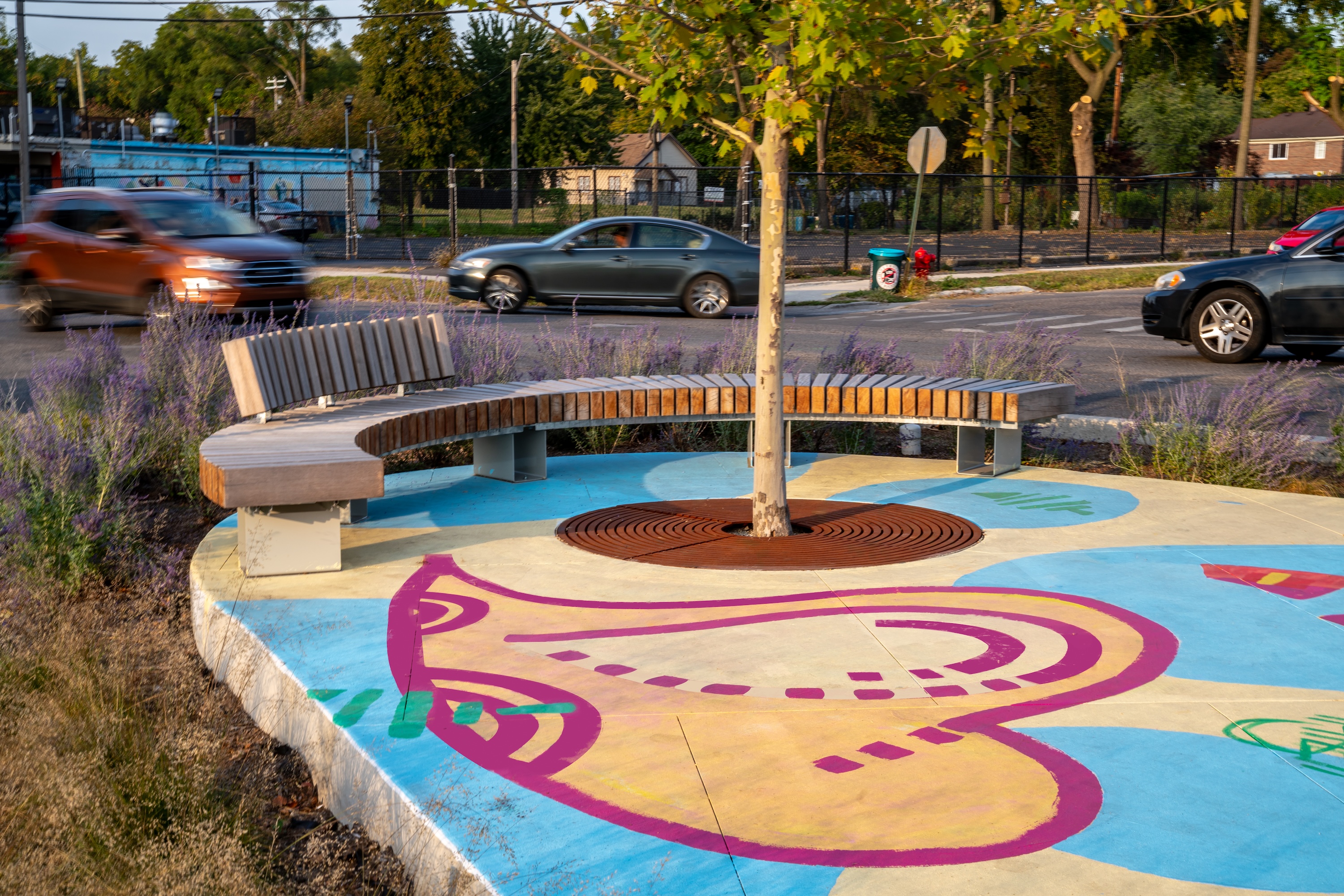
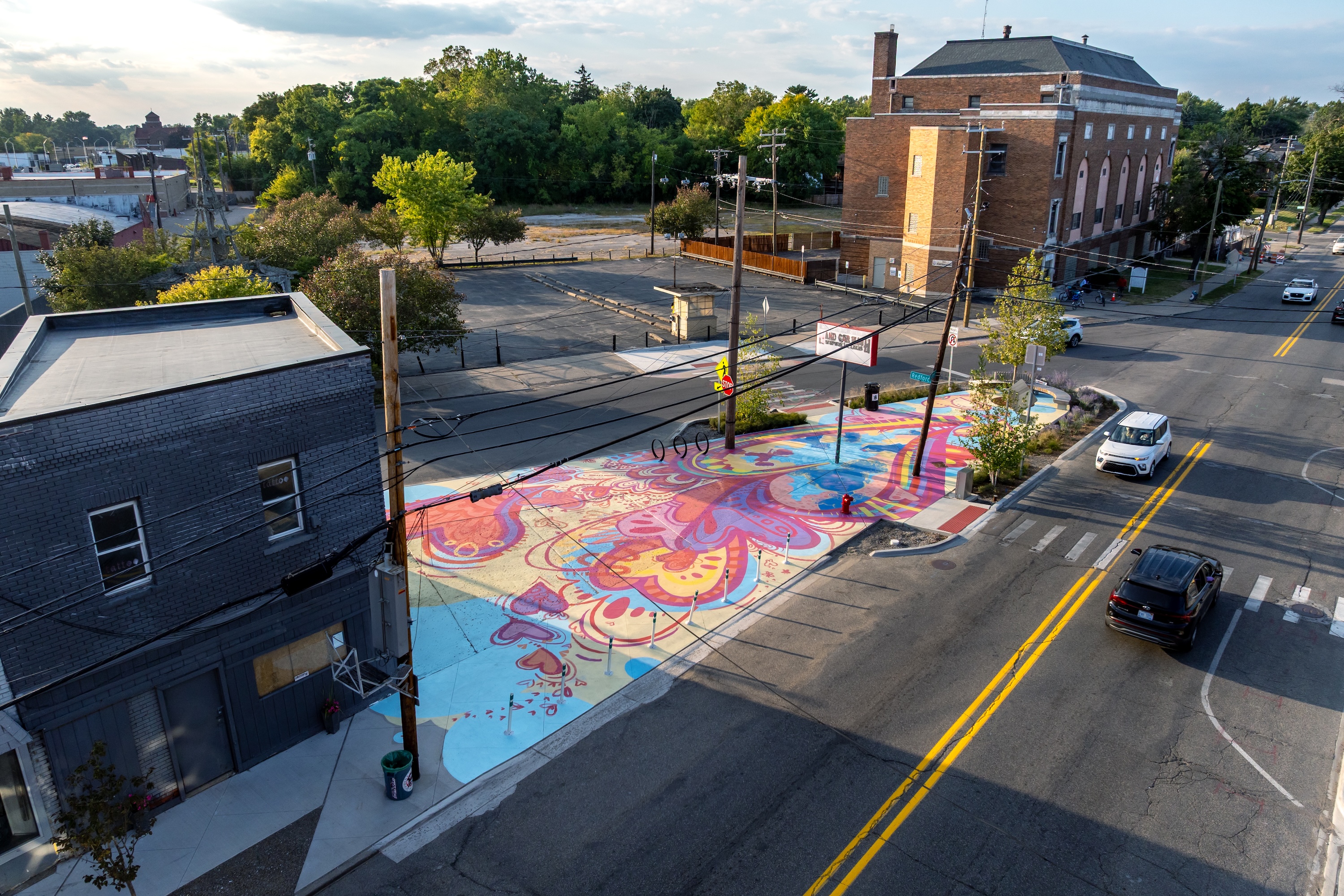
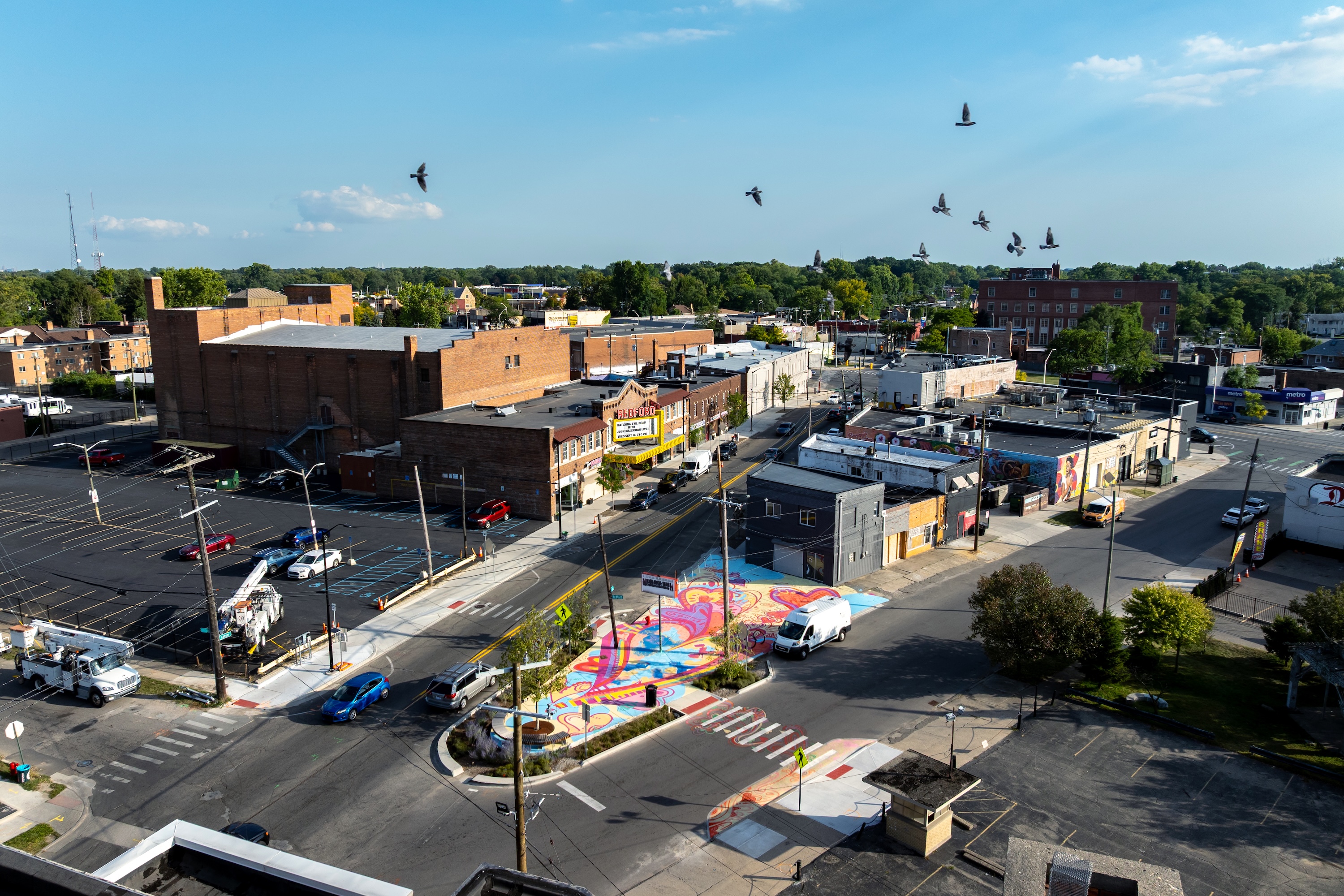
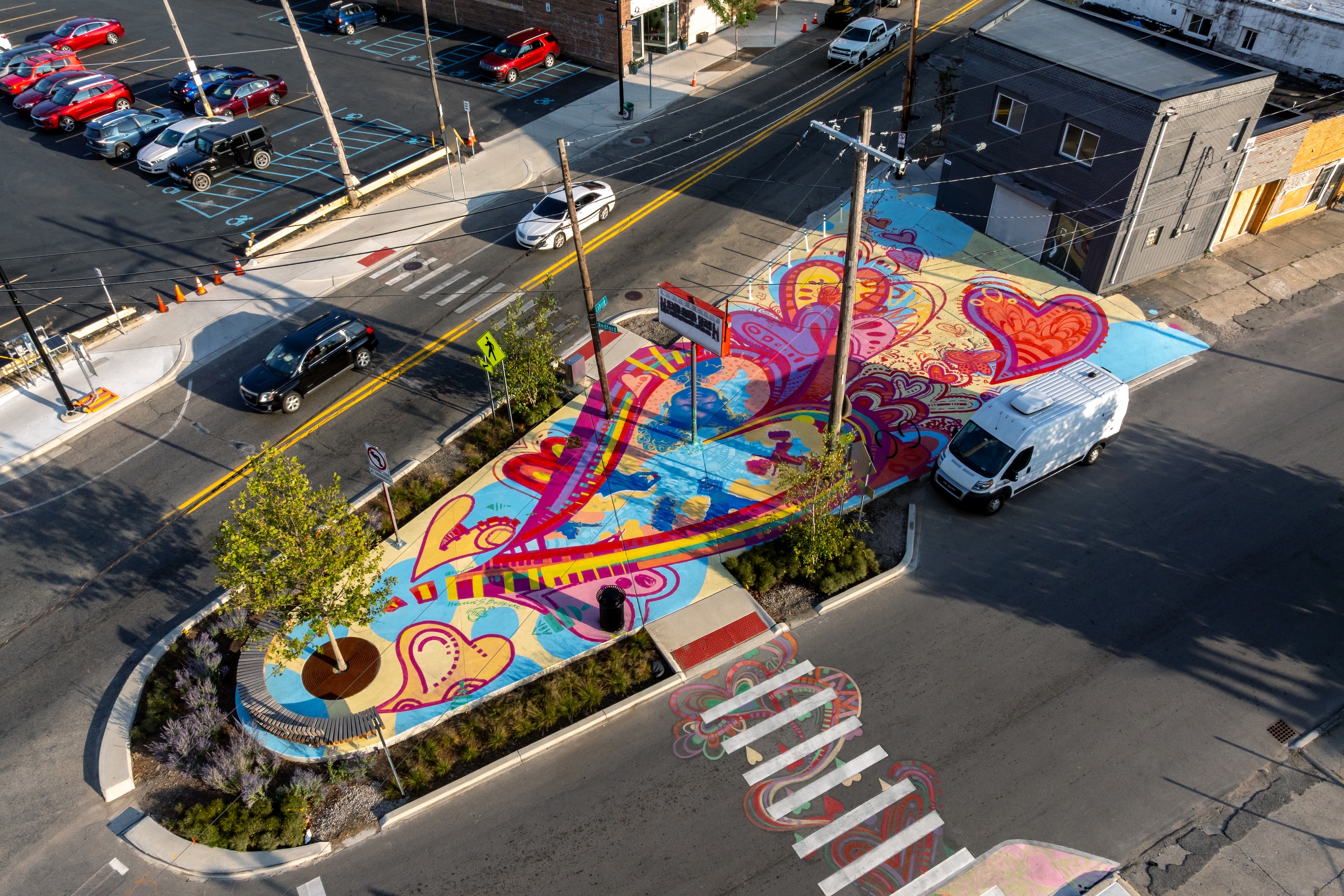
The Leading with Love mural at the Lahser Triangle in Northwest Detroit is the final touch on a community-based safety and walkability project years in the making. With the Redford Theater, the Artist Village, Detroit Blight Busters and long-time businesses like Sweet Potato Sensations, the Old Redford commercial district is a hub for community conversations, arts and resilience. At its heart, the angled intersection of Redford St with Lahser Rd, high vehicle counts and excessive speeding created an unsafe pedestrian environment in an otherwise walkable district. In 2020, during a local public art planning process, residents prioritized this intersection for a mural plaza that would create new pedestrian space, shorten crossing distances and slow car traffic. Winning an Asphalt Art Initiative grant allowed the City to secure additional funds to install a grade-separated plaza and landscaping in advance of the final mural. Per the Old Redford Public Art plan, an artist advisory group led by the Old Redford Business Association selected the artist and design. The project is a tribute to the power of community building when leading with love.
- 40% reduction in crossing distance
- 2 new crosswalks
- 1,700 square feet of roadway reclaimed for pedestrians
“The streetscape is now transformed into a place where everyone can gather, fostering a strong sense of togetherness and inclusivity.”
Augusta Morrison, Program Director, Sidewalk Detroit
Use the slider to see the transformation
Press
Town Hall Engages Old Redford Residents to Have Voice in Public Art, (Model D, July 2020)
For inspiration and tips for the creation of art on roadways and public places, download the Bloomberg Associates Asphalt Art Guide which features successful plaza and roadway art activations around the world, as well as key steps for developing such projects.

Mocochá, Mexico
Painting safe passages through the patterns of Yucatán
The Project
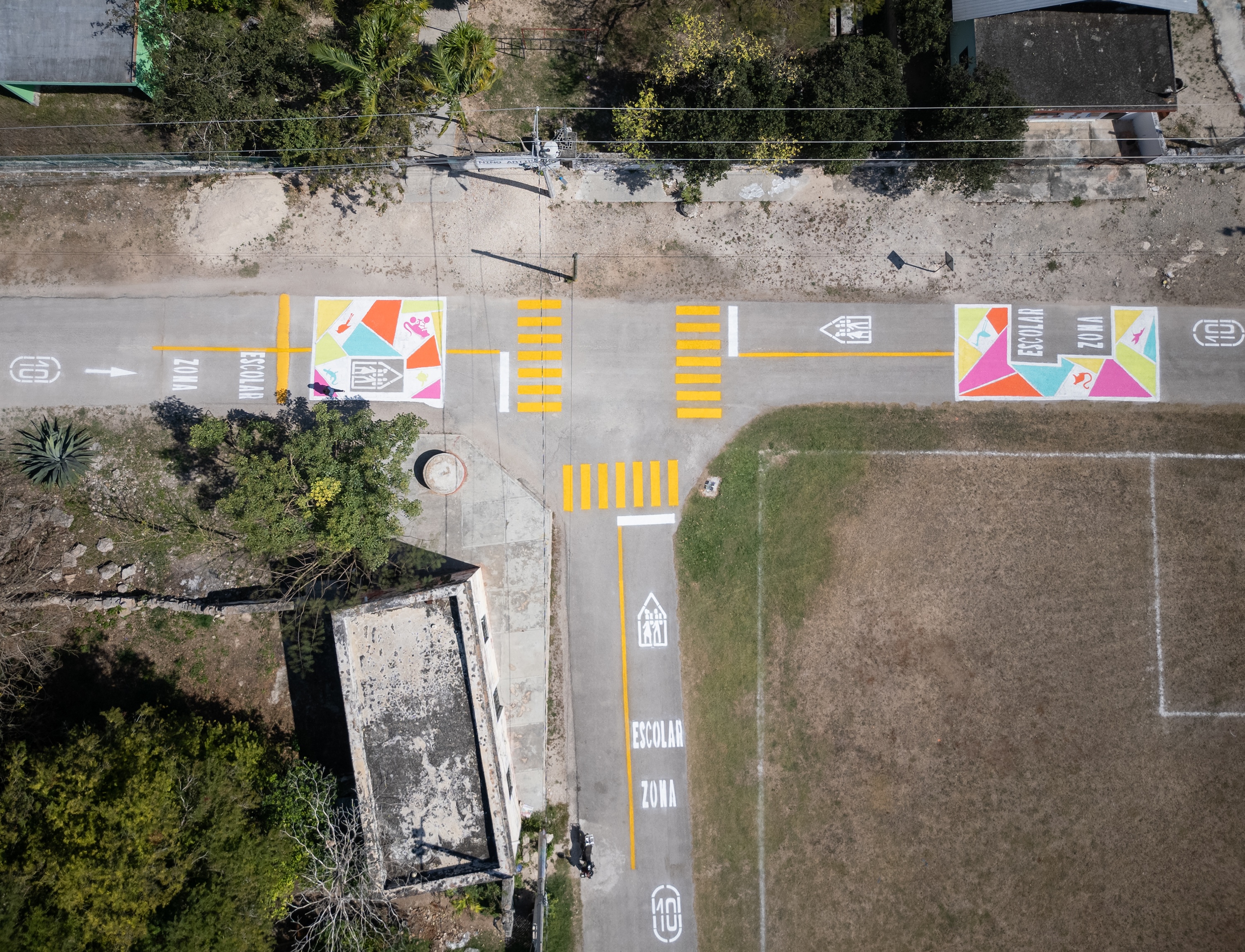
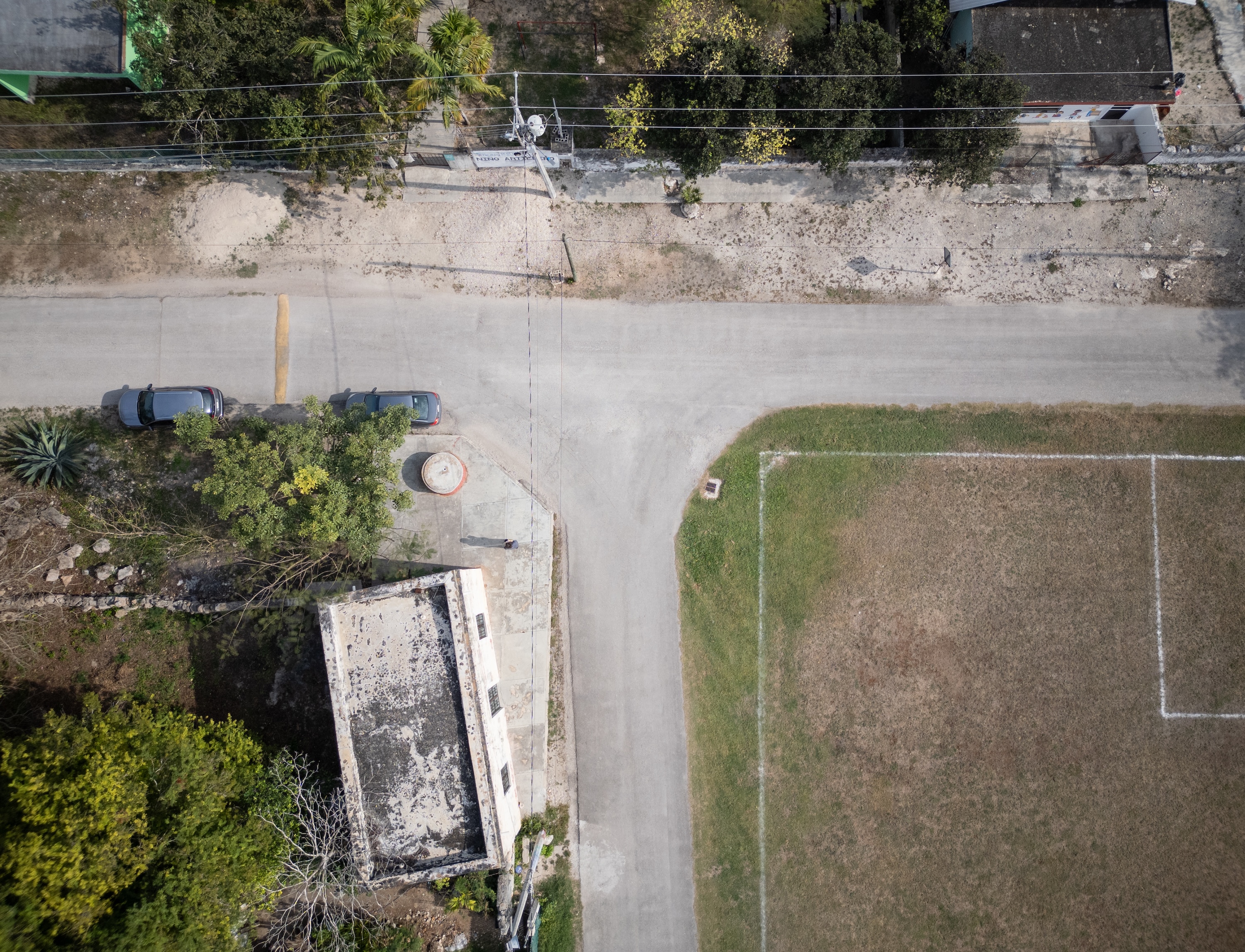
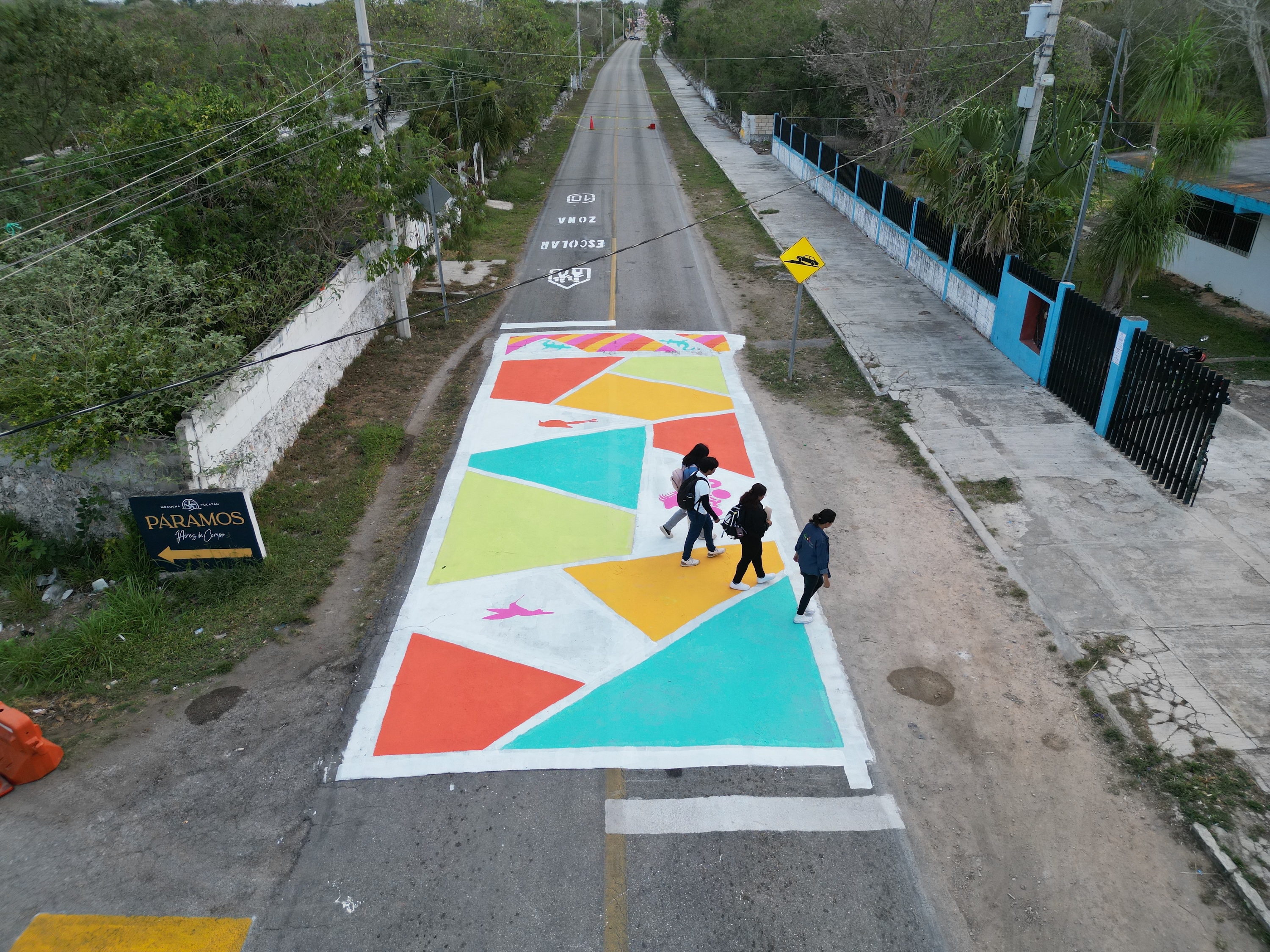
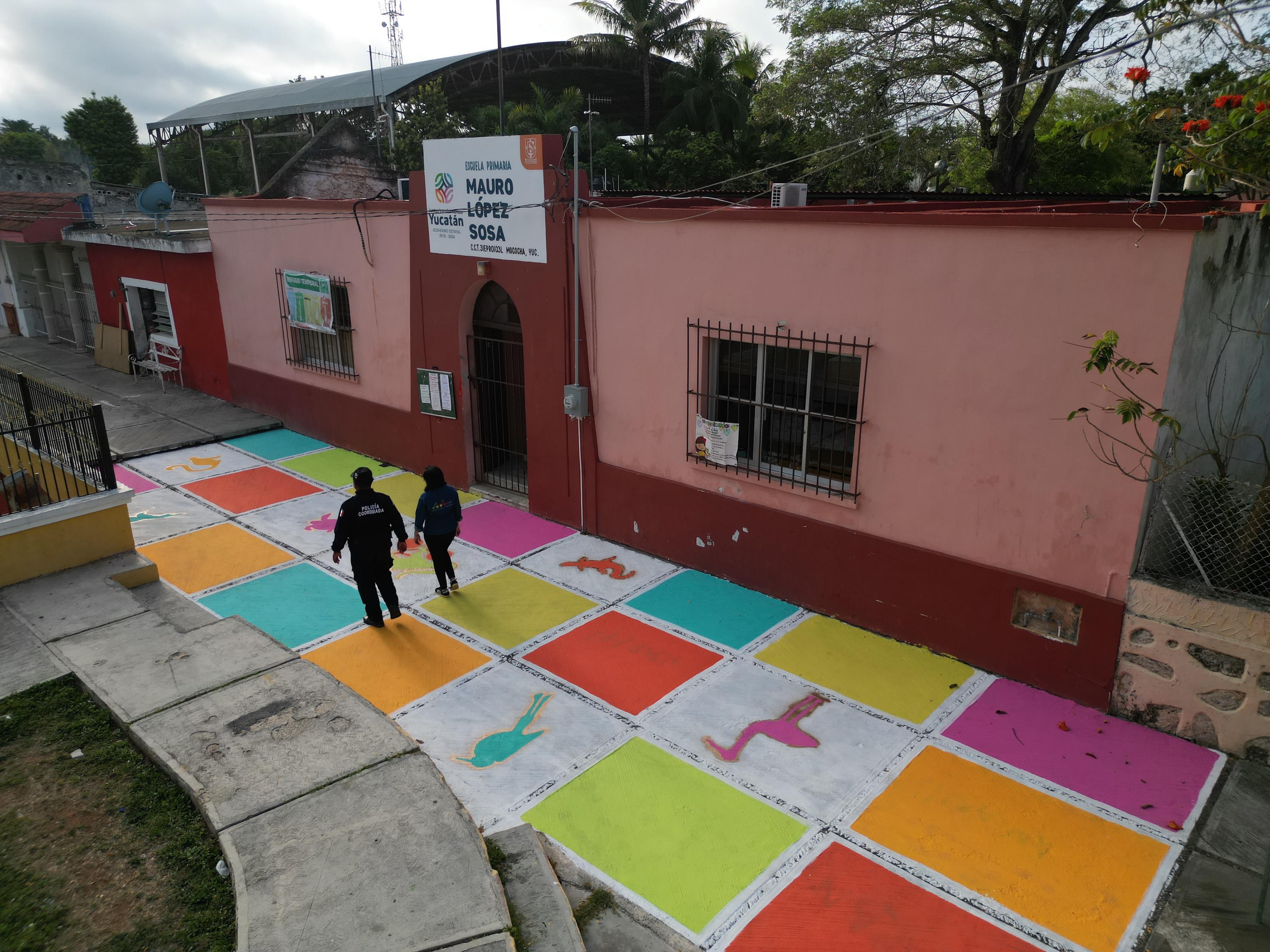
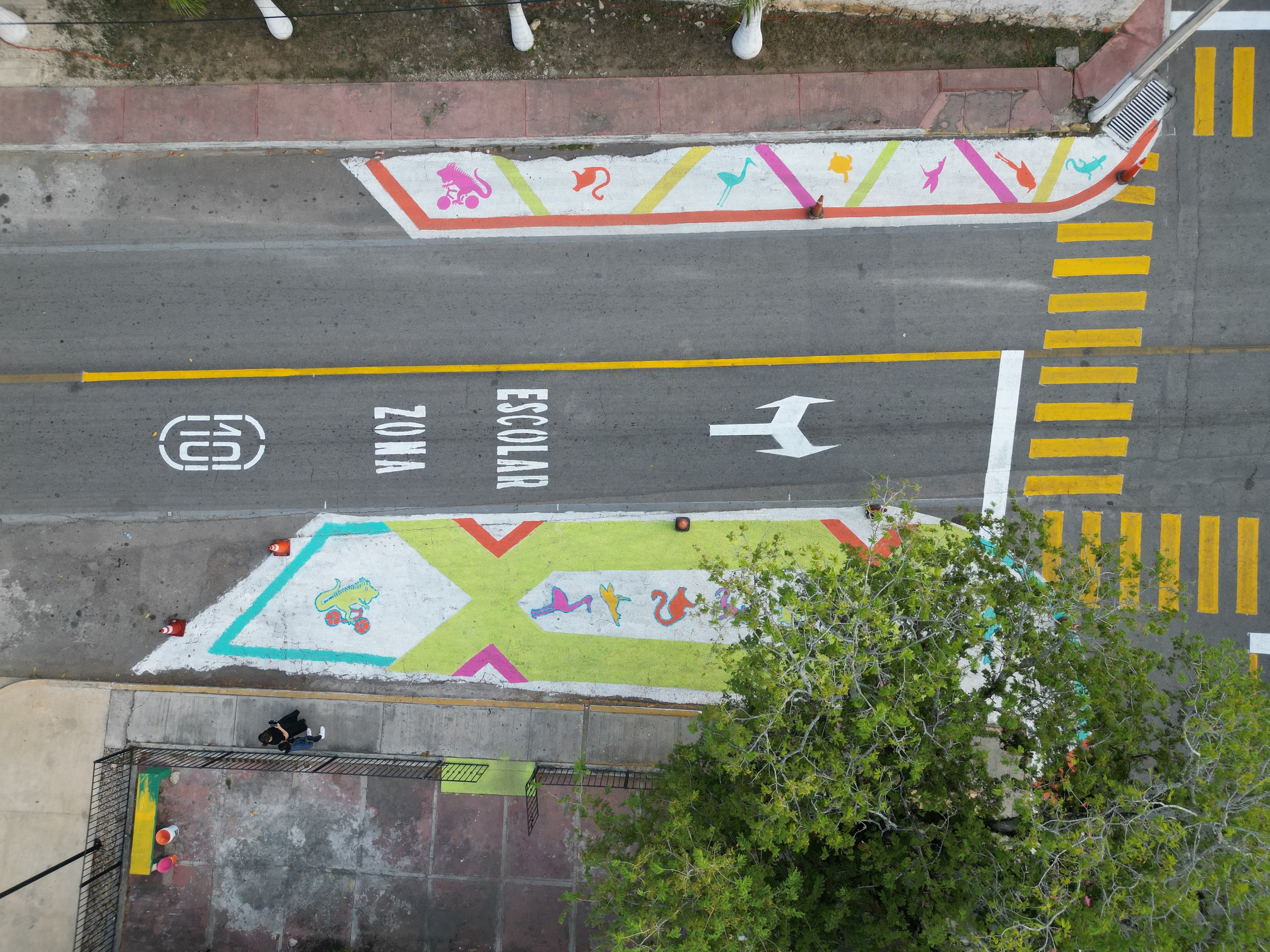
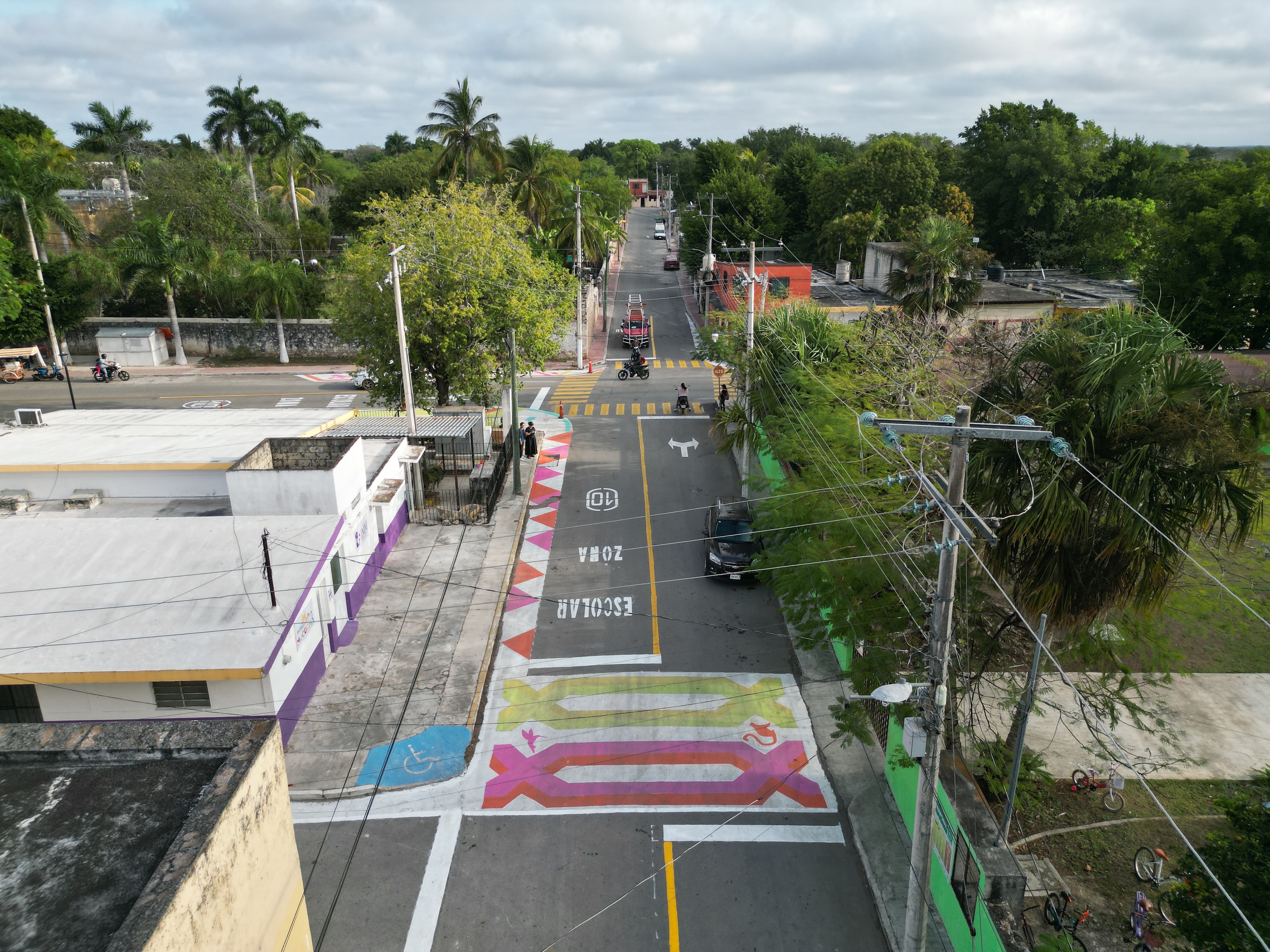
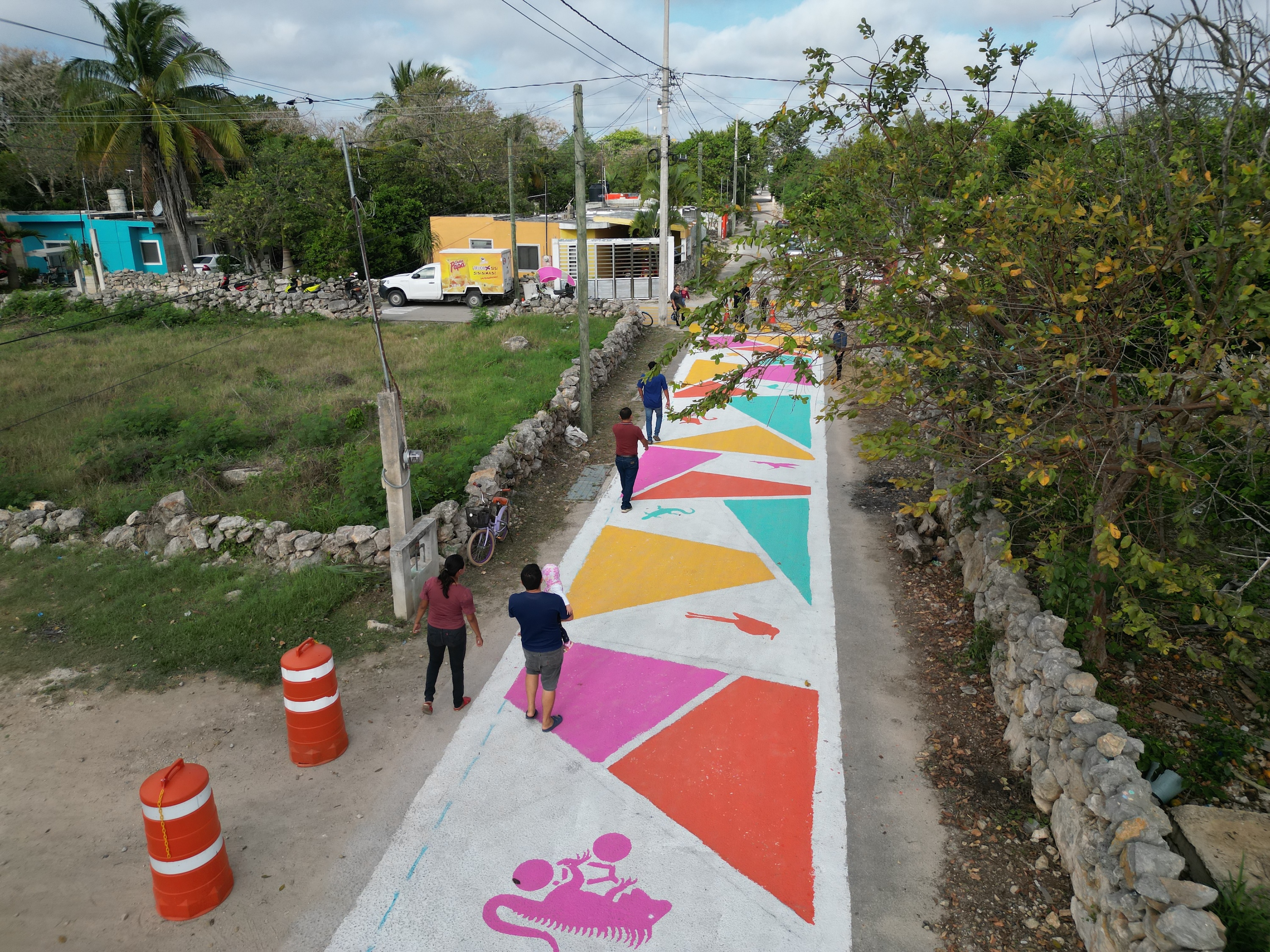
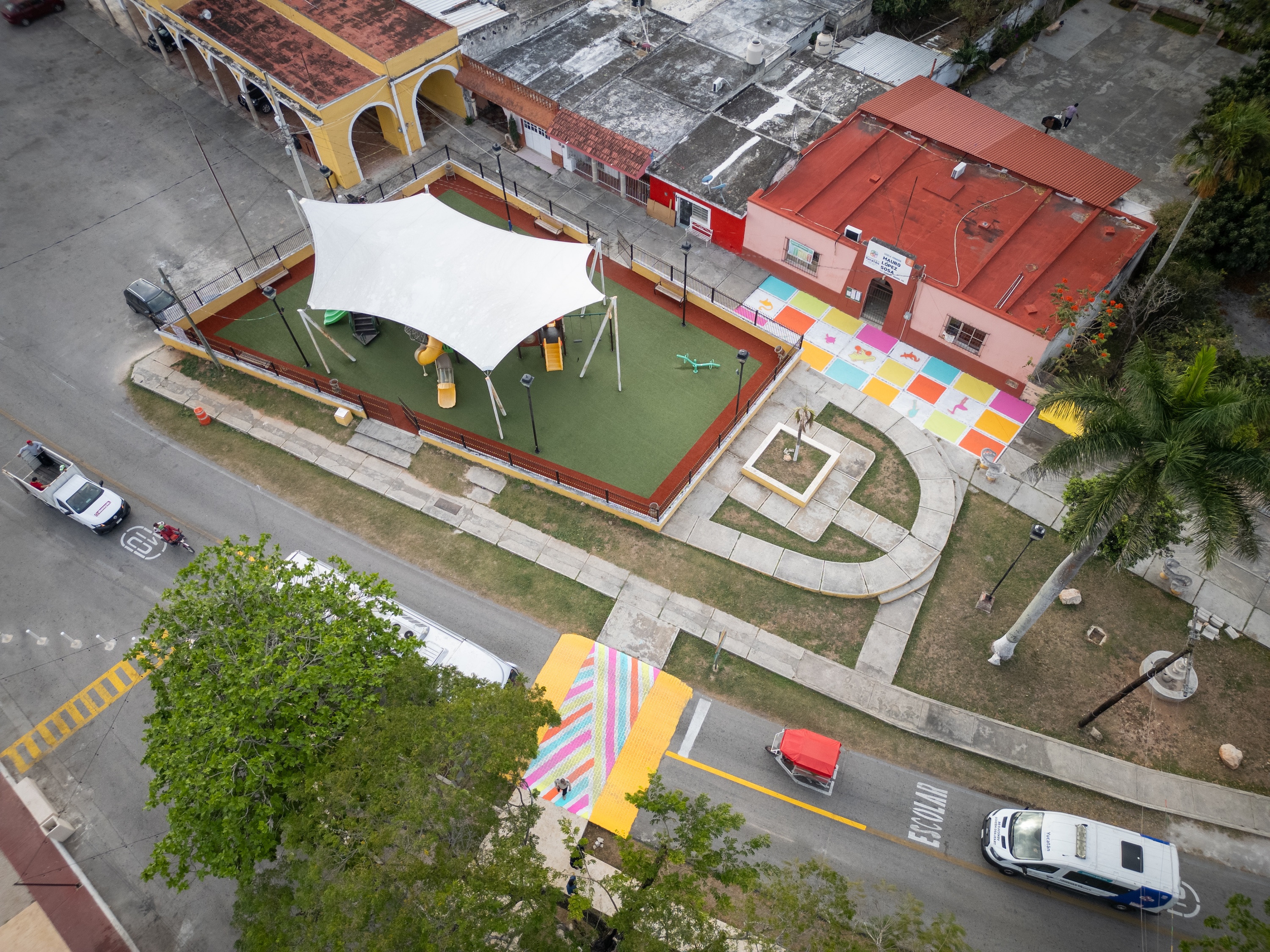
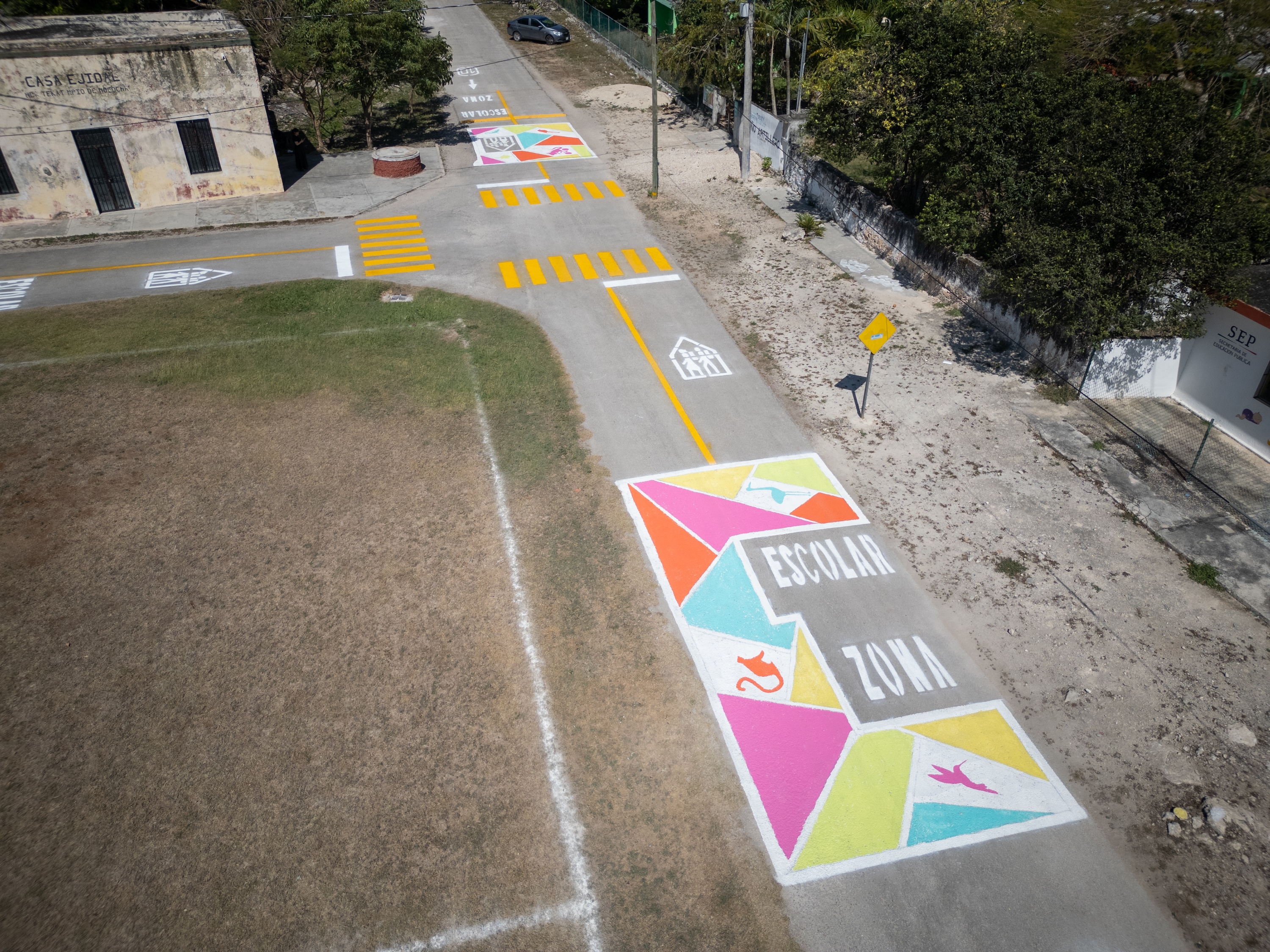
The “Heading to School” project in Mocochá aimed to improve school-area safety by promoting active mobility and expanding access for pedestrians and cyclists. The Asphalt Art project specifically focused on safe pedestrian crossings, sidewalk extensions, and street murals, and resulted in improved traffic management and safety, road safety education, and a stronger shared identity in school zones.
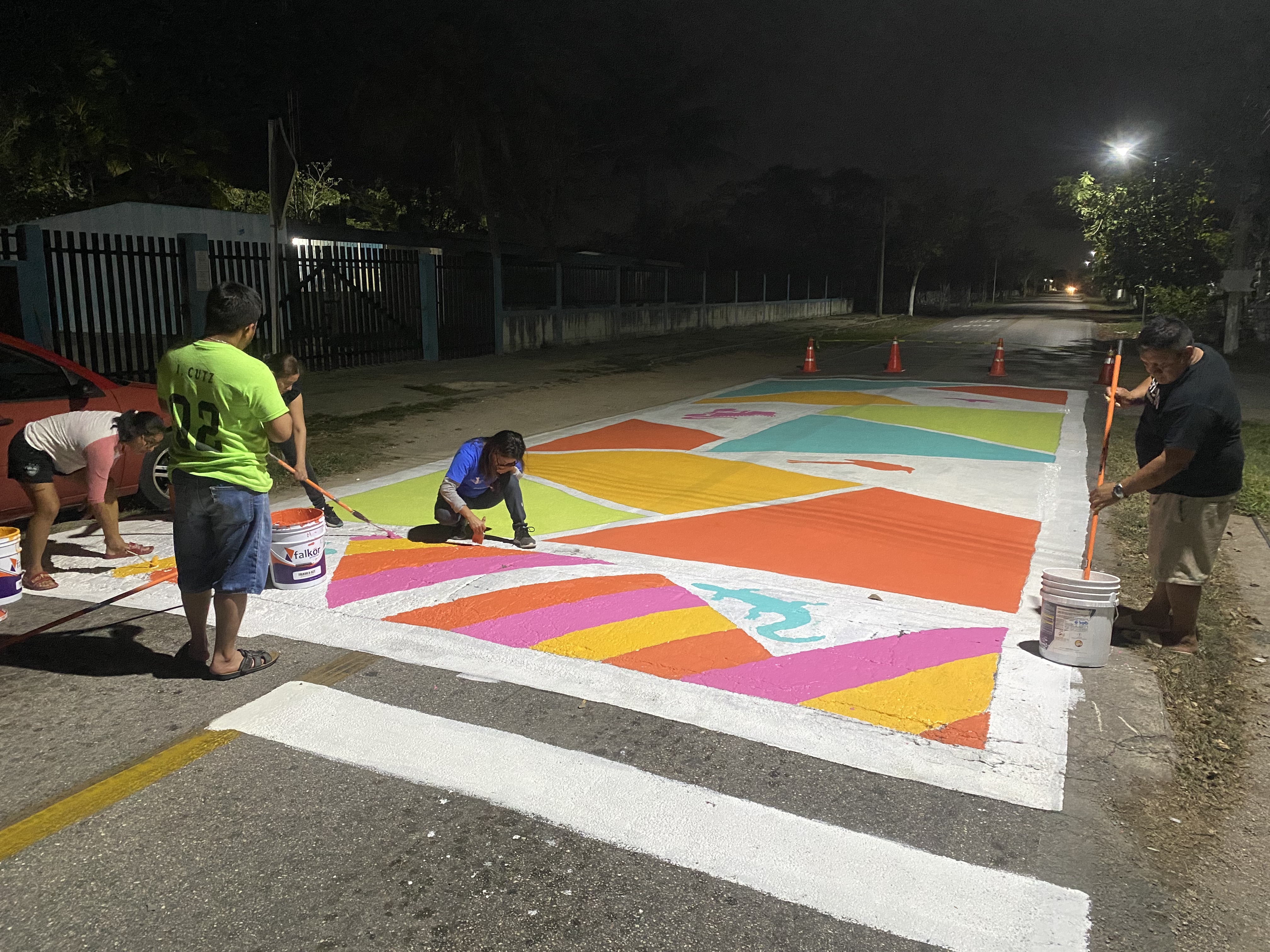
The project encouraged community involvement and inter-institutional collaboration, ultimately creating a safer and more respectful environment for everyone. Artists were selected through participatory workshops where community members contributed ideas inspired by local Yucatán vegetation and animals such as lizards, birds, and colibríes. The community actively engaged in the design and installation phases, organizing into teams to support work shifts—even at night to avoid the daytime heat. Installation prioritized road safety markings at school intersections before adding the vibrant artistic elements that enhanced identity and promoted safety awareness.
With paint, the road infrastructure was improved to generate greater visibility and safety for pedestrians and cyclists within school zones, preventing accidents and protecting the children and adolescents of Mocochá.
Pablo Alejandro Cutz, Mayor, City of Mocochá
Use the slider to see the transformation
Press
“Safe School Environments,” An Exemplary Pedestrian And Road Safety Project In Mocochá (Yucas Al Día, March 15, 2025)
For inspiration and tips for the creation of art on roadways and public places, download the Bloomberg Associates Asphalt Art Guide which features successful plaza and roadway art activations around the world, as well as key steps for developing such projects.


Oaxaca, Mexico
Connecting bus station to barrio with Oaxacan art
The Project
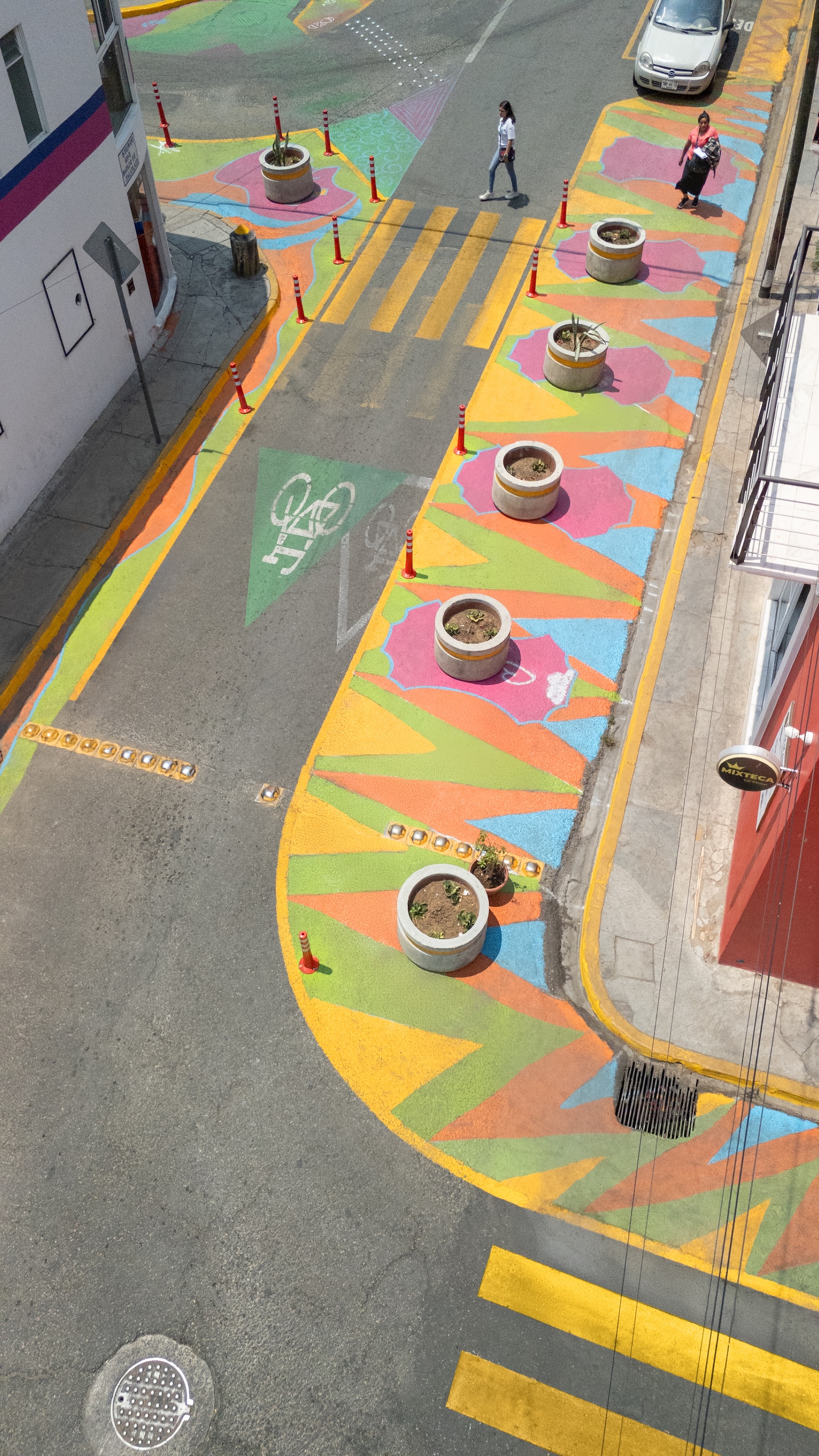
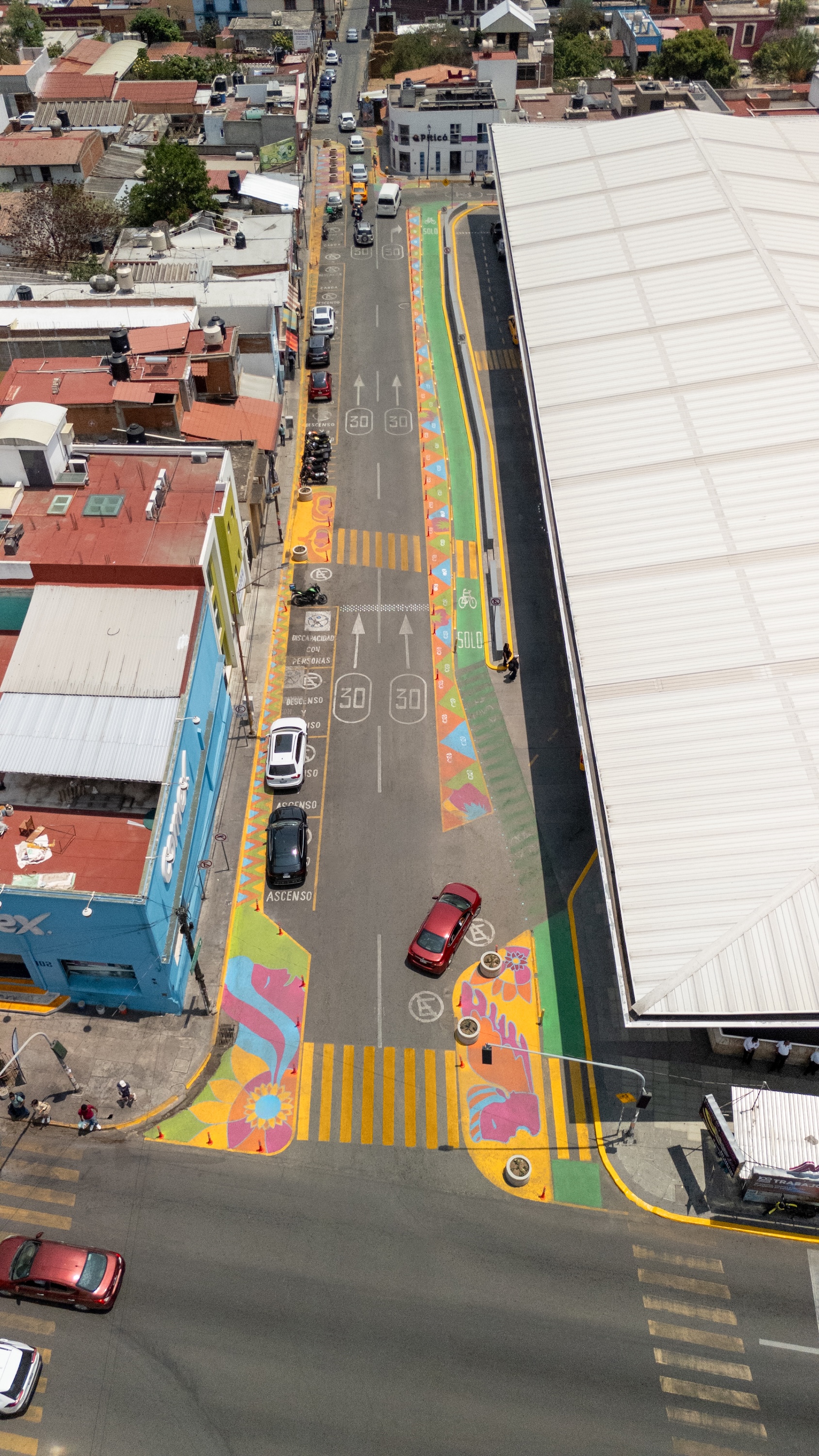
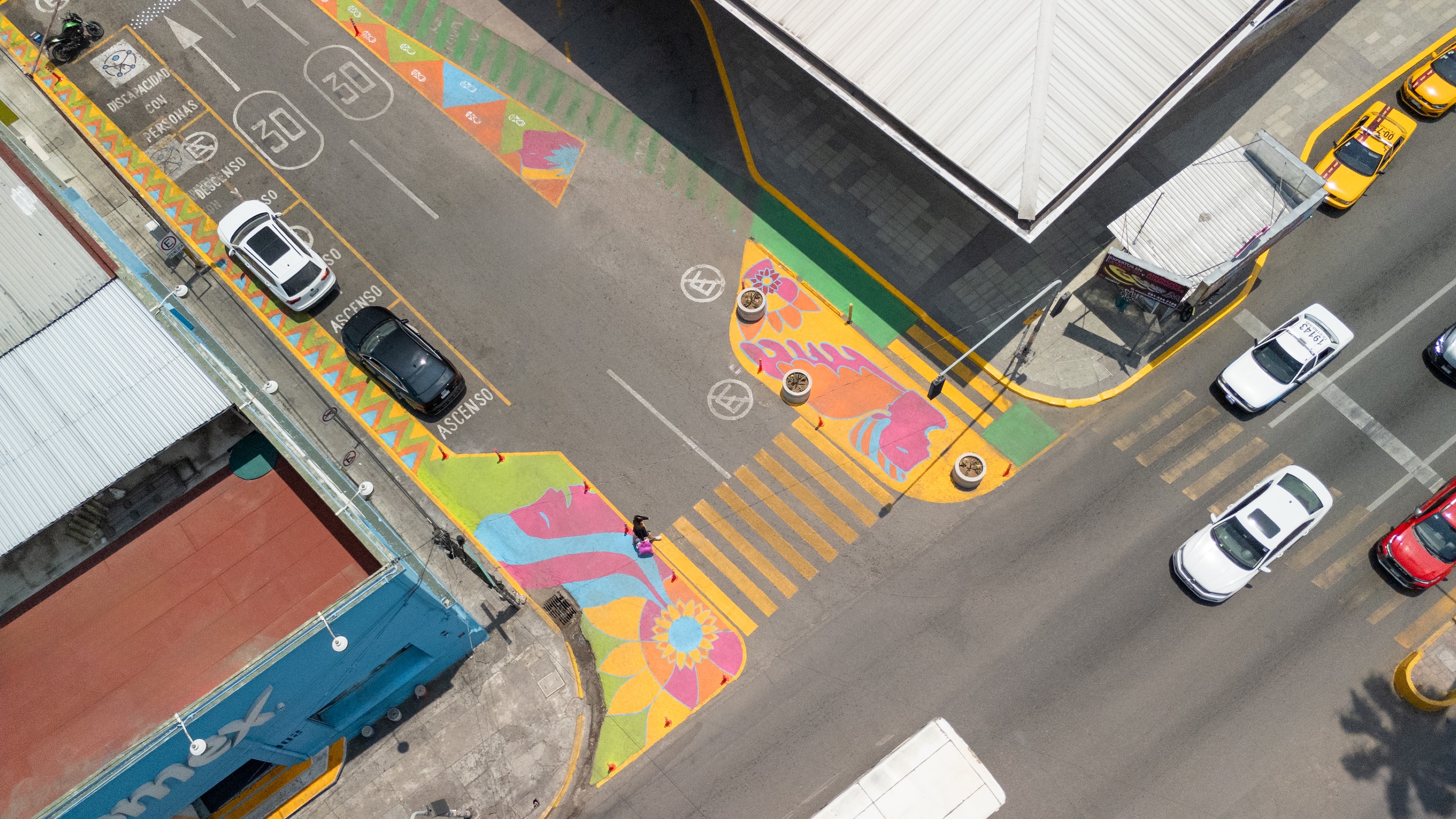
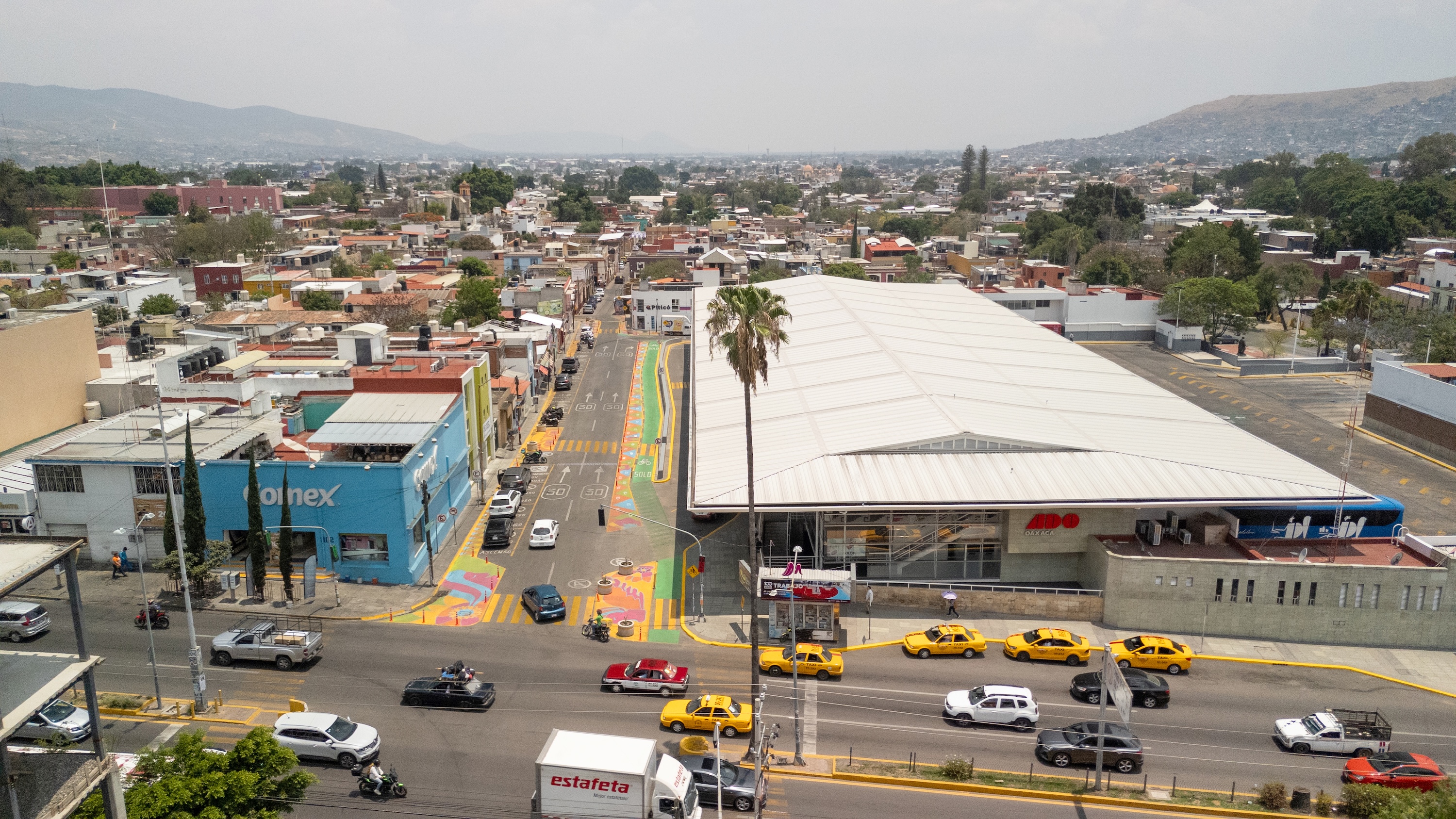
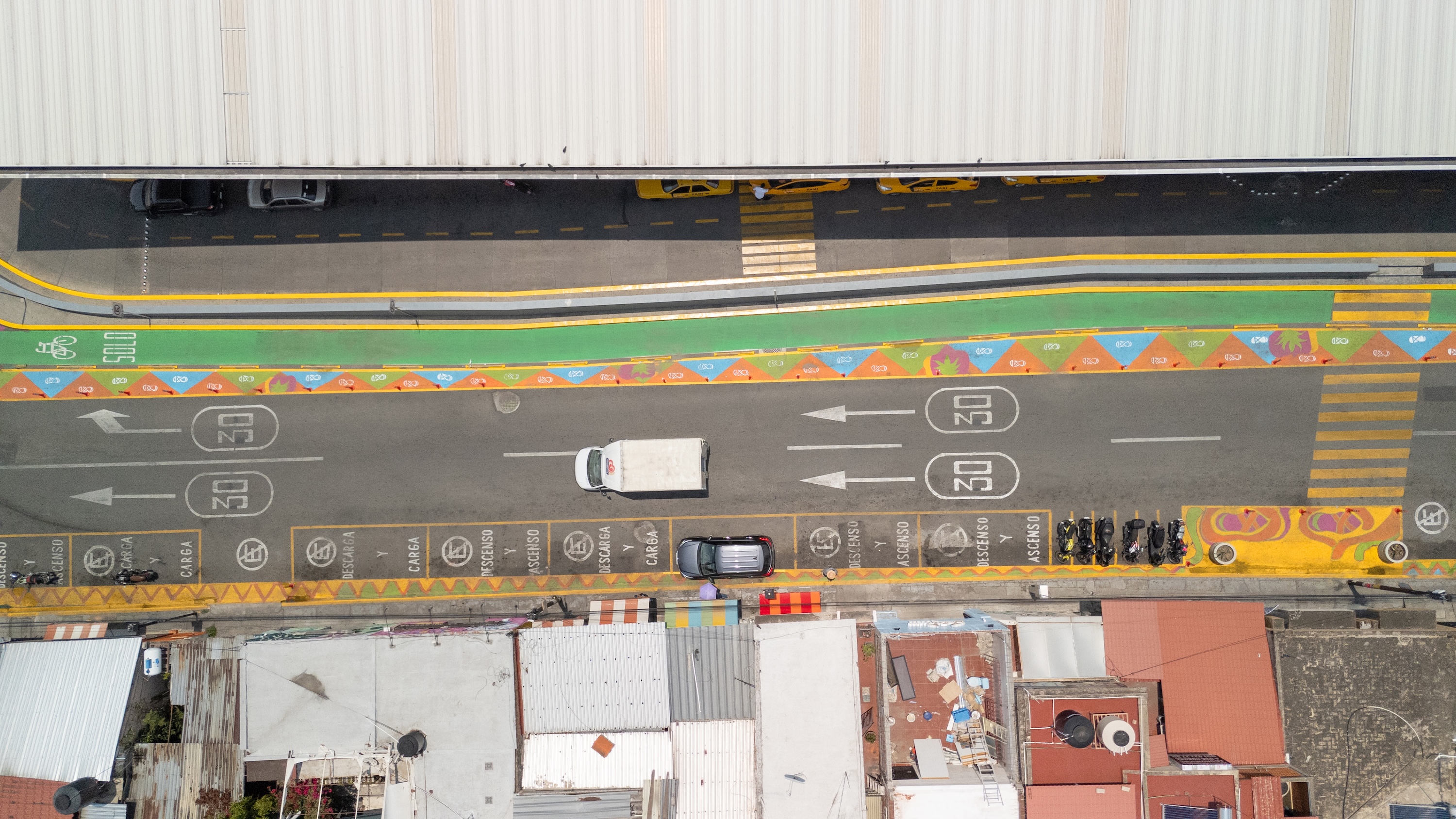
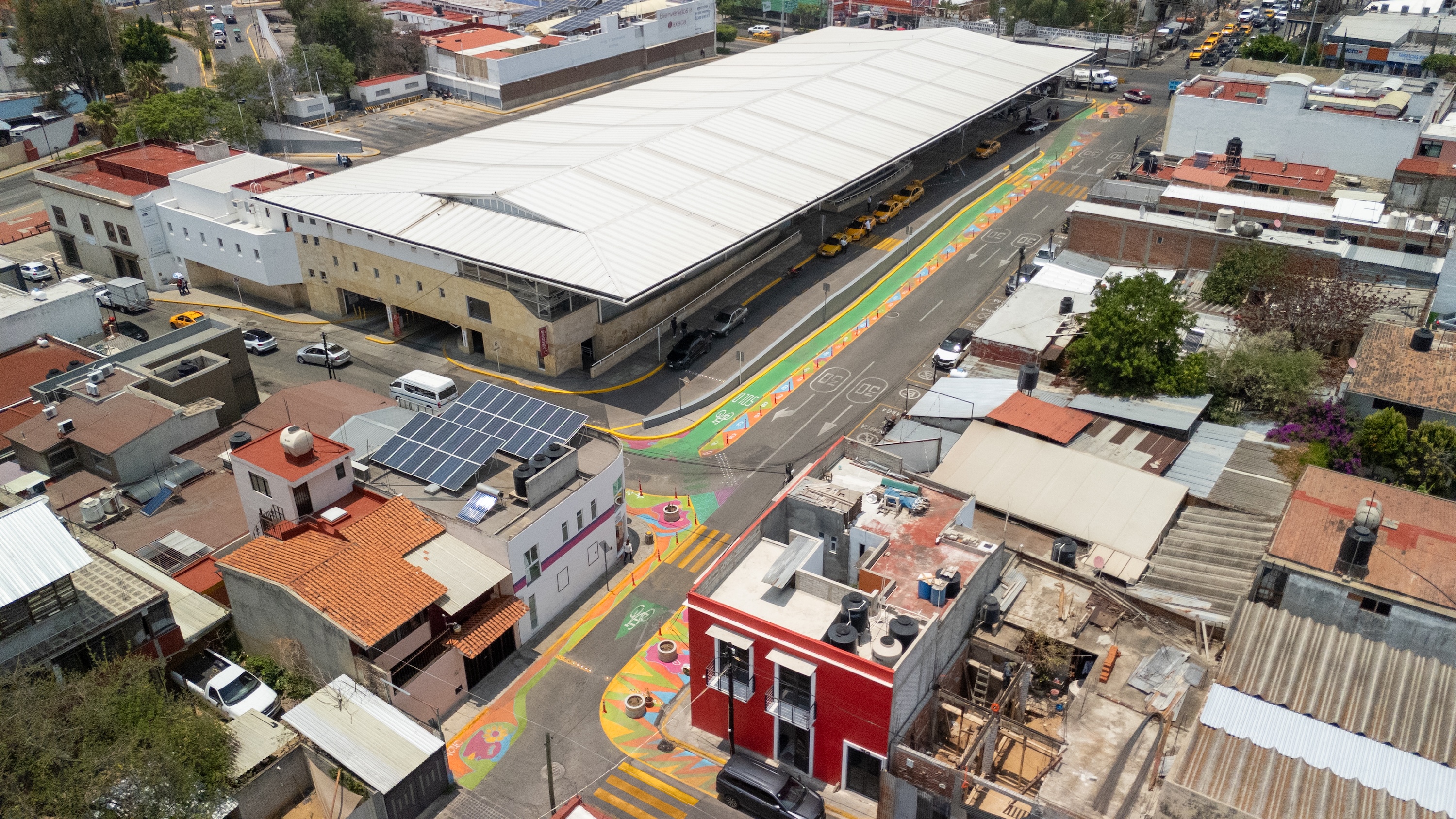
To address safety challenges for pedestrians traveling between Oaxaca’s Central de Buses and the historic Jalatlaco neighborhood, the City of Oaxaca implemented an Asphalt Art project on Calle 5 de Mayo—an area with heavy foot traffic, narrow sidewalks, and fast-moving vehicles. The intervention was part of Oaxaca Camina, the city’s active mobility plan to improve safety, accessibility, and inclusion for those walking. By reclaiming street space for pedestrians, narrowing vehicle lanes, and discouraging on-street parking, the project sought to slow traffic and create a safer, more welcoming gateway between the bus station and the newly designated Barrio Mágico of Jalatlaco.
Local artists and residents collaborated to transform the street with colorful designs inspired by Oaxaca’s cultural heritage. The artwork incorporates motifs of alebrijes—the fantastical creatures emblematic of the state—and references to the traditional craft of saddlery once practiced in Jalatlaco, with the silhouette of huaraches (handmade sandals) integrated into the pedestrian paths. The vibrant colors evoke both the imaginative spirit of Oaxacan art and the surrounding vegetation, turning a once hazardous corridor into a lively, community-driven celebration of local identity and safer urban design.
Use the slider to see the transformation


This intervention not only beautifies one of the most emblematic streets of our city, it is also part of a public policy focused on improving pedestrian and bicycle infrastructure, promoting sustainable, safe mobility with a focus on inclusion and universal accessibility.
Art and tactical urbanism thus become tools to recover spaces, invite you to walk, pedal and enjoy our streets from a human and close perspective. Because the city belongs to everyone.
Yesenia Nolasco Ramírez, Secretary of Mobility of the State of Oaxaca
 |
 |
Press
Inauguran intervención “Arte en Asfalto” en el Barrio de Jalatlaco (Online, 8 de abril de 2025)
Inauguran intervención “Arte en asfalto” en el emblemático Barrio de Jalatlaco (Online, 9 de abril de 2025)
For inspiration and tips for the creation of art on roadways and public places, download the Bloomberg Associates Asphalt Art Guide which features successful plaza and roadway art activations around the world, as well as key steps for developing such projects.

Winnipeg, Manitoba
Reclaiming a downtown corridor for walking, gathering, and play
The Project
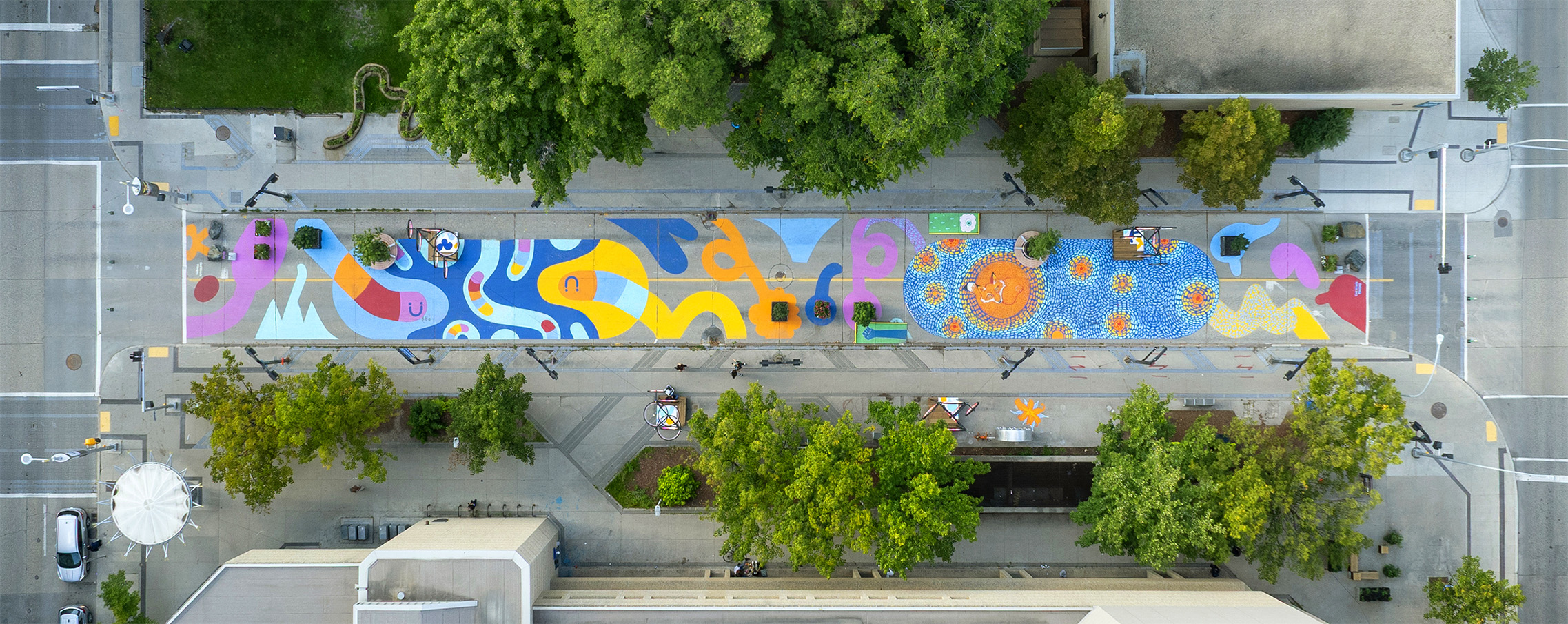
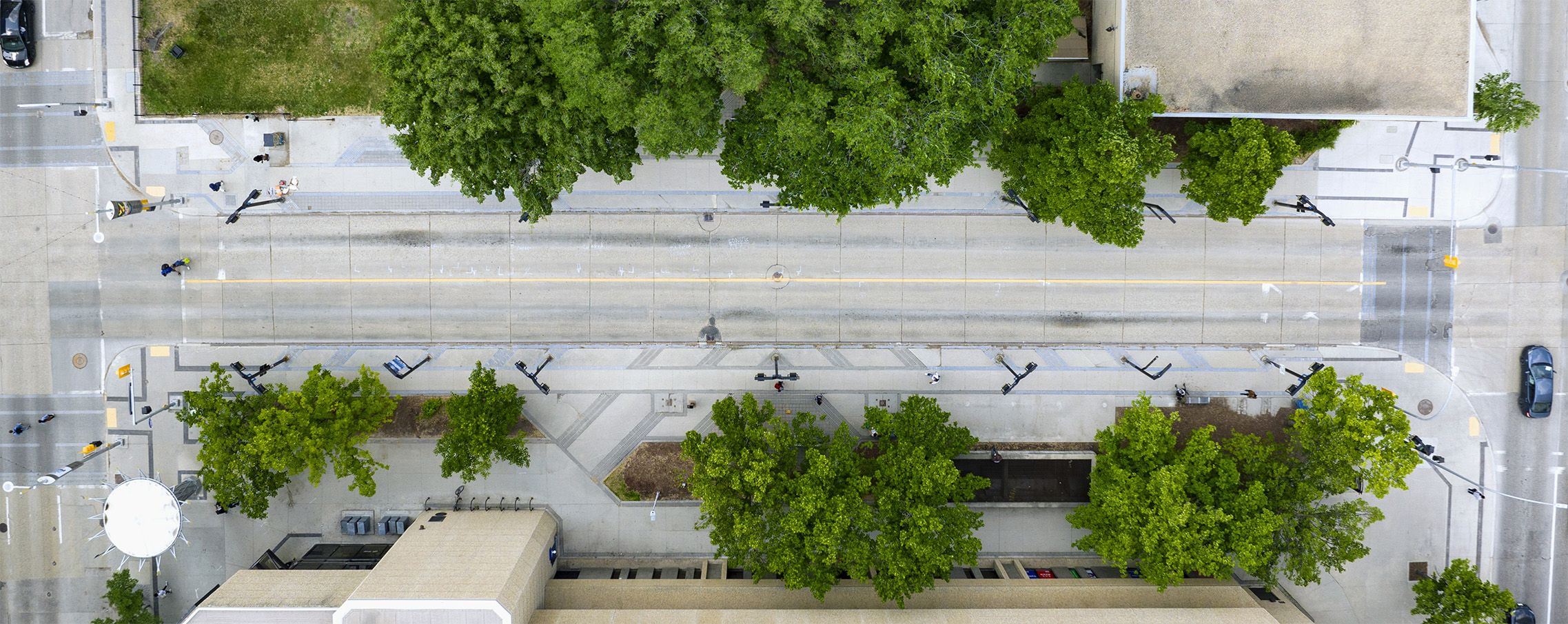
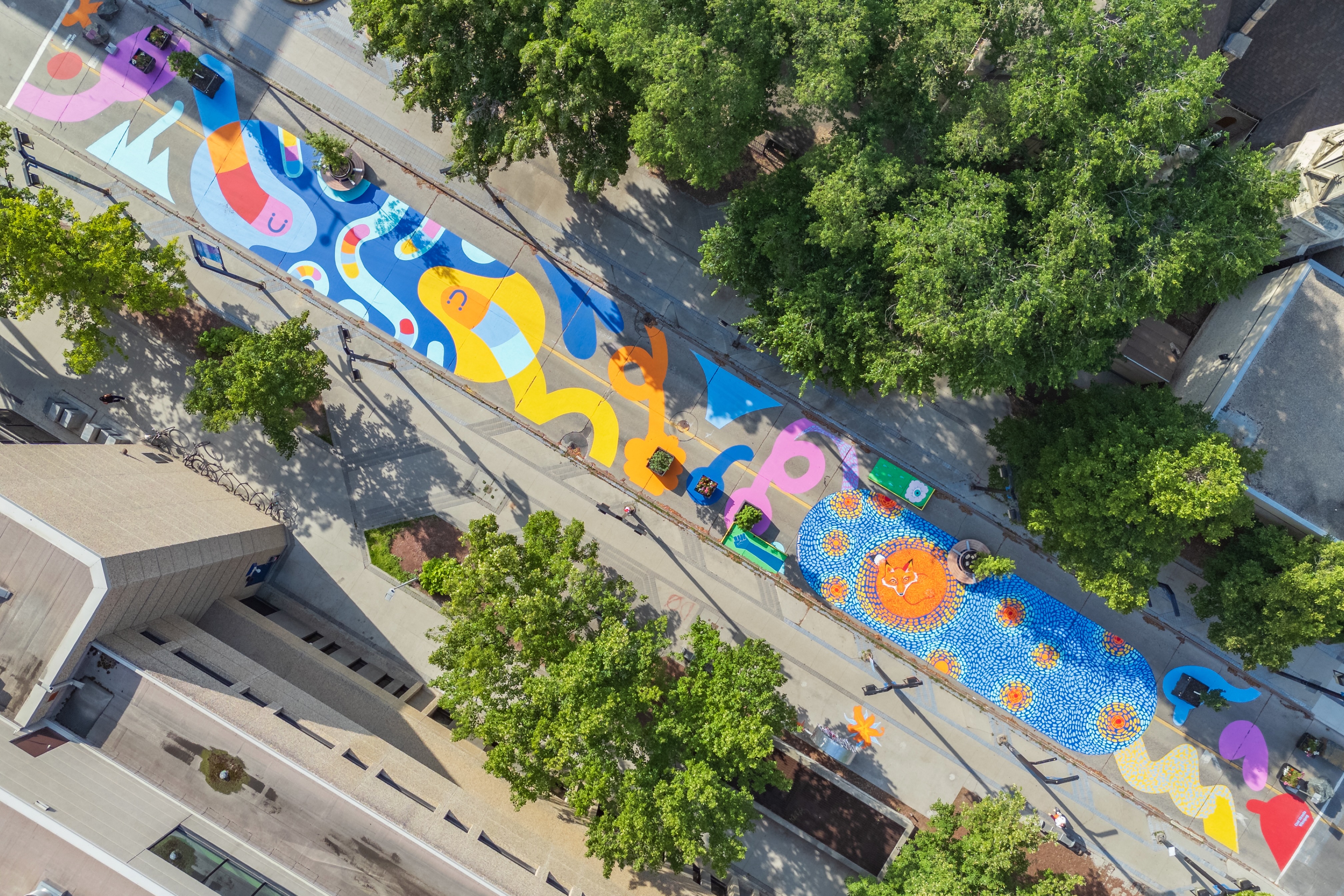
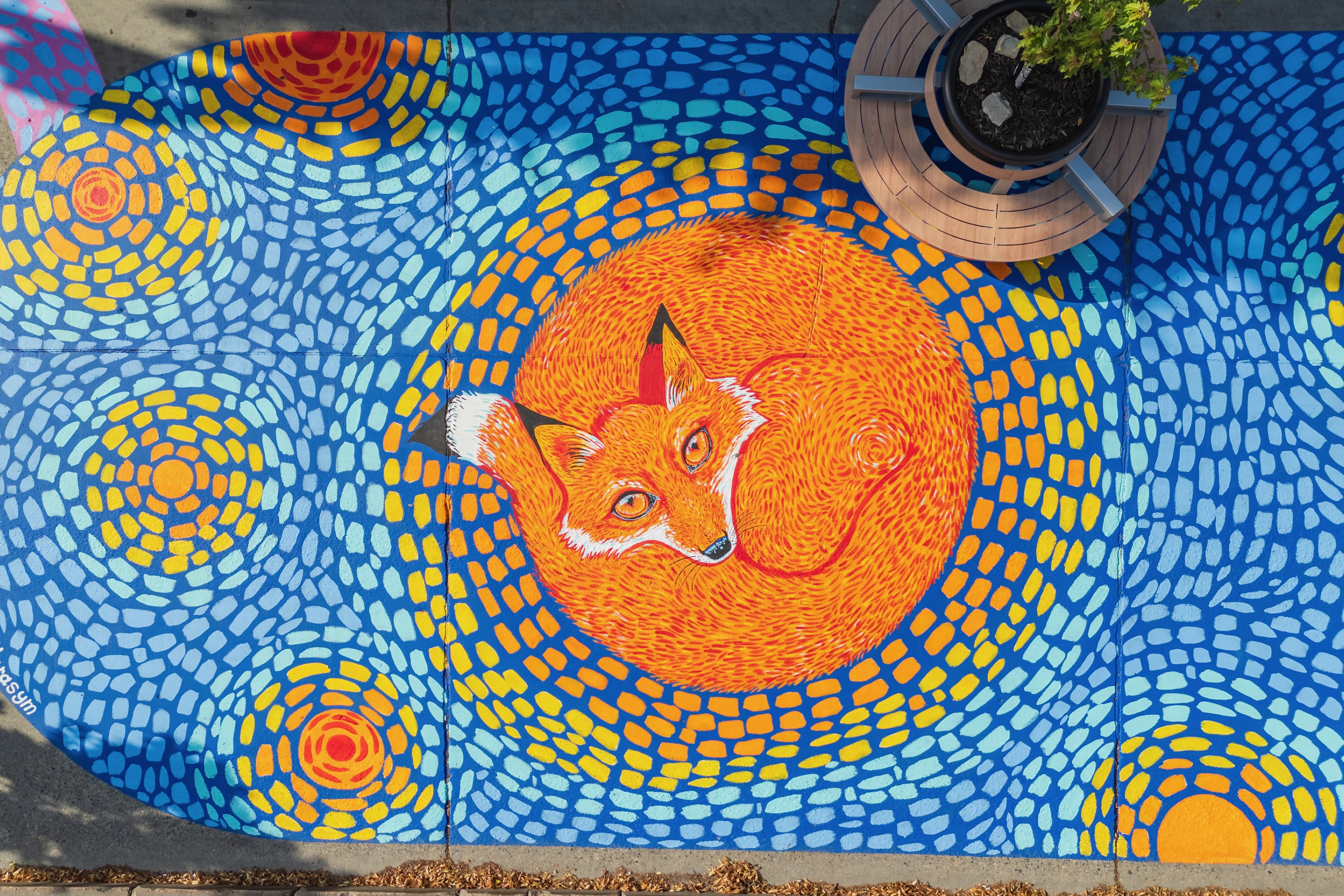
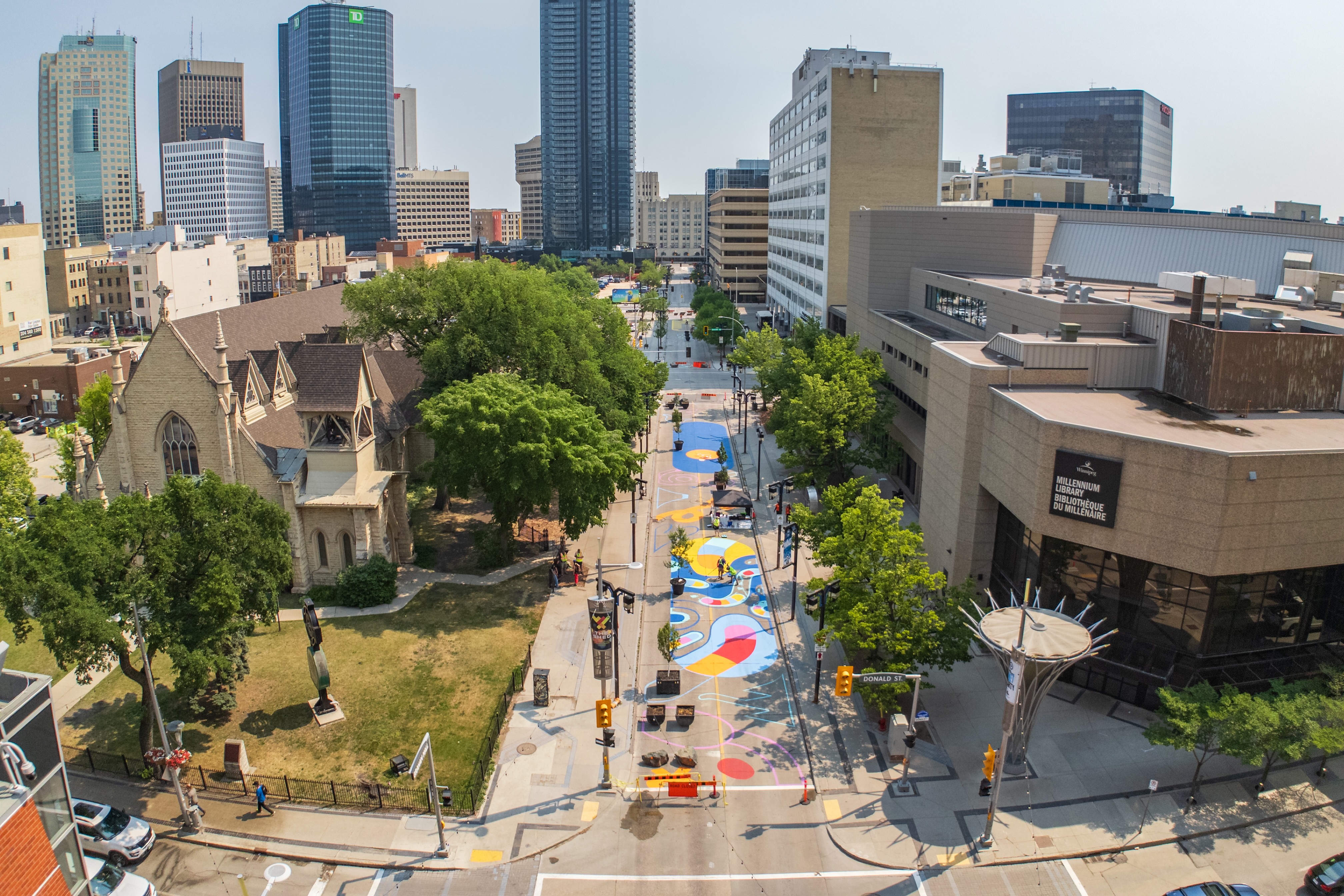
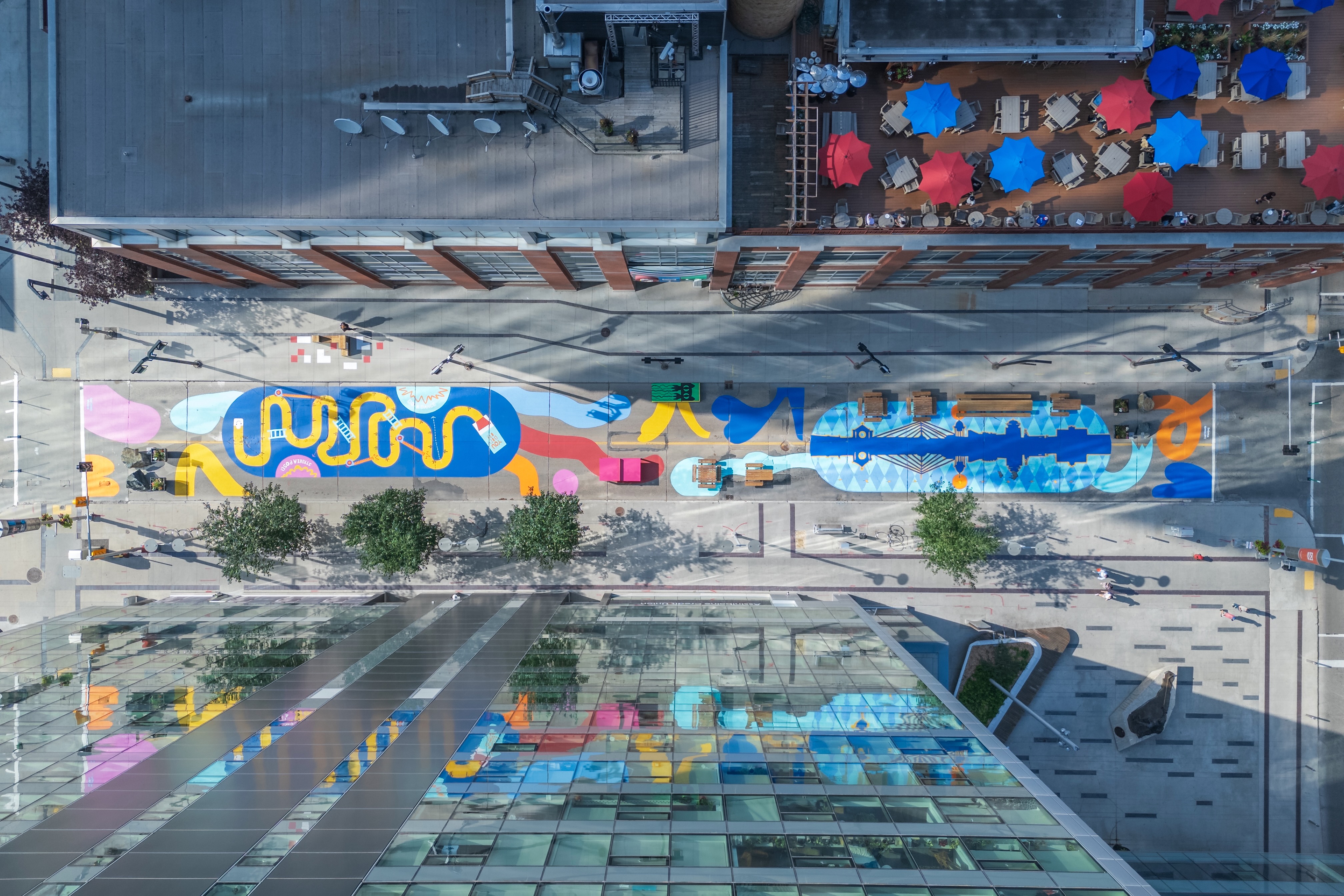
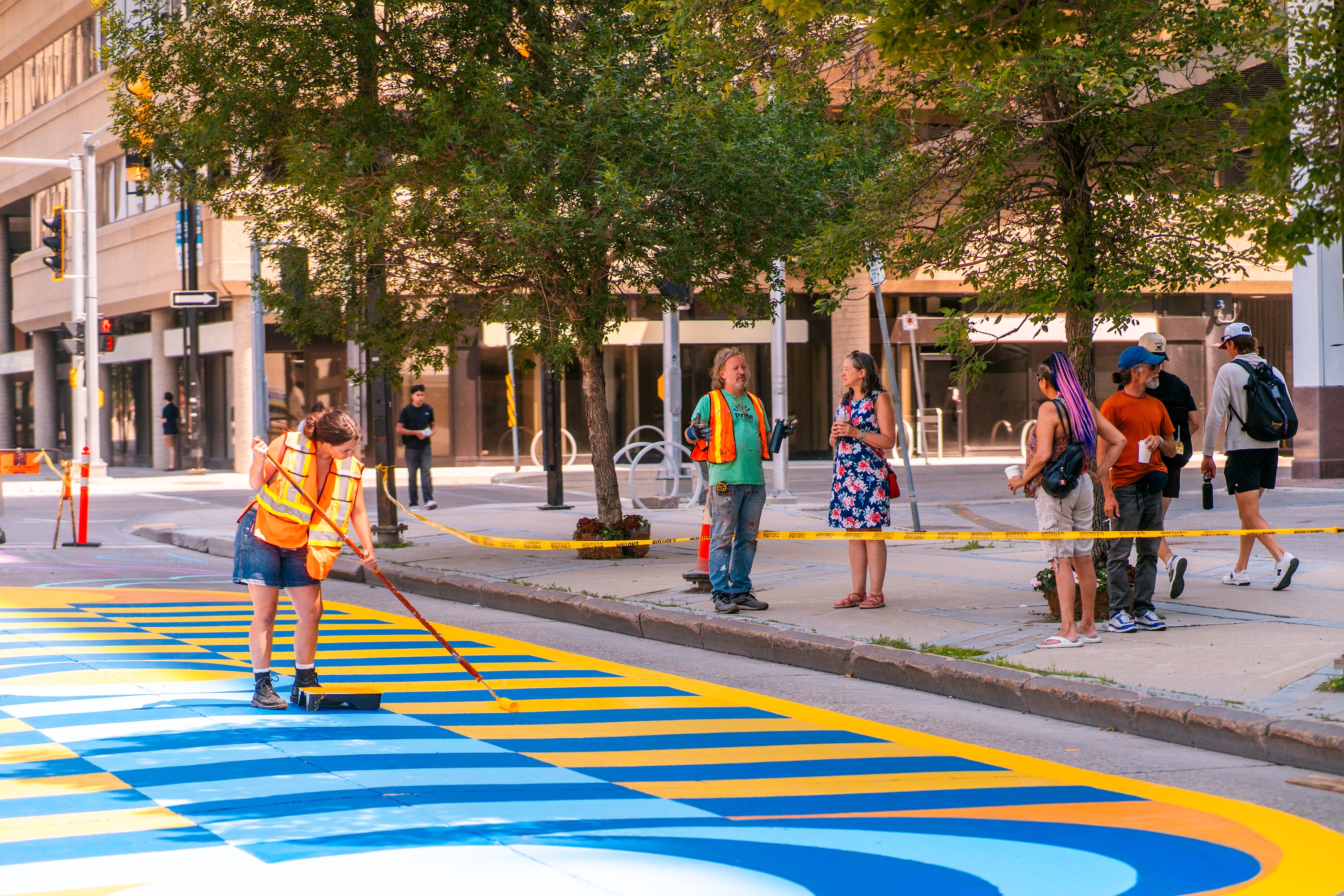
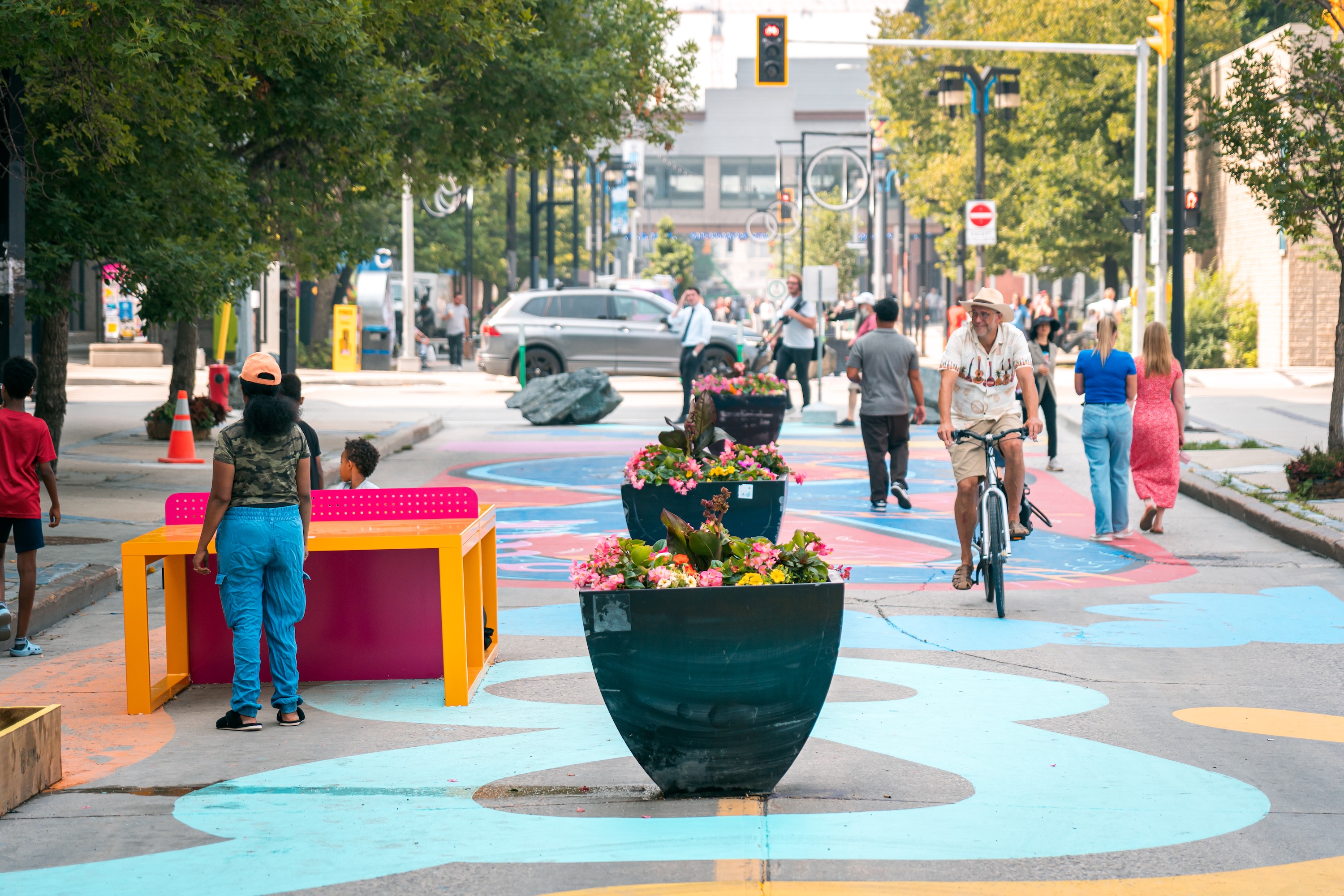
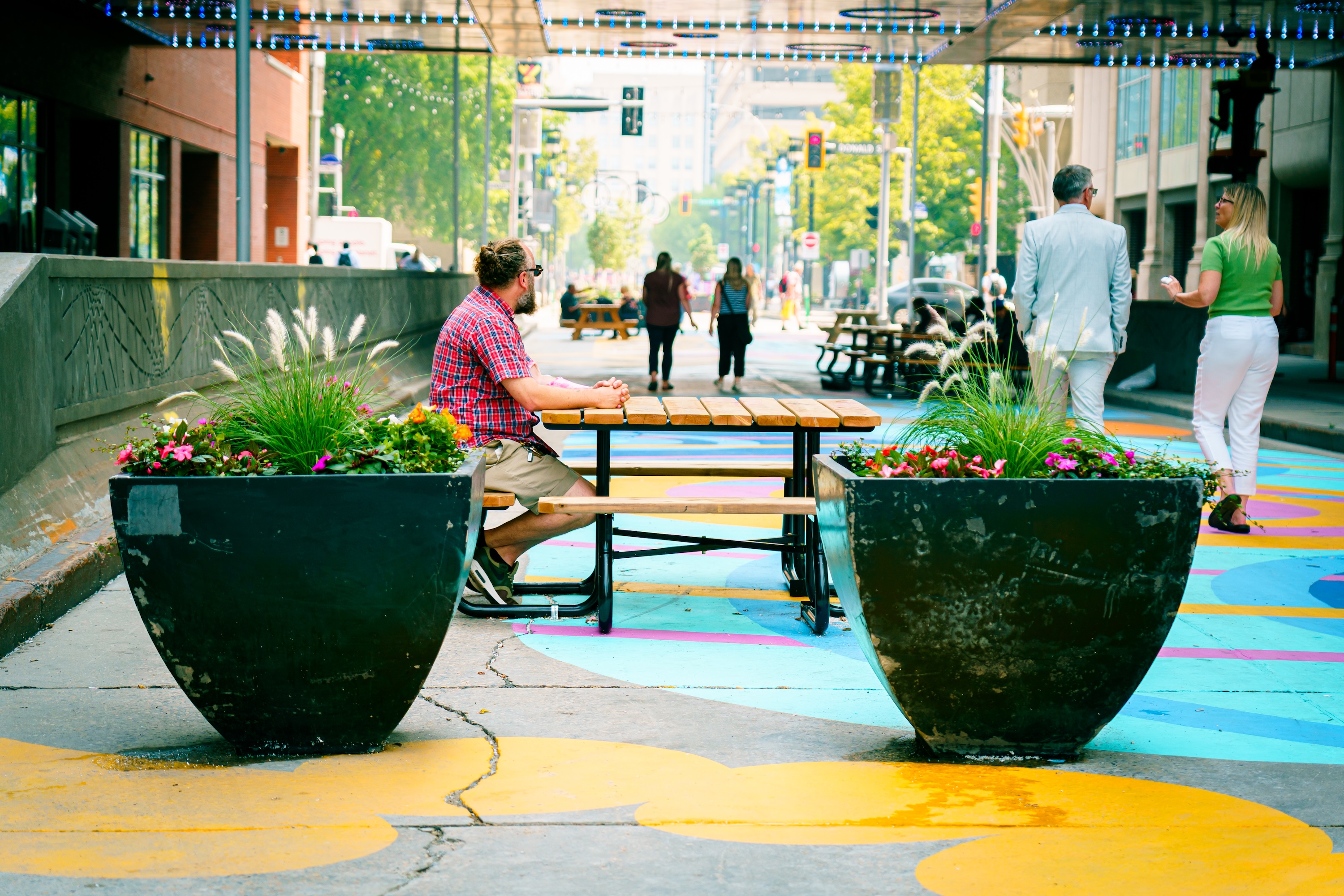
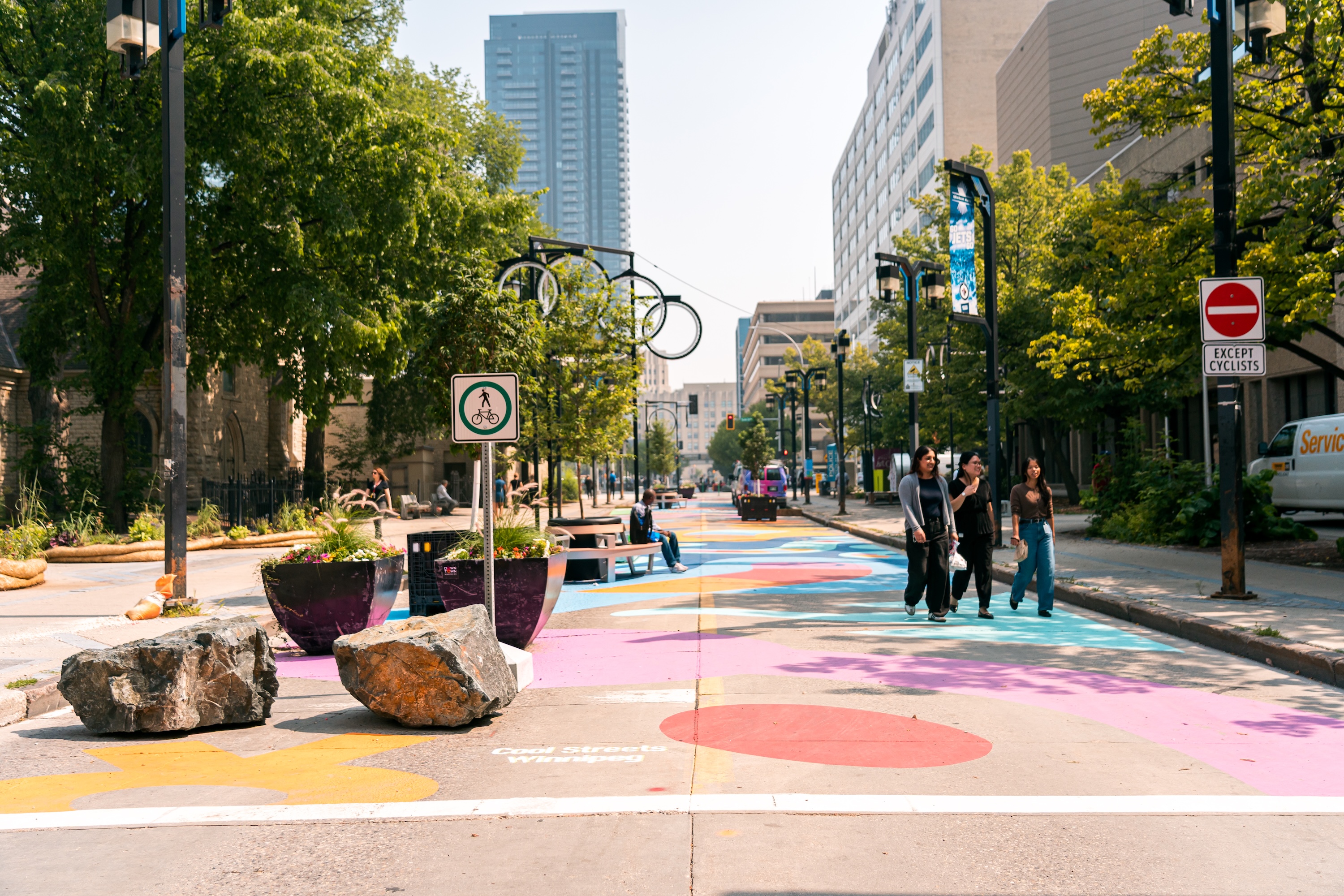
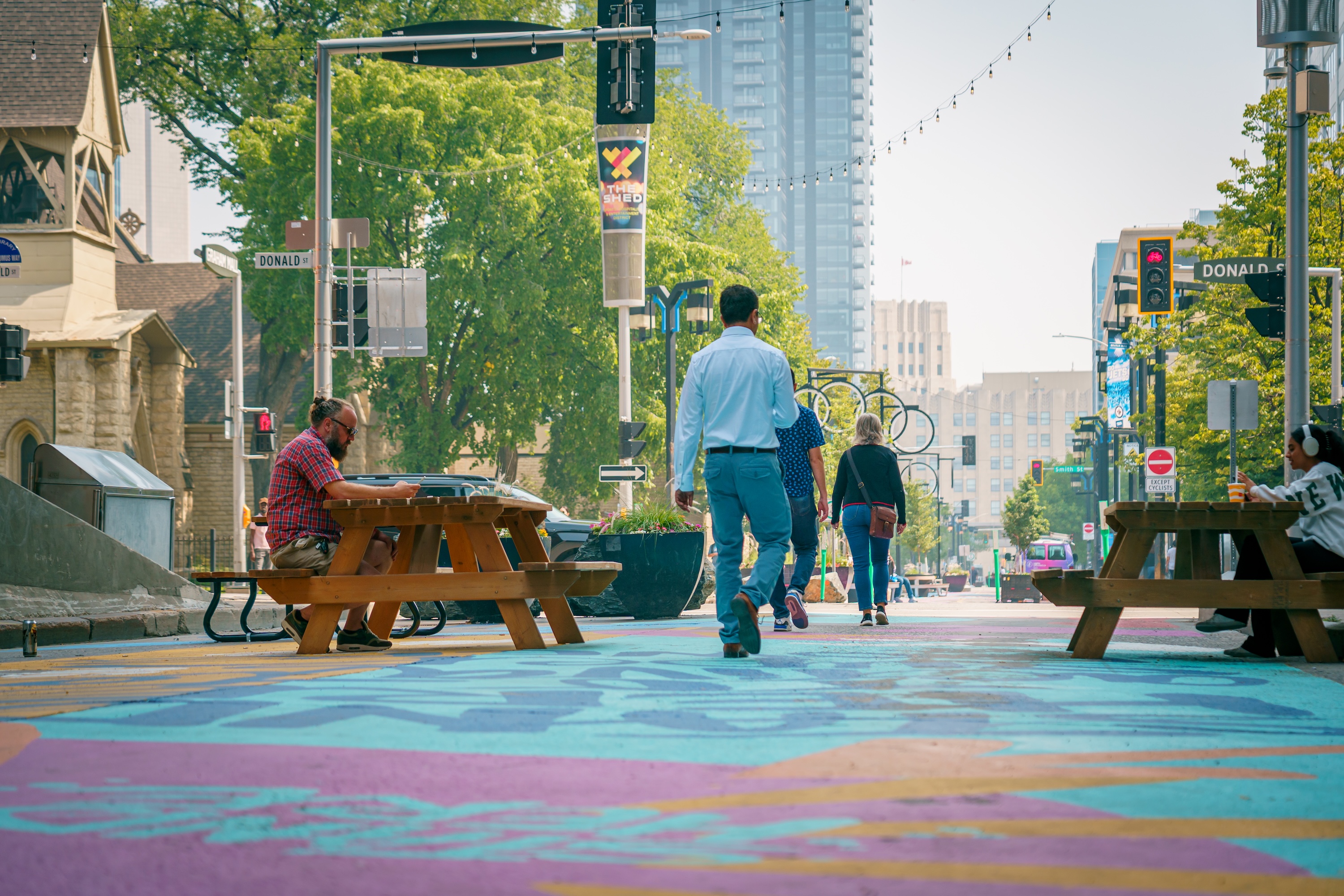
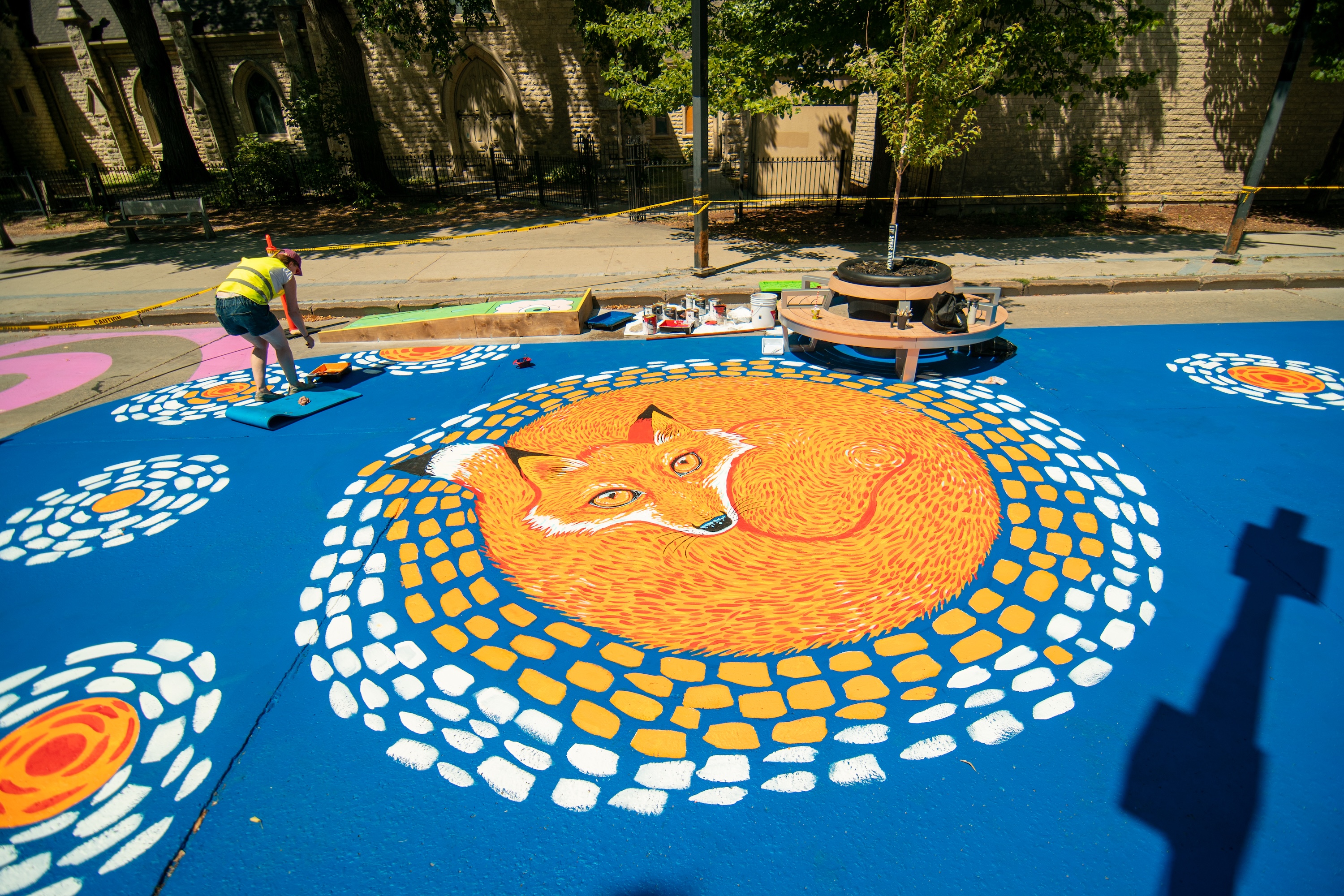
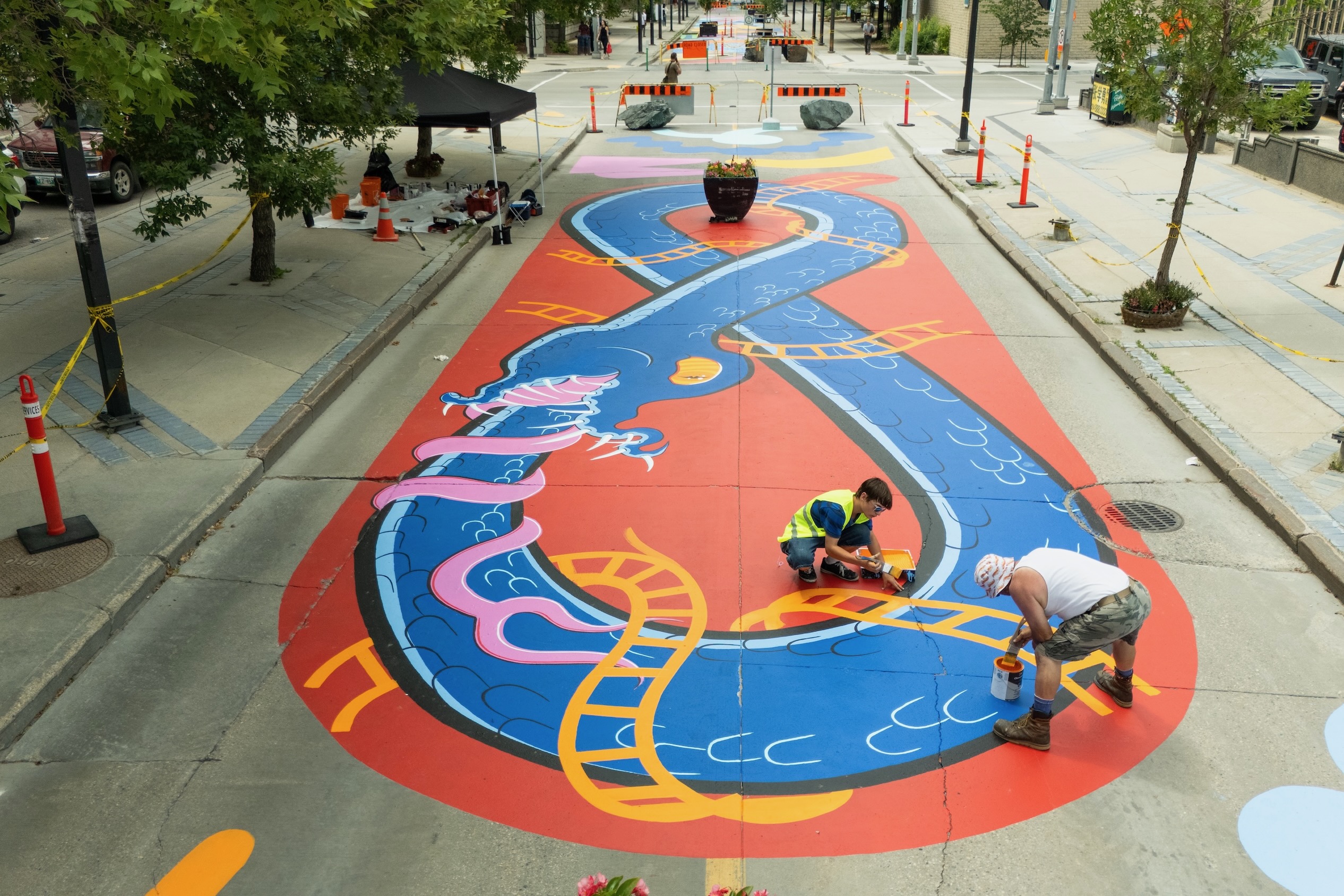
Re-imagining Graham Avenue involved a fast-paced street mural project that transformed a bus corridor into a pedestrian area, with park-like features and festival space. Eight murals, tied together by the work of a lead artist. The street murals were installed on four city blocks over a two-week period in July 2025. Colourful murals (with a palette reflecting many different partner organizations and businesses) brought to life approximately 24,000 square feet of road space, and helped temporarily transform the road into animated pedestrian space where people can walk, bike, eat and play on Graham.
Best Practice Highlight: Partnering for Success
The Re-imagining Graham project was led with partnerships in mind. It brought key stakeholders and their connections to the table to find creative ways to animate the street. This included lighting, seating, placemaking competition, street furniture, games and of course, street paint. For the street paint portion of this project, the artists worked collaboratively with a project manager, Stéphane Dorge, to guide the process, as well as and a lead artist, Takashi Iwasaki,. For such a large site, collaboration, teamwork and partnerships were crucial to doing the best with what we had.
Use the slider to see the transformation
It’s great to see a Graham Avenue that is more colourful, more dynamic, more pedestrian-friendly. This funding helped us make some quick changes and take the first steps toward a long-term vision of making Graham one of downtown’s signature streets
Mayor Scott Gillingham
I hope that people see this project and say, ‘Yes, this makes sense, this street should be a place for people, both now and in the future.’ Downtown is worth the investment, and this project is helping people see that.
Karin Kliewer, Senior Planner, City of Winnipeg
Press
Art is afoot, Winnipeg Free Press (July 12, 2025)
Graham Avenue undergoes vibrant transformation in downtown Winnipeg (July 8, 2025)
Ping pong tables, art installations coming to Graham Avenue as part of pilot project (June 23, 2025)
Ping-pong, picnic tables coming to Graham Avenue as city reimagines former bus mall (June 23, 2025)
For inspiration and tips for the creation of art on roadways and public places, download the Bloomberg Associates Asphalt Art Guide which features successful plaza and roadway art activations around the world, as well as key steps for developing such projects.