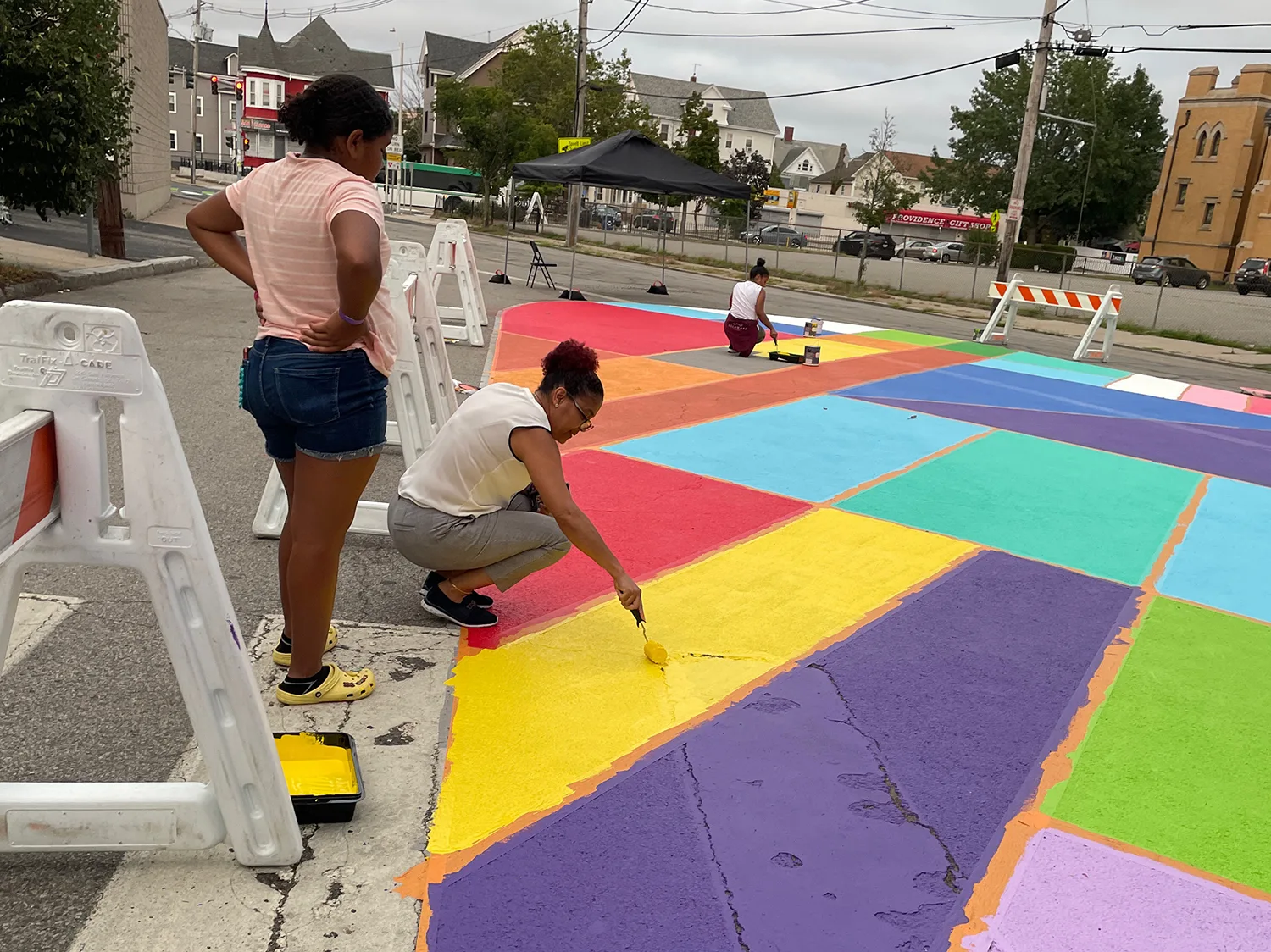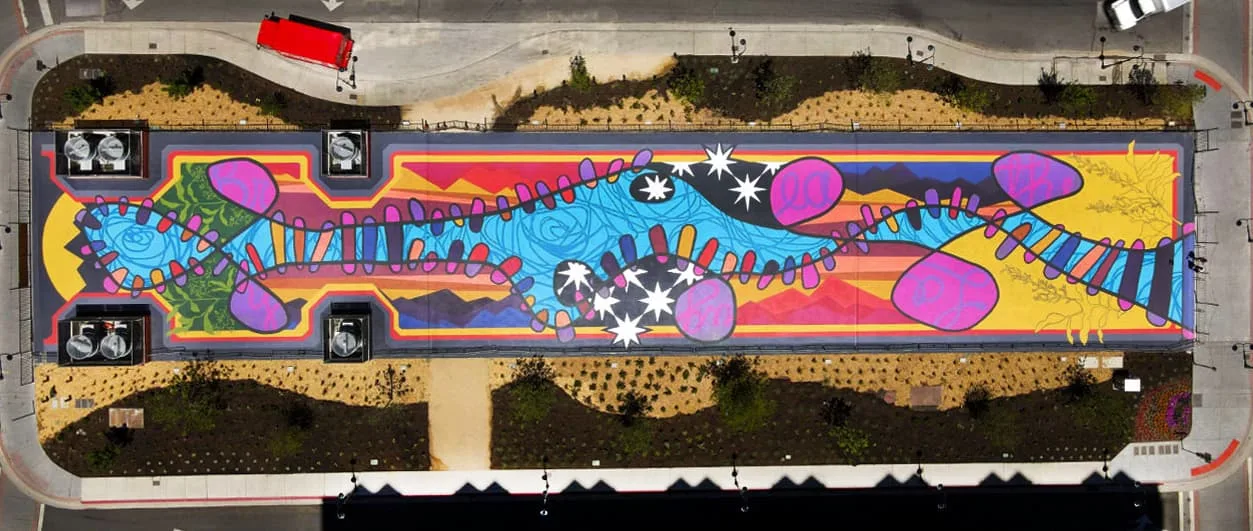
Culiacán, Mexico
Honoring local heritage across seven safer crossings
The Project
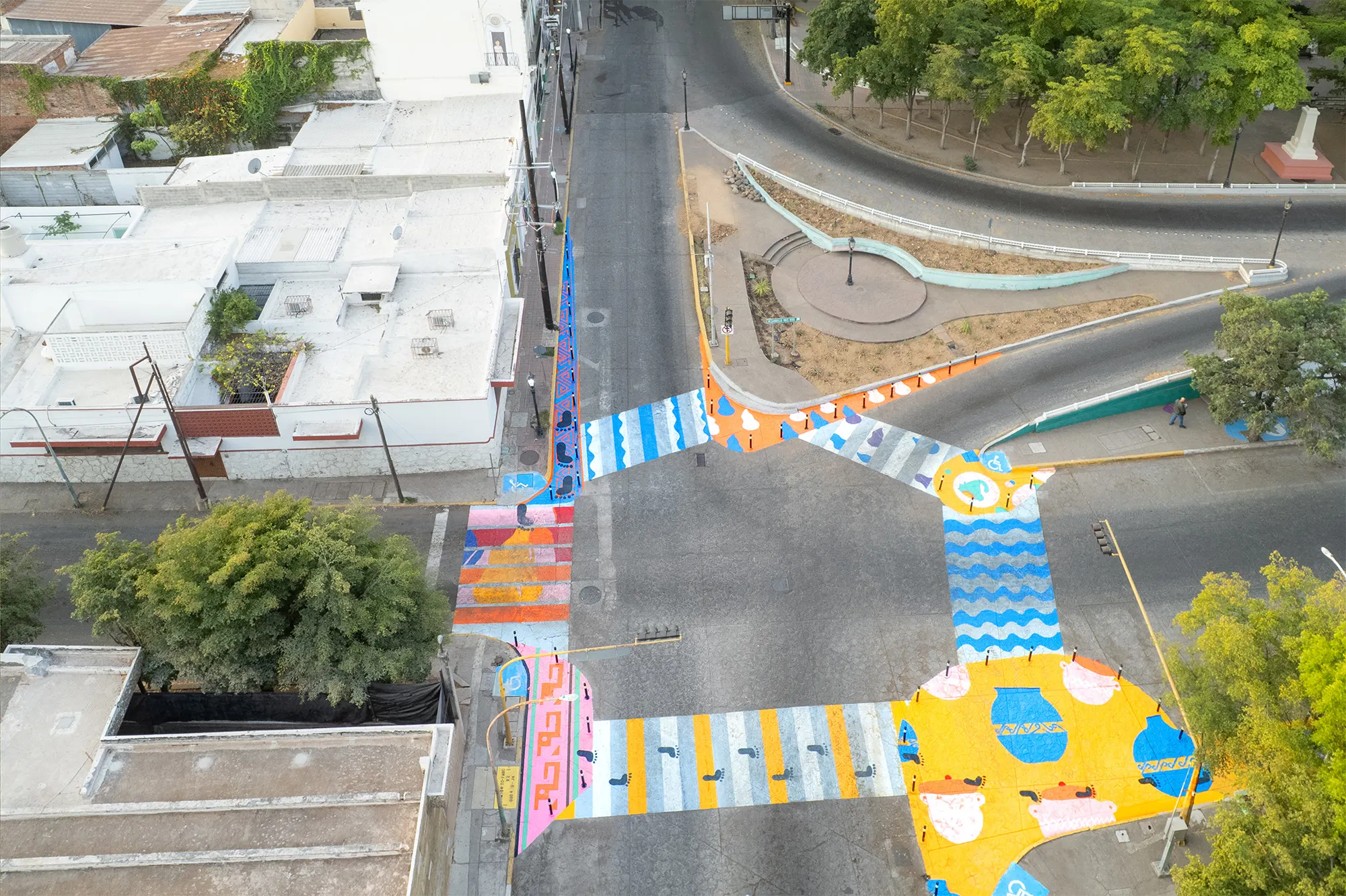
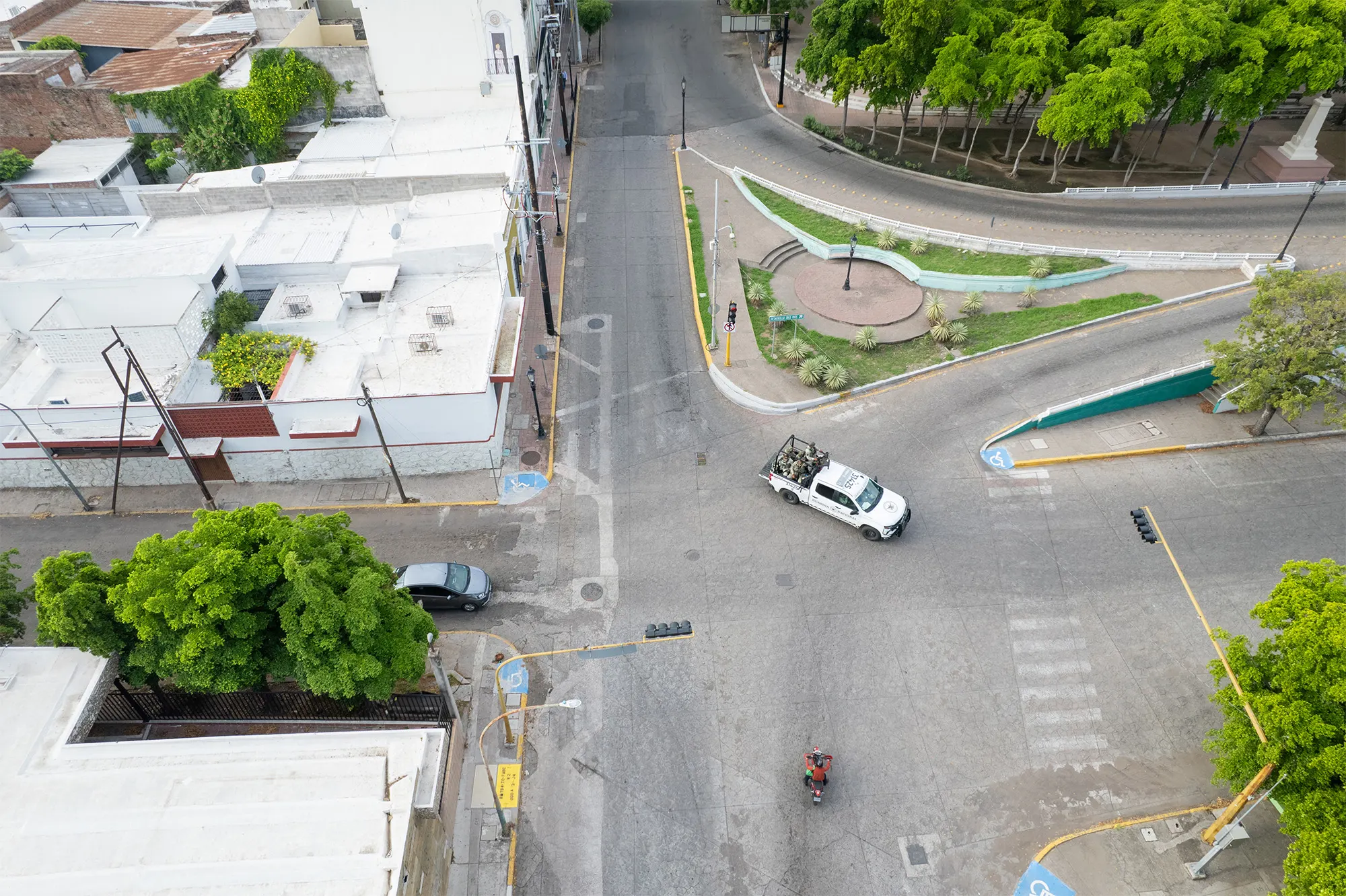
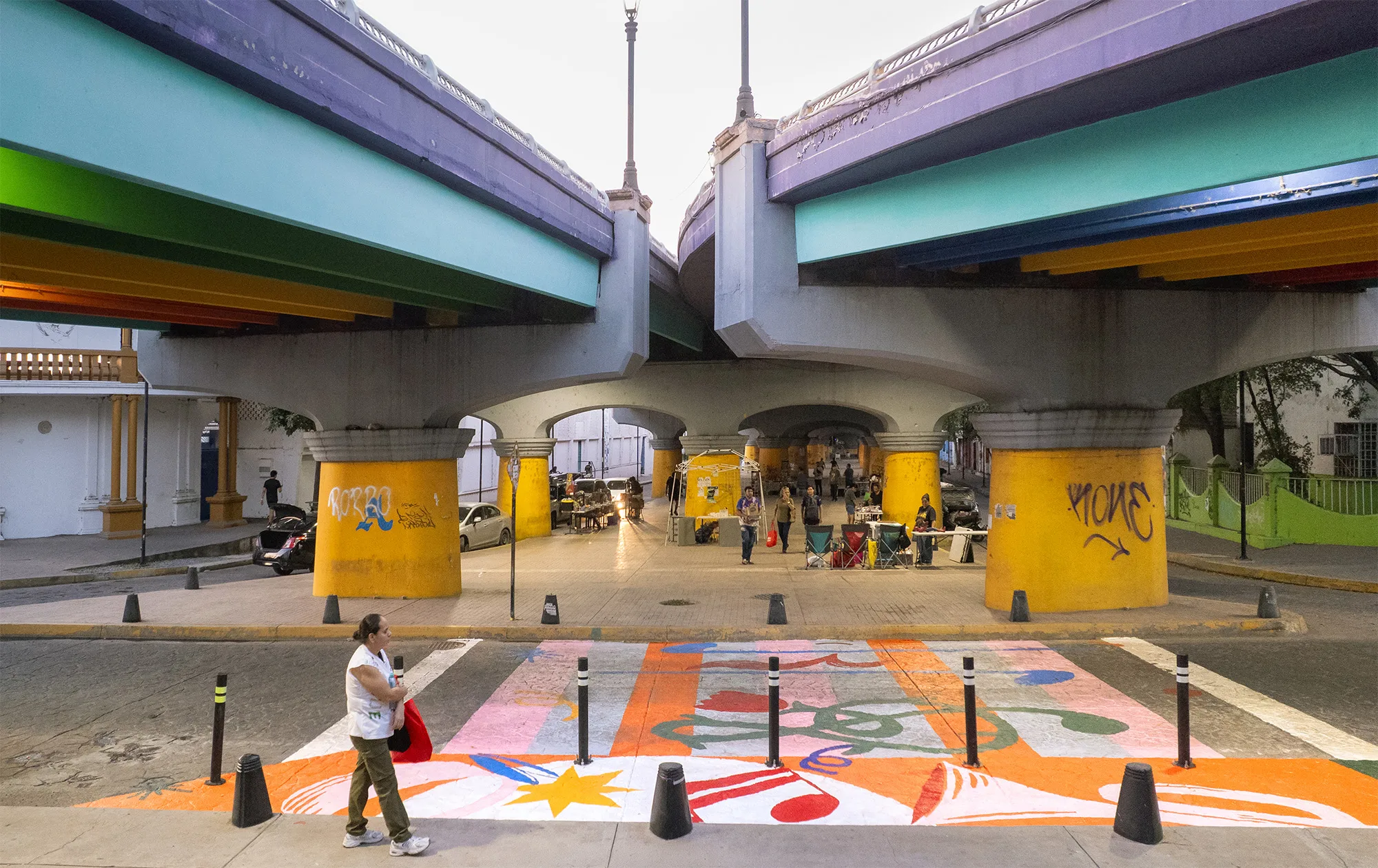
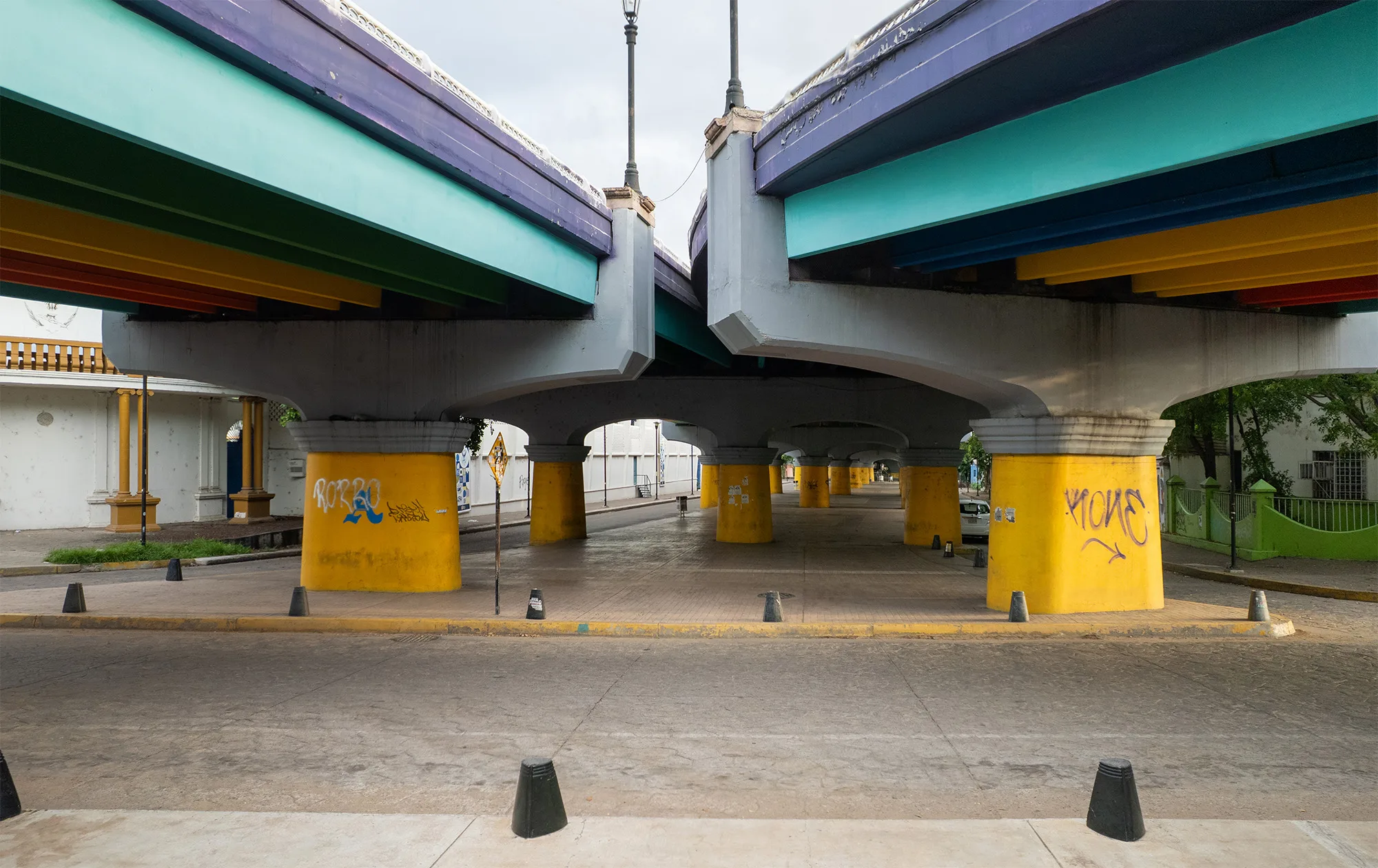
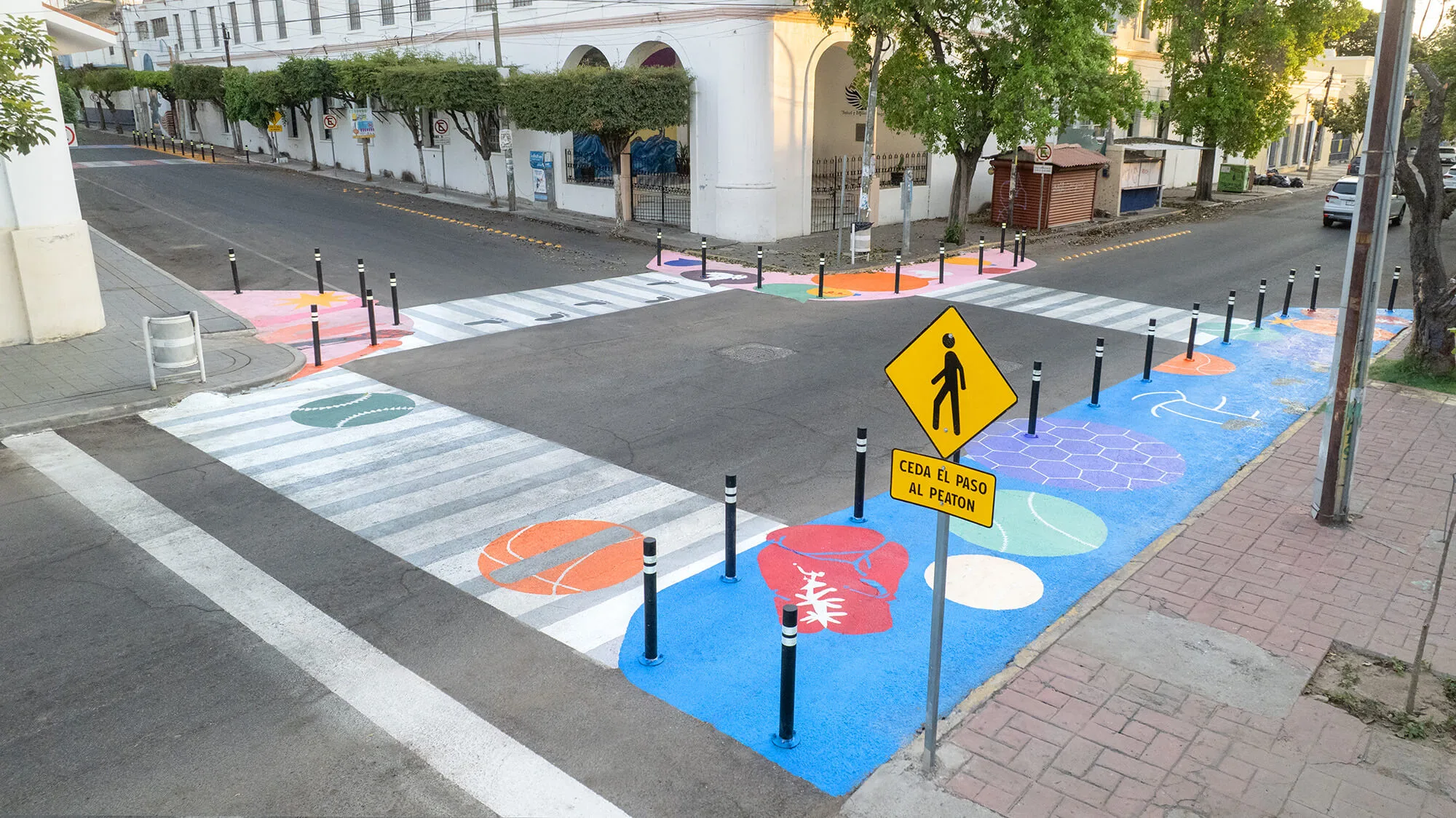
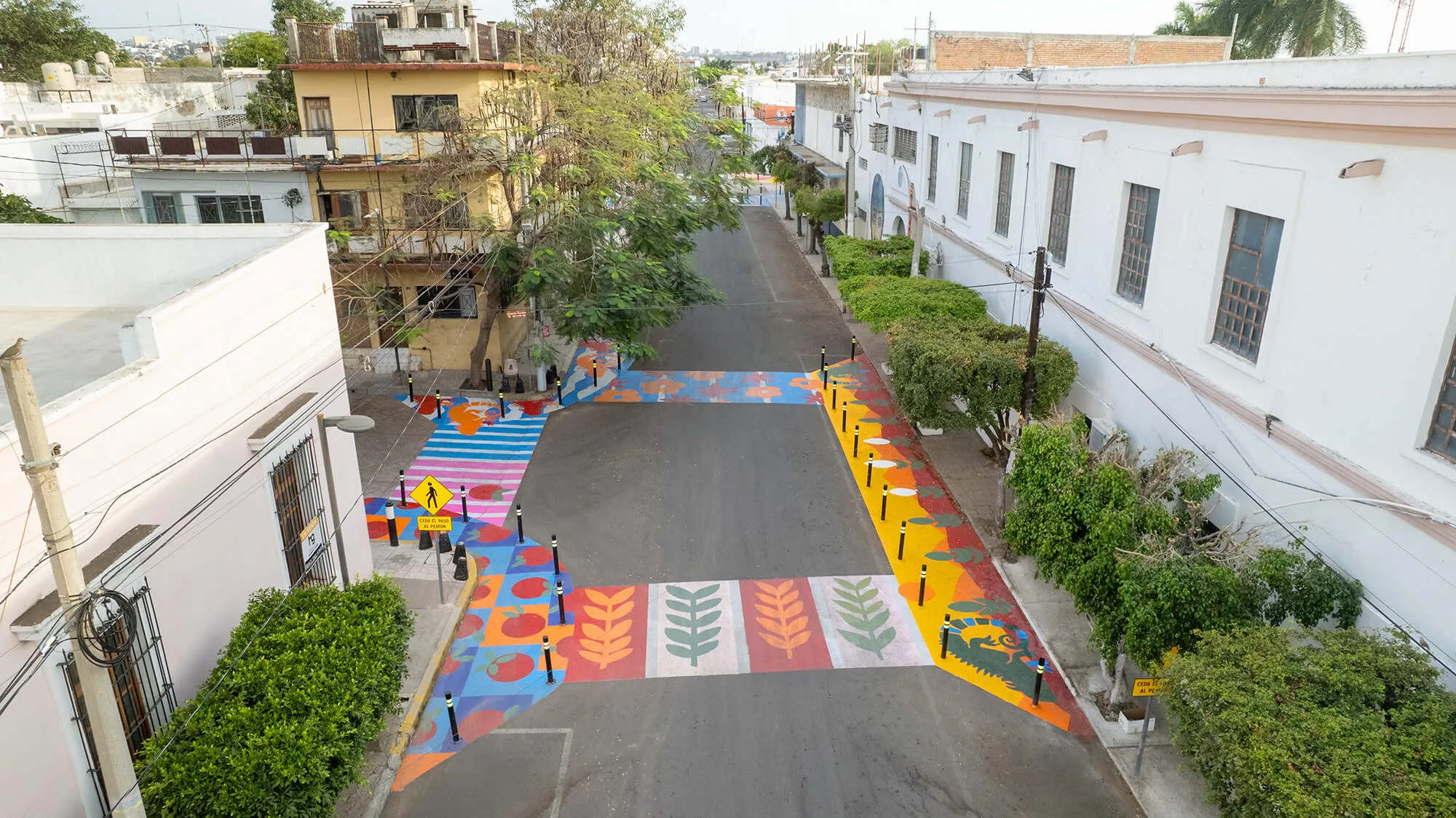
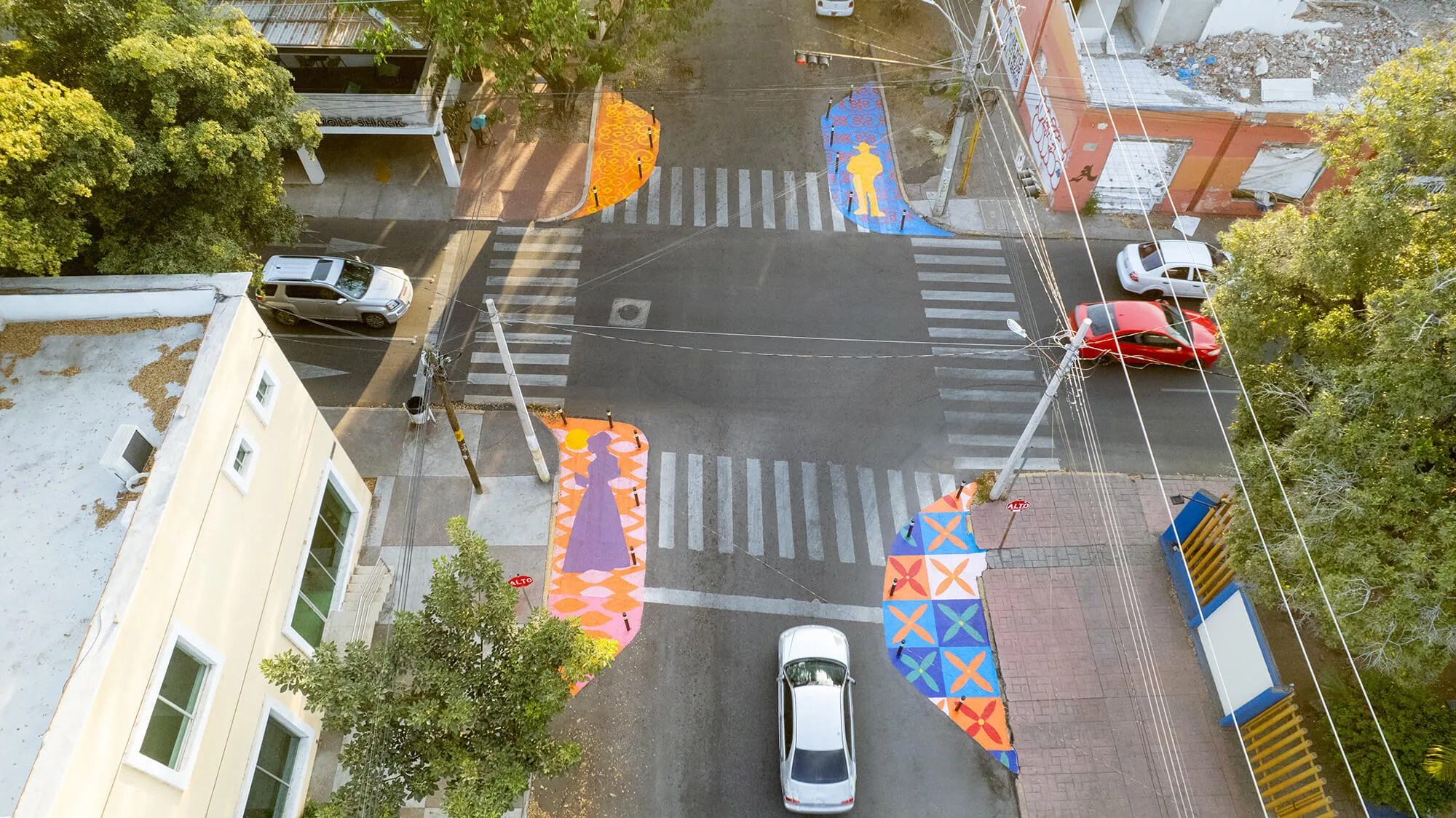
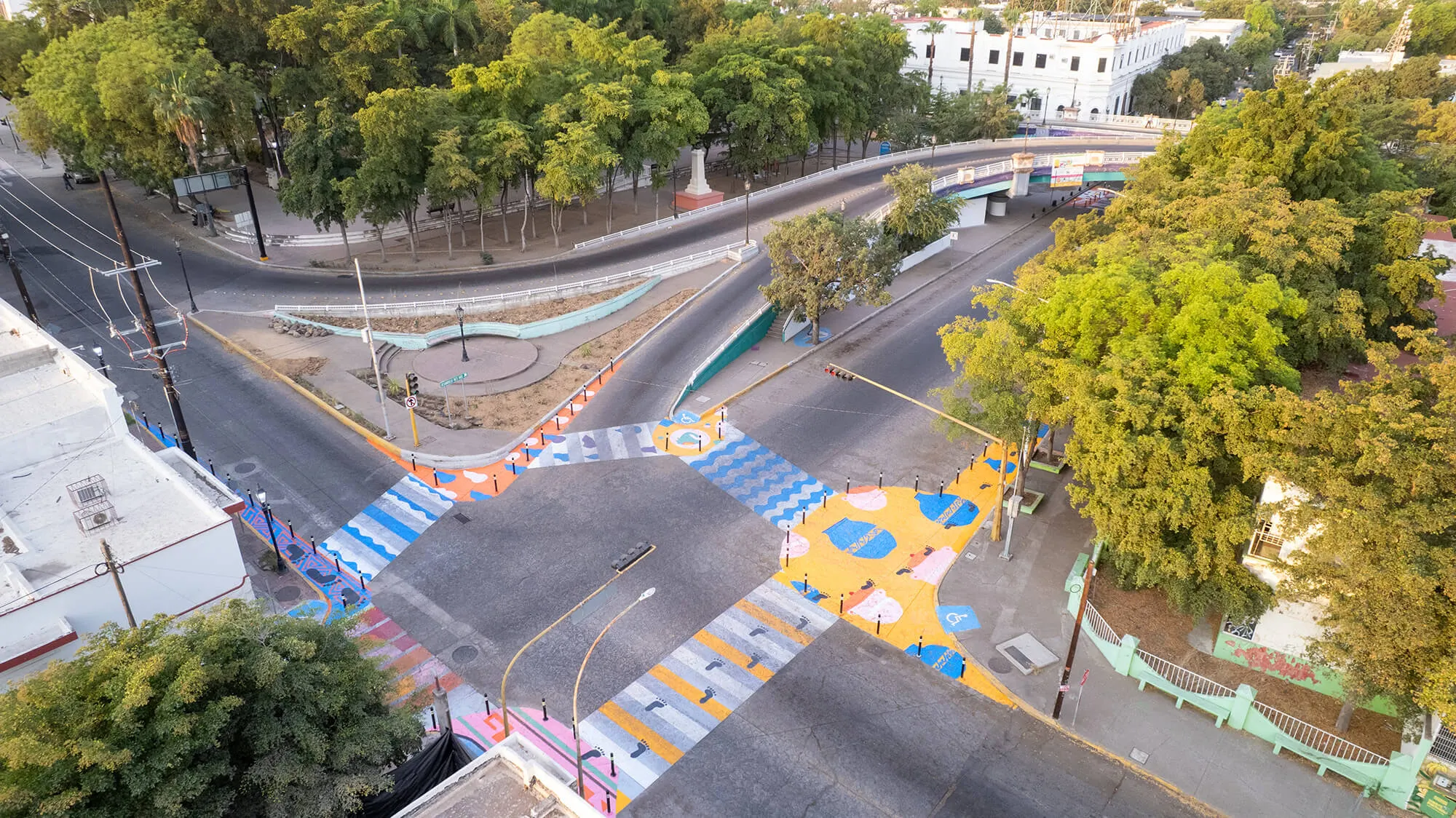
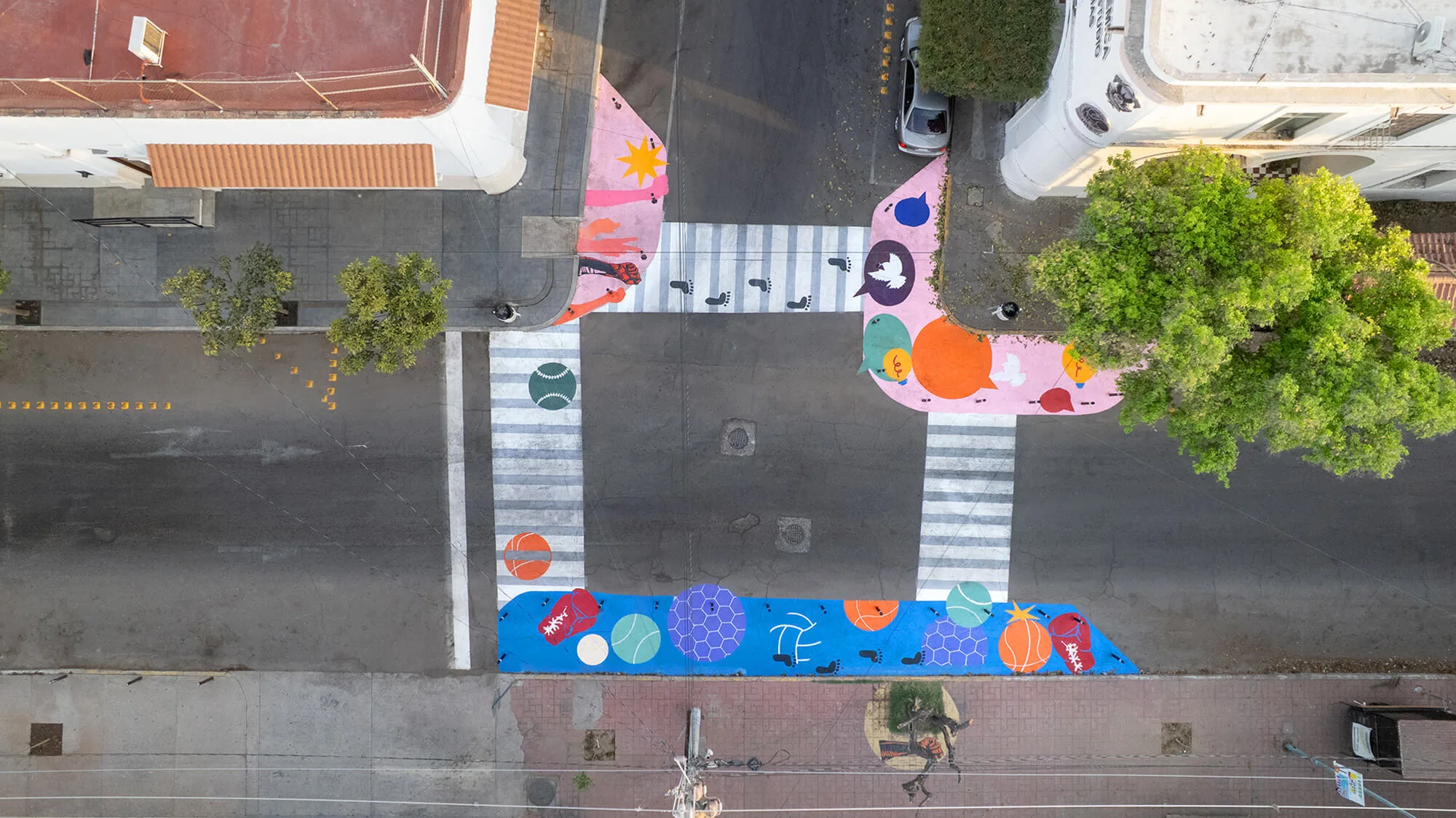
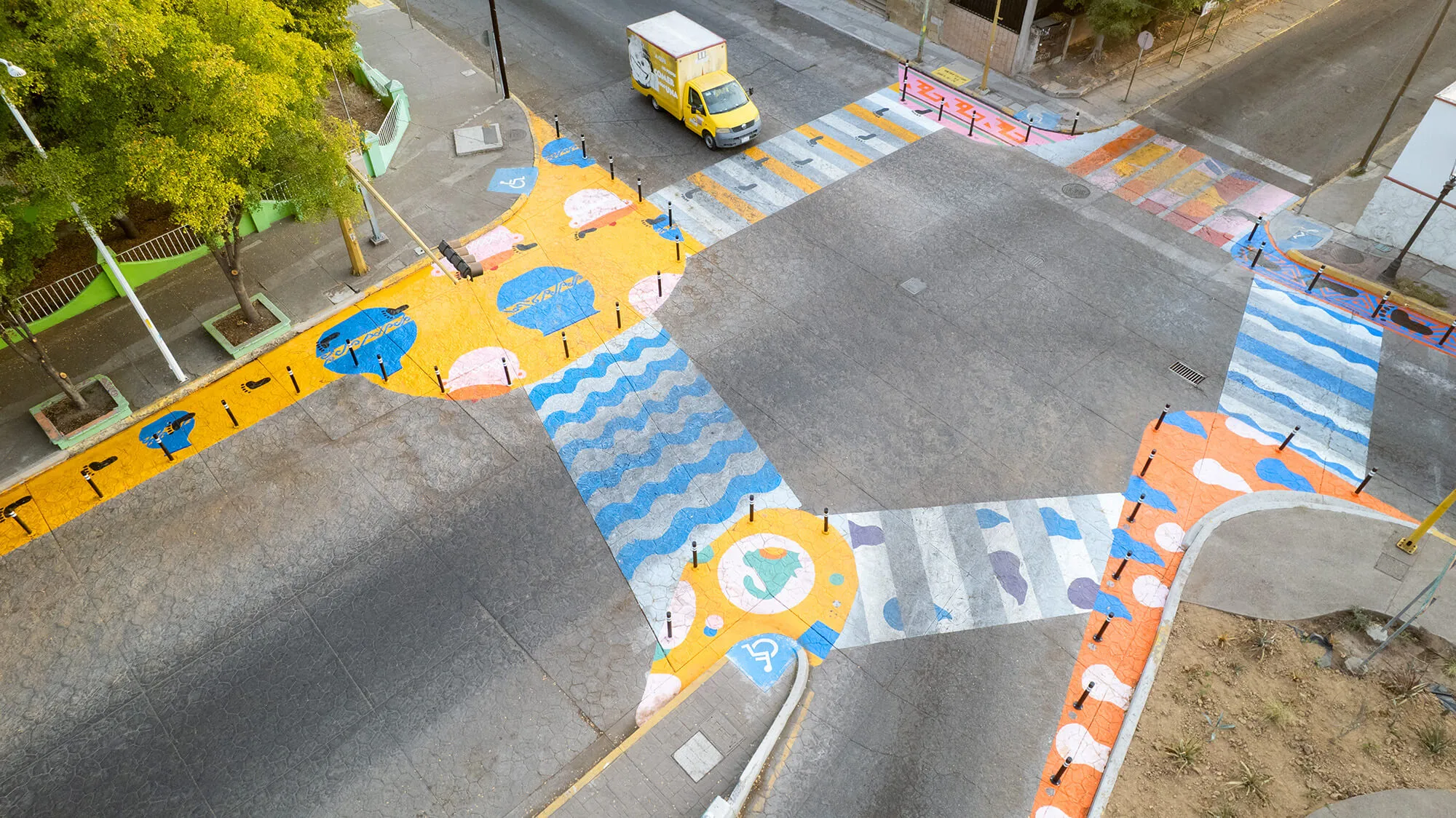
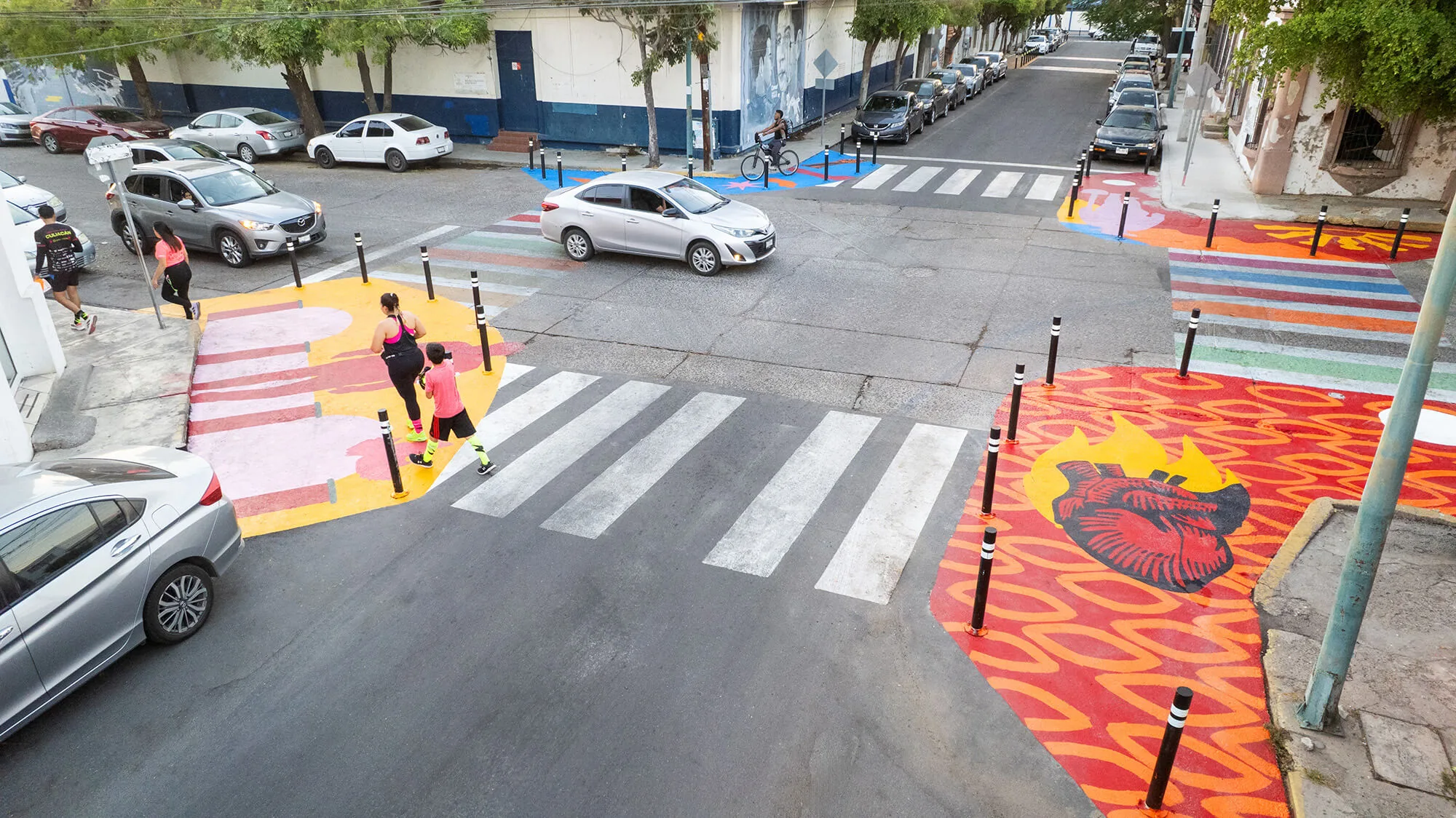
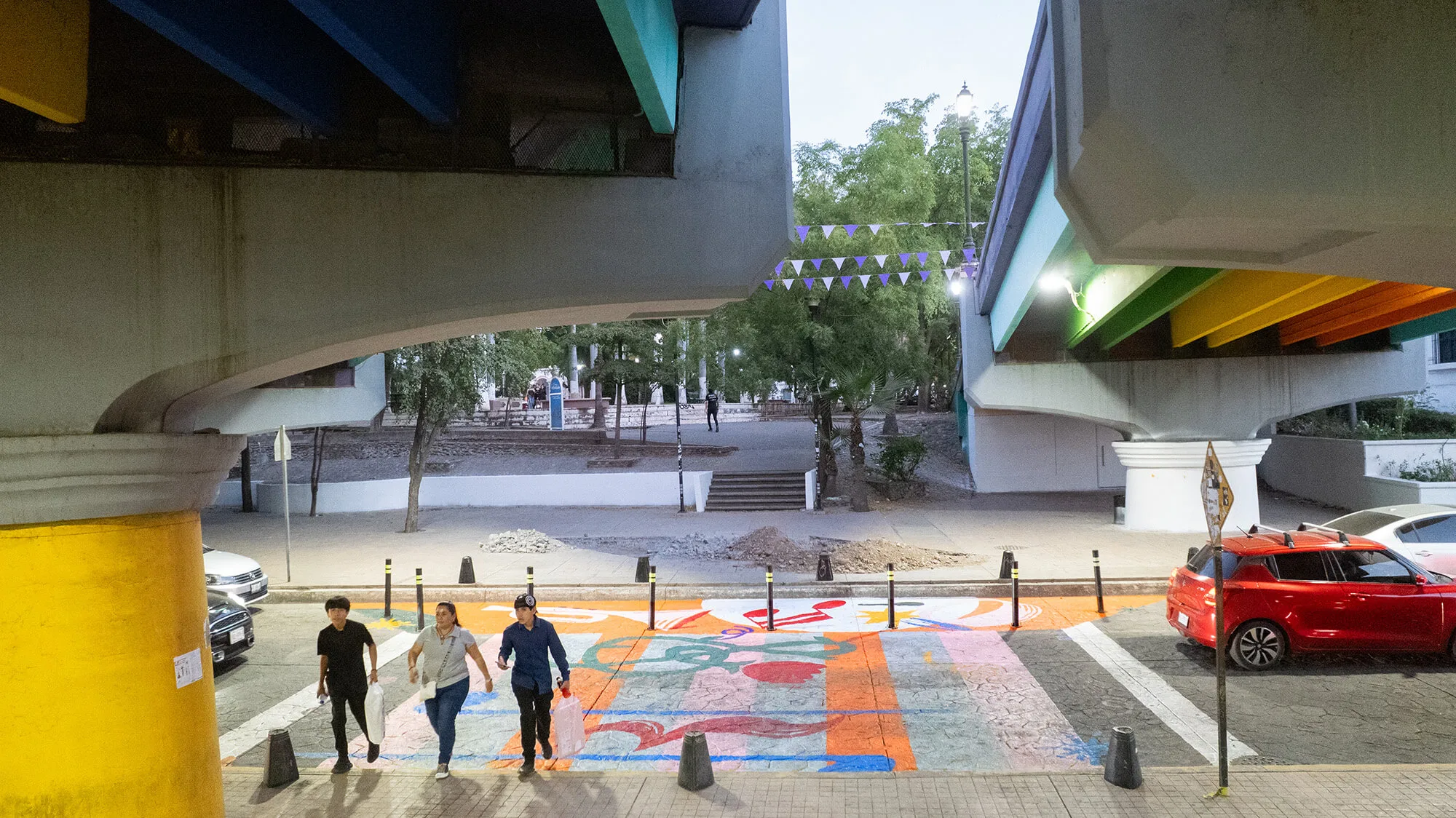
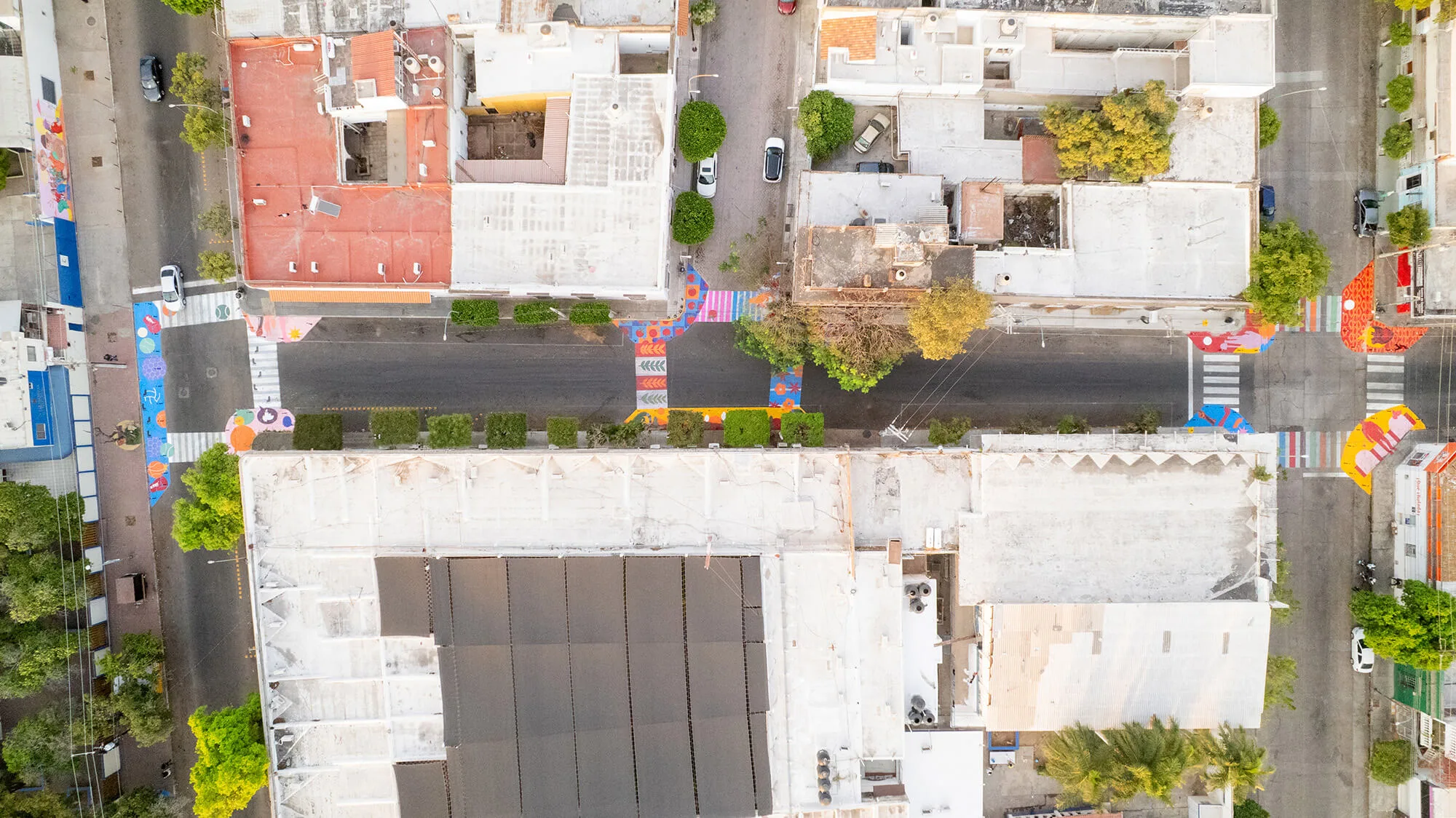
“Pasos por la Paz” (Steps for Peace) transforms seven pedestrian crossings along General Rafael Buelna Tenorio Street in the heart of Culiacán, Sinaloa. This corridor — traveled daily by more than 12,000 students, faculty, and residents of the UAS Central High School and Language Center — lacked safe pedestrian infrastructure. Using high-durability epoxy traffic paint, bollards, signage, and native-species gardens, the project reclaims public space with local cultural identity and incorporates Vision Zero principles to reduce vehicle speeds and protect human life. Through this project, art, road safety, and community are united in a single corridor.
- 11% average reduction in vehicle speeds
- 70% reduction in pedestrian waiting times
Use the sliders to see the transformation
“We are delivering a transformed space — a street designed for those who walk it. This achievement is the result of collective work and the courage to imagine a different city.”
Simei Cebreros Raygoza, Director of IMPLAN Culiacán
Best Practice Highlight: Incorporating Local Identity and Green Infrastructure
Local historians participated in the design process, contributing elements of Culiacán’s cultural and natural heritage to be incorporated into the murals by the artists. Permanent gardens with native species adapted to the local climate were included as long-term green infrastructure, not as temporary ornamental elements, with the potential to help mitigate the urban heat island effect and improve environmental conditions along the corridor.
Press
Entregan ‘Pasos por la Paz’ en Culiacán; transforman Calle Rafael Buelna con enfoque peatonal (Periódico Noroeste, March 5, 2026)
Culiacán implementa “Pasos por la Paz” con arte urbano y movilidad segura (El Sol de Sinaloa, March 25, 2026)
De zona de riesgo a corredor seguro: así quedó la Rafael Buelna tras Pasos por la Paz (Tus Buenas Noticias, March 25, 2026)
¡Por más seguridad vial! Inauguran en Culiacán “Pasos por la Paz” de Bloomberg Philanthropies (Línea Directa, March 25, 2026)
En Culiacán inauguran el mural “Pasos por la Paz (TVP, March 25, 2026)
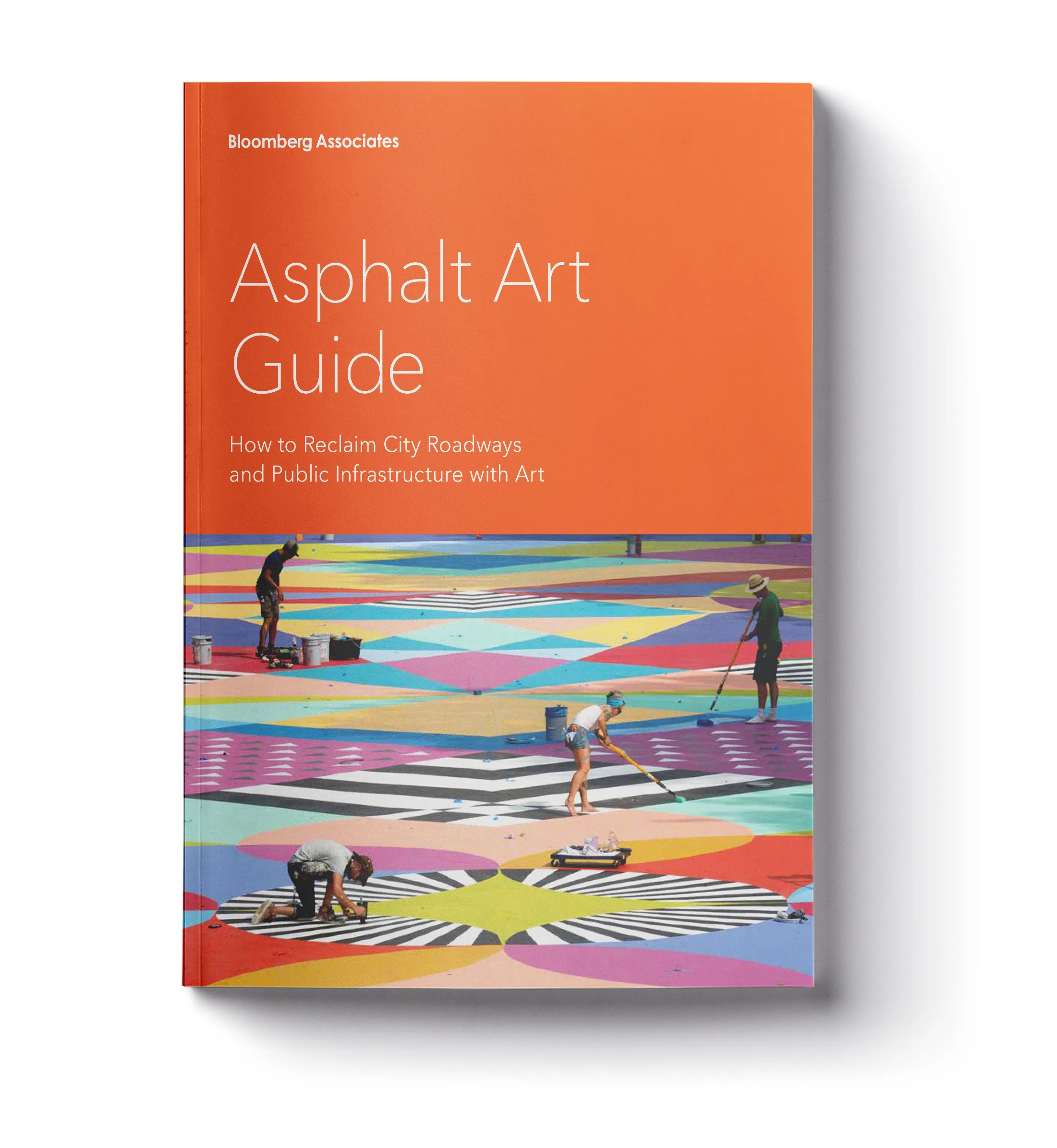
For inspiration and tips for the creation of art on roadways and public places, download the Bloomberg Associates Asphalt Art Guide which features successful plaza and roadway art activations around the world, as well as key steps for developing such projects.
Azcapotzalco, Mexico City
Strengthening community with art, identity, and road safety
The Project
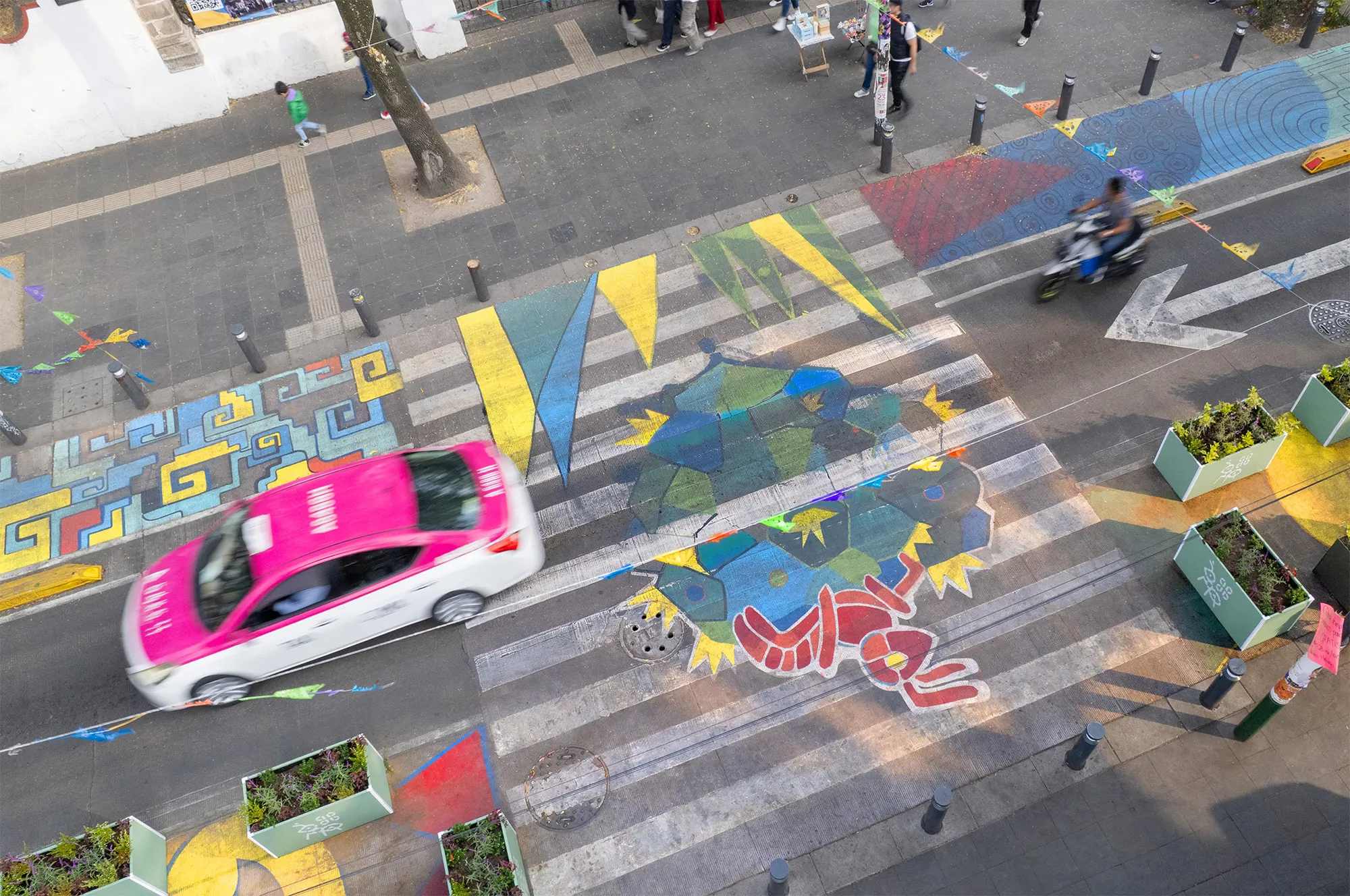
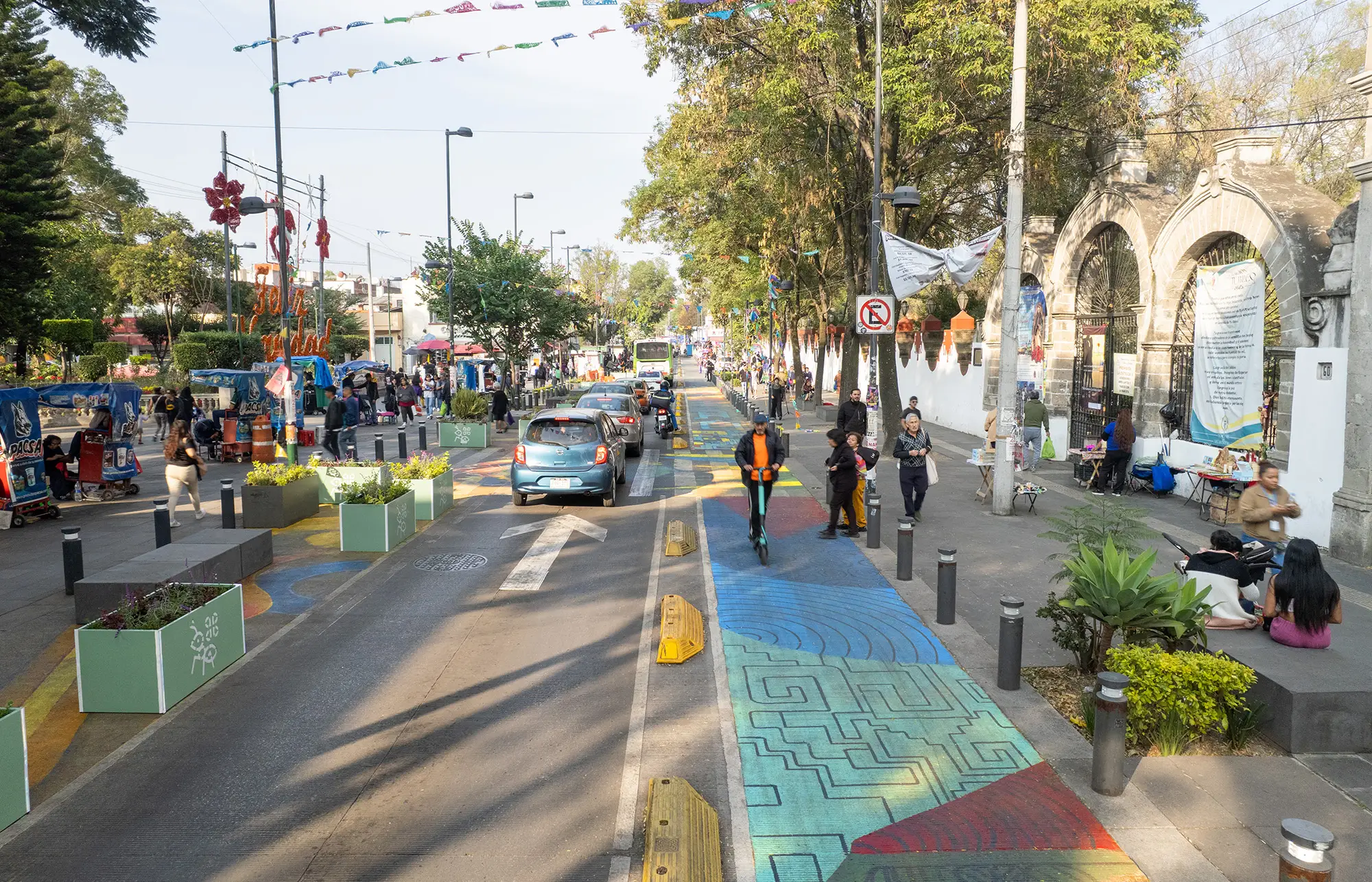
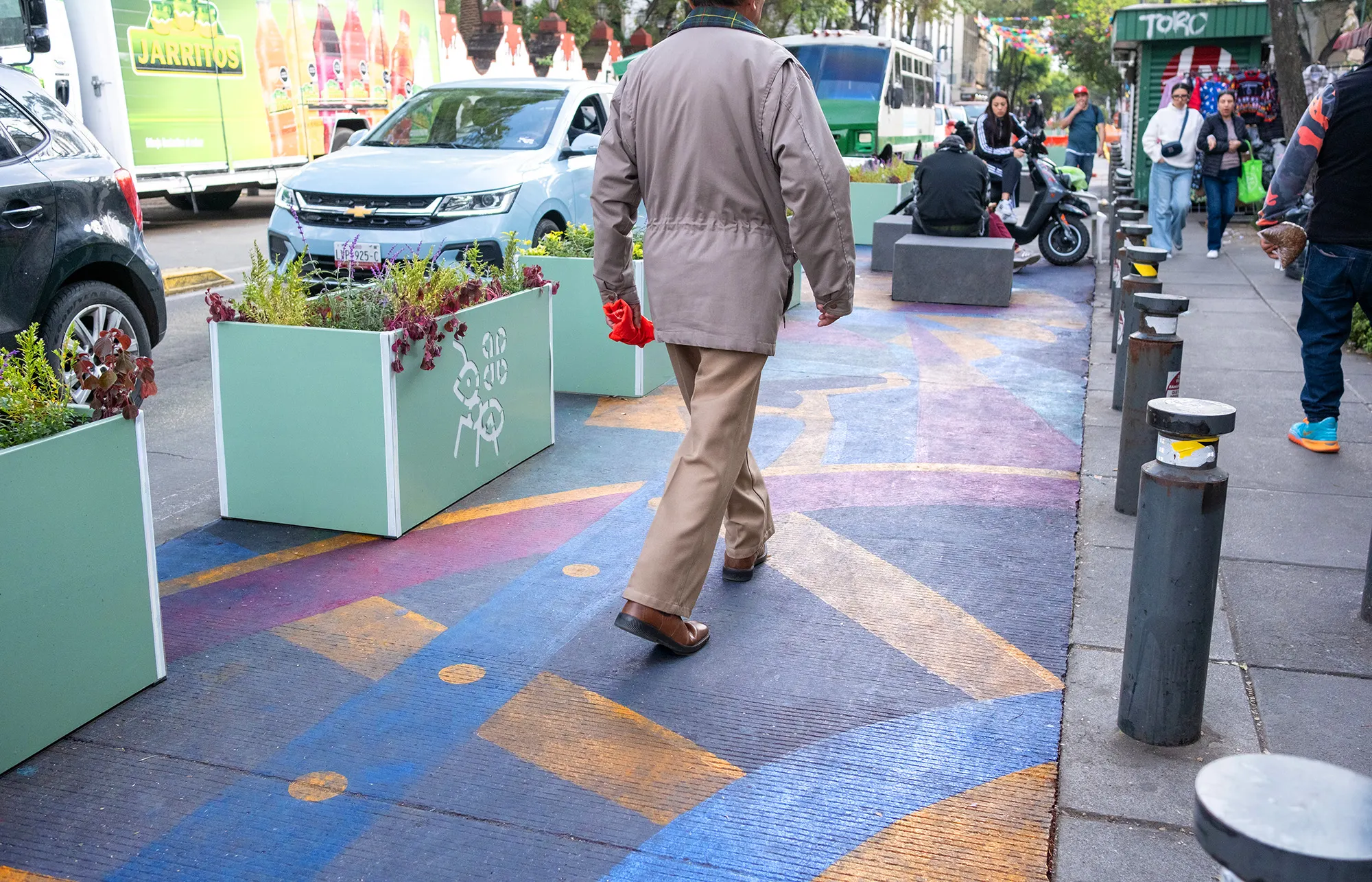
The Center of Azcapotzalco is an area of significant historical and social relevance, characterized by the presence of cultural sites, markets, hospitals, and schools. This diversity of uses generates a highly complex mobility dynamic, where pedestrians and cyclists coexist with intense vehicular traffic and local commerce, leading to everyday conflicts over the use and appropriation of public space.
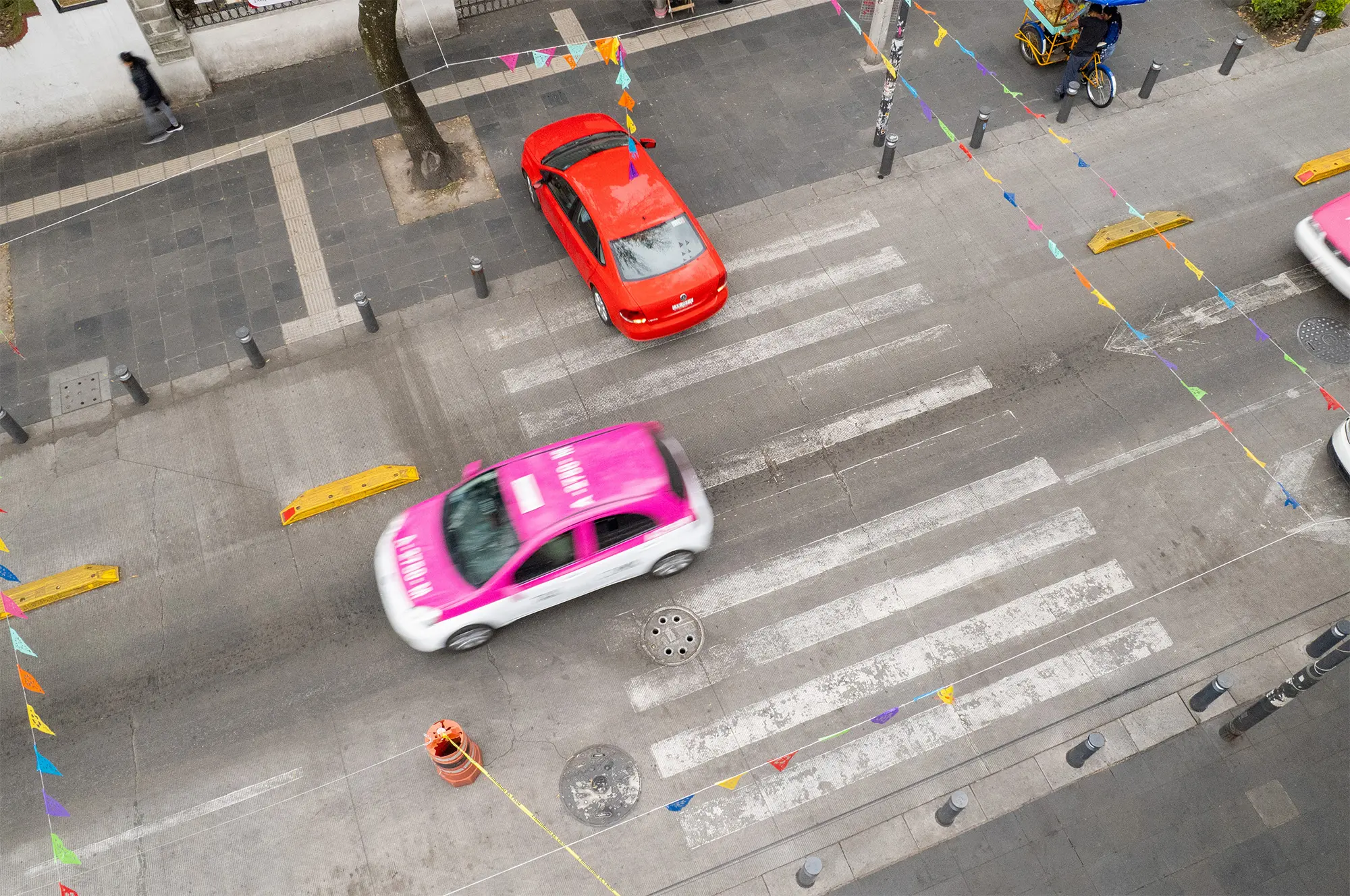
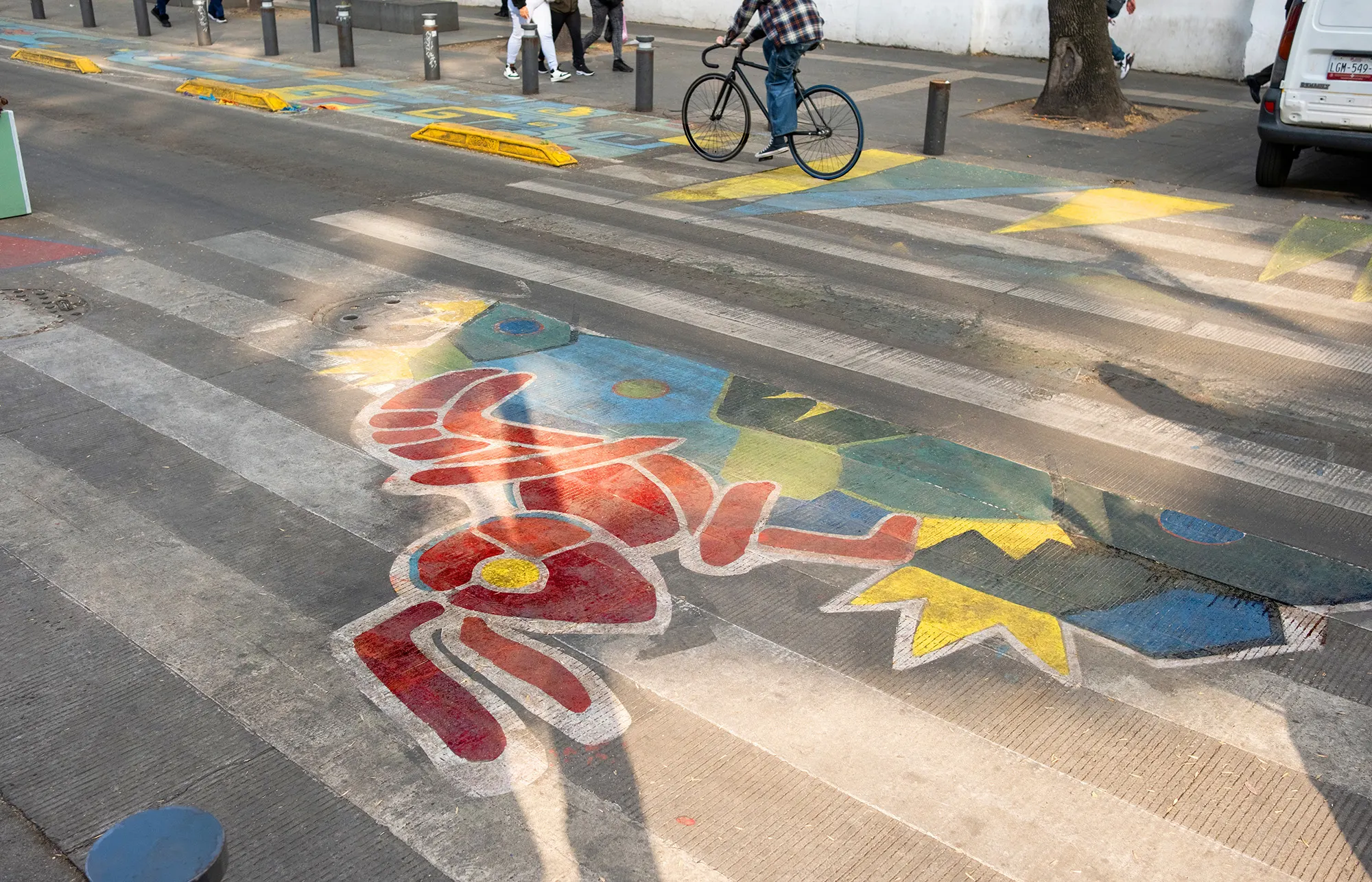
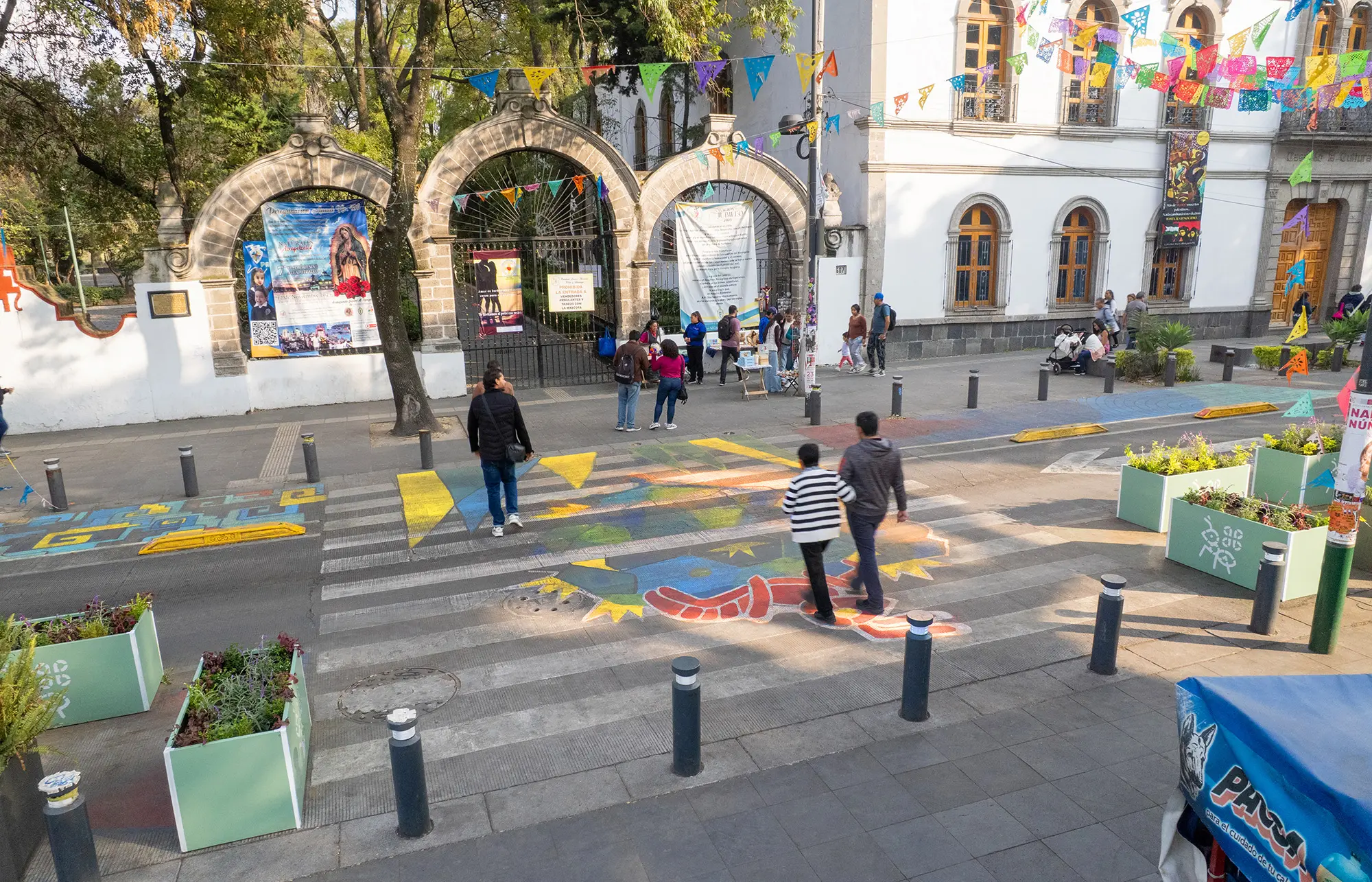
In response to this context, the project developed jointly by the organization Impacto Social y Arte Comunitario, la Alcaldía Azcapotzalco, and Mexico City’s Secretariat of Mobility enabled the creation of over 2,000 square meters of new, safe pedestrian space. This was achieved through the reclamation of a vehicular lane transformed with artistic interventions, road markings, signage, and urban furniture, improving access, encouraging use, and activating social interaction in public space. Additionally, traffic circulation was reorganized at a critical intersection, prioritizing pedestrian mobility and road safety. This intervention demonstrates that participatory public space design is an effective tool for reducing conflicts, improving perceptions of safety, and promoting safe mobility—particularly for children, older adults, and people with reduced mobility.
- 27% increase in pedestrians
- 160% increase in people socializing
- 64% decline in “near-miss” traffic conflicts
This intervention strengthens community identity and citizen participation, and promotes the center of the borough as a cultural hub in the north of the city
Nancy Núñez, Mayor of Azcapotzalco
Use the slider to see the transformation
Best Practice Highlight: From the community, for the community
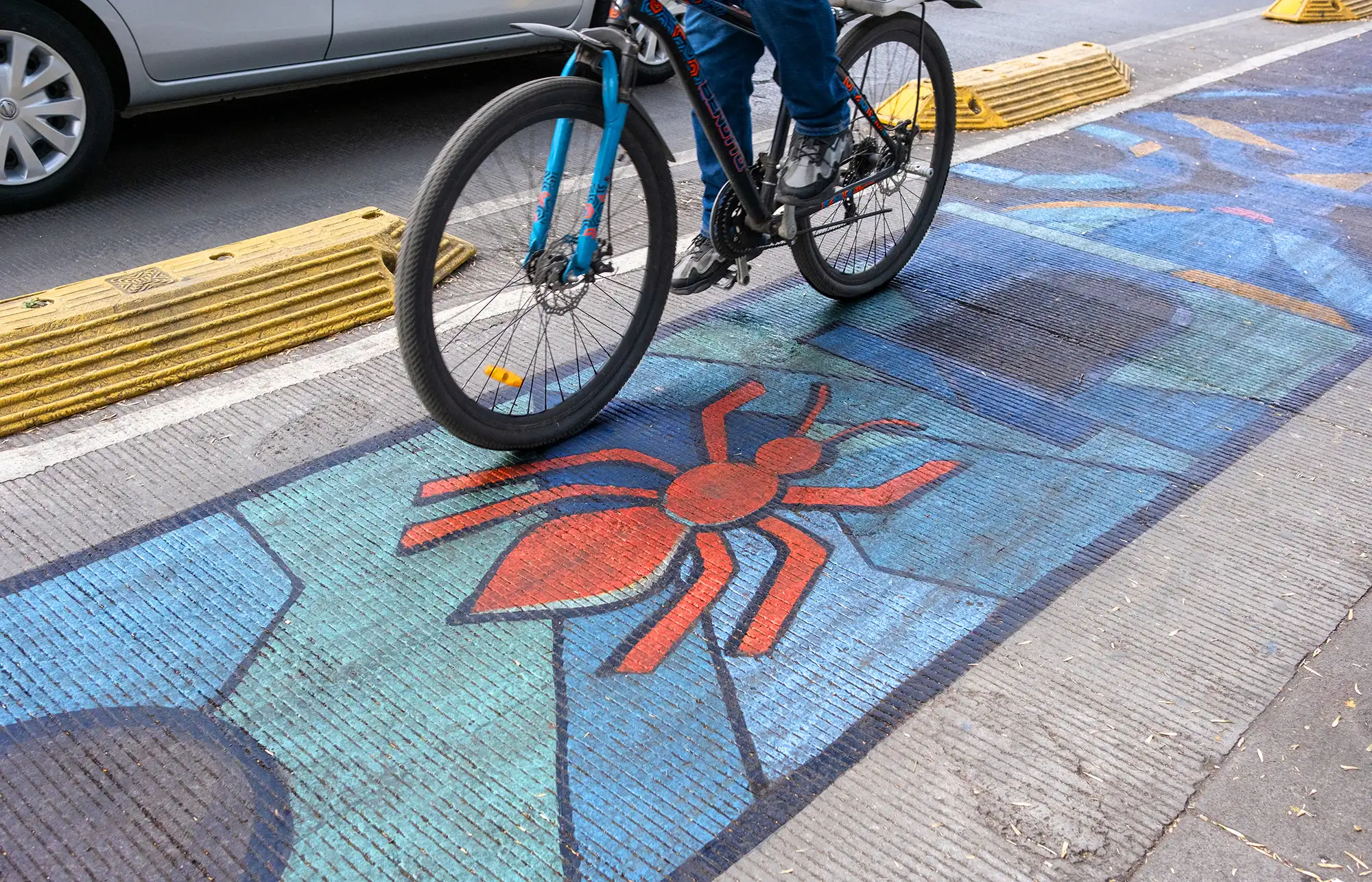
The artistic intervention was designed in collaboration with the Azcapotzalco community through an Art and Urbanism Laboratory (LA URBE), composed of seven local artists and five guest artists; four visual arts workshops with the participation of more than 150 people; and two community painting days involving 300 local residents. The design incorporated Azcapotzalco’s cultural and identity-based elements, as well as the history of the area and the main activities that take place in the surrounding context.
Press
“Impacto Social: Arte y seguridad vial en movimiento” (Blog Multiseñal, October 23, 2025)
“Buscan devolver derechos peatonales en Azcapotzalco con arte en asfalto” (El Sol de México, October 4, 2025)
“Azcapotzalco transformará su centro con arte urbano y participación comunitaria” (El Soberano, July 14, 2025)
“Azcapotzalco tendrá Arte en el Asfalto en colaboración con Impacto Social y Bloomber Philanthropies” (El Heraldo de México, July 14, 2025)
For inspiration and tips for the creation of art on roadways and public places, download the Bloomberg Associates Asphalt Art Guide which features successful plaza and roadway art activations around the world, as well as key steps for developing such projects.
Detroit, Michigan
Carving out calm at a chaotic intersection
The Project
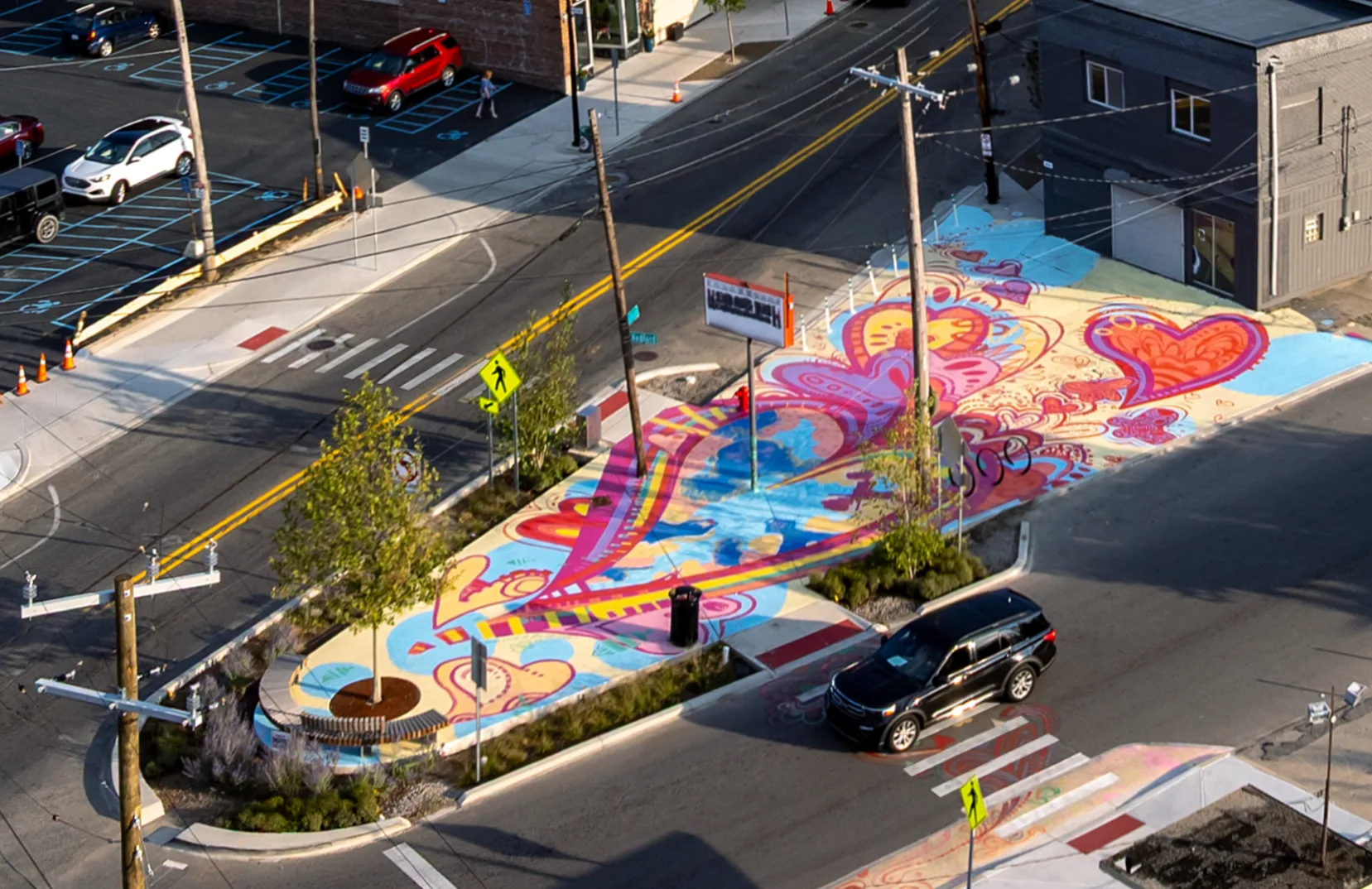
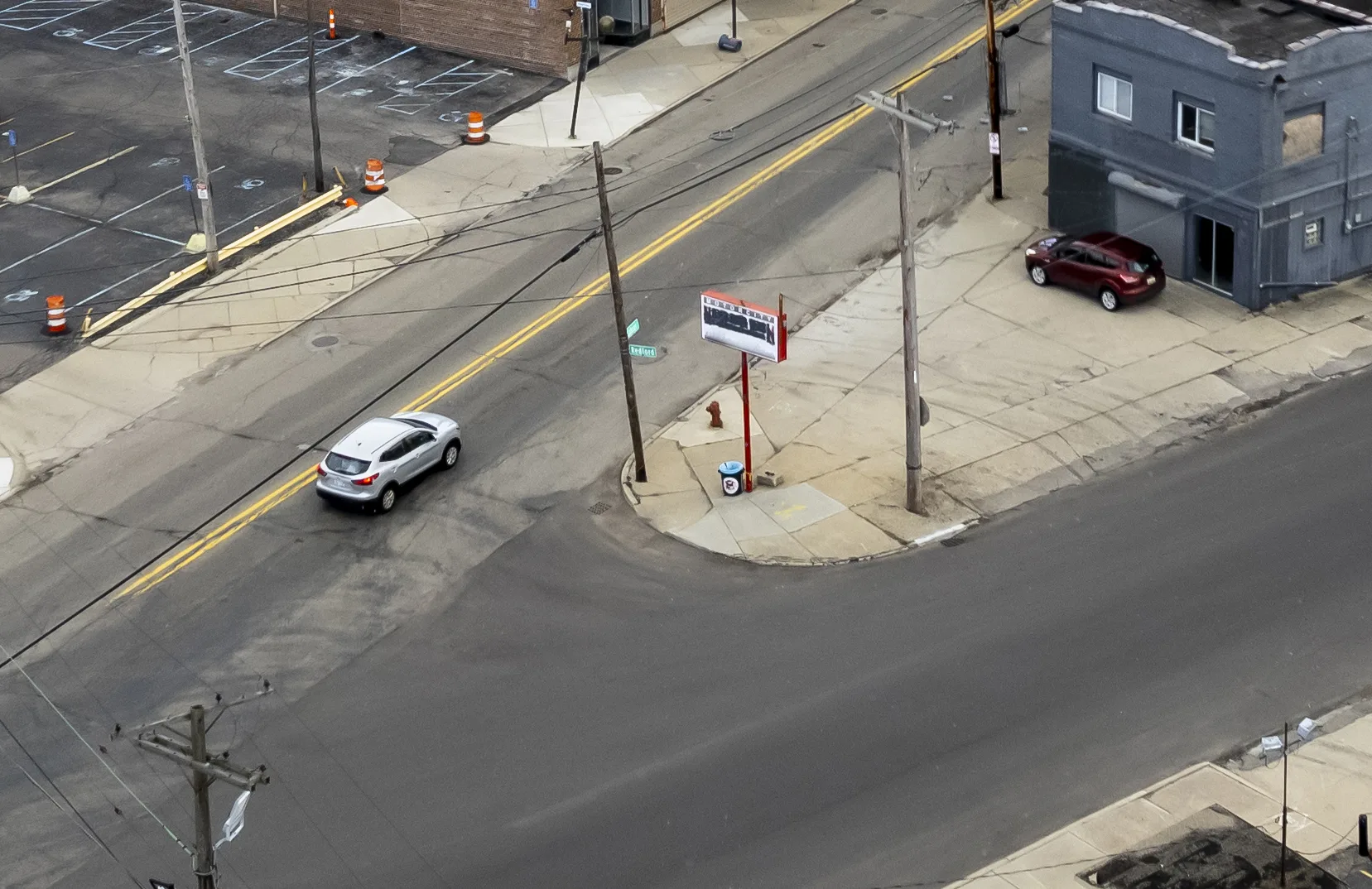
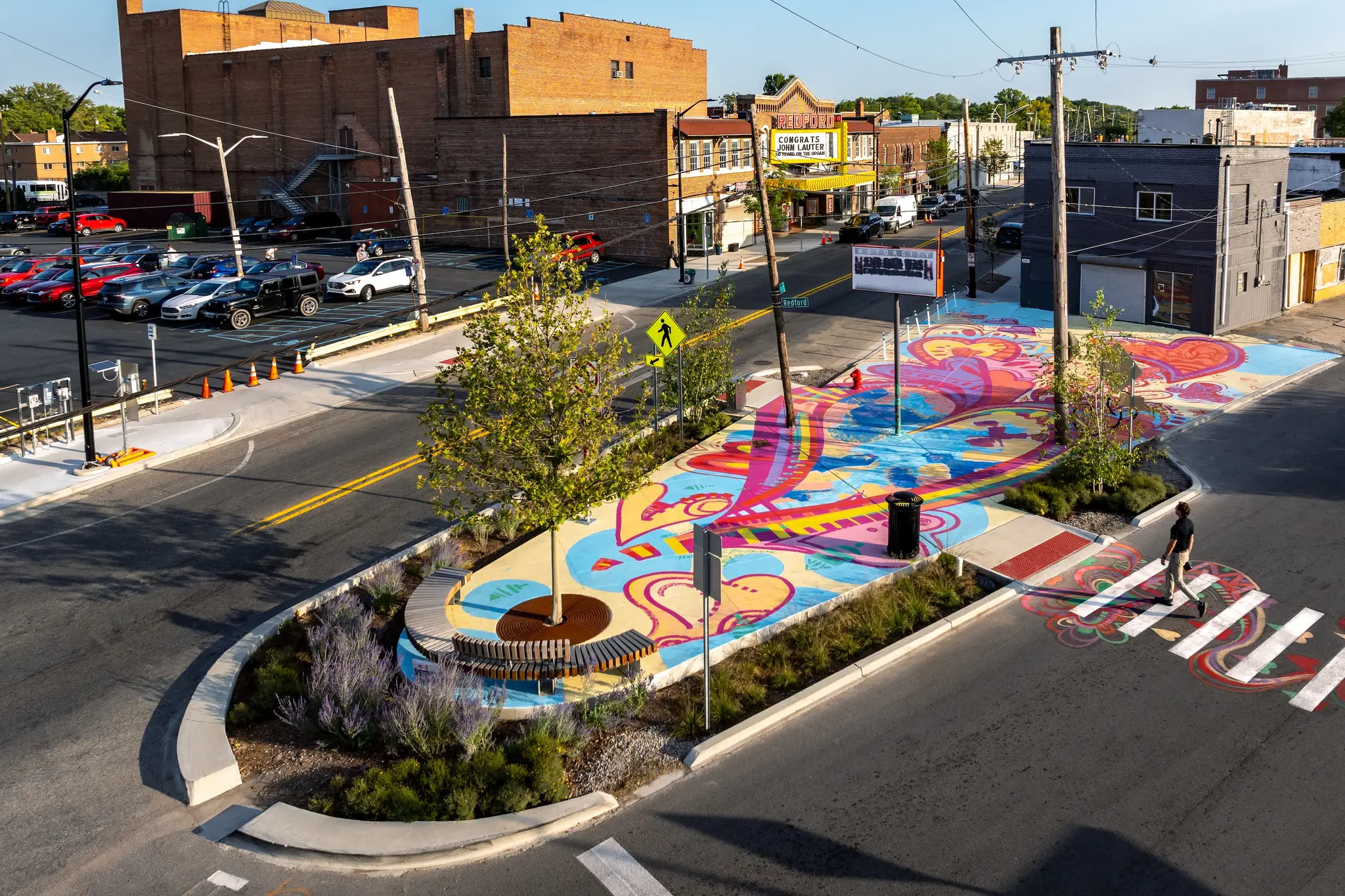
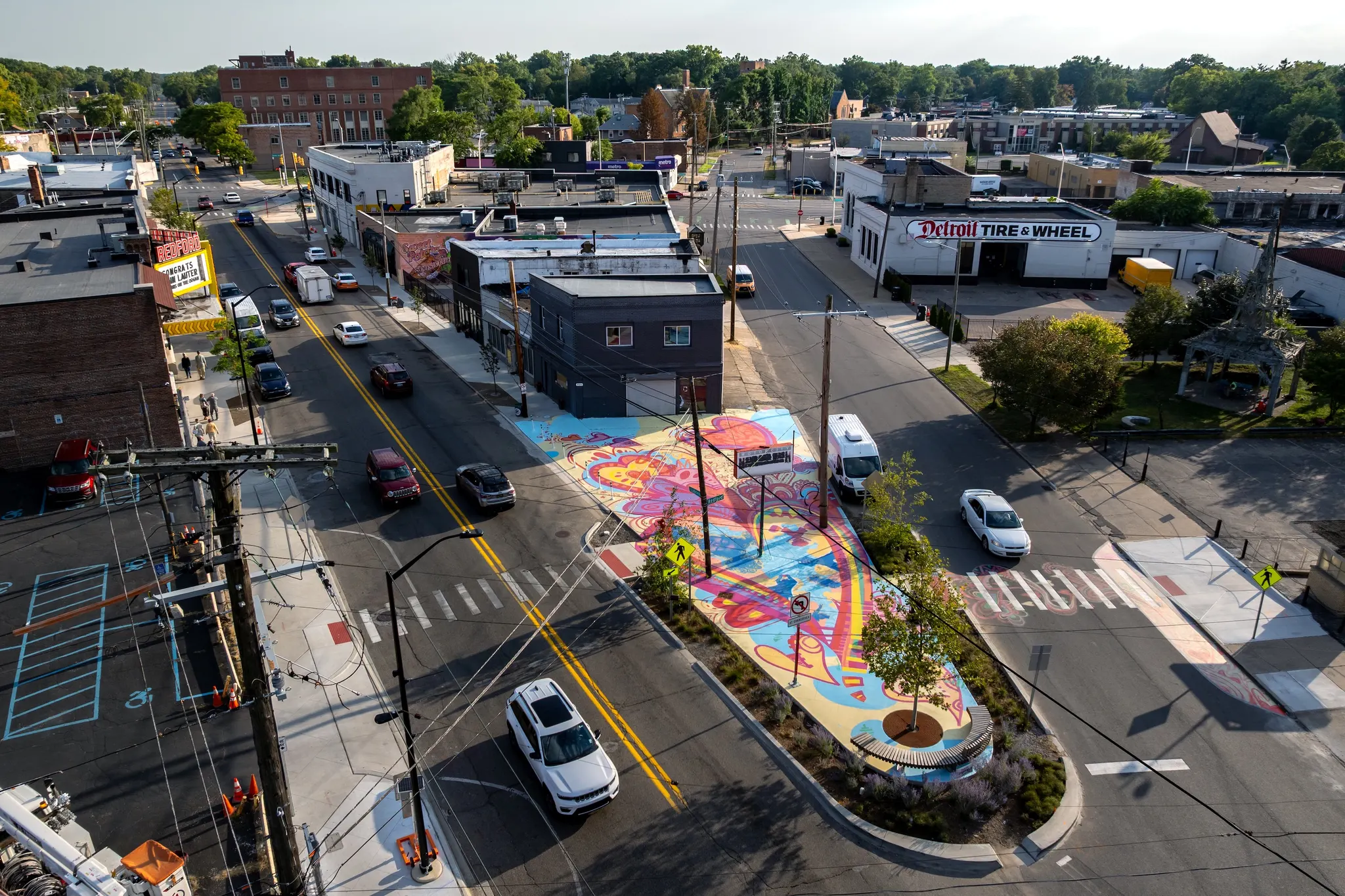
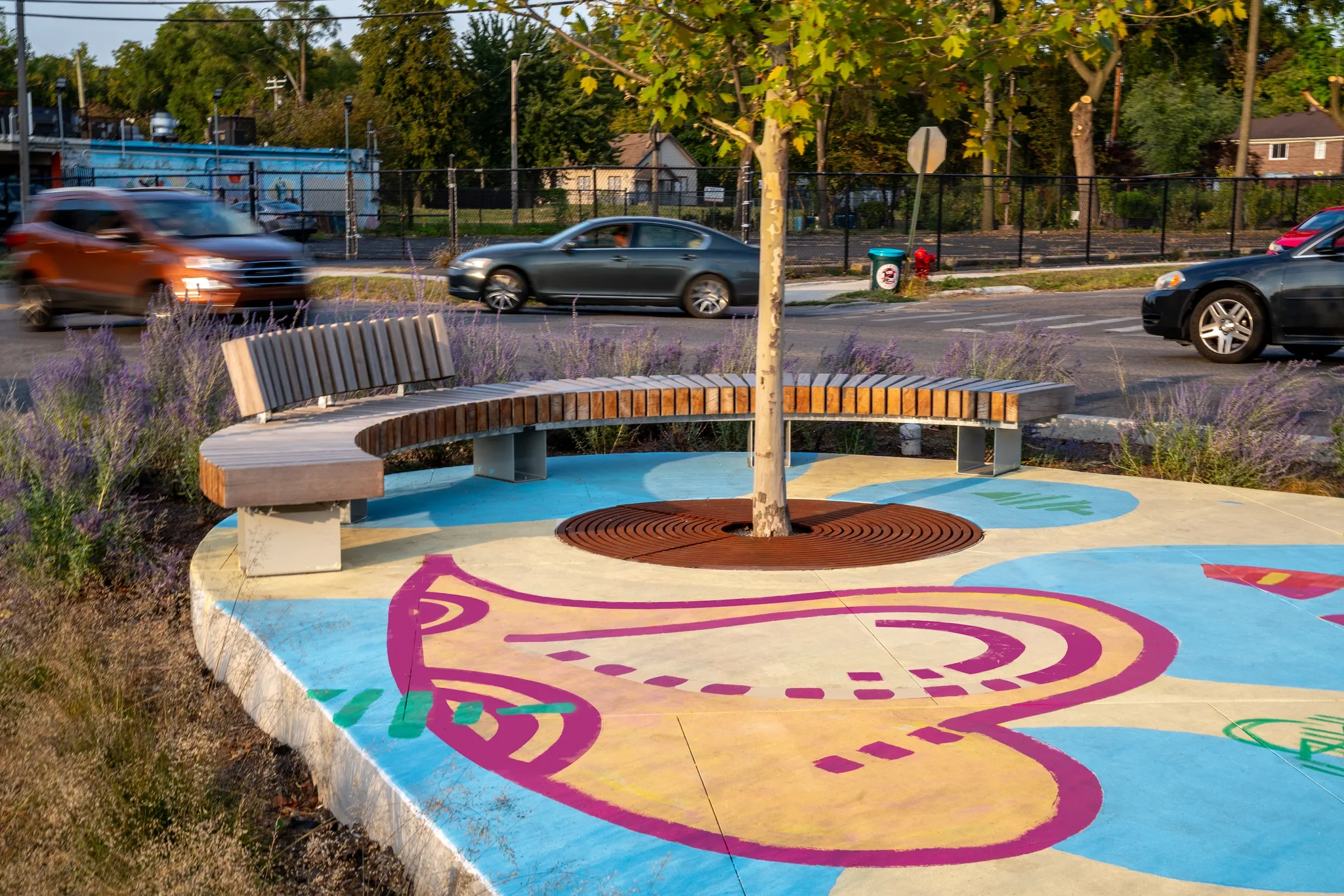
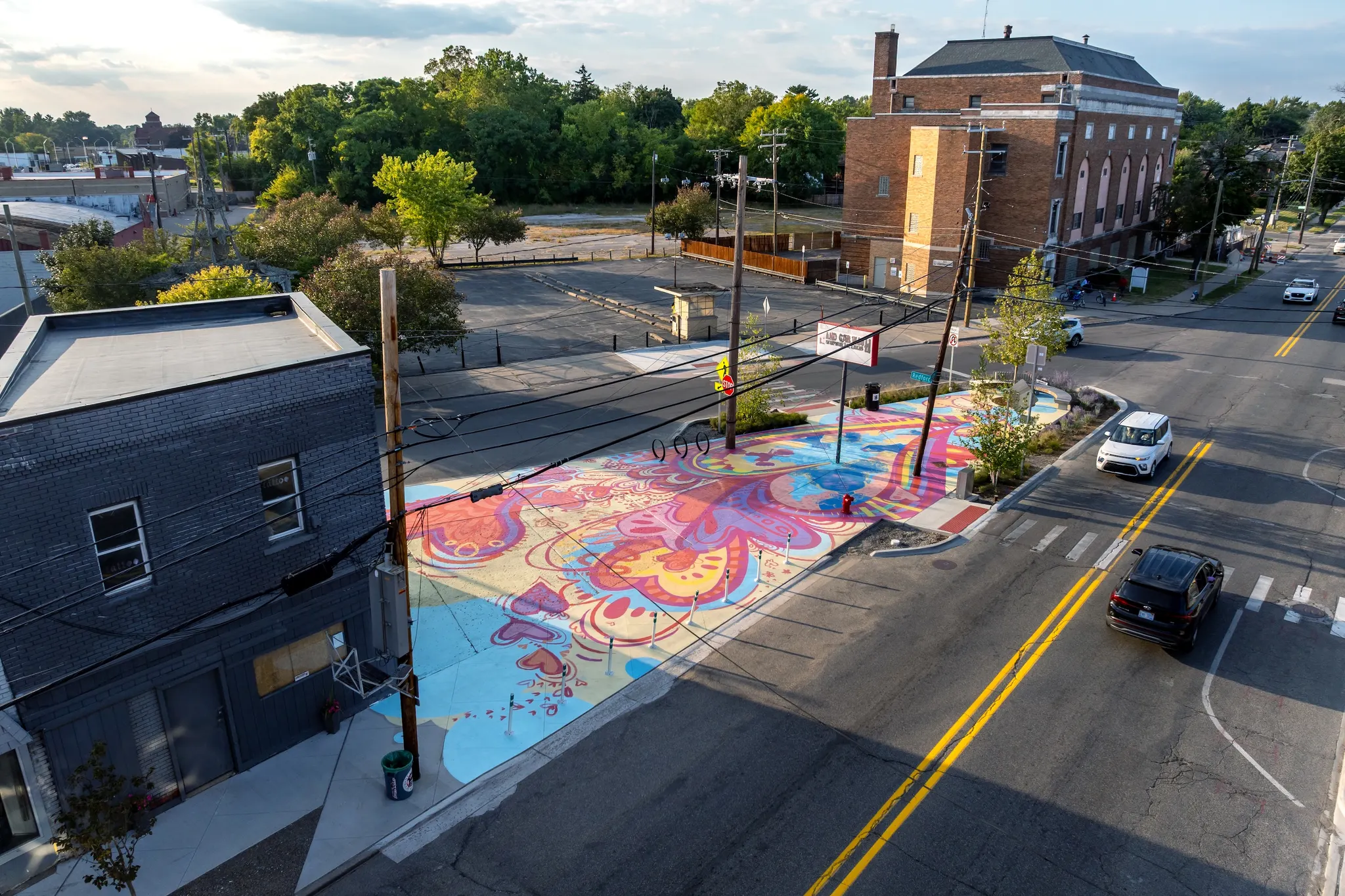
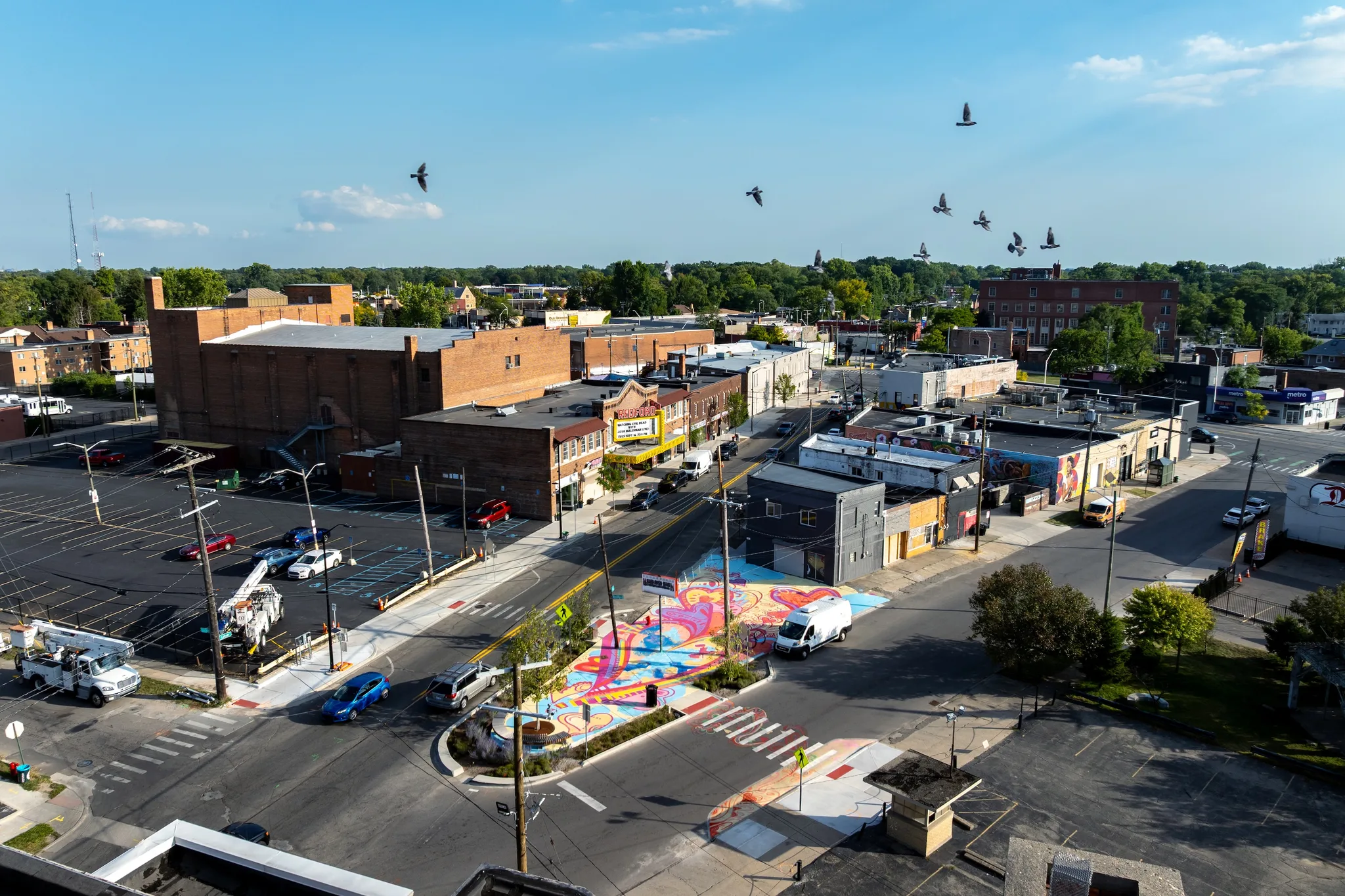
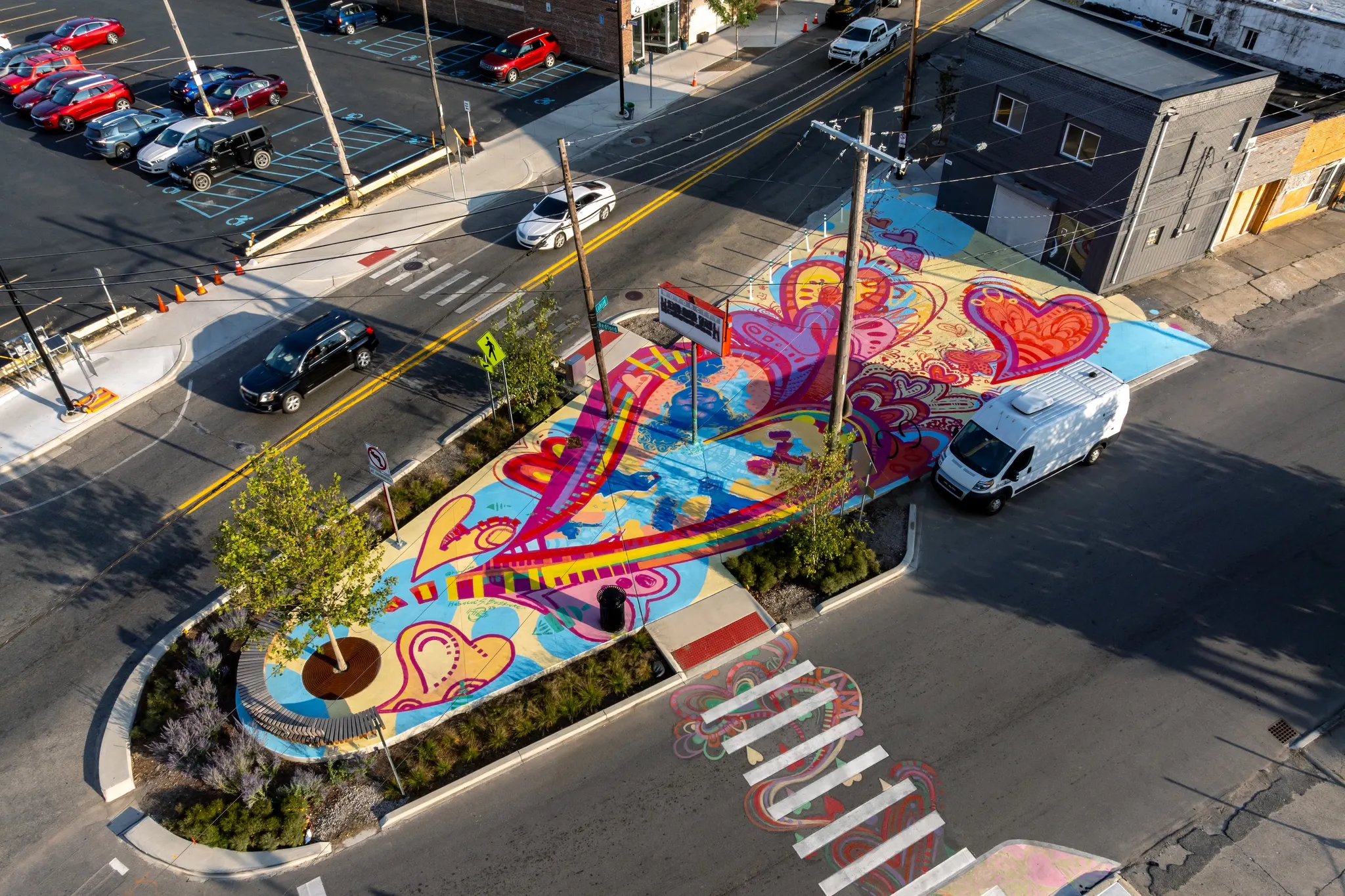
The Leading with Love mural at the Lahser Triangle in Northwest Detroit is the final touch on a community-based safety and walkability project years in the making. With the Redford Theater, the Artist Village, Detroit Blight Busters and long-time businesses like Sweet Potato Sensations, the Old Redford commercial district is a hub for community conversations, arts and resilience. At its heart, the angled intersection of Redford St with Lahser Rd, high vehicle counts and excessive speeding created an unsafe pedestrian environment in an otherwise walkable district. In 2020, during a local public art planning process, residents prioritized this intersection for a mural plaza that would create new pedestrian space, shorten crossing distances and slow car traffic. Winning an Asphalt Art Initiative grant allowed the City to secure additional funds to install a grade-separated plaza and landscaping in advance of the final mural. Per the Old Redford Public Art plan, an artist advisory group led by the Old Redford Business Association selected the artist and design. The project is a tribute to the power of community building when leading with love.
- 40% reduction in crossing distance
- 2 new crosswalks
- 1,700 square feet of roadway reclaimed for pedestrians
“The streetscape is now transformed into a place where everyone can gather, fostering a strong sense of togetherness and inclusivity.”
Augusta Morrison, Program Director, Sidewalk Detroit
Use the slider to see the transformation
Press
Town Hall Engages Old Redford Residents to Have Voice in Public Art, (Model D, July 2020)
For inspiration and tips for the creation of art on roadways and public places, download the Bloomberg Associates Asphalt Art Guide which features successful plaza and roadway art activations around the world, as well as key steps for developing such projects.

Mocochá, Mexico
Painting safe passages through the patterns of Yucatán
The Project
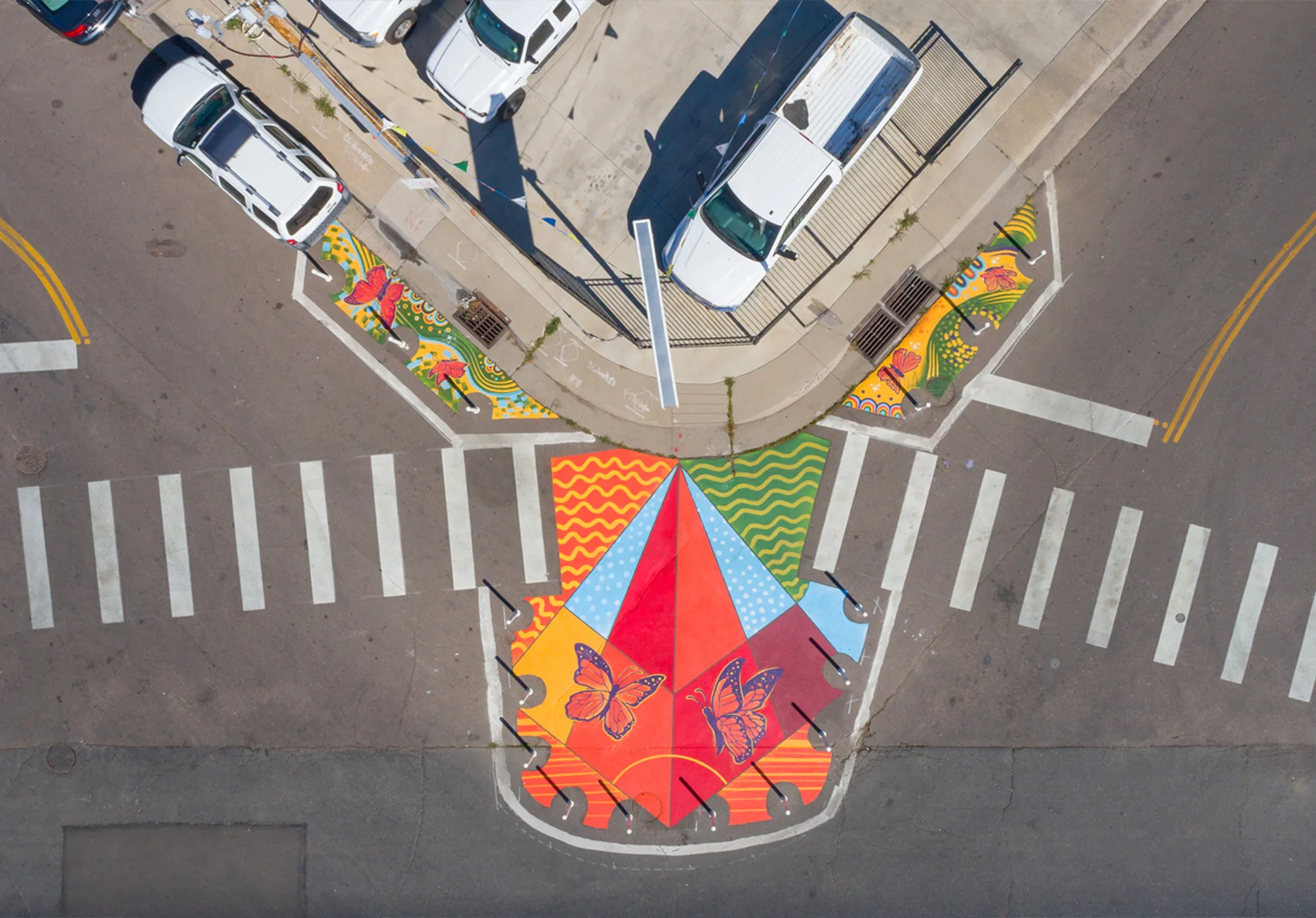
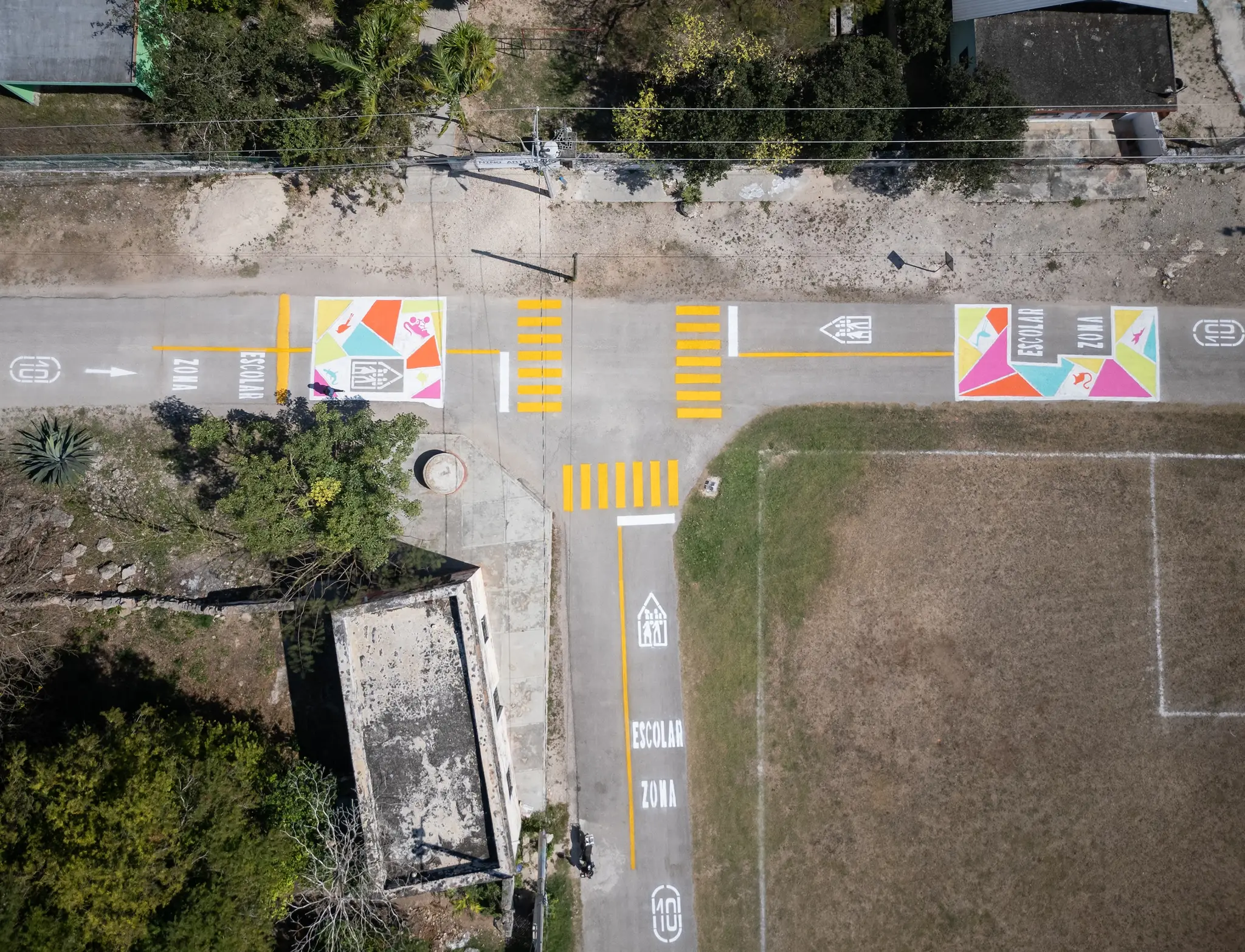
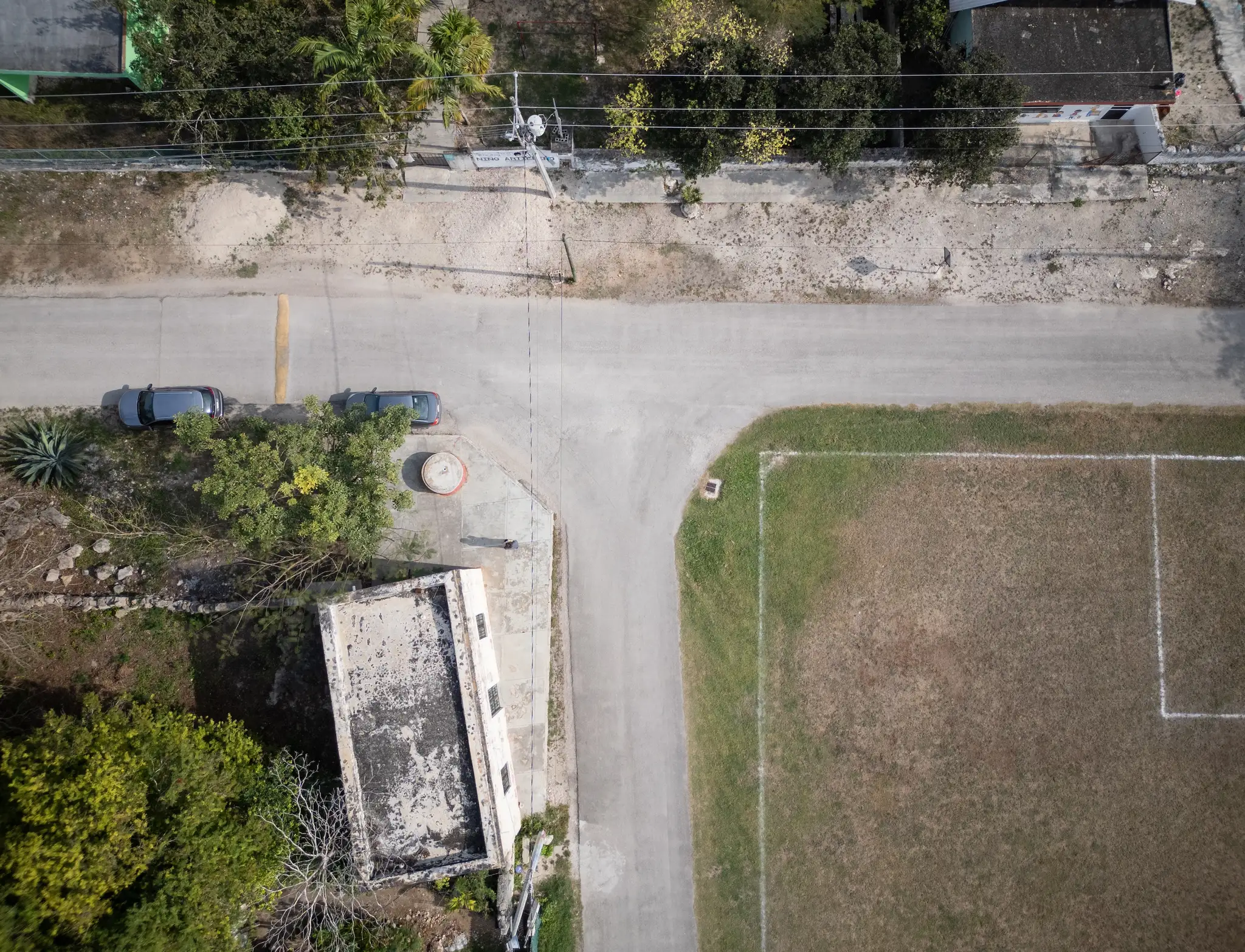
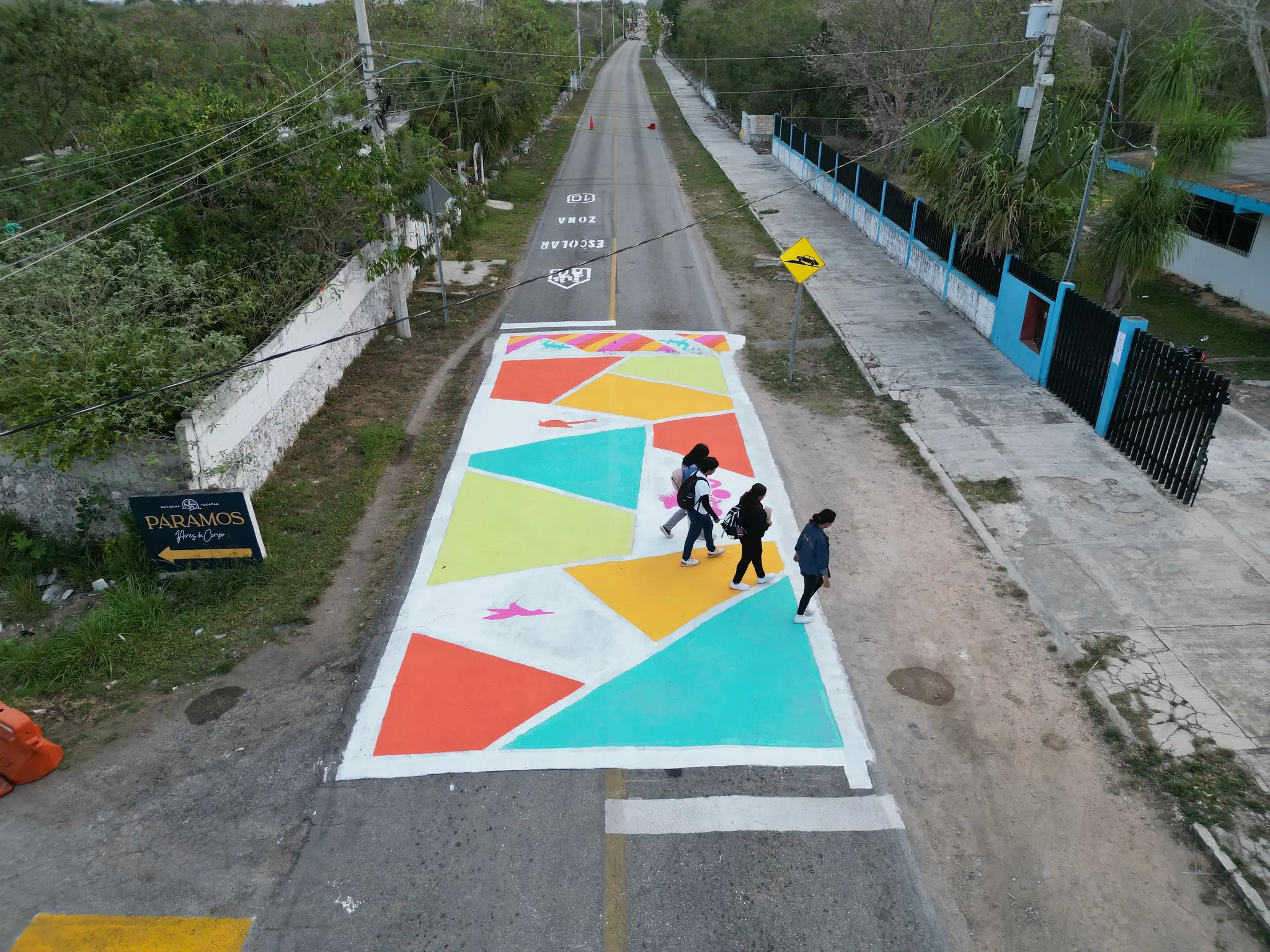
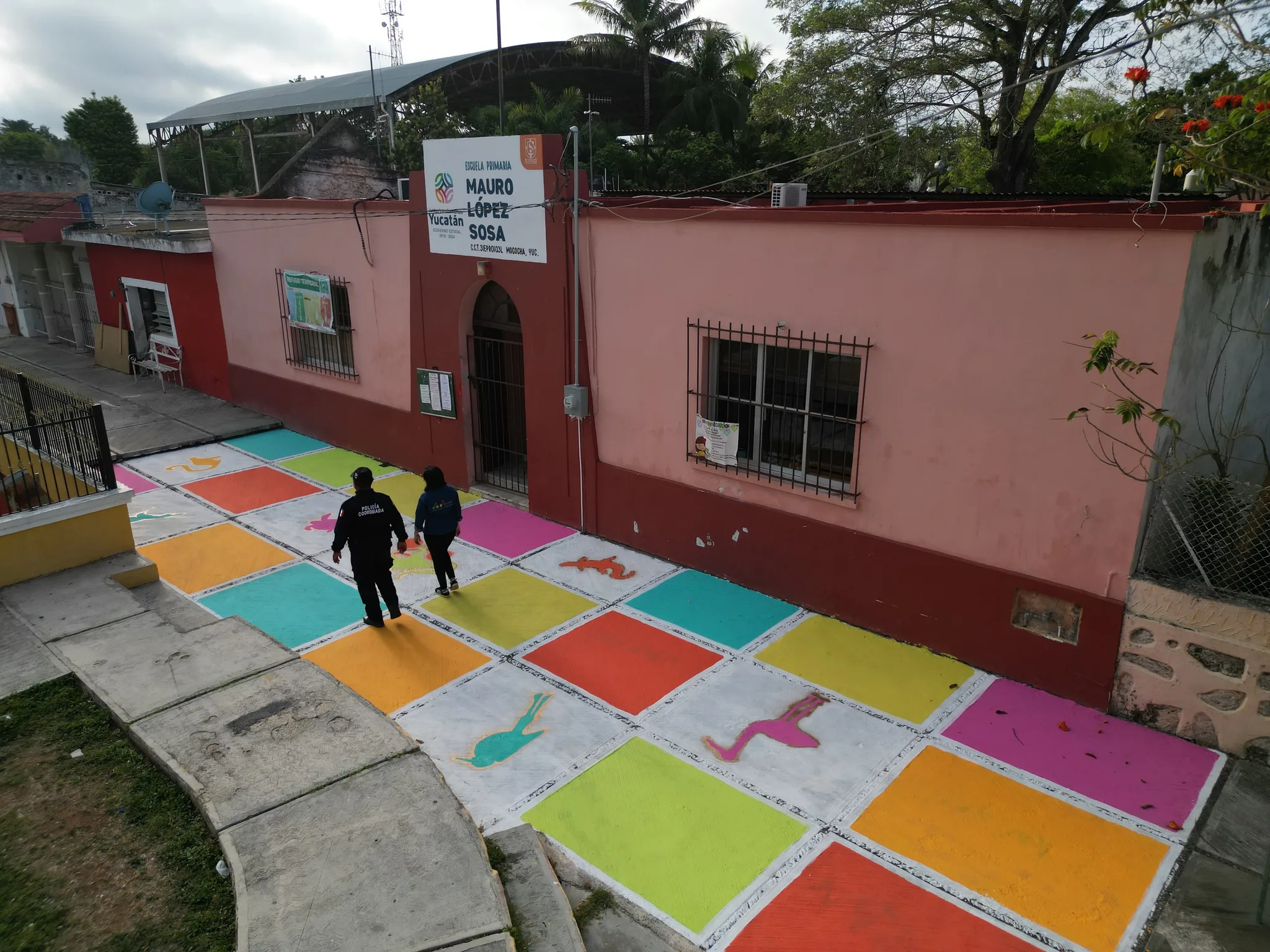
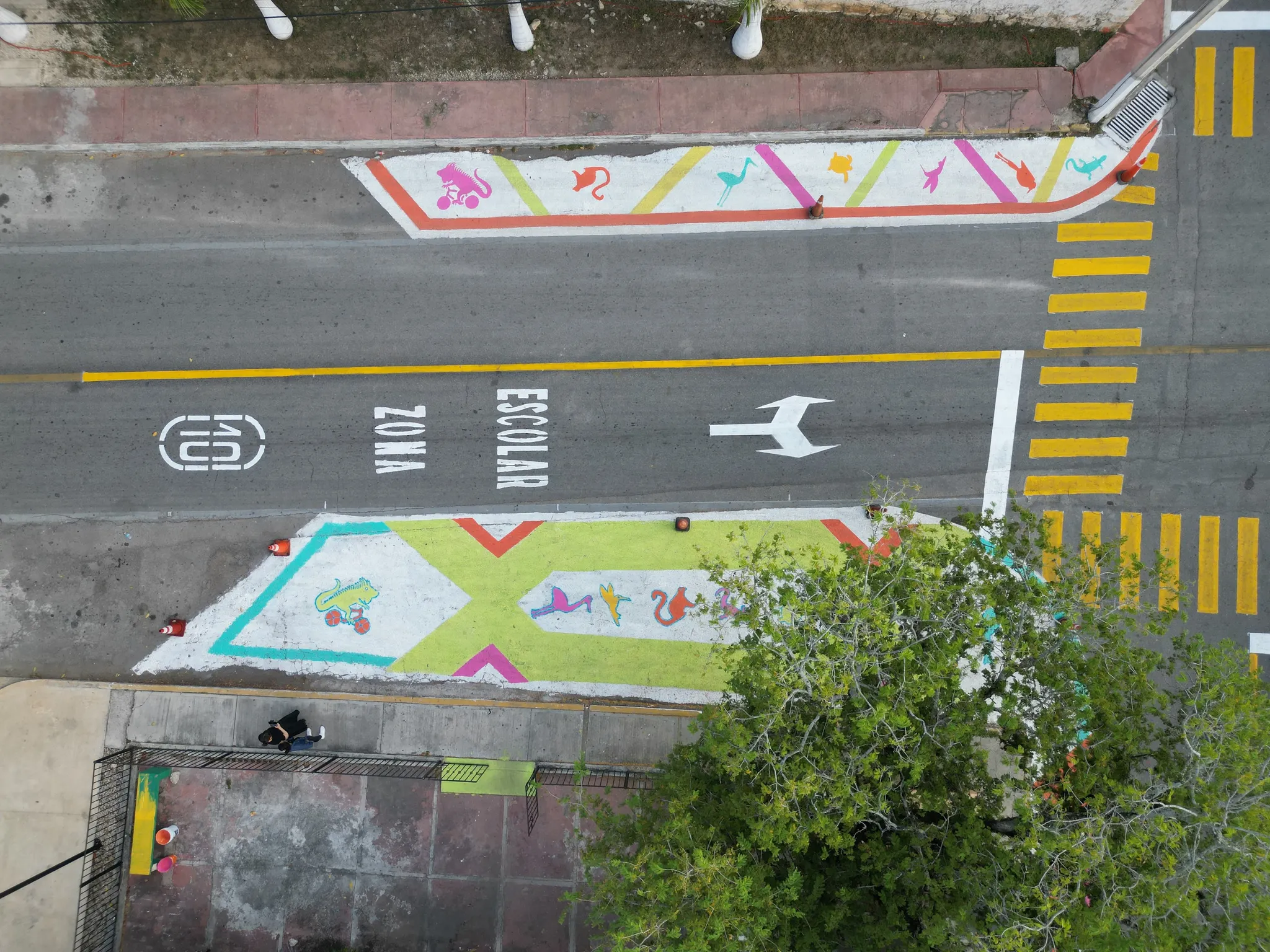
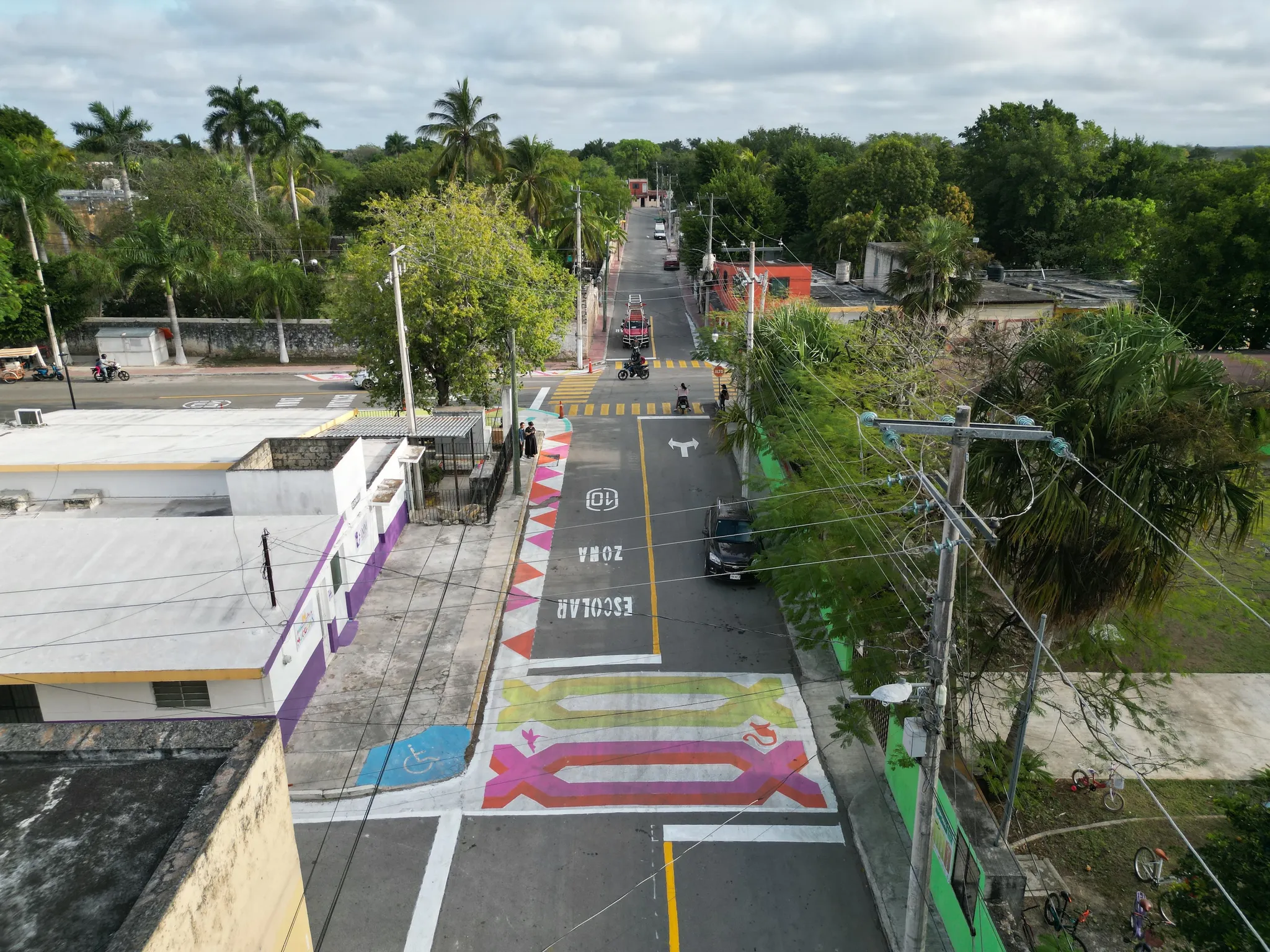
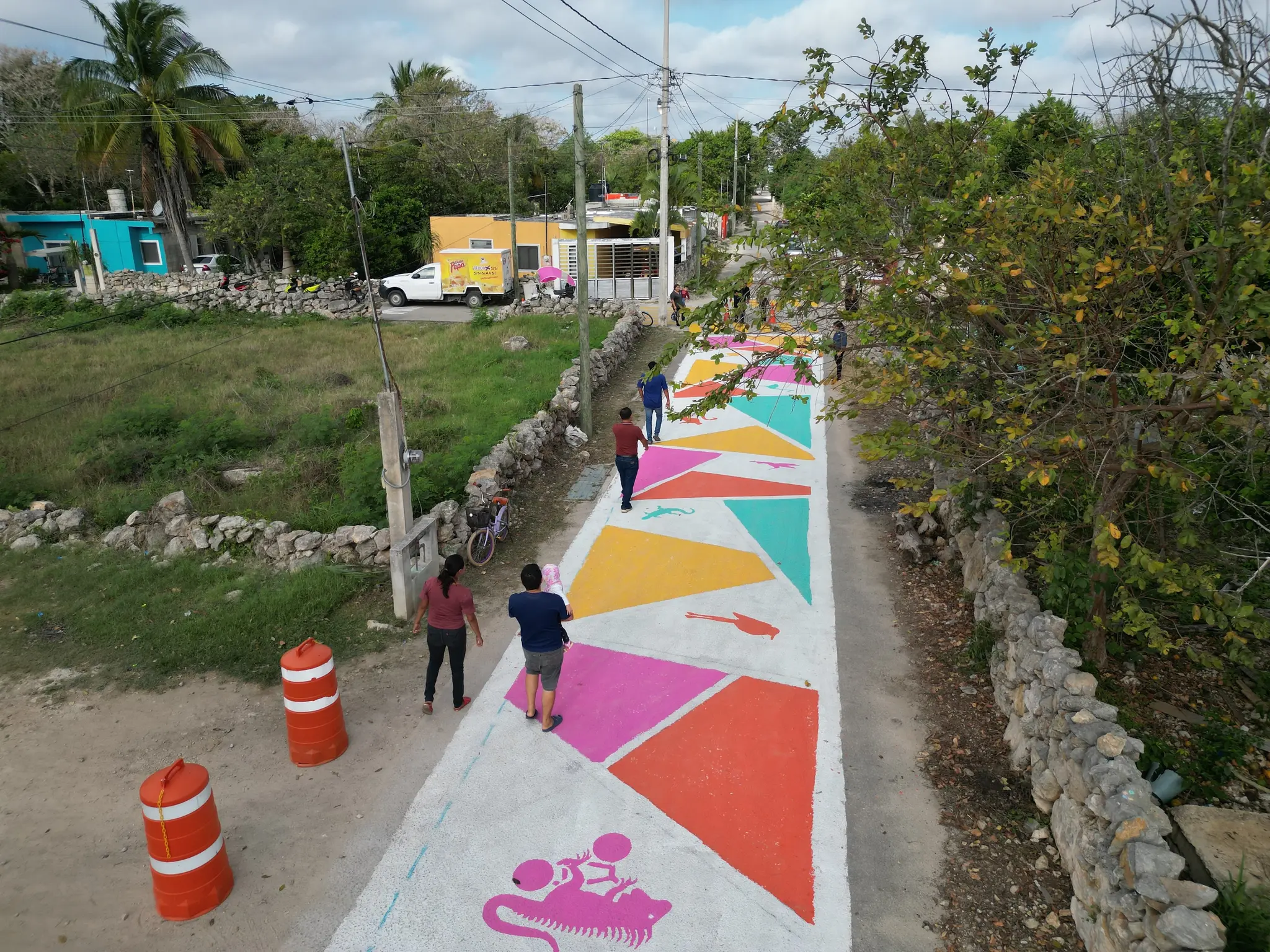
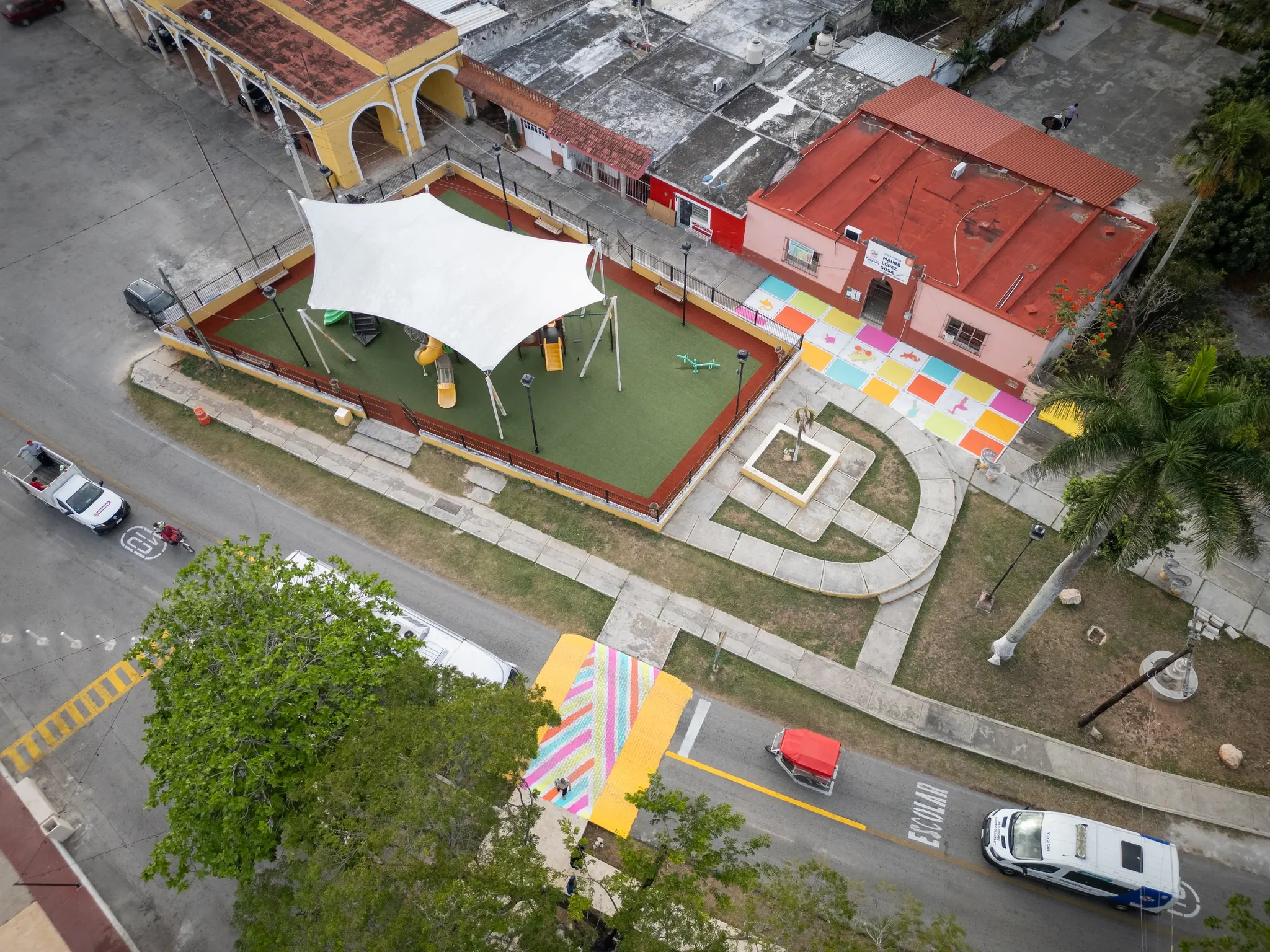
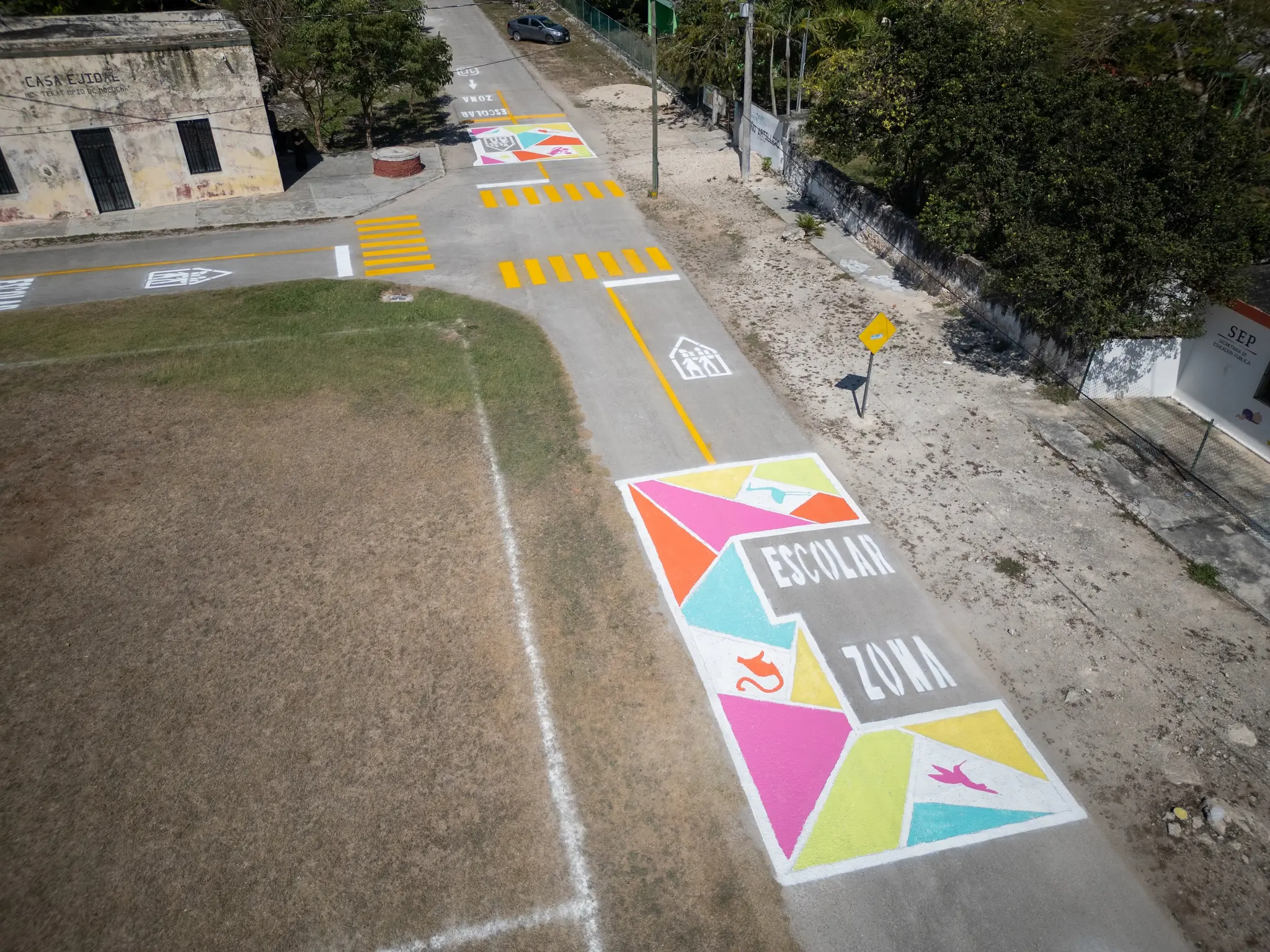
The “Heading to School” project in Mocochá aimed to improve school-area safety by promoting active mobility and expanding access for pedestrians and cyclists. The Asphalt Art project specifically focused on safe pedestrian crossings, sidewalk extensions, and street murals, and resulted in improved traffic management and safety, road safety education, and a stronger shared identity in school zones.
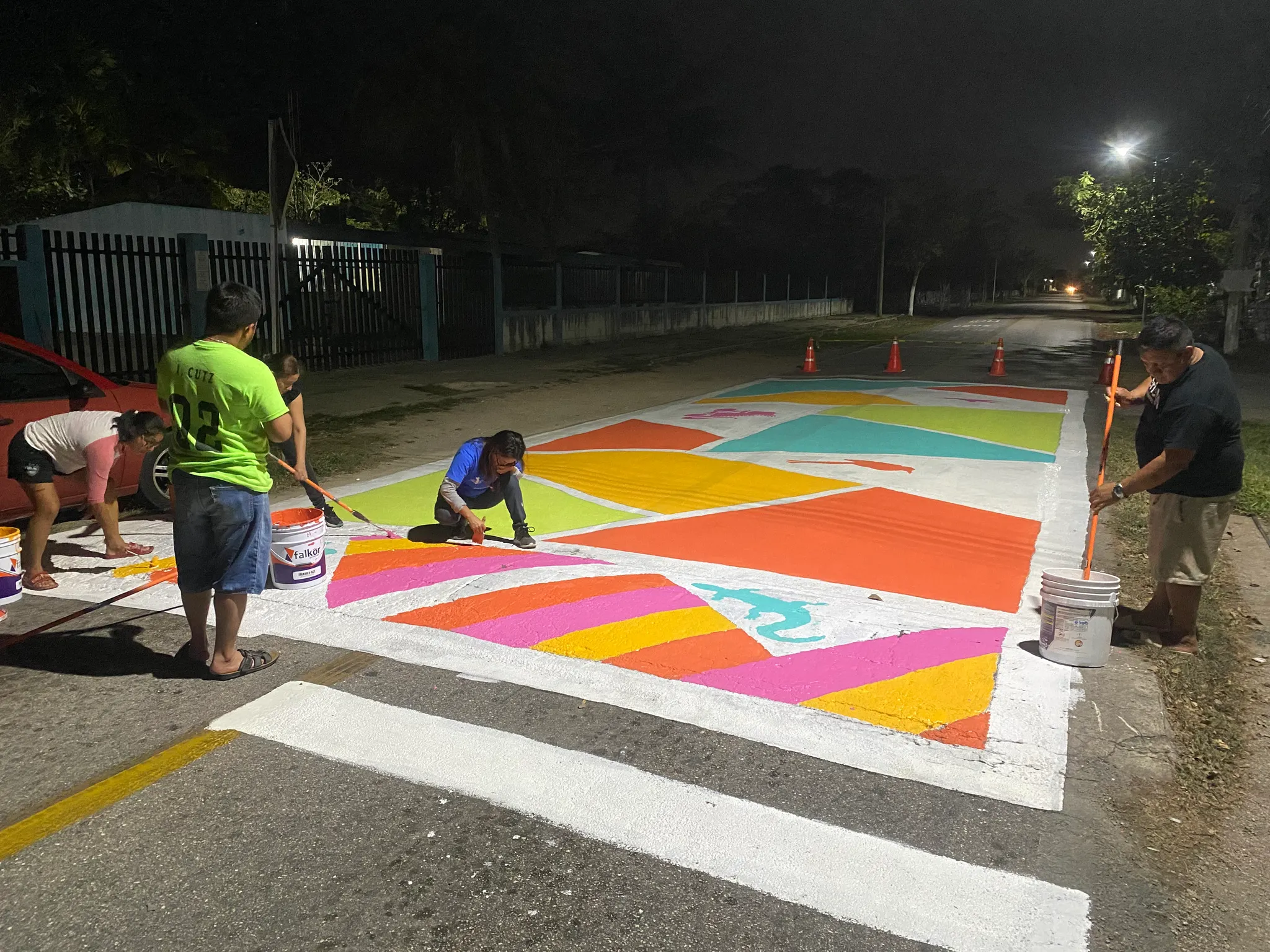
The project encouraged community involvement and inter-institutional collaboration, ultimately creating a safer and more respectful environment for everyone. Artists were selected through participatory workshops where community members contributed ideas inspired by local Yucatán vegetation and animals such as lizards, birds, and colibríes. The community actively engaged in the design and installation phases, organizing into teams to support work shifts—even at night to avoid the daytime heat. Installation prioritized road safety markings at school intersections before adding the vibrant artistic elements that enhanced identity and promoted safety awareness.
With paint, the road infrastructure was improved to generate greater visibility and safety for pedestrians and cyclists within school zones, preventing accidents and protecting the children and adolescents of Mocochá.
Pablo Alejandro Cutz, Mayor, City of Mocochá
Use the slider to see the transformation
Press
“Safe School Environments,” An Exemplary Pedestrian And Road Safety Project In Mocochá (Yucas Al Día, March 15, 2025)
For inspiration and tips for the creation of art on roadways and public places, download the Bloomberg Associates Asphalt Art Guide which features successful plaza and roadway art activations around the world, as well as key steps for developing such projects.
London, England
Catalyzing economic recovery through public art
The Project
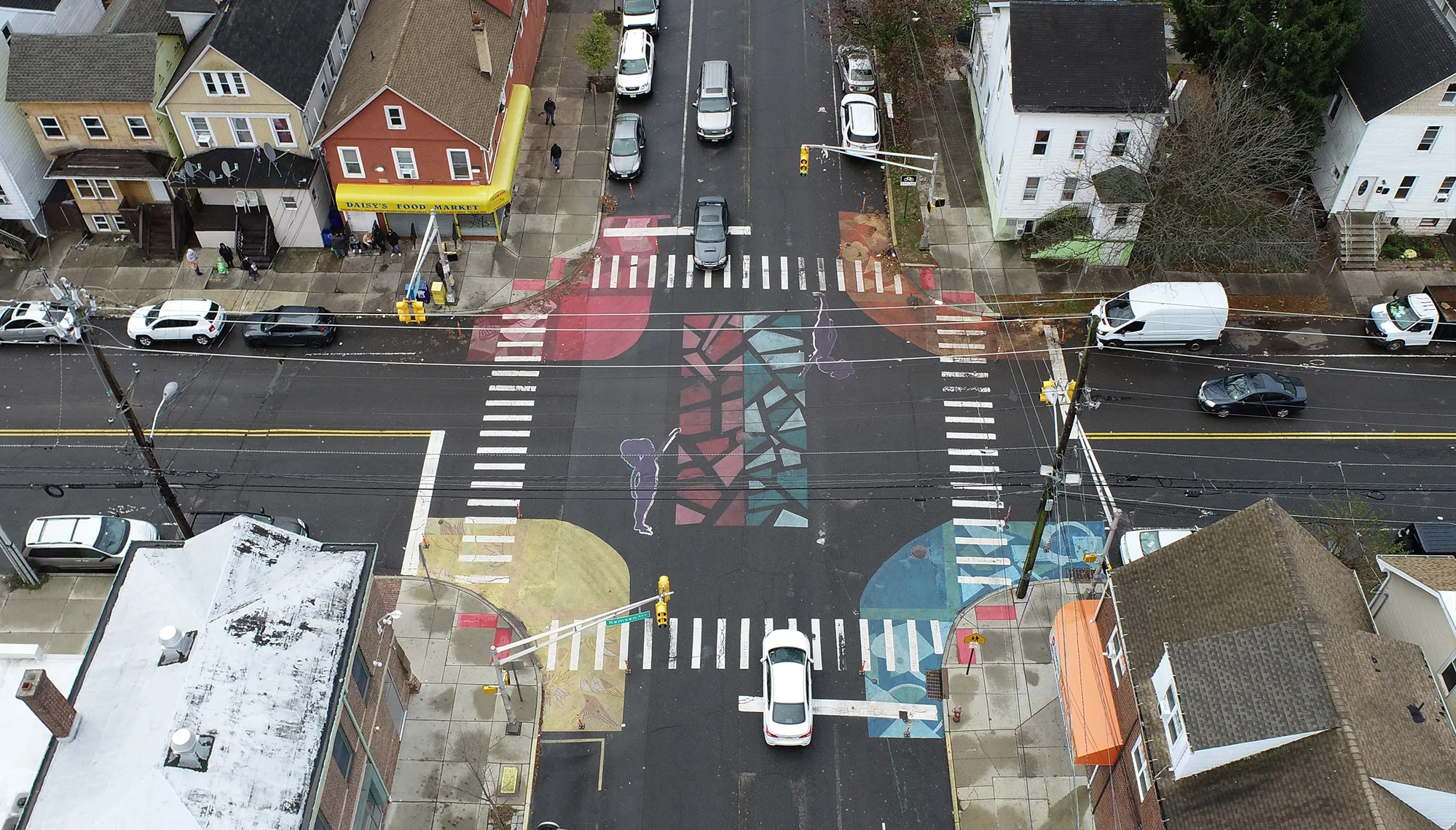
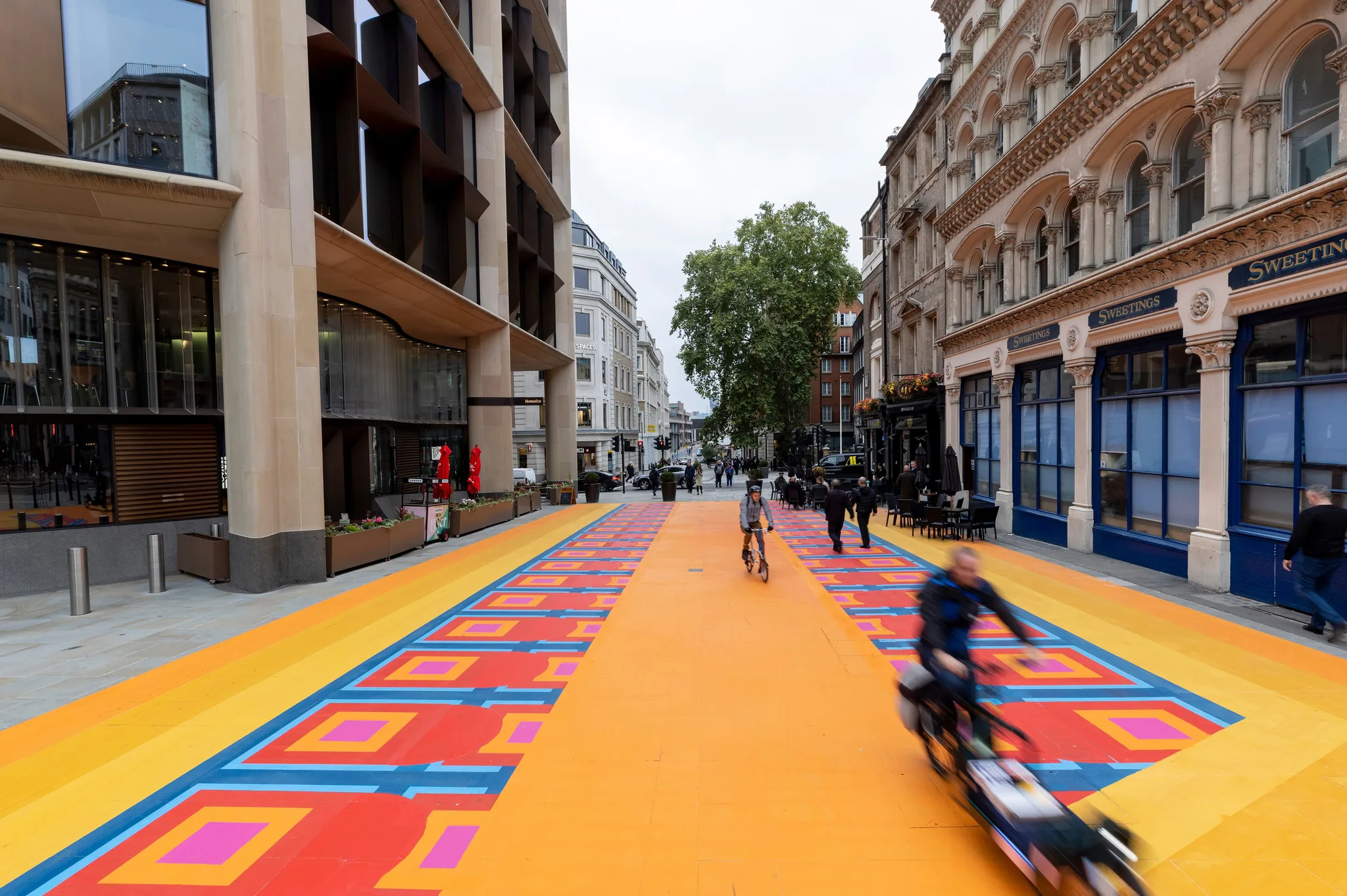
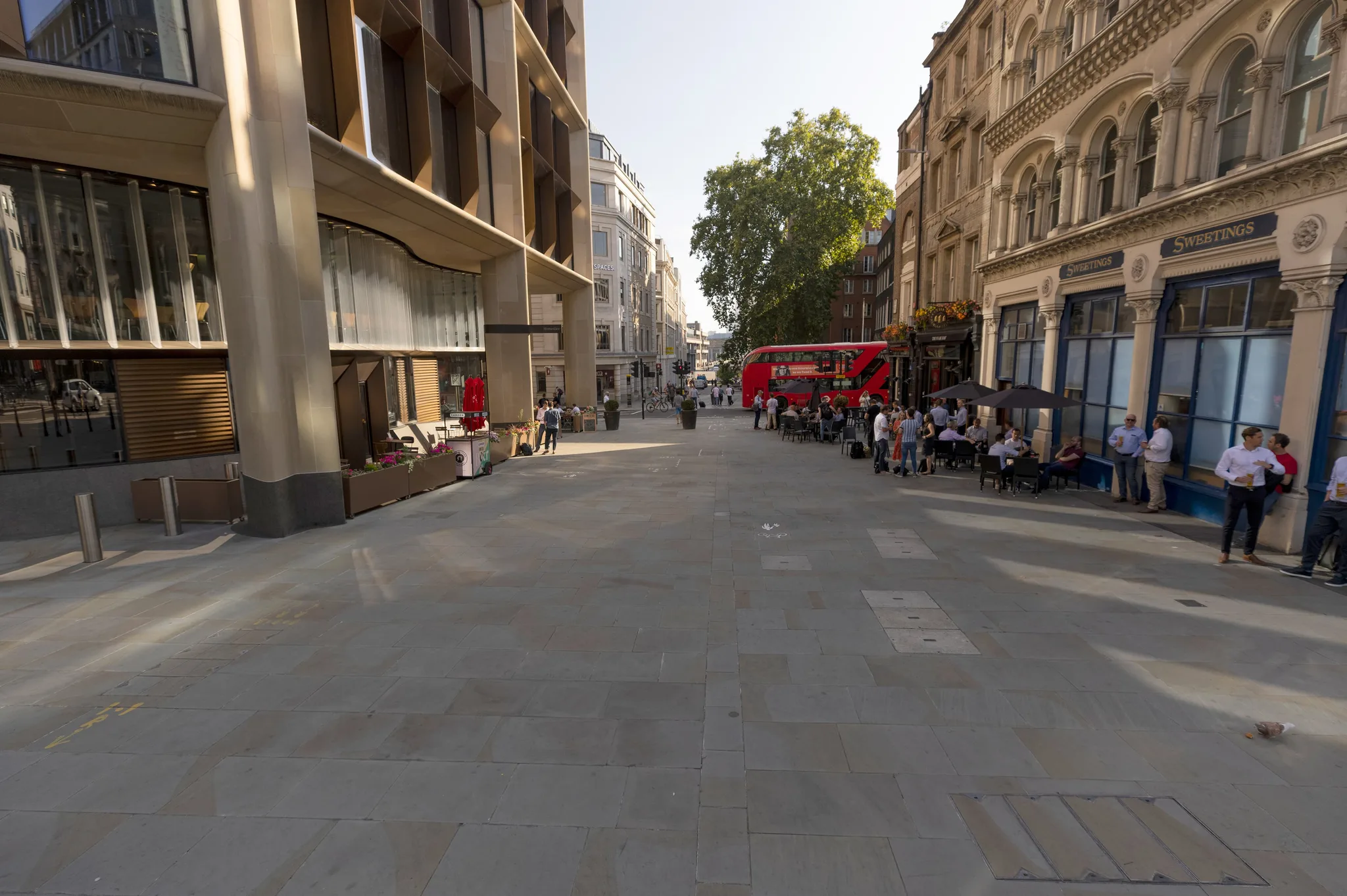
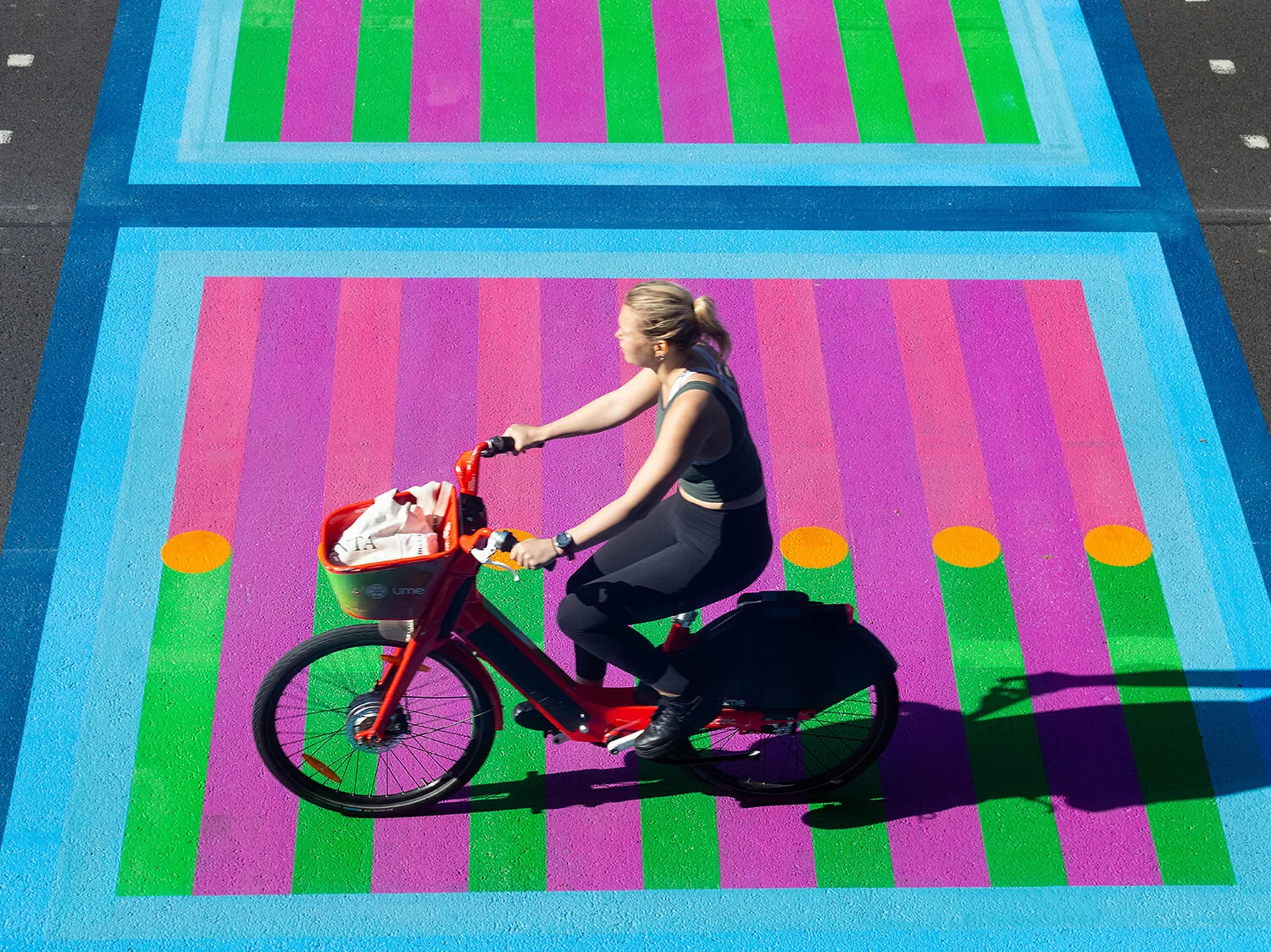
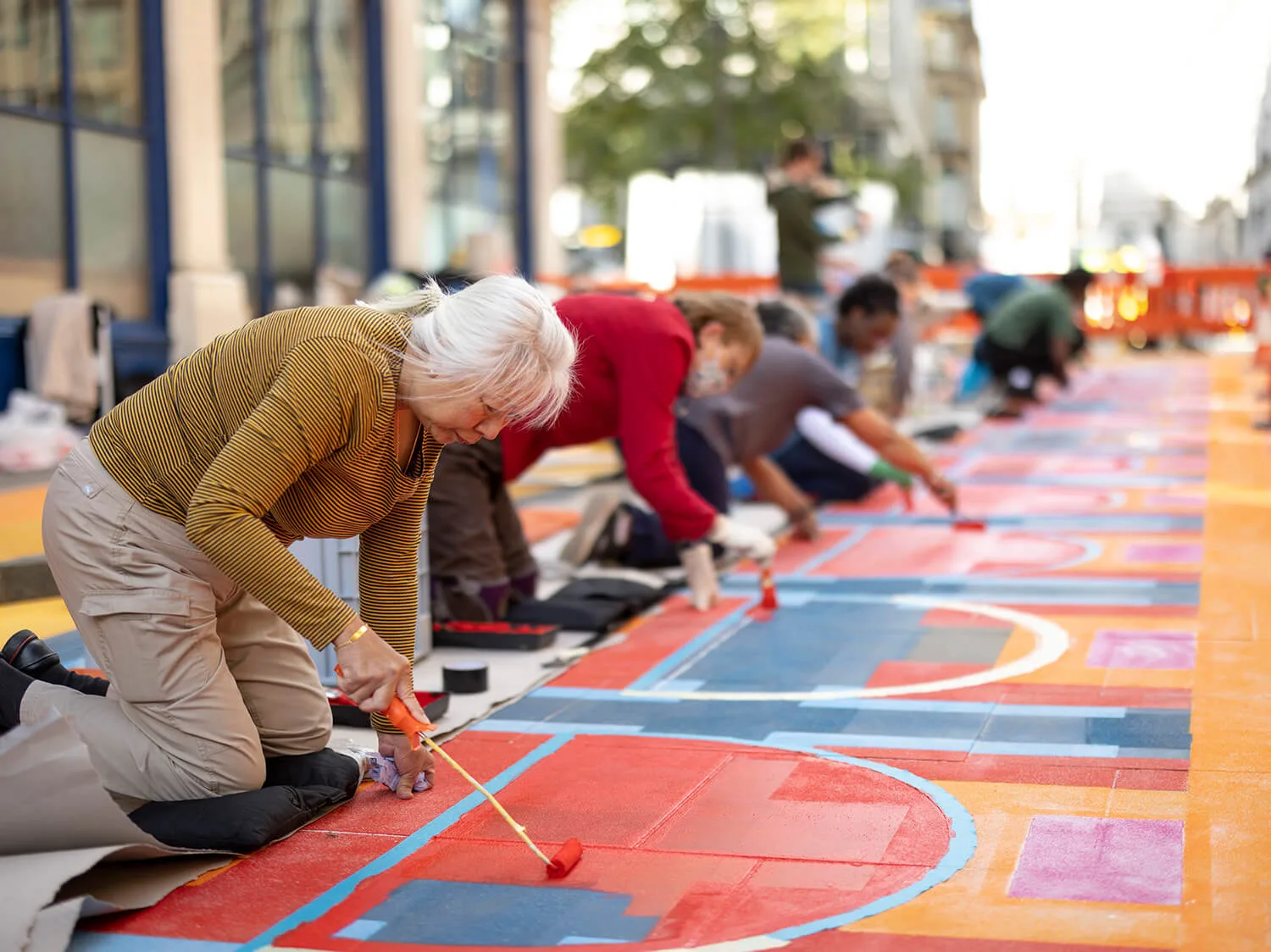
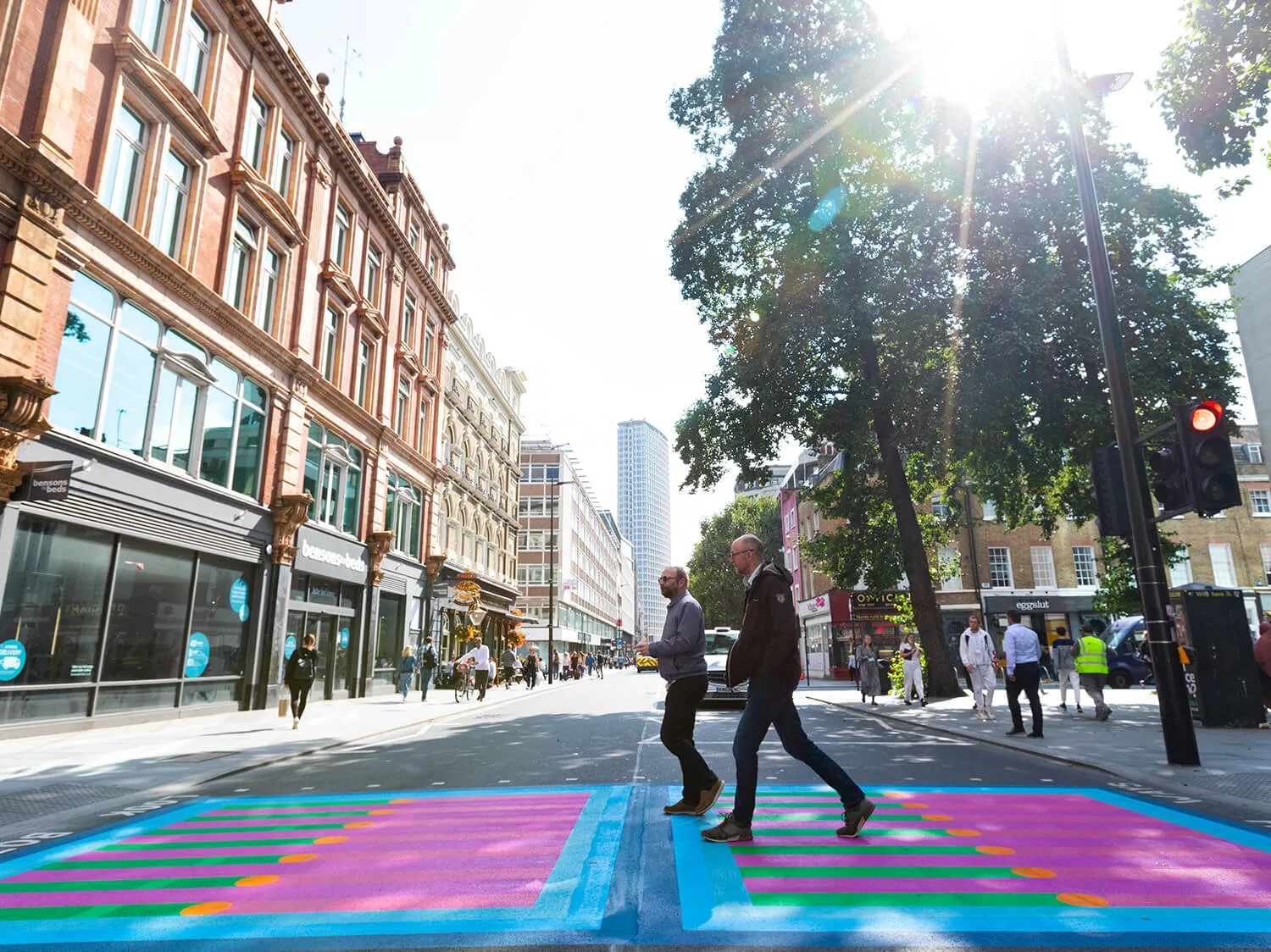
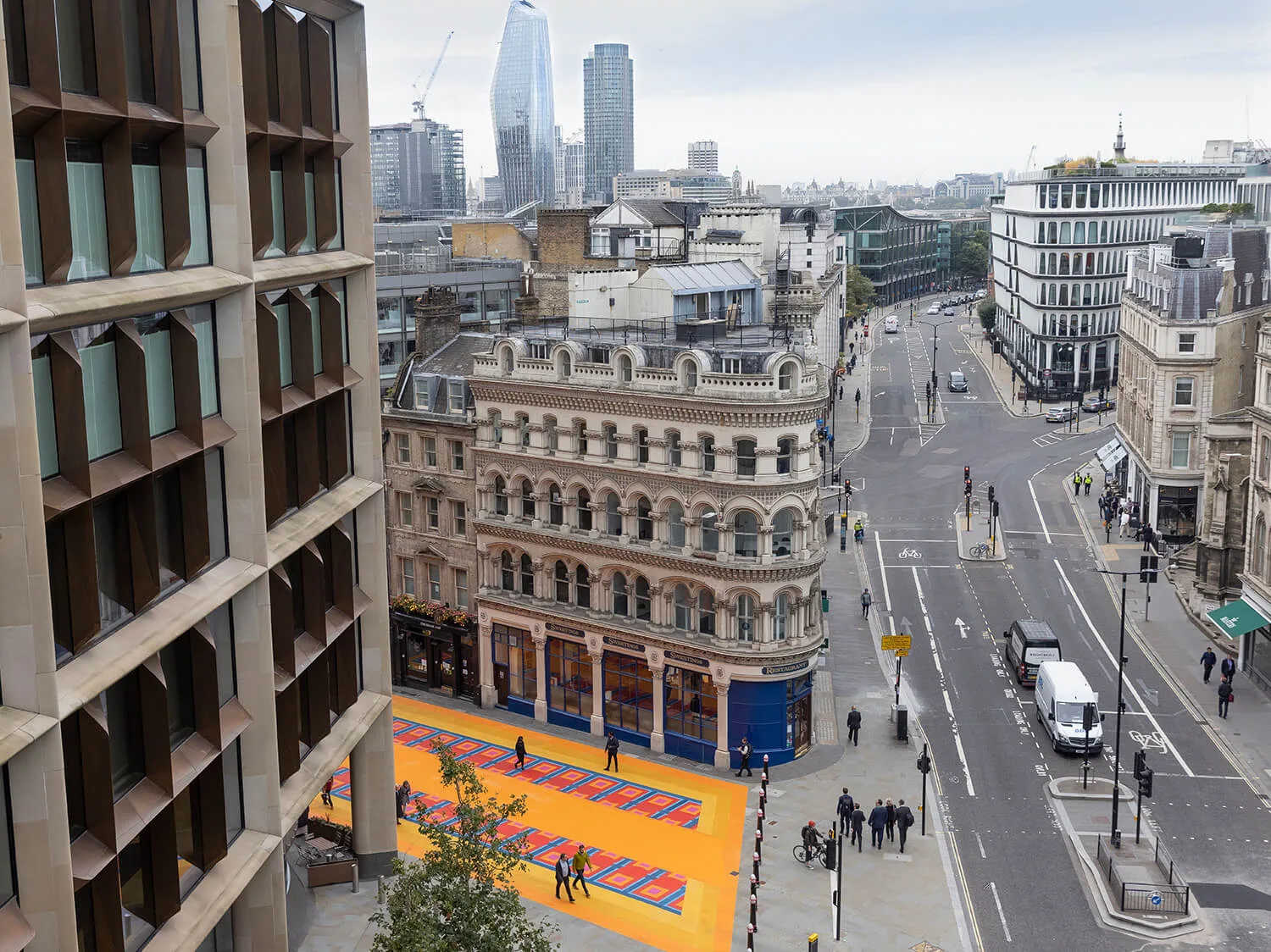
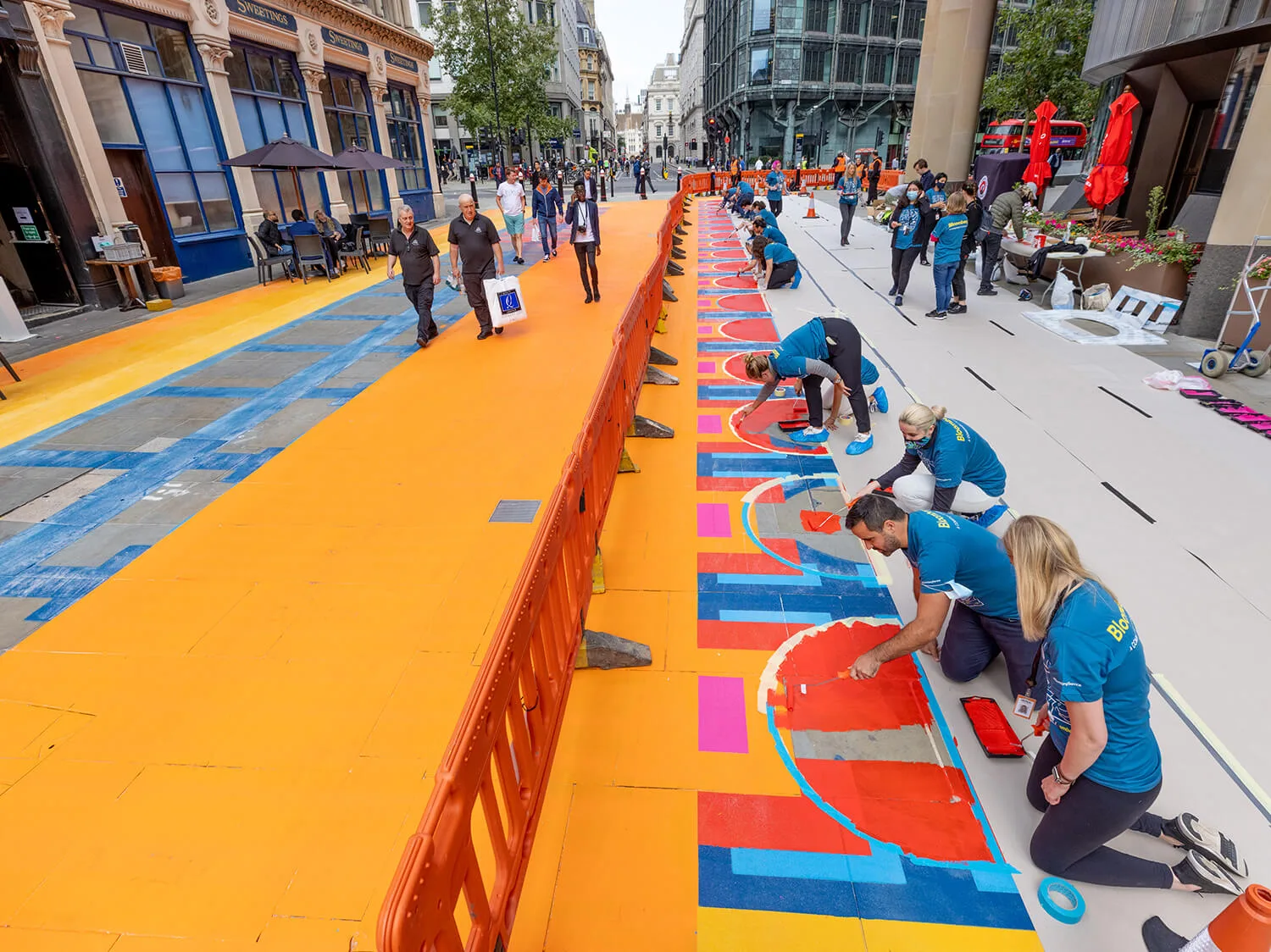
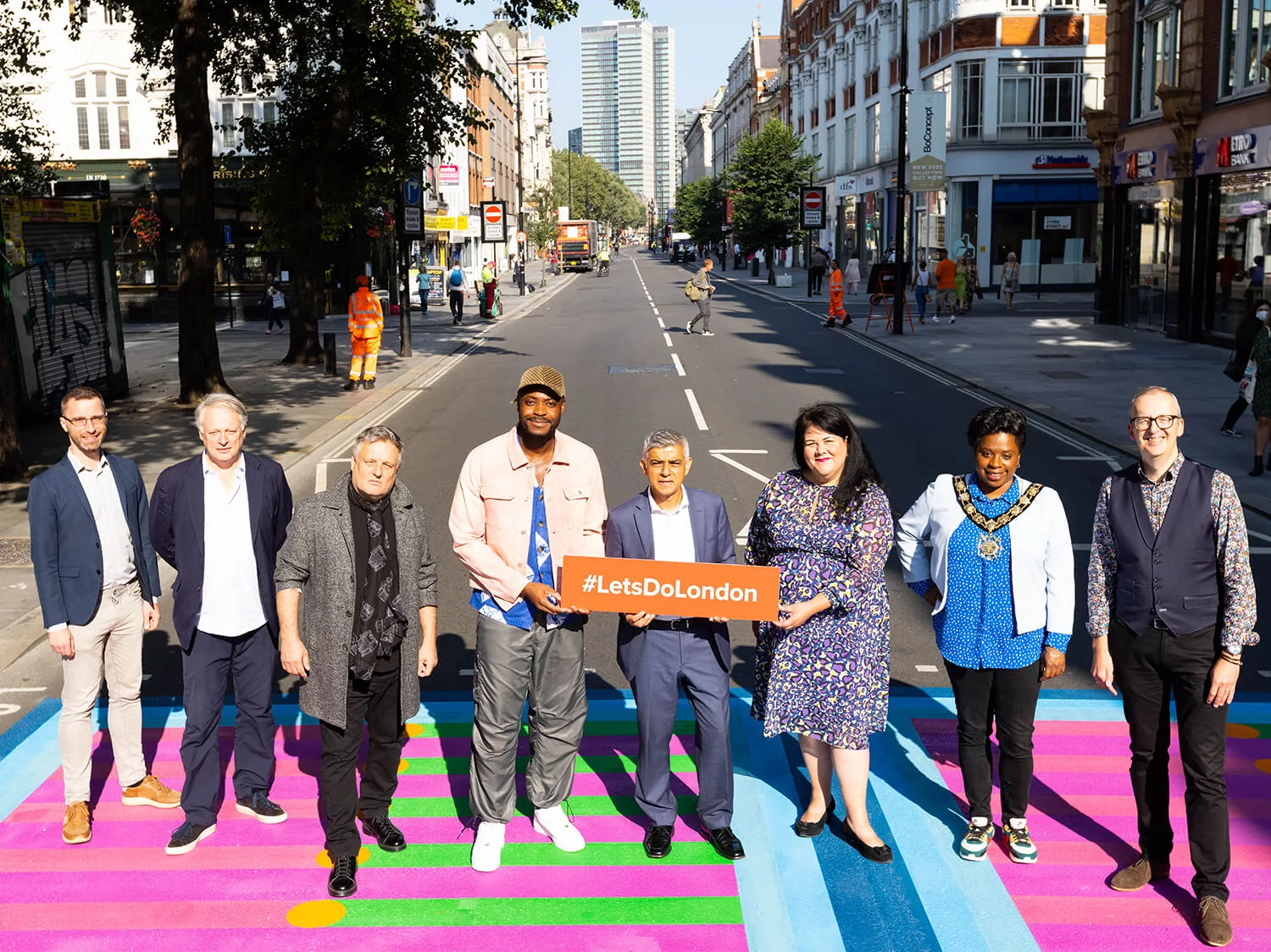
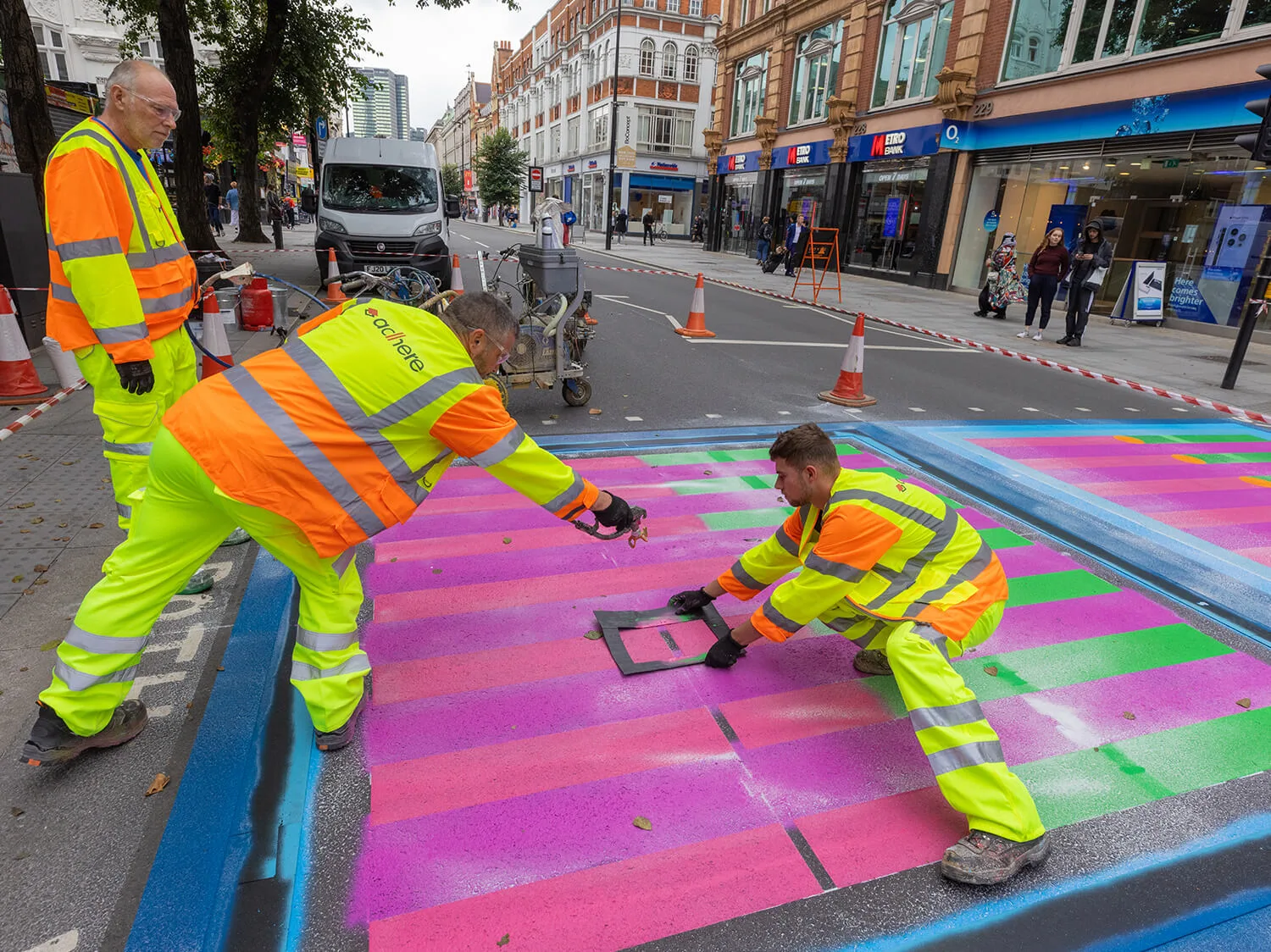
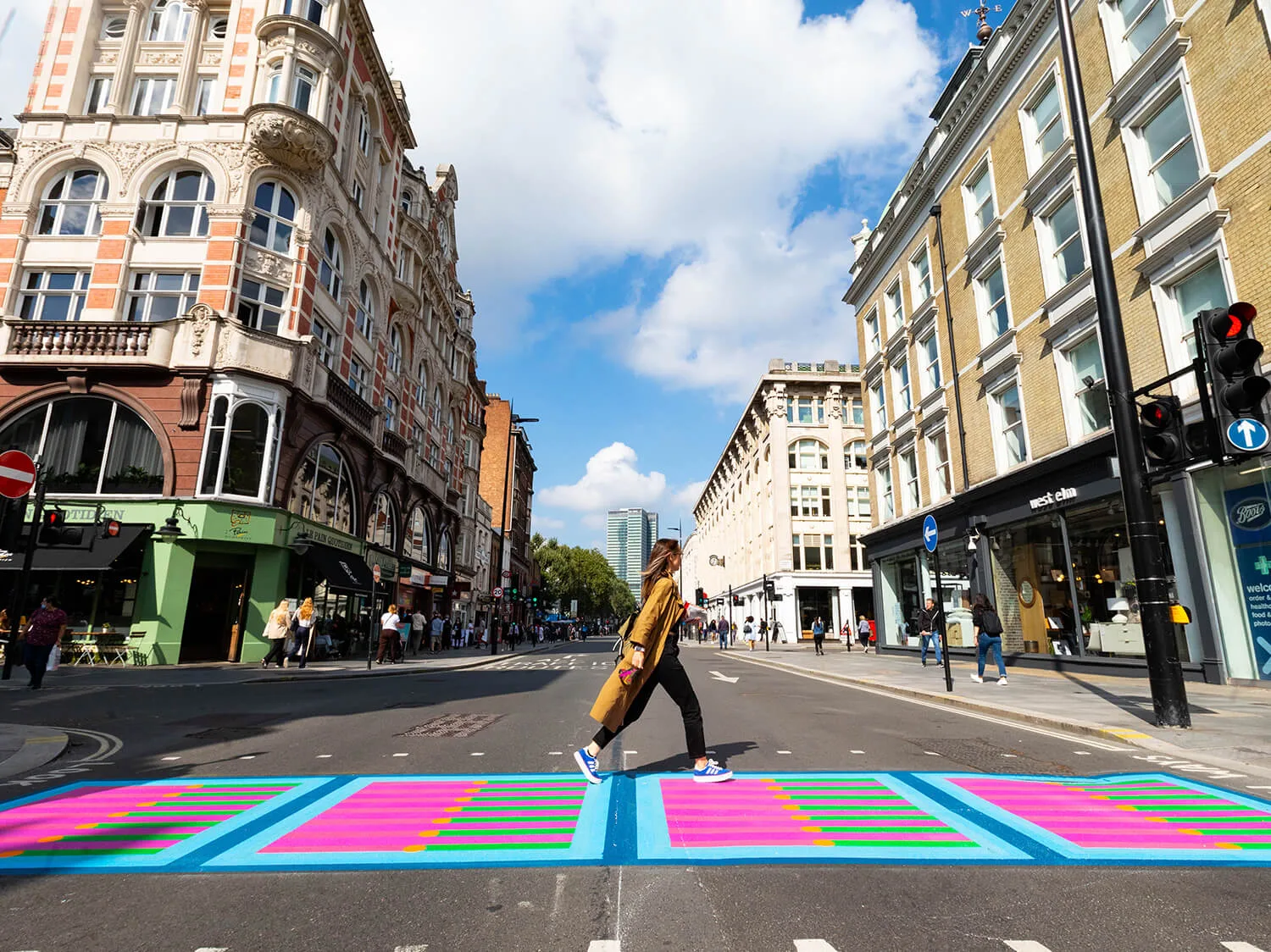
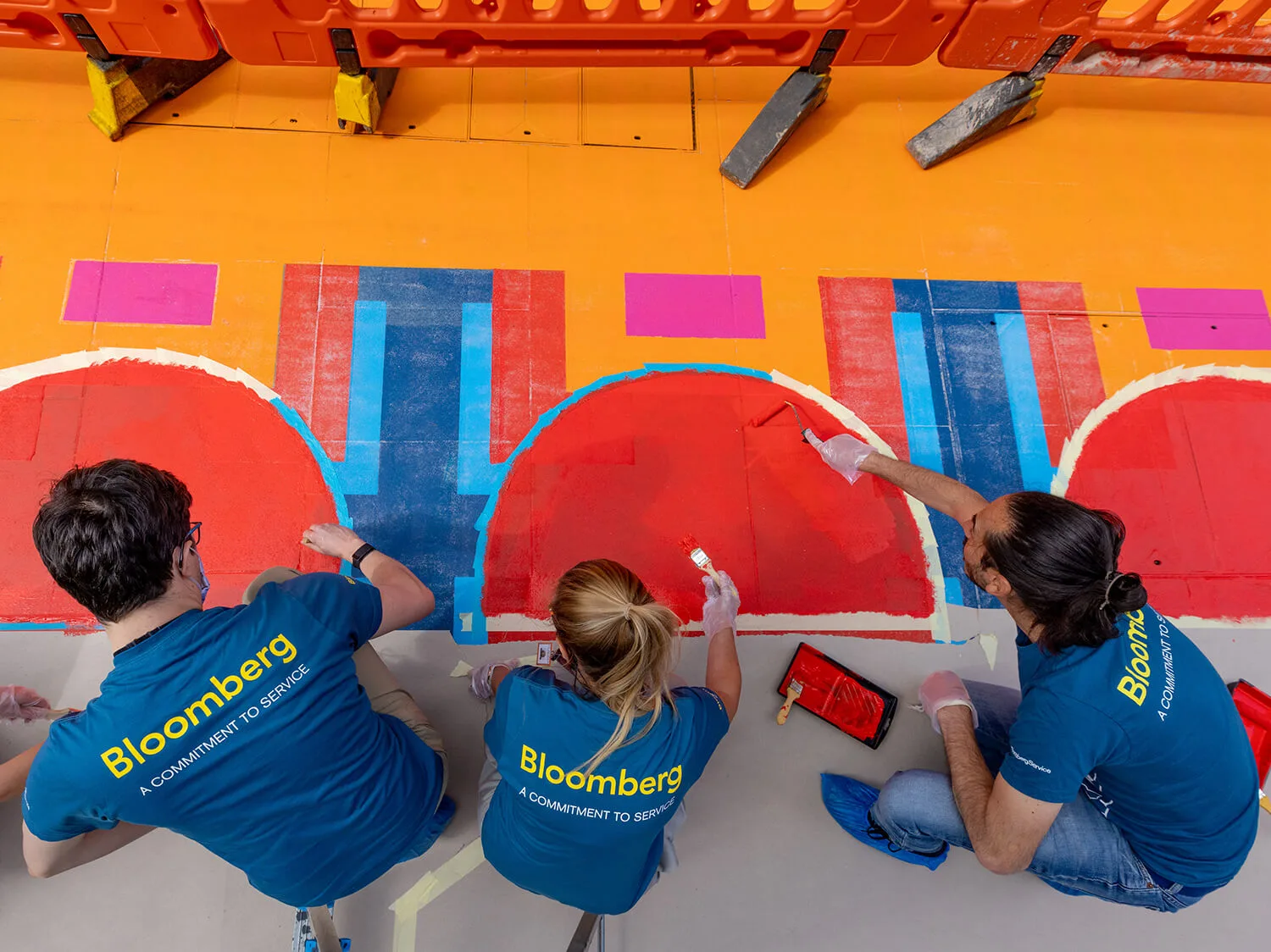
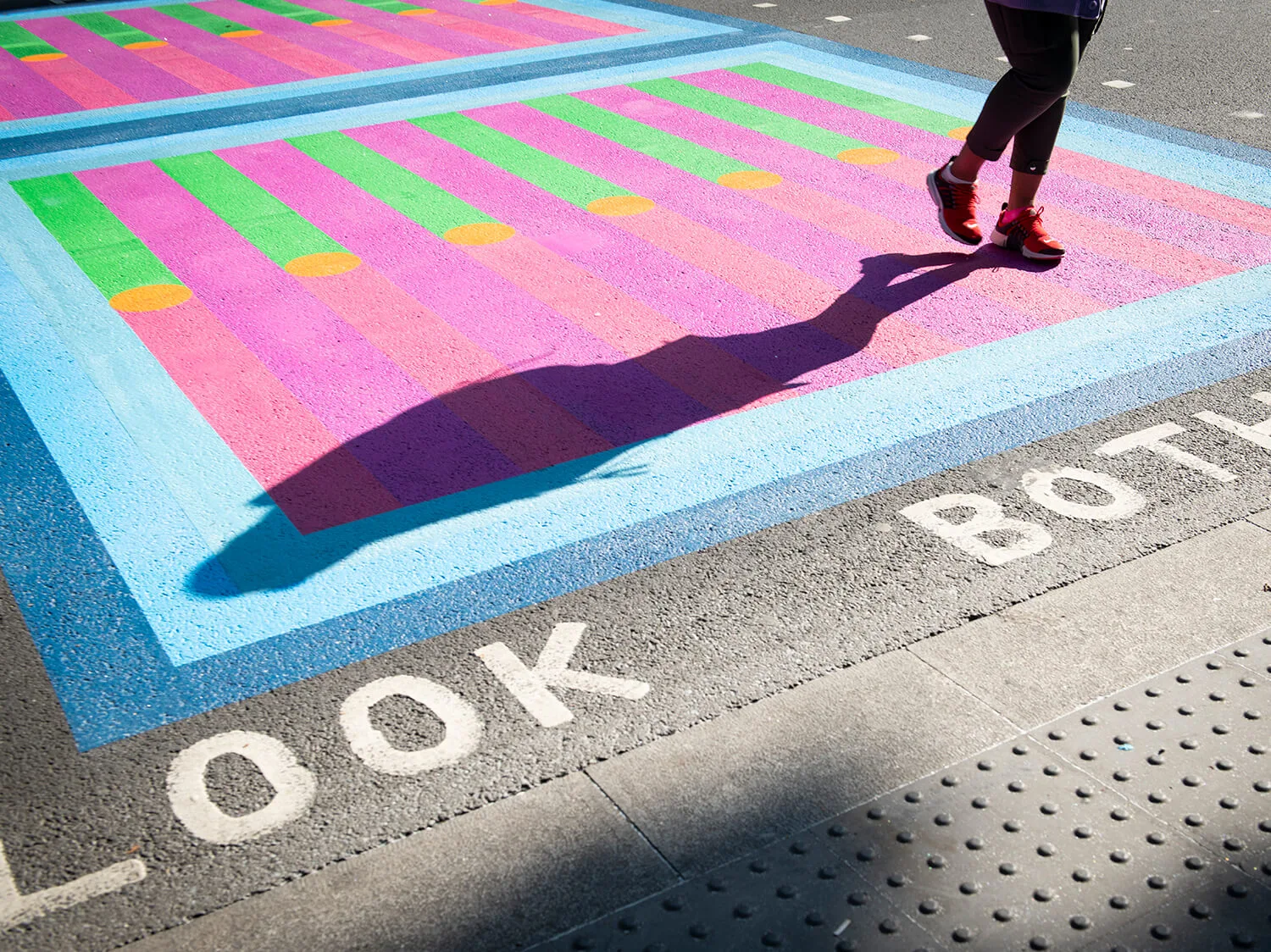
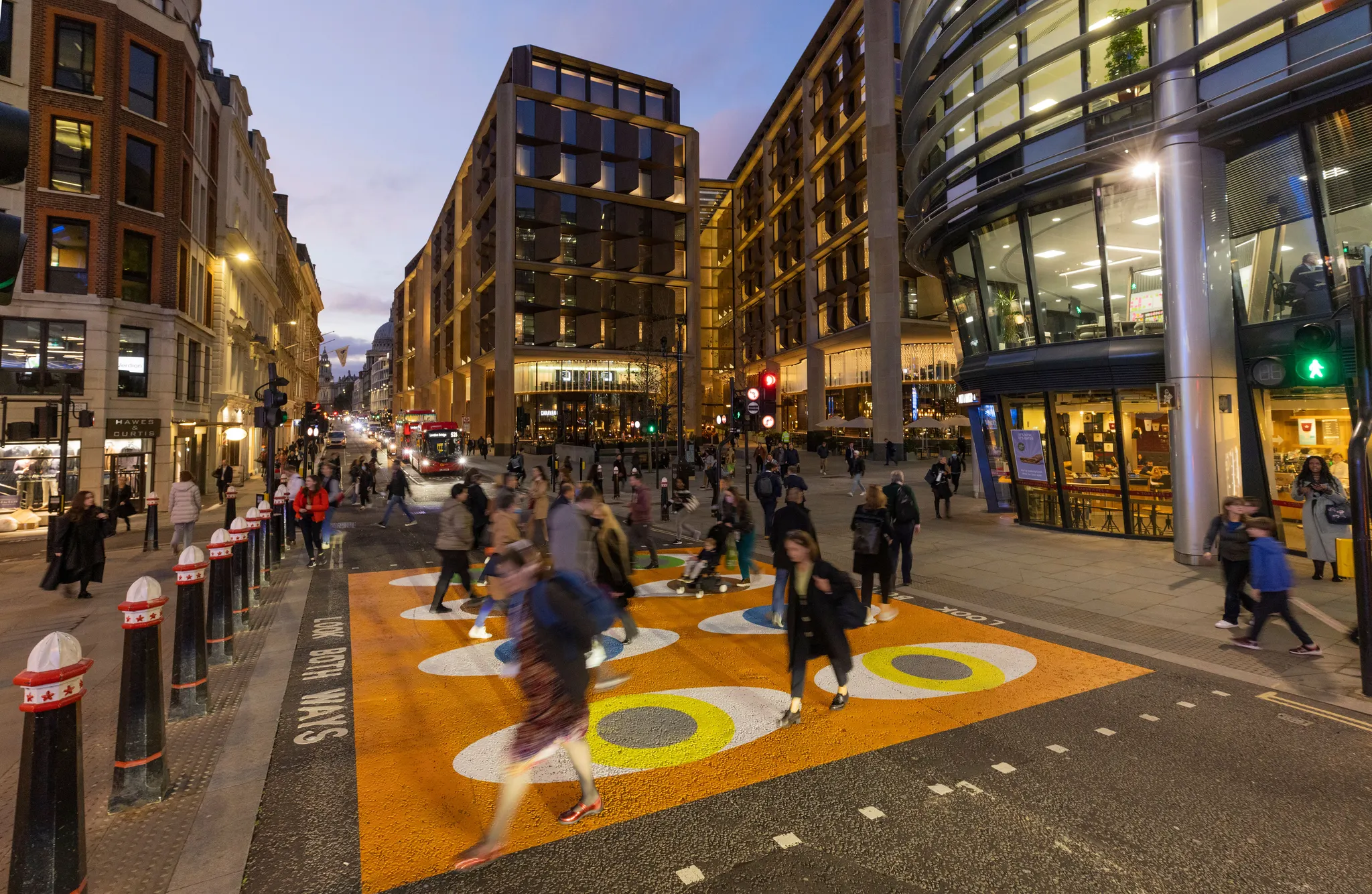
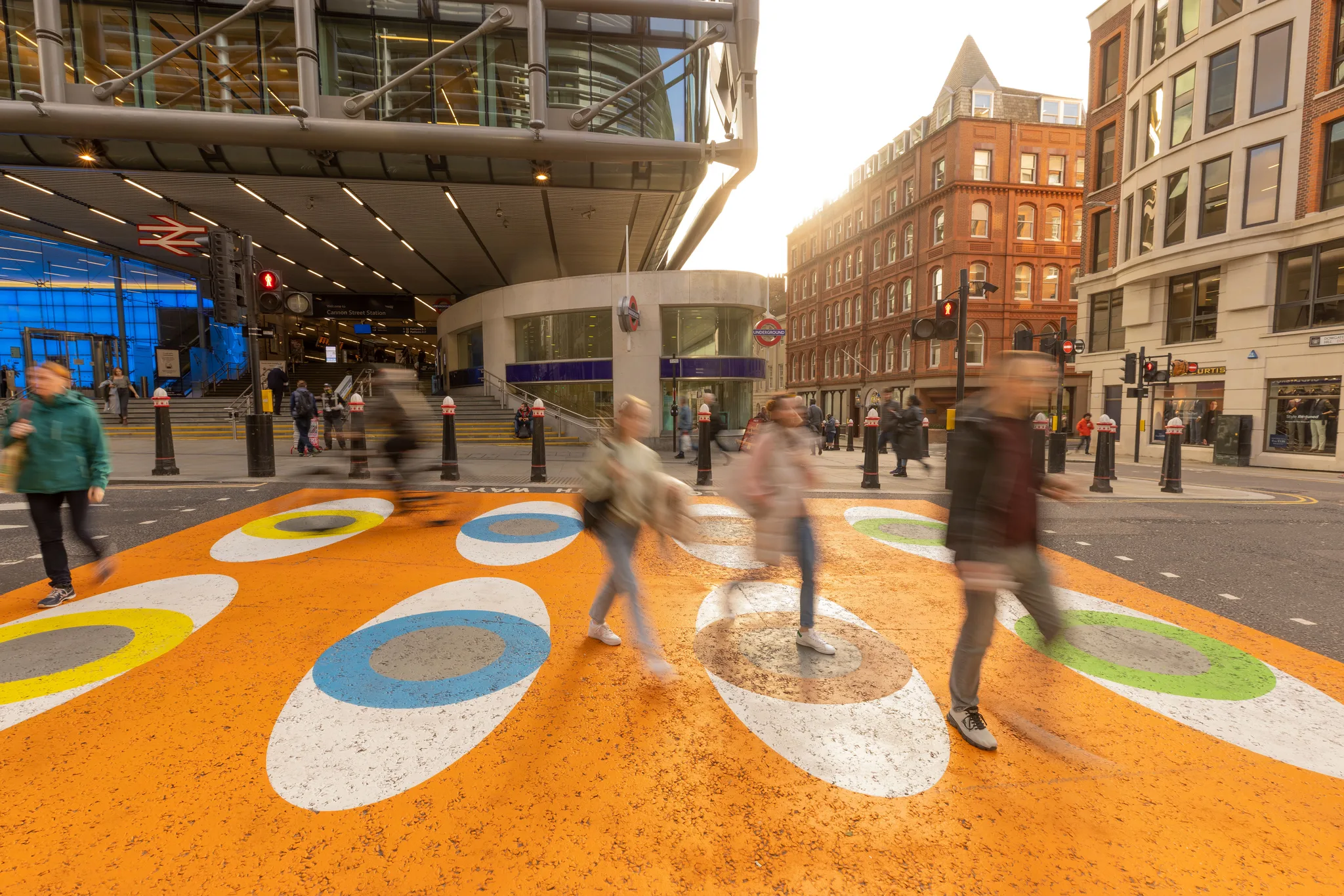
As part of London Design Festival, 11 crosswalks on Tottenham Court Road and a pedestrian plaza and crosswalk in the City of London were reimagined with distinctive, playful designs featuring bright colors and shapes. The artistic direction for the project was led by London-based artist Yinka Ilori, who worked with three art students from the University of the Arts London to develop some of the crosswalk designs, as well as community members invited to help paint the Queen Street pedestrian area. As the UK prepared to host the United Nation’s meeting on Climate Action, COP26, this project is one of several installations in international cities supported by the Asphalt Art Initiative to encourage more sustainable transportation and transform and revitalize public spaces through the power of art.
- 79% of pedestrians said these colorful crossings improve the local environment and feel of the street.
- Over half of pedestrians feel safer using these colorful crossings compared to normal pedestrian crossings.
Use the slider to see the transformation
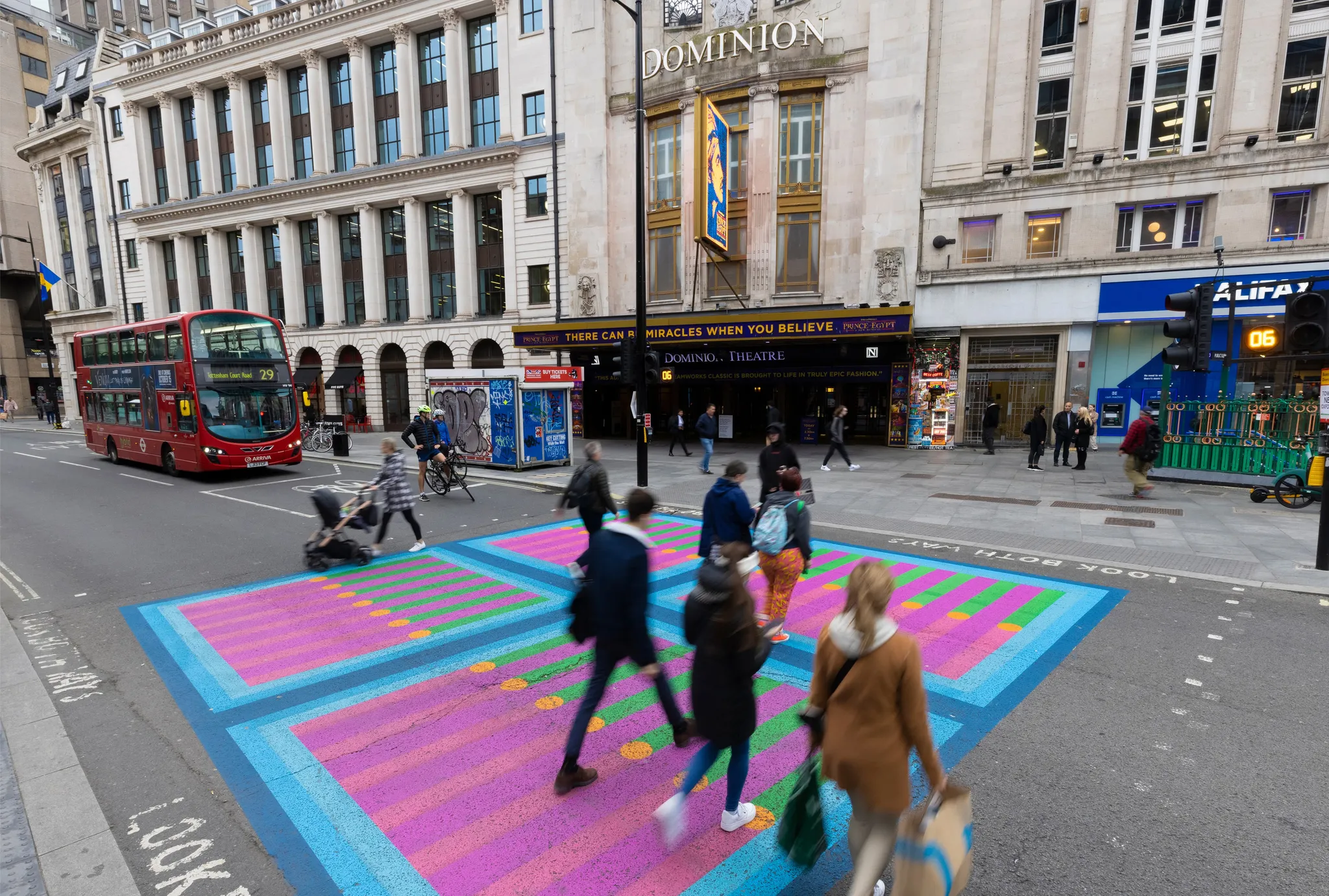
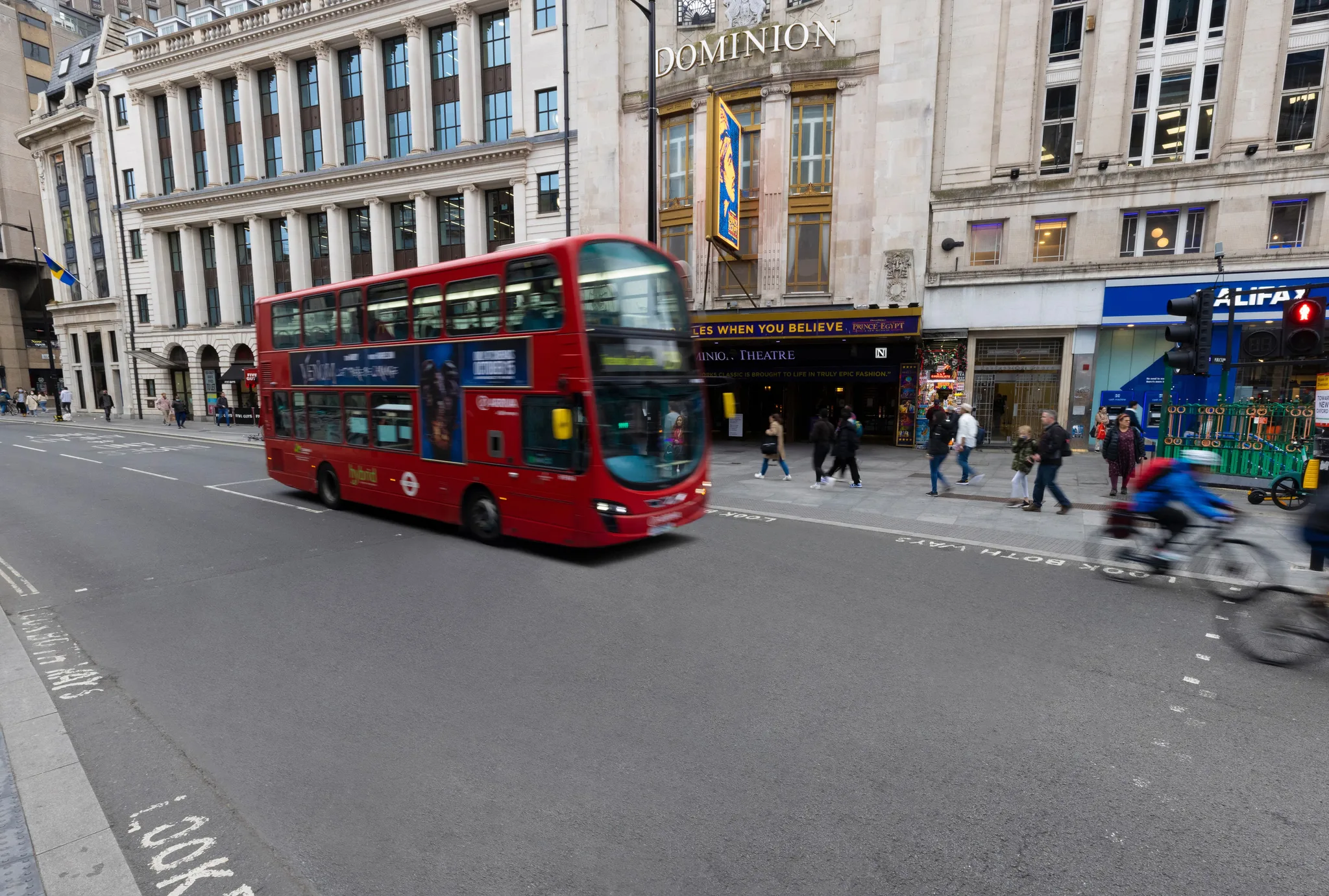
“This is the joy the city needs after the past year, and what better way to see London reopen but to have one of the capital’s most exciting talents, Yinka Ilori, paint one of London’s most iconic streets.”
Ben Evans CBE, London Design Festival Director
Use the slider to see the transformation
Best Practice Highlight – Aligning with City Priorities: Recovery
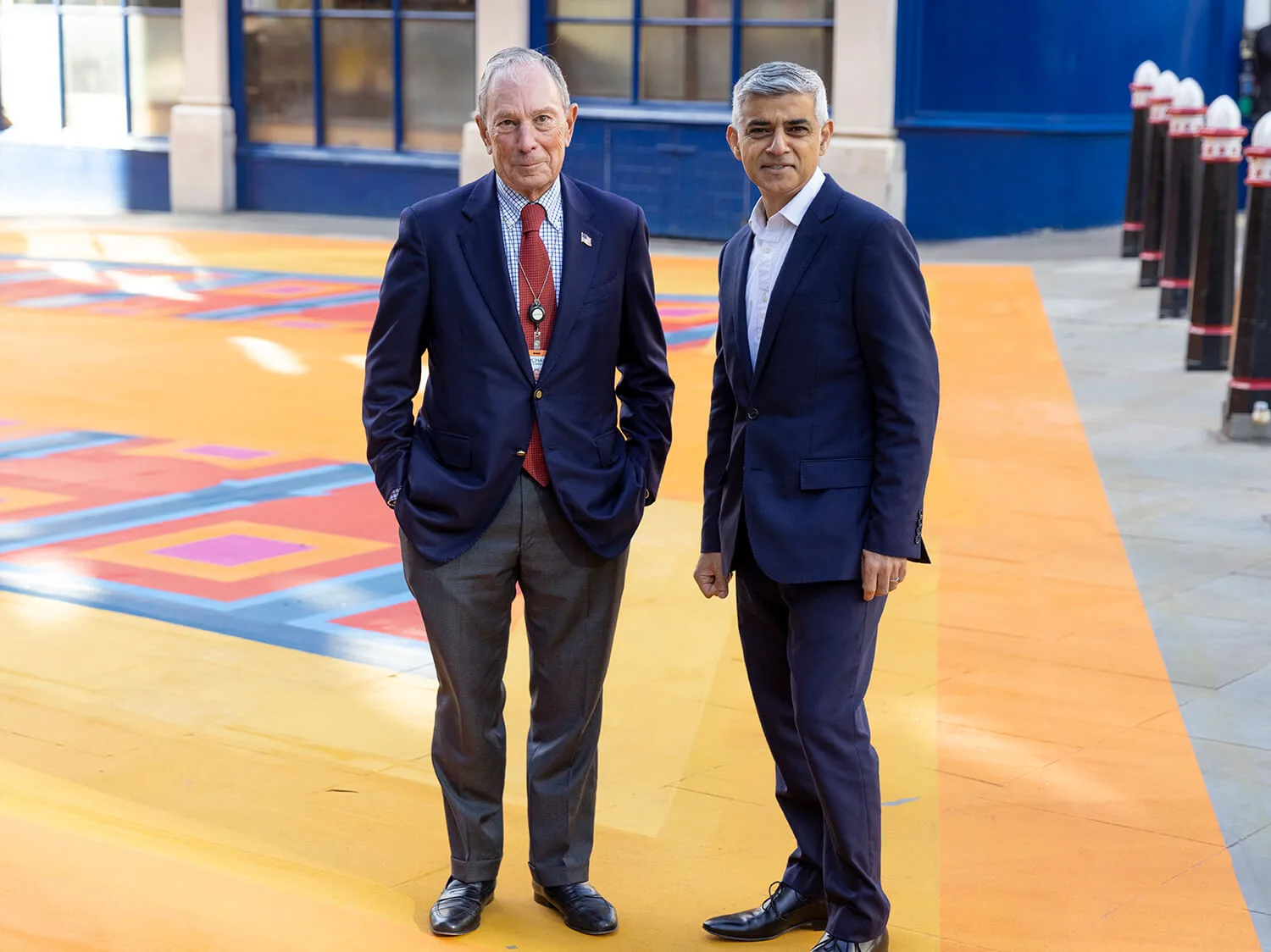
The ‘Bring London Together’ project sought to aid the reopening and recovery of London after the height of the Covid-19 pandemic, bringing colour, life, and vibrancy to the streets of the City. The asphalt art installation was launched as part of Mayor Sadiq Khan’s “Let’s Do London” tourism campaign to support the capital’s creative, retail and hospitality sectors which were disproportionately affected by the pandemic. The domestic tourism campaign was the largest in London’s history, bringing together London’s leading hospitality, culture and retail organizations to offer an autumn season of design, fashion, film, art, and photography events welcoming City workers, Londoners and visitors back to the capital.
For inspiration and tips for the creation of art on roadways and public places, download the Bloomberg Associates Asphalt Art Guide which features successful plaza and roadway art activations around the world, as well as key steps for developing such projects.
Durham, NC
Painting a safer route to school
The Project
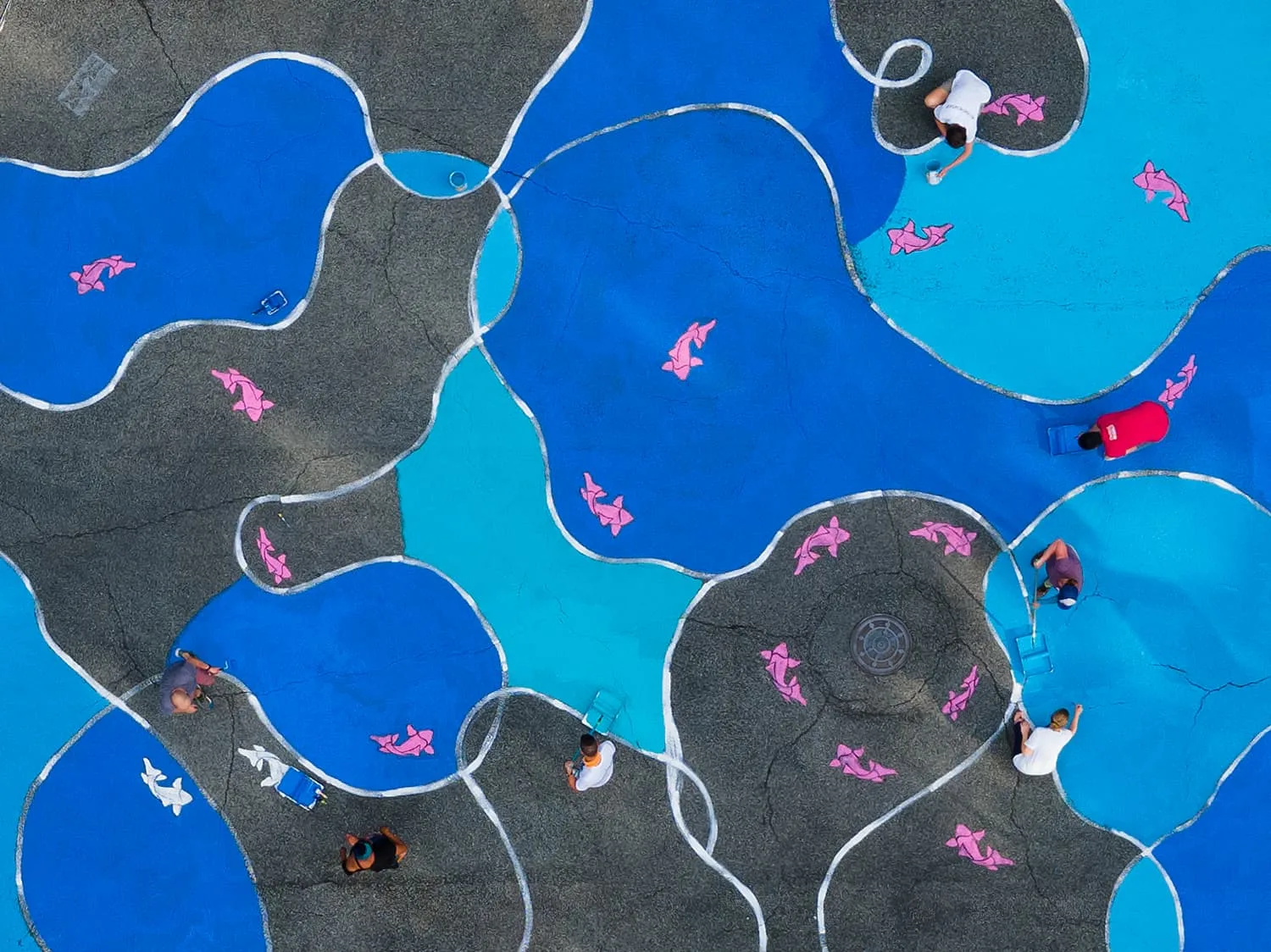
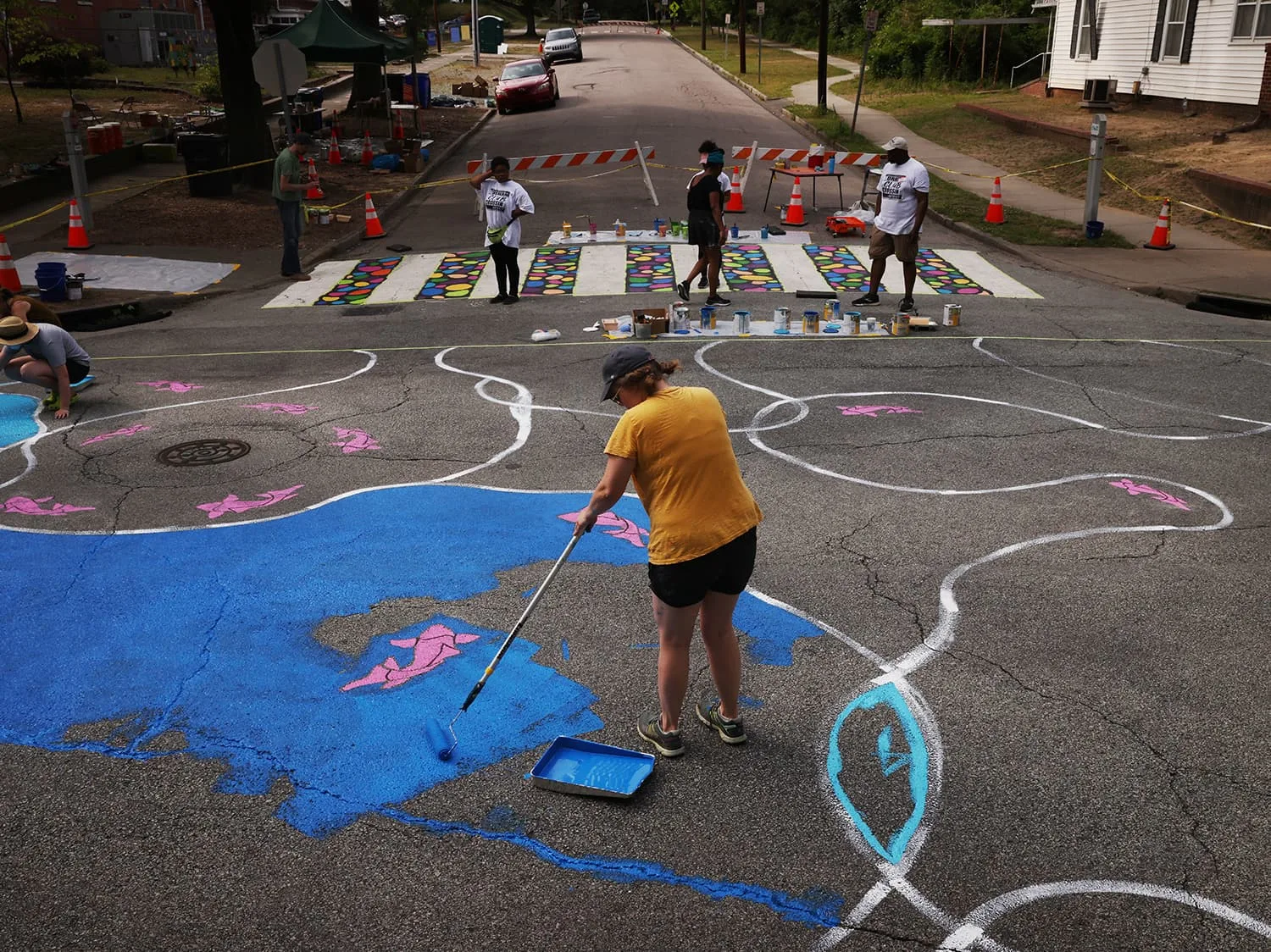
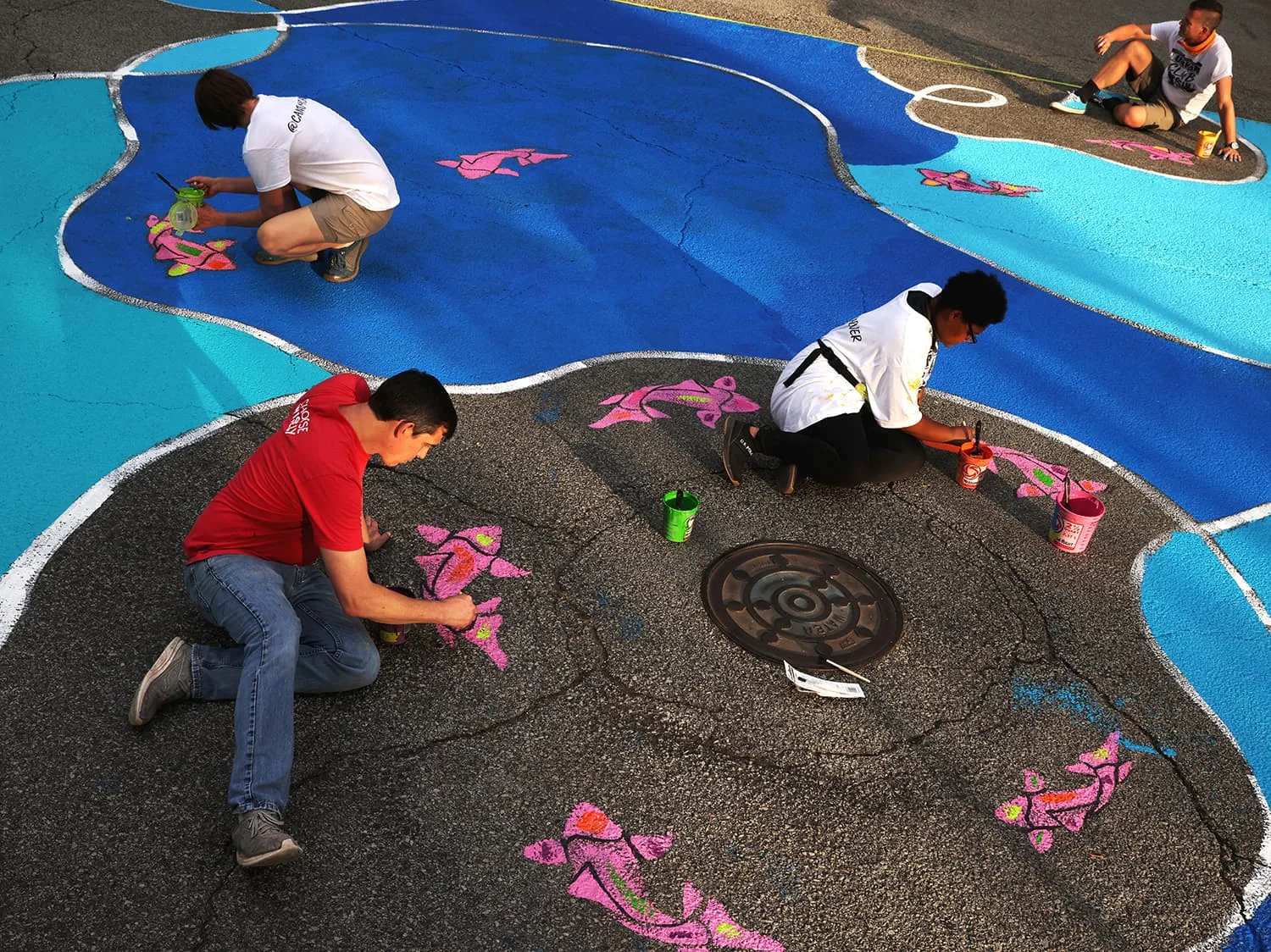
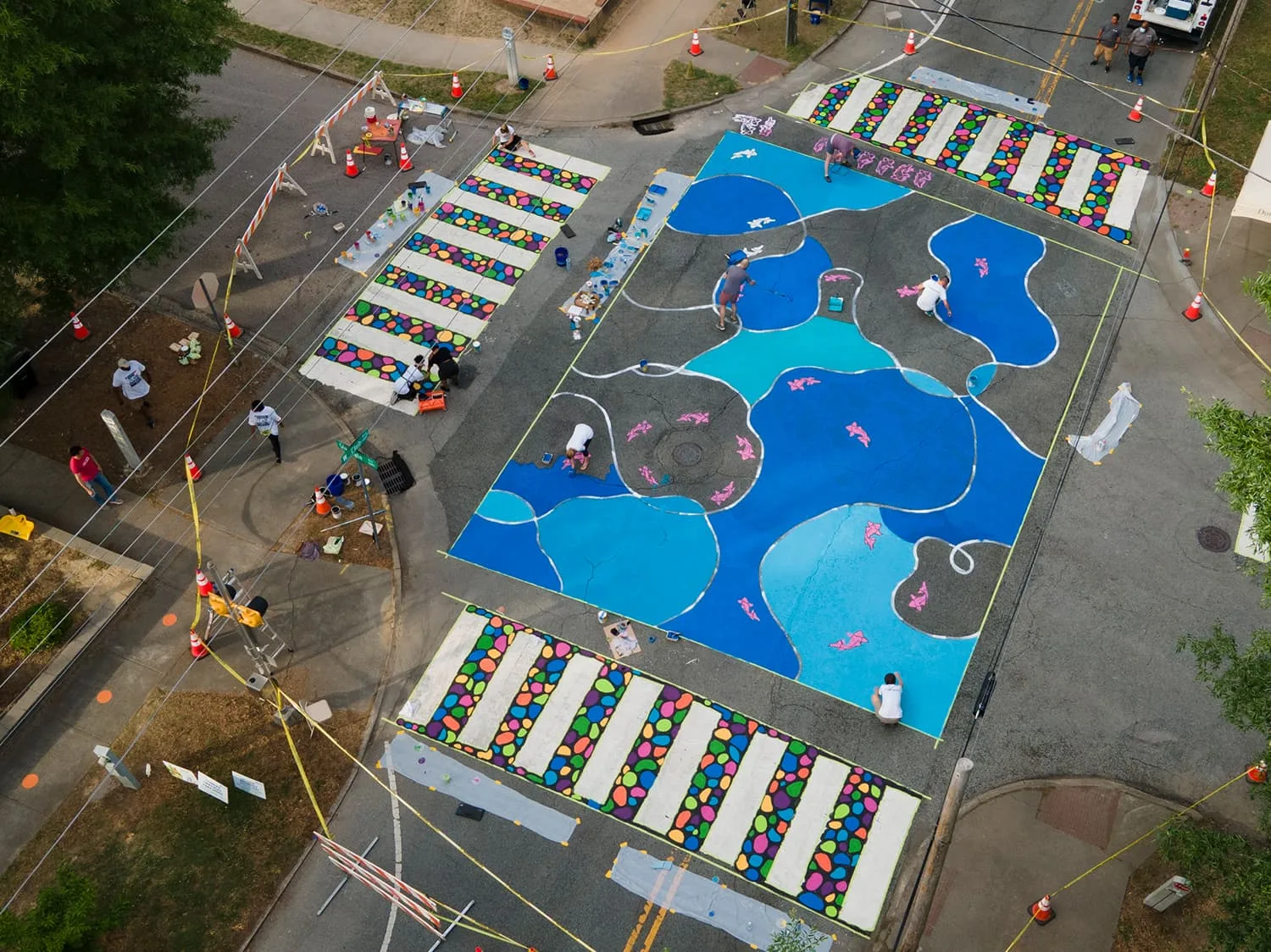
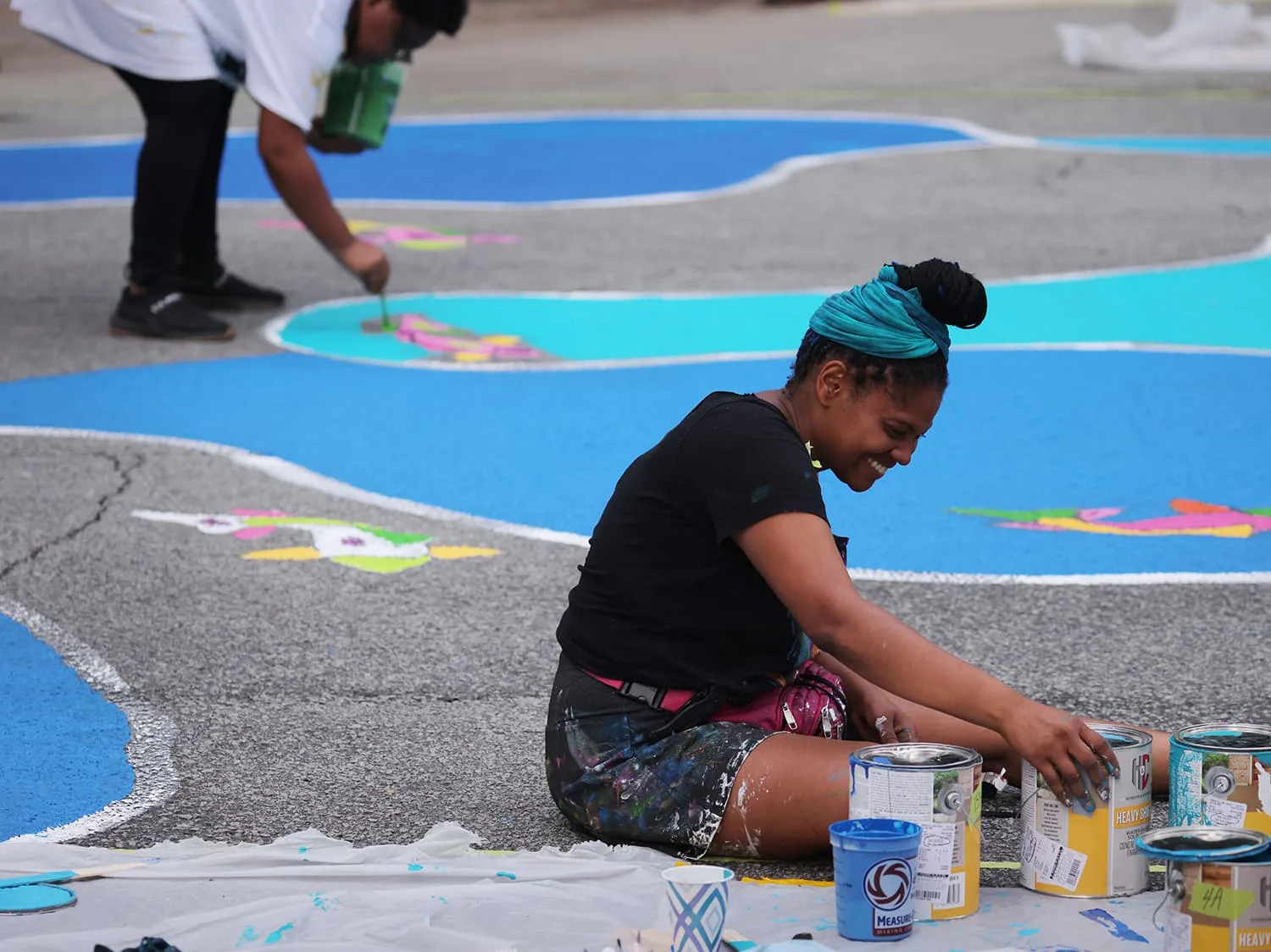
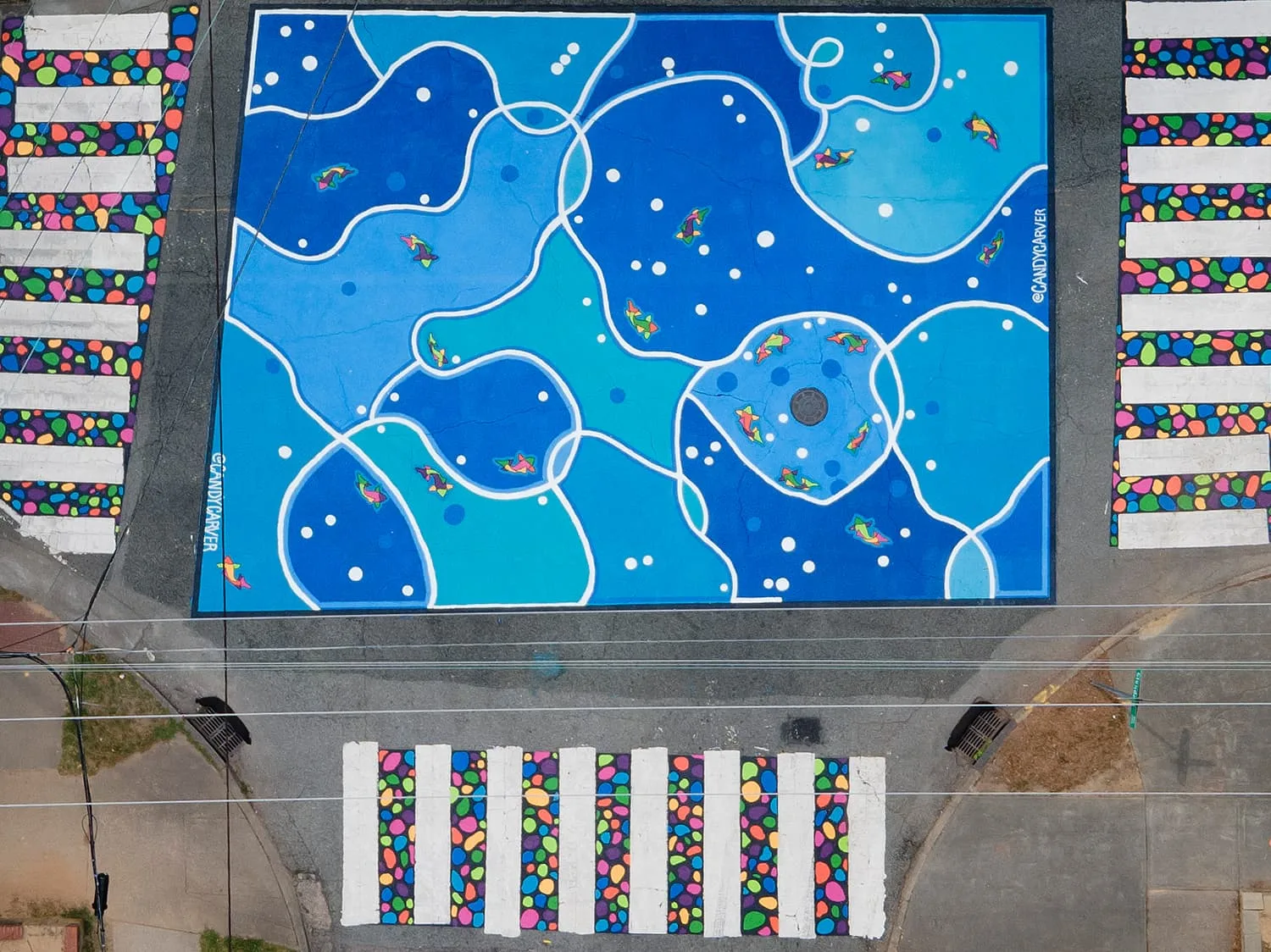
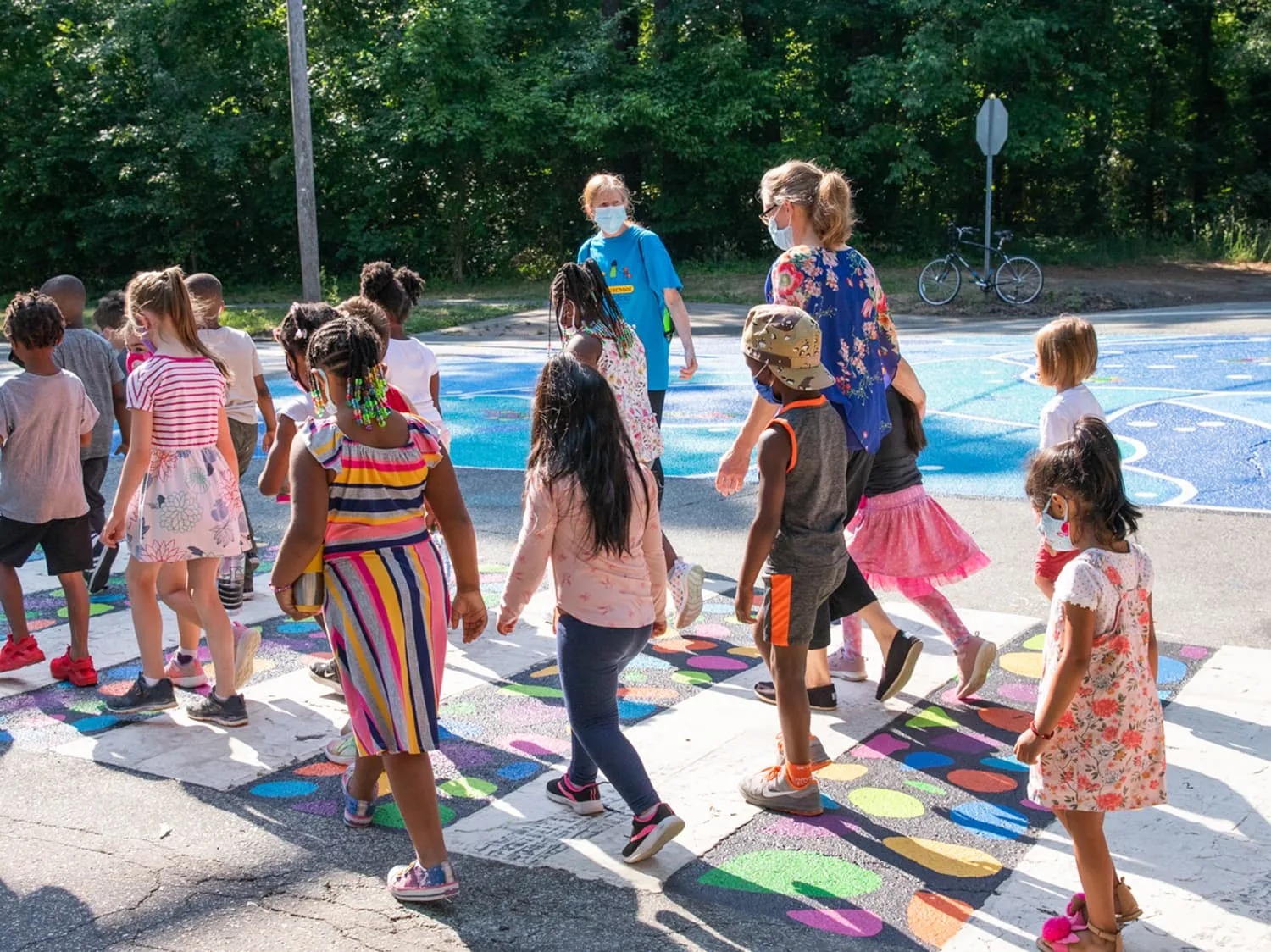
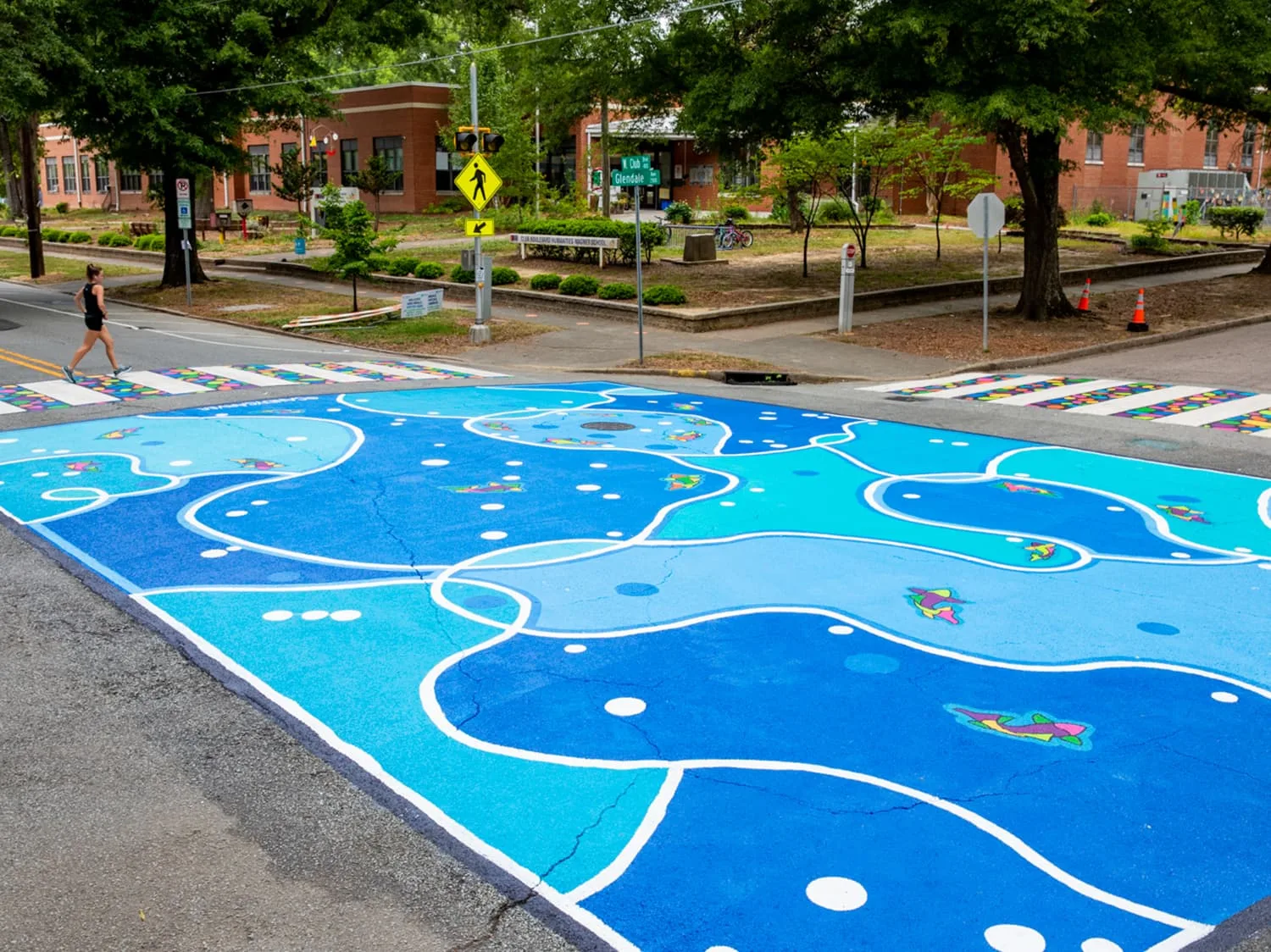
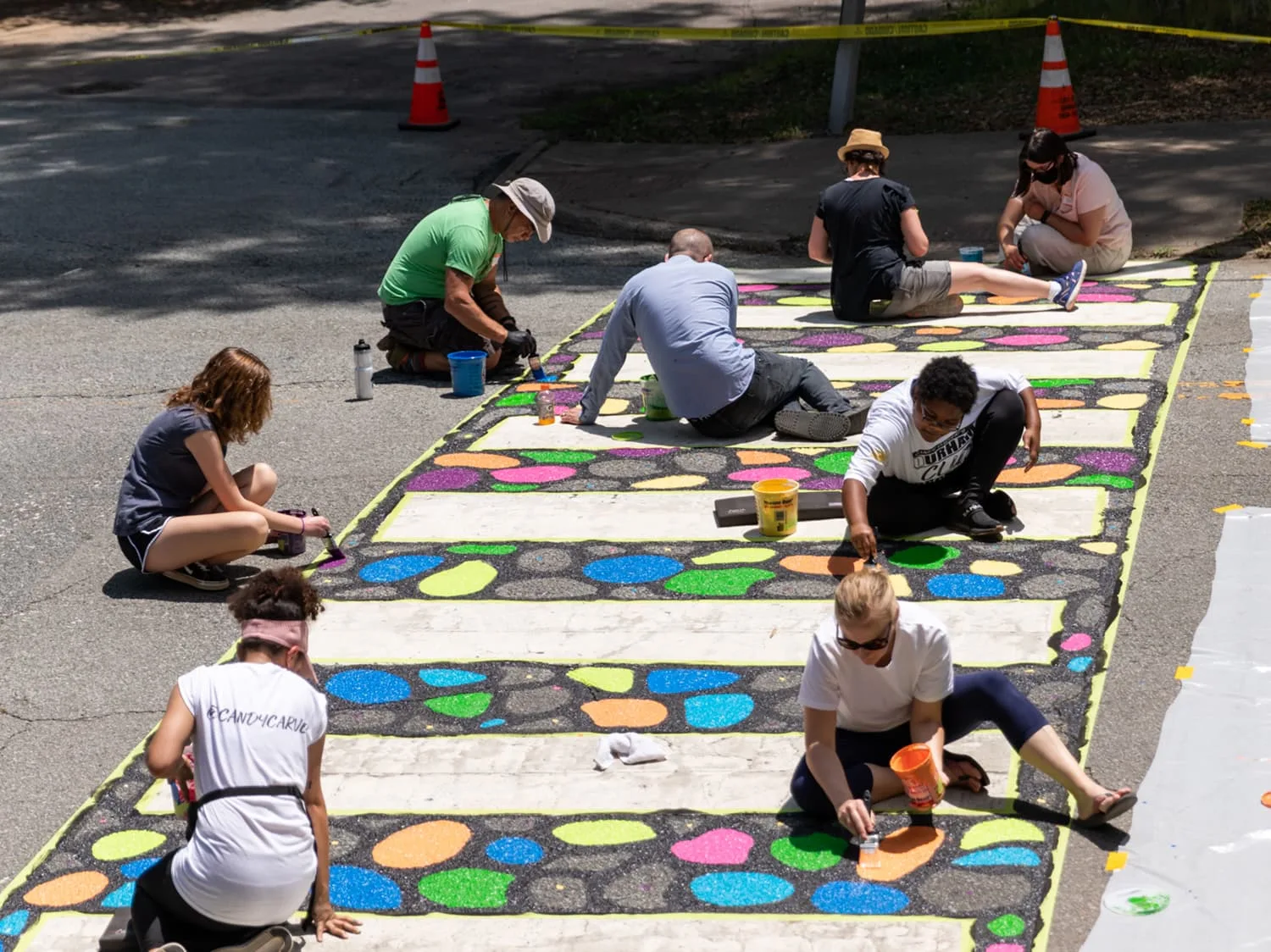
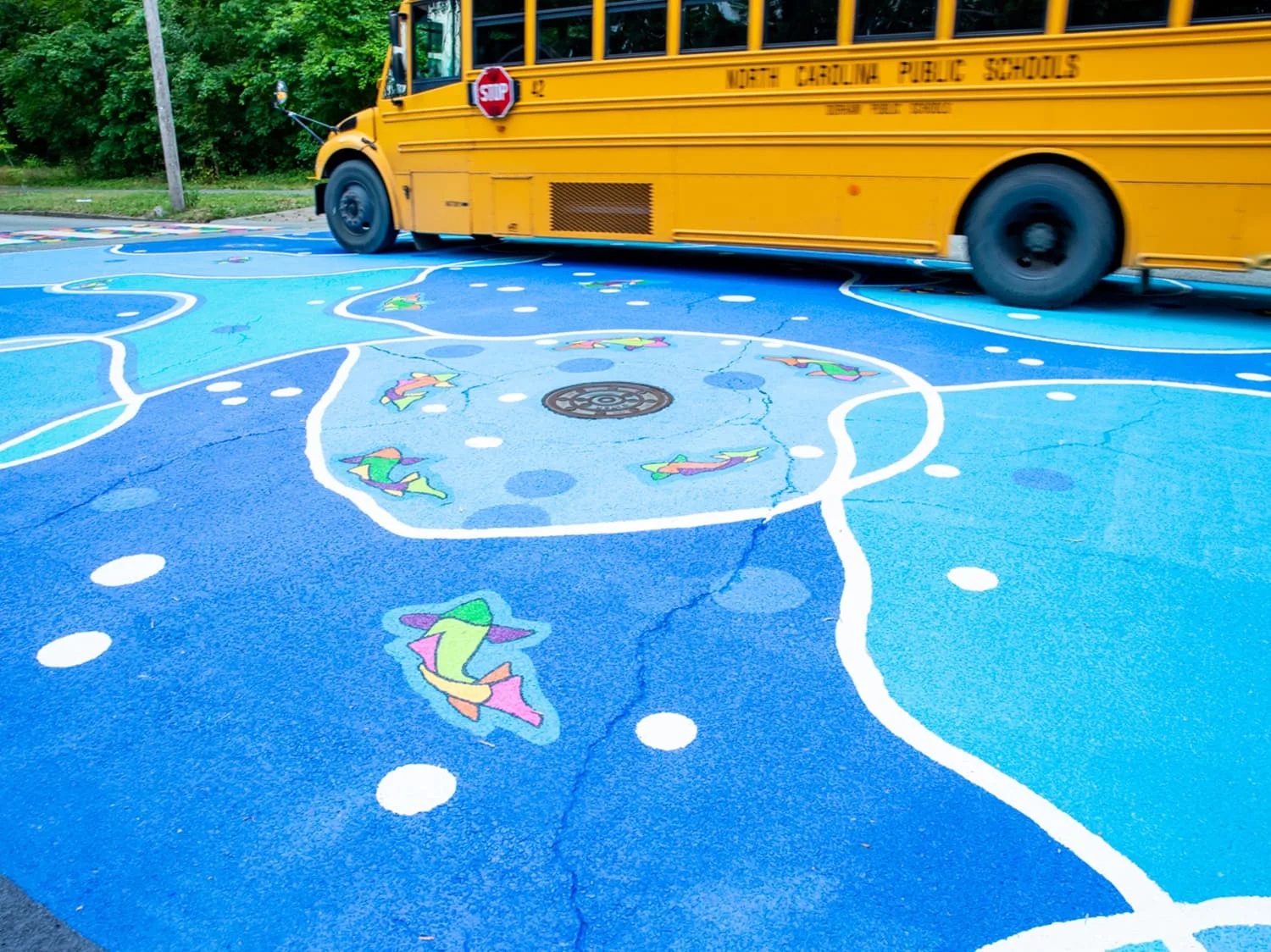
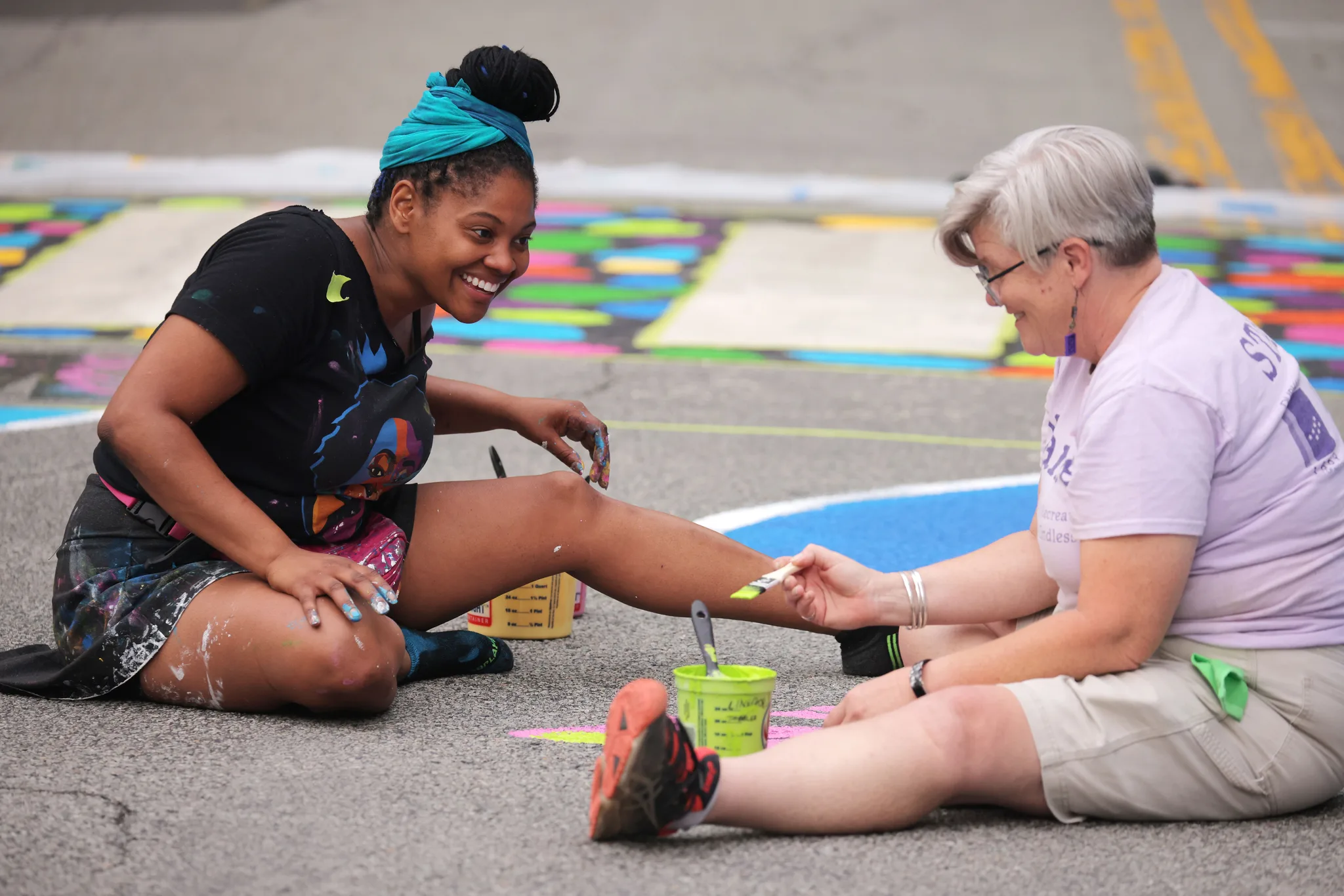
The Club Crossing project aimed to create a fun and welcoming street environment for elementary school students, families, and residents to cross to the Club Boulevard Elementary School, Northgate Park, and the Ellerbe Creek Trail. The project activated the intersection and travel lanes by adding artwork to the crosswalks in front of Club Boulevard Elementary, reducing speeding on West Club Boulevard, and increasing yielding to pedestrians crossing. Based on responses from 1,800+ residents through an online community vote held in January and February of 2021, Candy Carver was selected to paint her winning design out of five designs created by local and regional artists. Carver worked with community members and stakeholders to refine her crosswalk design, and together with 39 volunteers installed the mural over the course of two days. The mural, “Our Oasis,” depicts blue motifs and reminds residents of the nearby creek and surrounding natural environment with colorful fish guiding the way.
- Potentially dangerous conflicts between drivers and pedestrians crossing the street decreased by 30%.
- The percentage of people who felt unsafe crossing fell from 85% to 6%.
- Community members who felt positively about the site rose from 4% to 77%.
“By rooting the community at every stage of the project, the artist and volunteers were able to transform a normal intersection into a wayfinding landmark.”
Rebecca Brown, Cultural & Public Art Program Manager, City of Durham
Use the slider to see the transformation
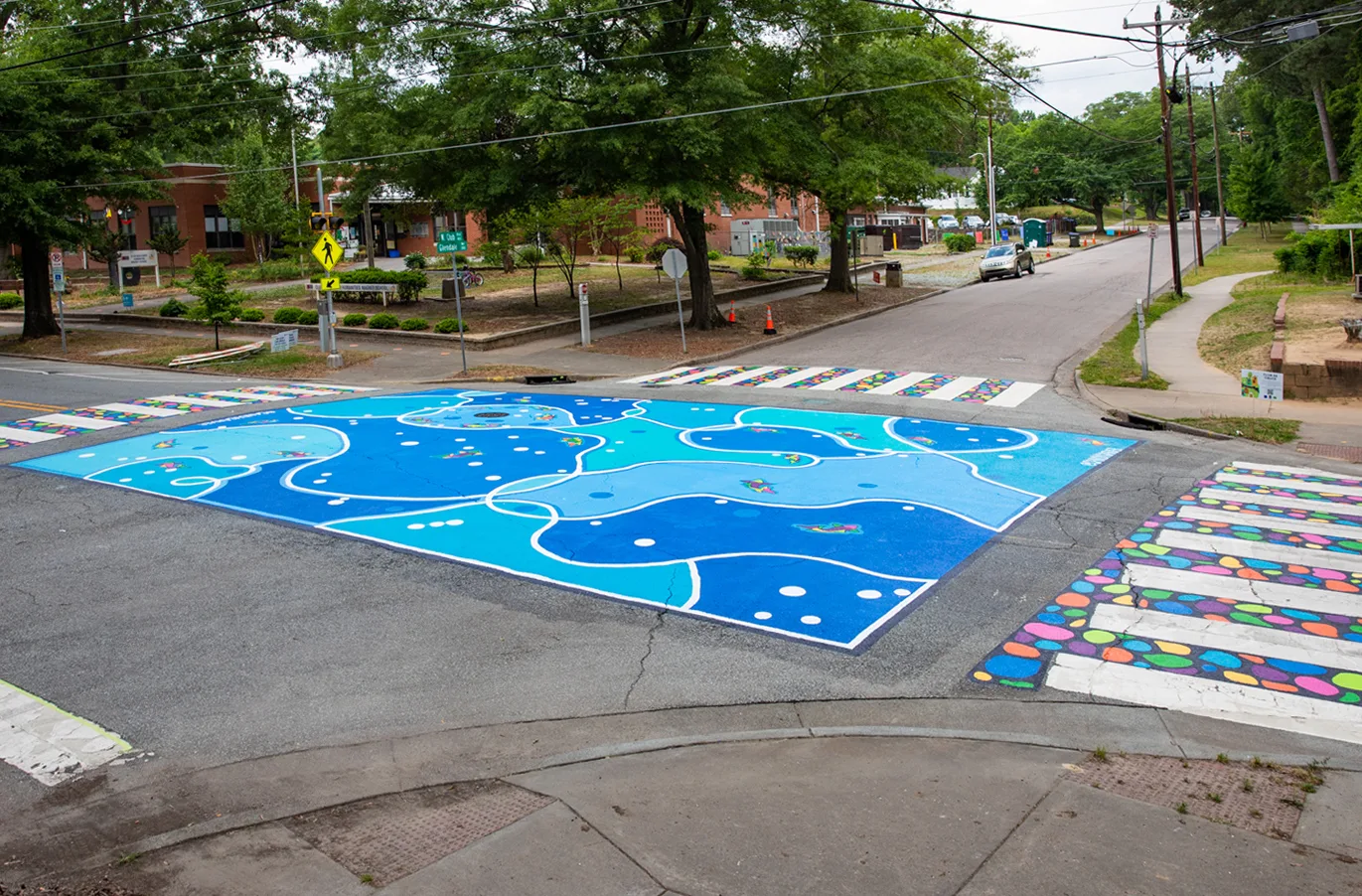
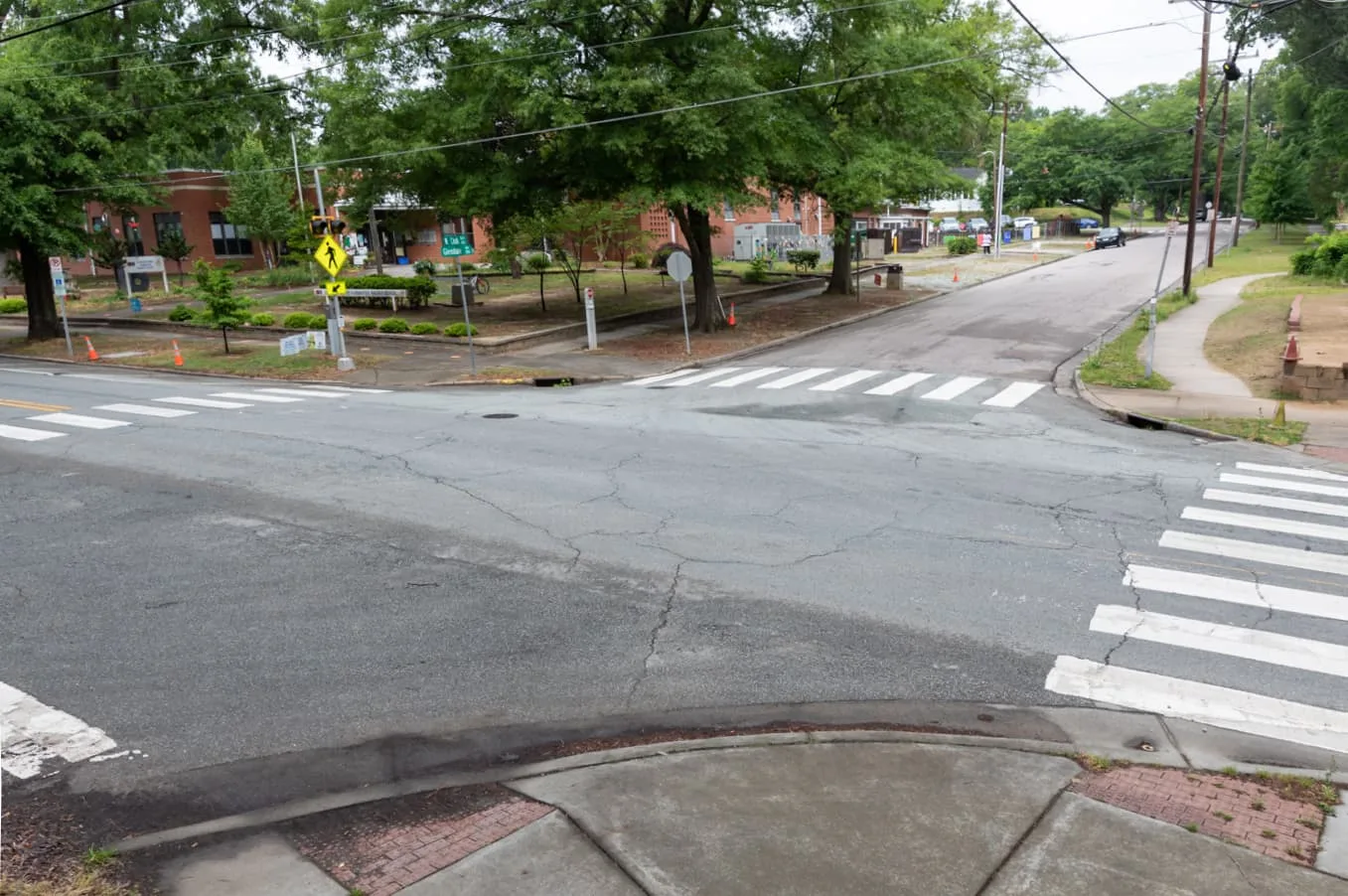
Best Practice Highlight: Community Surveys
The City of Durham engaged community members throughout the design process by using various forms of surveys and community conversations. Through an initial survey, the City collected feedback from residents on usage and perception of the site, as well as what kinds of design interventions were desired. Five finalist artists were selected by a panel of community members and organizations and commissioned to create designs that responded to the needs and preferences of the community. This process culminated in a vote drawing in 1,826 responses, selecting Candy Carver’s crosswalk mural of colorful oceanic patterns and fish as the winner. Post installation, a school-day walking event was hosted for 160+ students to meet the artist and representatives from the East Coast Greenway, Ellerbe Creek Watershed Association, Bike Durham, and the Durham Park Foundation who discussed public art, street safety, nature, trail and park use, and connectivity throughout Northgate Park.
Press
Durham seeks community input on future crosswalk art along West Club Boulevard (WTVD-TV (ABC), November 9, 2020)
For inspiration and tips for the creation of art on roadways and public places, download the Bloomberg Associates Asphalt Art Guide which features successful plaza and roadway art activations around the world, as well as key steps for developing such projects.
Trenton, NJ
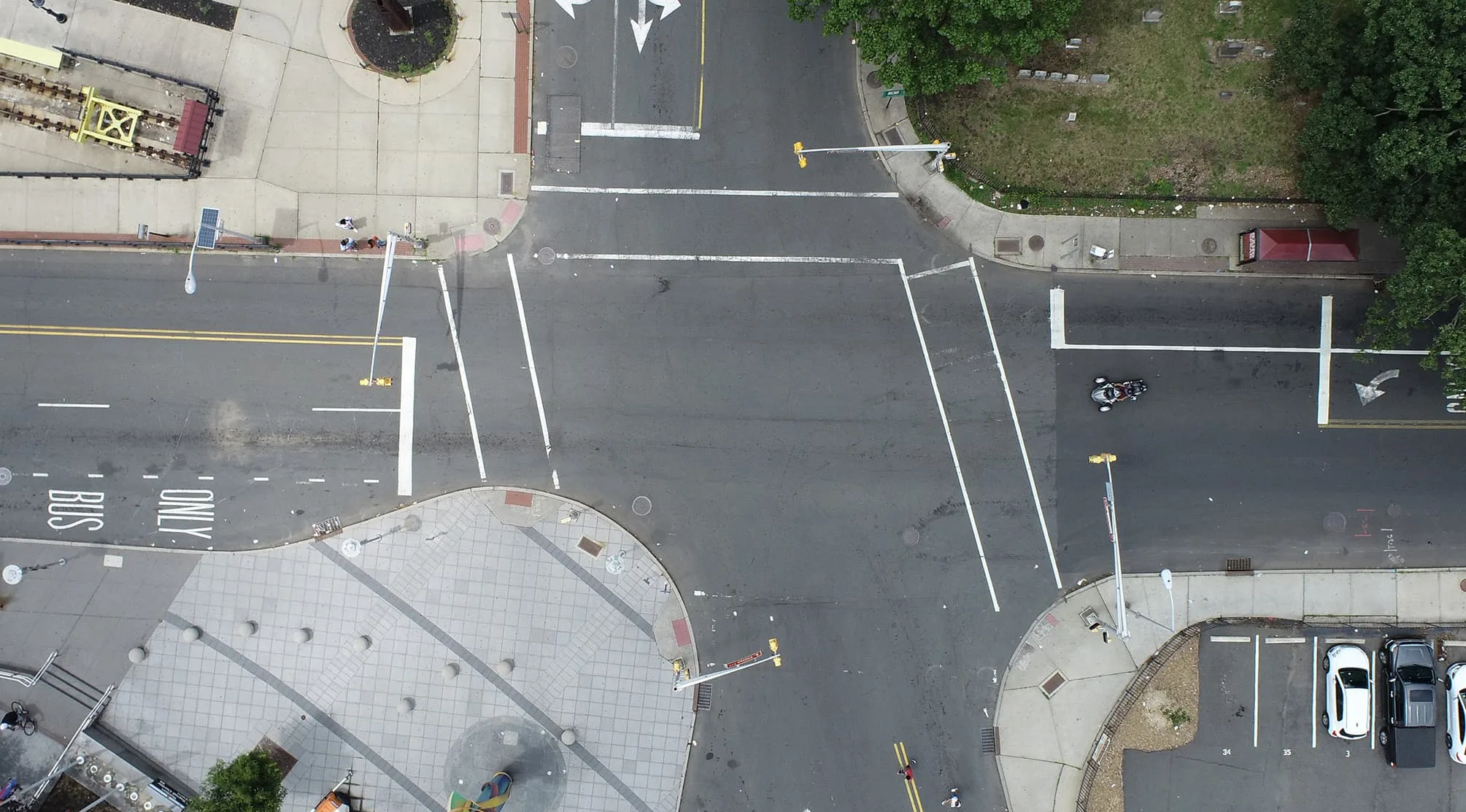
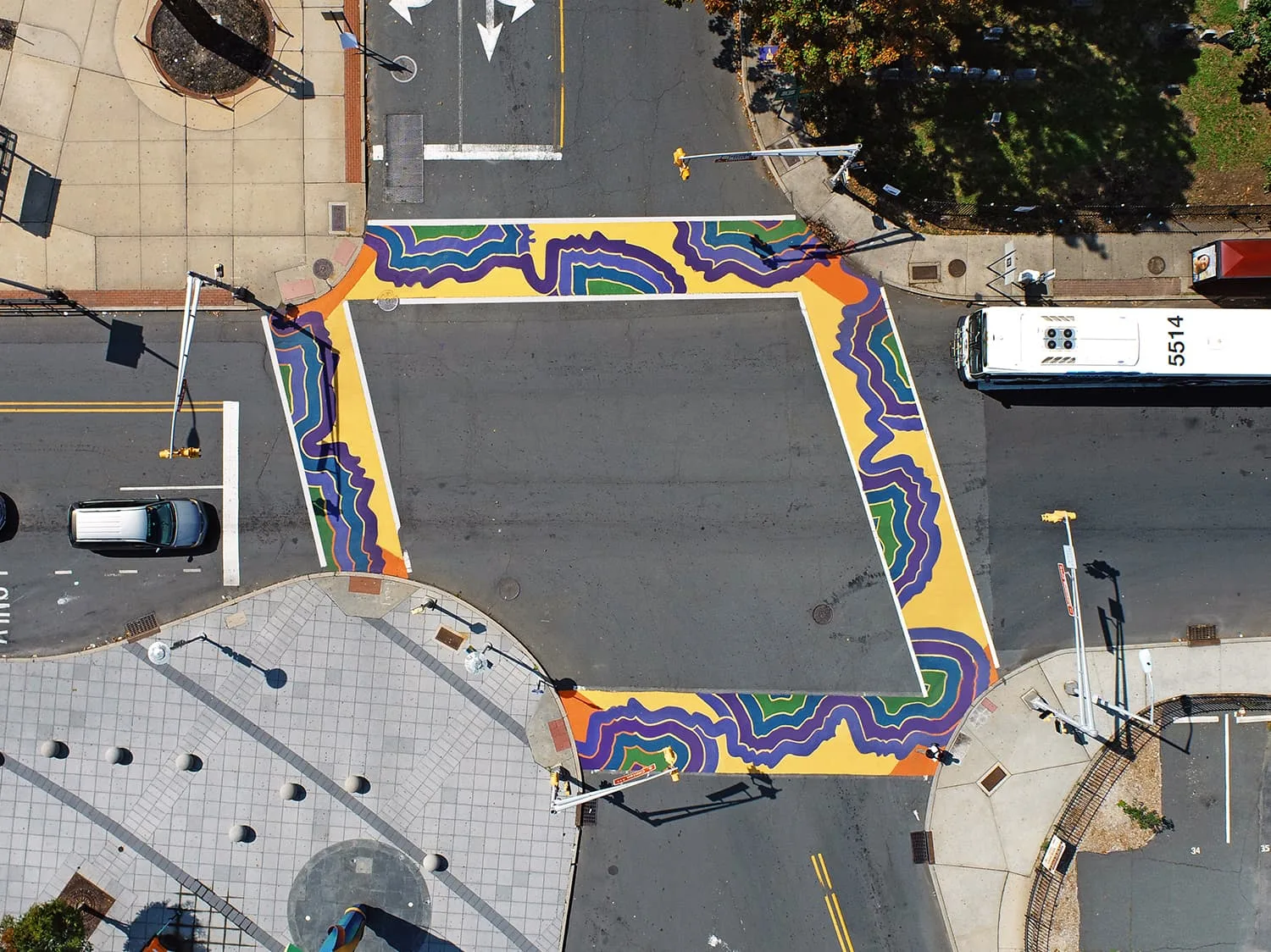
Art creating a gateway at a transit hub
Best Practice Highlight: Adapting the Design to Rising Challenges
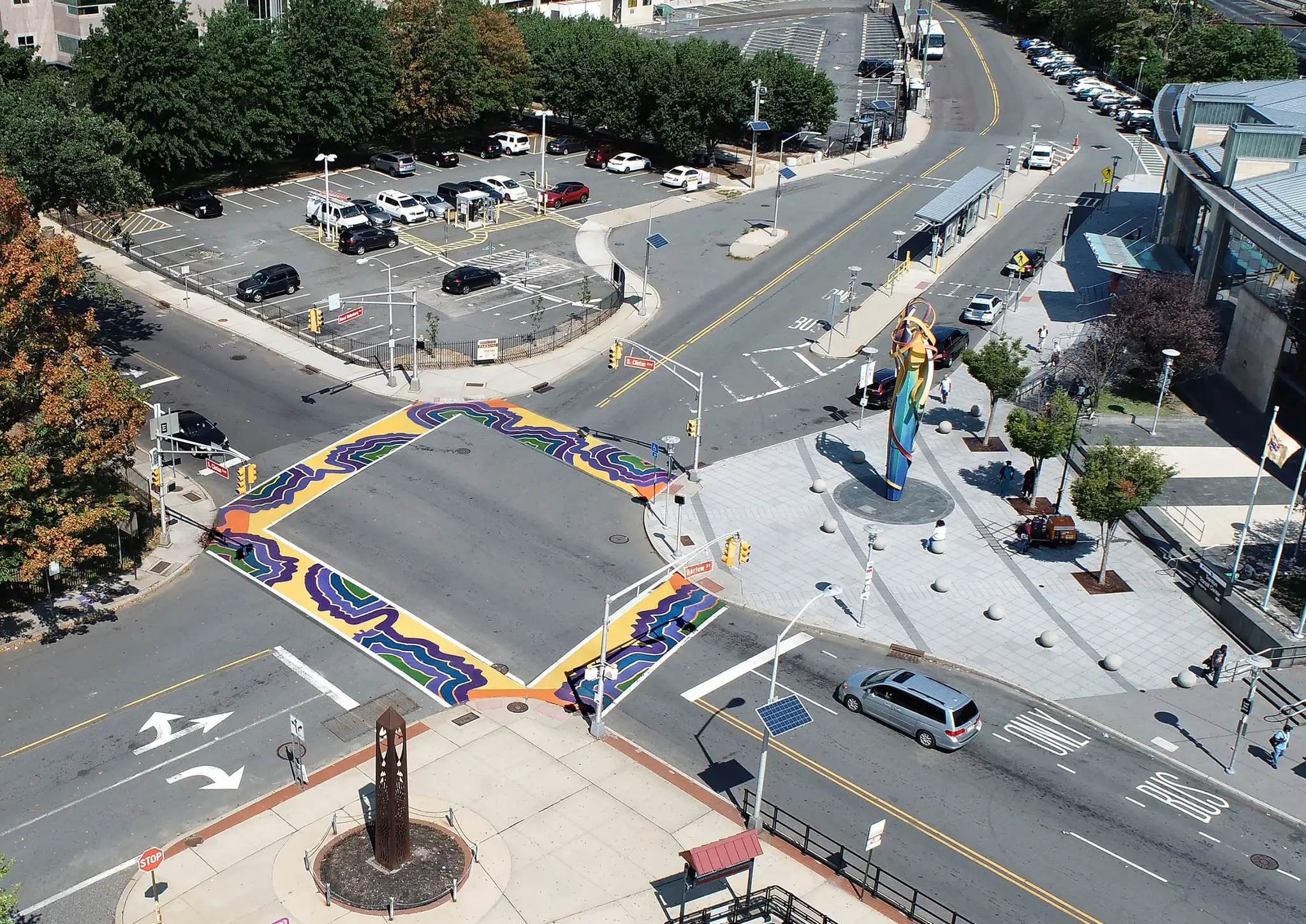
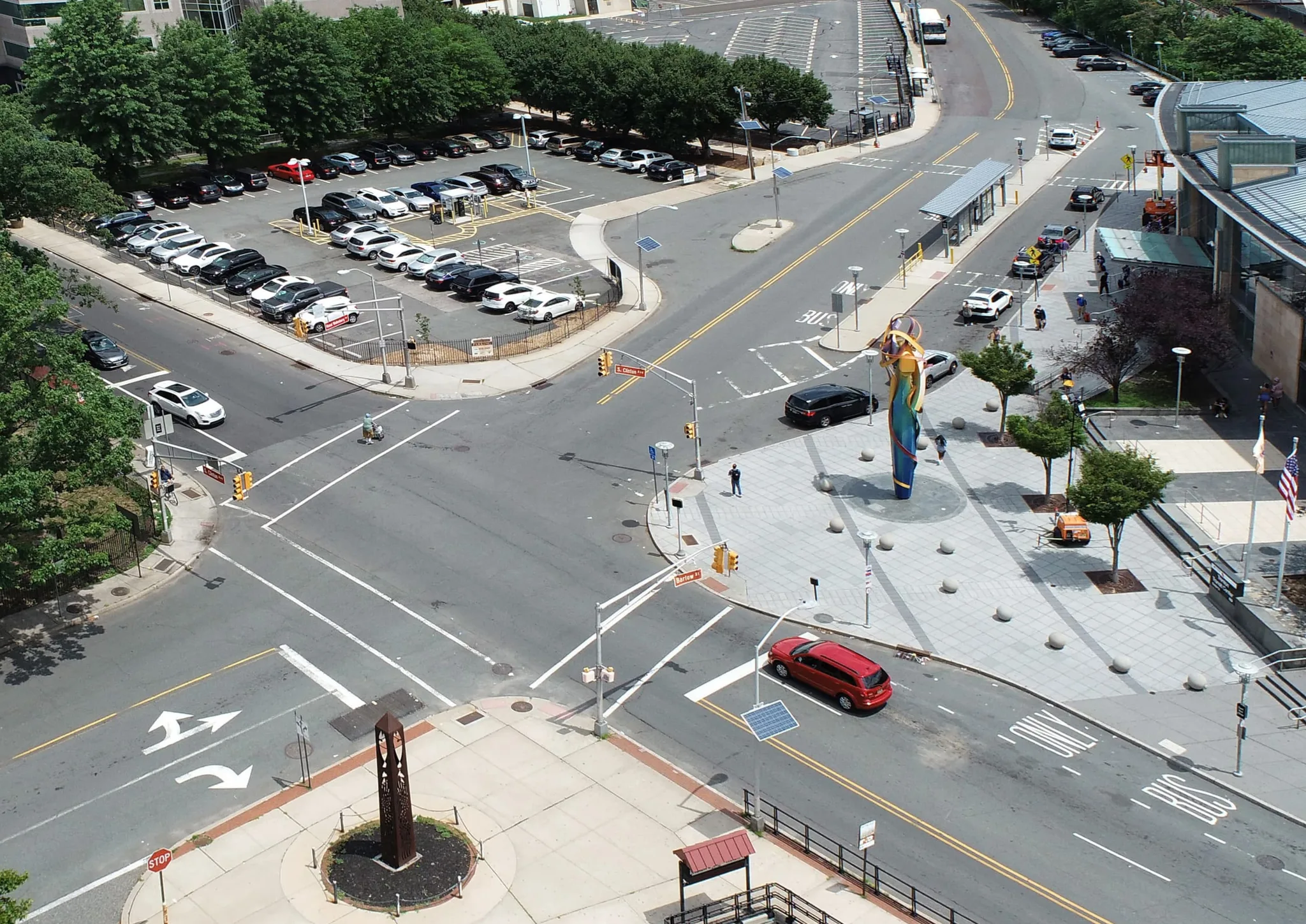
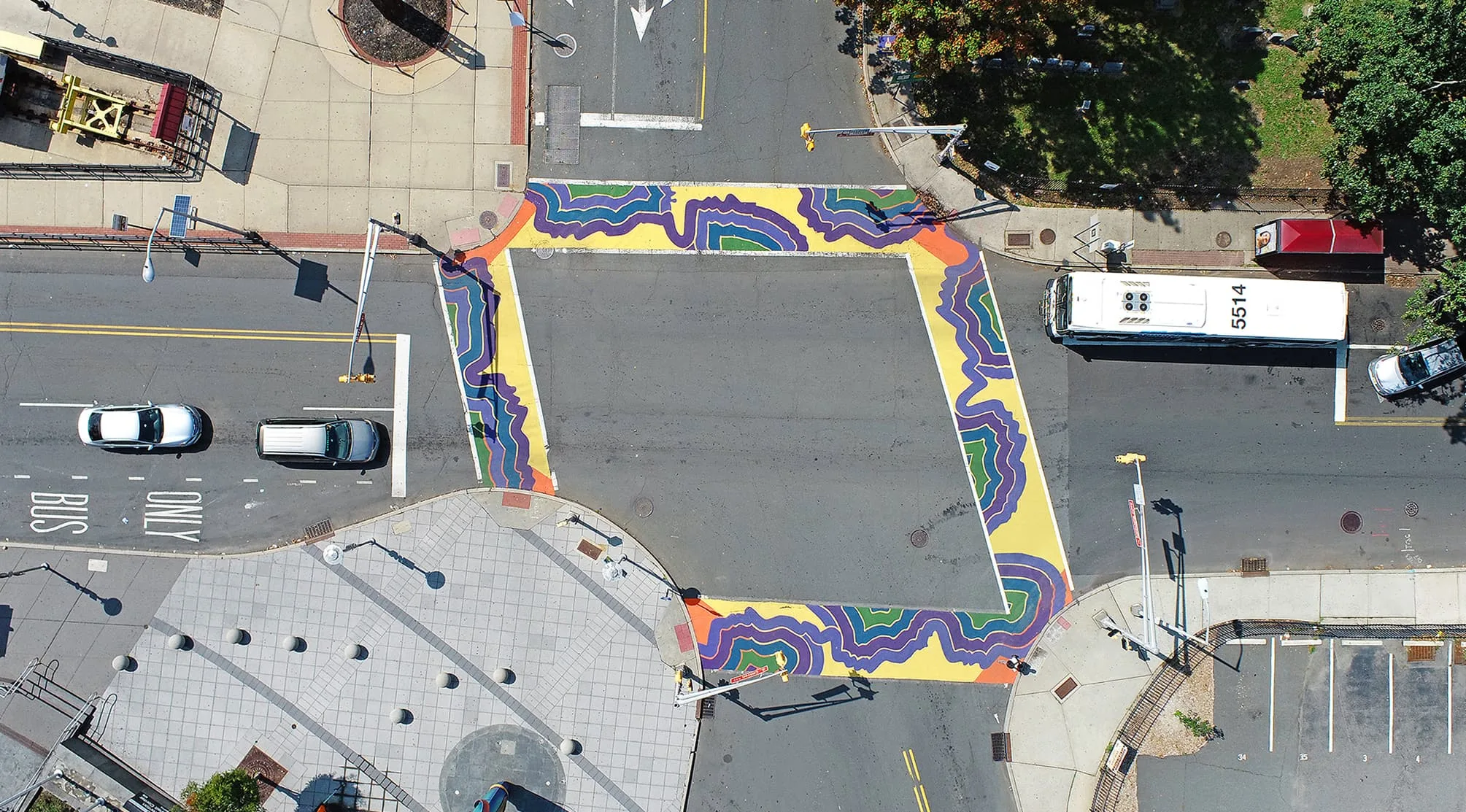
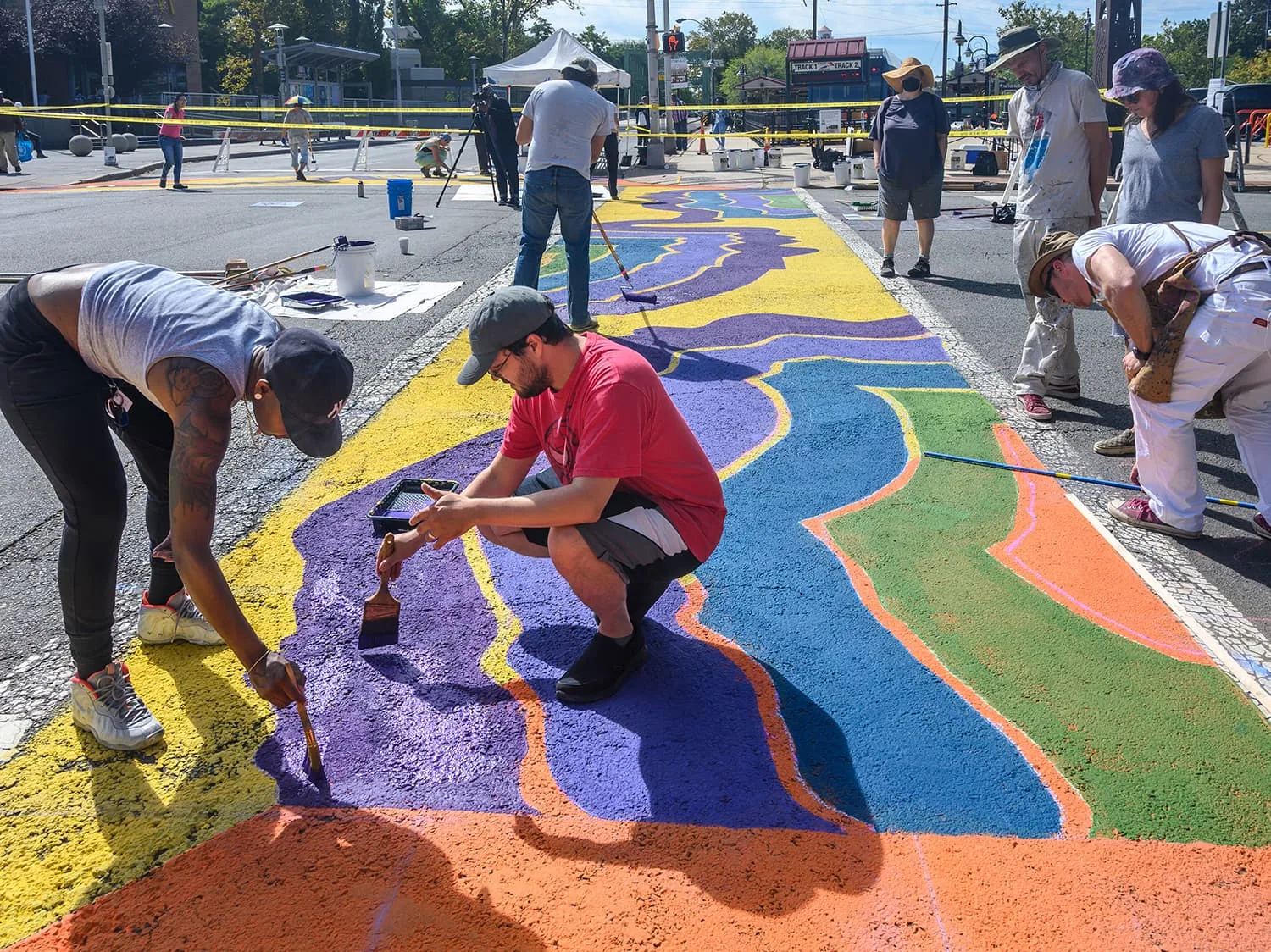
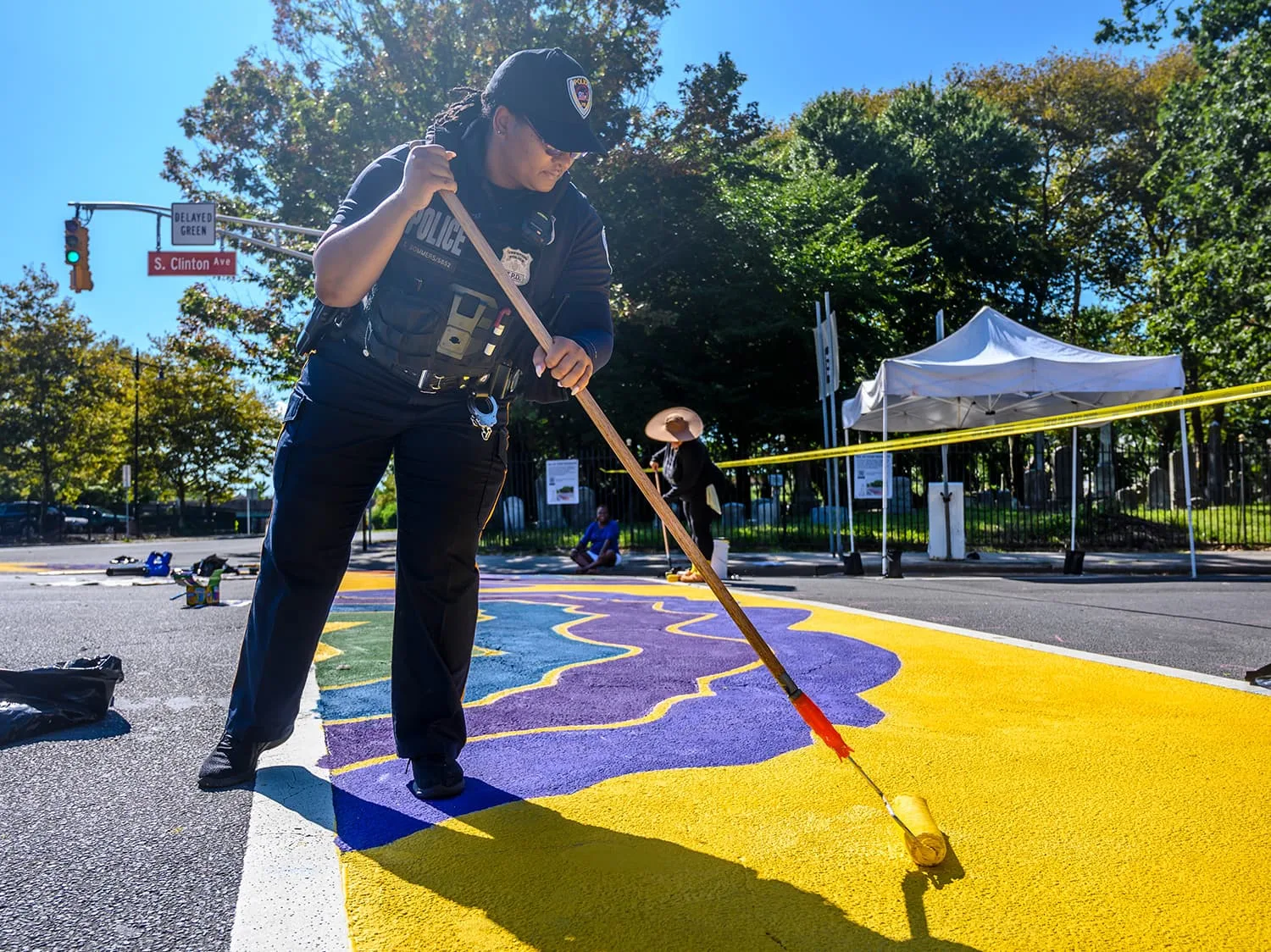
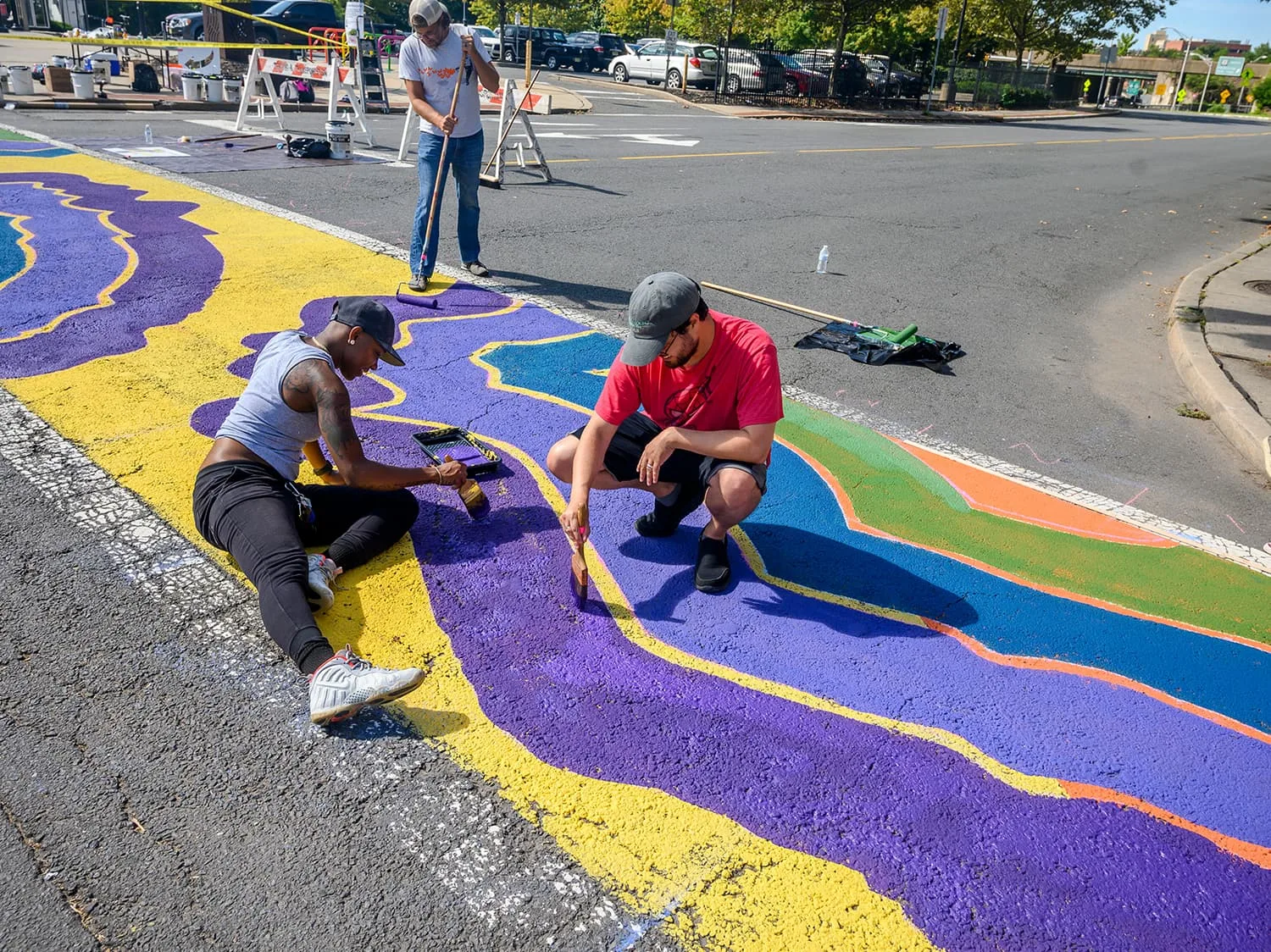
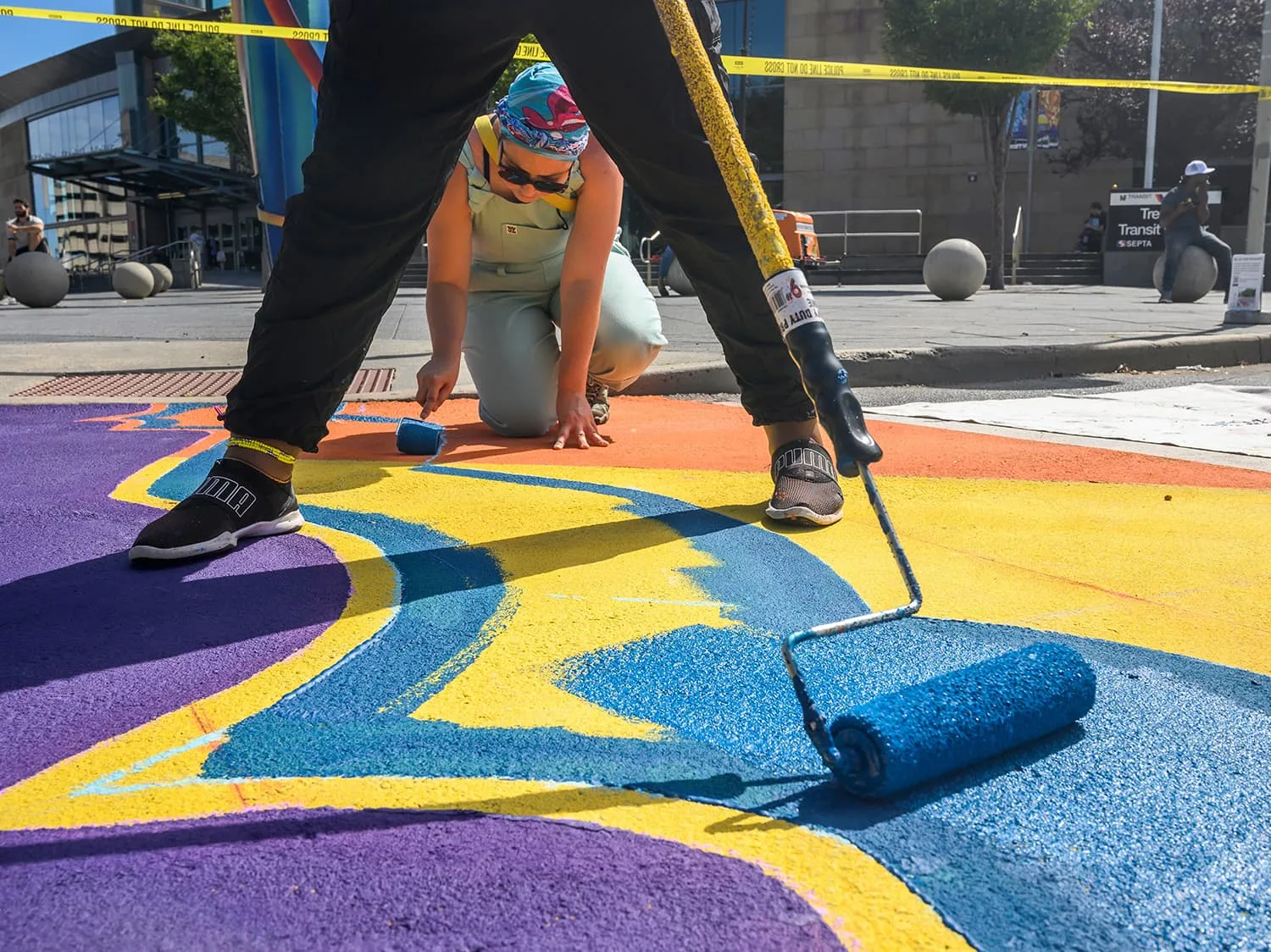
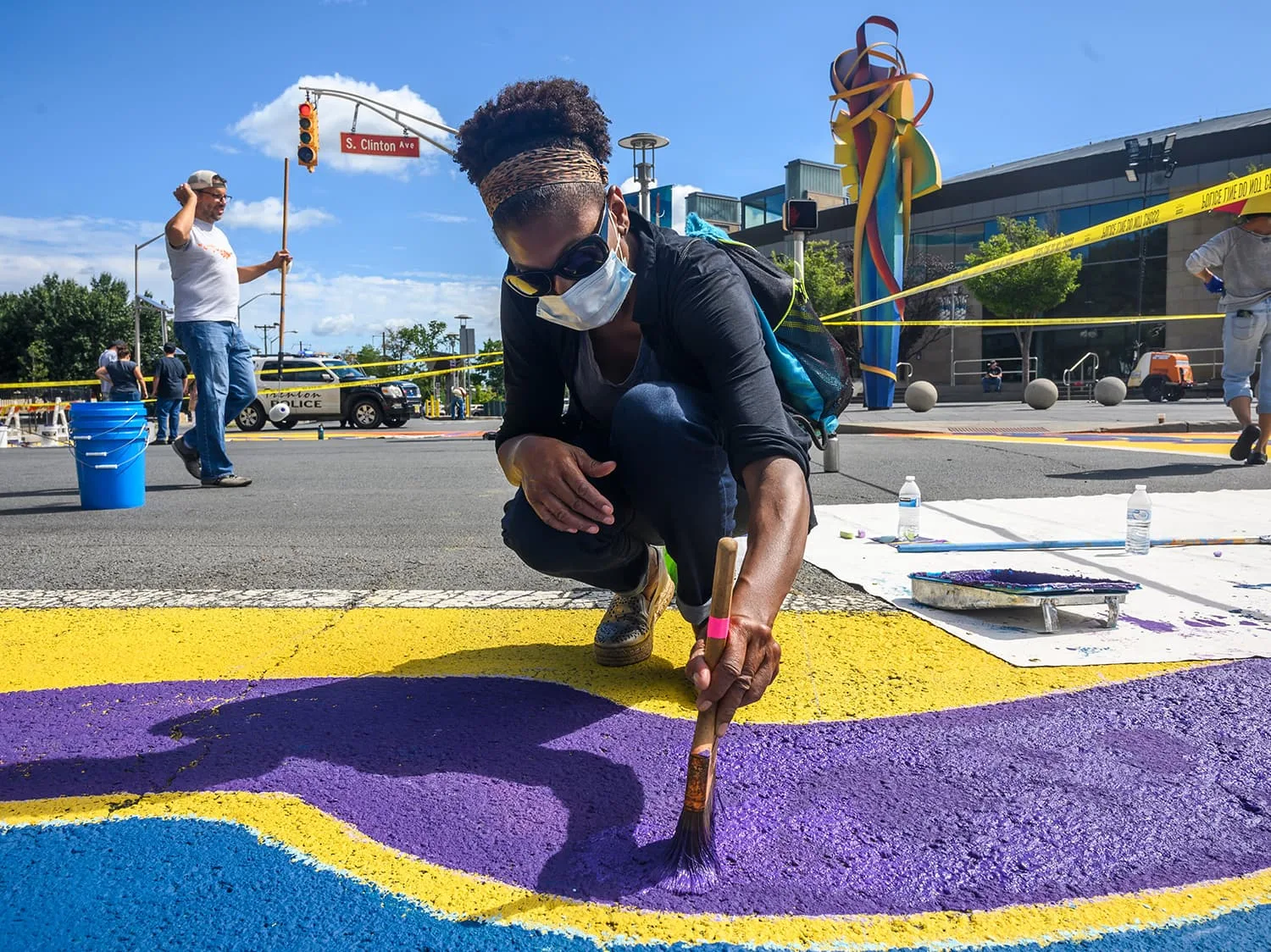
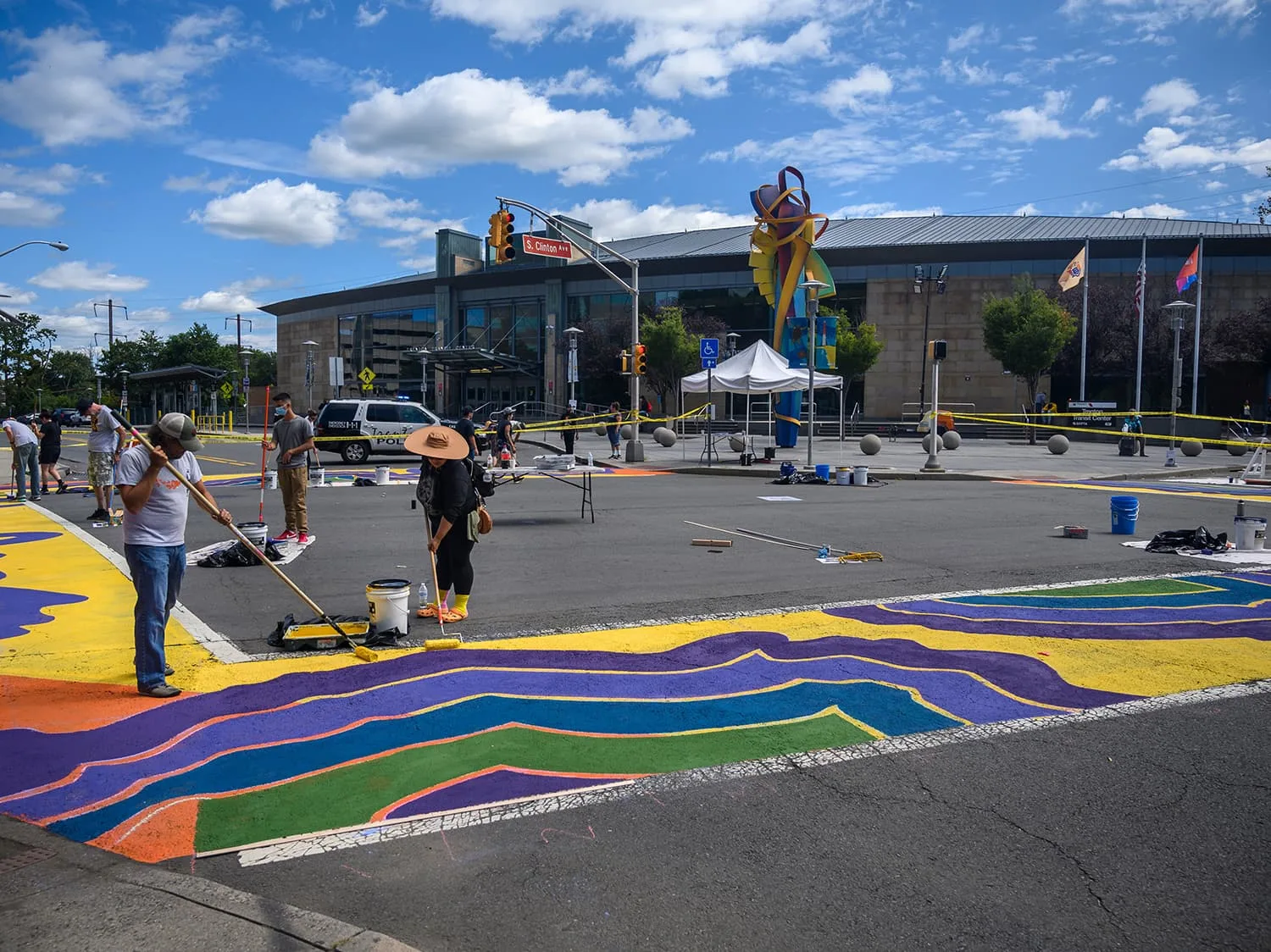
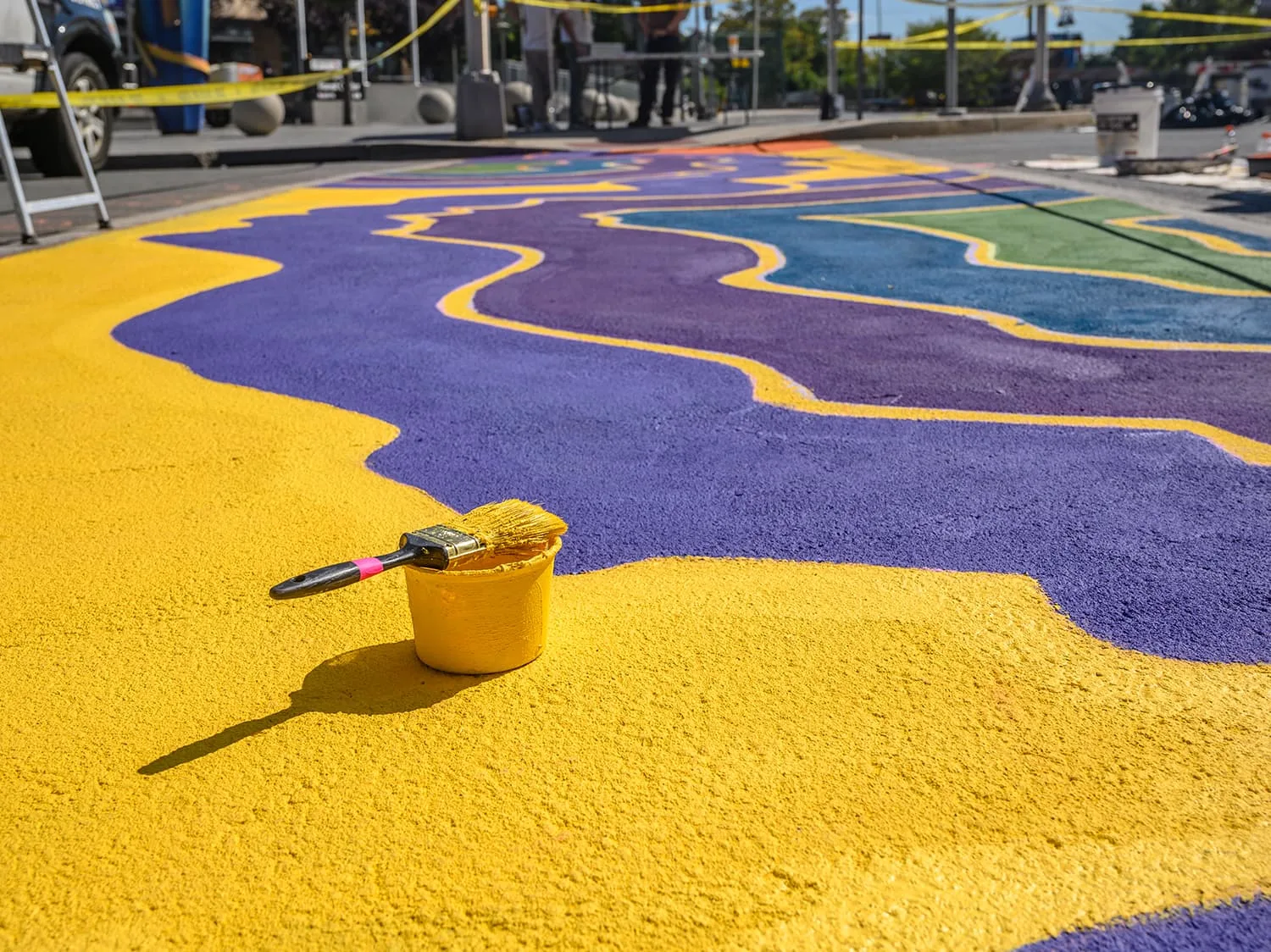
The intersection in front of the Transit Center is heavily used by cars, buses, and pedestrians, so a balance had to be struck between closing the intersection for long enough to appropriately install George Bates’ design and keeping traffic disruption to a minimum. Artworks and Bates worked together with City officials and determined that their team could execute the mural painting over 16 hours on a weekend (12 hours the first day, 4 the second). The City coordinated this closure and Bates adapted his original design to be able to be more efficiently installed, making the shapes larger and with fewer overlaps. The first install day began with laying down coats of a yellow base, chalk grid and design lines, and then teams of volunteers were assigned a color to paint the silhouettes (one volunteer creating the outline edge with a small roller, another with a larger roller filling big spaces and others with brushes completing edges and detail work). Halfway through the first day, Bates removed some elements from his design, determining this would not reduce the overall impact of the design but would buy crucial time to complete the installation.
Artist Testimonial
“I had been looking to more directly incorporate the local community into a project, and the relationships Artworks had within the area, and their exceptional team, were perfect for this endeavor. One of my favorite moments from the install day was the emotion and enthusiasm a mother had for the project while watching her young son paint his own portrait into the piece. The goal is always to have a community experience their own sense of ownership of a site-specific public art work, and when they do there’s nothing better than that. As Art is a thoughtful reflection, and a thoughtful reflection is an act of kindness. I like to think there’s more kindness at the intersection now.”
George Bates, Artist
Press
“Stepping into Tomorrow”: A Trenton Public Art Project (Trenton Daily, July 6, 2021)
For inspiration and tips for the creation of art on roadways and public places, download the Bloomberg Associates Asphalt Art Guide which features successful plaza and roadway art activations around the world, as well as key steps for developing such projects.
Starkville, MS
Increasing walkability with colorful street murals
The Project
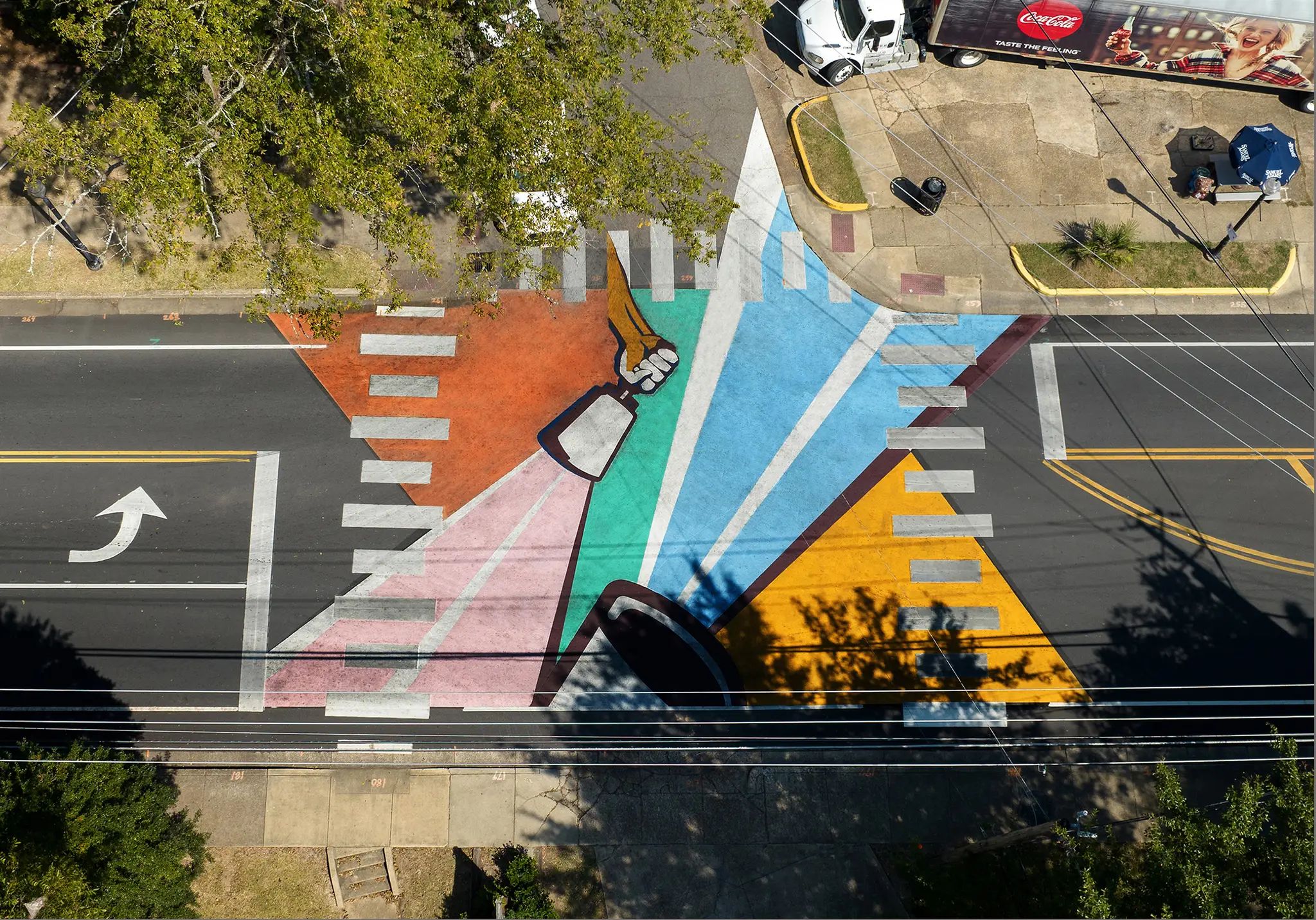
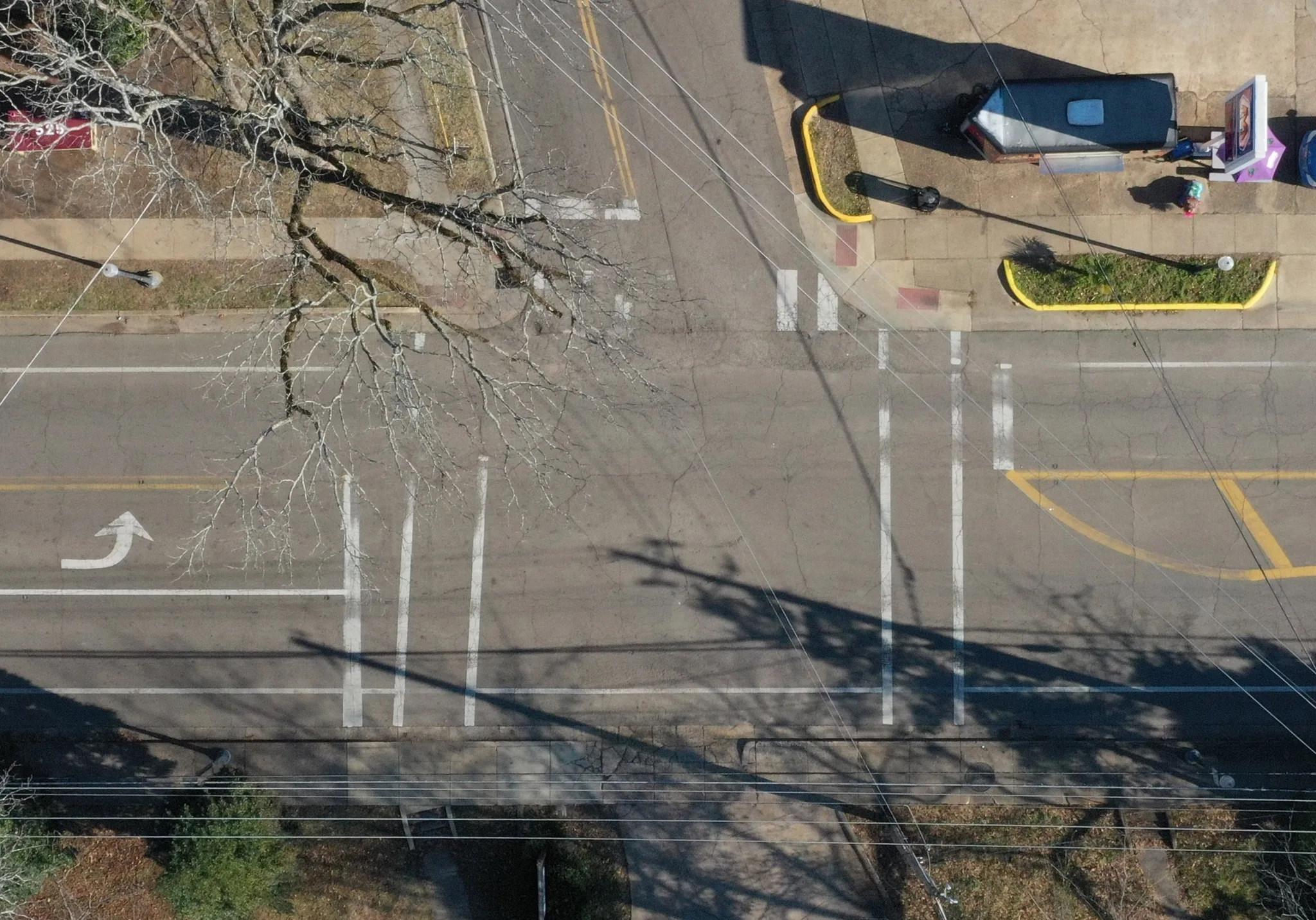
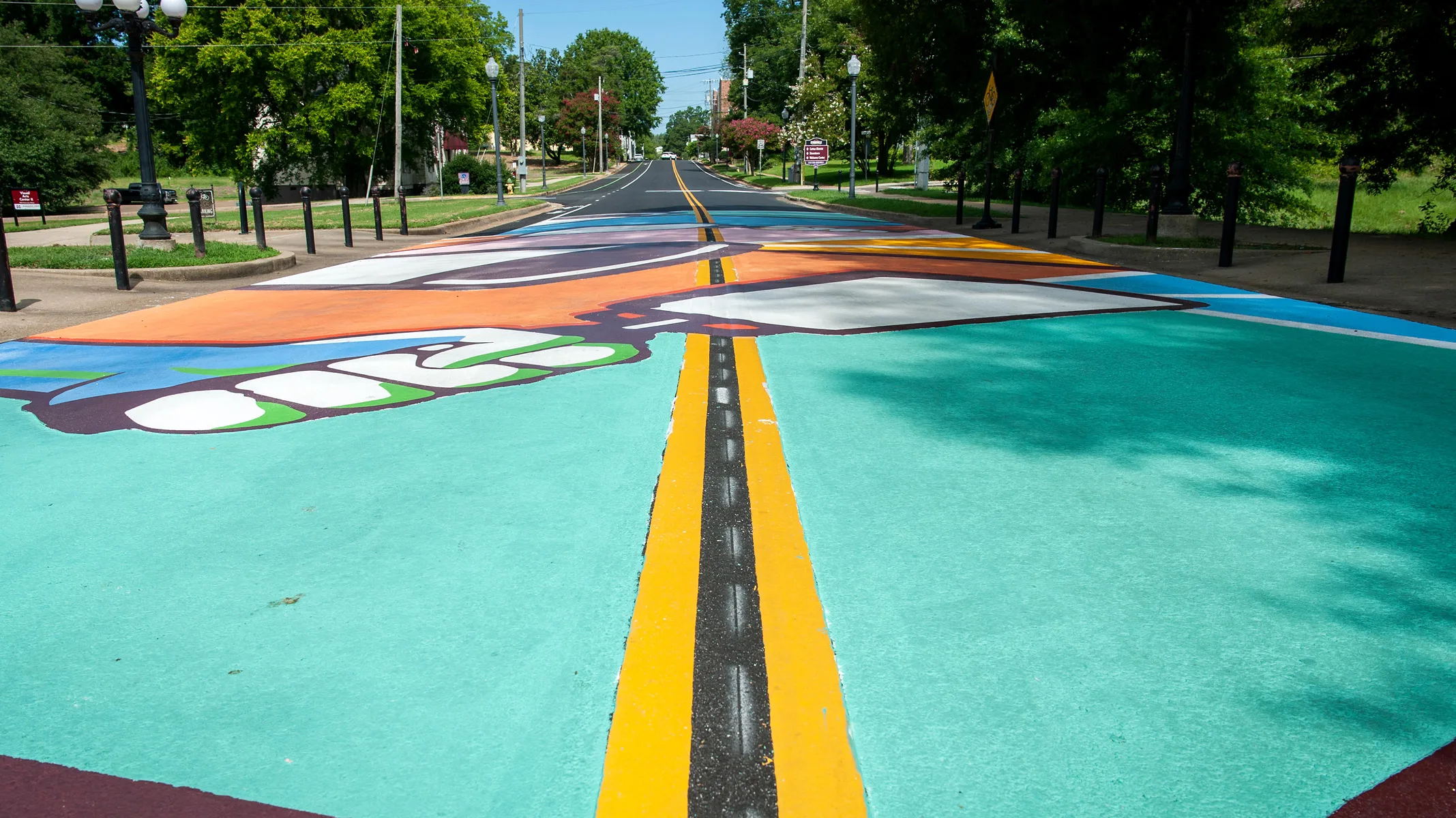
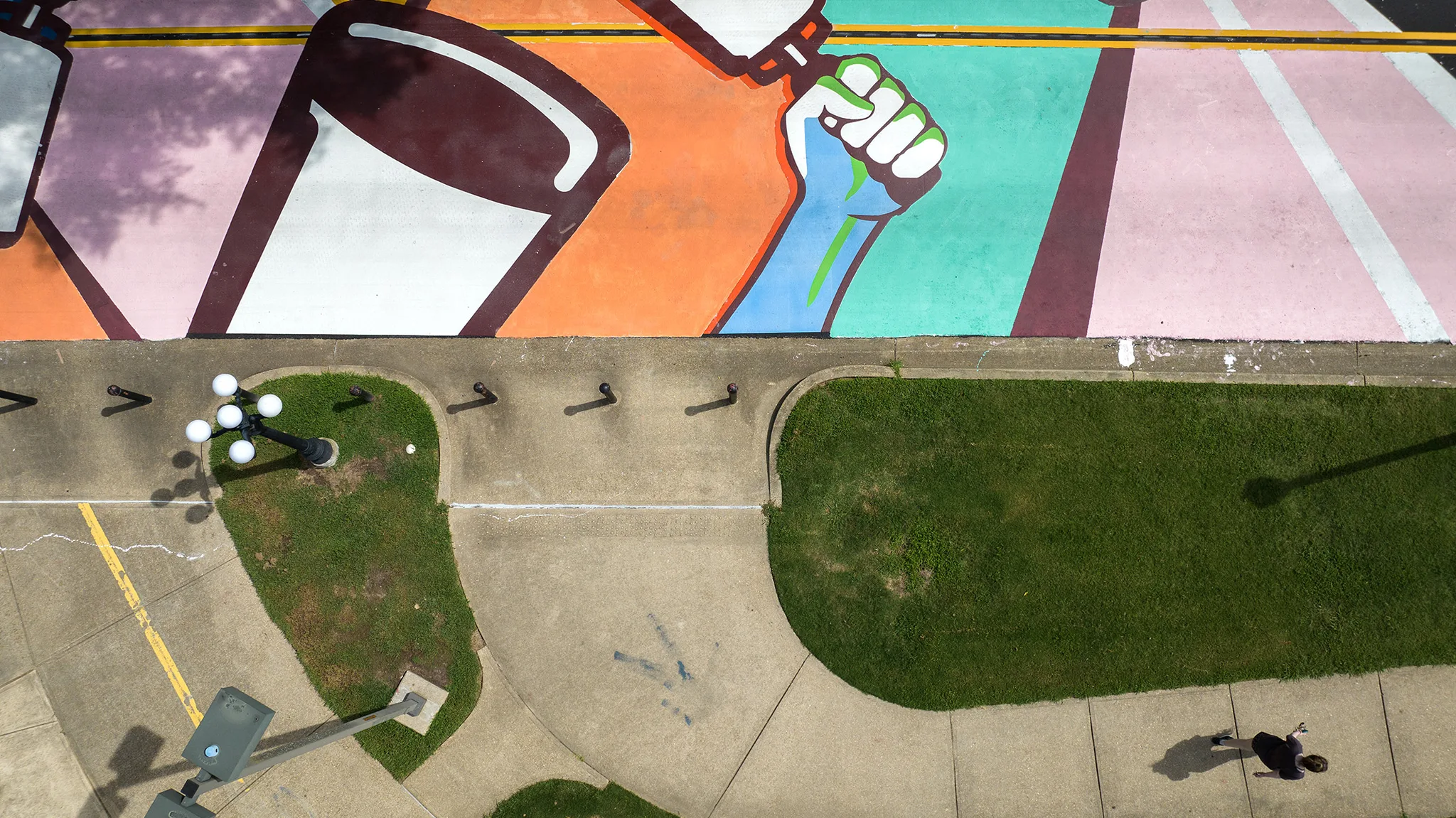
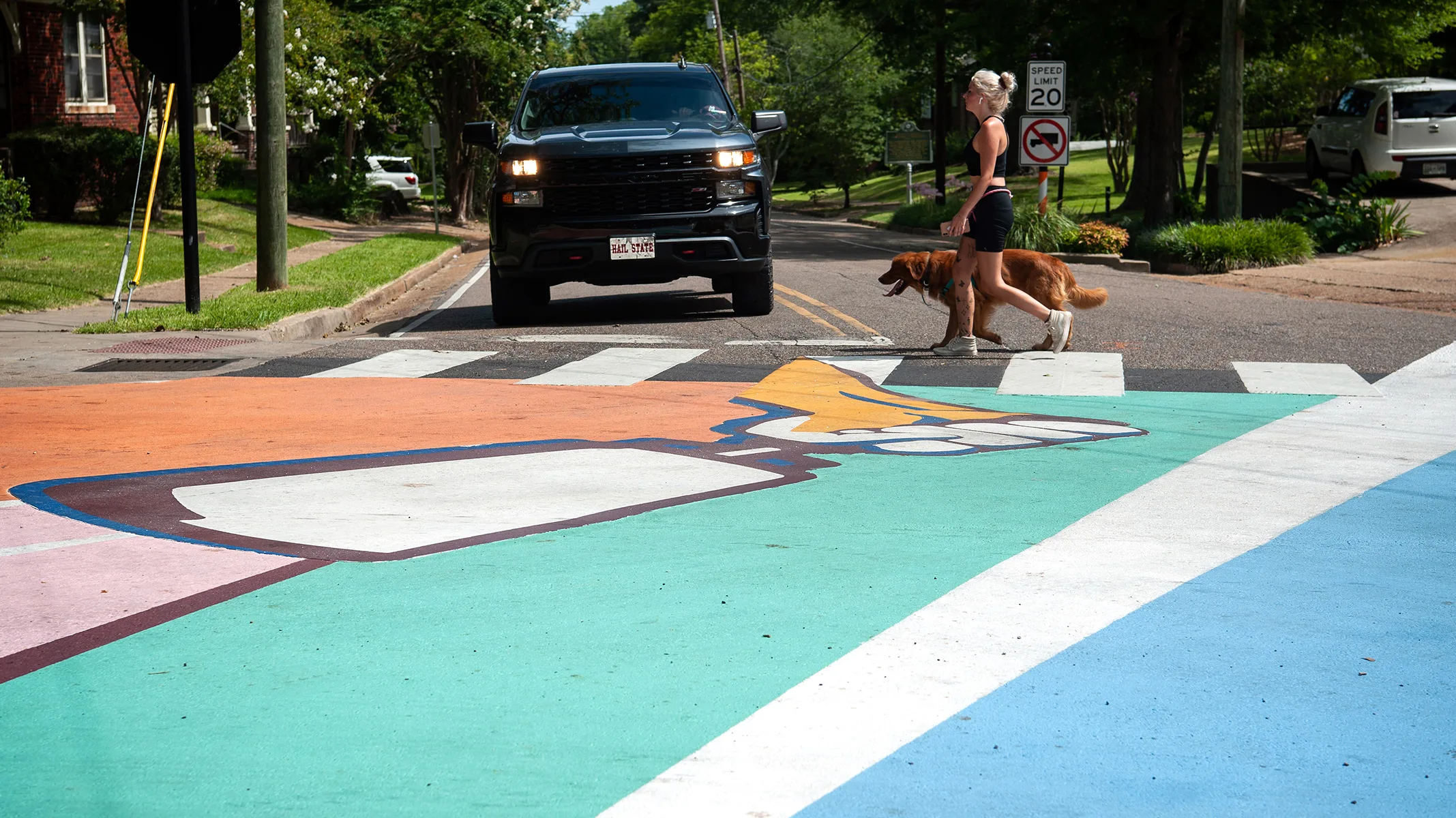
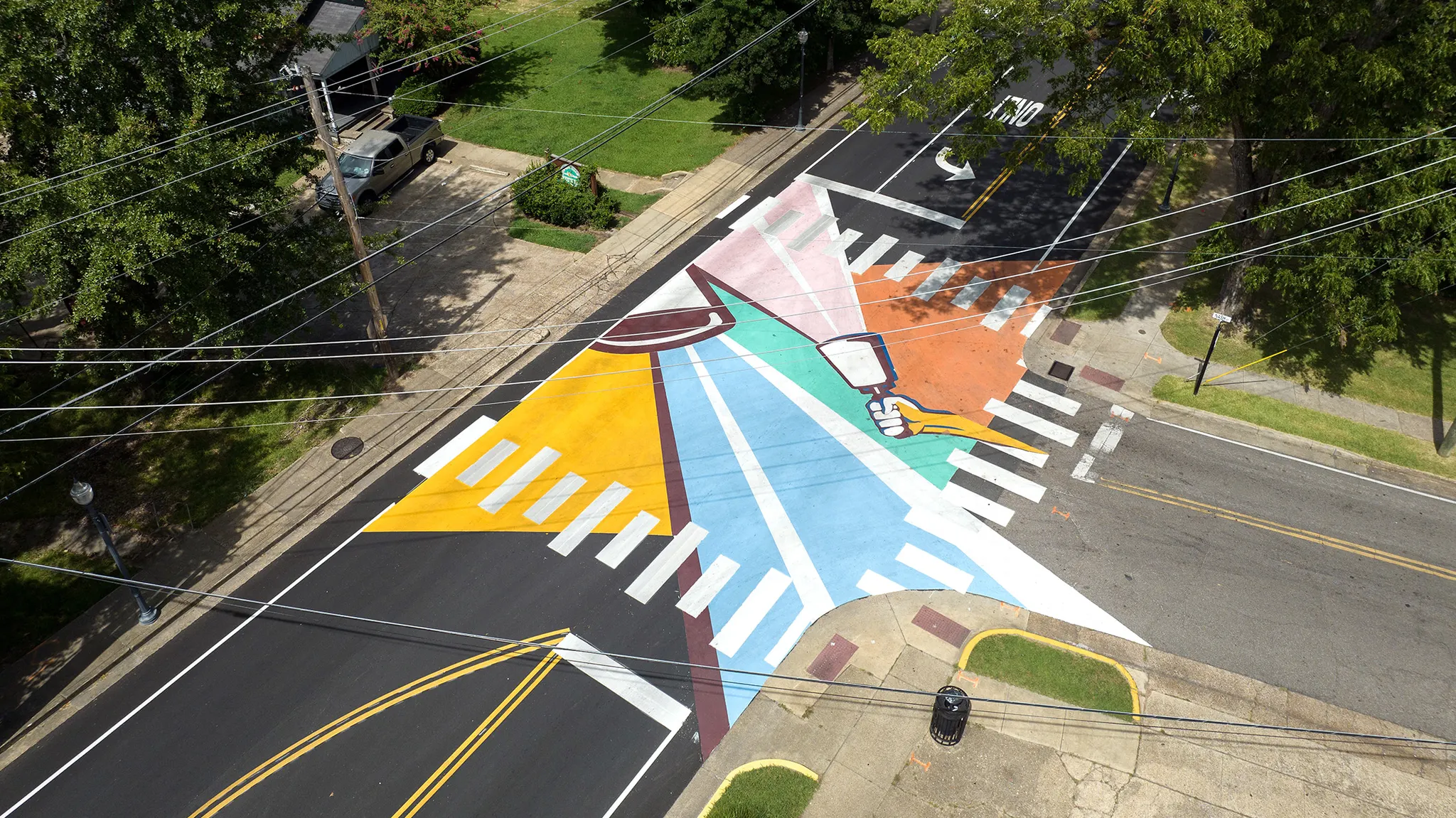
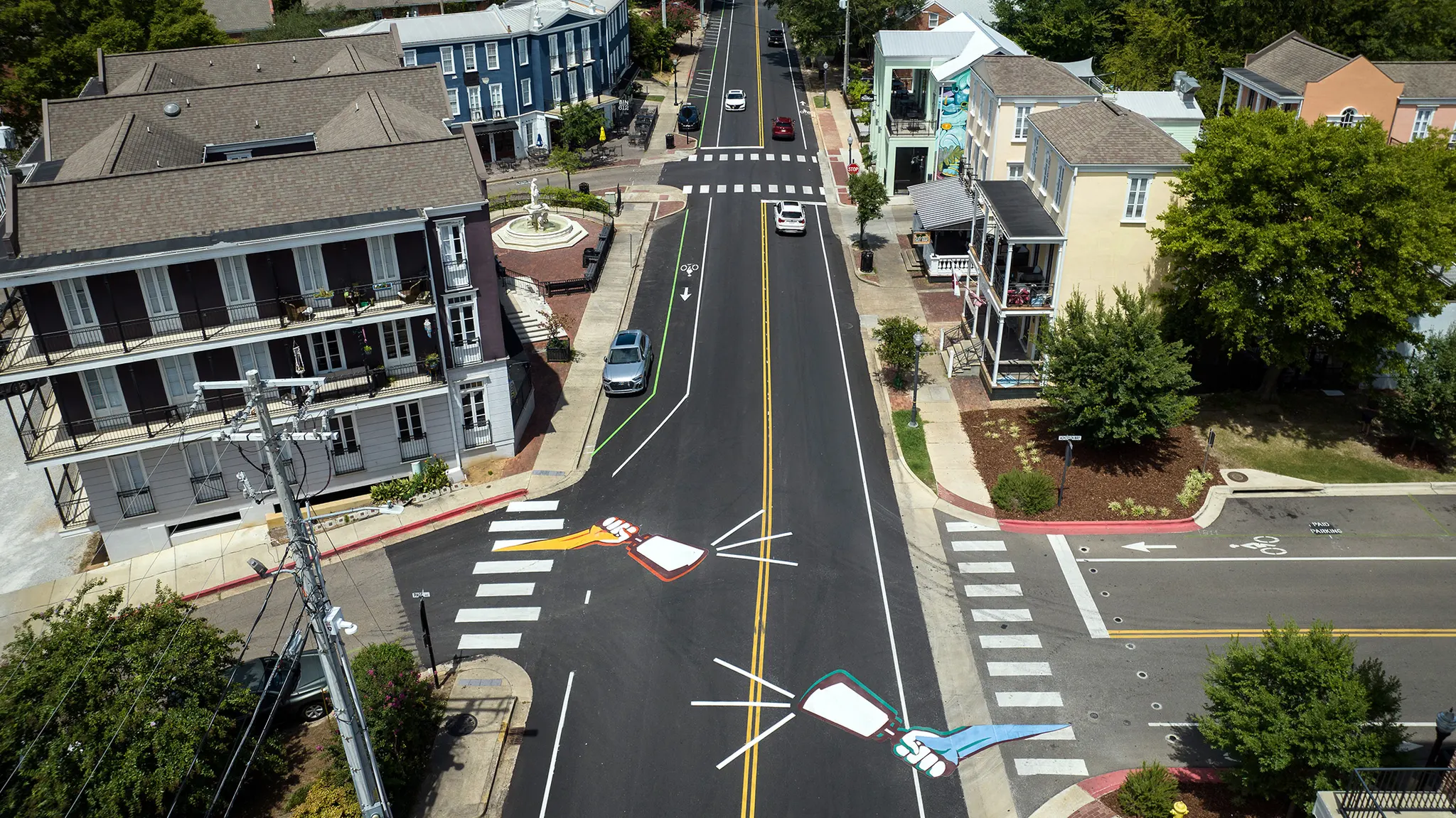
The University Drive Corridor Connections helps connect the one mile stretch between downtown Starkville and the Mississippi State University (MSU) campus by adding new, artful intersection murals at three locations and crosswalks at nine key intersections. The mural and crosswalk series progressively leads pedestrians along the corridor, creating a safe and attractive means of connecting Downtown, Midtown, and the Cotton District.
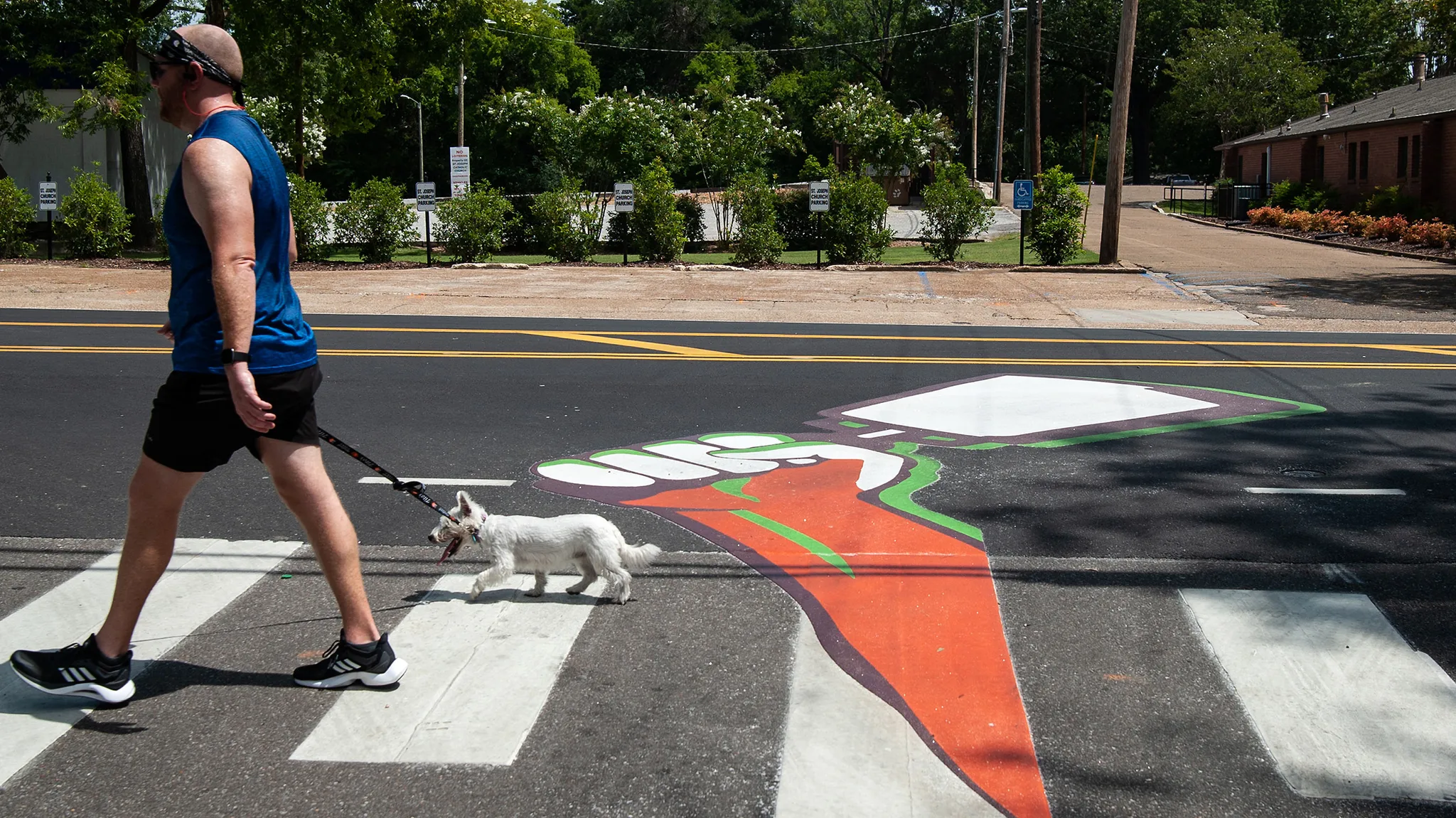
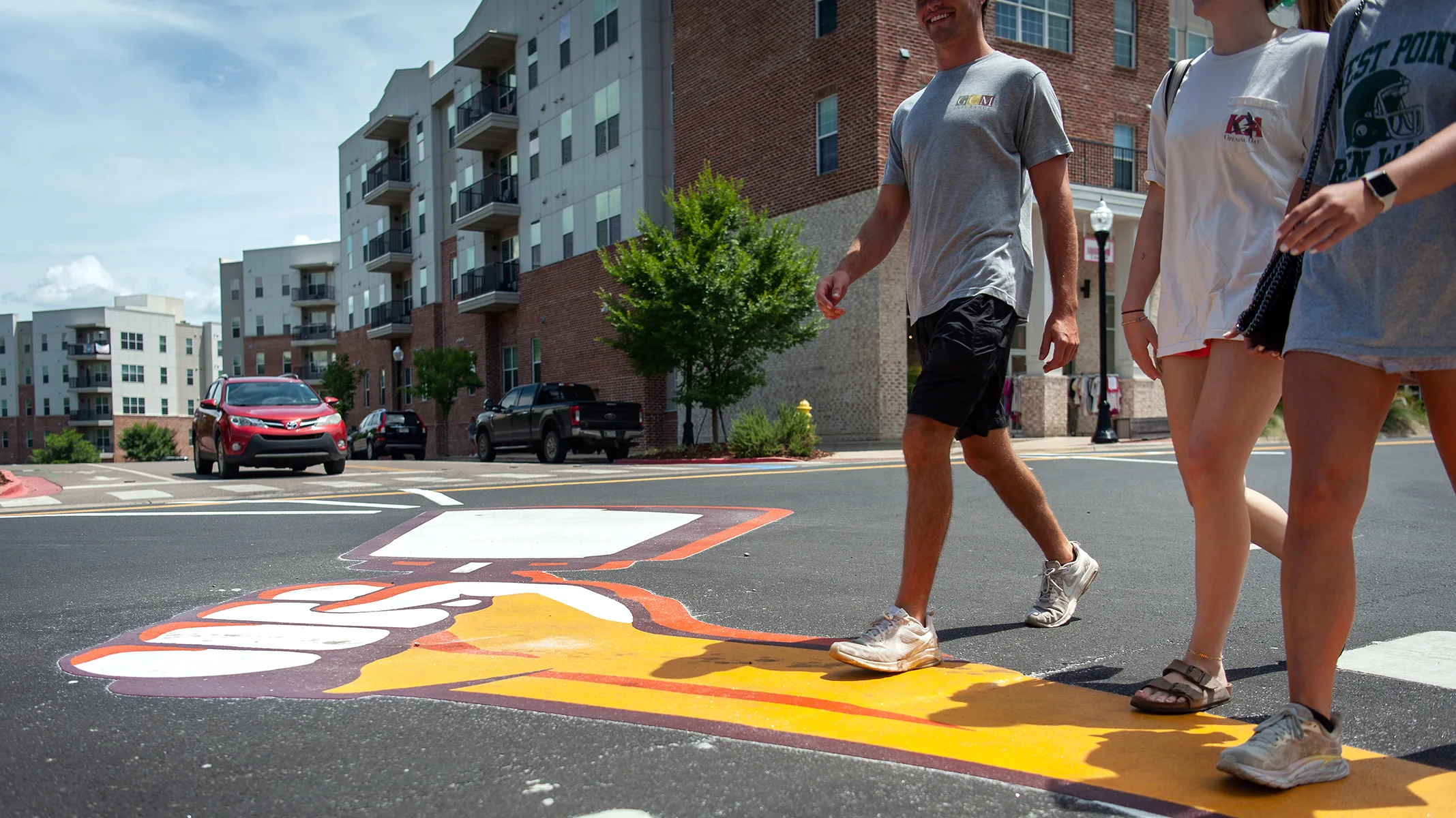
Community input was achieved through several surveys that helped refine the design process and ultimately focus on a cowbell theme. Cowbells are a signature MSU icon and strengthen the identity of both community and campus. The cowbells progressively line the crosswalks and intersections along University Drive in this asphalt art project.
Mayor Lynn Spruill decided to involve the community in the painting process by hosting a community-wide event, called “Cowbells and Paint Pails,” which included bands performing while people painted. The outlines of the cowbell shapes were created using thermoplastic for longevity, and the colors were added by volunteers using using a low-VOC and biodegradable soy-based paint. Free t-shirts were given to participants, and food and beverages were also provided. MSU provided an attractive street “barricade” in the form of its maroon streetcar. This served as an attractive backdrop for the painting, while deterring traffic during painting.
The success of these murals in Starkville inspired an initiative to implement asphalt art in eleven communities throughout Mississippi, as part of the USDA Rural Partners Network Project.
“Remediating barriers to walking and increasing connectivity of this corridor through the installation of public art and intersection safety improvements also will allow greater social interactions, thus strengthening the sense of community.”
Leah Kemp, Director, Fred Carl Jr. Small Town Center
Use the slider to see the transformation
Press
“Cowbells and Paint Pails” Paints murals on university drive (Starkville Daily News, August 6, 2022)
From the Gallery (MSU, August 2022)
Street art strengthens MSU-Starkville bonds (MSU, July 2022)
Starkville seeks input on future street art project (The Dispatch, January 28, 2022)
Starkville to receive a grant from the Bloomberg Asphalt Art Initiative Grant (WCBI, October 21, 2021)
For inspiration and tips for the creation of art on roadways and public places, download the Bloomberg Associates Asphalt Art Guide which features successful plaza and roadway art activations around the world, as well as key steps for developing such projects.
East Providence, RI
Creating a safer school–park connection
The Project
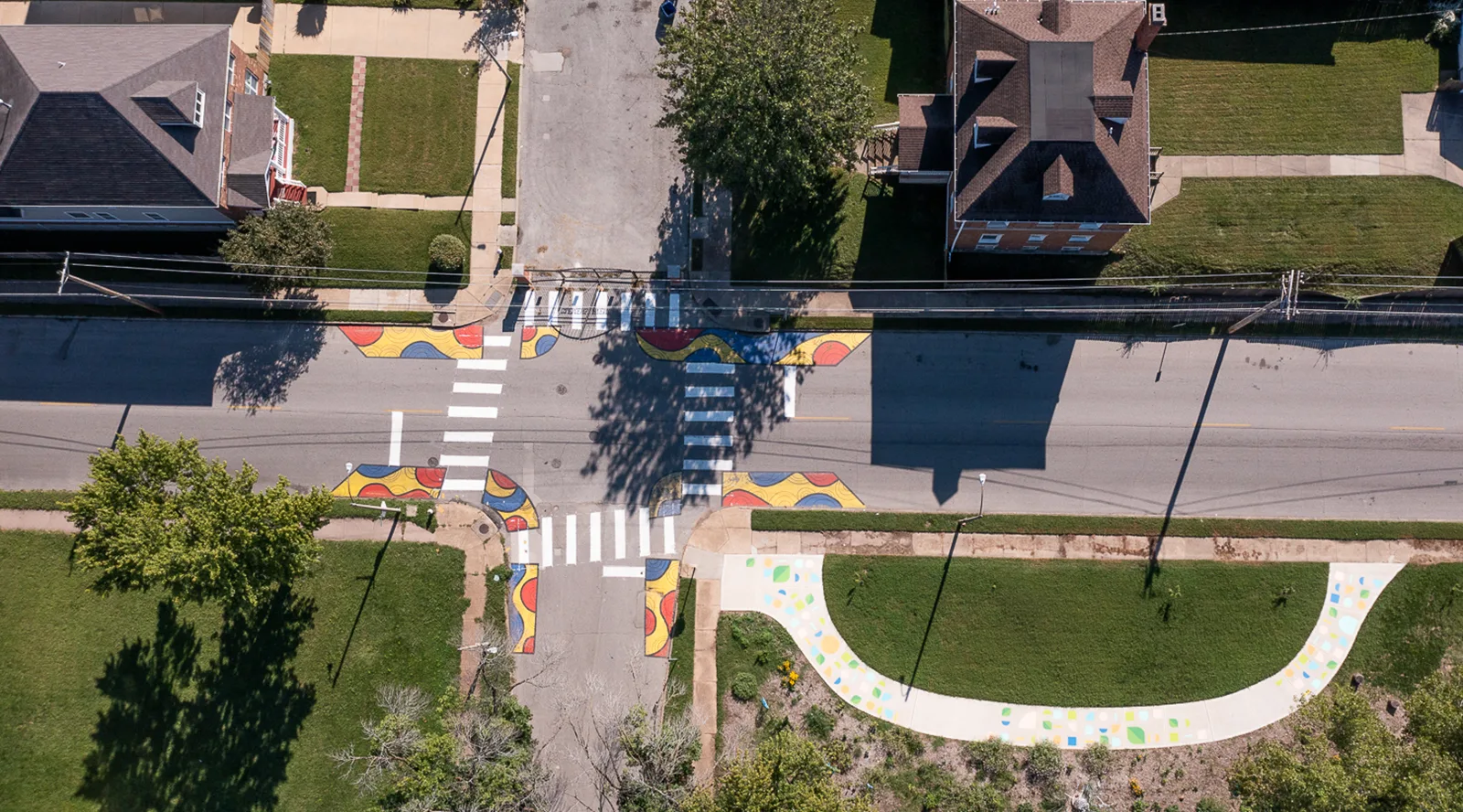
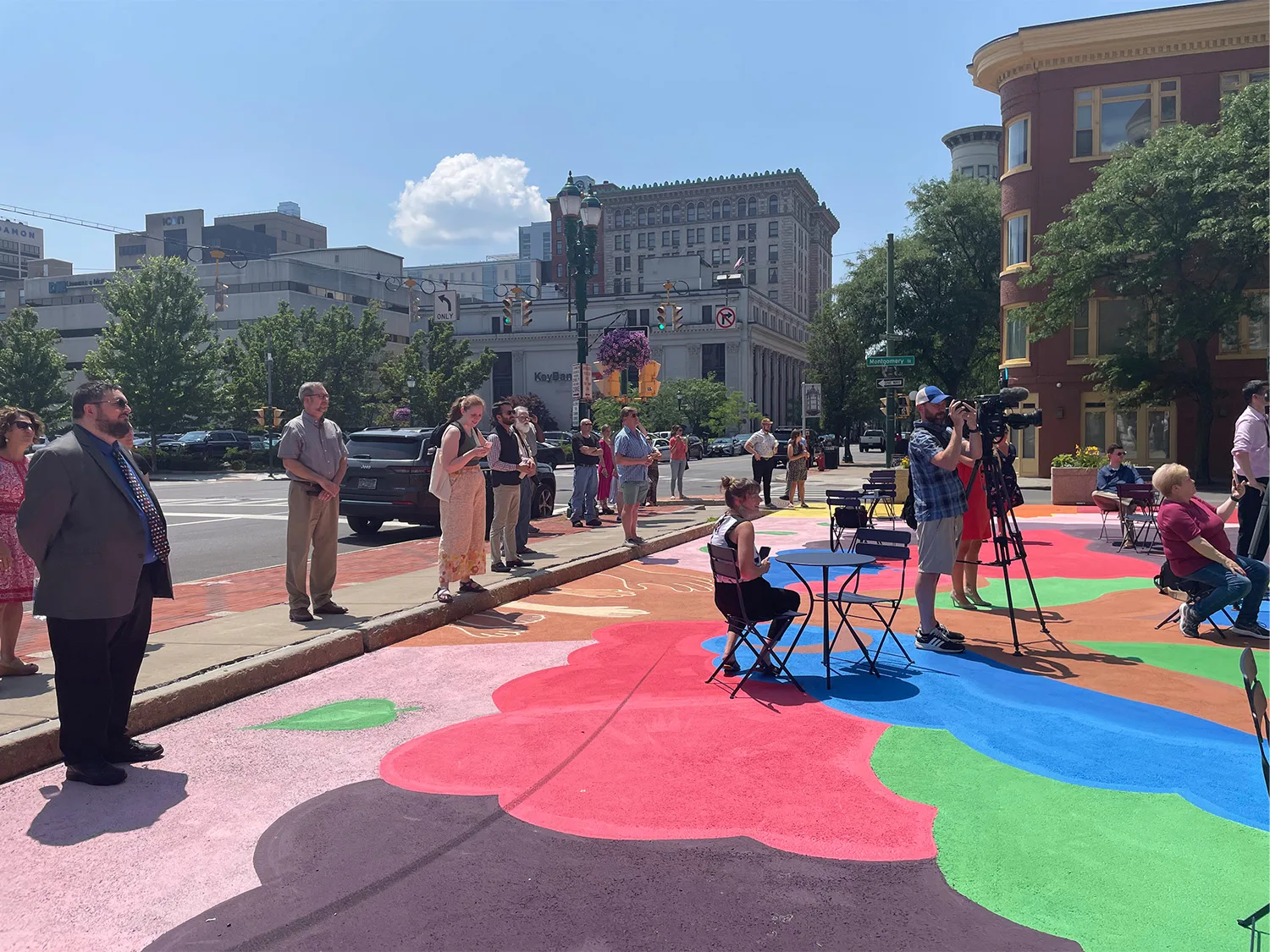
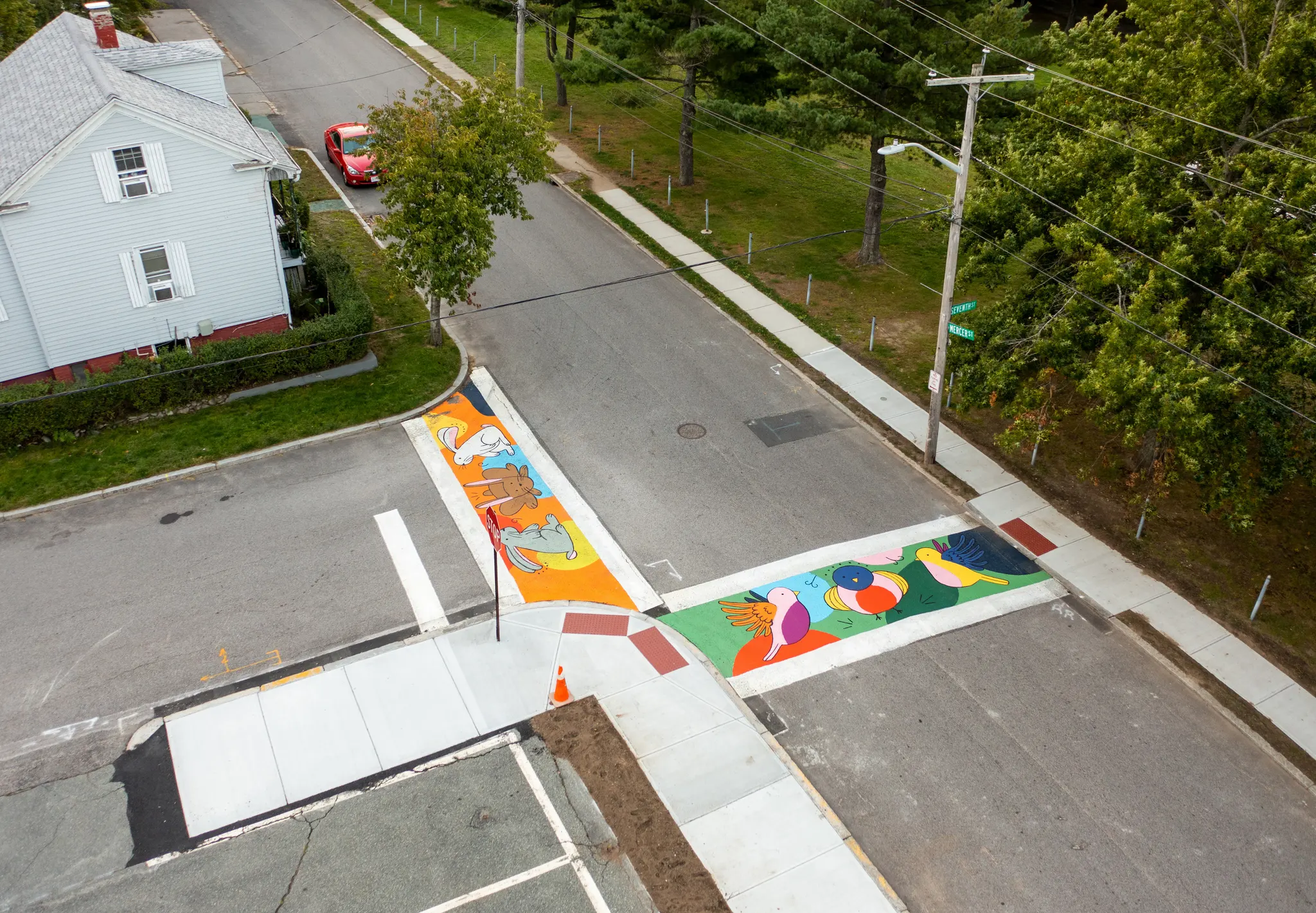
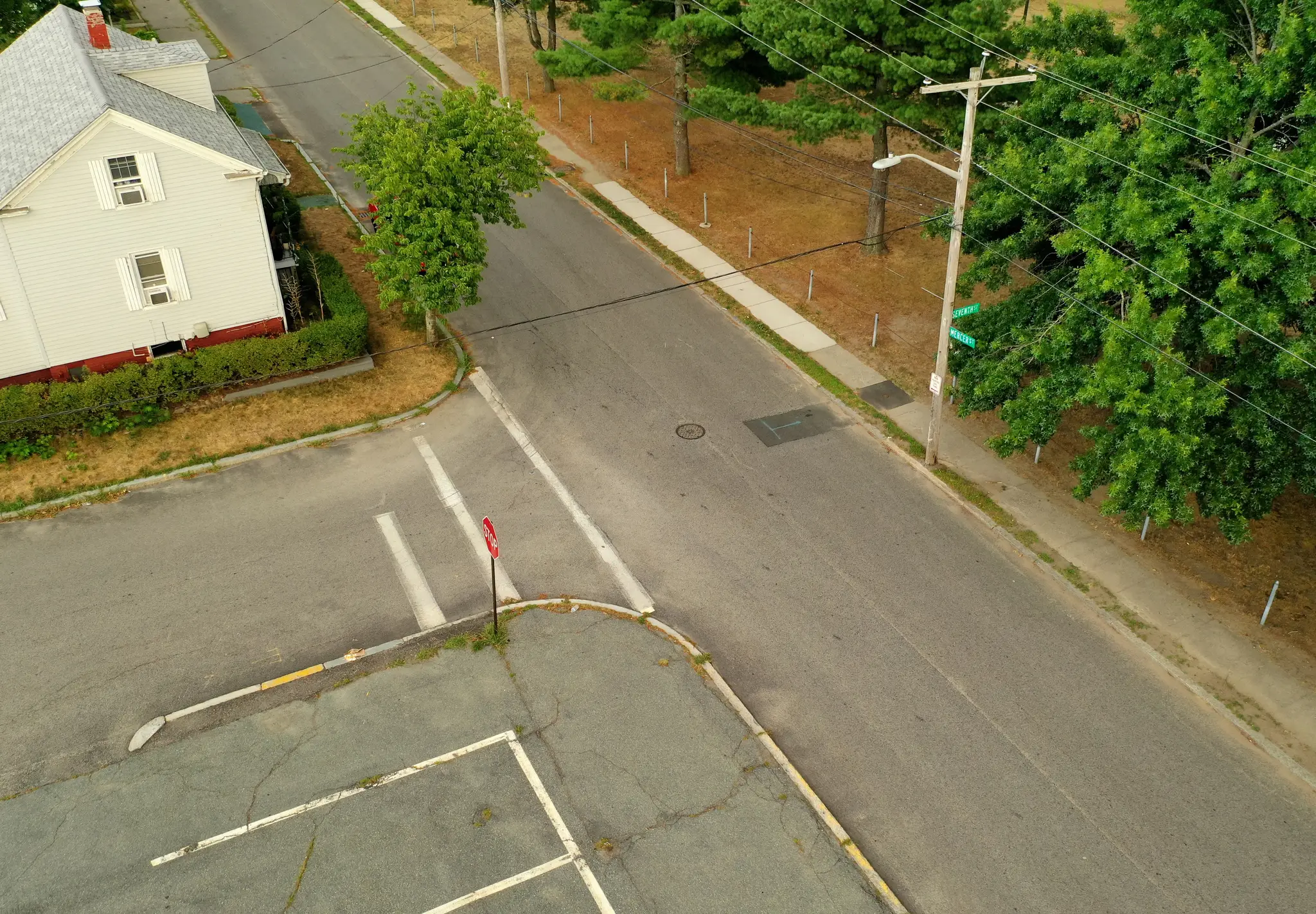
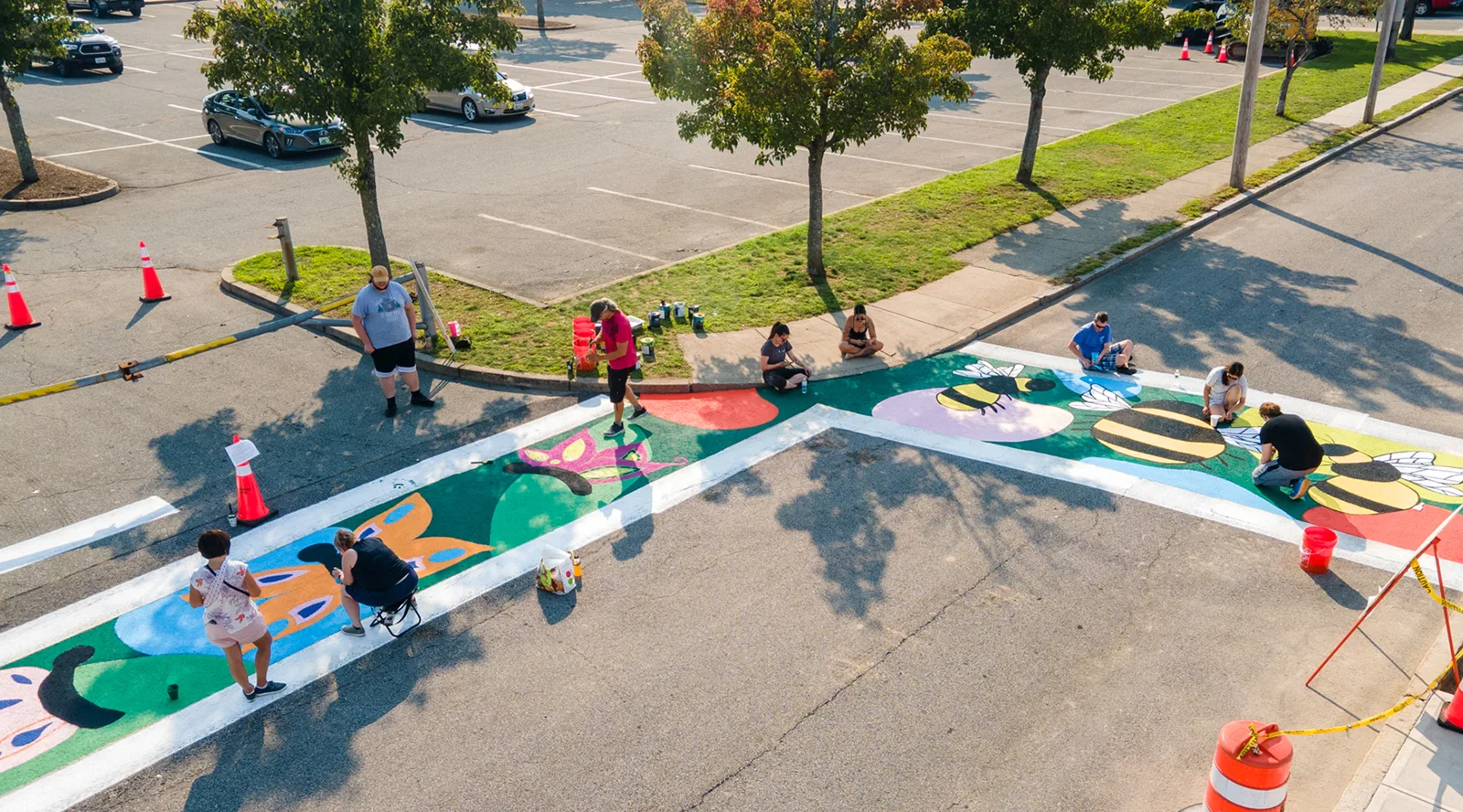
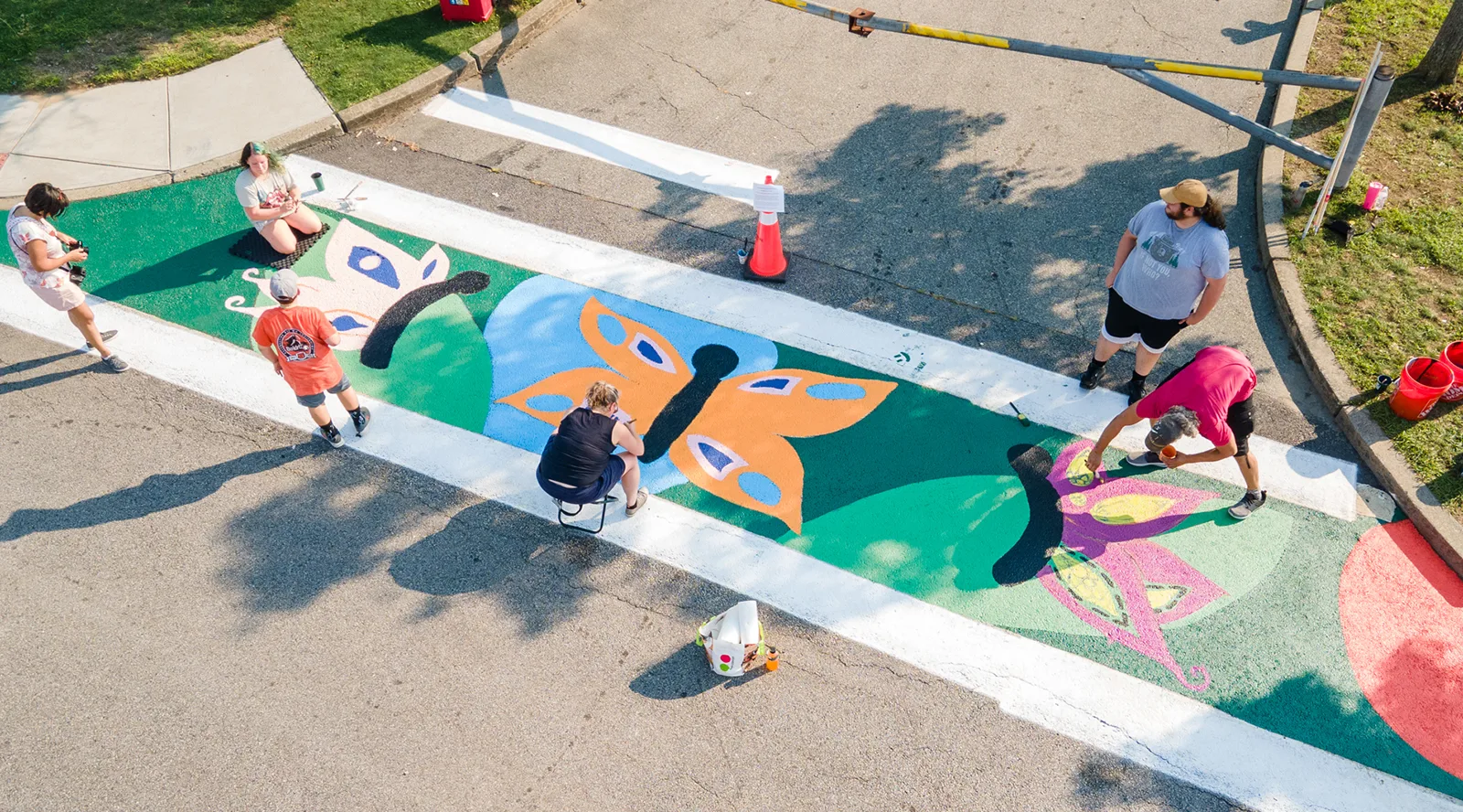
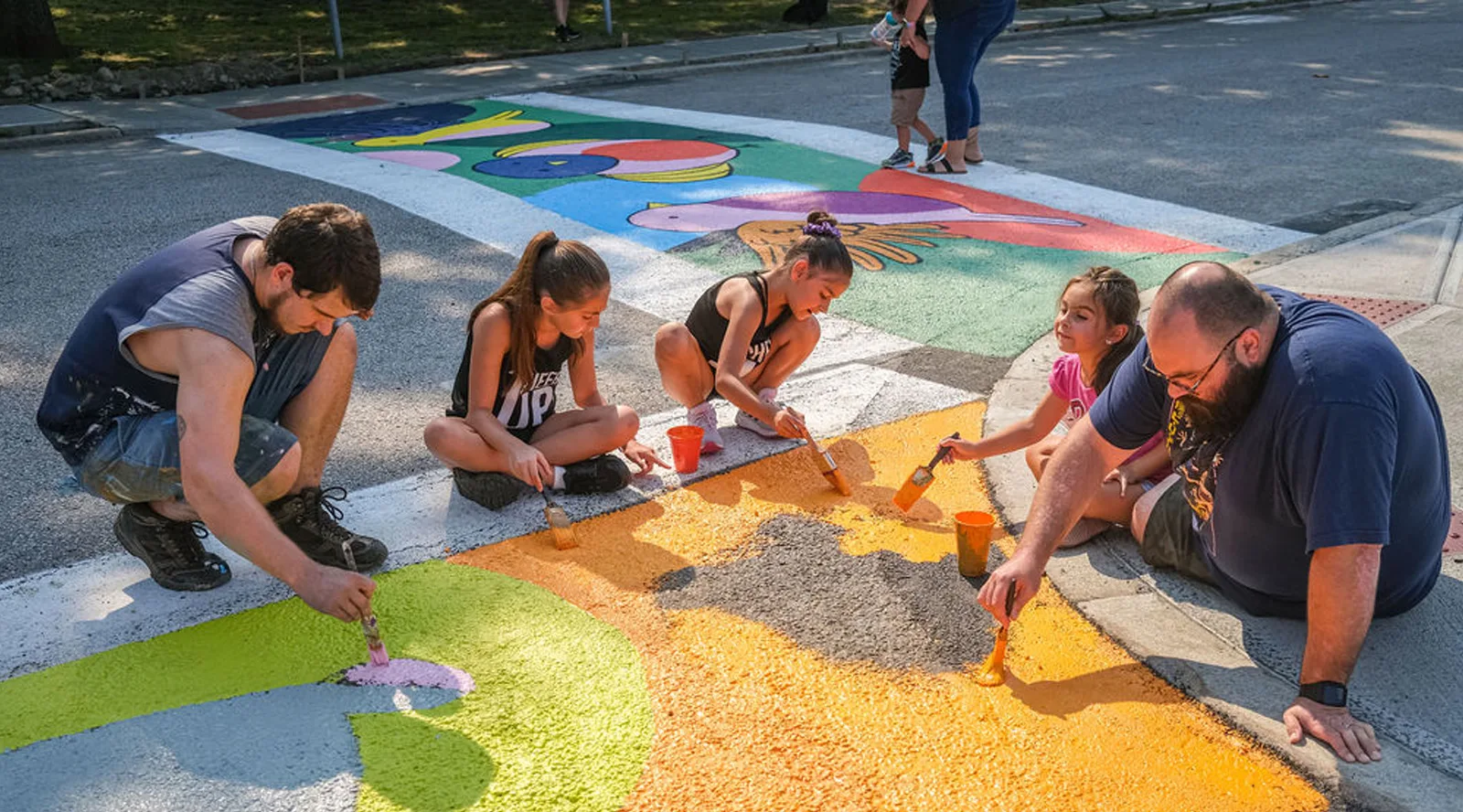
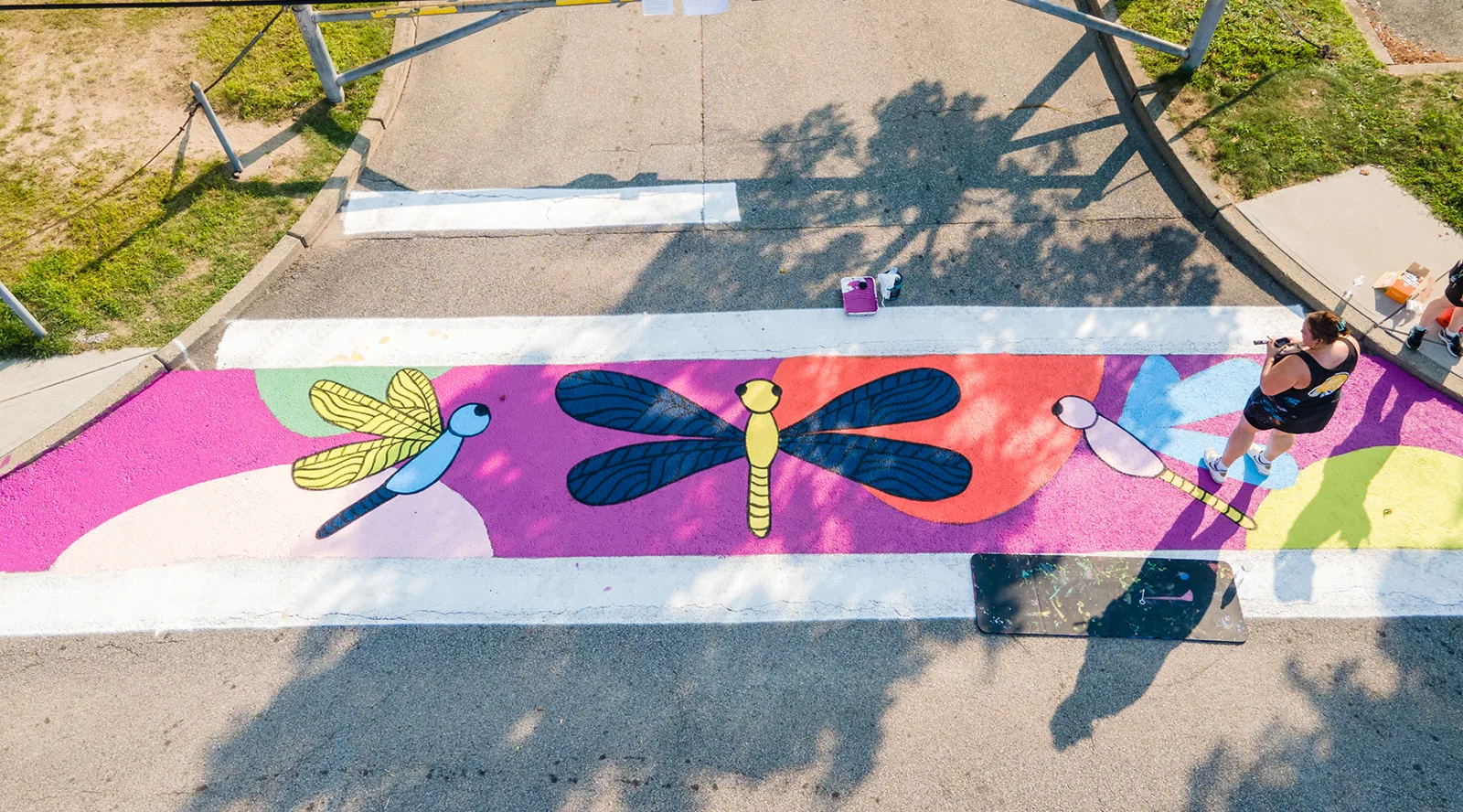
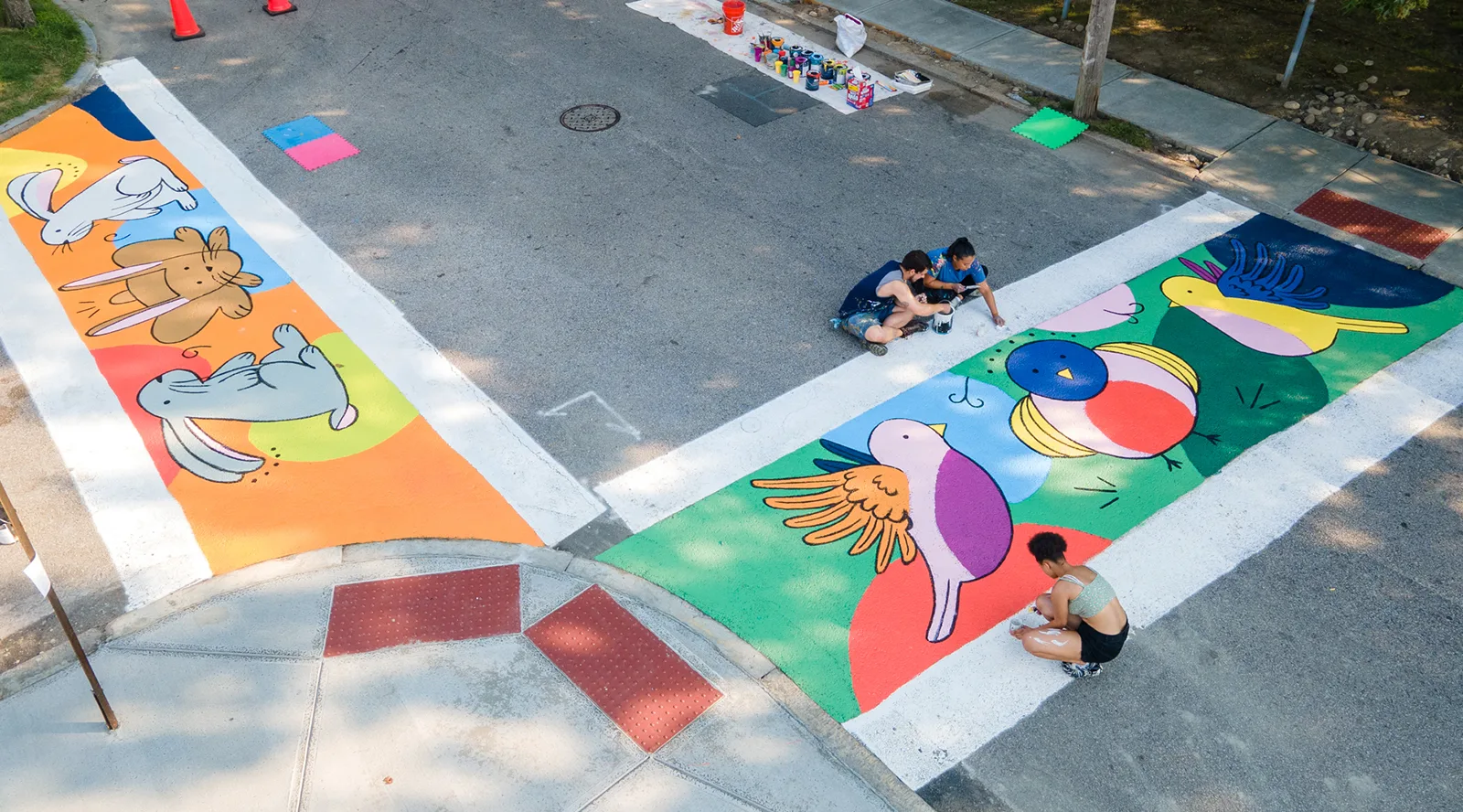
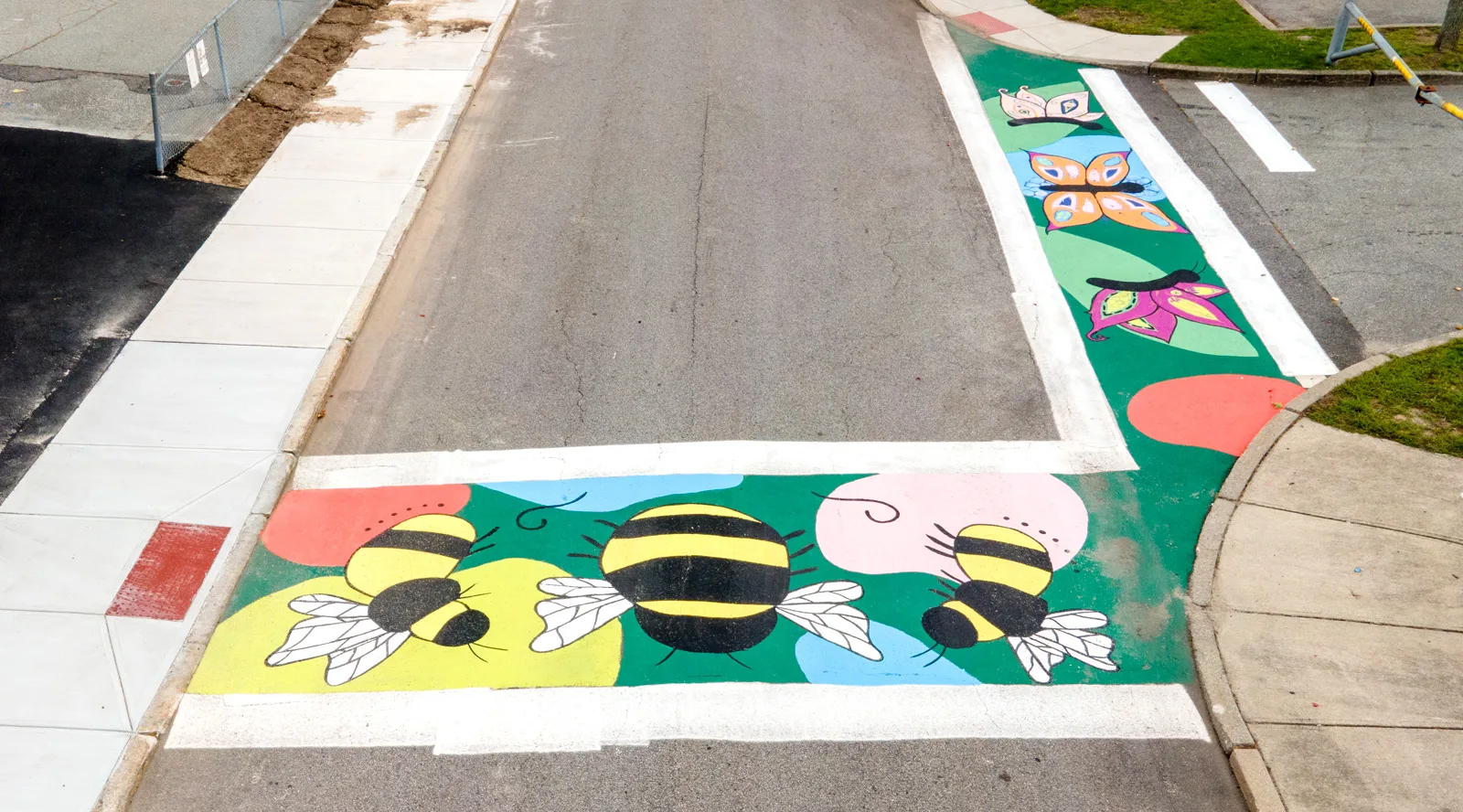
In East Providence, Rhode Island, Mercer Street divides the Hennessey Elementary School from the Pierce Field athletic complex commonly used by the school community and surrounding neighborhood residents. With cracked sidewalks and lacking designated pedestrian crosswalks, the street did not provide a safe and walkable environment for students, families, and educators, as well as neighborhood residents walking and biking in the area. To address these challenges, the City of East Providence partnered with the East Providence Arts Council to commission local artist Anna Dugan to design five whimsical crosswalk murals through a community engaged design process. These colorful crosswalks were installed along Mercer Street with the participation of over 70 volunteers to provide safe, welcoming connections between the school and the recreation center. The new public art works catalyzed further improvements in the area, including the installation of new concrete sidewalks and additional street tree plantings.
- The percentage of people who reported feeling safe as a pedestrian increased from 59% to 91%
- Positive perception of the street rose significantly, with the percentage of people who “like the way the project area looks” increasing from 20% to 93%
“This project has been in the works for many years and it was exciting and heartwarming to see it come to light at the community painting in September. It was a true community project bringing Anna’s work to life and those murals will be enjoyed by many in the years to come.”
Stacey Messier, Dean of Students, Agnes B. Hennessey Elementary School
Use the slider to see the transformation
Press
East Providence’s ‘Asphalt Art Initiative’ is completed at Hennessey Elementary (East Bay RI, September 14, 2022)
For inspiration and tips for the creation of art on roadways and public places, download the Bloomberg Associates Asphalt Art Guide which features successful plaza and roadway art activations around the world, as well as key steps for developing such projects.
Puebla, Mexico
Commemorating community stories across 11 intersections
The Project
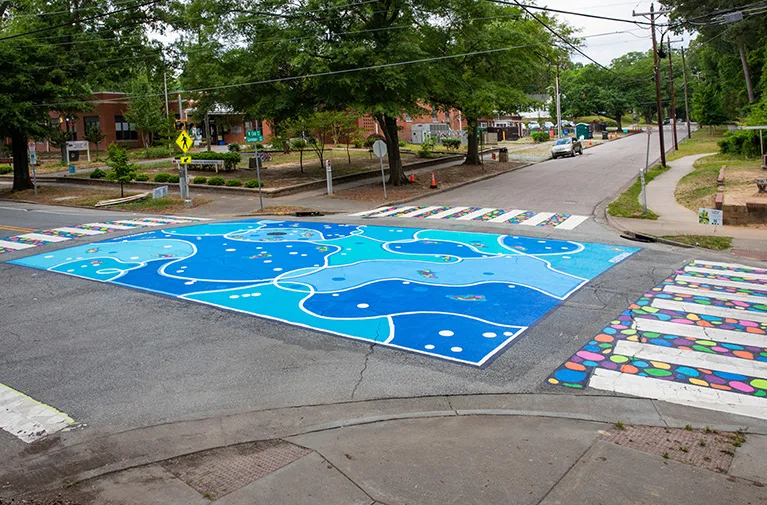
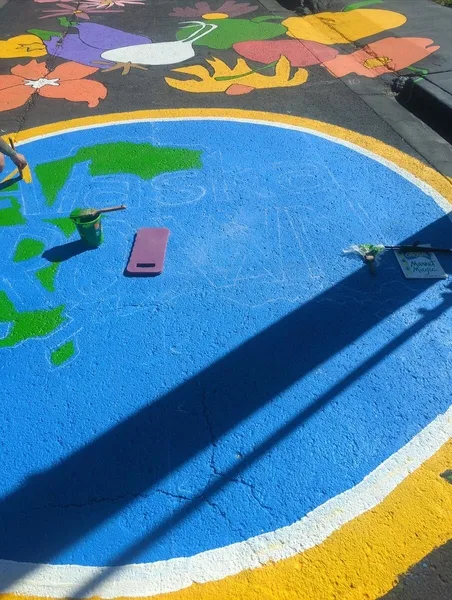
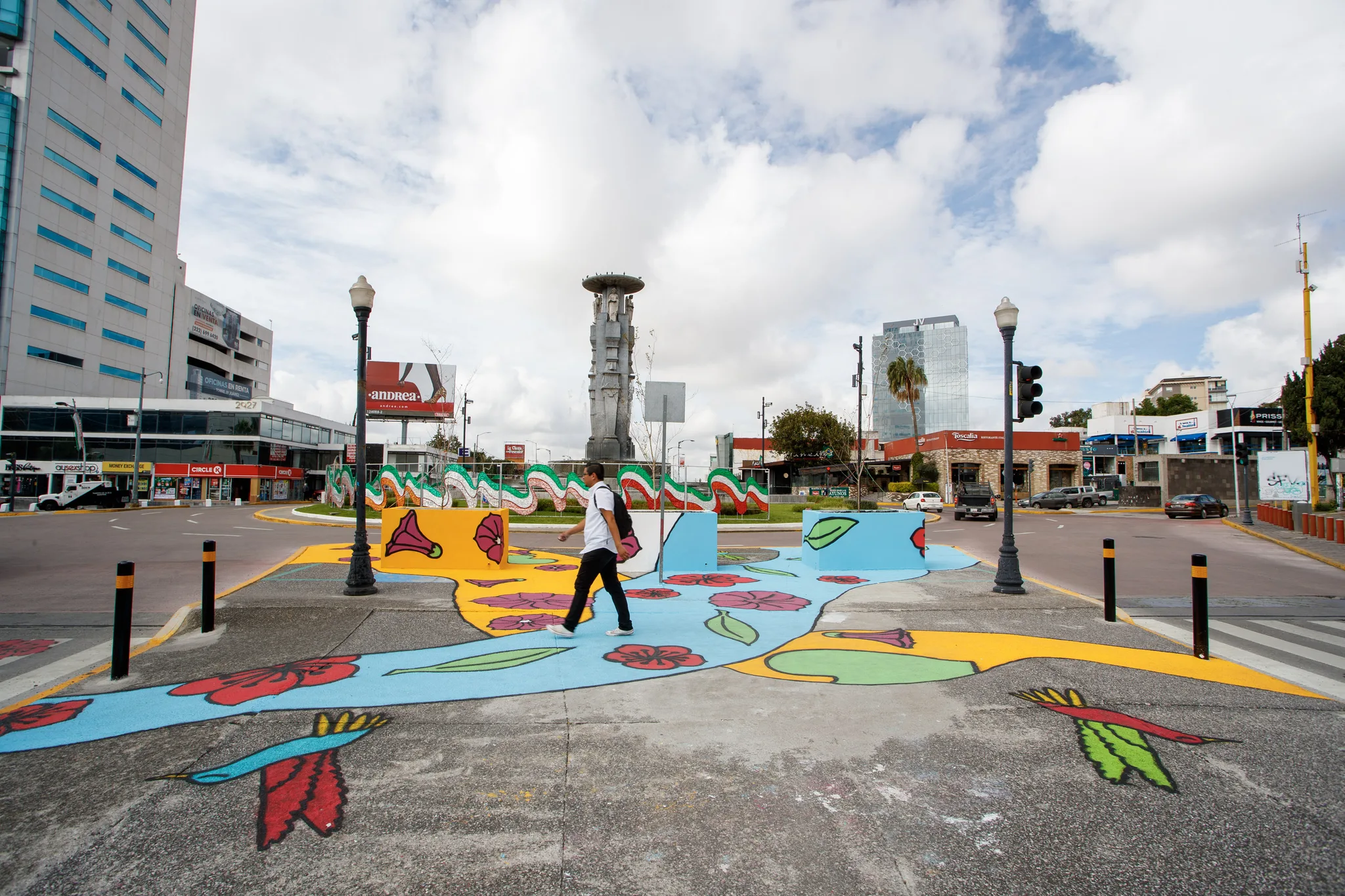
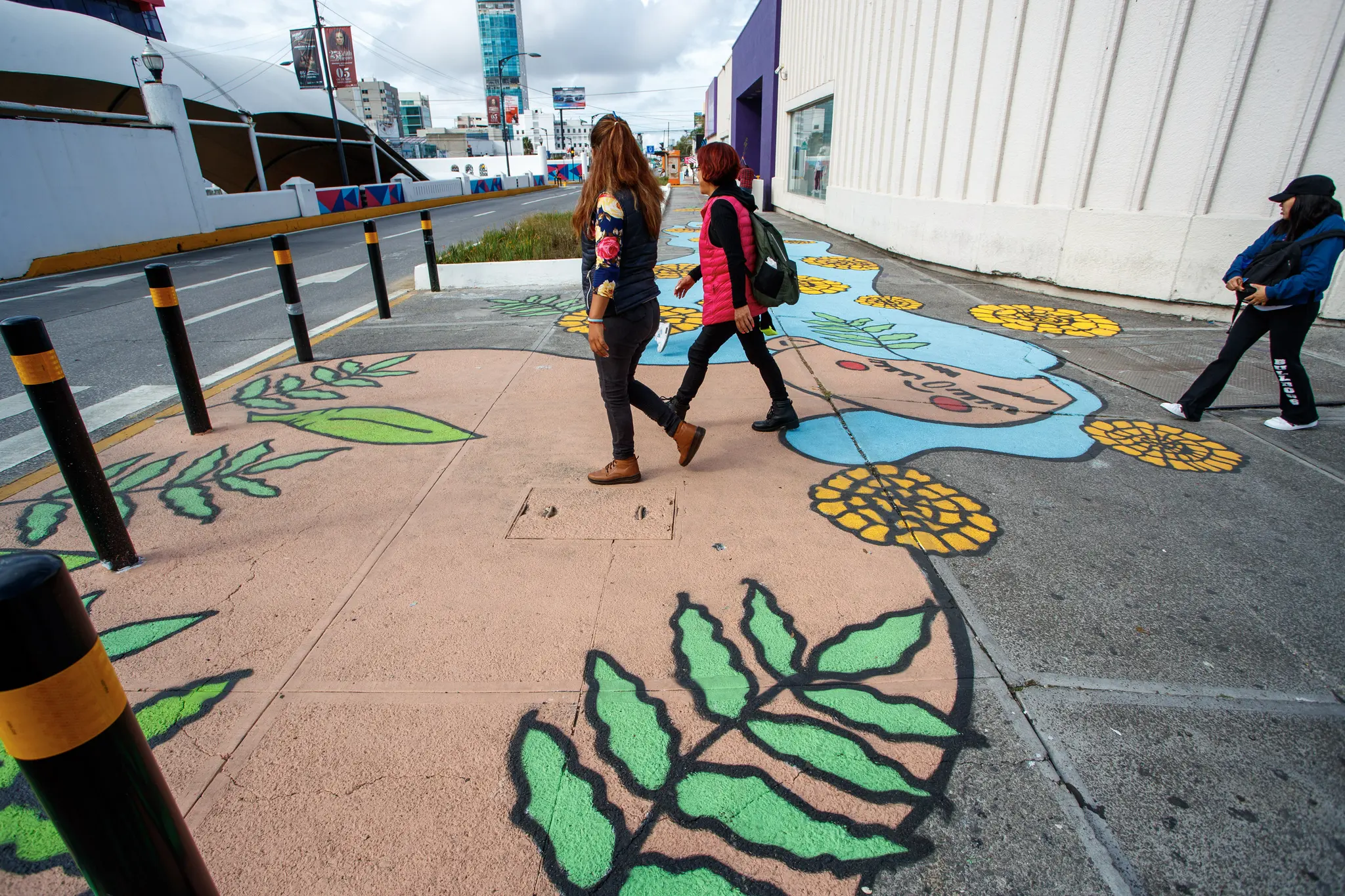
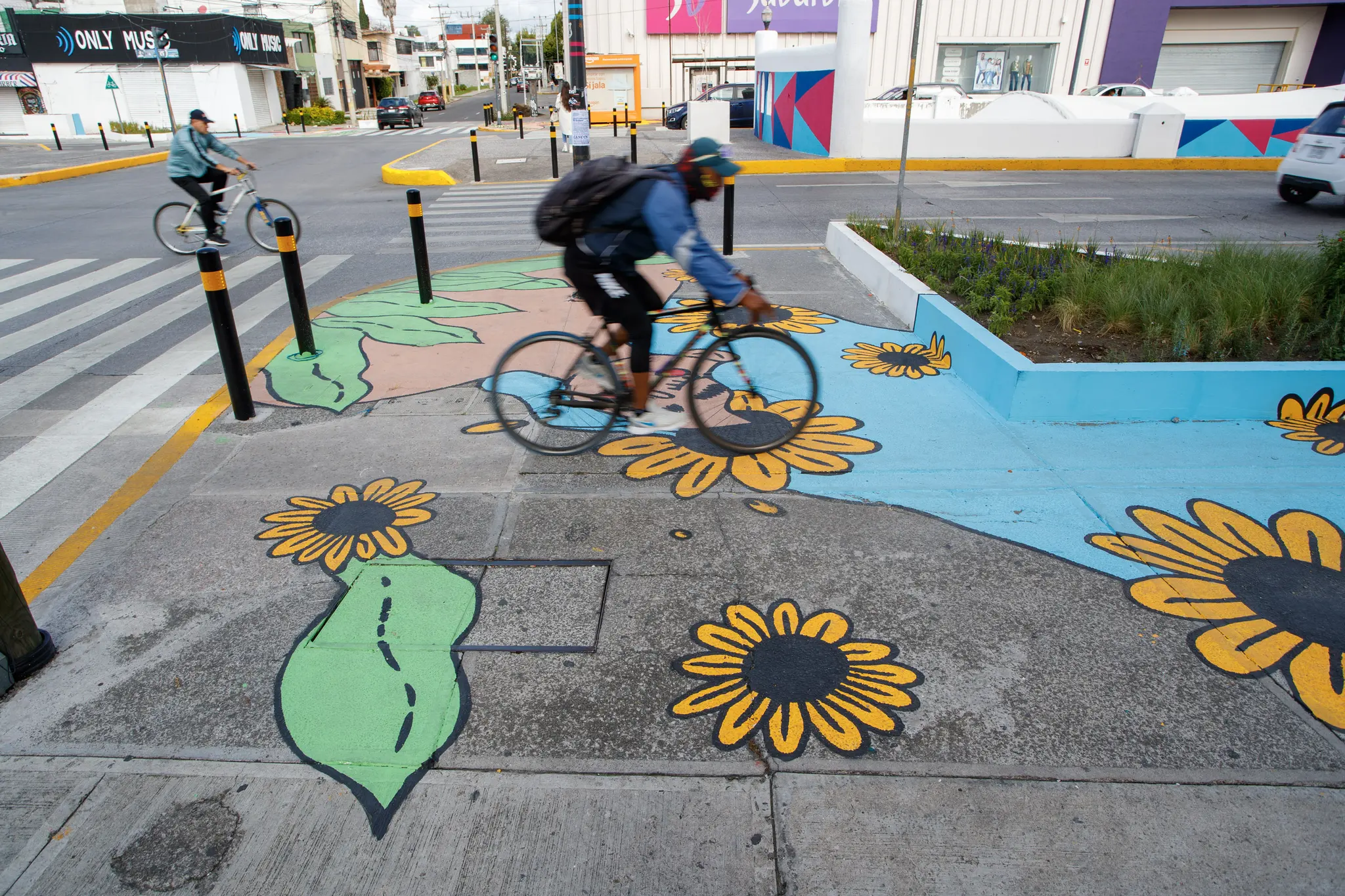
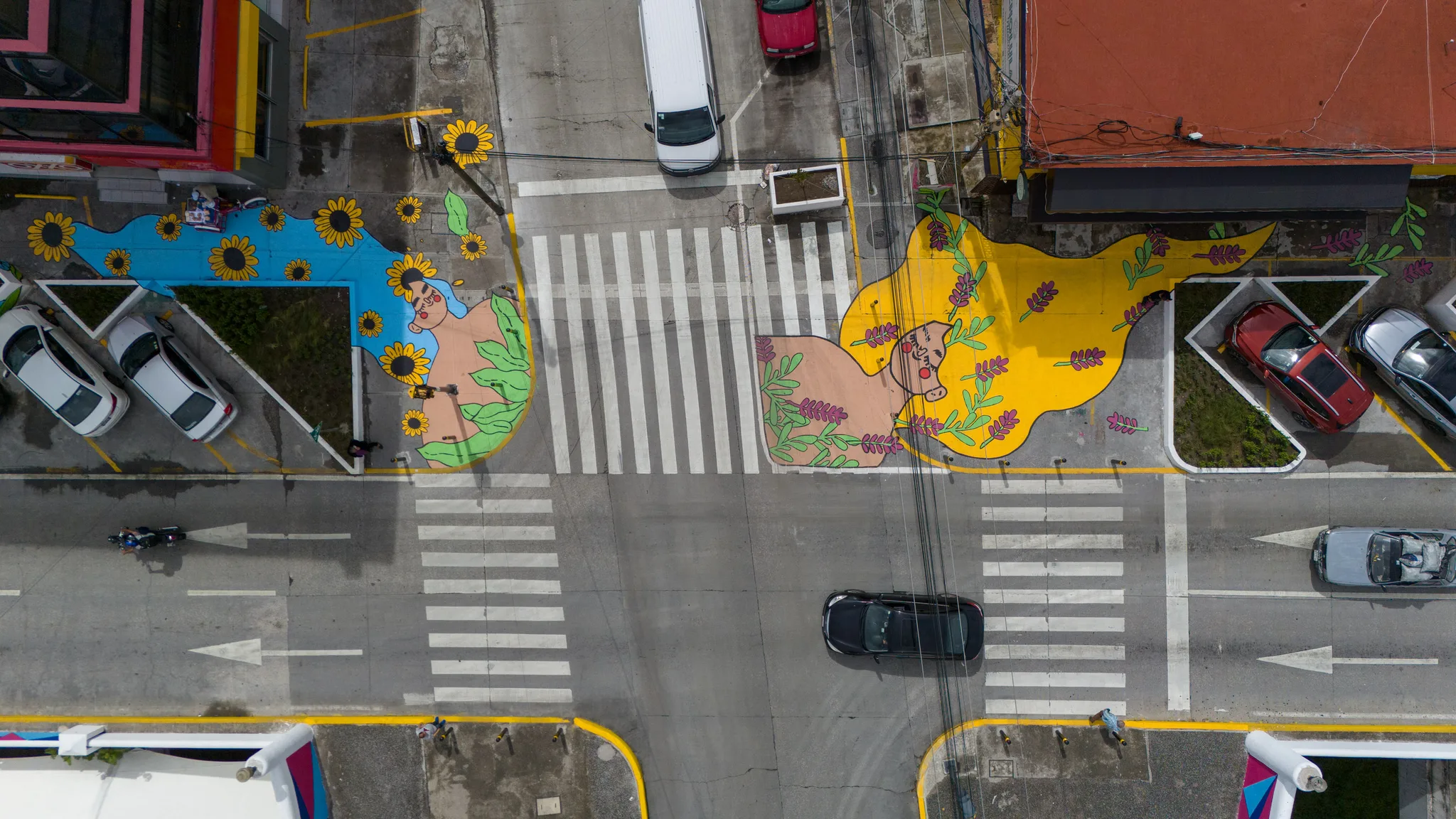
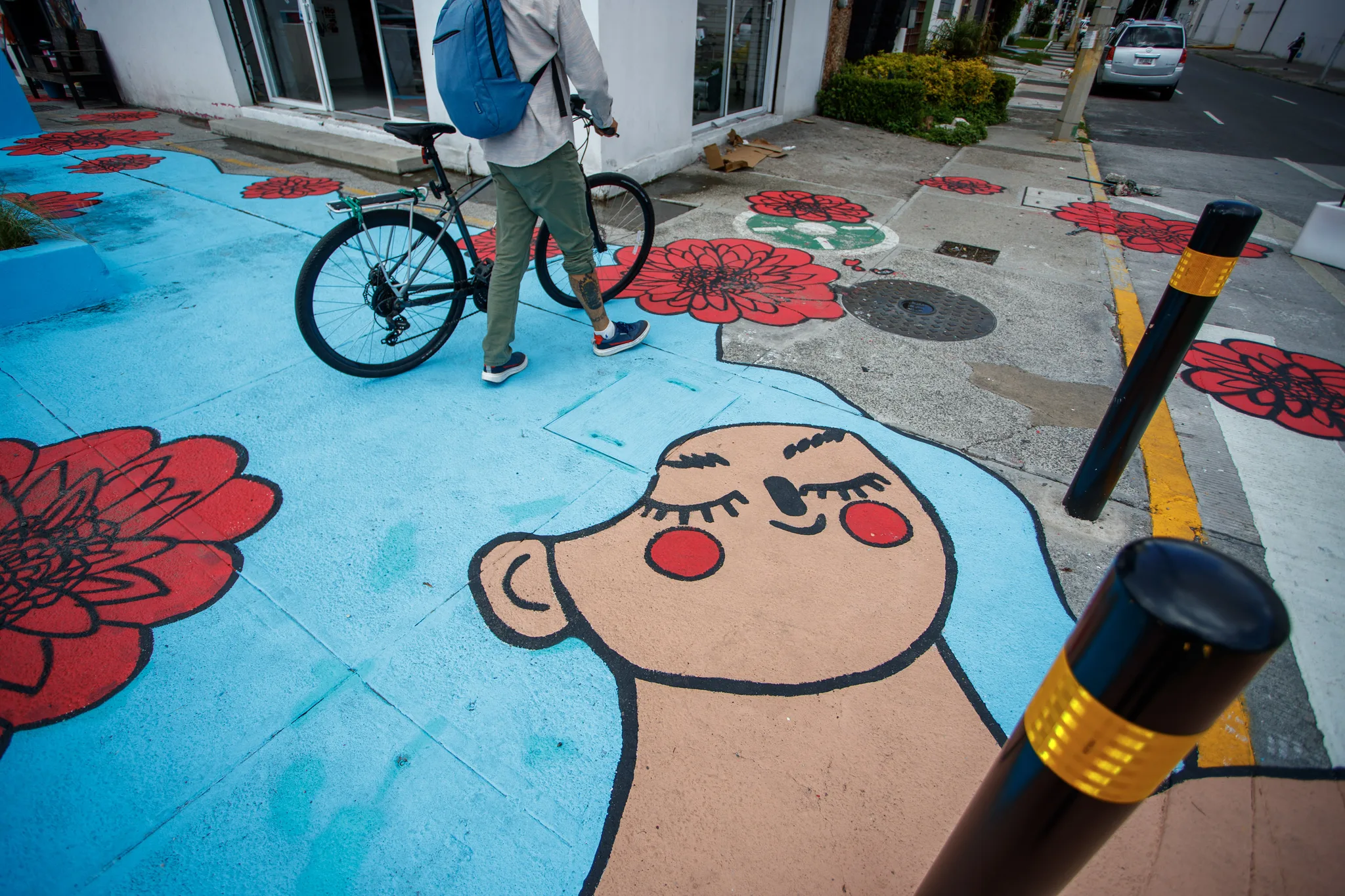
With “Vereda Florida,” a previously gray and unwelcoming part of the city was transformed into a vibrant, pedestrian-friendly corridor.
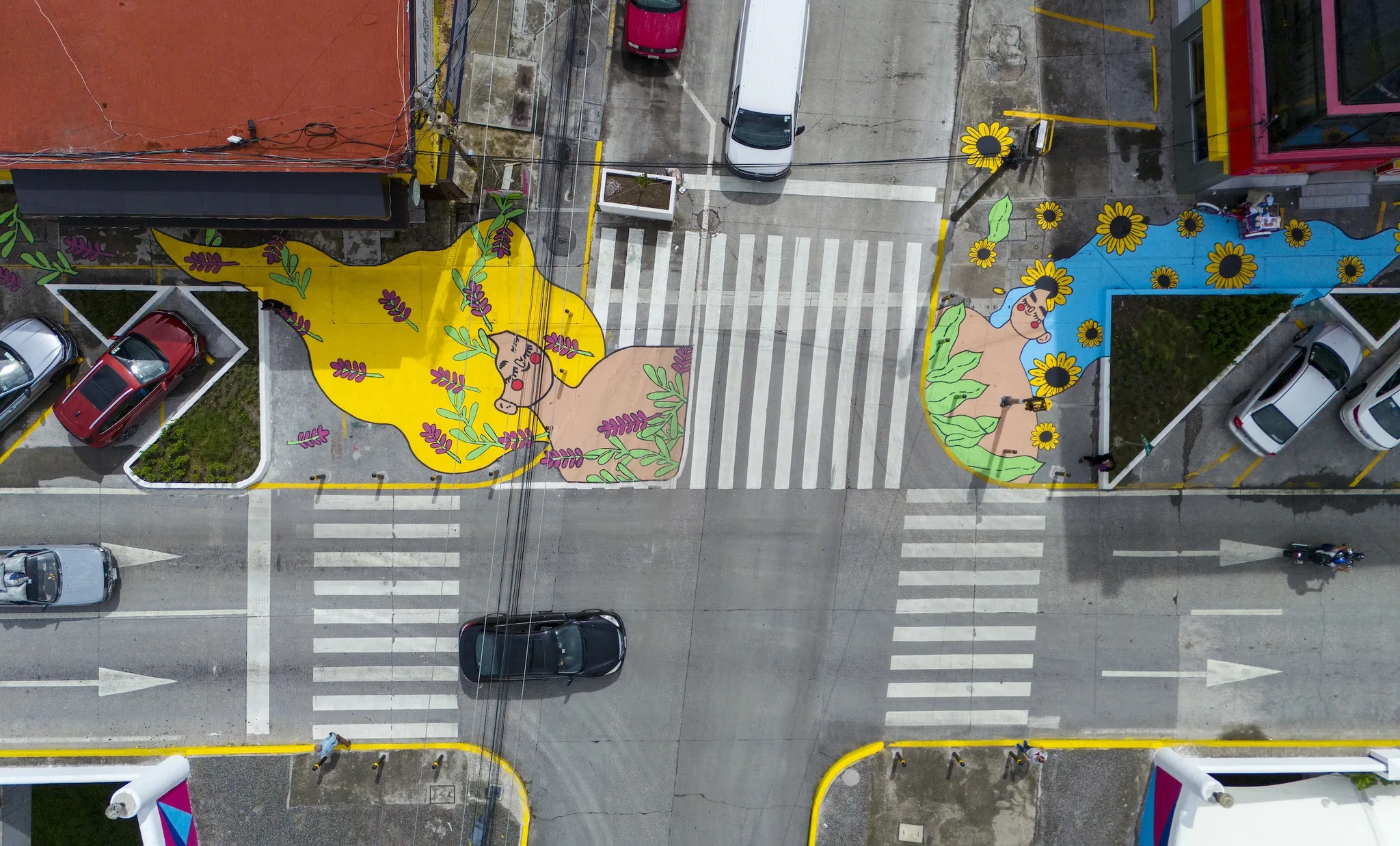
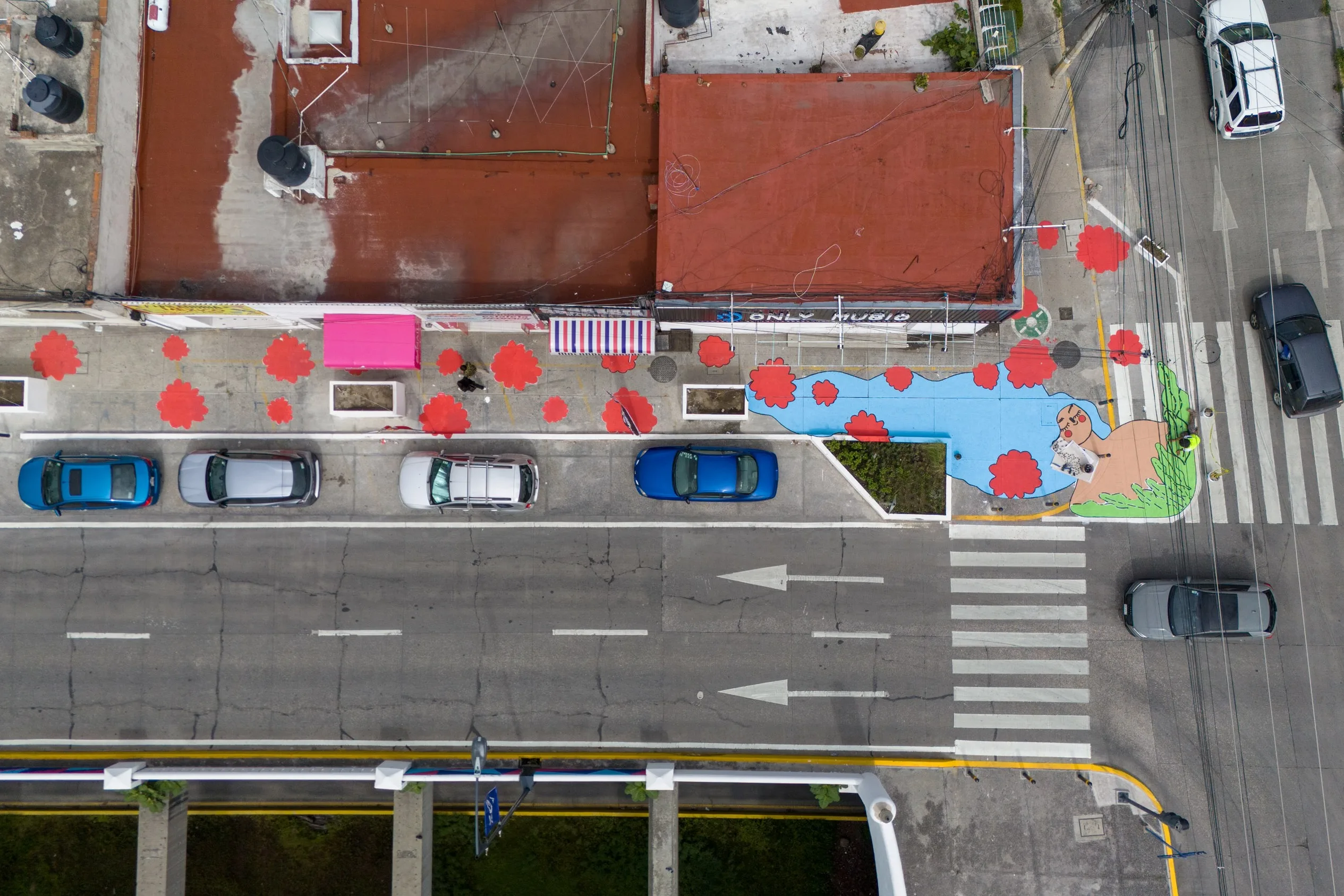
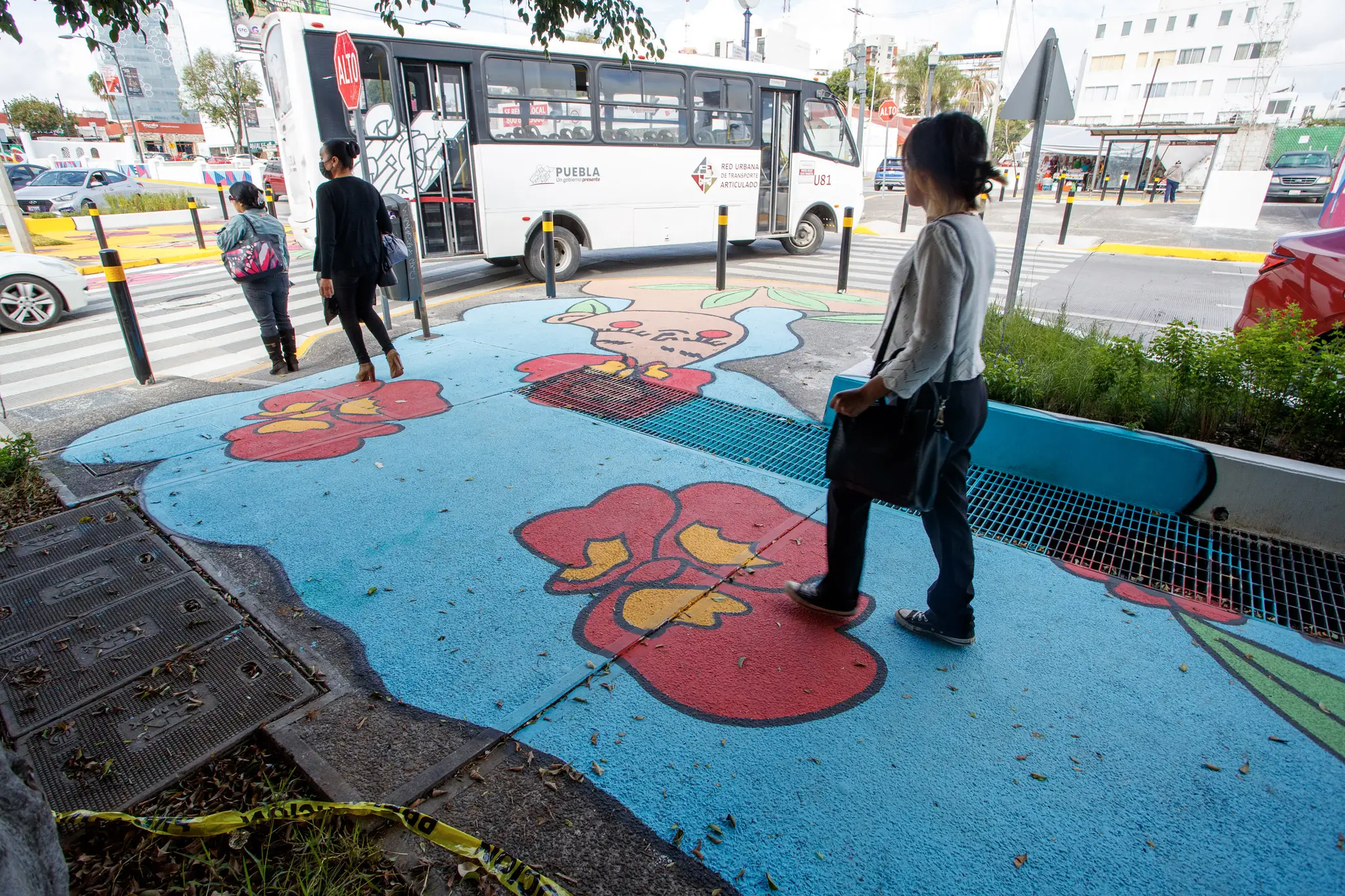
For the mural design, ideas were generated through a series of workshops held with 30 students from Universidad Tec de Oriente. The artist then generated two proposals from among these ideas that were then put to a vote on social media and through street surveys. The winning design is a commemoration of the victims of femicide in the state of Puebla, and features women with flowers flowing from their hair. For each street corner, a unique character with a native flower was created, thus unifying the design across the 11 corners. The murals were installed over 4 days with the help of more than 200 volunteers.
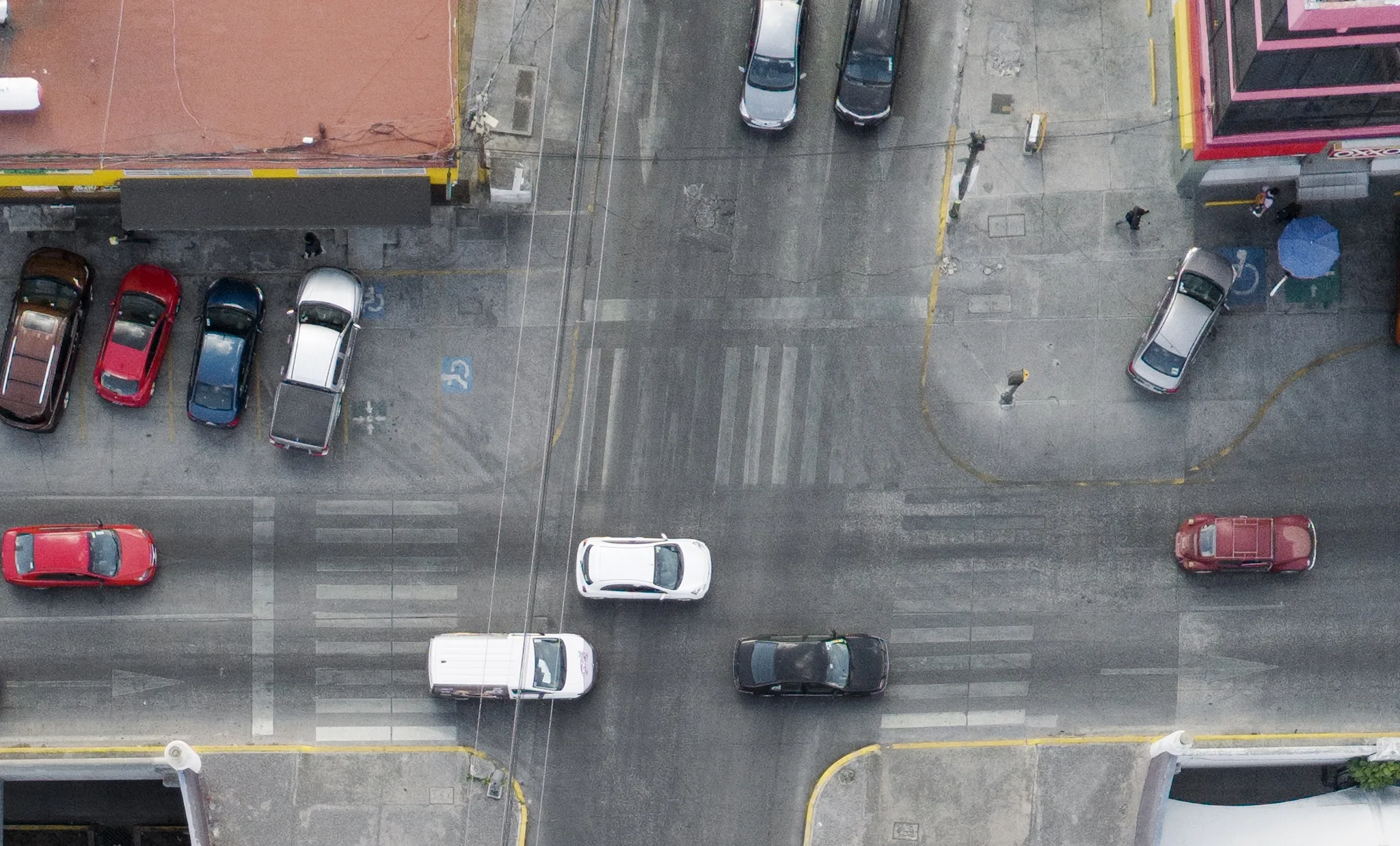
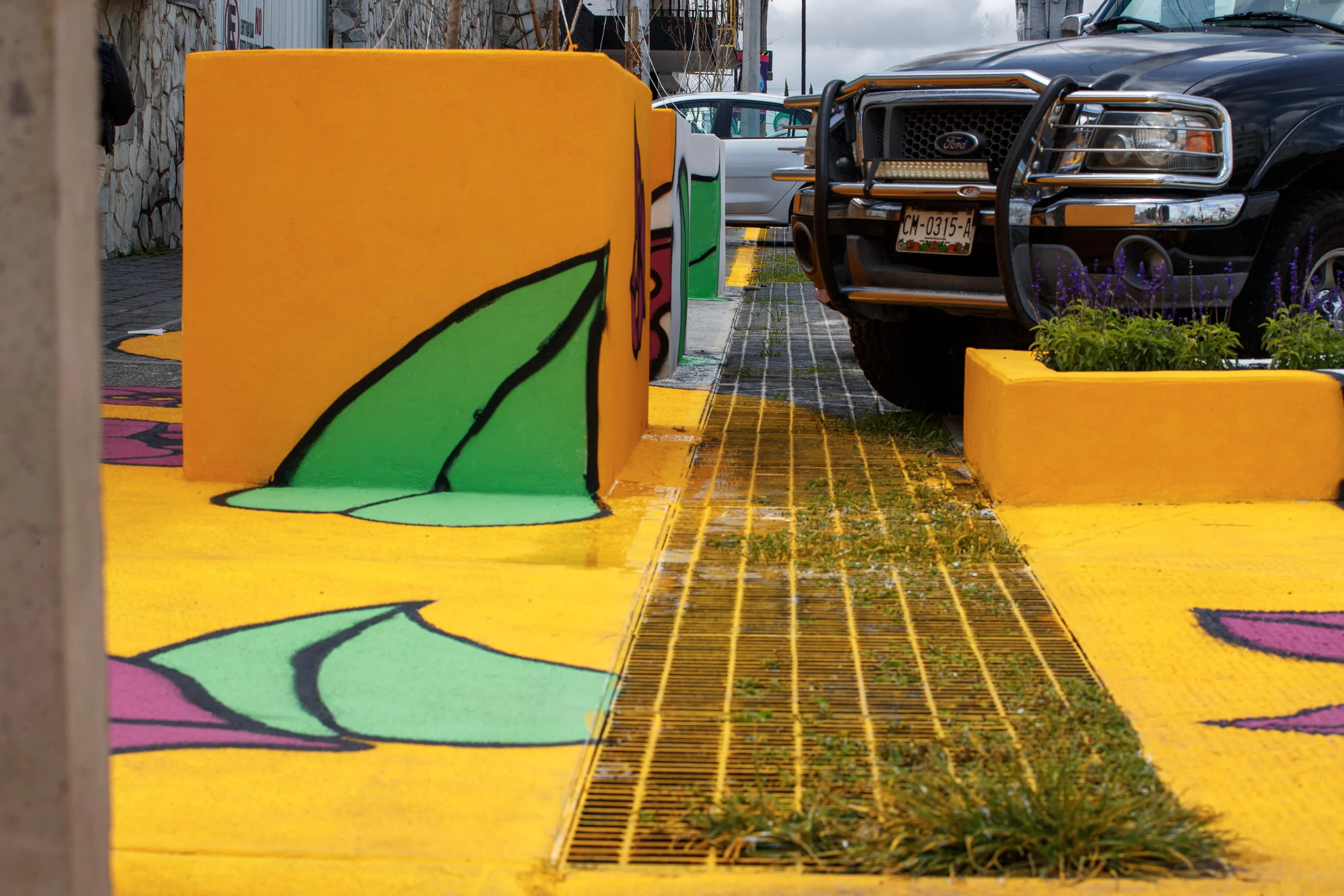
Along with the murals, pedestrian areas were protected and parking was better organized, and the area was enhanced with new benches and planters filled with pollinating flowers and trees. The result saw a more inviting place for people to rest and enjoy, as well as a successful reduction in vehicular speeds, “near misses,” and crossing distances at most intersections.
- Average car speeds within the corridor were reduced by 61%.
- Pedestrian and green areas were nearly doubled, increasing from 23% to 41% of the total space on the street
This intervention showed that when people feel connected to their surroundings, they’re more likely to embrace and support safety measures. Art bridges that connection and enhances the success of socializing urban interventions.
Sara Miranda, Project Lead
Use the slider to see the transformation
Best Practice Highlight: Aligning with Permanent Infrastructure Improvements
Close collaboration between Ciudad Activa and the Municipal Authorities of Puebla City was crucial to integrating permanent infrastructure improvements alongside the ‘Vereda Florida’ asphalt art. Collaboration began early in the planning stages at project conception, to align artistic vision with design goals focused on pedestrian safety. Through multiple consultations with local business owners and ongoing reviews of the design, the artwork was strategically placed in such a way as to feature the largest part of the murals at the intersections that were geometrically redesigned and enhanced with the new curb installations and planters to protect pedestrian areas. These physical improvements were implemented by the municipal government as part of a larger urban renewal effort, transforming the area into a more vibrant, pedestrian-friendly space.
Press
Aaron Merino Murals || News with Juan Carlos Valerio (Imagen Televisión, September 9, 2024)
Aaron Merino Remodeling || News with Juan Carlos Valerio (Imagen Televisión, August 27, 2024)
For inspiration and tips for the creation of art on roadways and public places, download the Bloomberg Associates Asphalt Art Guide which features successful plaza and roadway art activations around the world, as well as key steps for developing such projects.