
New Orleans, Louisiana
Safely connecting residents to the Lafitte Greenway
The Project
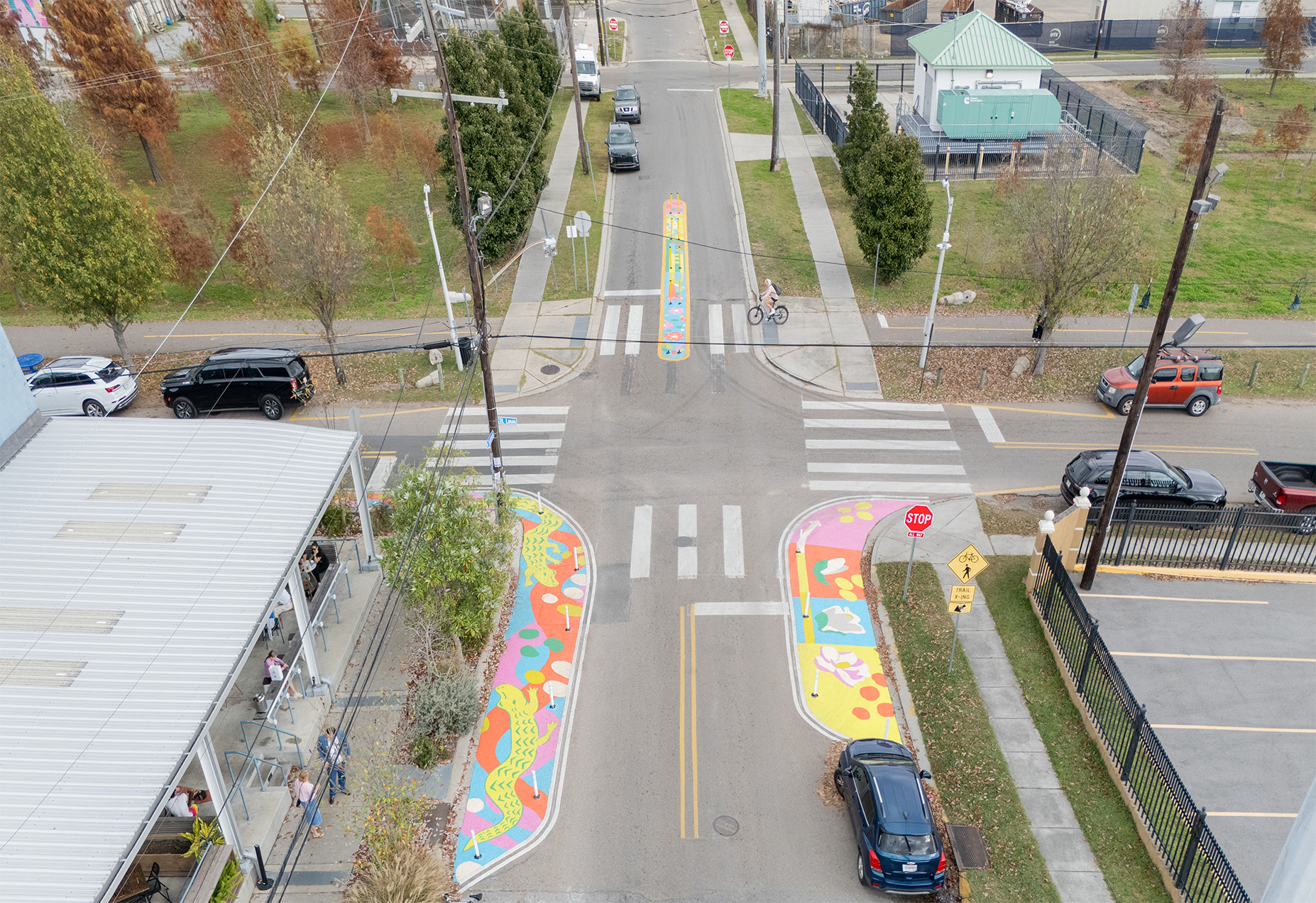
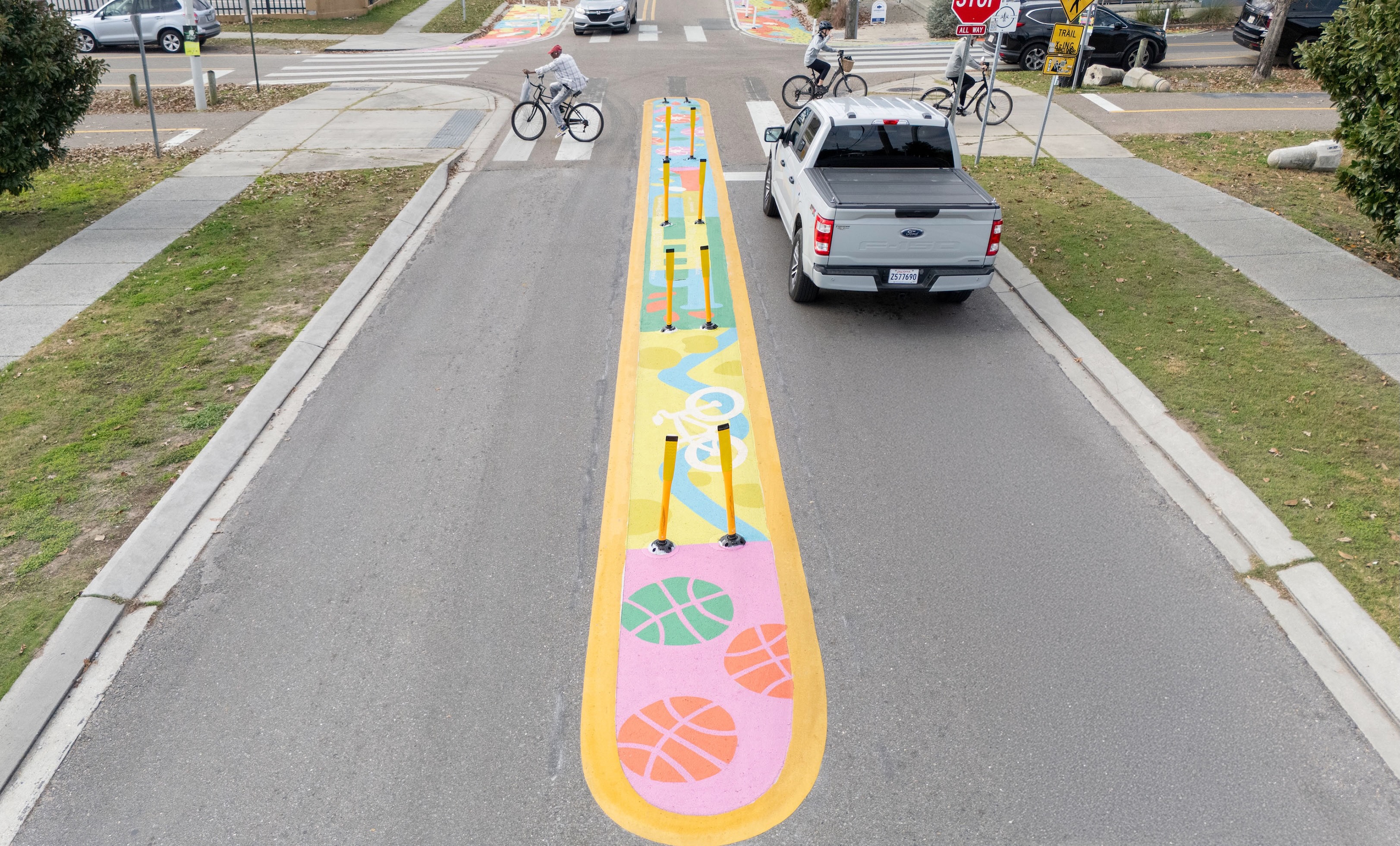
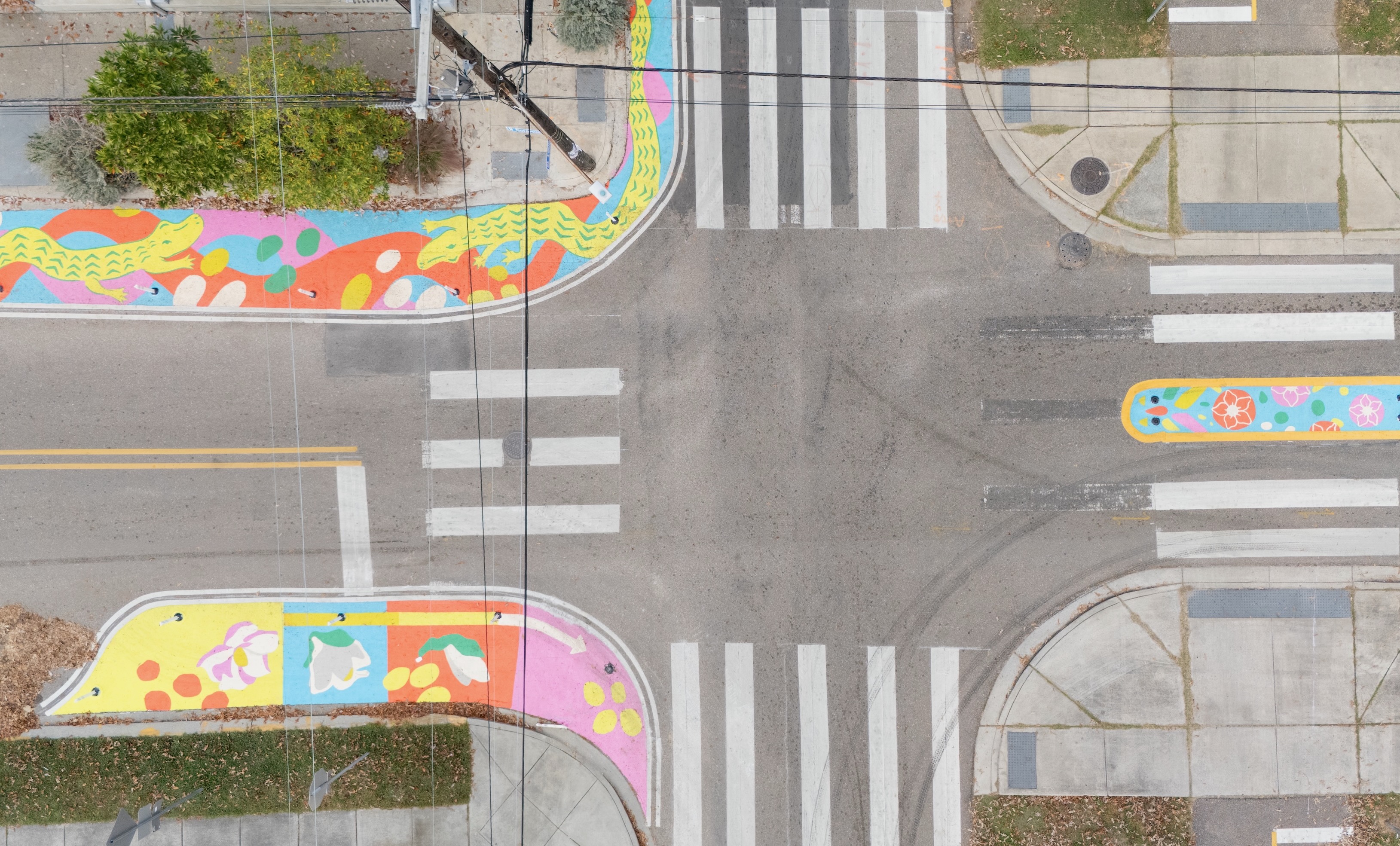
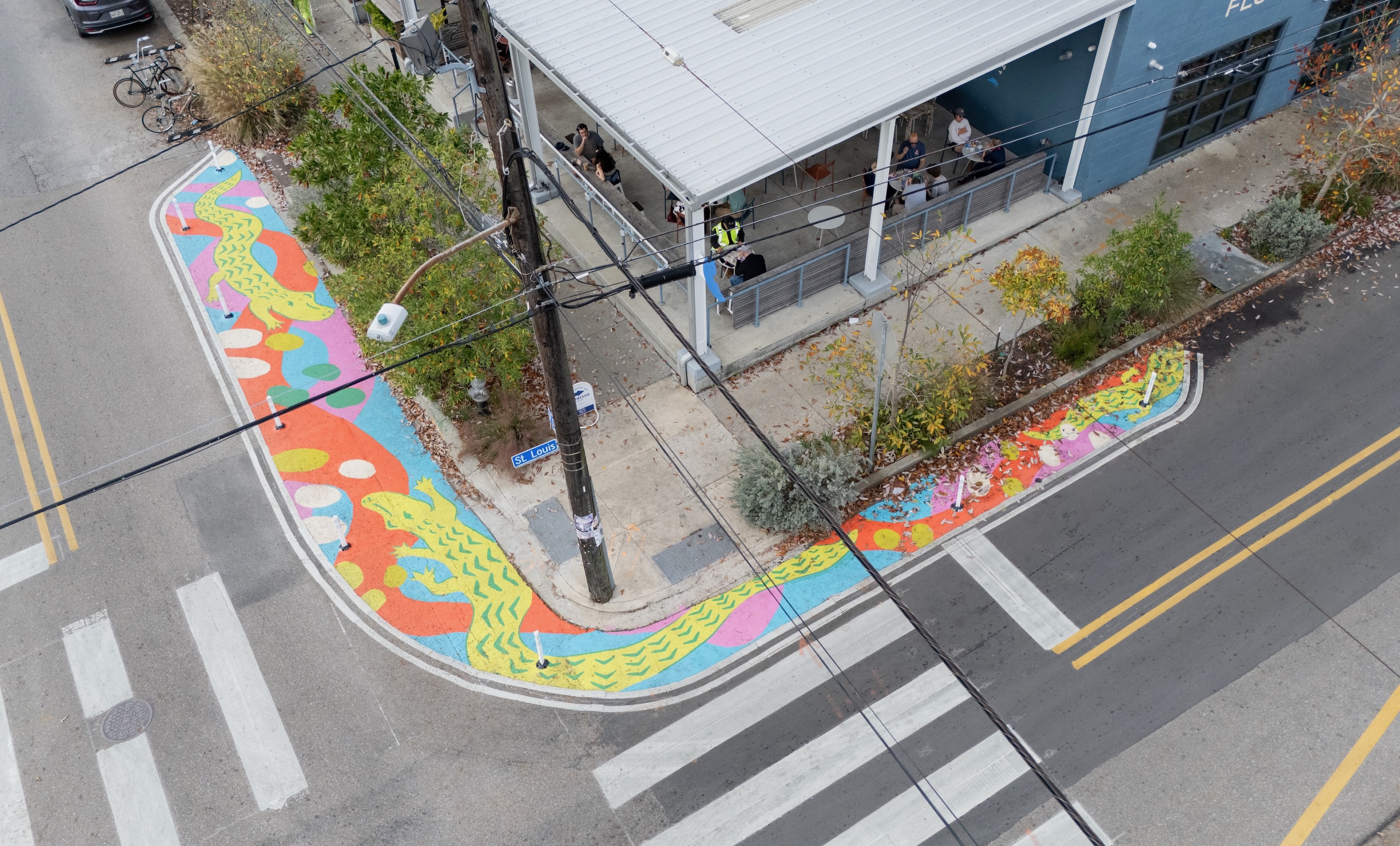
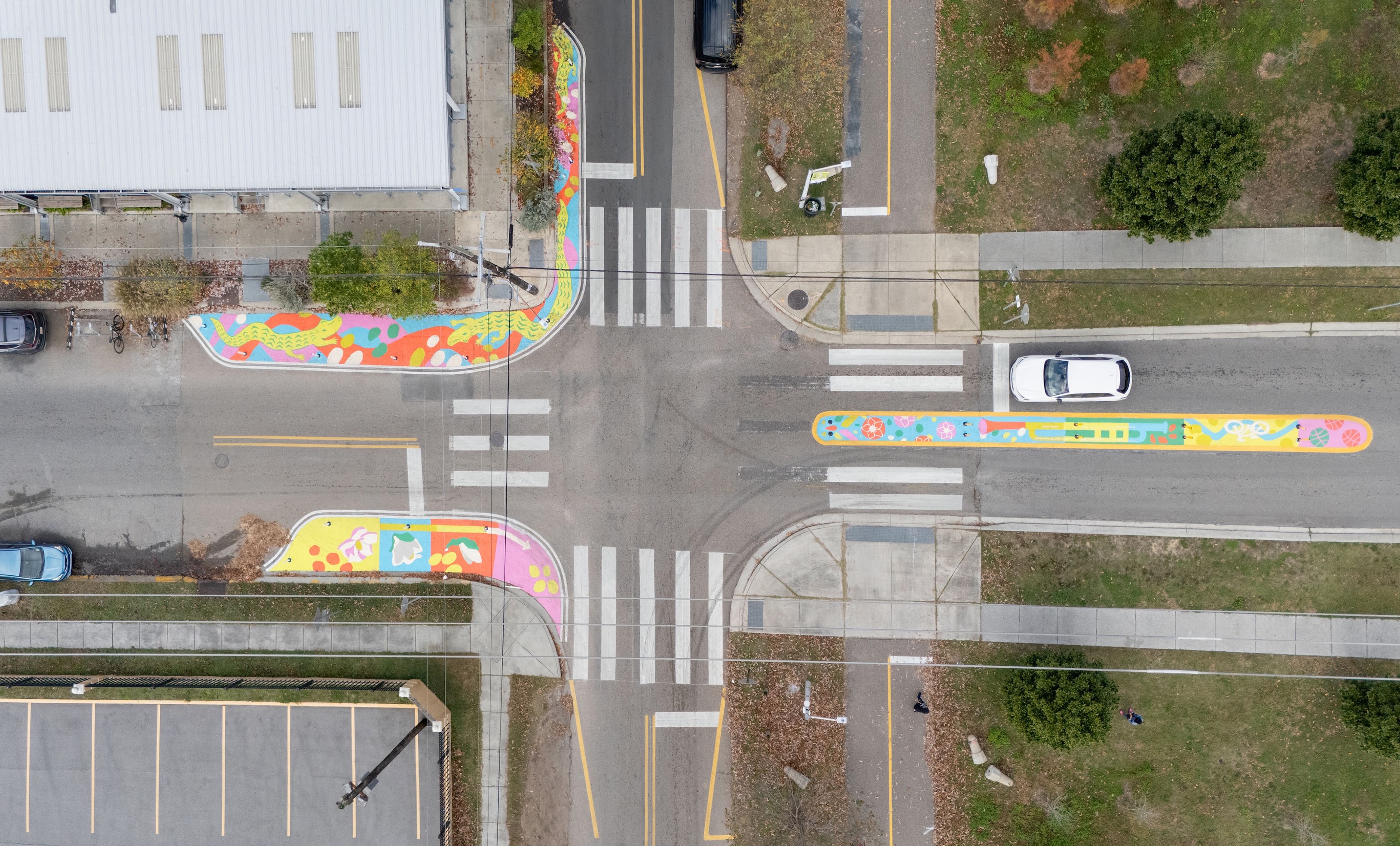
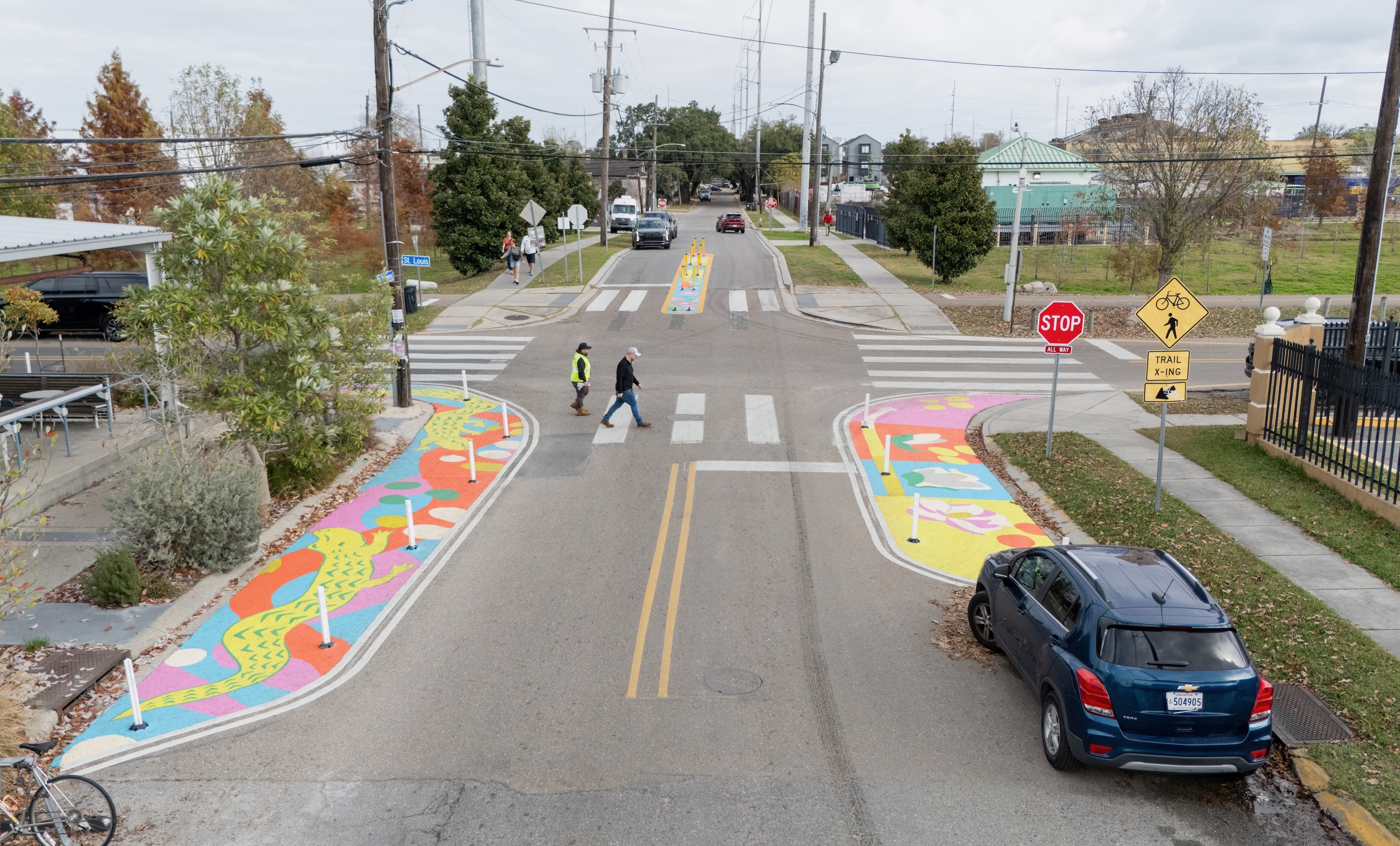
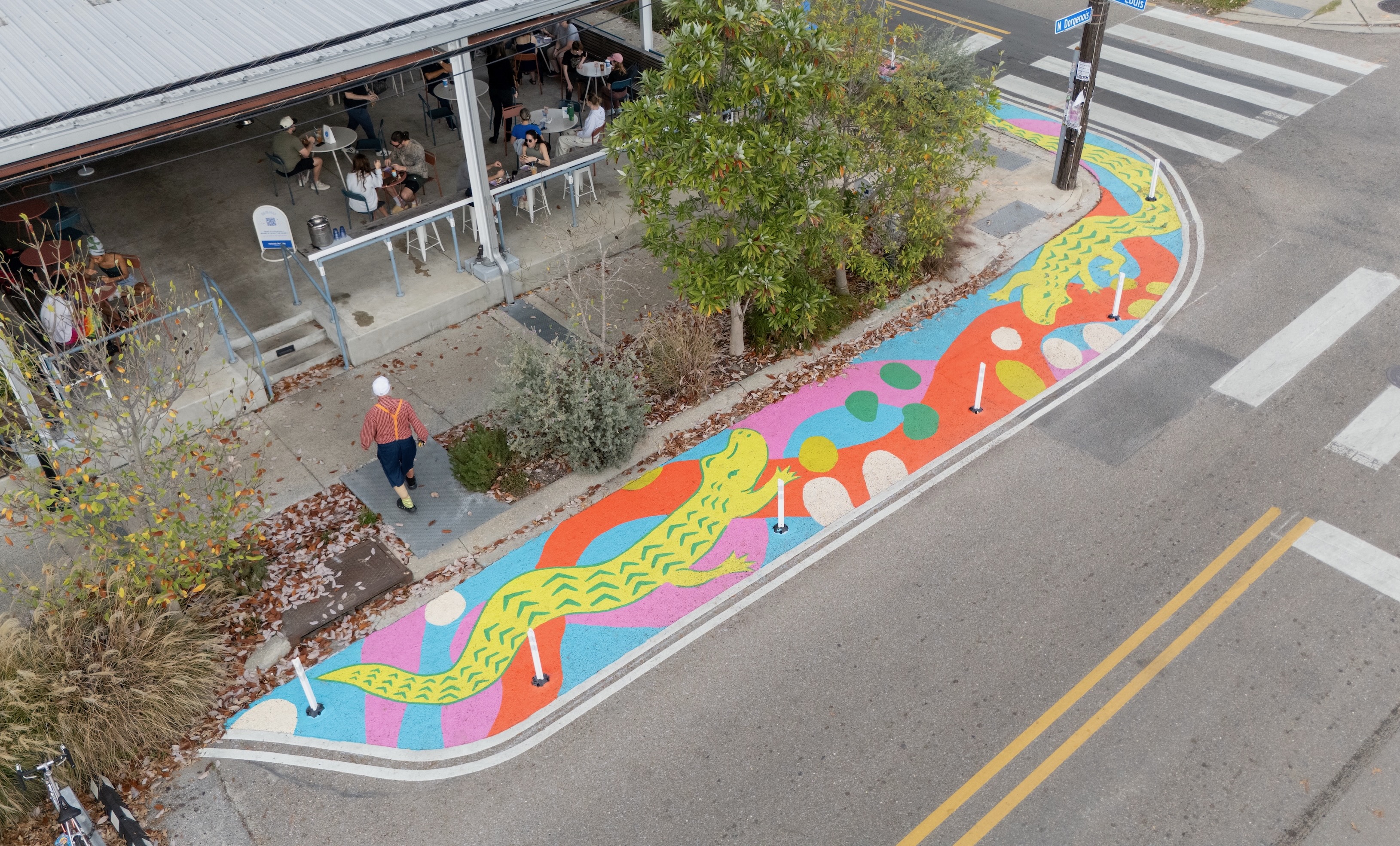
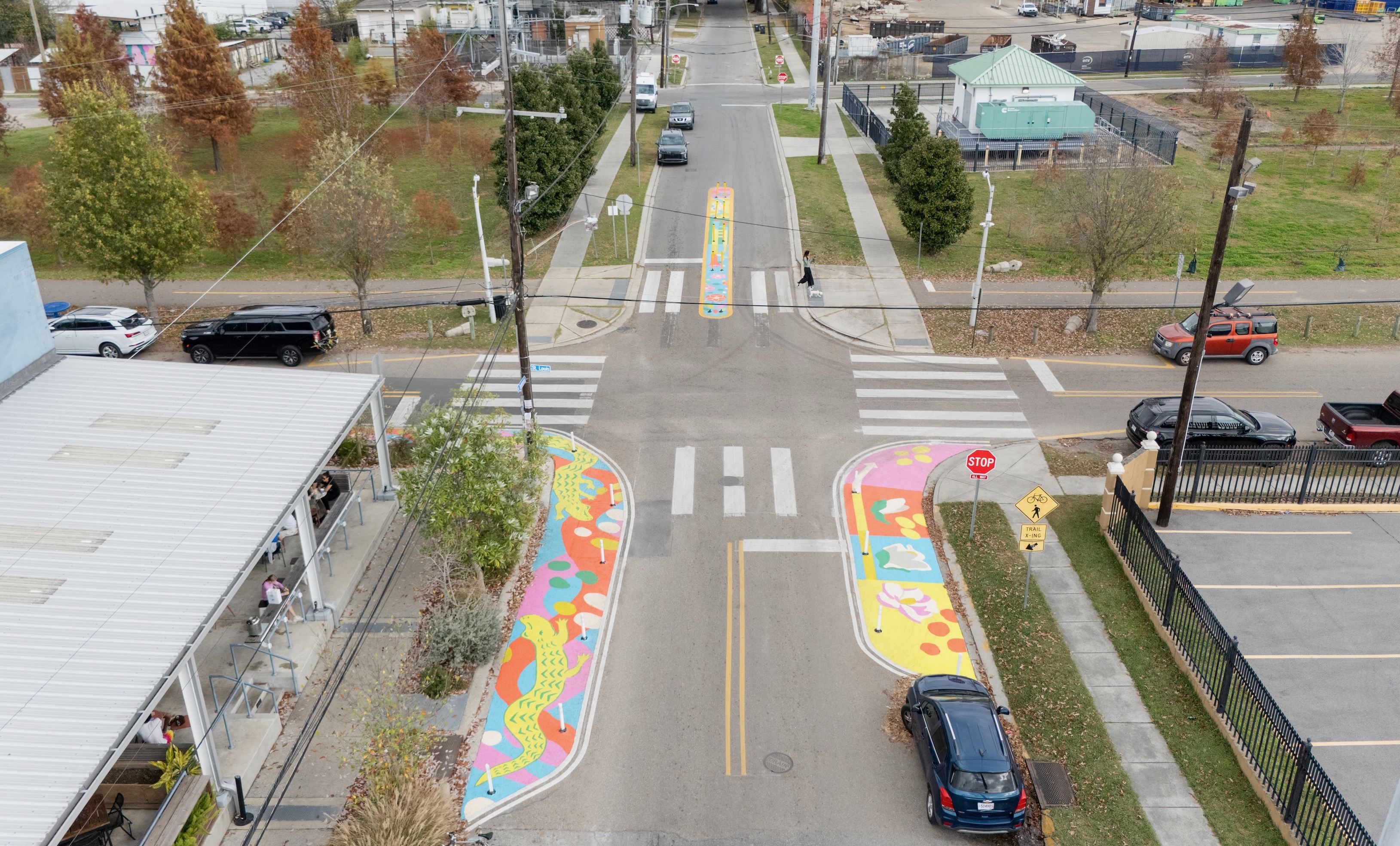
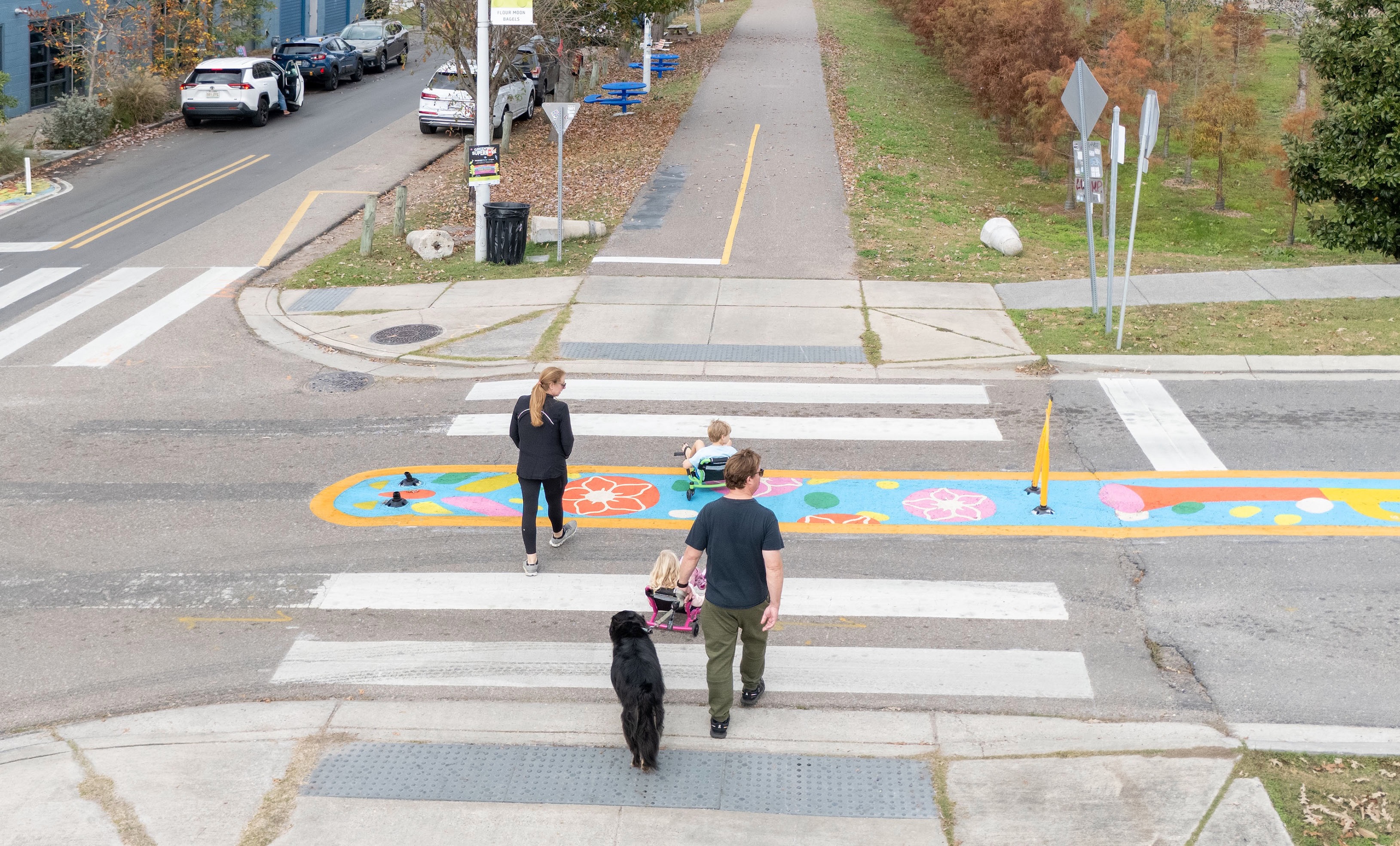
At the intersection of North Dorgenois Street and the Lafitte Greenway in New Orleans’ Treme neighborhood, this project addressed a persistently dangerous crossing point for pedestrians and cyclists. The Greenway is a vital corridor for recreation, commuting, and community life, and this intersection had been the site of frequent near-misses and collisions, with unclear traffic patterns and insufficient safety infrastructure. The project aimed to improve visibility, slow vehicle speeds, and create a safer, more legible connection to the surrounding neighborhood.
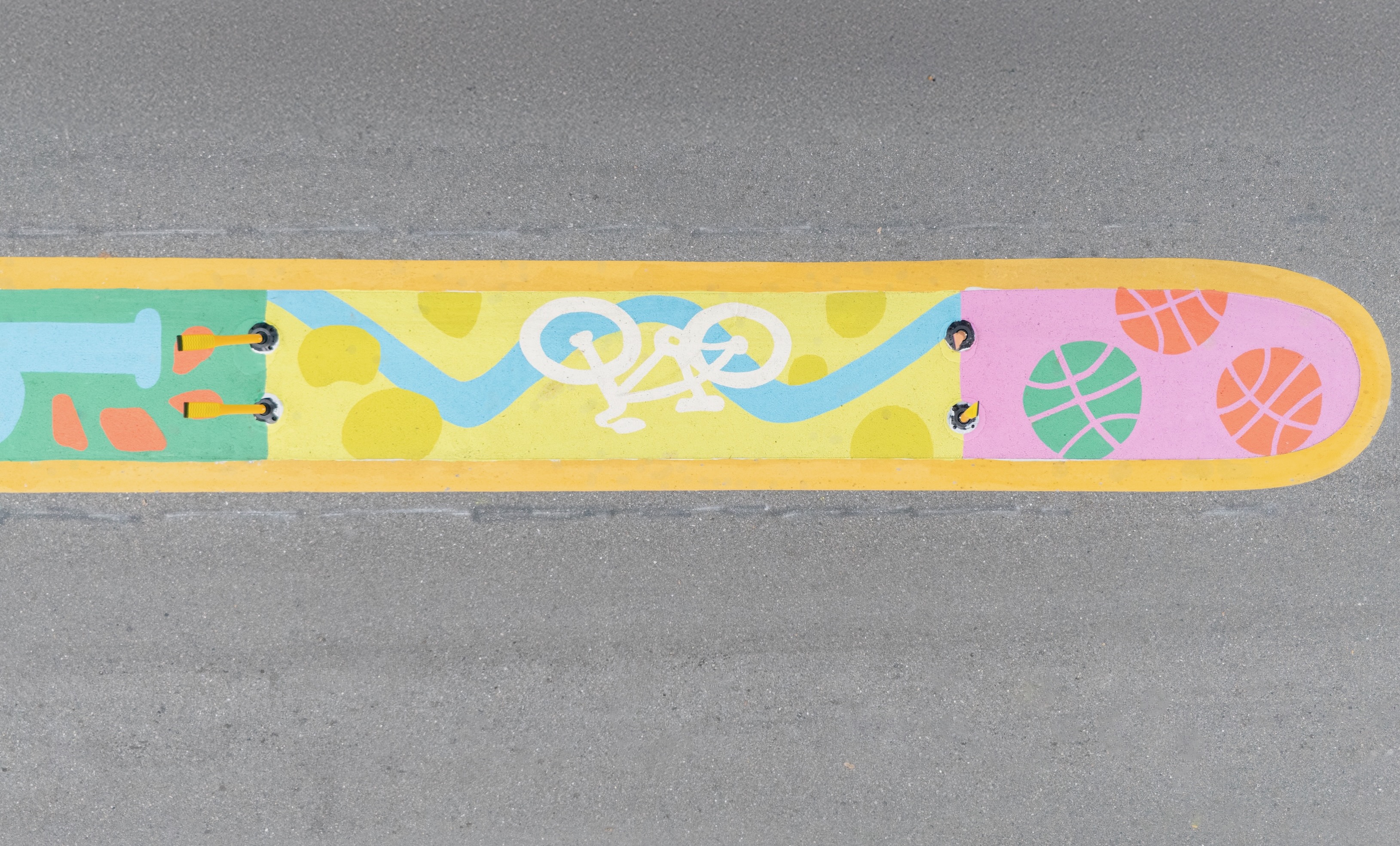
The intervention combined bold roadway murals with targeted traffic-calming measures, including new stop signs and flexposts, to clearly define the intersection and encourage safer driver behavior. Designed and installed by Arts New Orleans’ Young Artist Movement, the murals reflect community-based motifs while directly engaging 25 local youth in shaping a safer streetscape. The project creates a more welcoming gateway for the more than 1,000 daily users who pass through the site. By pairing infrastructure improvements with creative placemaking and youth leadership, the project demonstrates how asphalt art can deliver immediate safety benefits while strengthening community connection and ownership.
“The improvements immediately helped make this intersection much safer. These murals added so much vibrancy to this corner and made the Greenway more accessible and beautiful.”
Jeff Hinson, co-owner, Flour Moon Bagels
Use the slider to see the transformation

Press
Safety upgrades put in place near Lafitte Greenway intersection described as dangerous, (WDSU6, December 11 2025)
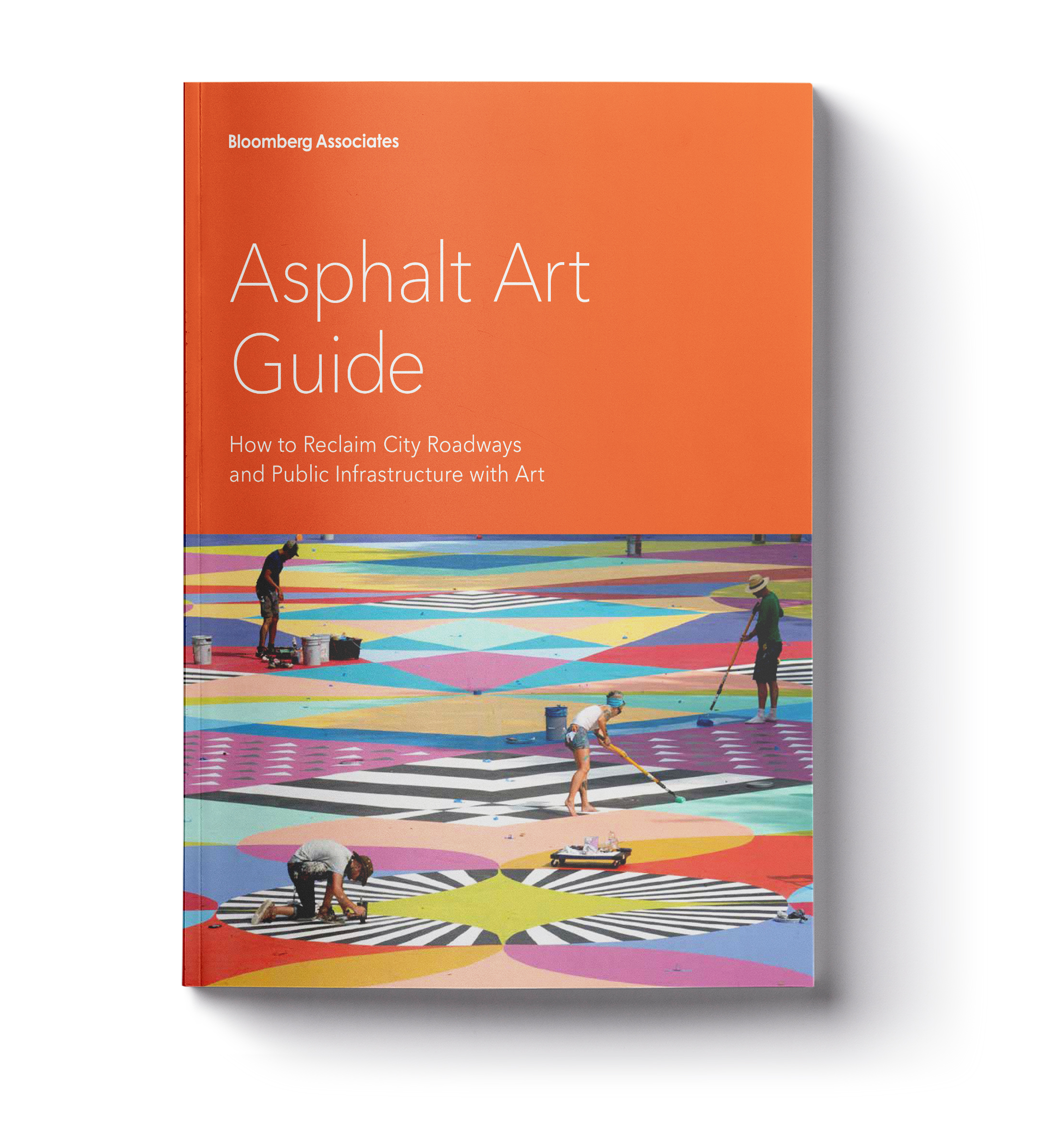
For inspiration and tips for the creation of art on roadways and public places, download the Bloomberg Associates Asphalt Art Guide which features successful plaza and roadway art activations around the world, as well as key steps for developing such projects.
Clarksdale, Mississippi
Transforming streets into canvases for food equity and community pride
The Project
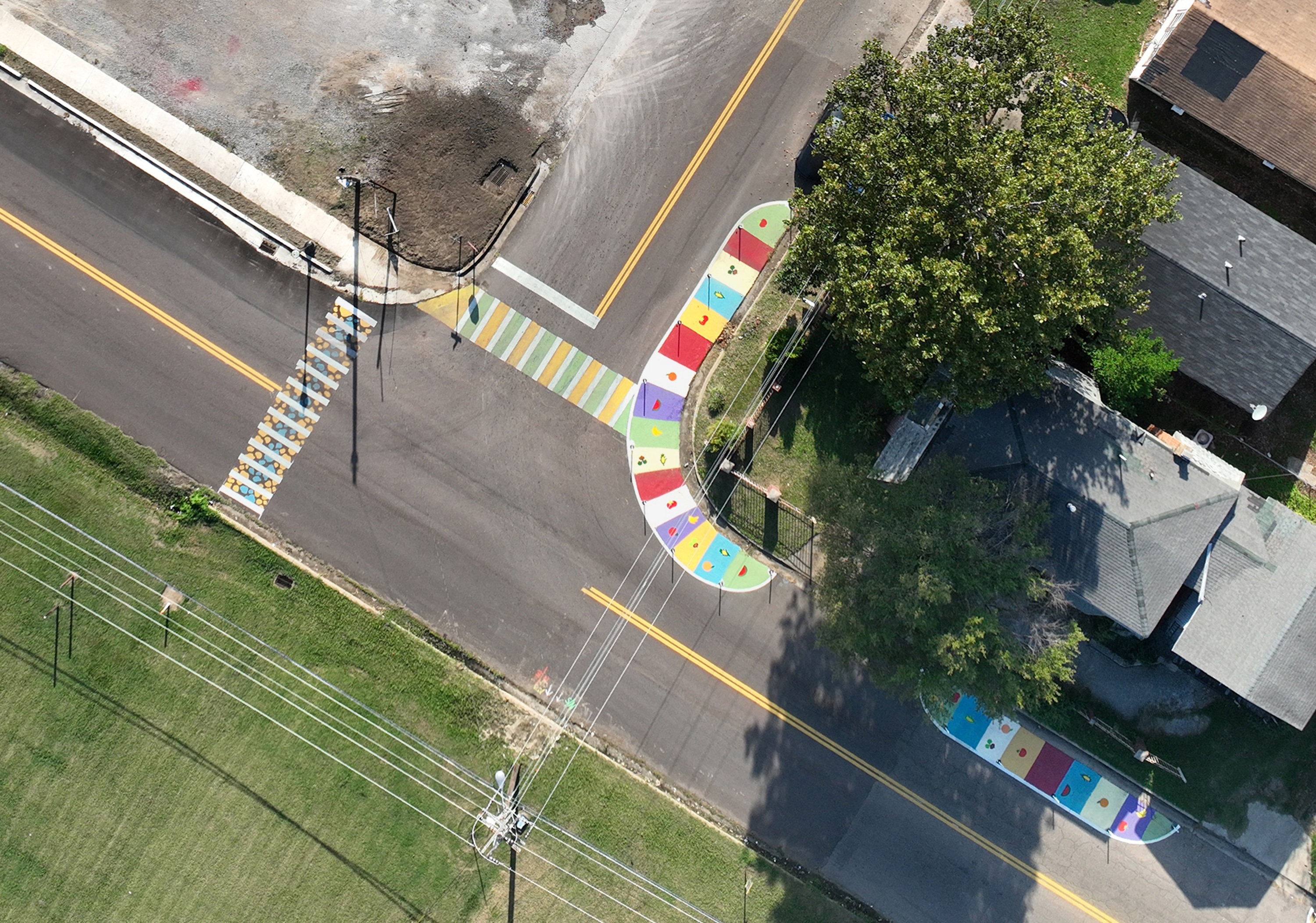
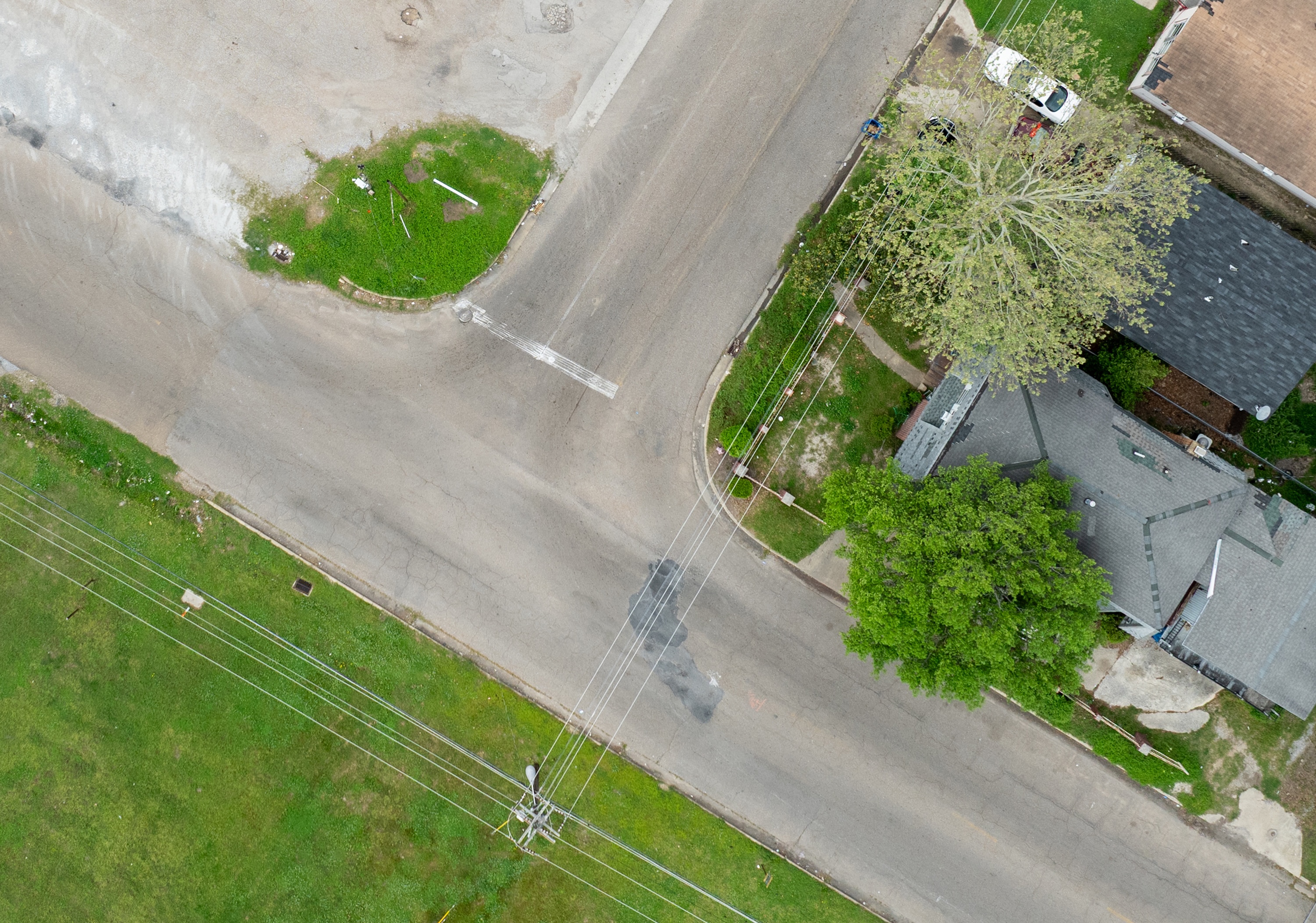
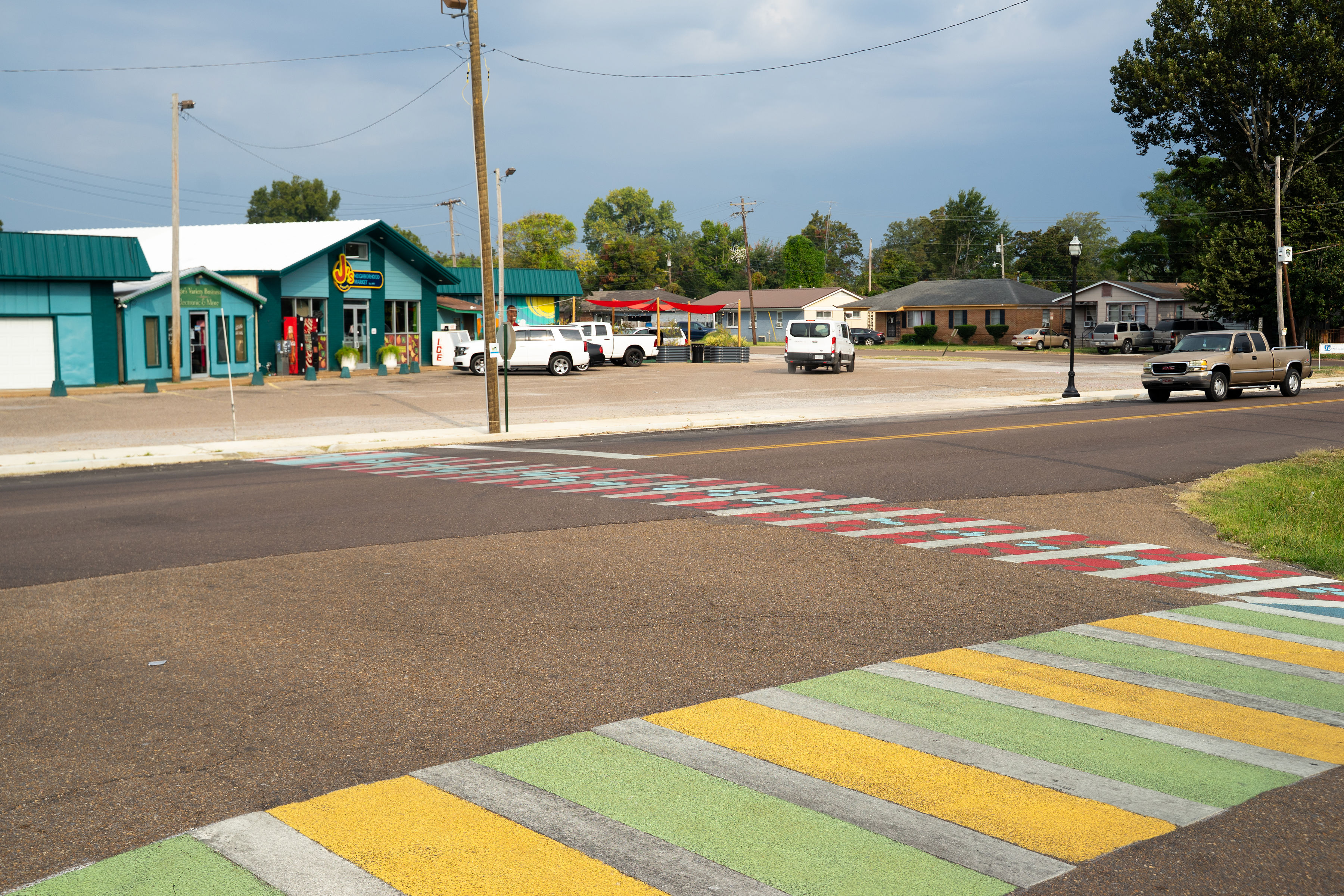
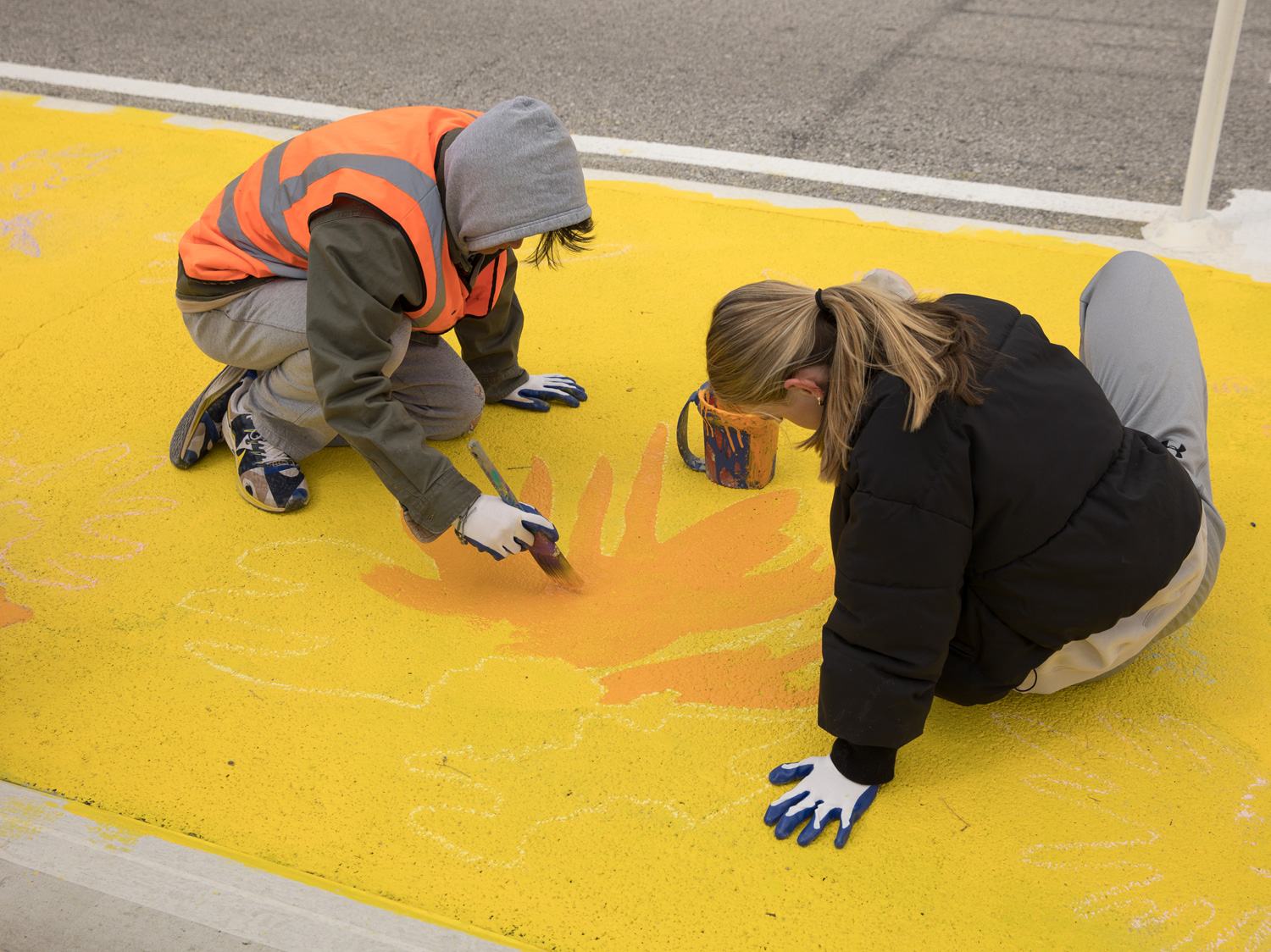
In Clarksdale’s Brickyard neighborhood, the only path connecting two public schools, a community health center, and the area’s sole grocery store had no designated crosswalks, minimal signage, and documented pedestrian safety concerns. Griot Arts partnered with the City of Clarksdale, the Partnership for a Healthier America, and local residents to transform 5,183 square feet of asphalt along the Ritchie Avenue corridor into a vibrant series of crosswalk murals and a curb extension. Led by artist Thaxton Waters with support from Aikee Mathews and Jarvis Howard, the installation engaged 25 volunteers and approximately 40 youth participants. The project created eight new designated crossings where only one or two had existed, directly addressing both food access and pedestrian safety in this predominantly low-income, African American community.
By transforming this street into a canvas, we are amplifying the stories, culture, and creativity of the community, and reclaiming space, reimagining it as a place where connection, pride, and possibility meet.
Tyler Yarbrough, Director of MS Delta Programs, Partnership for a Healthier America
Use the slider to see the transformation
Best Practice Highlight: Community-Centered Design For Food Equity
Rather than approaching street art as a standalone beautification effort, the Food Equity Mural Project embedded its design process within an existing food access and public health strategy. By co-locating the installation along the corridor between schools, a health center, and the neighborhood’s only full-service grocery store, the project addressed multiple community needs simultaneously. The partnership with PHA’s Rootswell initiative brought an additional $15,000 in food equity funding, demonstrating how asphalt art can serve as a catalyst for cross-sector collaboration. Post-installation, the owner of J’s Grocery reported increased walk-in customers, and hospital staff and city employees have made the corridor a regular destination.


For inspiration and tips for the creation of art on roadways and public places, download the Bloomberg Associates Asphalt Art Guide which features successful plaza and roadway art activations around the world, as well as key steps for developing such projects.
San Francisco, California
Calming traffic through color on Slow Sanchez
The Project
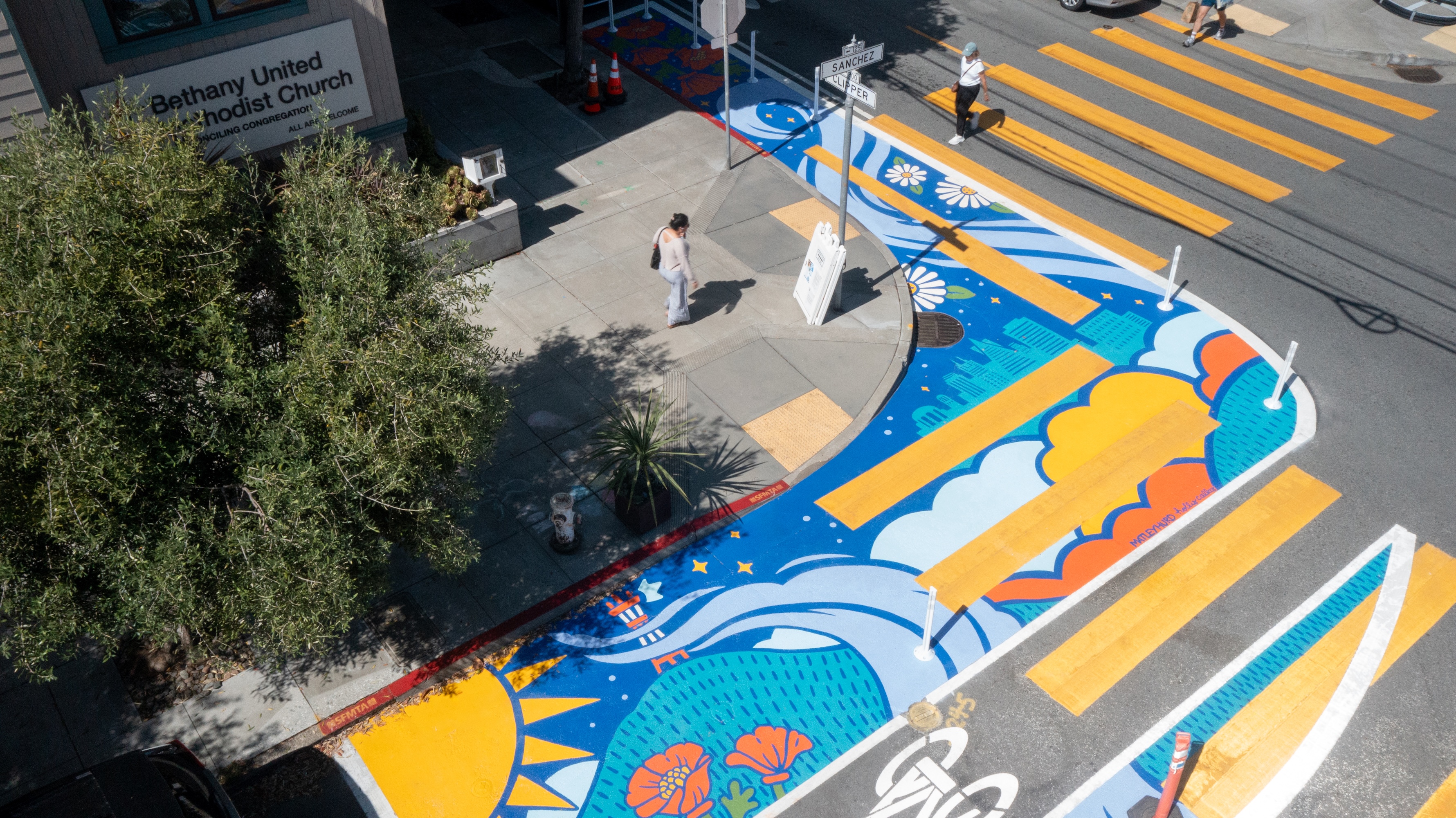
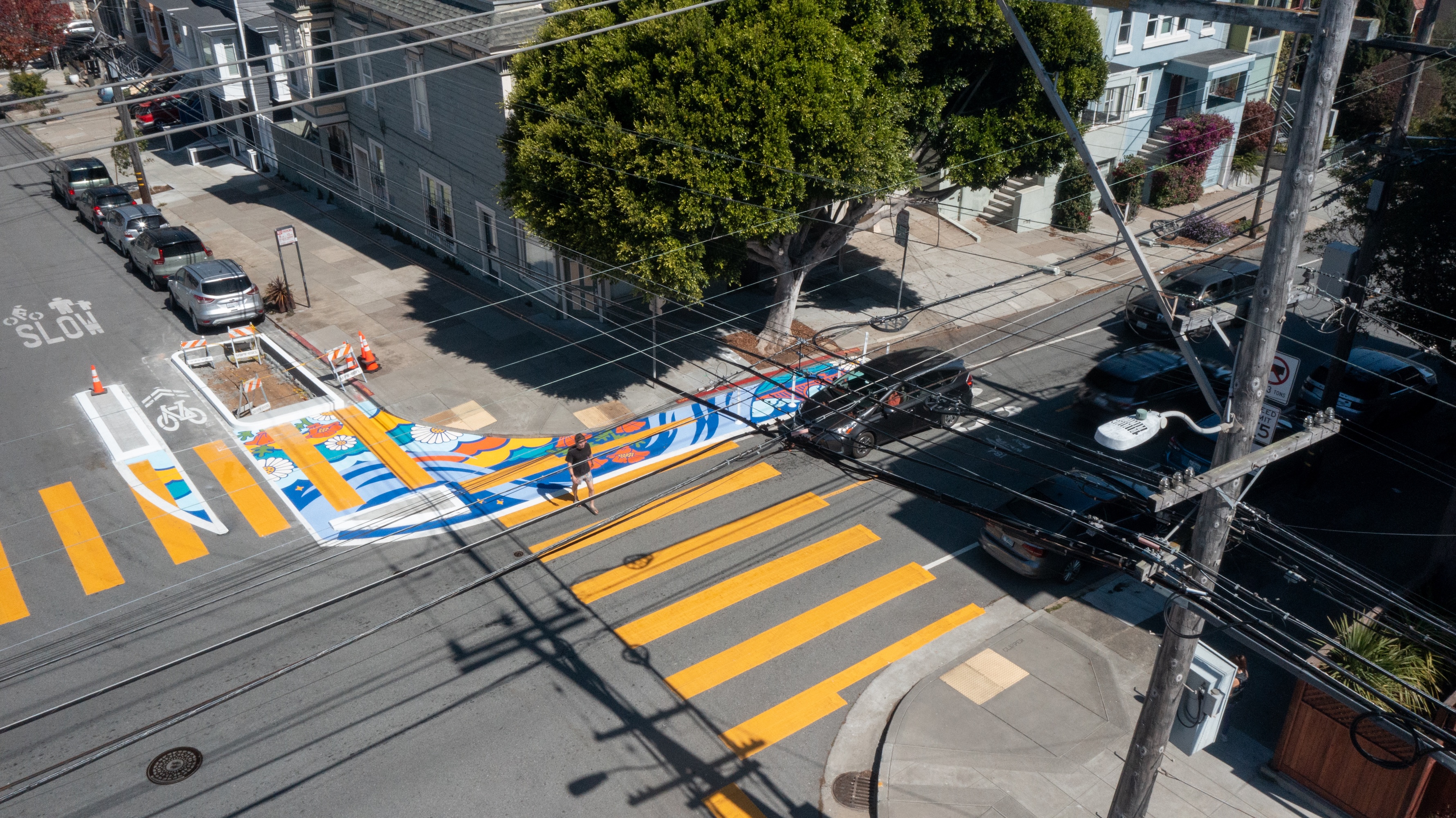
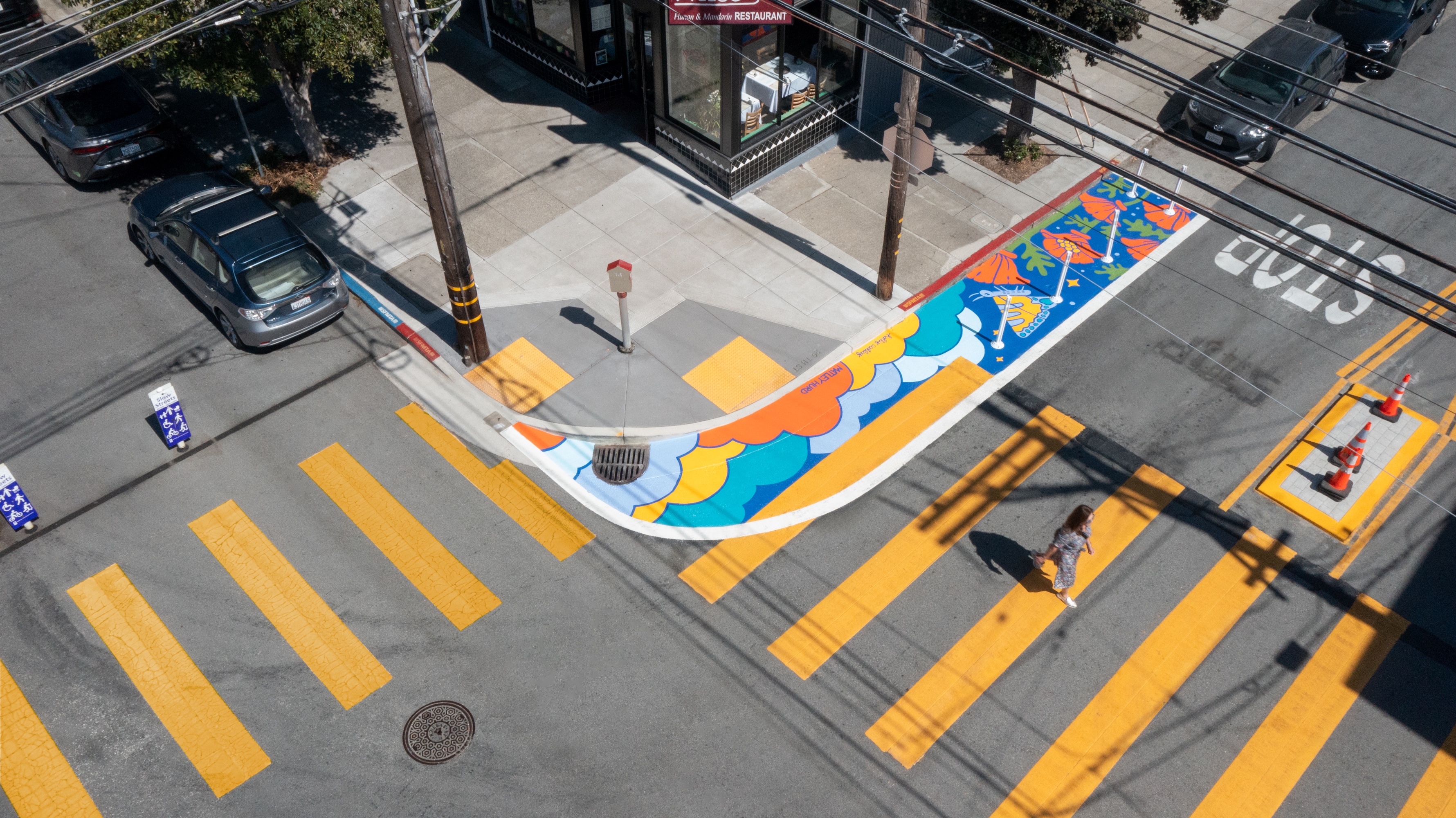
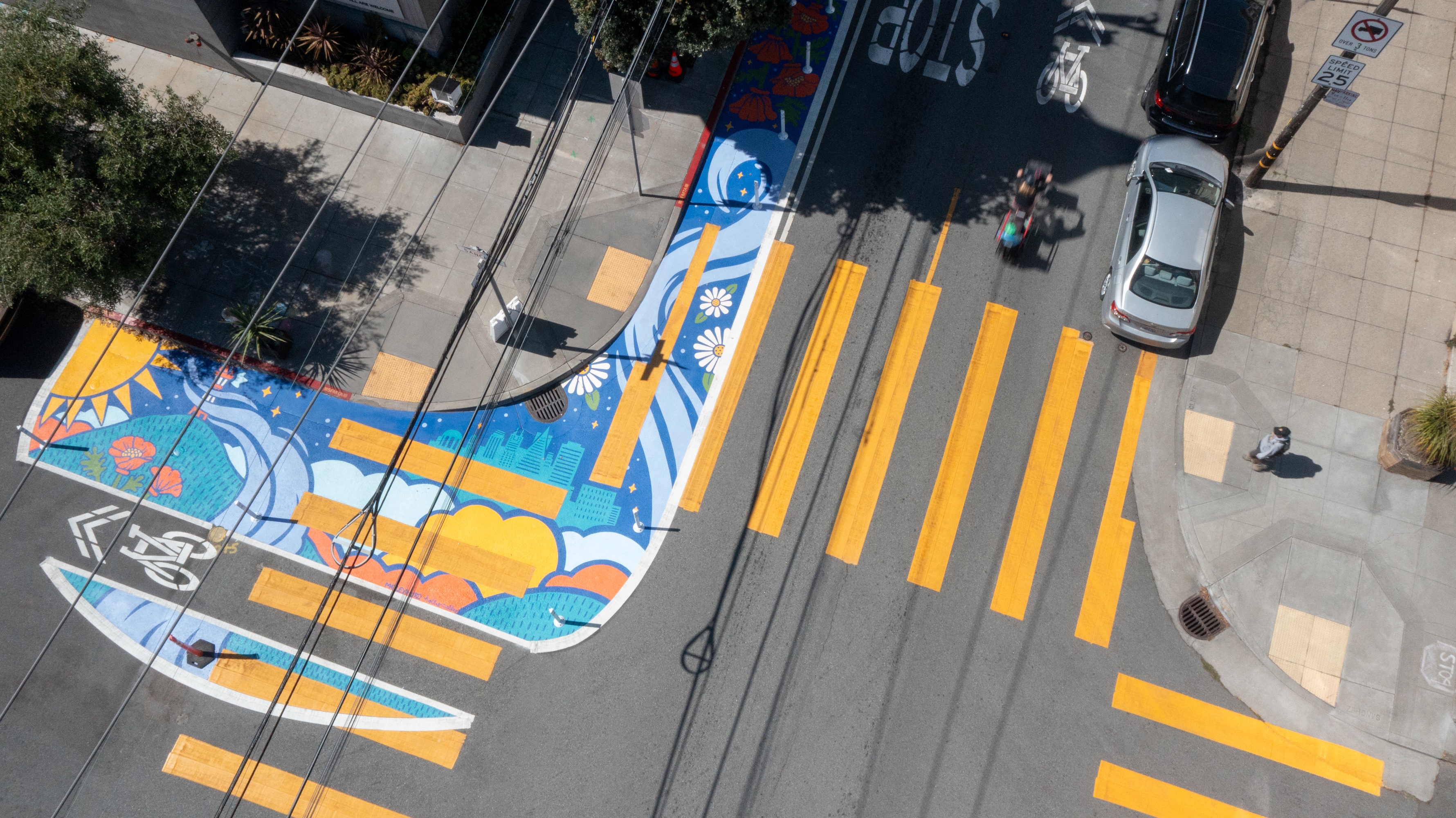
The Slow Sanchez mural was part of a larger effort to calm neighborhood vehicle traffic, provide safe travel for active modes, and uplift community identity through art. Murals were painted within the Painted Safety Zone, and were designed to highlight San Francisco culture. The SFMTA worked with community partners Friends of Slow Sanchez and Upper Noe Neighbors to engage the community and identify key safety needs. Once legislated and implemented, Friends of Slow Sanchez and Street Plans collaborated to identify local artists to design and implement a mural at two key intersections along the Sanchez, 29th and Clipper. These intersections have a combination of painted safety zones and traffic calming islands. Painted Safety Zones are painted areas that wrap around the intersection to slow vehicle turns and improve pedestrian visibility.
Integrating this project with a larger traffic calming effort in the neighborhood allowed the team to leverage strong partnerships that played to the strength of each entity – SFMTA was able to lead on the technical striping and geometric design to create a “canvas” for the artists. Artists were able to work quickly to create compelling works for the site without having to get involved in permitting or use materials budget for traffic control or roadway striping elements.
“The recent murals and traffic calming installed at Sanchez and Clipper make walkers and bikers much more visible to drivers while the murals giver everyone more to smile about!”
Chris Keene, San Francisco Resident and Activist
Use the slider to see the transformation


Press
Stylish Curbs, (Noe Valley Voice, October 2025 issue – page 7)


For inspiration and tips for the creation of art on roadways and public places, download the Bloomberg Associates Asphalt Art Guide which features successful plaza and roadway art activations around the world, as well as key steps for developing such projects.

Niagara Falls, New York
Slowing speeds with a swirl of local spirit
The Project
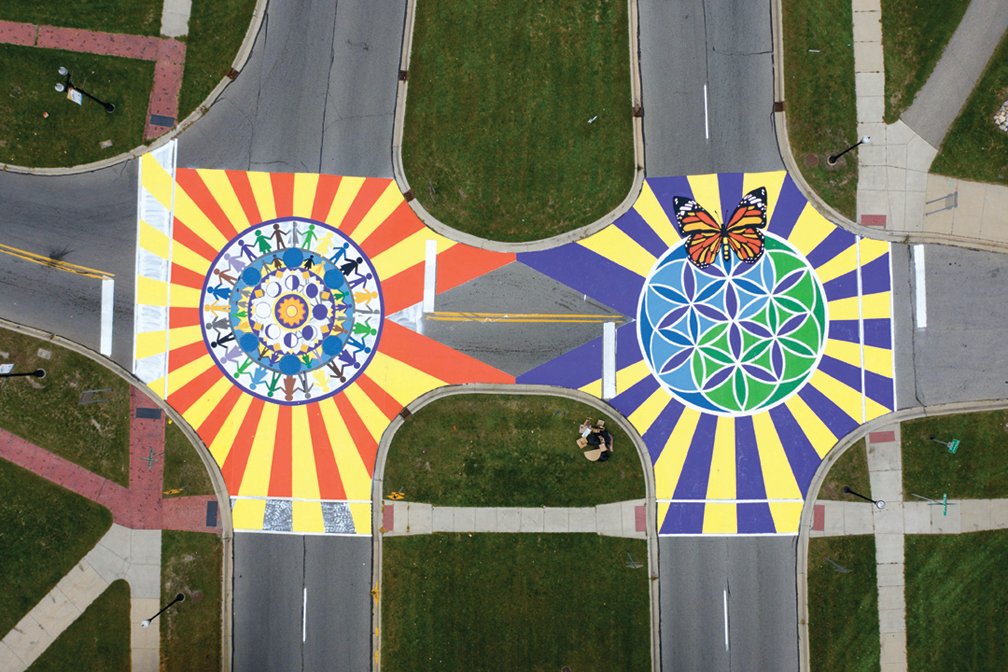
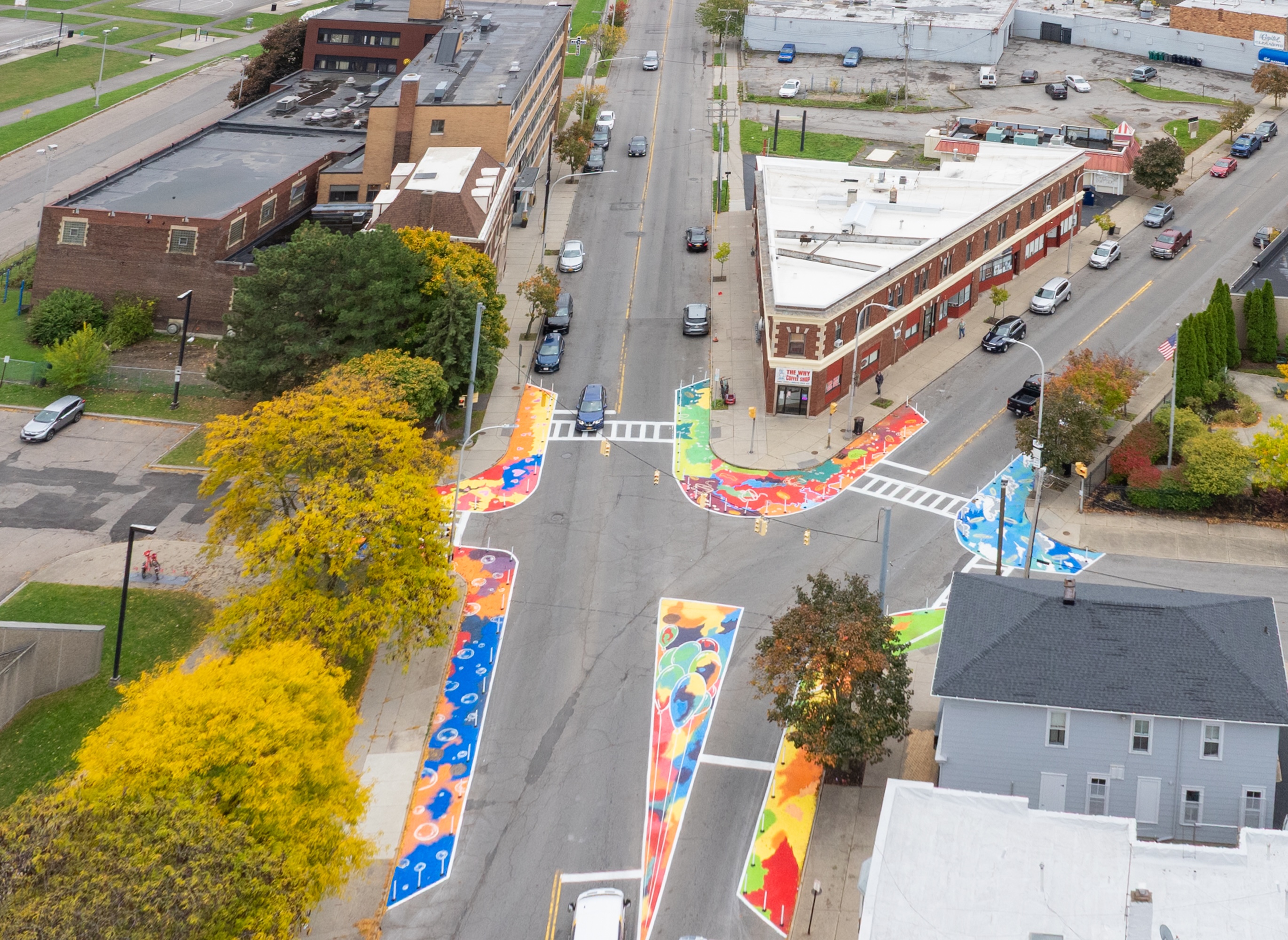
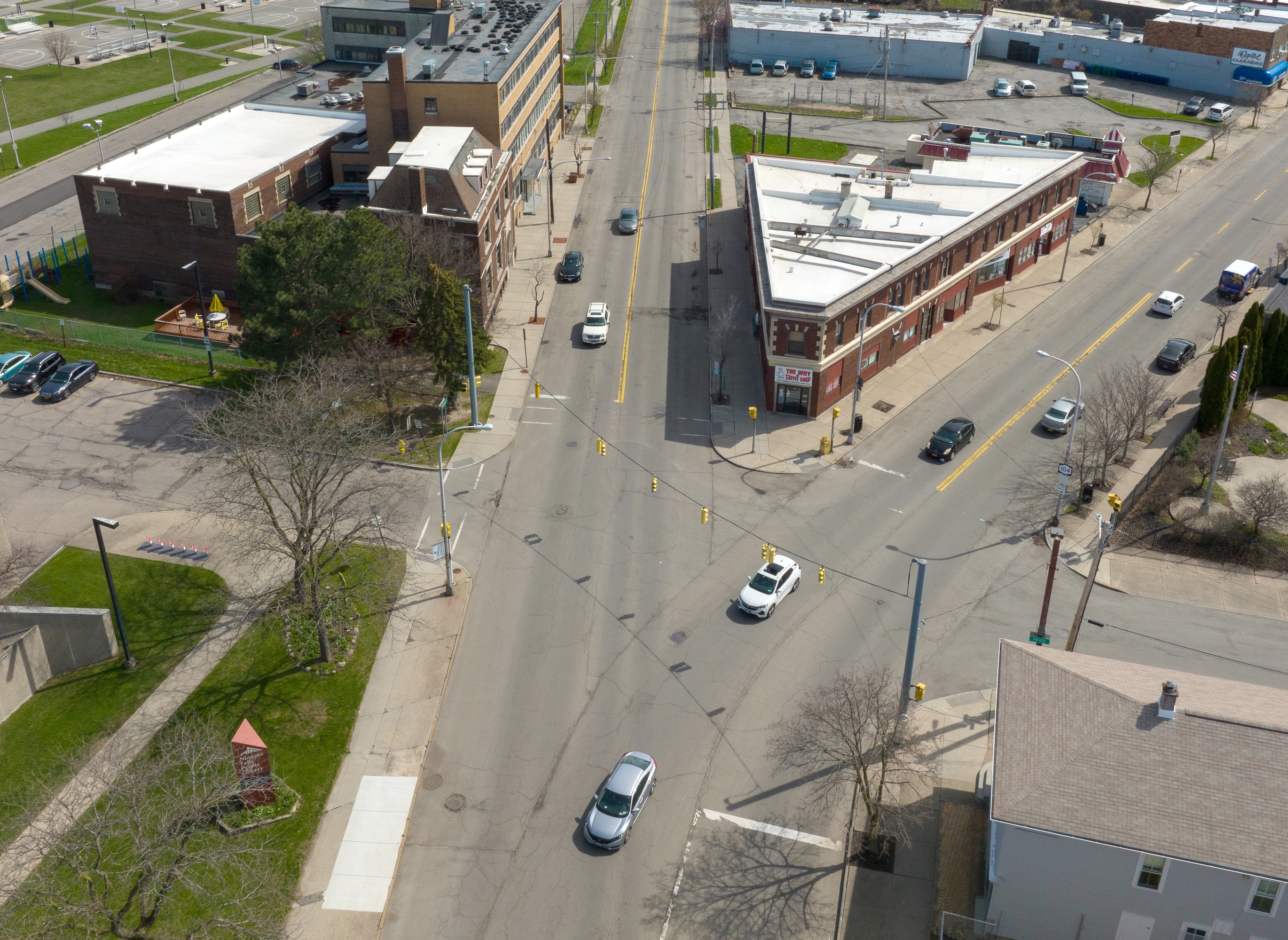
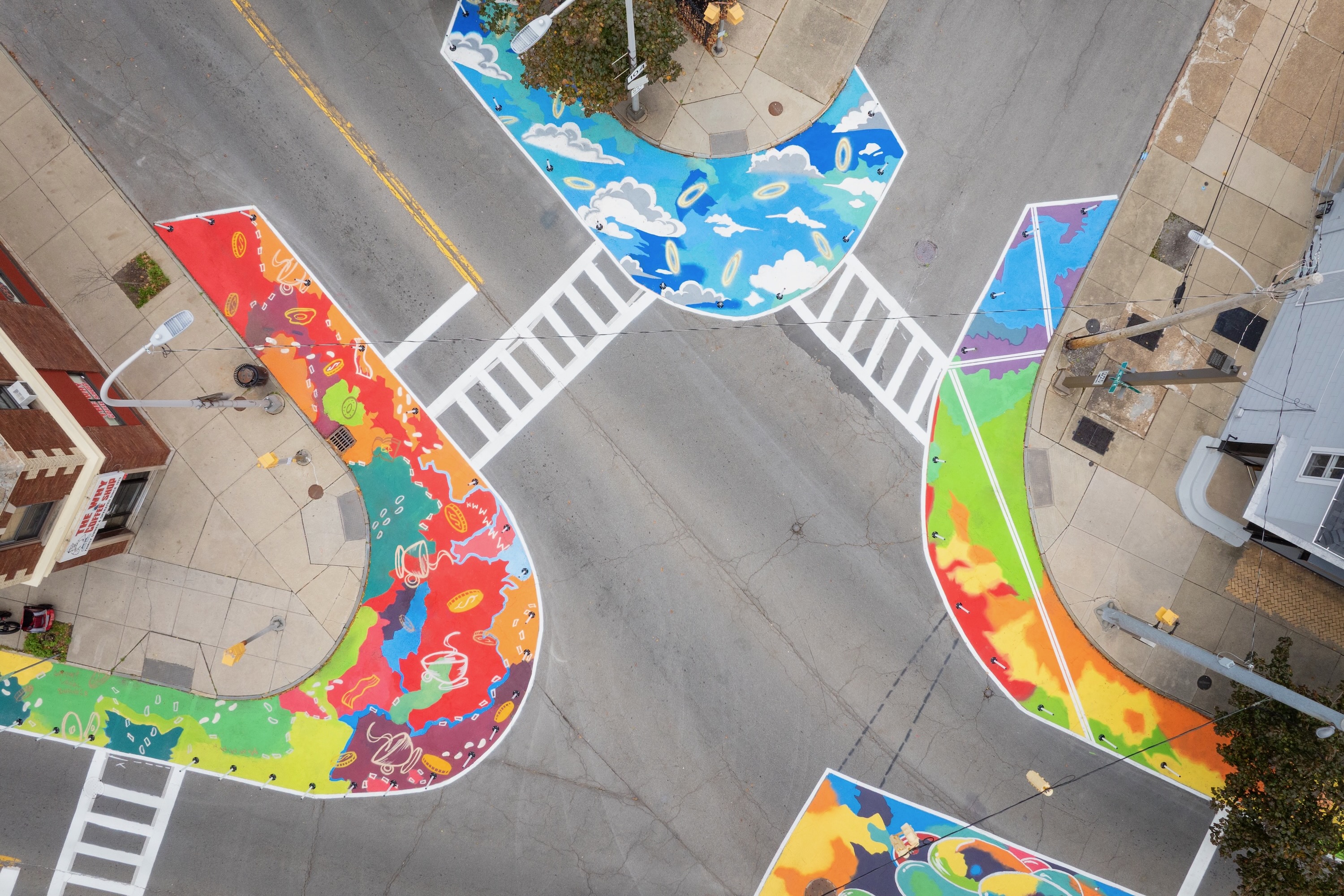
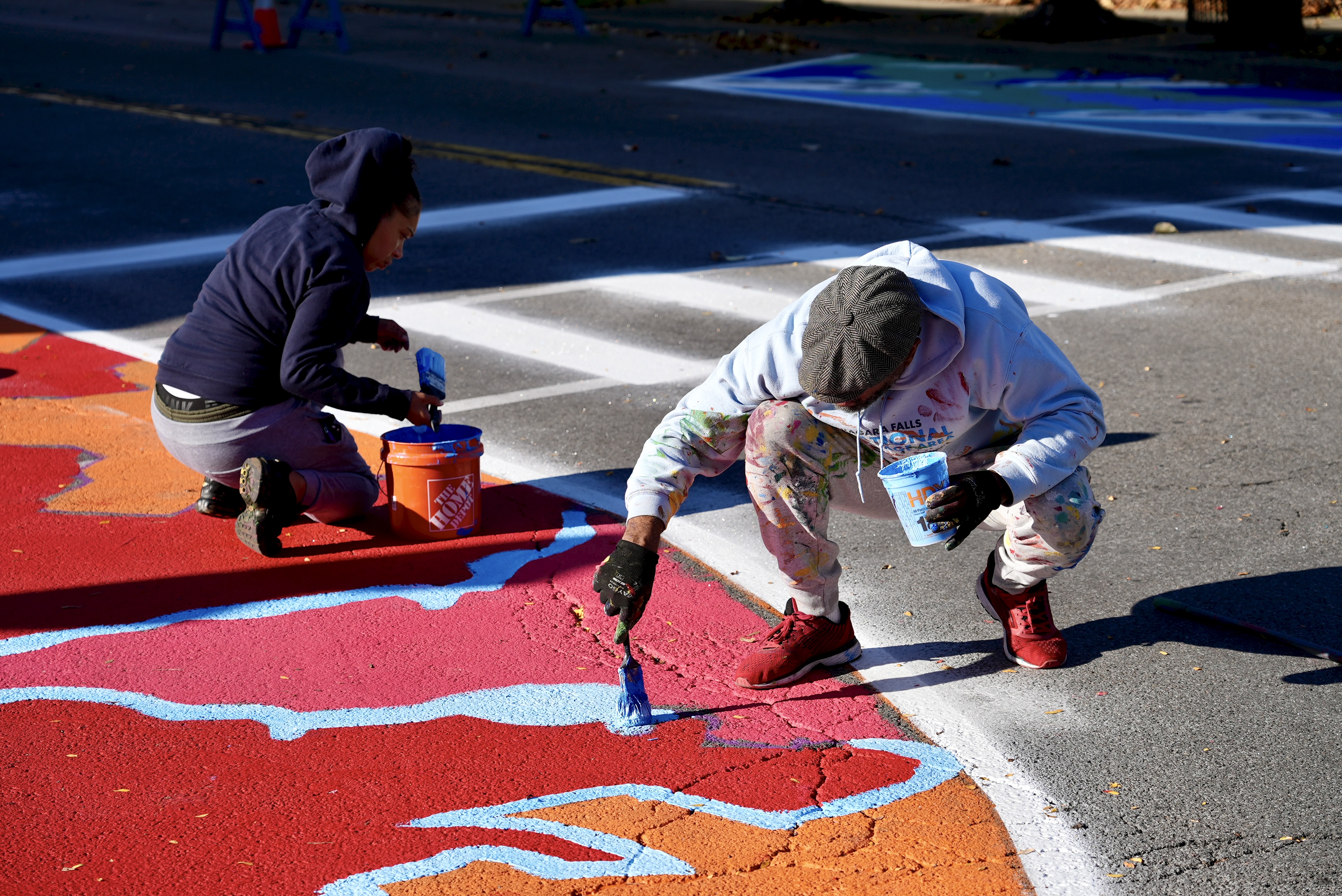
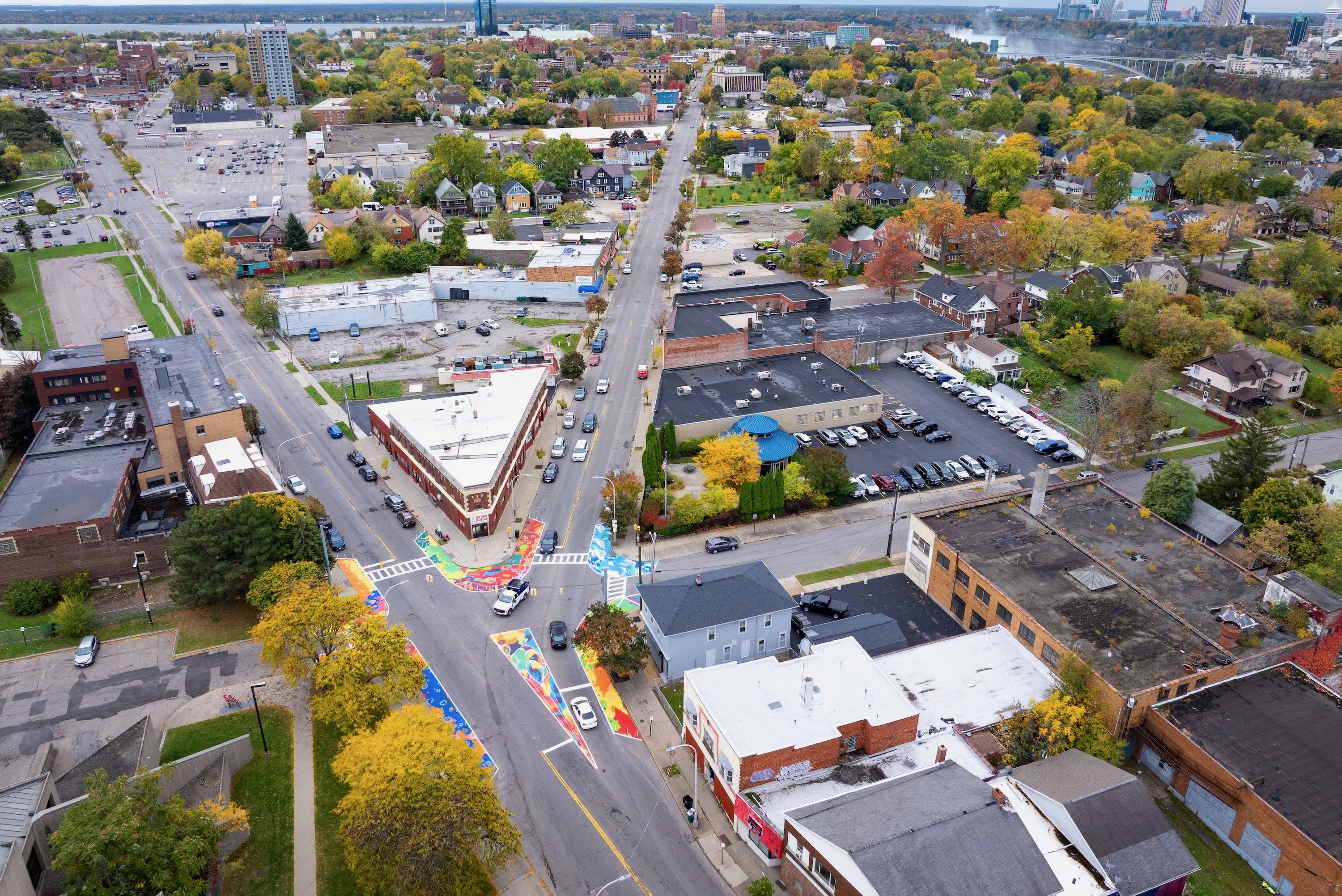
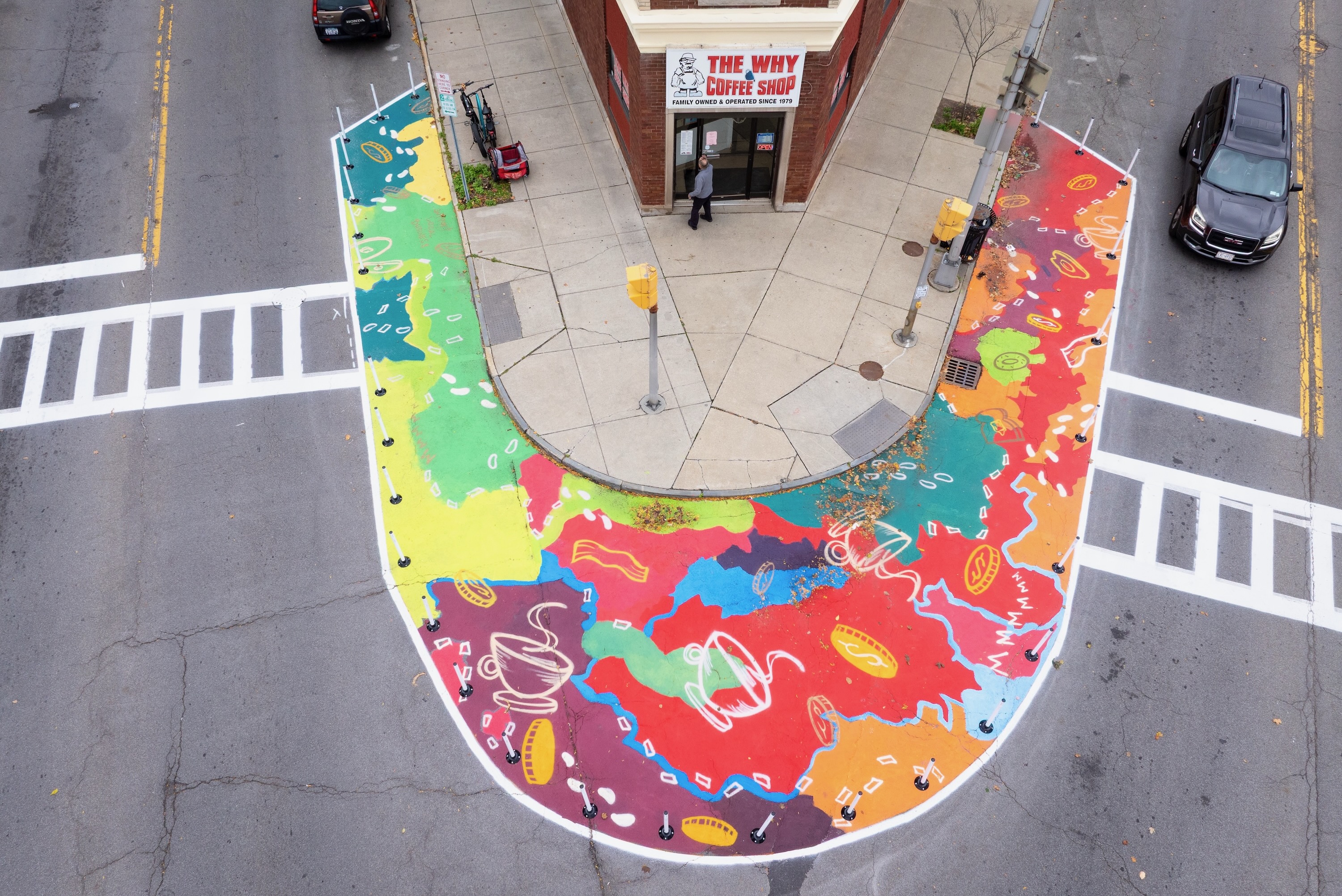
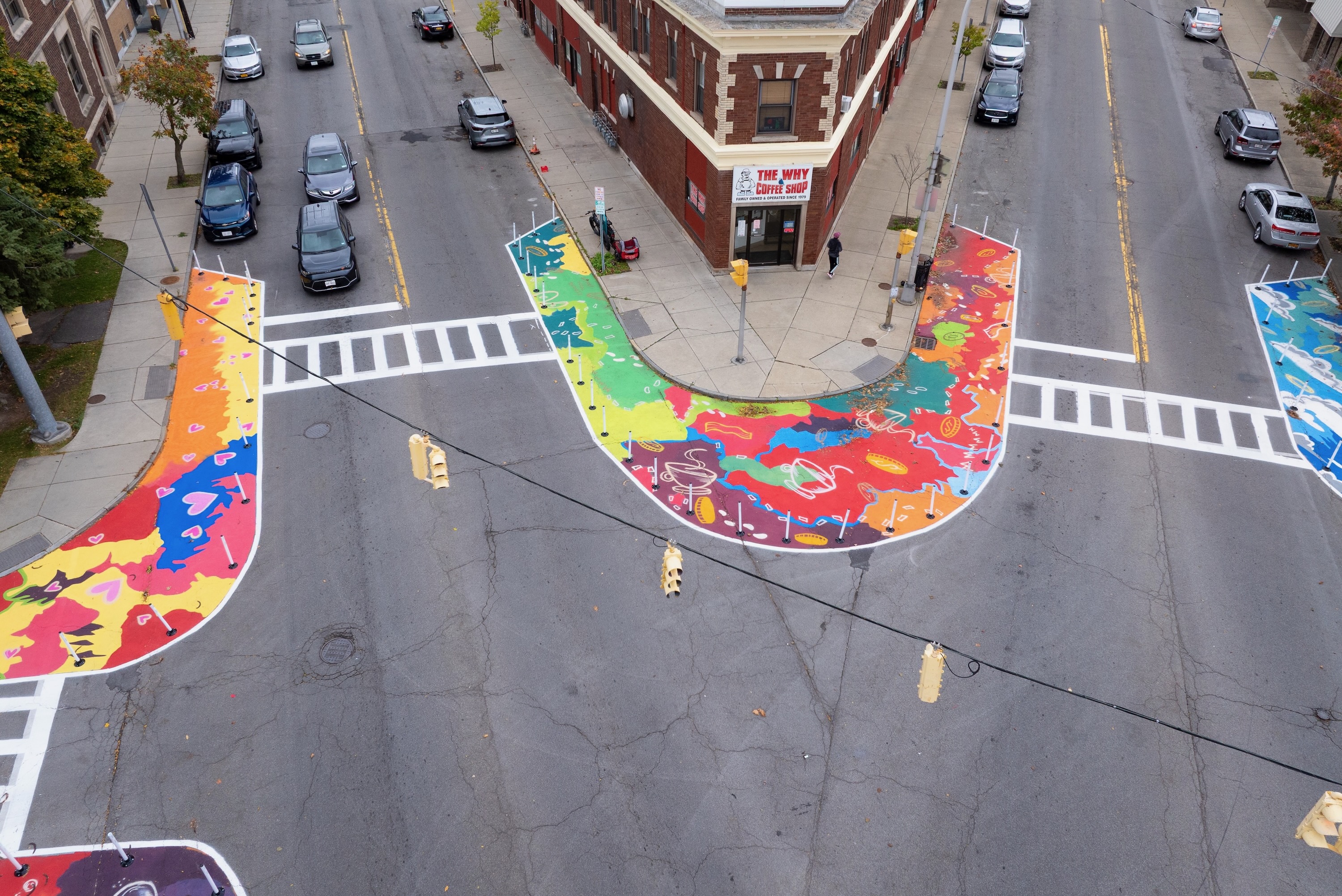
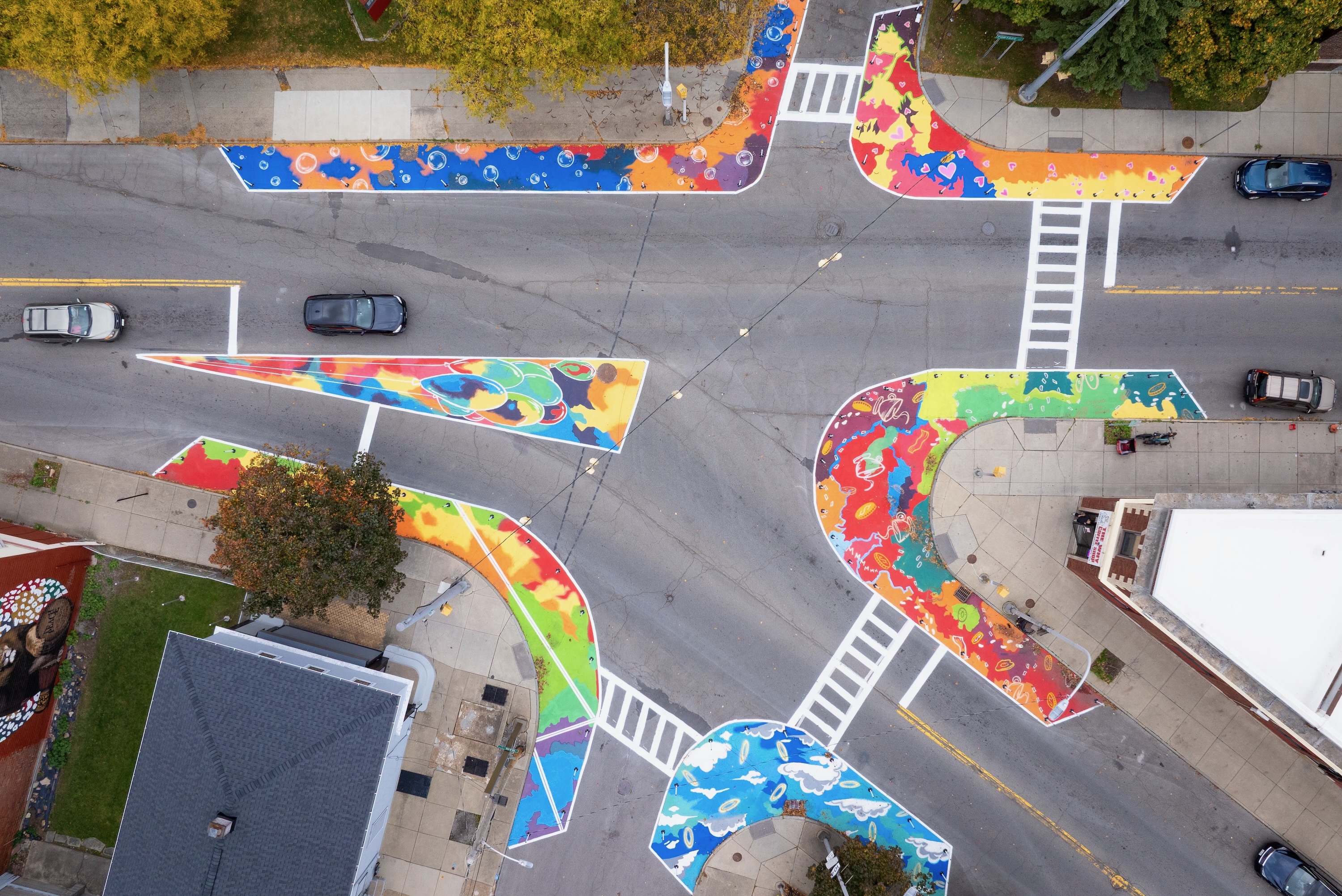
A major crossing point in the North End of Niagara Falls, a five-way intersection was reimagined to increase pedestrian safety, lower dangerous high speeds, and improve the overall wellbeing of the neighborhood. Vehicle lanes were narrowed, forcing traffic to slow as they approached the intersection. Crosswalks were installed across four lanes, where before there were no crosswalks, with shortened crossing distances to improved pedestrian safety.
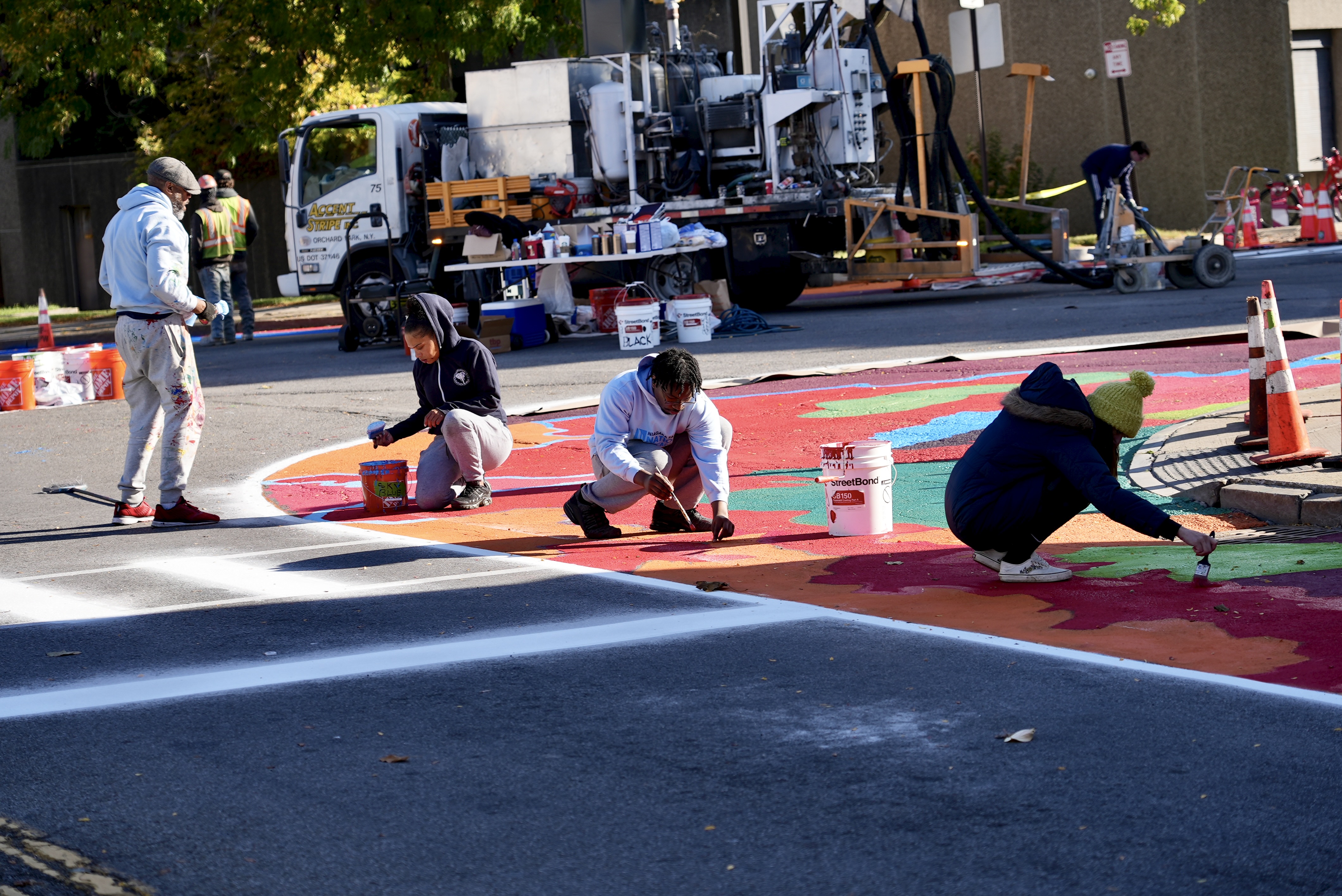
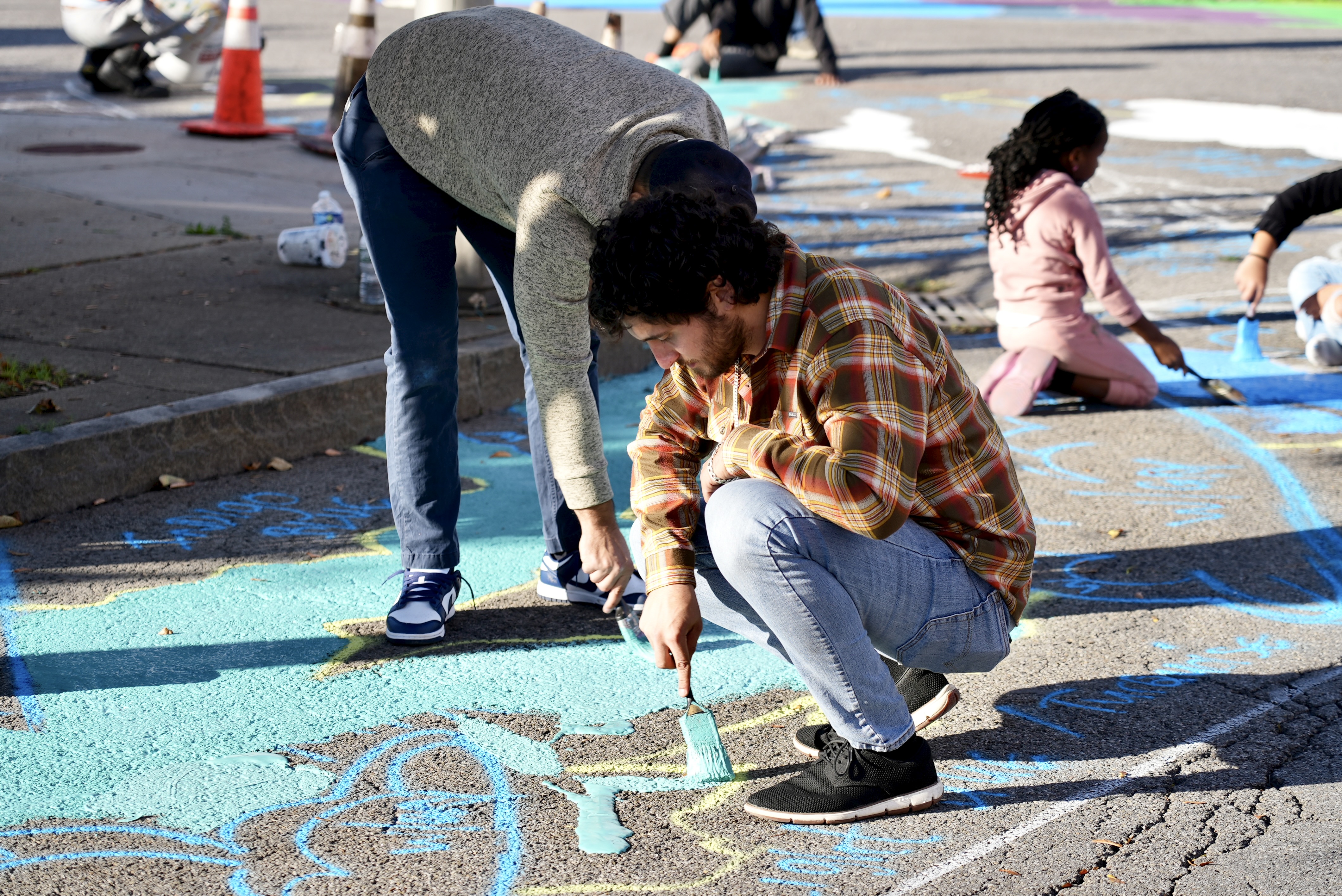
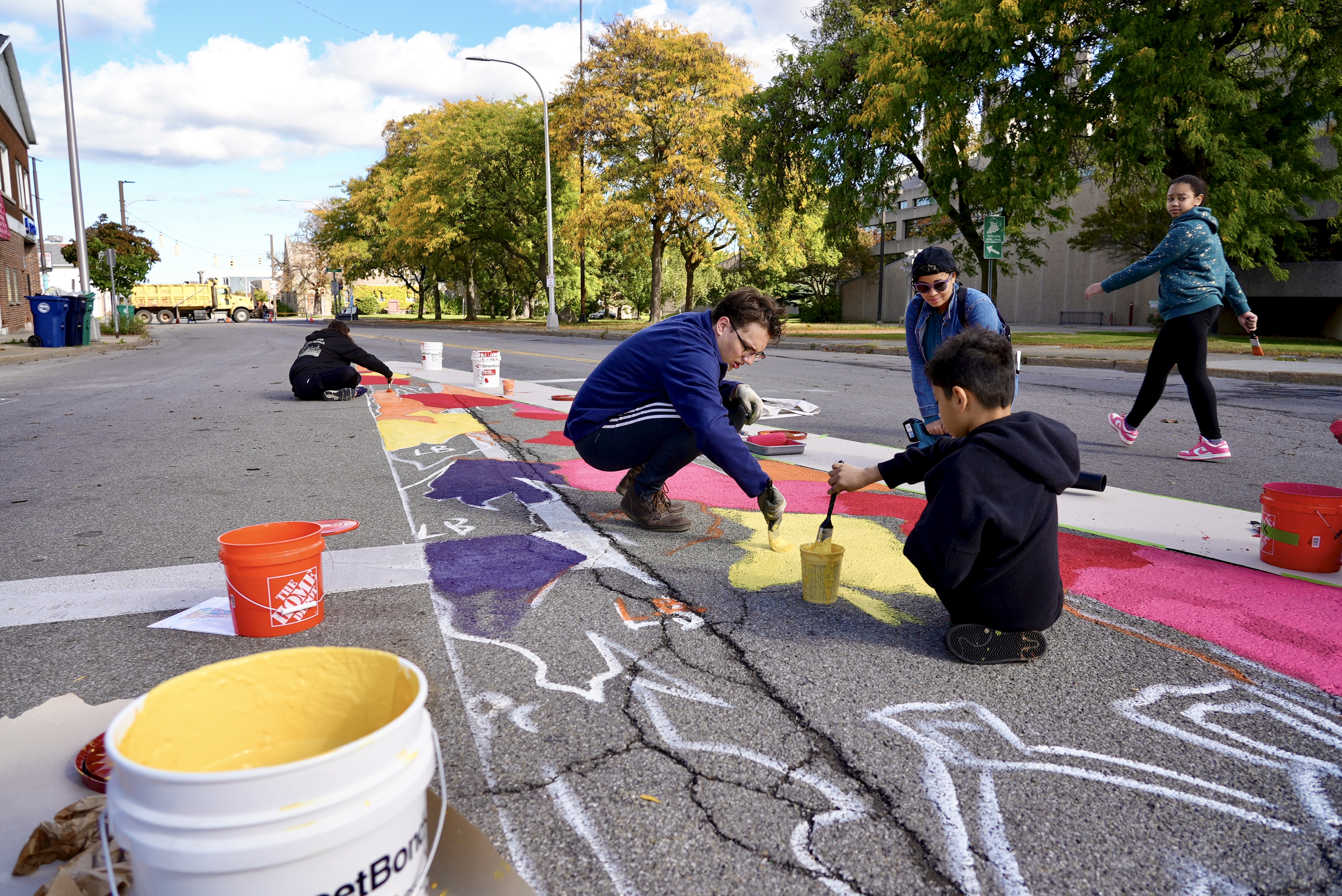
The curb extensions and center roadway mural, totaling just over 4,500 square feet and defined by plastic traffic bollards, were designed and painted under the direction of Tyshaun Tyson, the Artist Development Manager for the Niagara Falls National Heritage Area, with the help of 10 volunteers and 8 National Heritage Area staff members over the course of three days. The design was inspired by movement and the energy found in everyday urban spaces, and merges creativity with the natural flow of the neighborhood.
Best Practice Highlight: Building a sense of community ownership
The Niagara Falls National Heritage Area is an organization deeply rooted in the local community, and as such, it was important that the community take part in creating the artwork. Students from nearby Abate Elementary assisted with the installation on all three days, and nearby local business owners assisted each evening. By involving the community members who would utilize this intersection the most, they became invested in the outcome of the project and in further creating a safer and more connected neighborhood.
- 45%-53% decrease in average vehicle speed
- Recorded high speeds through intersection dropped an average of 10
miles per hour - 12% increase in pedestrian foot traffic
“We are thankful for this opportunity to collaborate with Bloomberg Philanthropies to bring such an important project to our city. As the first of its kind in our municipality, we are proud to set a new standard of pedestrian-centered traffic safety for our citizenry.”
Saladin Allah, Public Projects Coordinator
Use the slider to see the transformation
Press
‘A Big Improvement’: Niagara Falls intersection gets colorful makeover to improve traffic safety, (WKBW Channel 7, October 8, 2025)
Asphalt Art project coming to busy Niagara Falls intersection, (WGRZ Channel 2, October 1, 2025)
For inspiration and tips for the creation of art on roadways and public places, download the Bloomberg Associates Asphalt Art Guide which features successful plaza and roadway art activations around the world, as well as key steps for developing such projects.

Detroit, Michigan
Carving out calm at a chaotic intersection
The Project
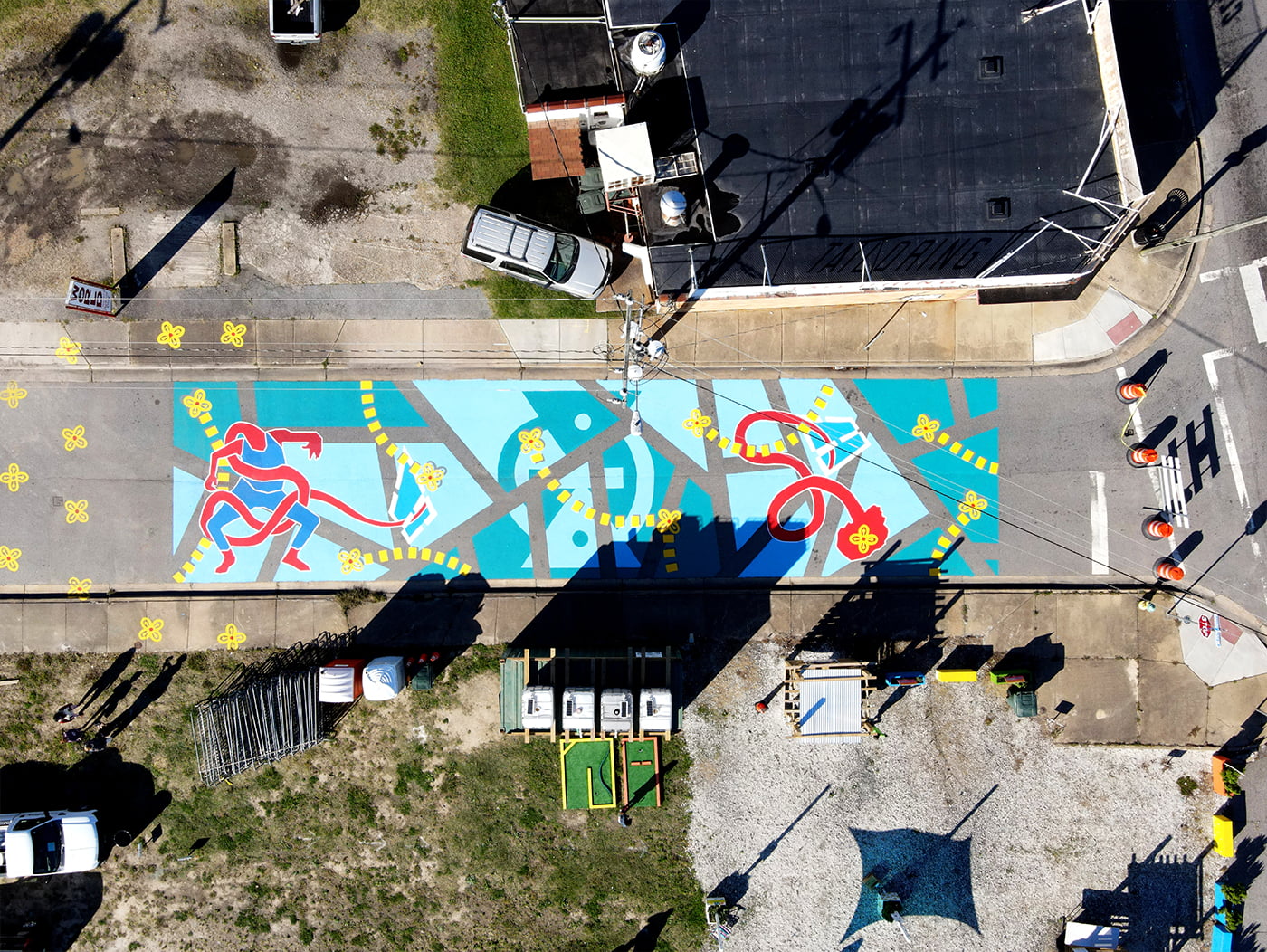
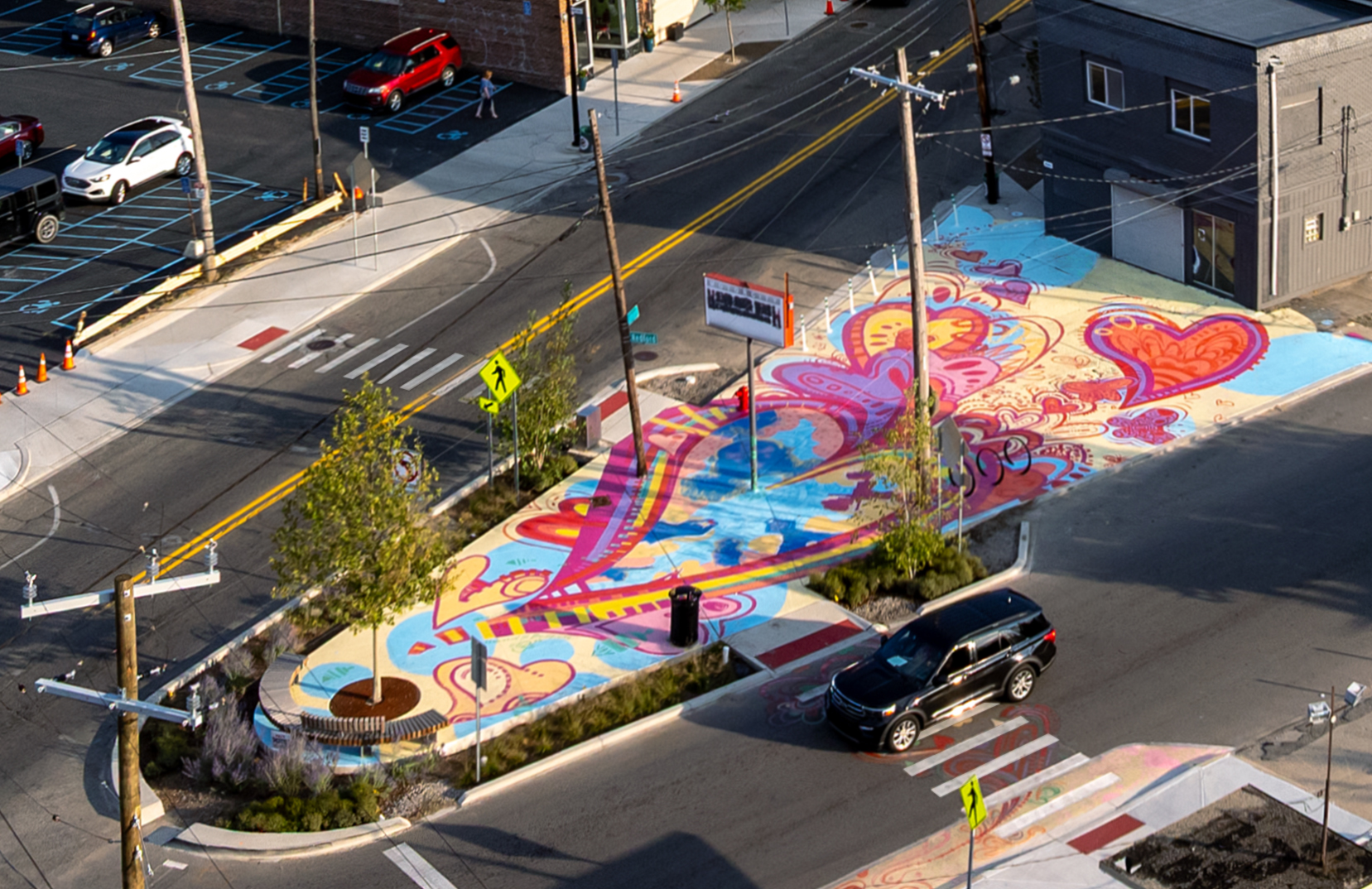
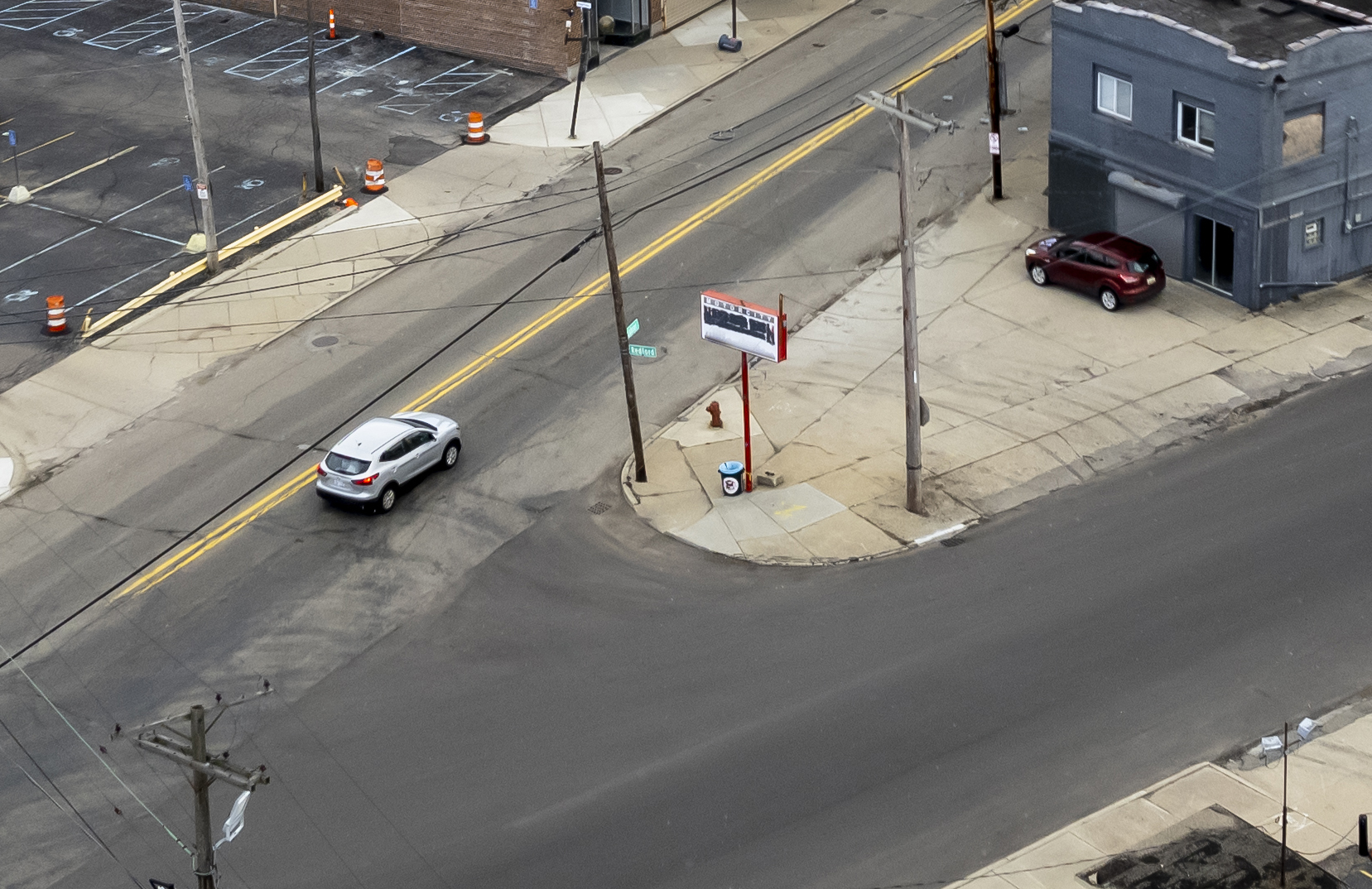
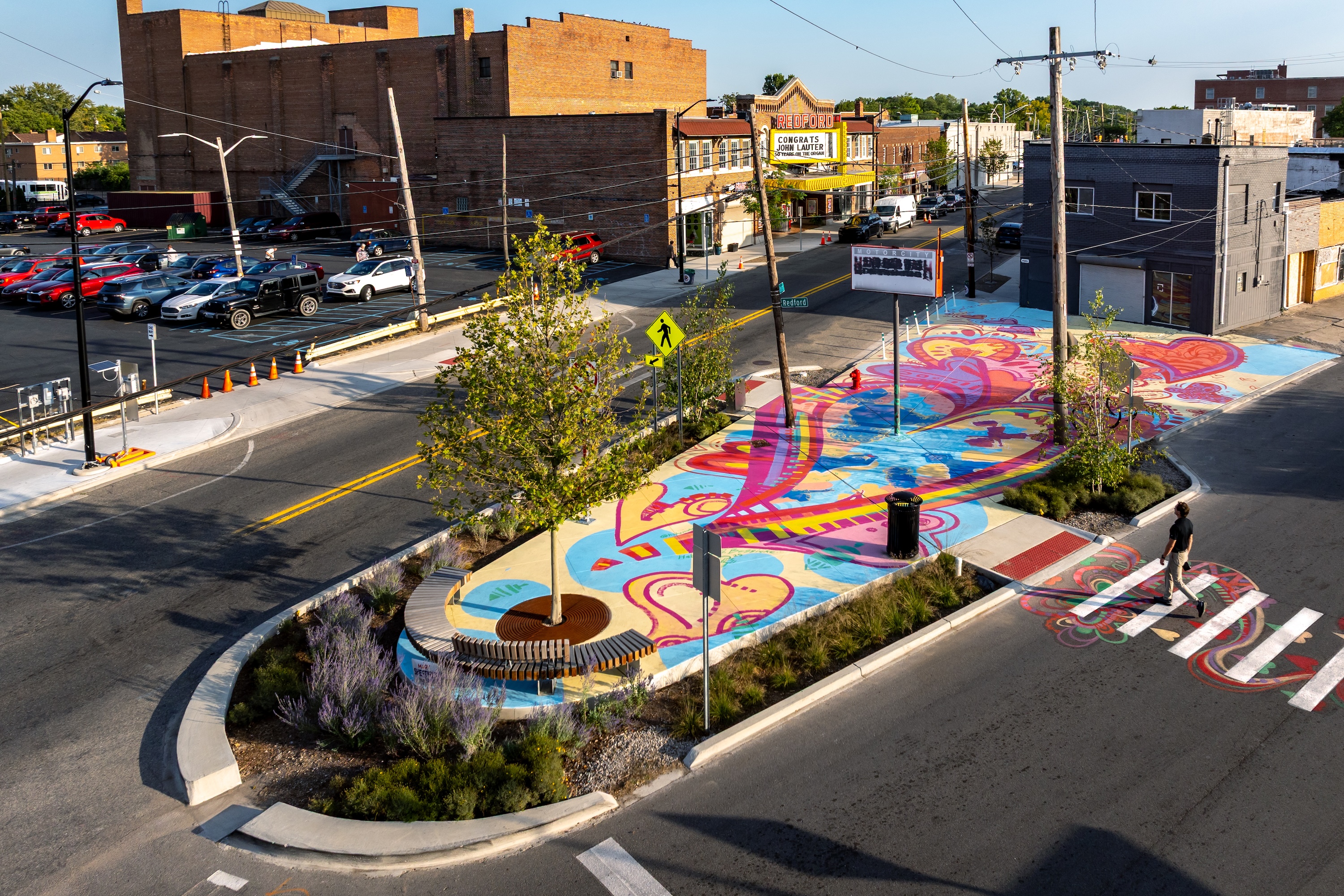
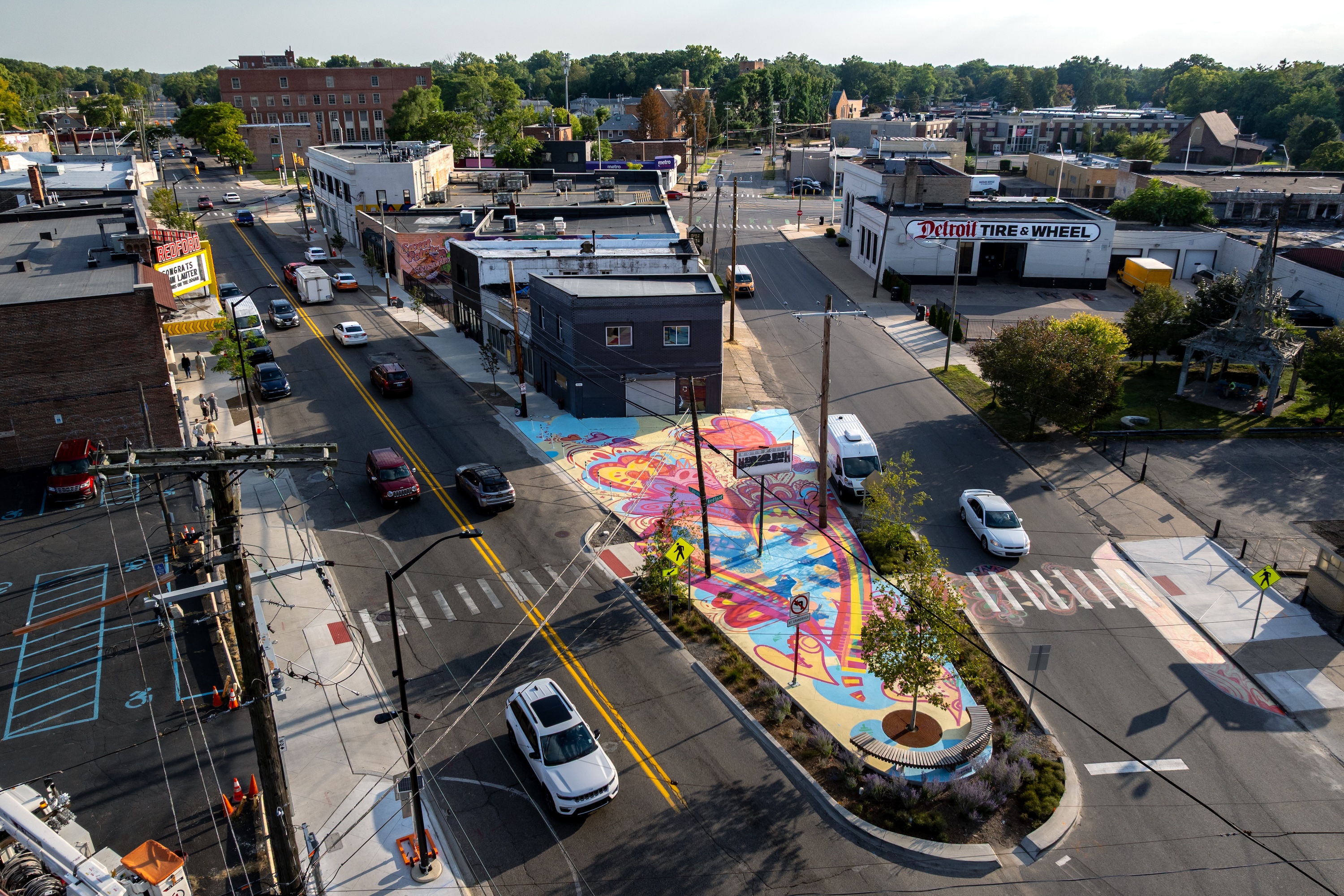
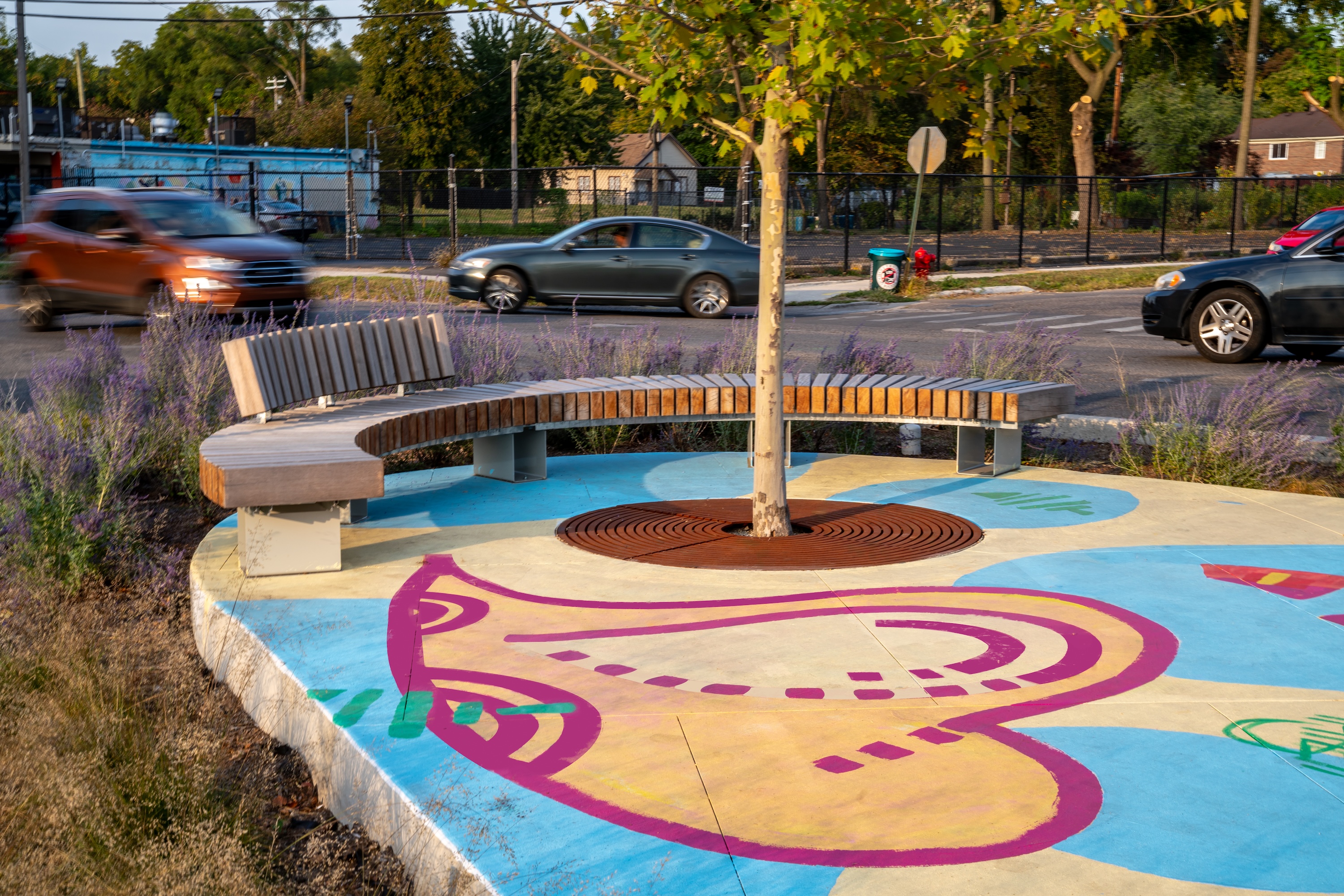
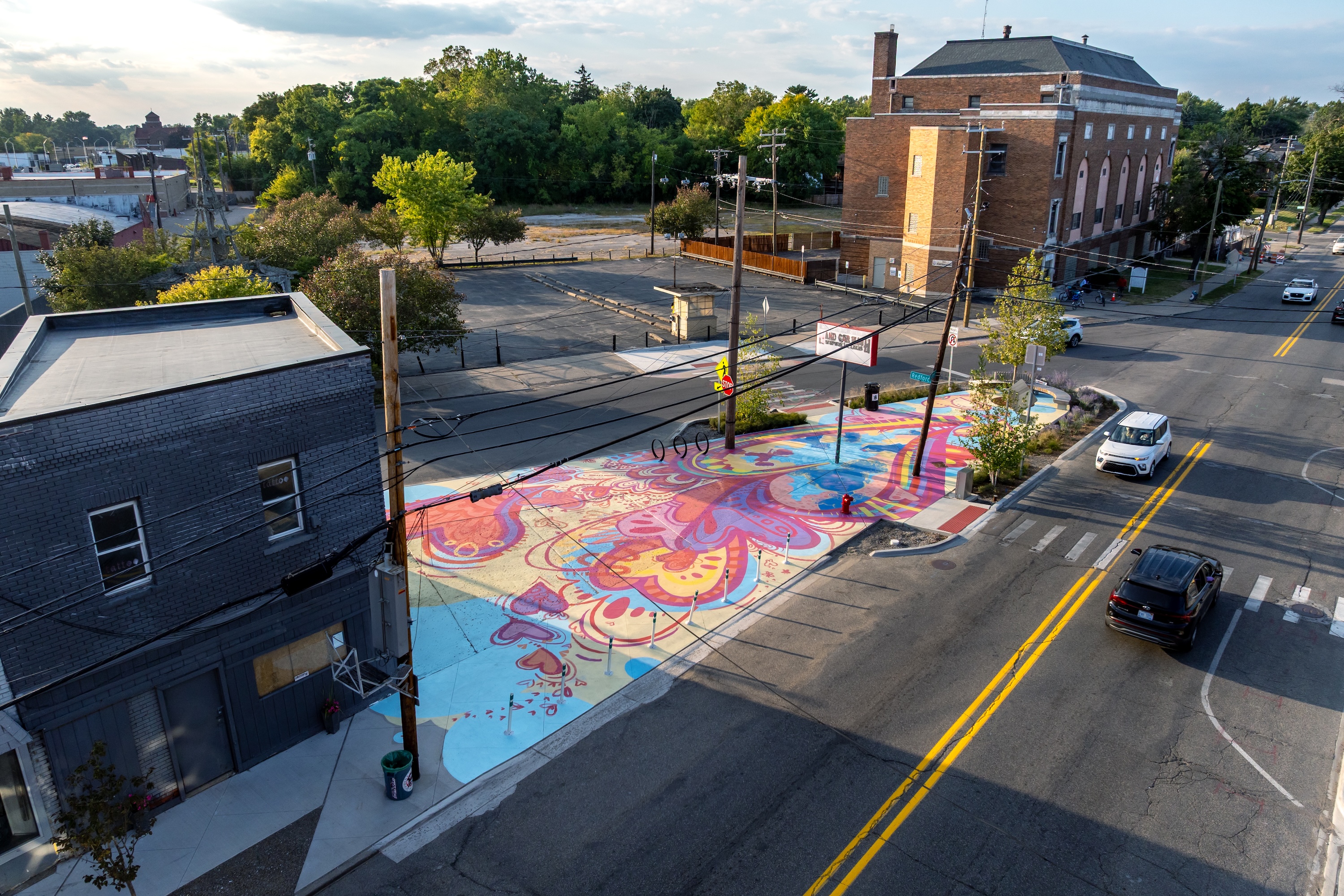
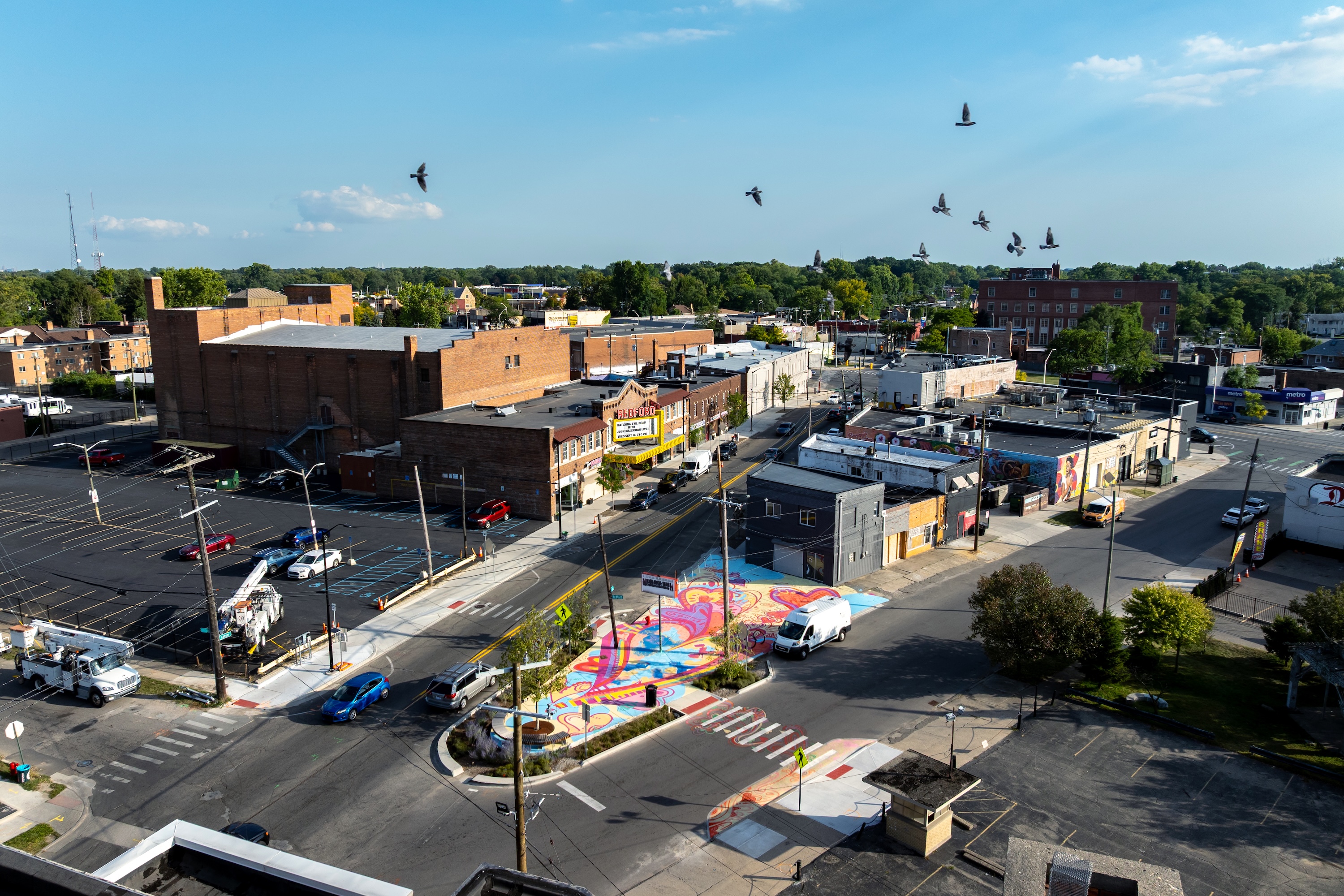
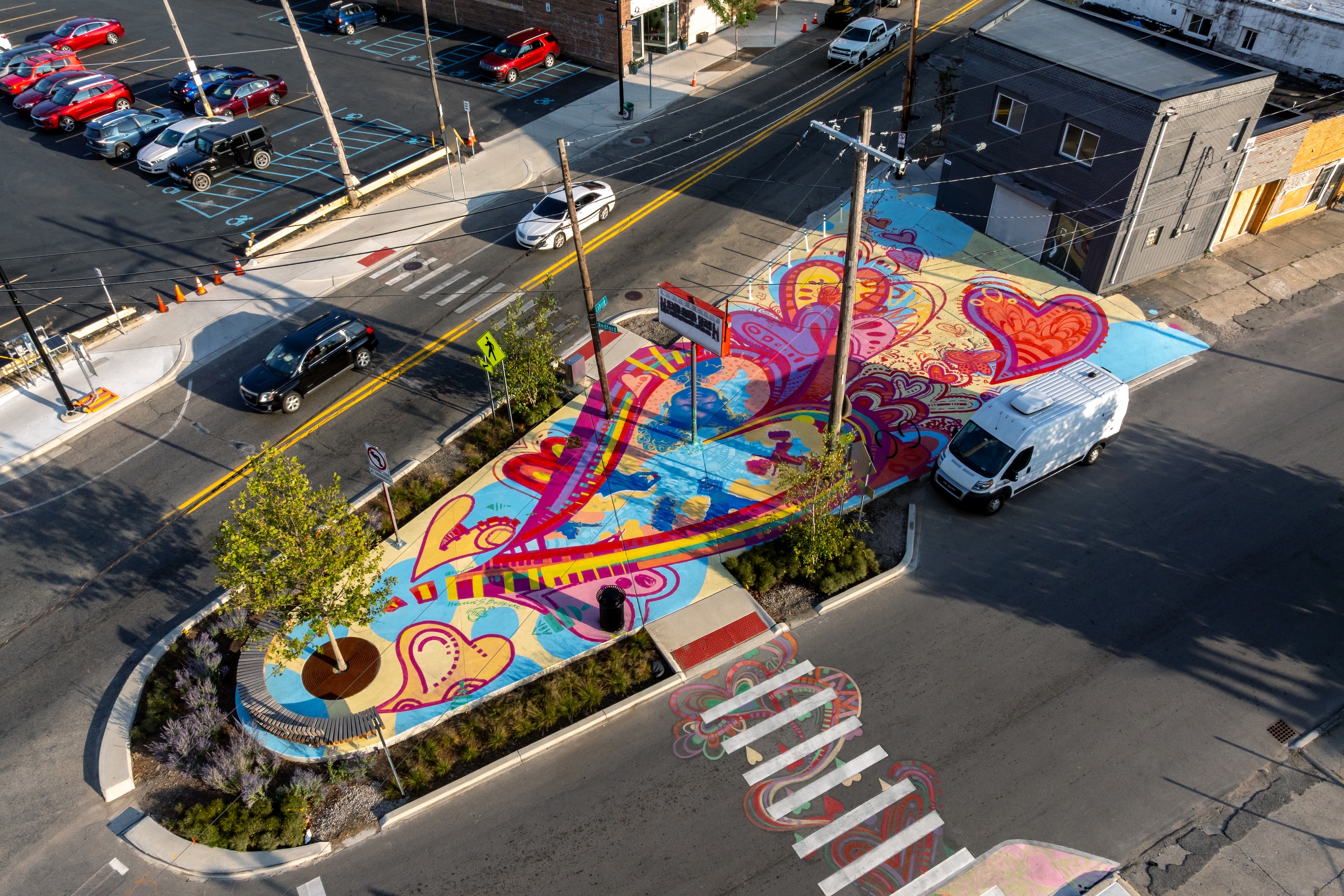
The Leading with Love mural at the Lahser Triangle in Northwest Detroit is the final touch on a community-based safety and walkability project years in the making. With the Redford Theater, the Artist Village, Detroit Blight Busters and long-time businesses like Sweet Potato Sensations, the Old Redford commercial district is a hub for community conversations, arts and resilience. At its heart, the angled intersection of Redford St with Lahser Rd, high vehicle counts and excessive speeding created an unsafe pedestrian environment in an otherwise walkable district. In 2020, during a local public art planning process, residents prioritized this intersection for a mural plaza that would create new pedestrian space, shorten crossing distances and slow car traffic. Winning an Asphalt Art Initiative grant allowed the City to secure additional funds to install a grade-separated plaza and landscaping in advance of the final mural. Per the Old Redford Public Art plan, an artist advisory group led by the Old Redford Business Association selected the artist and design. The project is a tribute to the power of community building when leading with love.
- 40% reduction in crossing distance
- 2 new crosswalks
- 1,700 square feet of roadway reclaimed for pedestrians
“The streetscape is now transformed into a place where everyone can gather, fostering a strong sense of togetherness and inclusivity.”
Augusta Morrison, Program Director, Sidewalk Detroit
Use the slider to see the transformation
Press
Town Hall Engages Old Redford Residents to Have Voice in Public Art, (Model D, July 2020)
For inspiration and tips for the creation of art on roadways and public places, download the Bloomberg Associates Asphalt Art Guide which features successful plaza and roadway art activations around the world, as well as key steps for developing such projects.

Oaxaca, Mexico
Connecting bus station to barrio with Oaxacan art
The Project
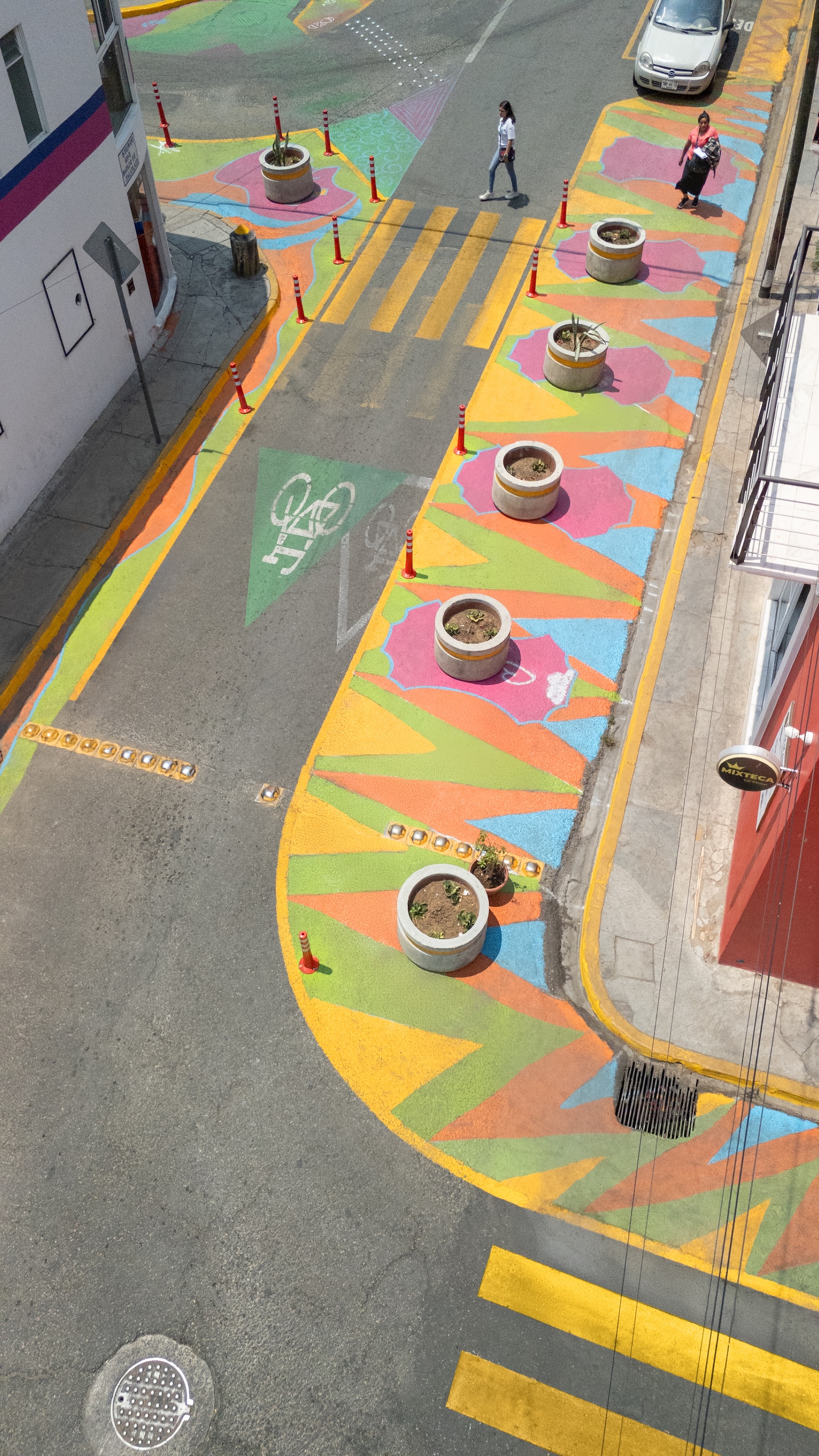
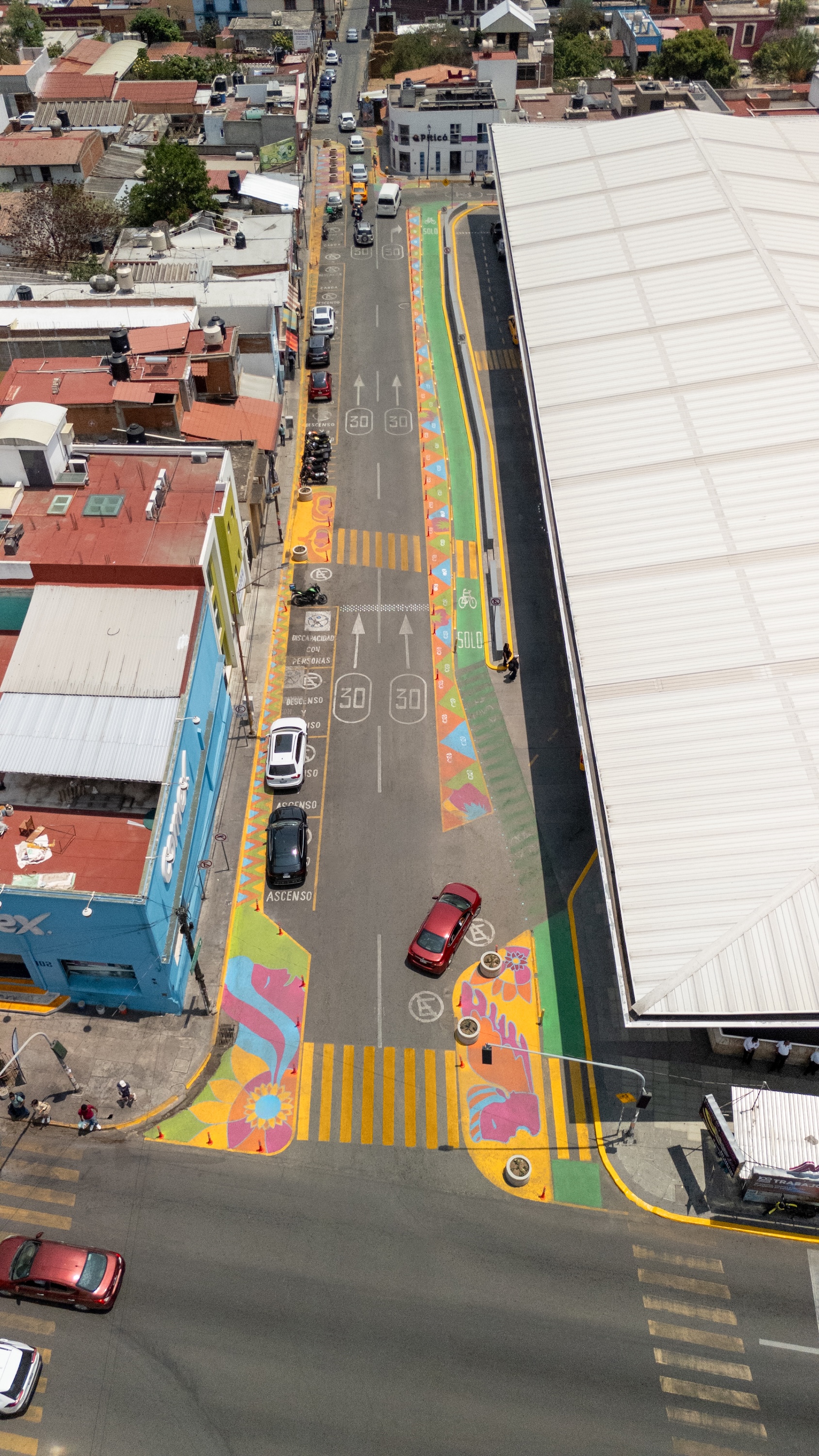
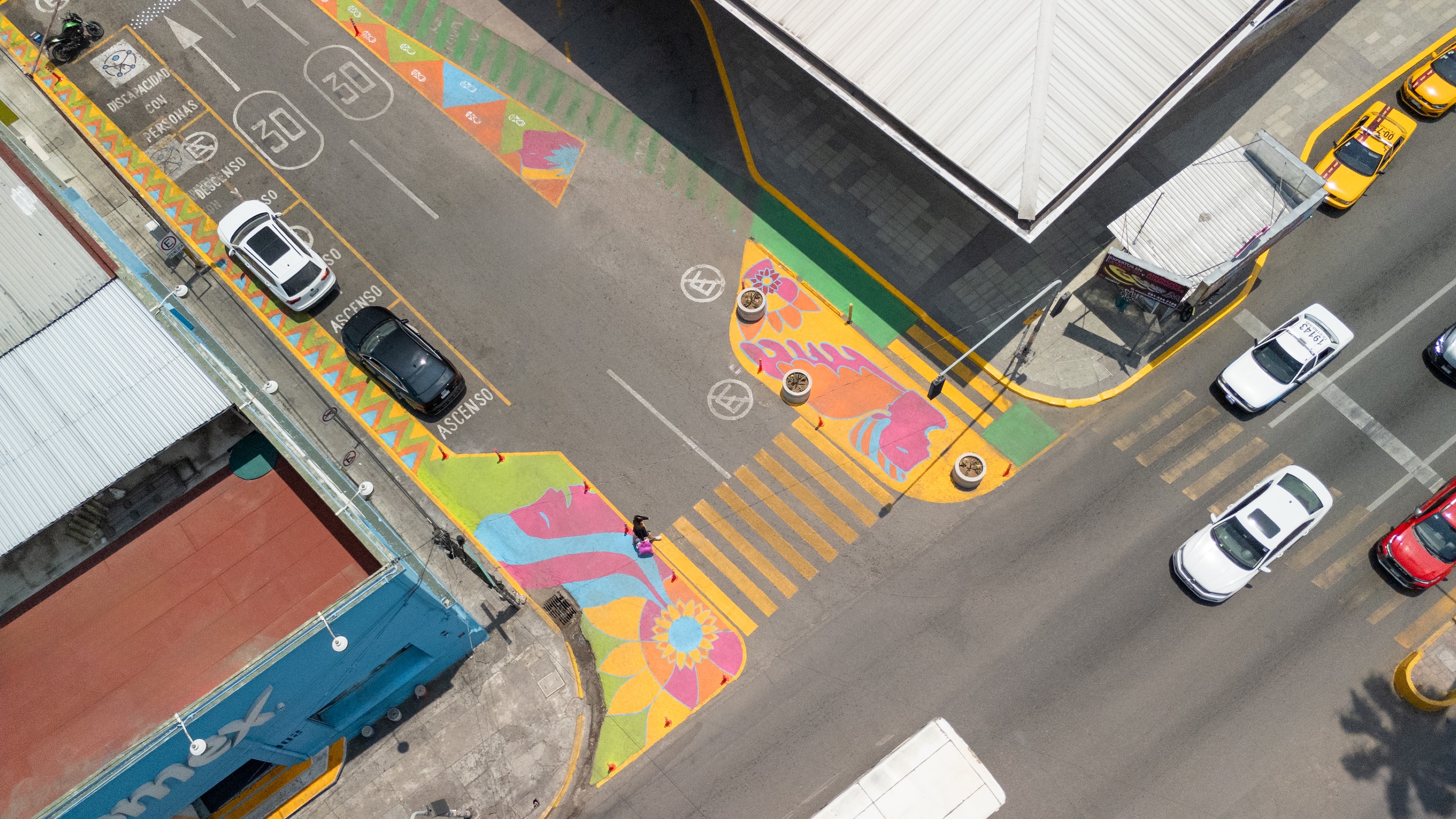
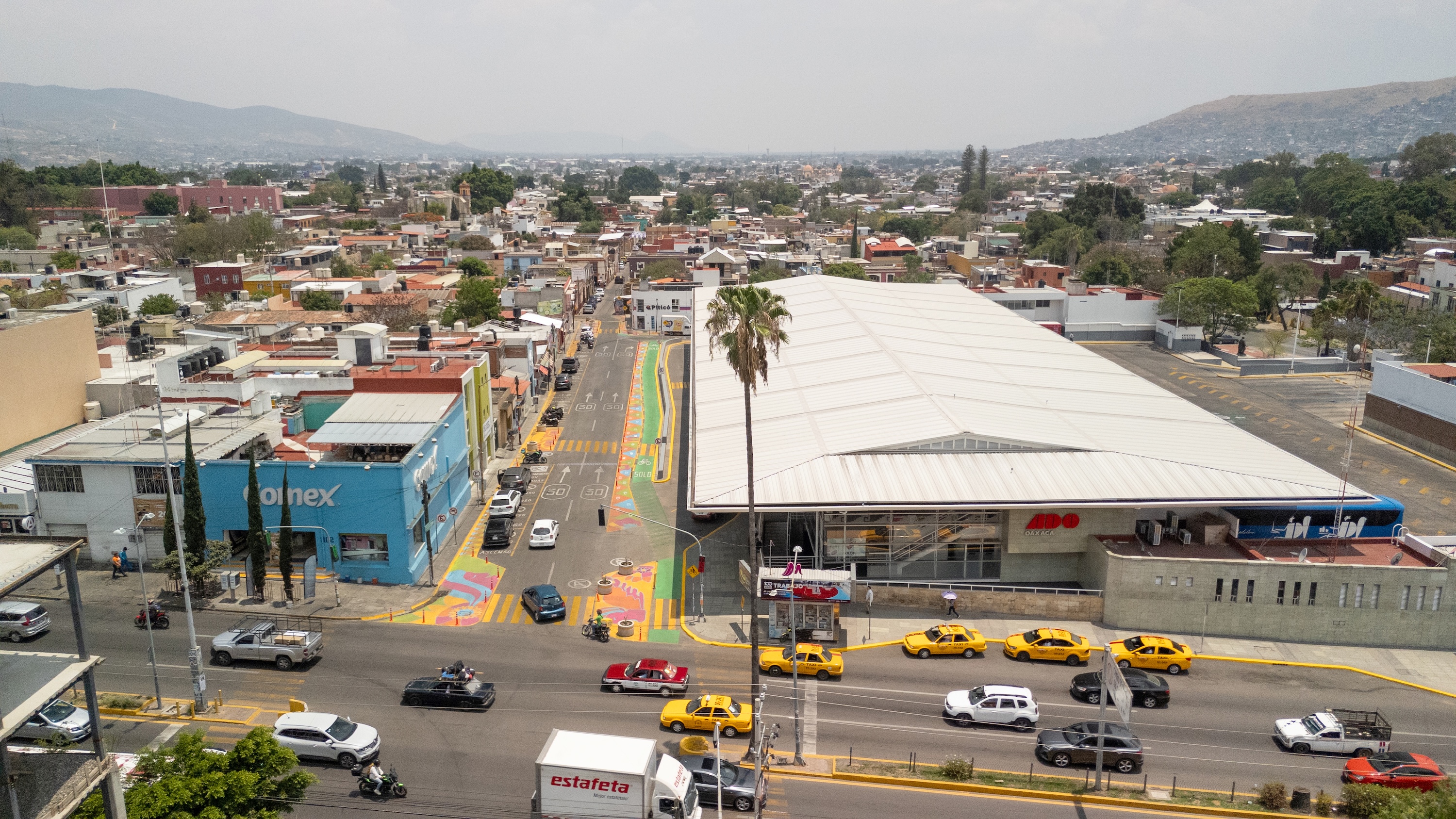
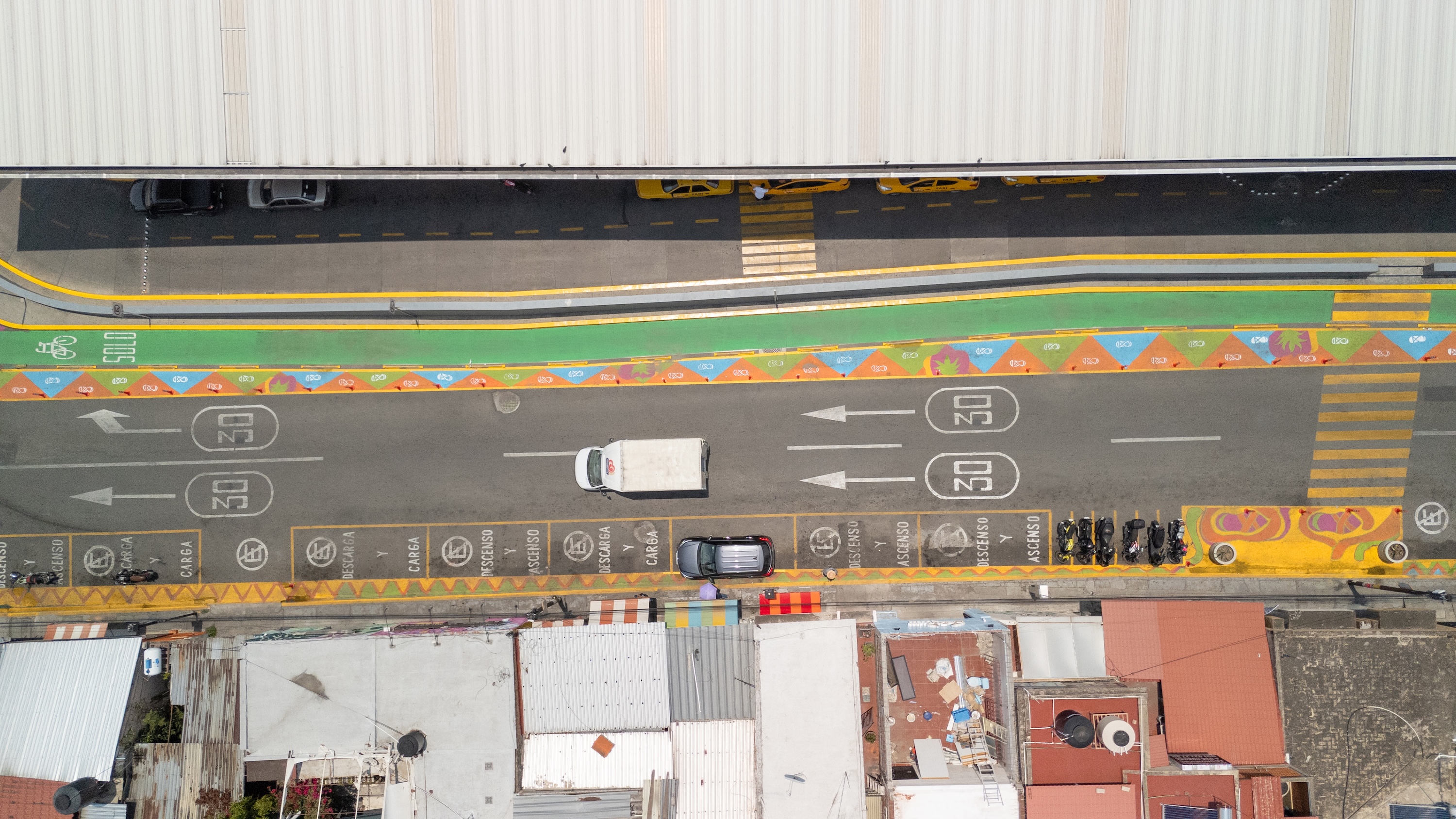
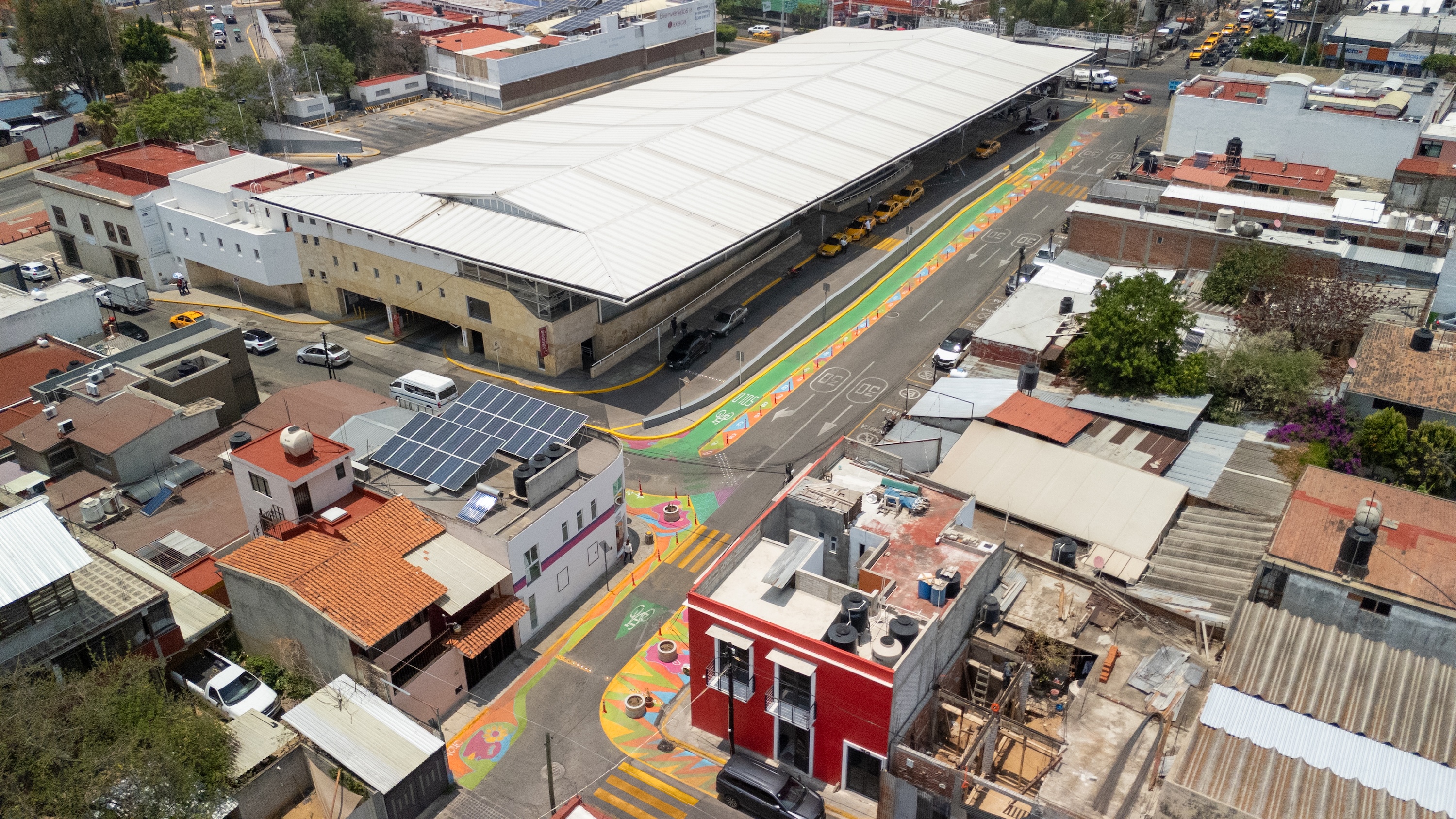
To address safety challenges for pedestrians traveling between Oaxaca’s Central de Buses and the historic Jalatlaco neighborhood, the City of Oaxaca implemented an Asphalt Art project on Calle 5 de Mayo—an area with heavy foot traffic, narrow sidewalks, and fast-moving vehicles. The intervention was part of Oaxaca Camina, the city’s active mobility plan to improve safety, accessibility, and inclusion for those walking. By reclaiming street space for pedestrians, narrowing vehicle lanes, and discouraging on-street parking, the project sought to slow traffic and create a safer, more welcoming gateway between the bus station and the newly designated Barrio Mágico of Jalatlaco.
Local artists and residents collaborated to transform the street with colorful designs inspired by Oaxaca’s cultural heritage. The artwork incorporates motifs of alebrijes—the fantastical creatures emblematic of the state—and references to the traditional craft of saddlery once practiced in Jalatlaco, with the silhouette of huaraches (handmade sandals) integrated into the pedestrian paths. The vibrant colors evoke both the imaginative spirit of Oaxacan art and the surrounding vegetation, turning a once hazardous corridor into a lively, community-driven celebration of local identity and safer urban design.
Use the slider to see the transformation


This intervention not only beautifies one of the most emblematic streets of our city, it is also part of a public policy focused on improving pedestrian and bicycle infrastructure, promoting sustainable, safe mobility with a focus on inclusion and universal accessibility.
Art and tactical urbanism thus become tools to recover spaces, invite you to walk, pedal and enjoy our streets from a human and close perspective. Because the city belongs to everyone.
Yesenia Nolasco Ramírez, Secretary of Mobility of the State of Oaxaca
 |
 |
Press
Inauguran intervención “Arte en Asfalto” en el Barrio de Jalatlaco (Online, 8 de abril de 2025)
Inauguran intervención “Arte en asfalto” en el emblemático Barrio de Jalatlaco (Online, 9 de abril de 2025)
For inspiration and tips for the creation of art on roadways and public places, download the Bloomberg Associates Asphalt Art Guide which features successful plaza and roadway art activations around the world, as well as key steps for developing such projects.

Baltimore, MD
Surrounding a school with safe crossings
The Project
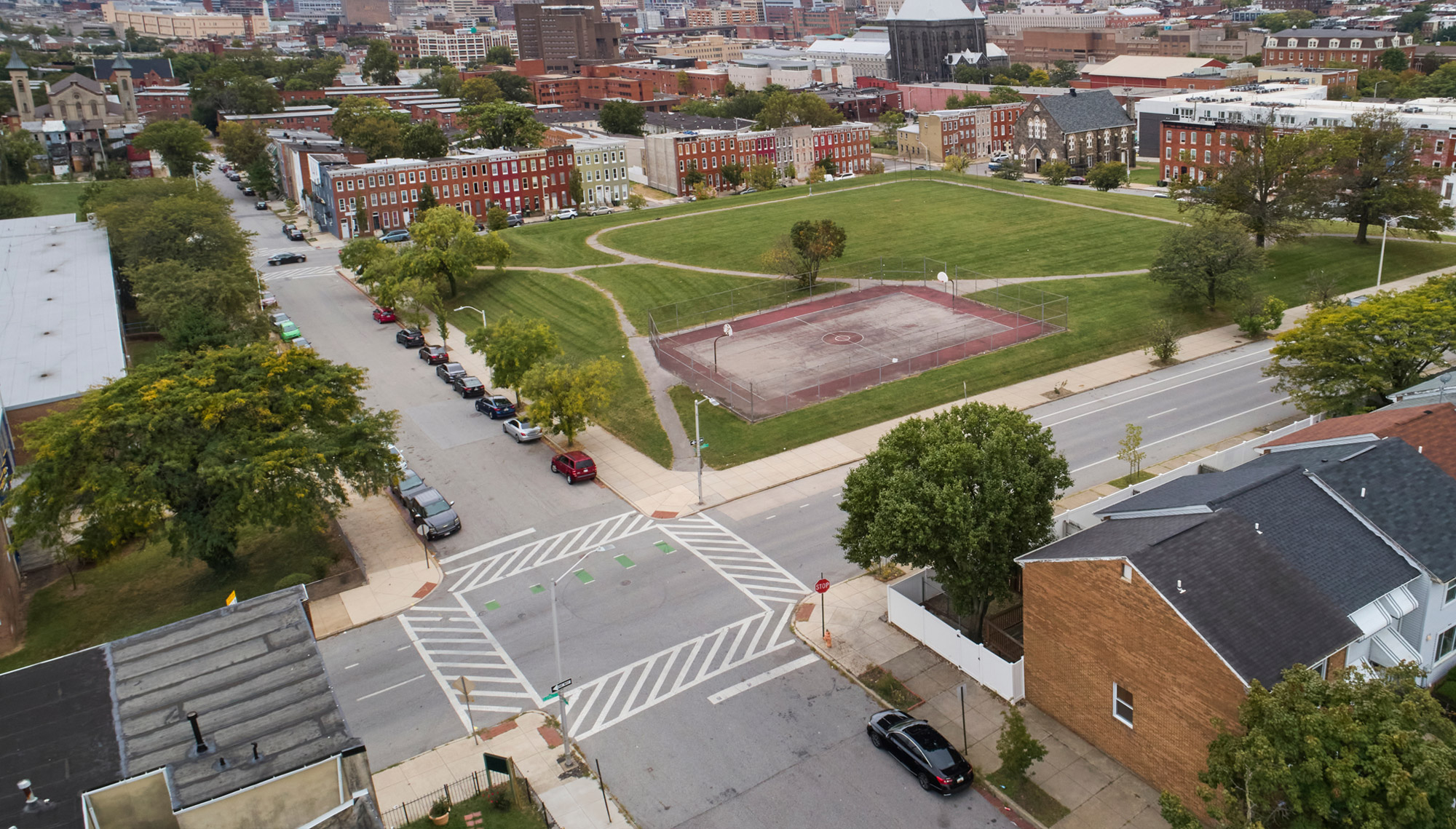
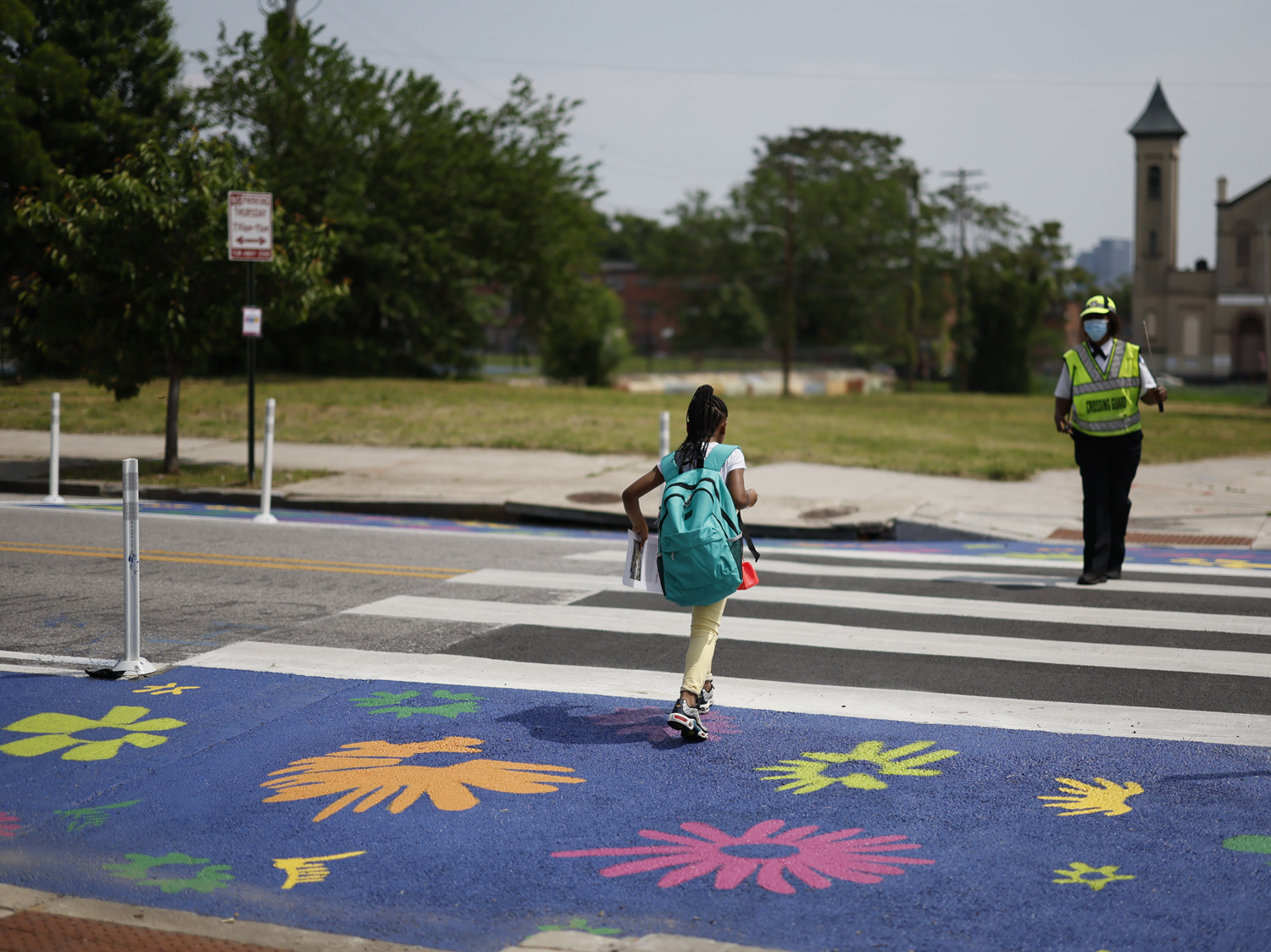
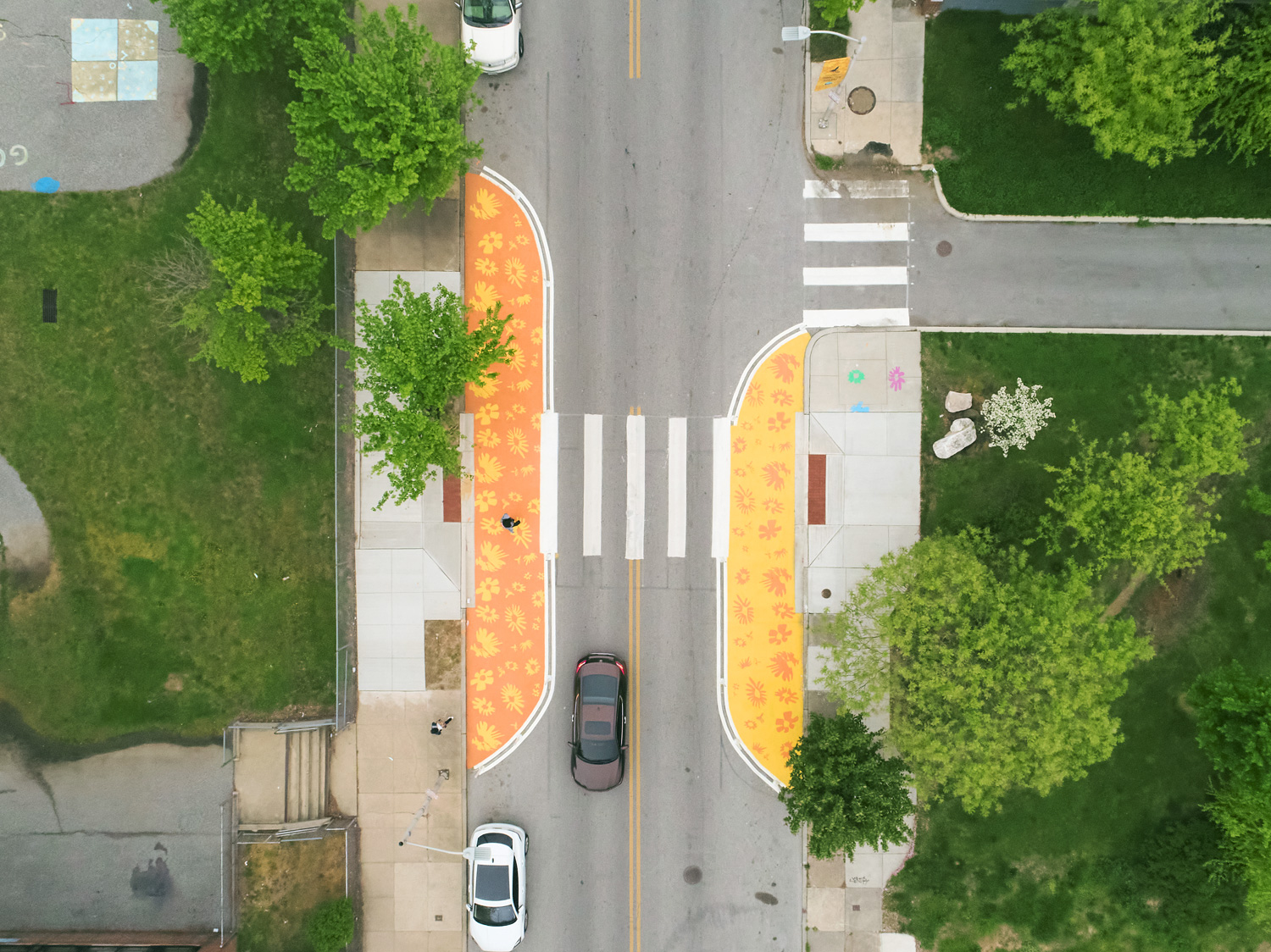
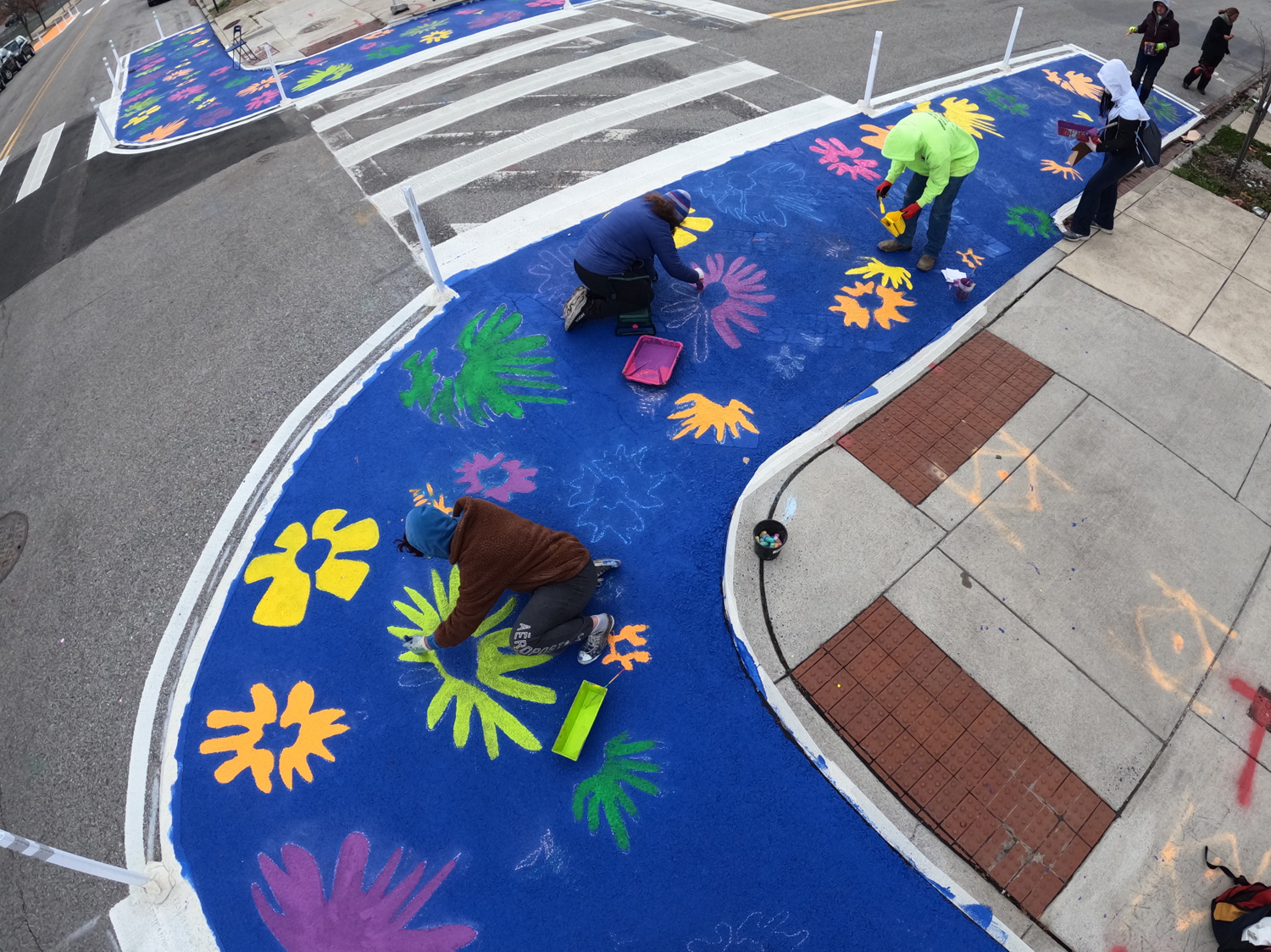
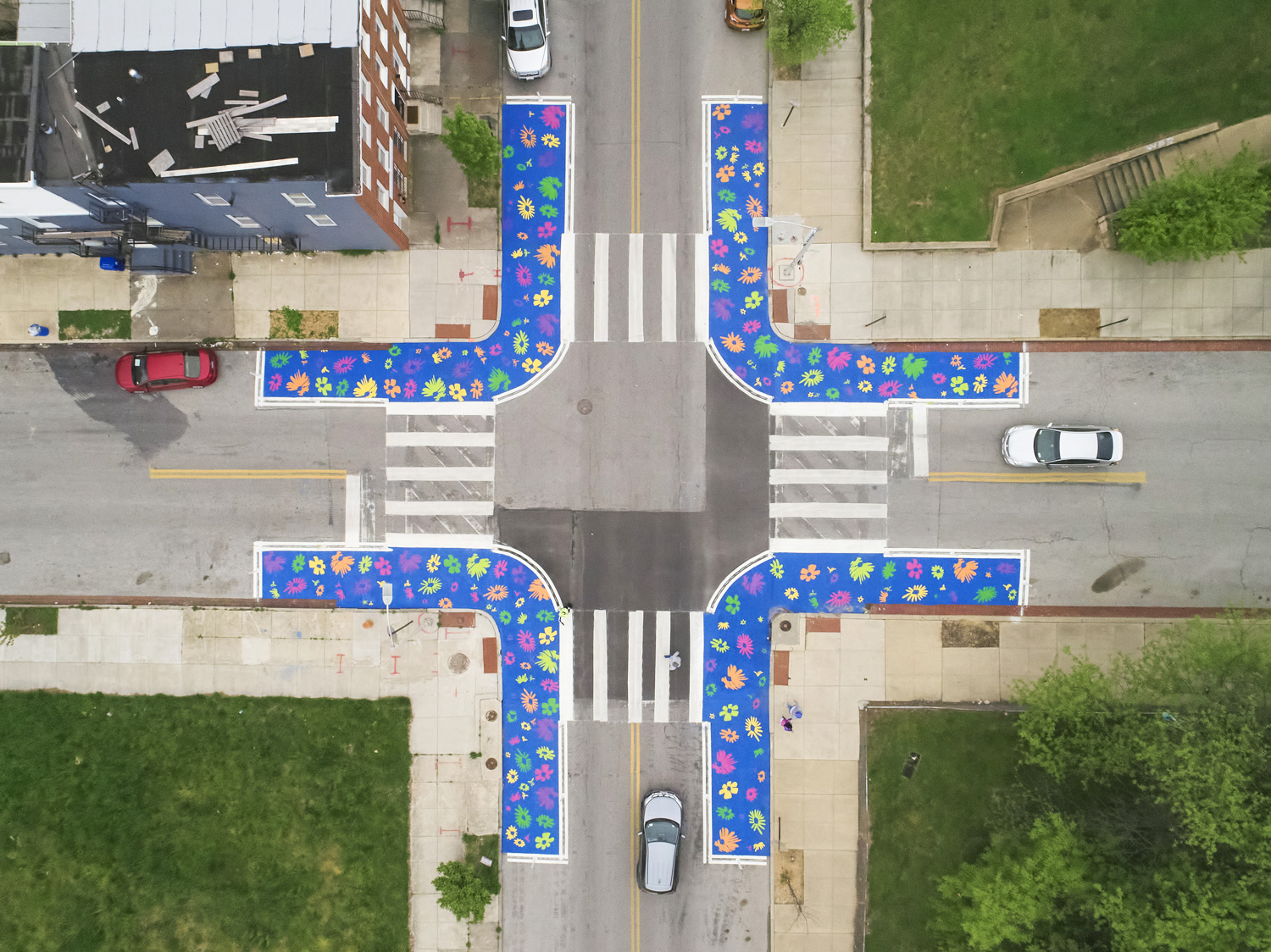
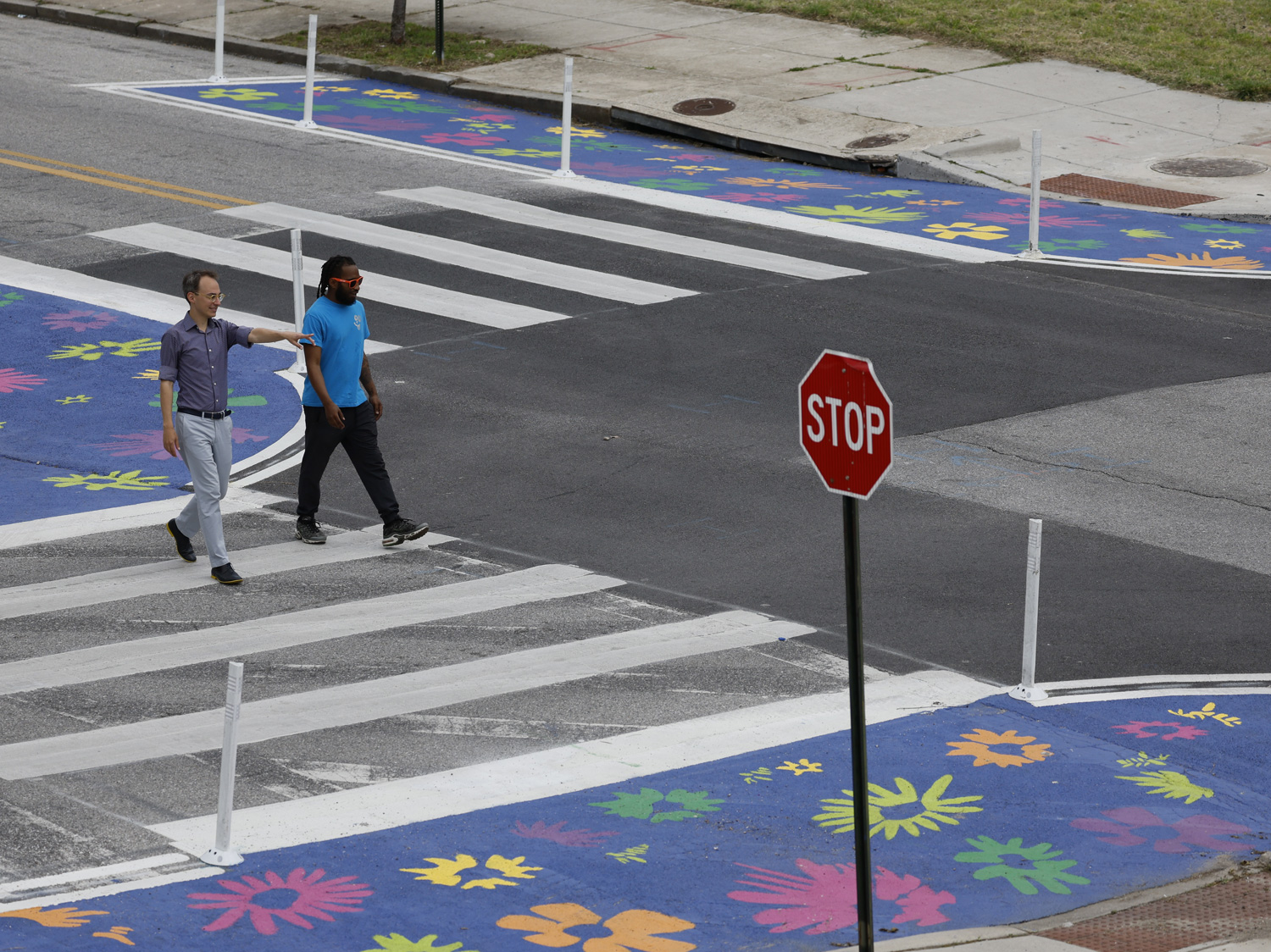
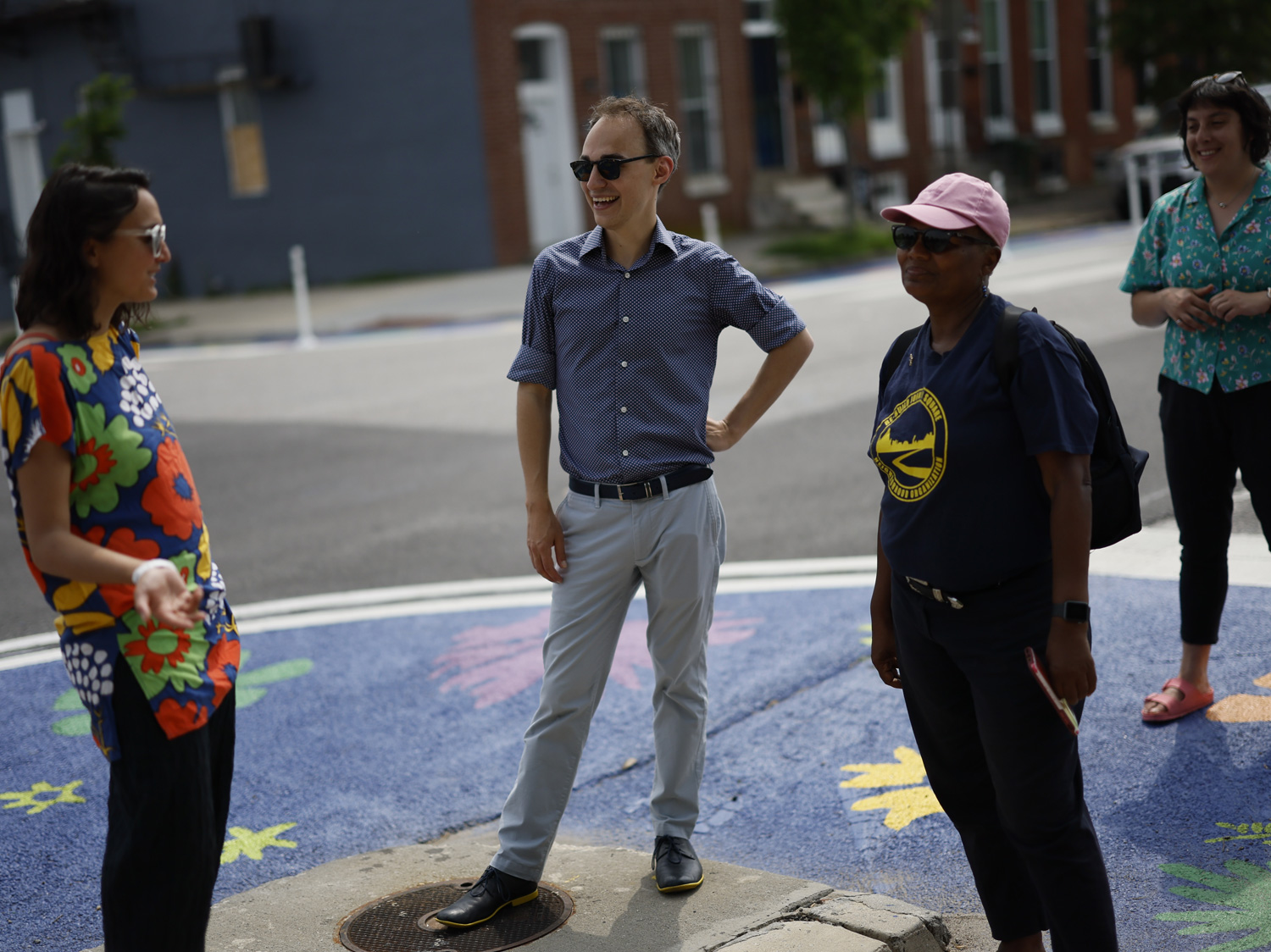
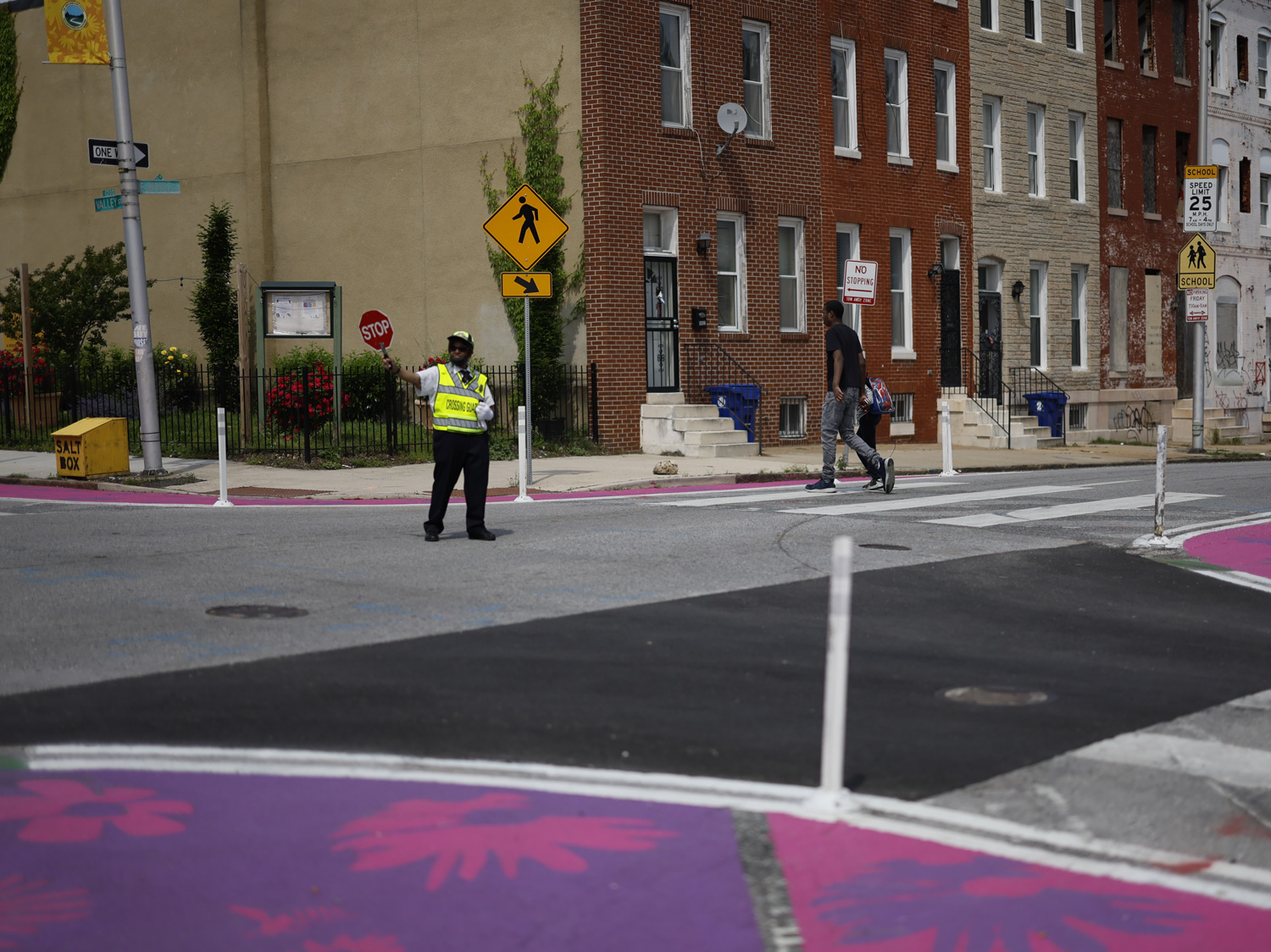
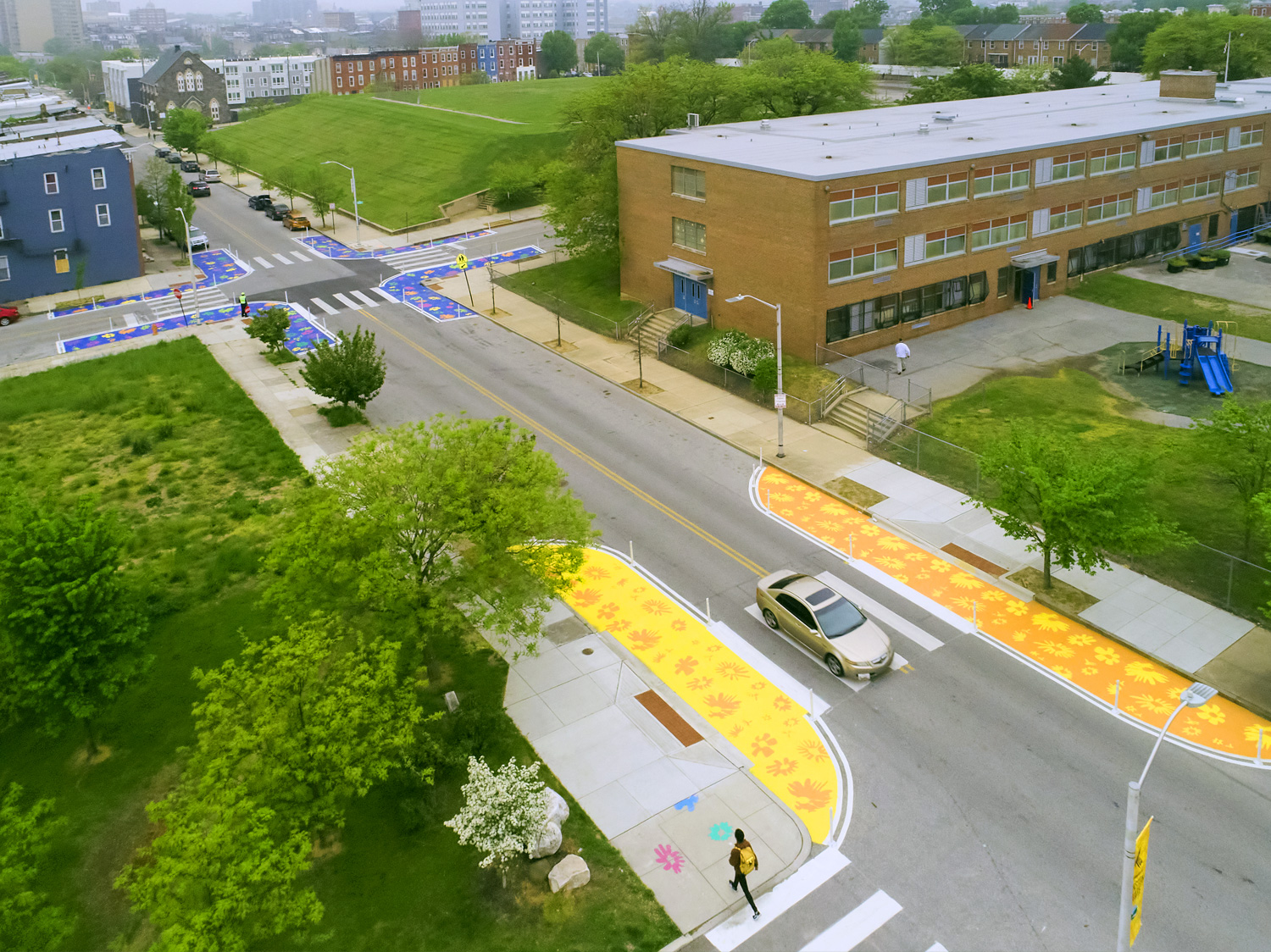
Three intersections adjacent to Johnston Square Elementary school were identified by neighborhood residents to receive traffic calming art to combat vehicle speeds recorded as high as 85 MPH during school hours. The project began with the Johnston Square 2020 Vision Plan, a resident-led initiative to support safety for pedestrians of all ages and abilities. The design for the Bee Safe Art Crosswalks came together through community design workshops, where neighborhood residents worked with the design team to create the flower and bee pattern representing the neighborhood and to decide the color combinations for each intersection. Through the enhancement of sidewalks and the addition of curb bump-outs and new and shortened crosswalks, the redesigned space has already changed the way users move through it. Prior to installation, the area behind the school was used as a preferred access point for parents and students due to the location, despite high rates of speeding and missing crosswalks. After the safety interventions, the school felt comfortable adding a second dismissal location at the new mid-block crossing on Chase Street in addition to the overcrowded front entrance, allowing for a more efficient and safe pick-up process.
- Crossing distances were cut in half
- The percentage of drivers yielding to pedestrians with the right of way increased from 37% to 78%
How Asphalt Art Makes This Baltimore Community Safer
“I use less time to cross because of the artwork. The bump-outs also make it easier for cars to see me while I am waiting to cross. I feel they notice me more and slow down for me.”
Neighborhood resident
Use the slider to see the transformation

Best Practice Highlight: Building a shareable resource
At its core, this project is rooted in data and community engagement through the partnership between the Made You Look initiative and ReBuild Johnston Square Neighborhood Organization. Made You Look was conceived by Maryland Institute College of Art graduate students, Vilde Uset and Quinton Batts, who promoted artful safety interventions as a way to combat the high rates of Baltimore crashes. They oversee projects across the city and created an Art in the Right of Way Toolkit, a guide for other communities to create their own artistic street redesigns. Alongside the guide, they created an implementation Toolbox that has equipment for installing asphalt art (such as paint trays, safety vests, and a pressure washer) that can be borrowed for free from a local library branch. ReBuild Johnston Square is an organization of community members dedicated to the improvement of the Johnston Square neighborhood. Through this partnership, the intersections surrounding the elementary school were prioritized to receive safety and placemaking enhancements. Extensive community engagement tools were used to identify what safety interventions were needed, develop the artwork, and implement the project.
Press
Crosswalk art slows cars in Johnston Square (Baltimore Fishbowl, October 4, 2022)
Going the distance with public space design (WYPR, May 17, 2022)
Volunteers Paint Crosswalks In East Baltimore To Keep Students Safe (CBS Baltimore, March 30, 2022)
Volunteers paint the streets of Johnston Square Elementary this weekend hoping to slow down drivers (WMAR, March 27, 2022)
For inspiration and tips for the creation of art on roadways and public places, download the Bloomberg Associates Asphalt Art Guide which features successful plaza and roadway art activations around the world, as well as key steps for developing such projects.

Kansas City, MO
Using art to make a safer intersection
The Project
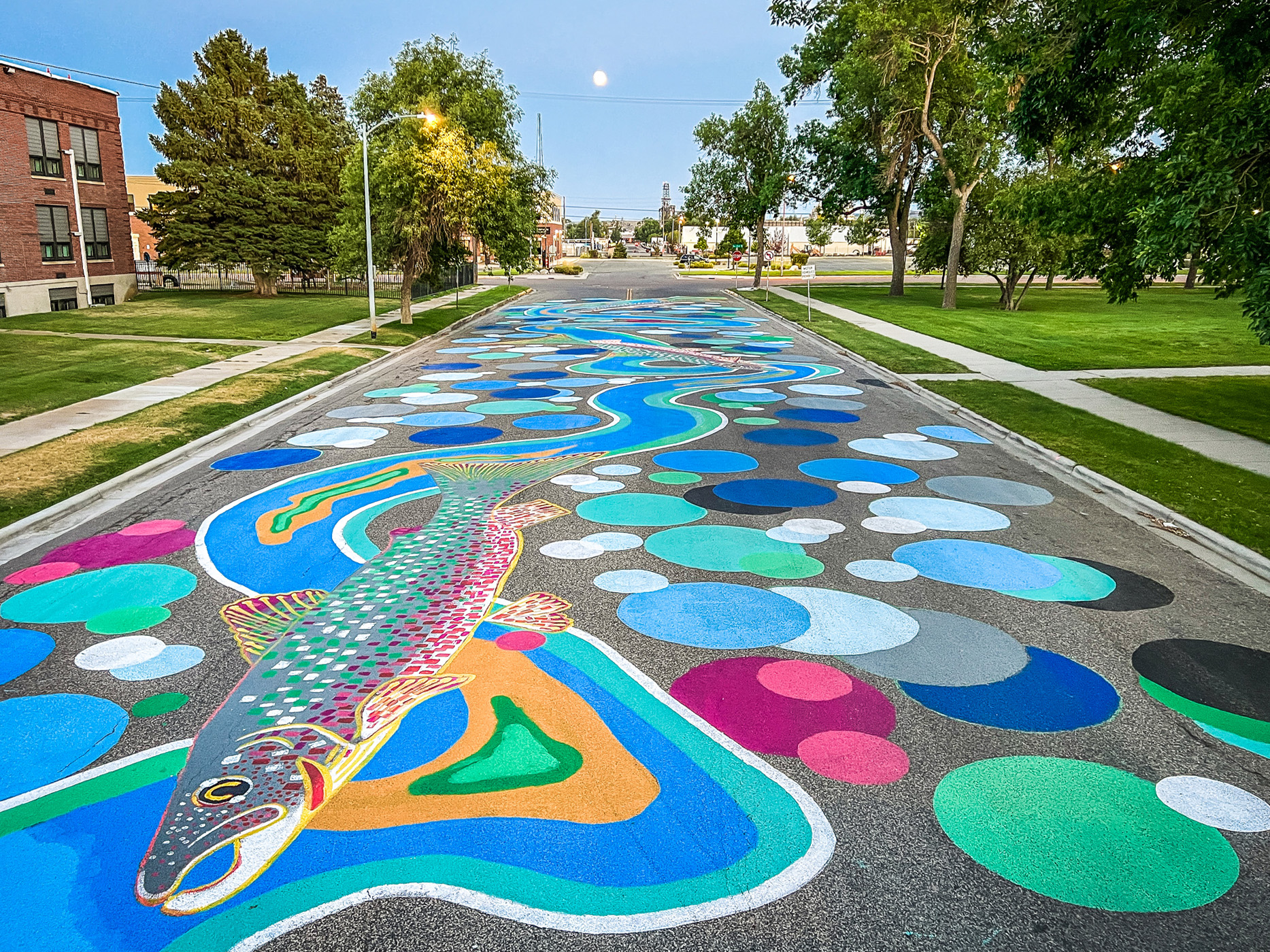
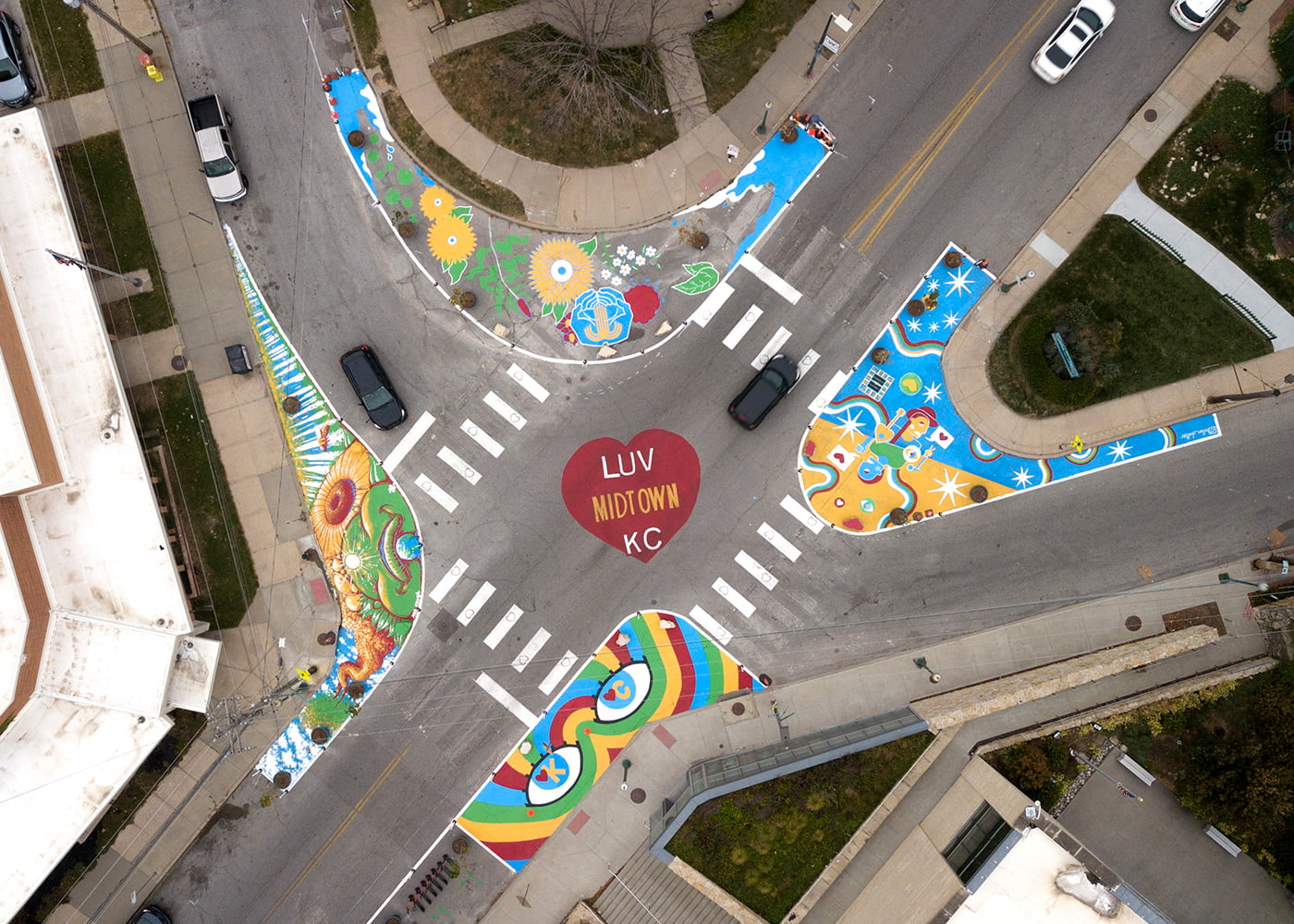
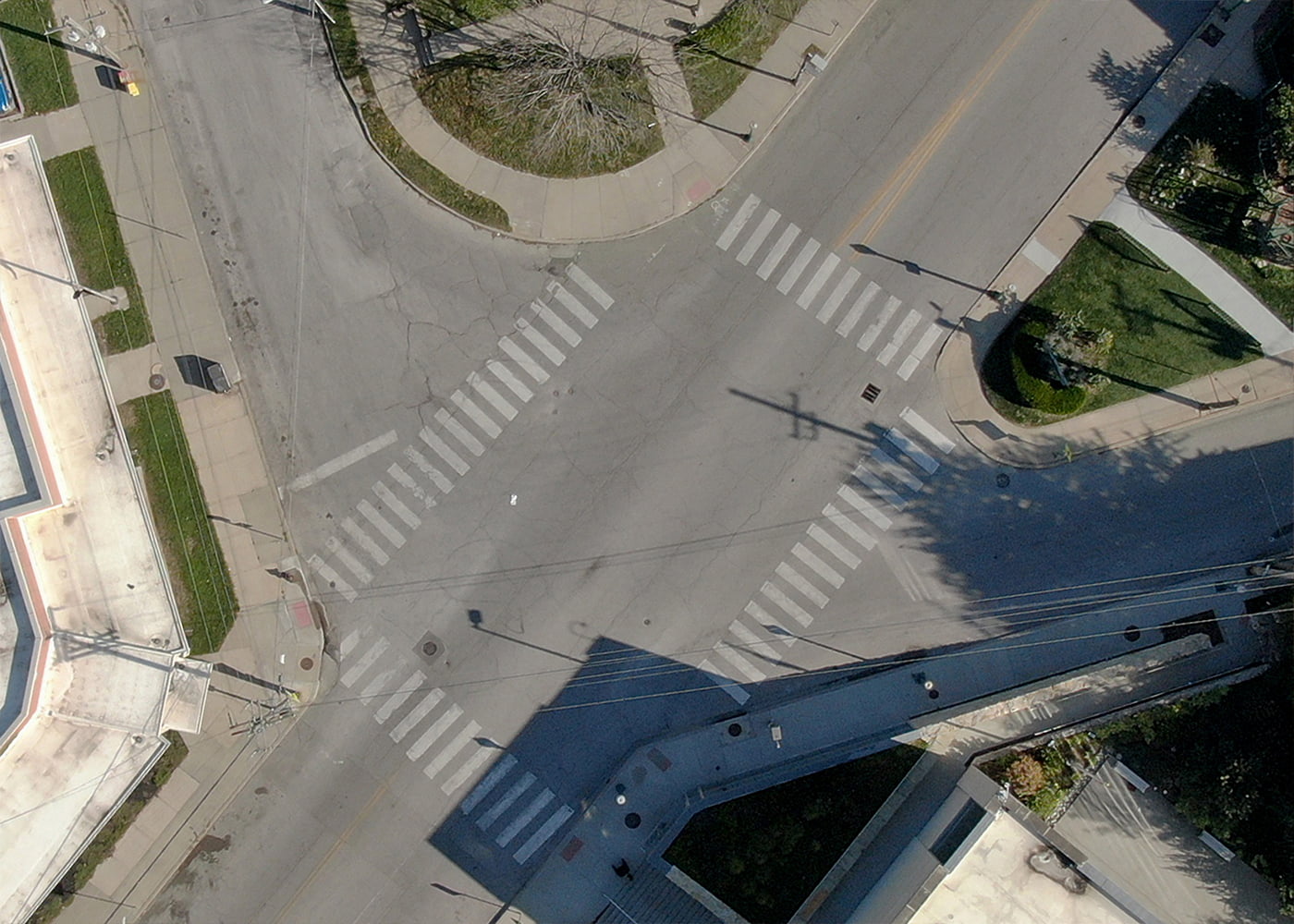
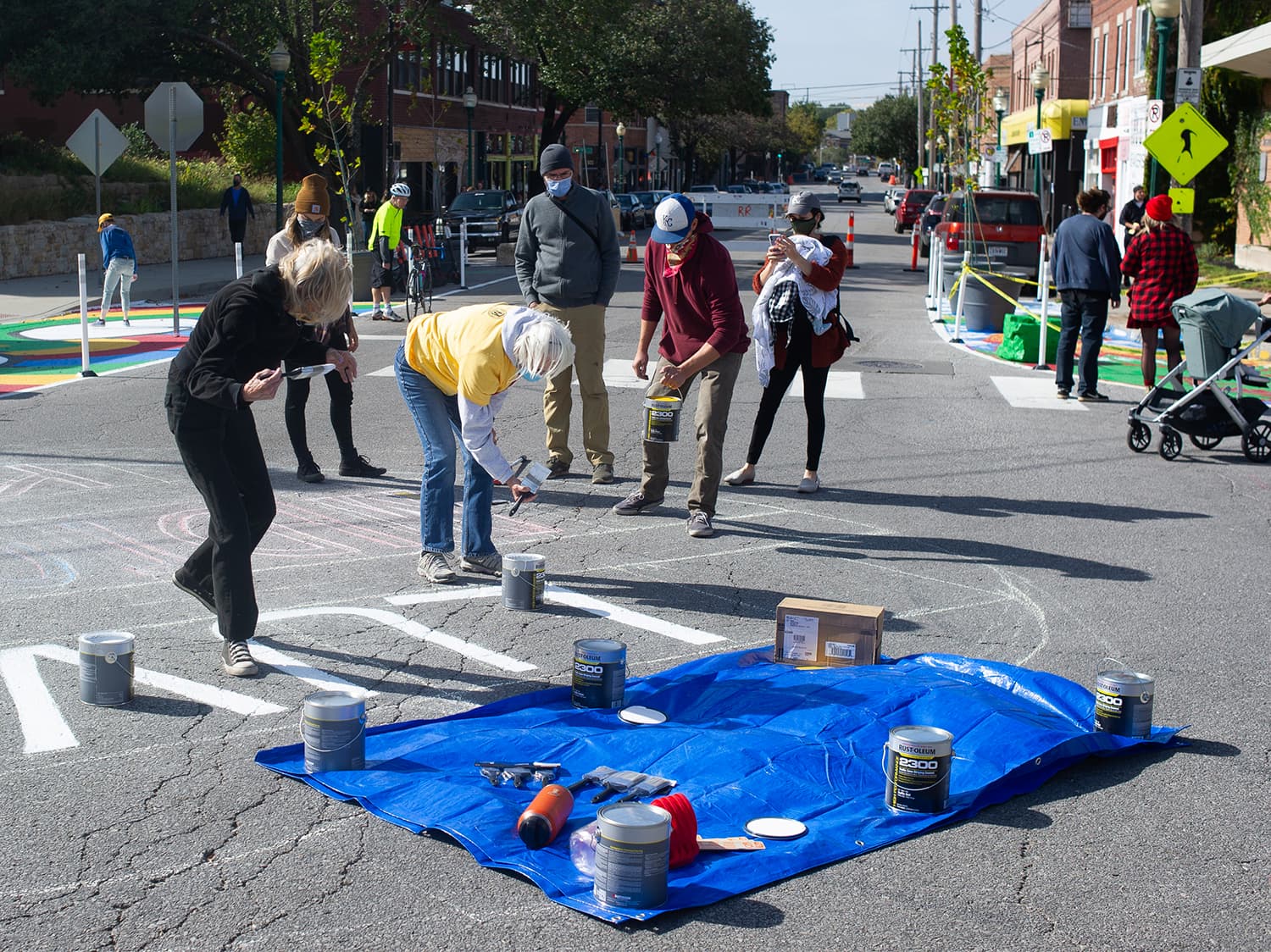
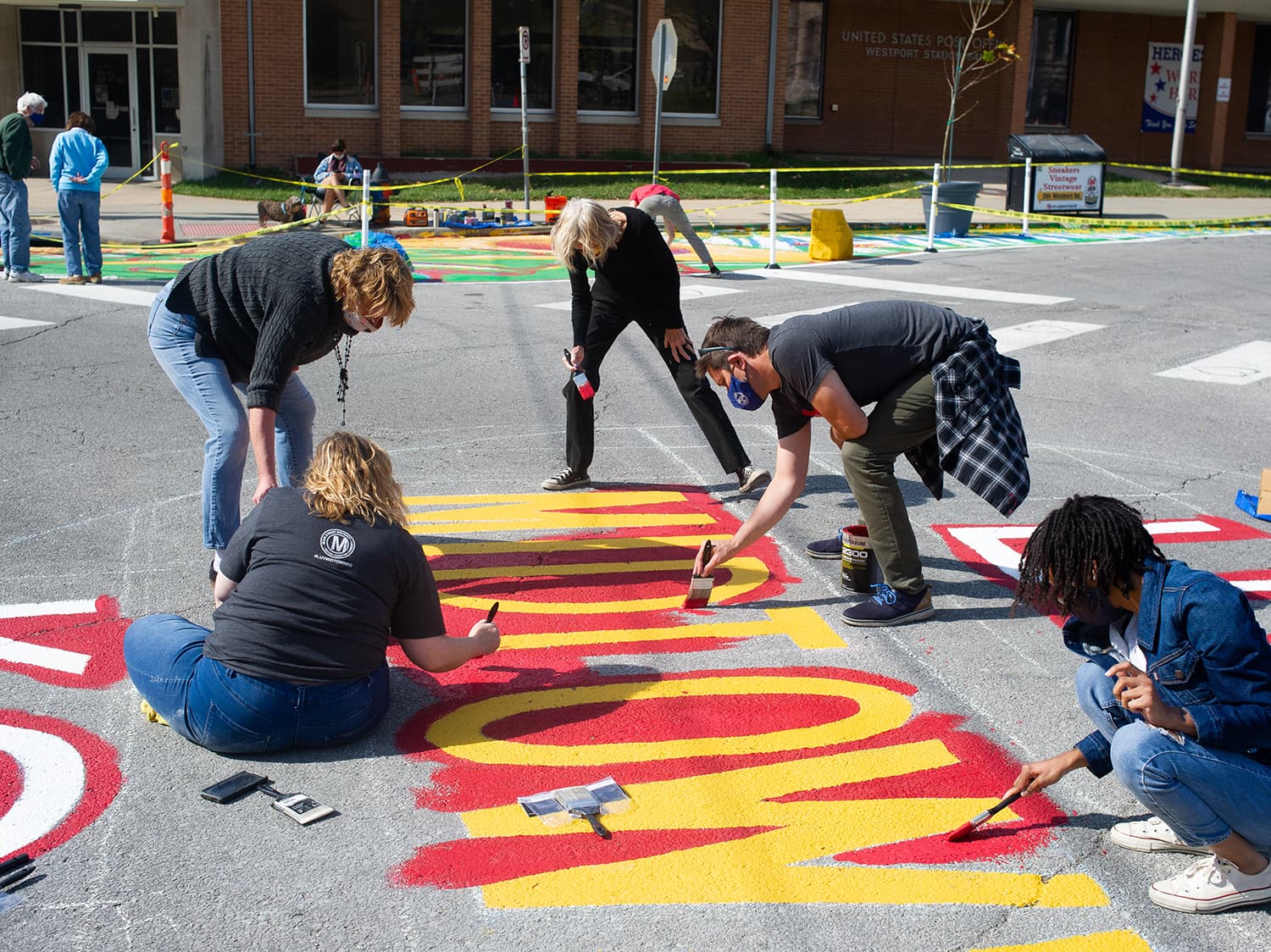
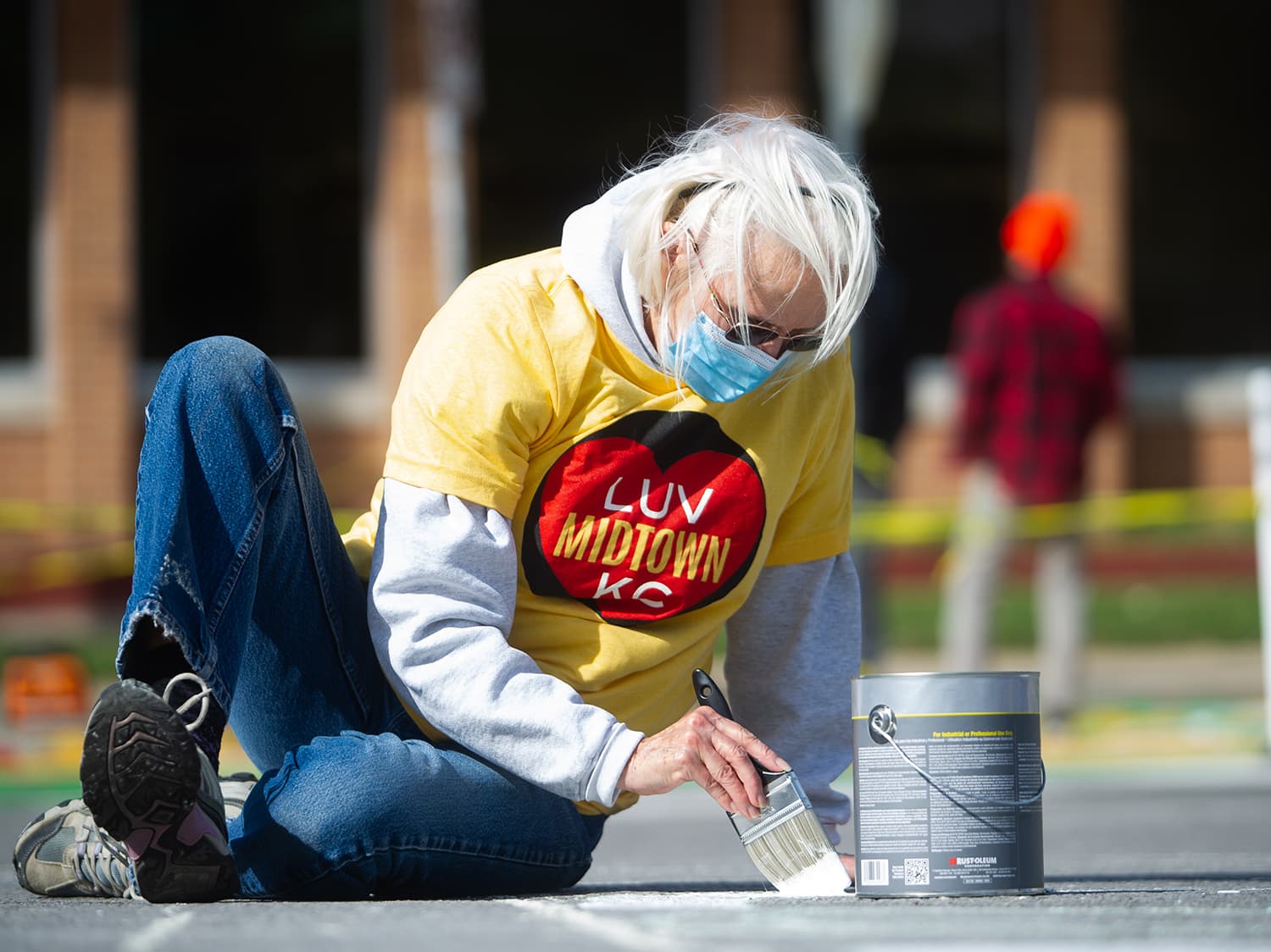
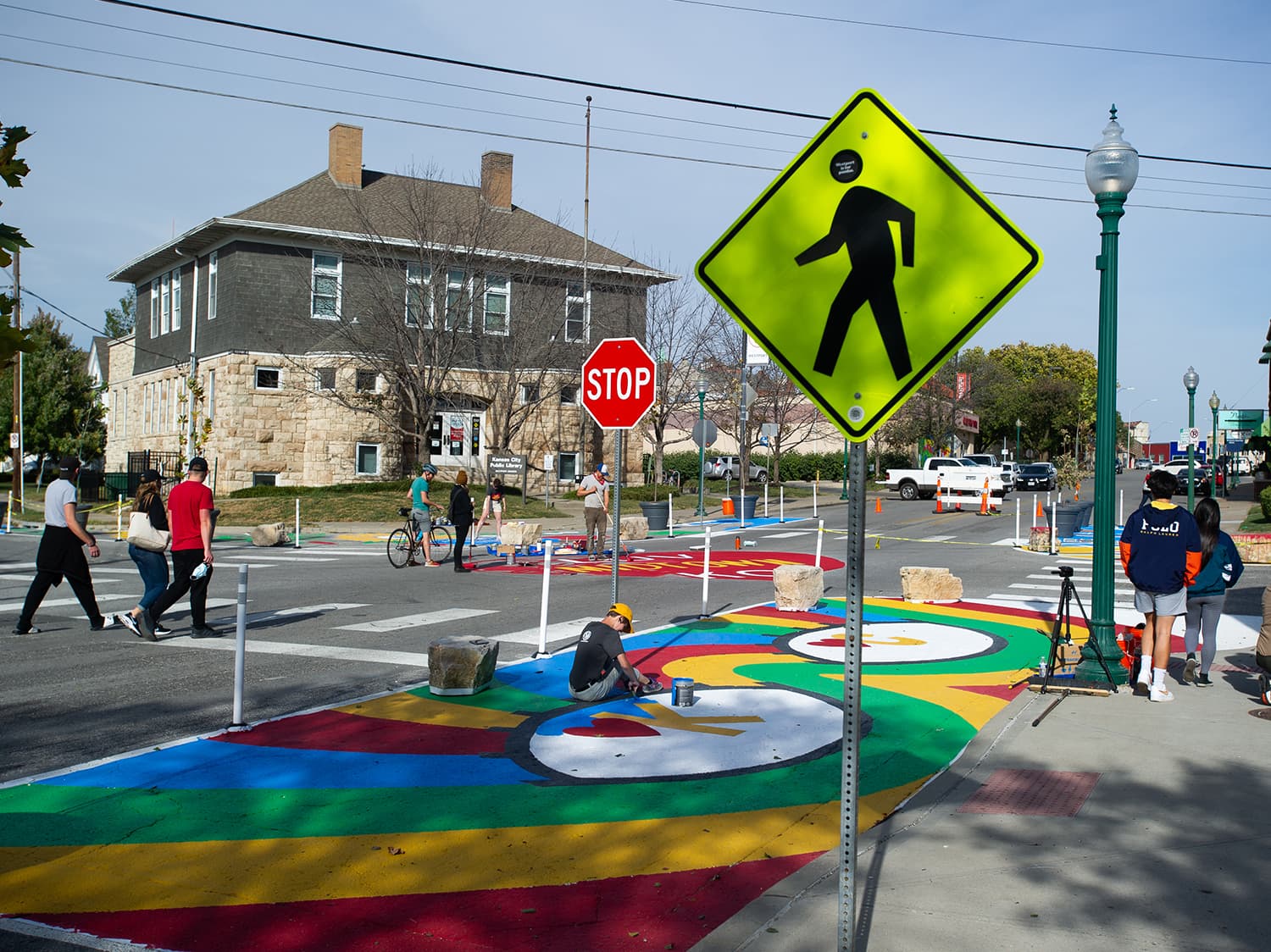
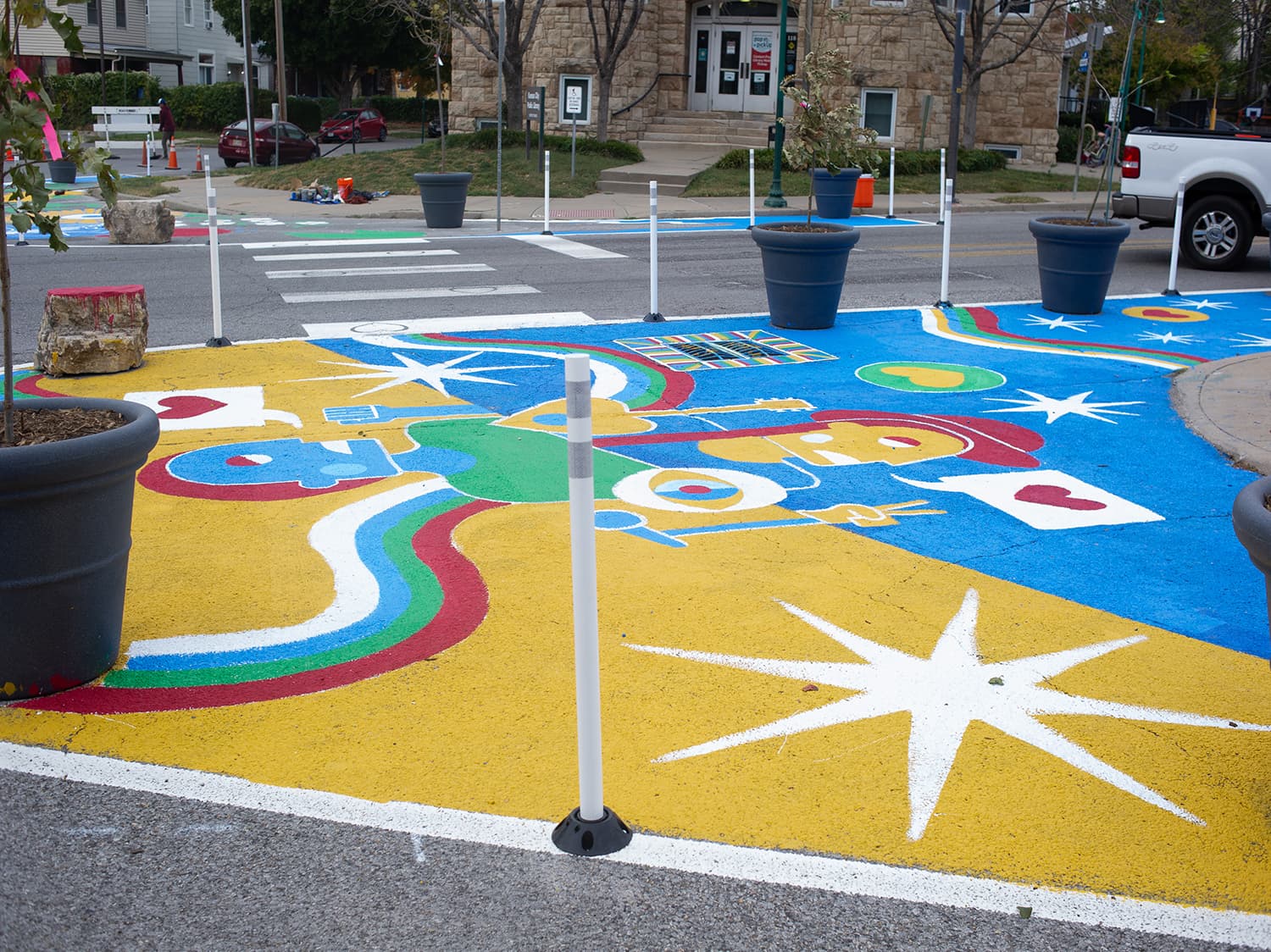
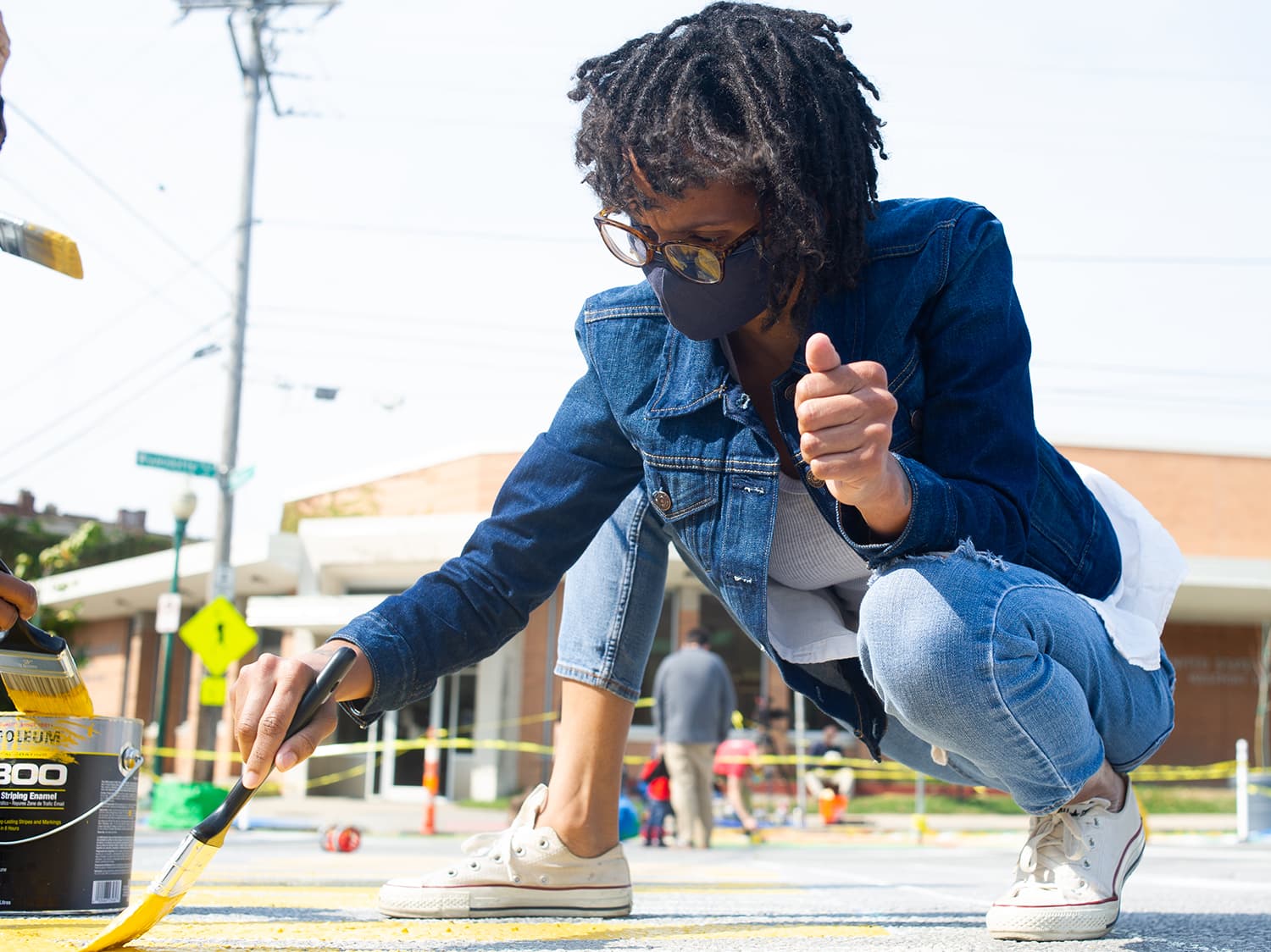
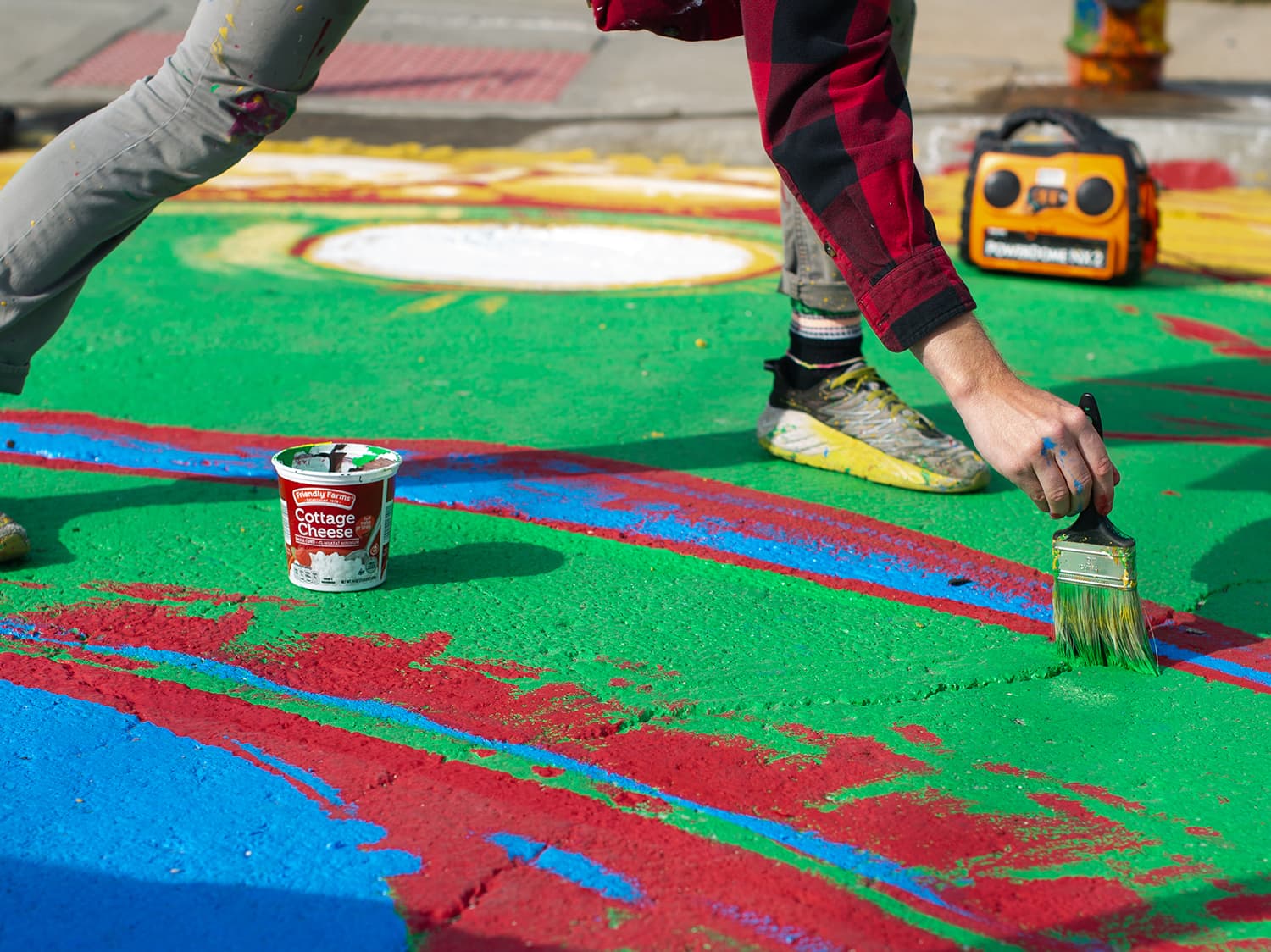
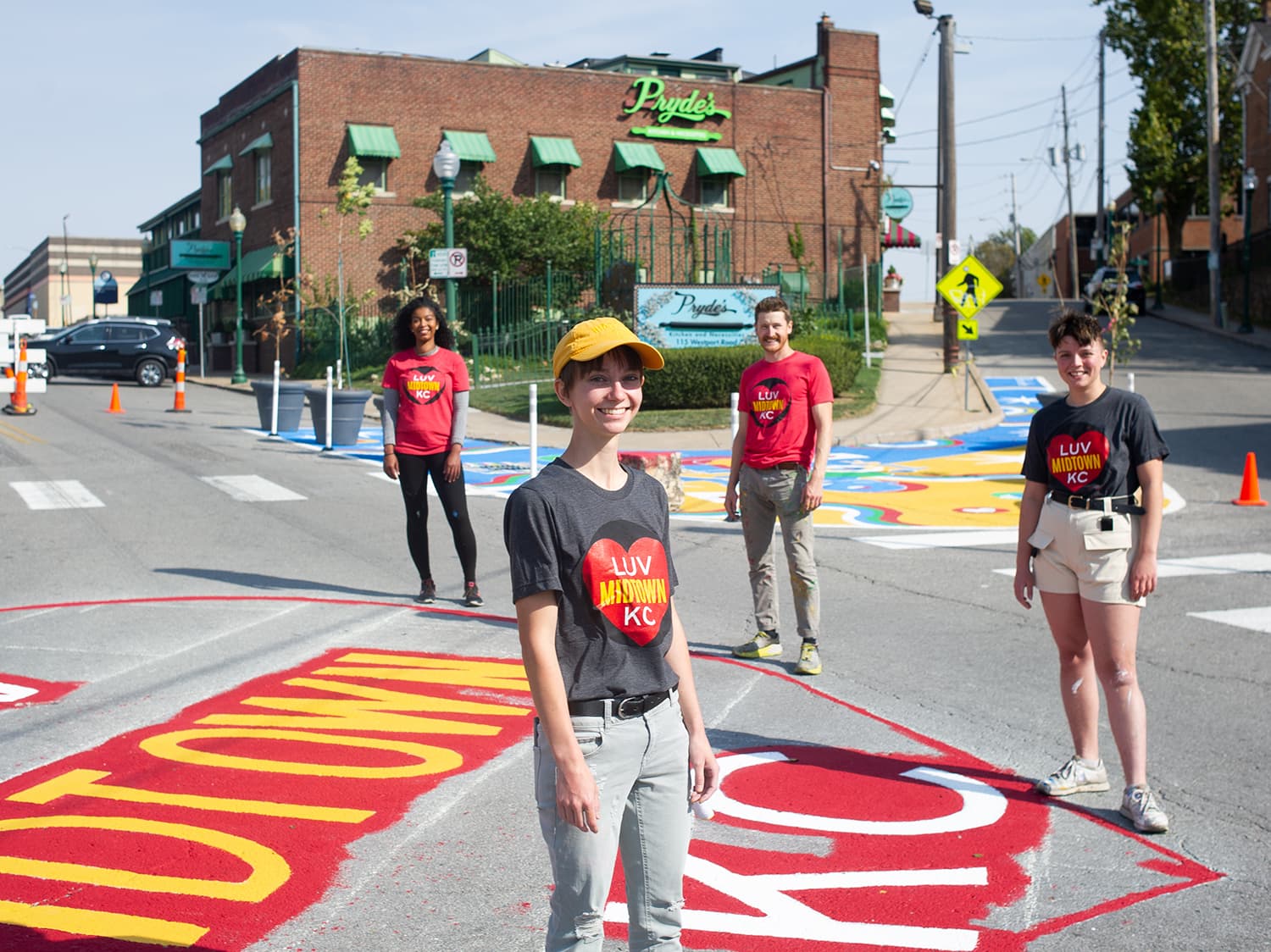
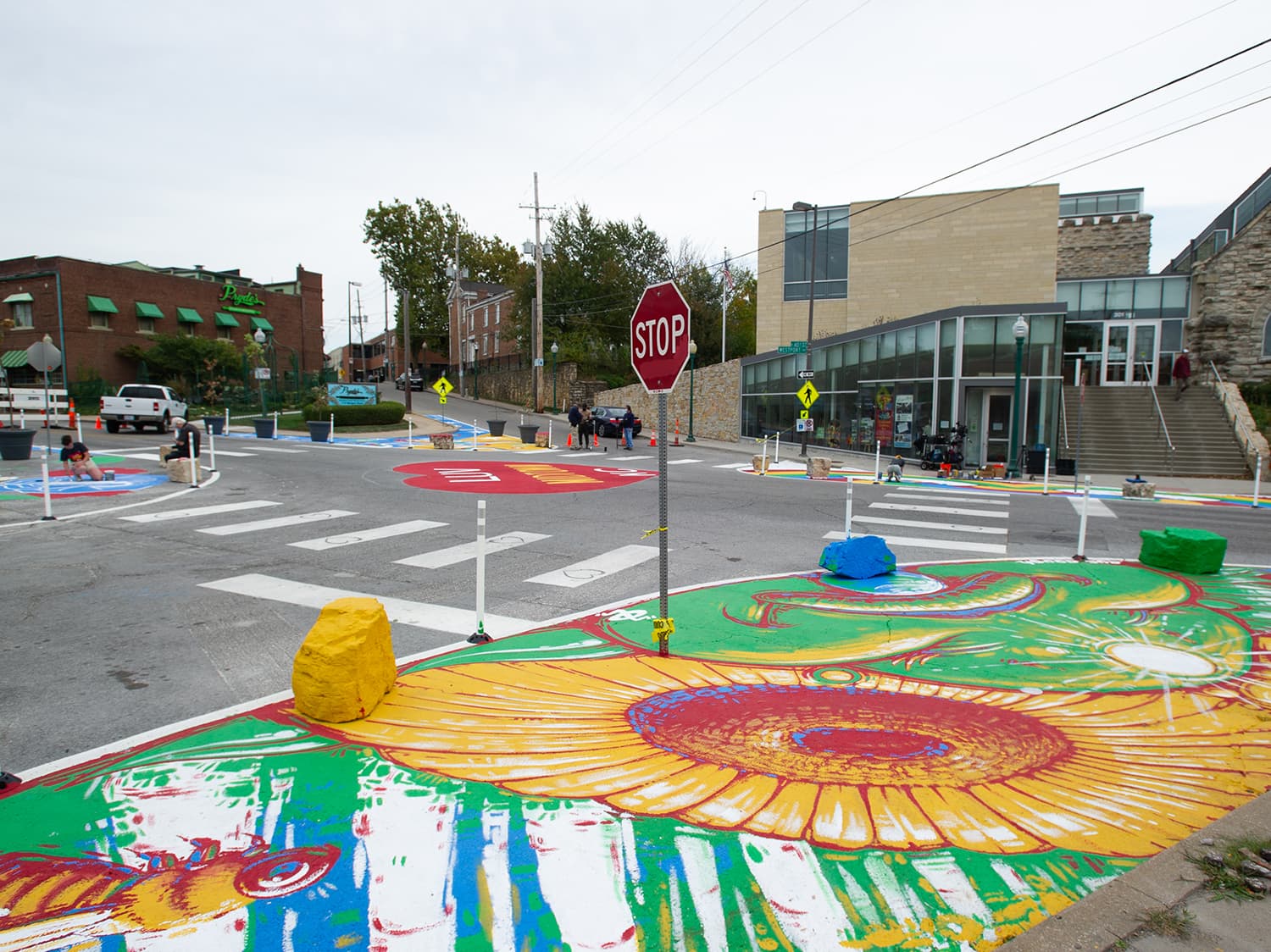
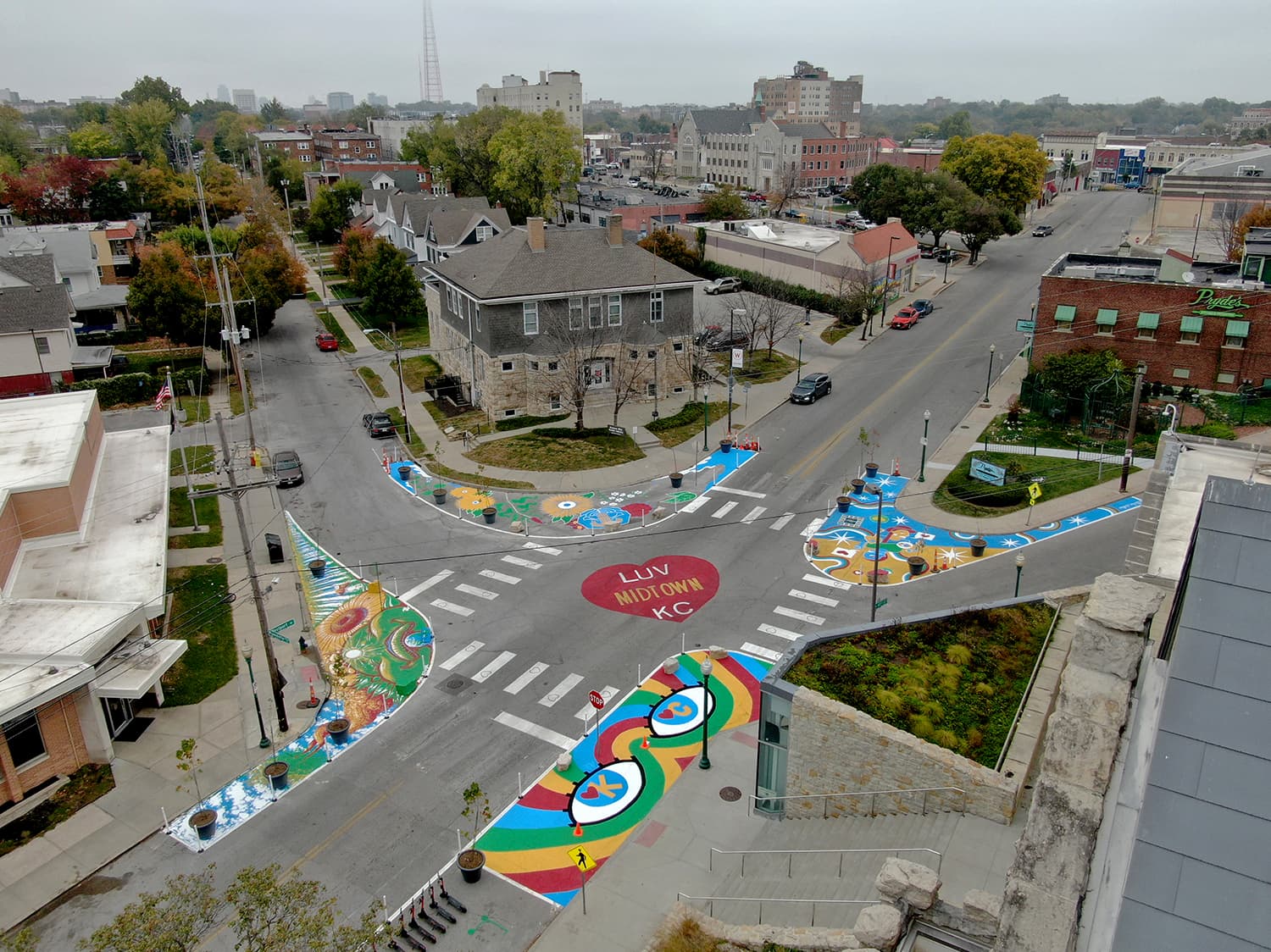
Midtown KC Now and Street Smarts Design + Build applied to the Asphalt Art Initiative to make long-sought improvements to the intersection of Westport Road – a well-traveled road connecting two major commercial corridors – Wyandotte Street and W 40th Street Midtown. The corridor is used heavily by pedestrians, bikes, and cars, but the selected intersection felt daunting and dangerous for pedestrians and bikers because of its design. City engineers worked with Street Smarts Design + Build, a local urban design firm, to create a new design for the intersection that would address the safety challenges. The new design reclaimed over 4,000 square feet of roadway space, and four artists were selected to paint murals at the four corners of the intersection. In addition, members of the community were invited to paint a simple mural in the center of the intersection. A sixth mural was added on the exterior wall of an adjacent business.
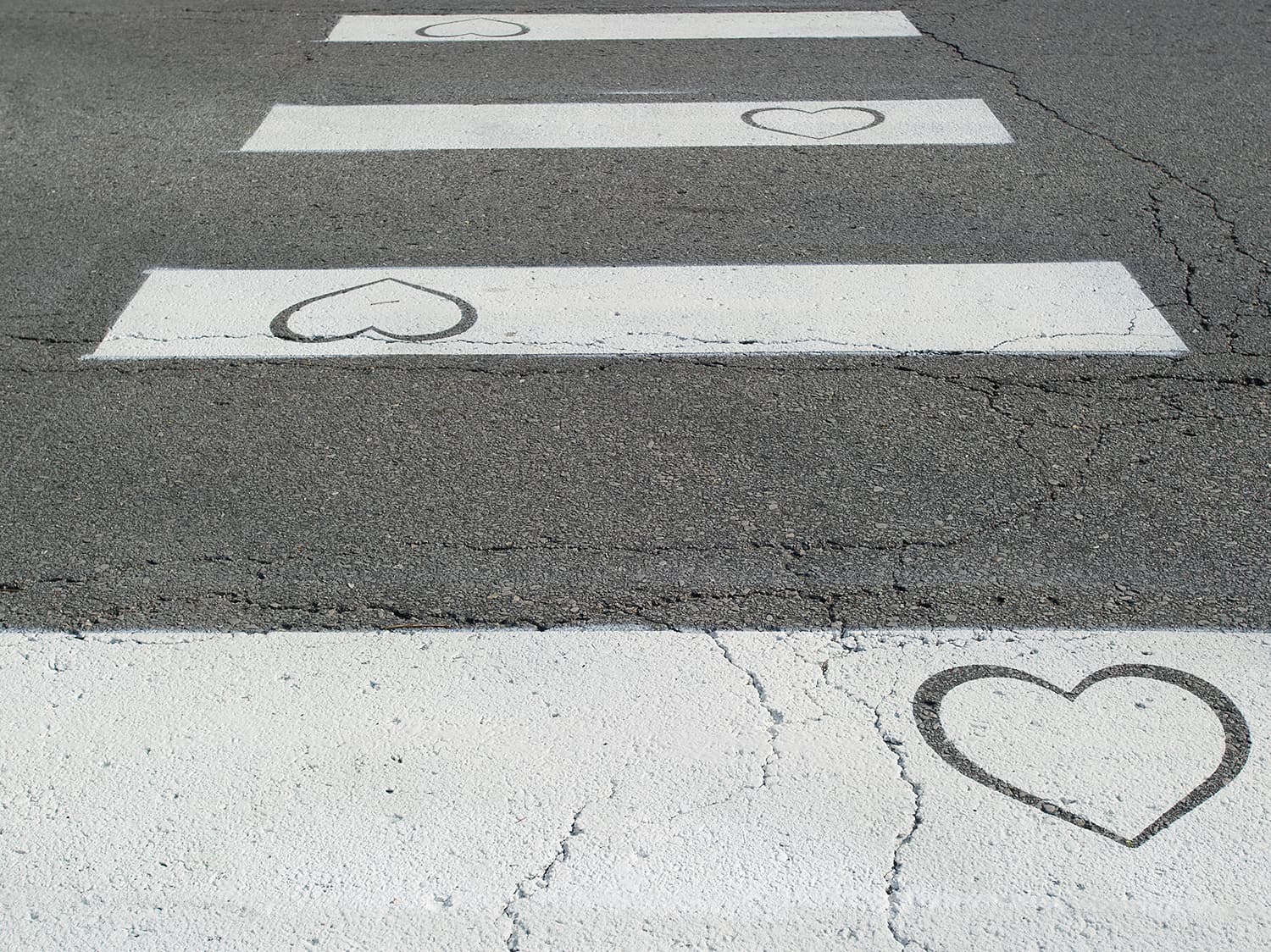
In analyzing the site, the primary safety challenges were found to be cars speeding and making sharp turns, and long distances for people to walk across the street. The design narrowed the travel lanes and implemented curb extensions bordered by planters, boulders, and bollards to slow traffic and make crossing the street safer for pedestrians. Crosswalk length was cut in half, turn paths were more clearly delineated for drivers, and two stop signs were added.
- The average speed at the intersection has dropped by 45%, and the most dangerous, illegal speeds have been eliminated.
- Crosswalks have been shortened by 52%, making it faster for pedestrians to cross the street.
- The percentage of pedestrians who report feeling “very safe” at the intersection has increased from 23% to 63%.
- Traffic noise has decreased by 14% (from 79 to 68 decibels on average).
Best Practice Highlight: Stepping Stone to Permanent Improvements
This asphalt art project allowed the Kansas City to test the effectiveness of safety improvements at this intersection, leading to permanent improvements. In 2024, four years after the asphalt art was initially installed, the curb extensions were made permanent through new sidewalks, ADA-accessible ramps, and street trees.
Reshaping a Dangerous Intersection Through Art in Kansas City
“This Asphalt Art project will build on our ongoing efforts to create more opportunities for Kansas Citians to get outdoors and will help the City revitalize public spaces for all to enjoy.”
Mayor Quinton Lucas
Use the slider to see the transformation
Press
An Initiative to Improve Street Safety through Public Art
New project at Westport intersection could expand to other parts of Kansas City
10-Minute Walk Grant will continue improvements in Northeast parks
KCMO receives Asphalt Art grant from Bloomberg Philanthropies
KCMO Receives Bloomberg Philanthropies Asphalt Art Grant
For inspiration and tips for the creation of art on roadways and public places, download the Bloomberg Associates Asphalt Art Guide which features successful plaza and roadway art activations around the world, as well as key steps for developing such projects.

Lancaster, PA
Making an intersection easier to navigate
The Project
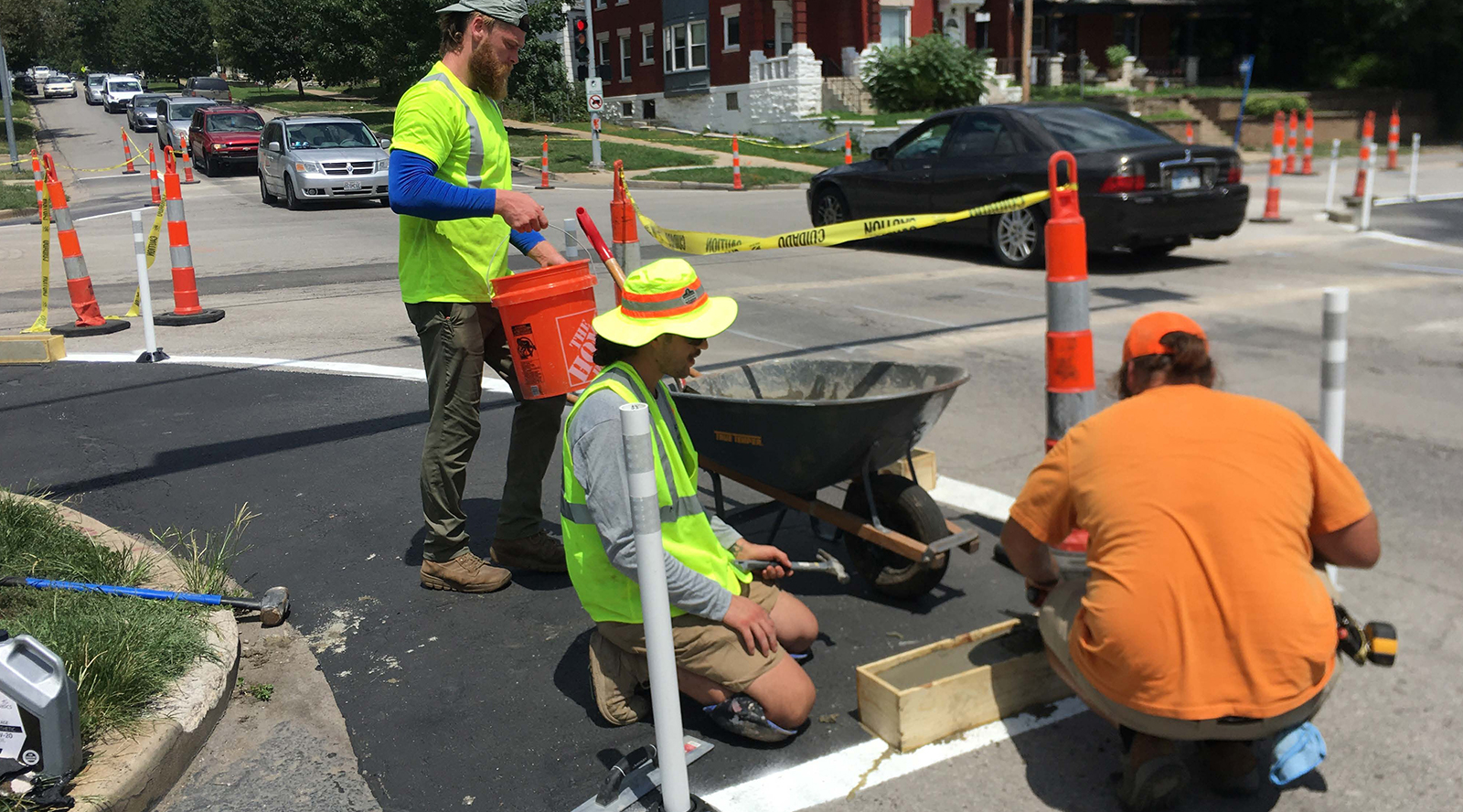
Residents of the Cabbage Hill neighborhood identified a busy five-way intersection – often used as a cut-through by motorists – as confusing and uninviting to pedestrians and bikers. By introducing artful safety redesigns to the intersection – including shortening crosswalks by 55%, adding over 3,600 square feet of new pedestrian space, narrowing vehicular lanes, and adding a needed stop sign – the City created a public space that is easier to safely navigate, with car traffic reduced by 27% and bike ridership increased by 12%. Through an extensive community engagement process, the City of Lancaster amplified local voices and facilitated conversations that shaped the intersection redesign and artistic direction.
- The average speed at the intersection has dropped by 20%.
- The rate of drivers yielding to pedestrians with the right of way increased by 10%.
- Bike ridership has increased by 12%.
“Neighbors strongly advocated for changes in the intersection that would align with community needs and desires. The result was a space created by and for the community that added art, safer pedestrian crossing areas, stops signs to slow traffic and additional parking.”
Jake Thorsen, SoWe Neighborhood Director
Use the slider to see the transformation


Best Practice Highlight: Community Engagement Platform
To facilitate their Asphalt Art Initiative project, the City of Lancaster made use of their online community engagement platform, Engage Lancaster, with which residents were already familiar and comfortable using. Through the platform, they released multiple surveys and design drafts at each milestone along the design and installation process, allowing community members to actively inform the final product. The team also posted survey results and infographics, making the public feedback received readily accessible to all. Finally, 100 residents volunteered through the platform to help paint the intersection and celebrate the completion of the project they helped design and implement.
Press
Creating an Artful Intersection in Cabbage Hill (Lancaster County Magazine, September 2021)
Artists chosen for Bloomberg-funded Cabbage Hill public art project; neighbors’ input sought (Lancaster Online, June 14, 2021)
Lancaster city receives $25K Asphalt Art Grant, issues call for artists for public art project (Lancaster Online, March 9, 2021)


For inspiration and tips for the creation of art on roadways and public places, download the Bloomberg Associates Asphalt Art Guide which features successful plaza and roadway art activations around the world, as well as key steps for developing such projects.


Pittsburgh, PA
Empowering a community to improve their streets
The Project
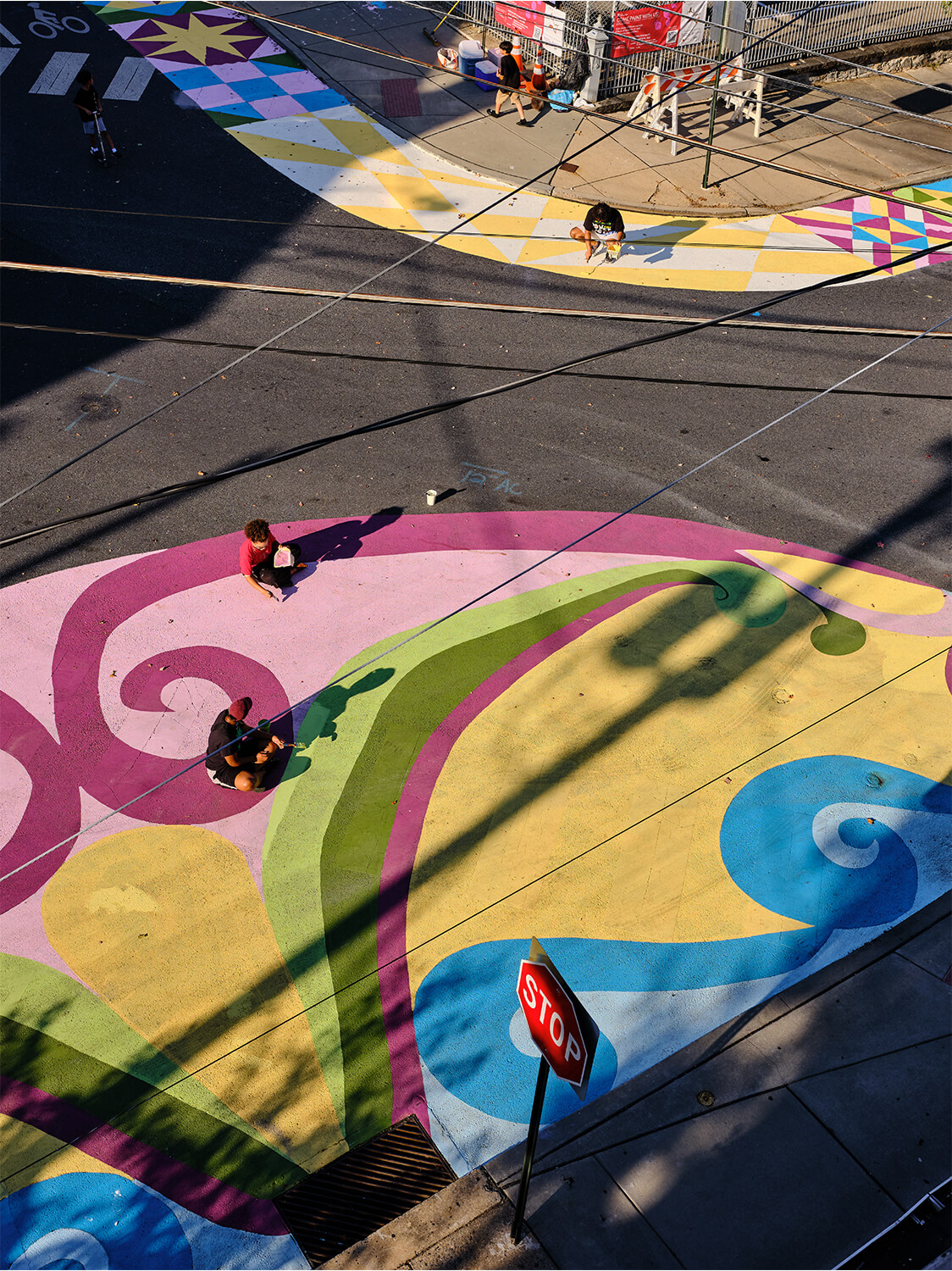
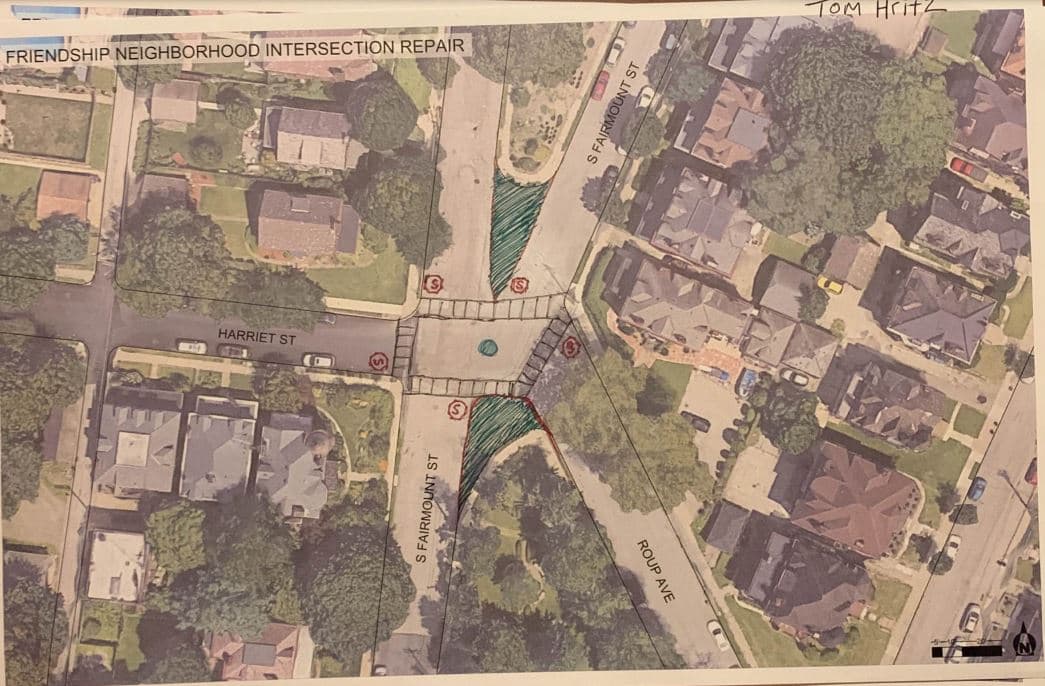
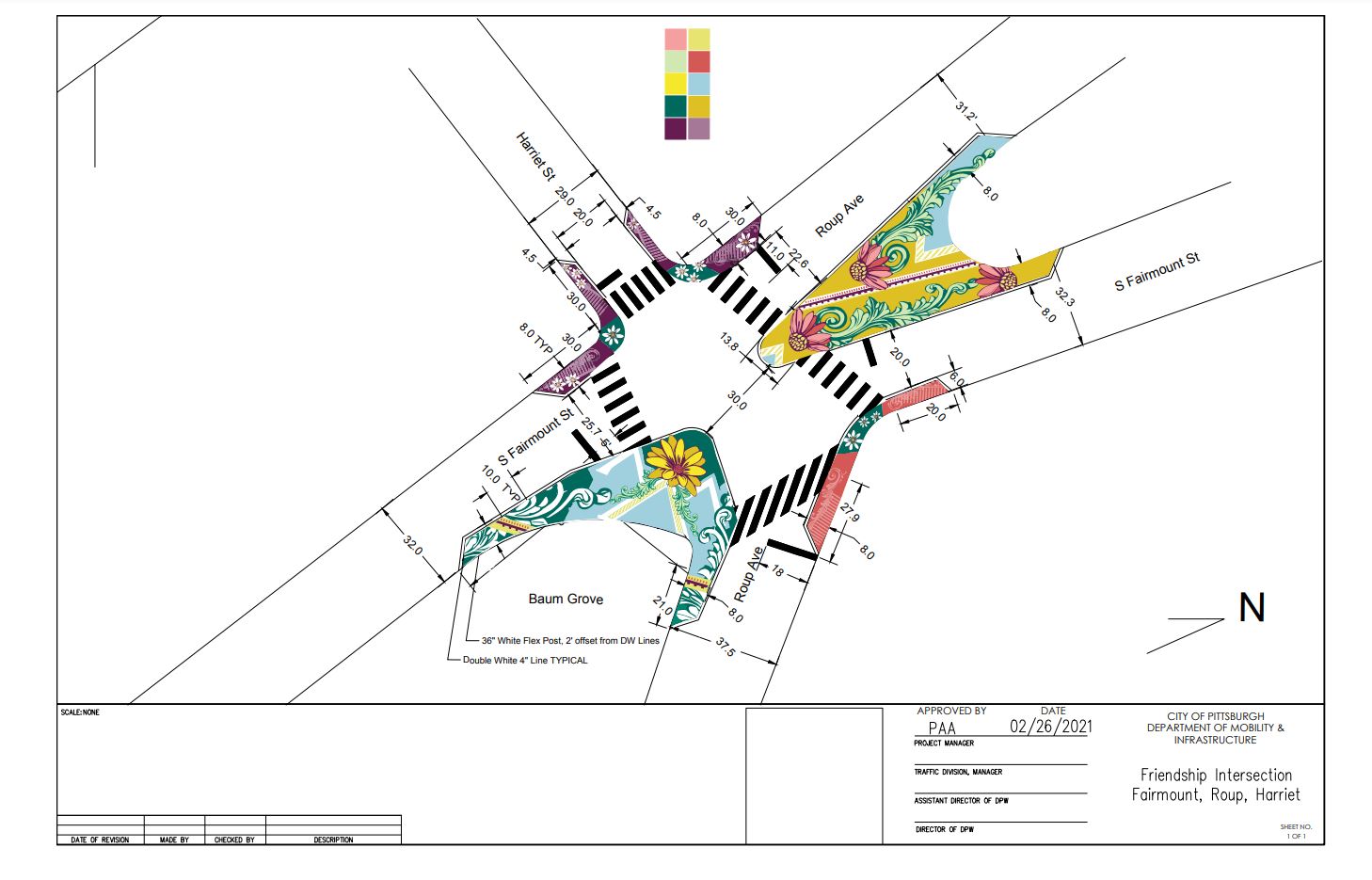
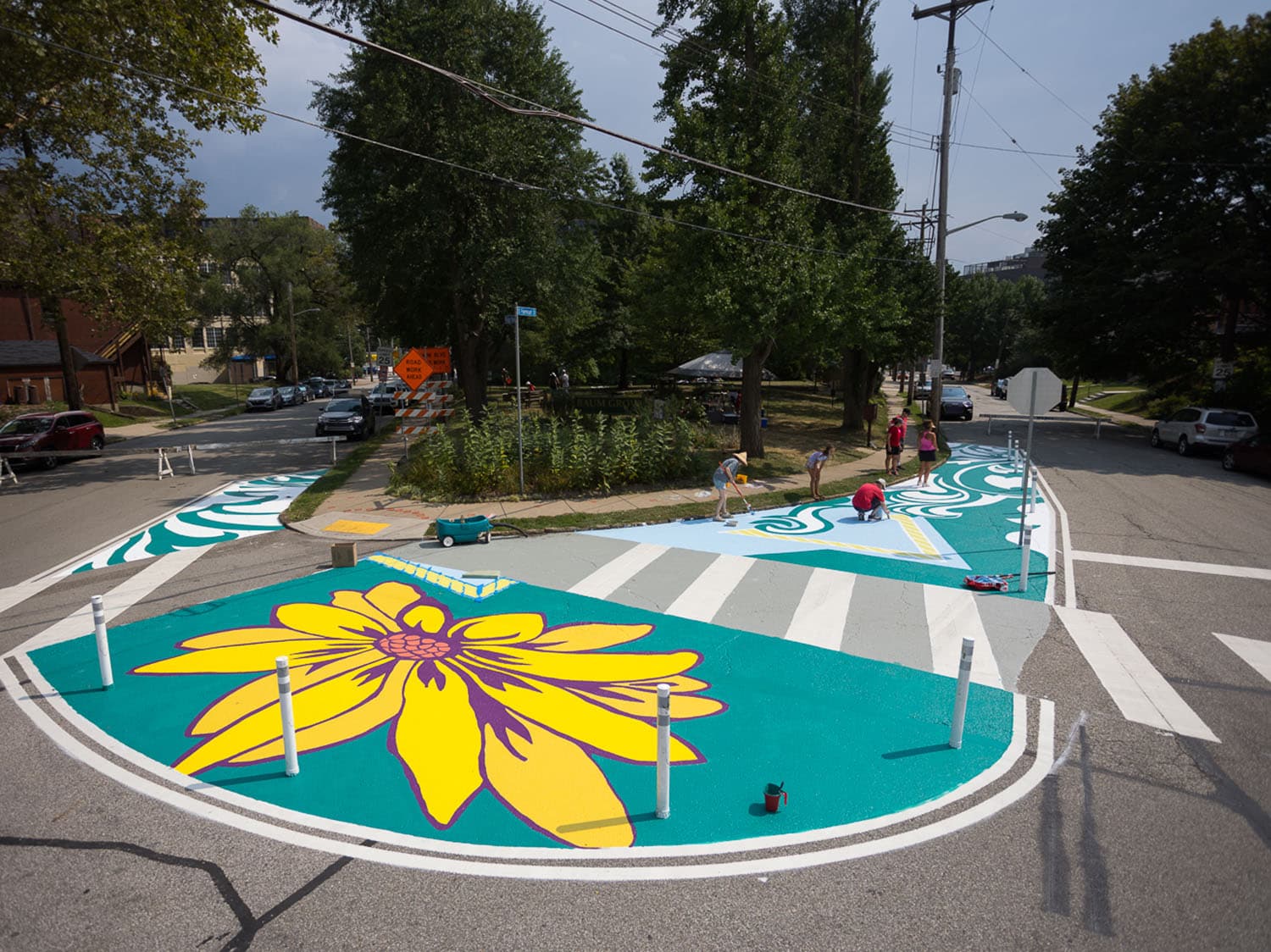
Friendship Community Group and the City of Pittsburgh partnered to redesign a five-way intersection adjacent to Baum Grove, a parklet that is frequently used for community events. By extending the sidewalks, adding crosswalks, , and adjusting the placement of stop signs, the team transformed the challenging intersection a pedestrian- and cyclist-friendly space. The reclaimed asphalt also expanded the square footage of the parklet, allowing more space for events. Through community design workshops, residents came together to influence the artistic design and structural layout of the project.
- The rate of drivers speeding decreased by 40%.
- The rate of drivers coming to a full stop at the stop bar increased by 25%.
- The rate of drivers not yielding to pedestrians with the right of way decreased by 57%.
- Potentially dangerous conflicts between drivers and pedestrians crossing the street decreased by 61%.
“The five-way intersection directly in front of our community parklet was breathtaking to cross because of the confusing set-up. Now we have a safer, redesigned intersection and a breathtaking asphalt mural with art that reflects our architecture heritage and natural elements.”
Sara DeLucia, President, Friendship Community Group
Use the slider to see the transformation


Best Practice Highlight: Community-Led Project
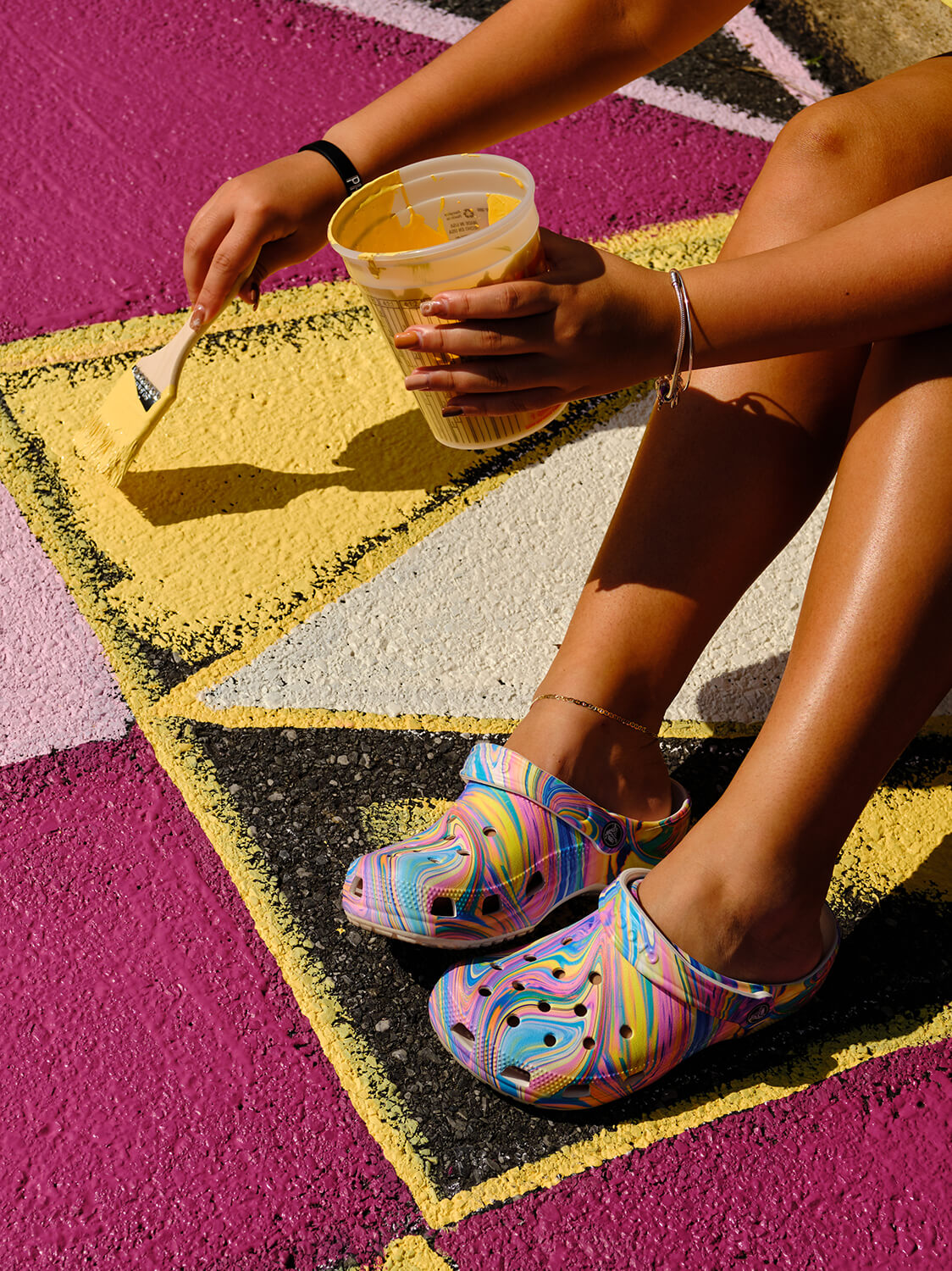
The redesign of the Baum Grove intersection was advocated for, led, and installed by community members. Identified by residents as a confusing and unsafe intersection for both pedestrians and motorists, a safety redesign became a priority for the Friendship Community Group. Community design workshops were held virtually and in person to ensure the installation was created by and for the surrounding neighborhood. Residents actively participated in every aspect of the project, including the development of the safety redesign, selection of the artists, development of the mural design, and physical installation of the mural in a volunteer painting weekend.
Workshop sketches by Friendship residents
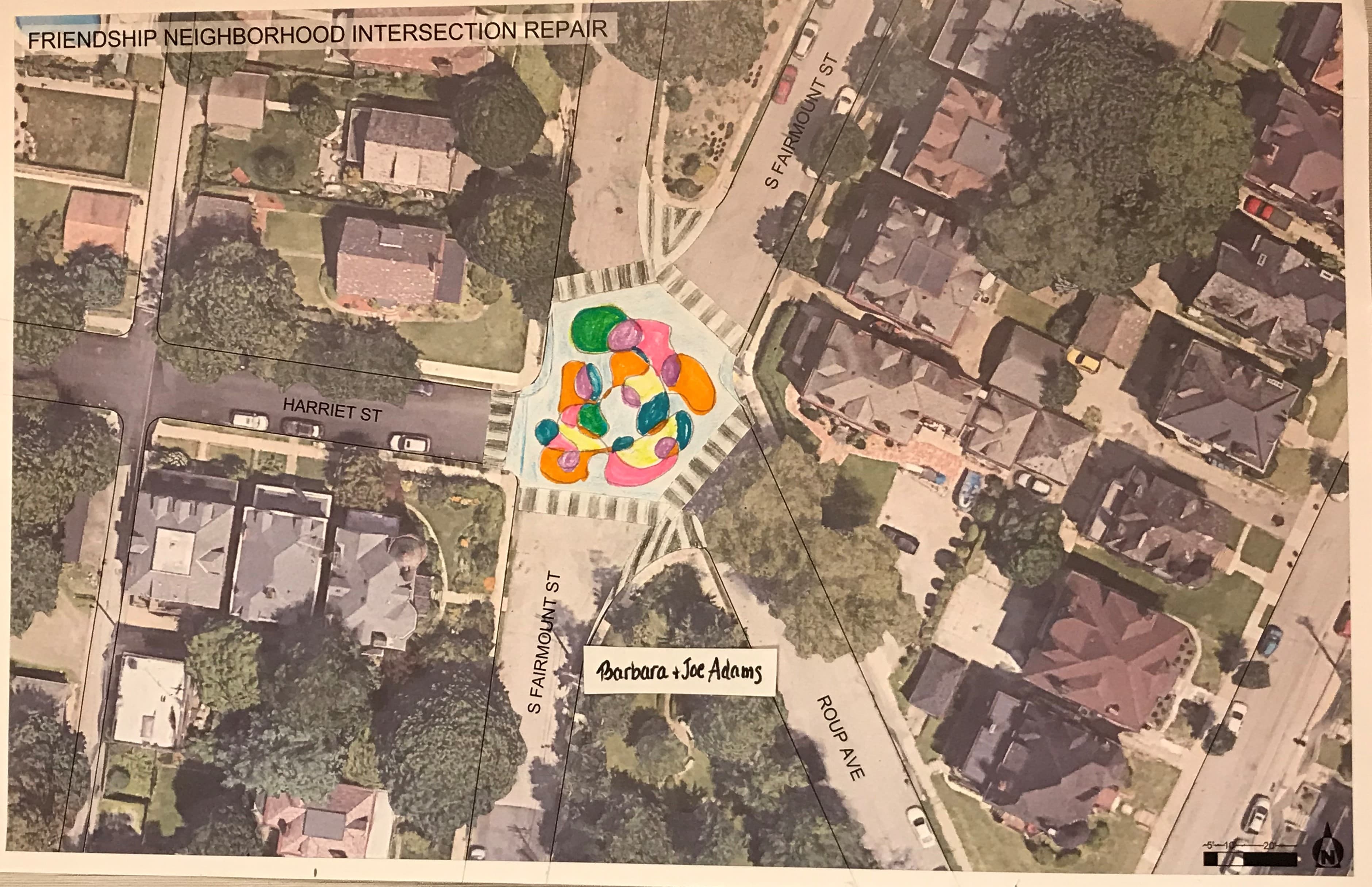


Final engineering drawing with artists’ design
Press
Friendship Intersection Closed While Artists Install Asphalt Art (CBS Pittsburgh, August 8. 2021)
Murals decorate intersection in Pittsburgh’s Friendship neighborhood (WTAE 4, August 8, 2021)
Group installs asphalt art in Pittsburgh neighborhood (WPXI-11, August 7, 2021)
CompletioInterview: Asphalt Art Project, Sara DeLucia (Saturday Light Brigade Radio, August 7, 2021)
Friendship intersection to close this weekend for street art mural painting (Pittsburgh Tribune-Review, August 6, 2021)


For inspiration and tips for the creation of art on roadways and public places, download the Bloomberg Associates Asphalt Art Guide which features successful plaza and roadway art activations around the world, as well as key steps for developing such projects.
