
Rome, Italy
Unrolling imagination across Rome’s first school street
The Project
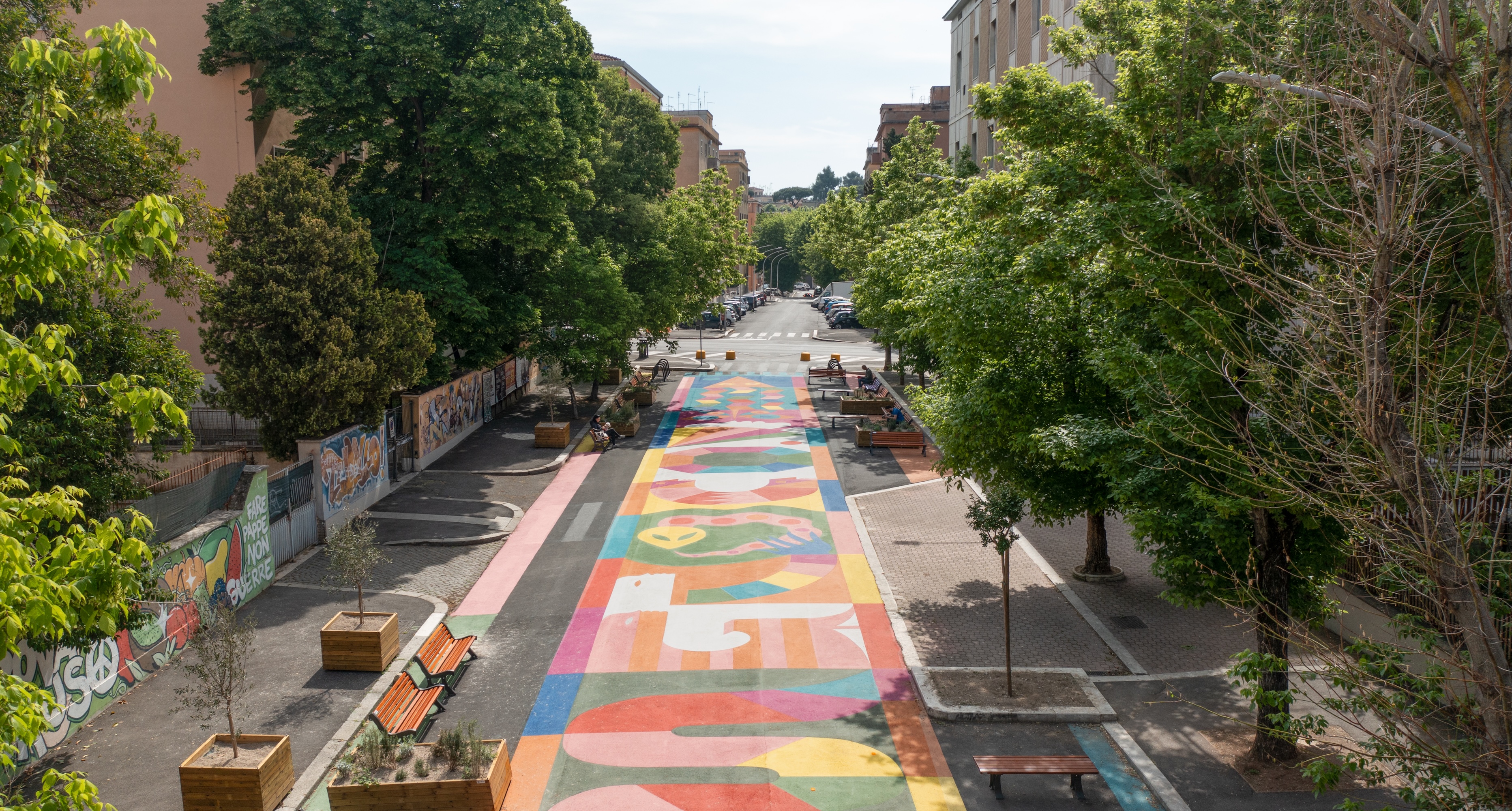
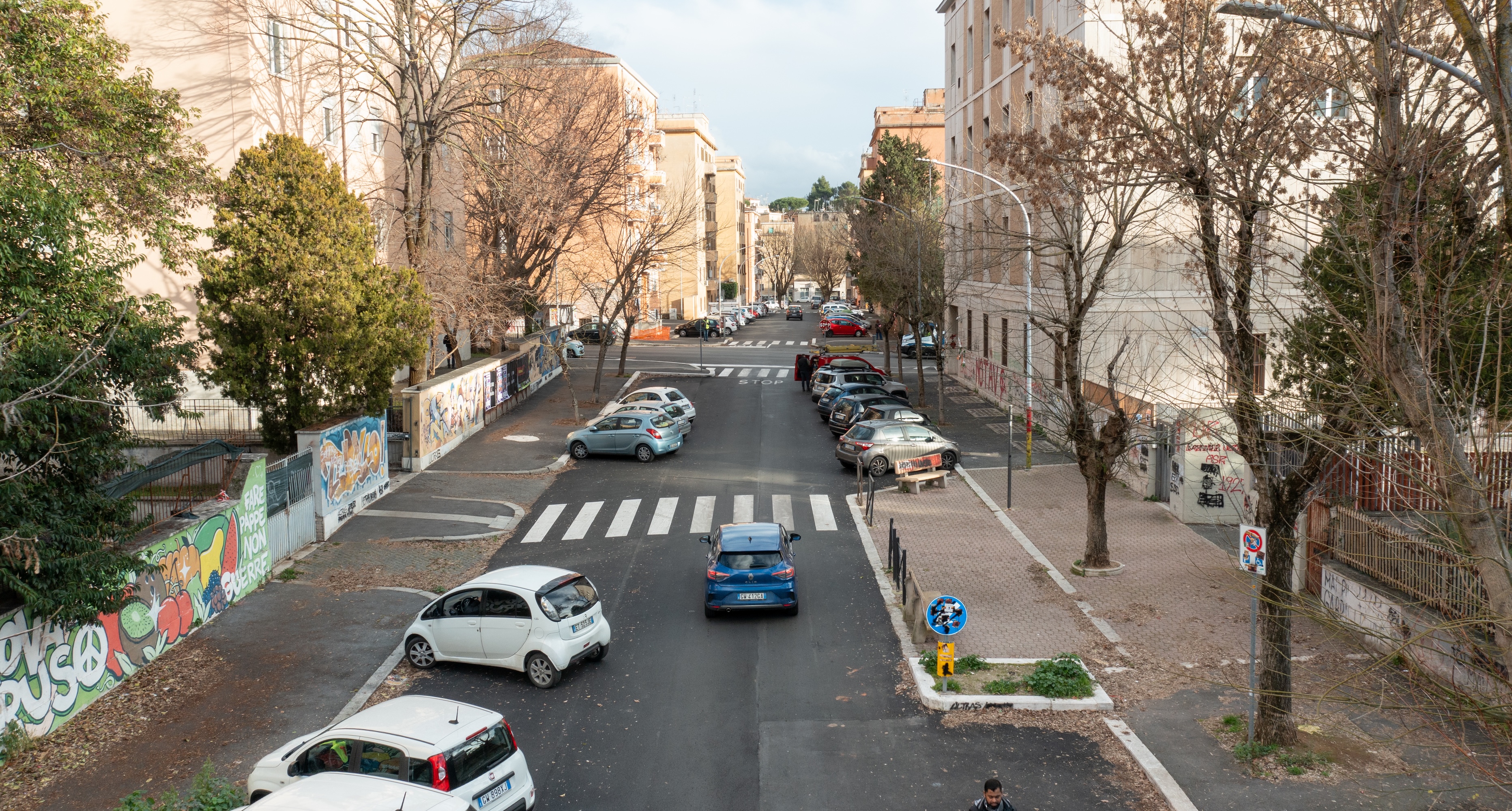
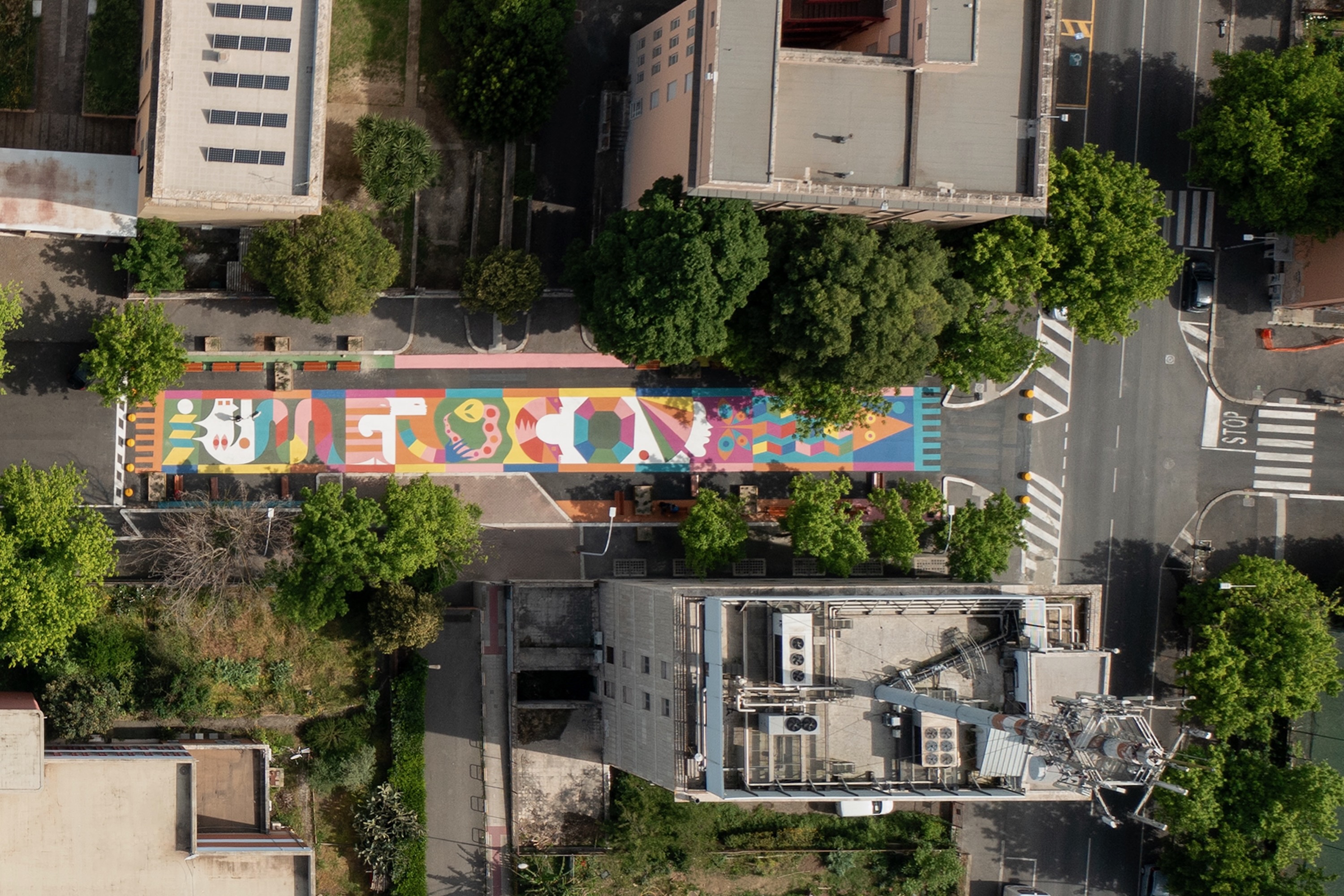
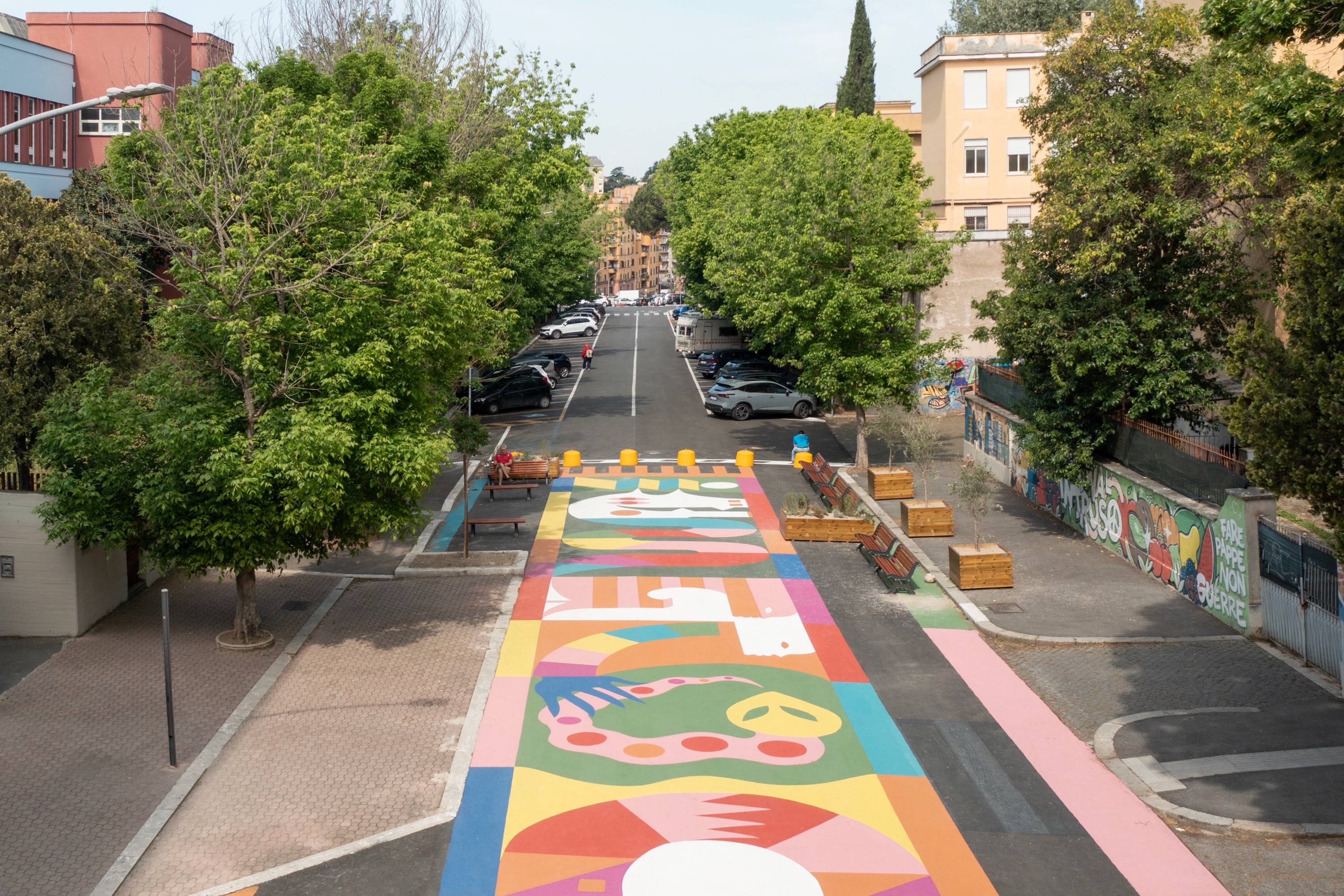
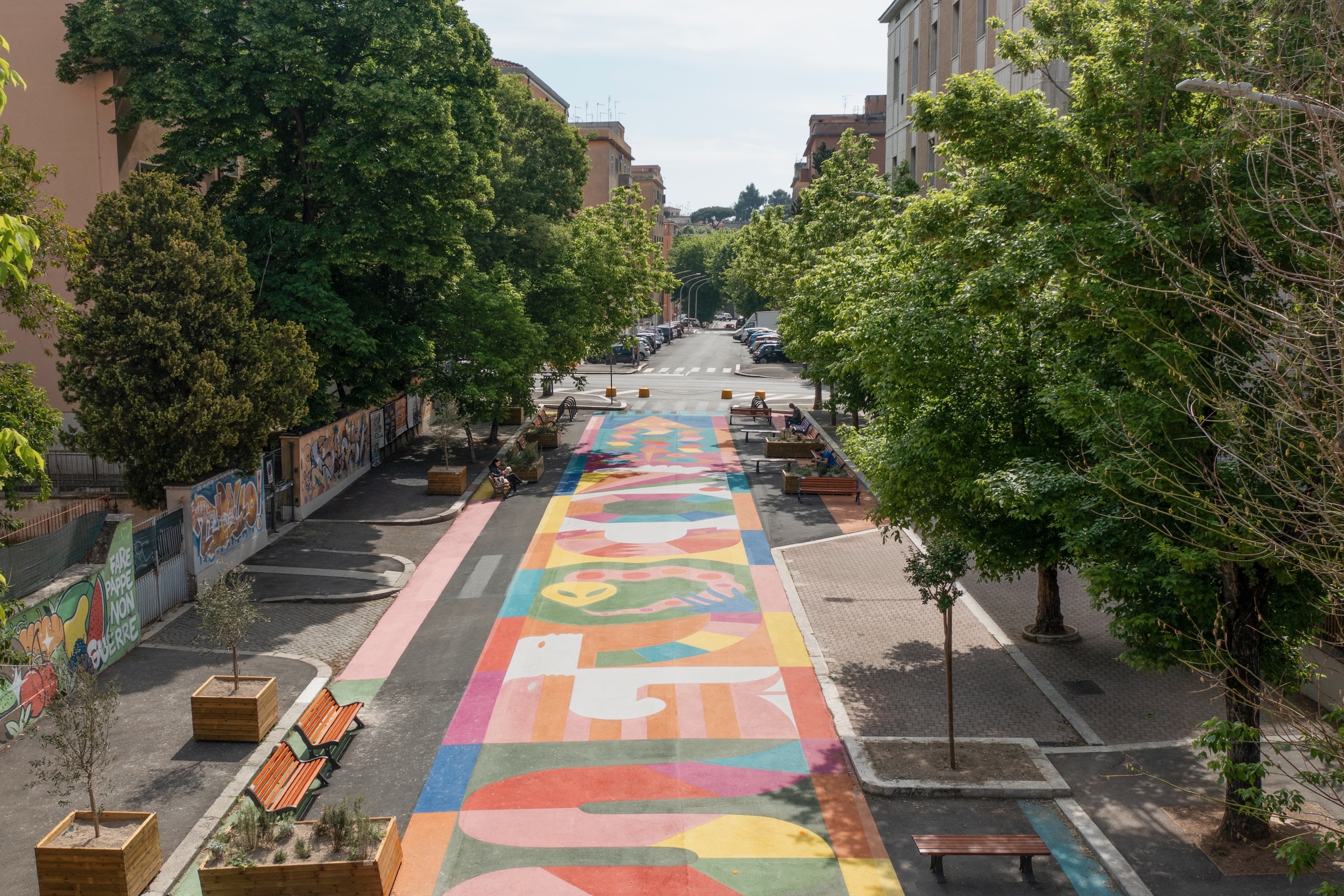
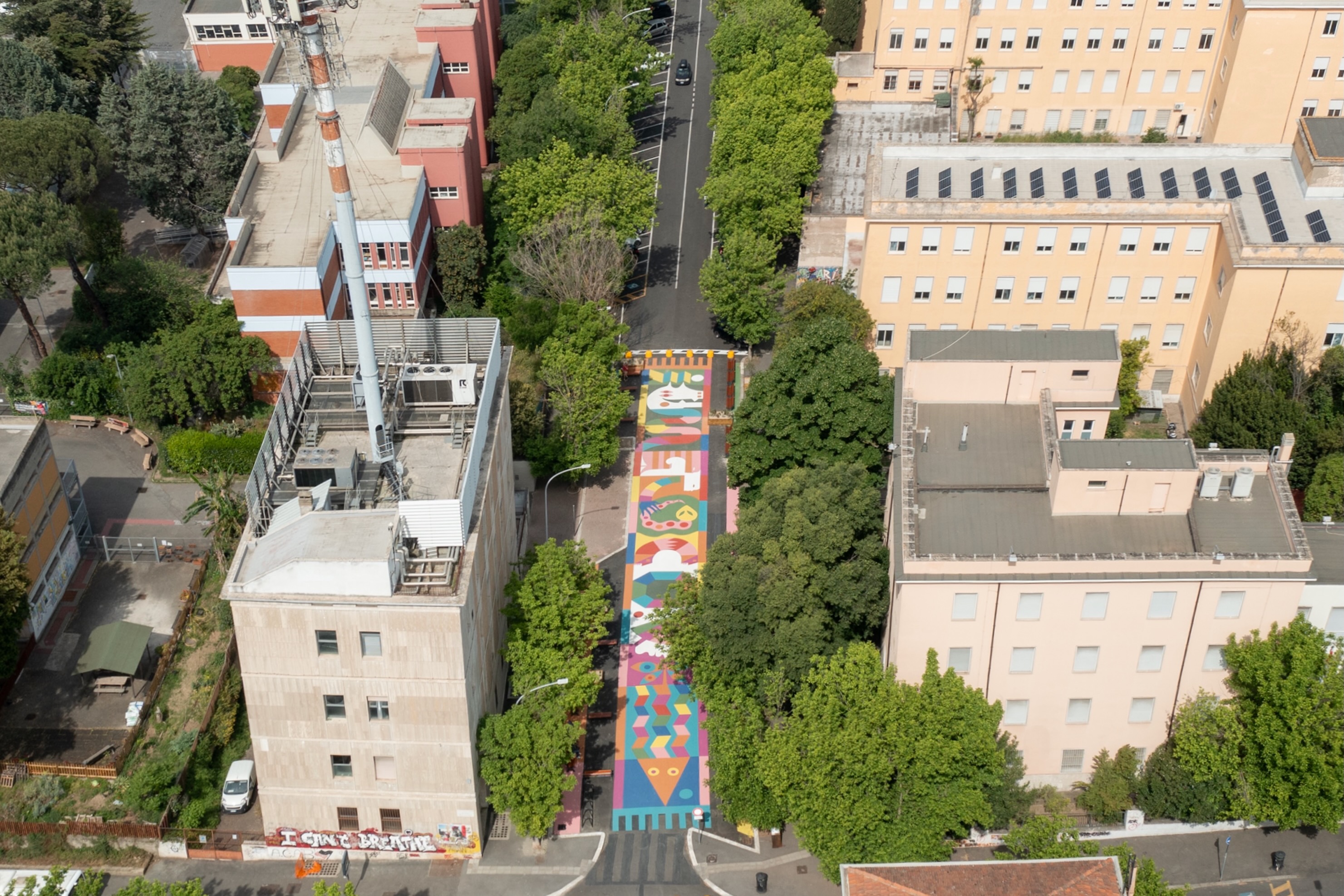
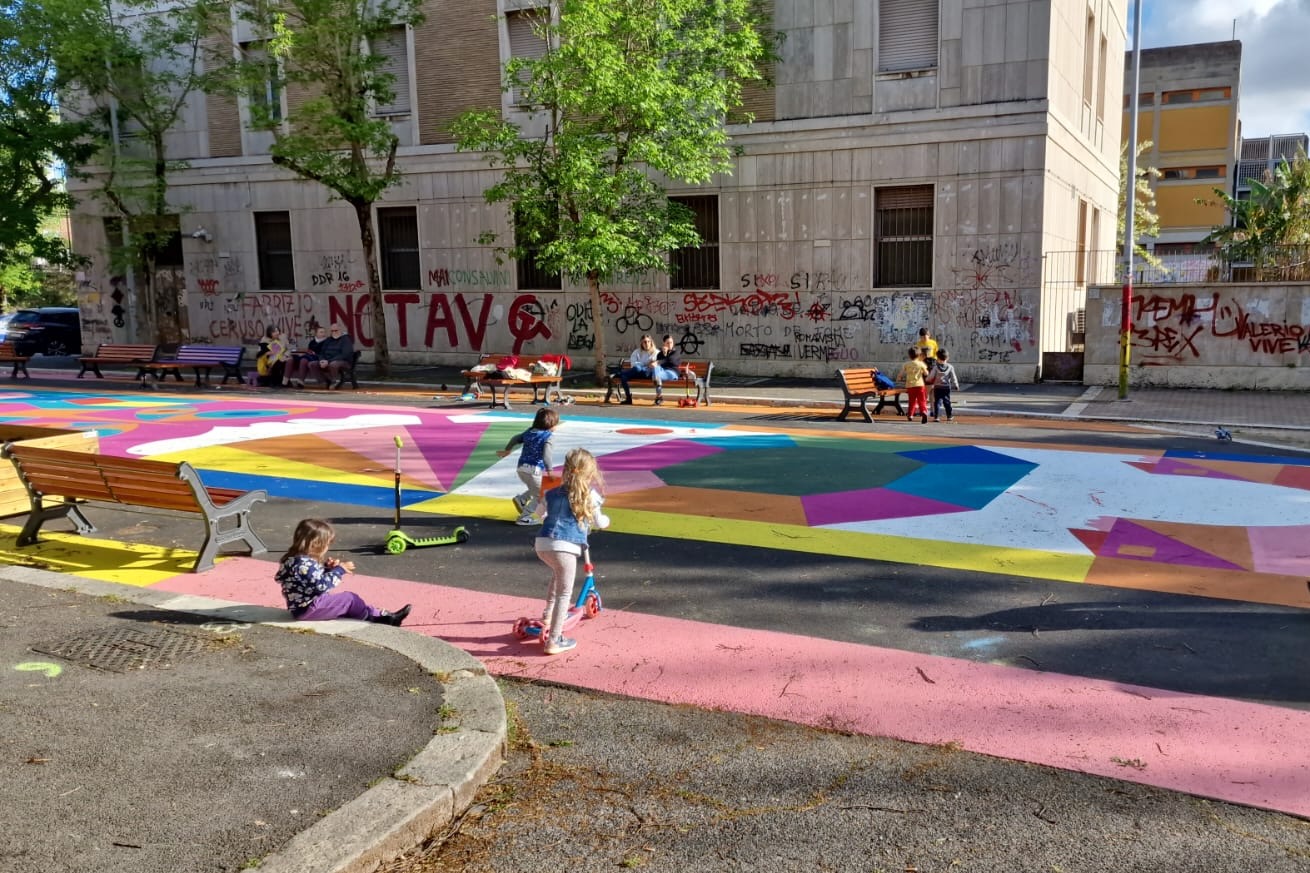
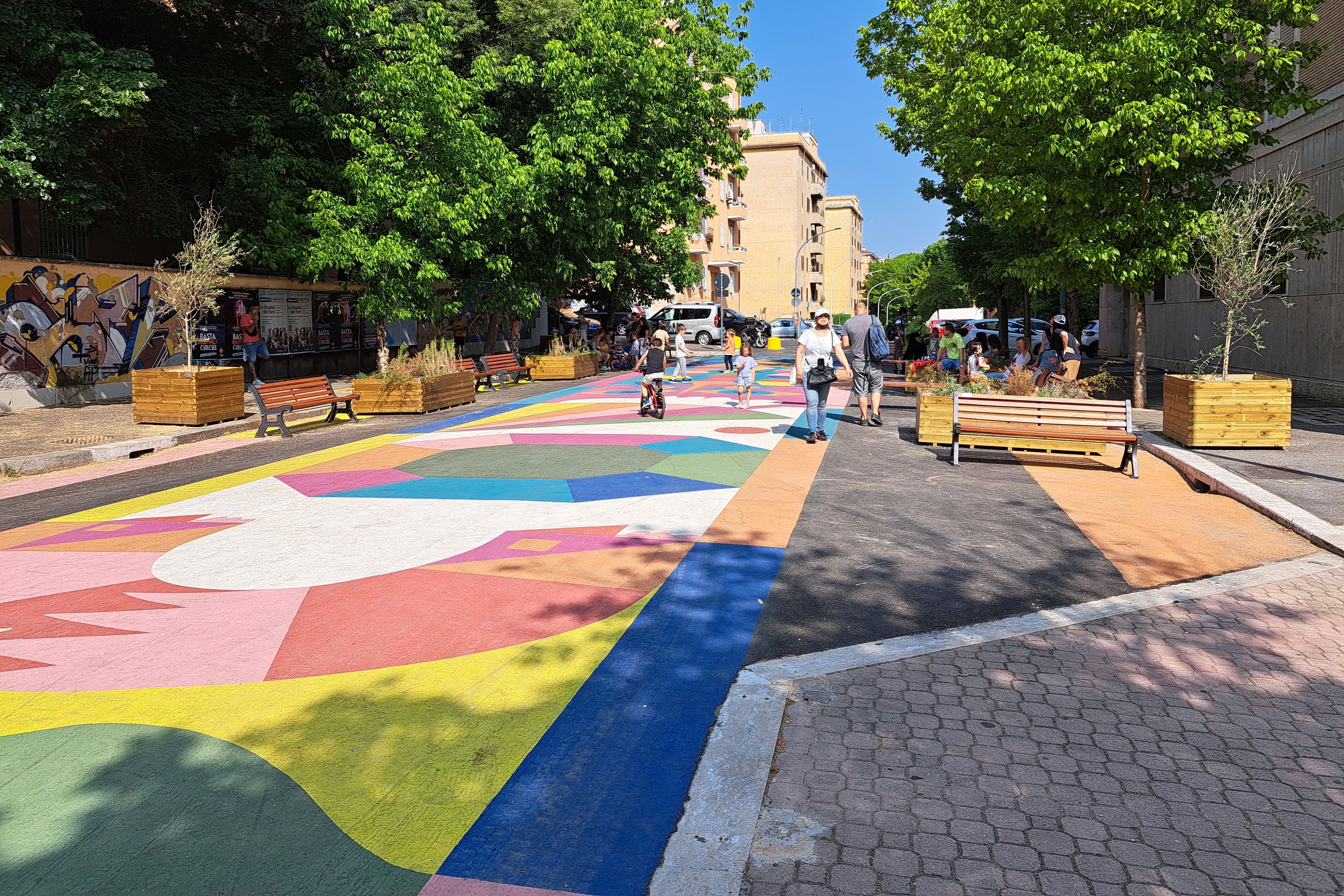
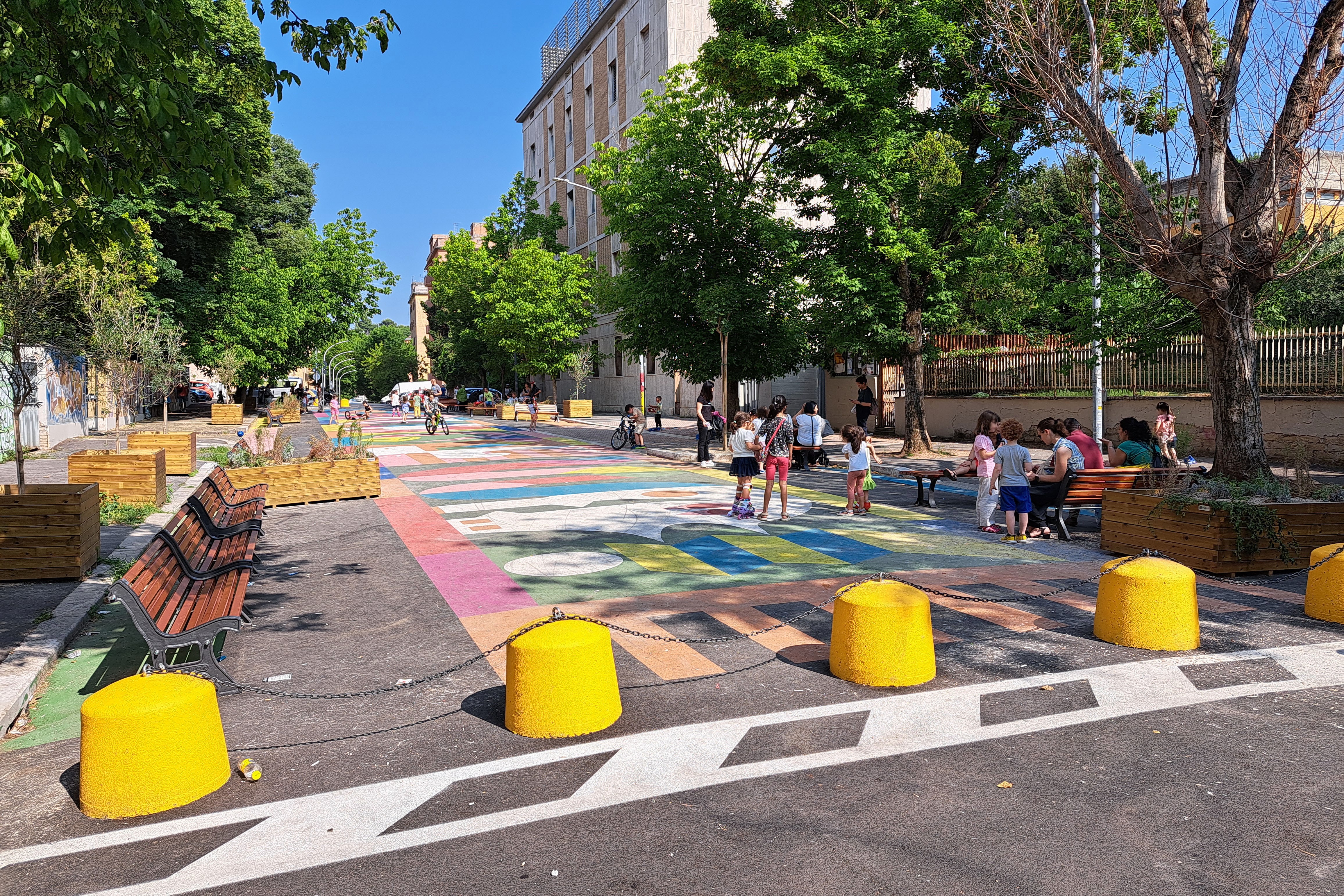
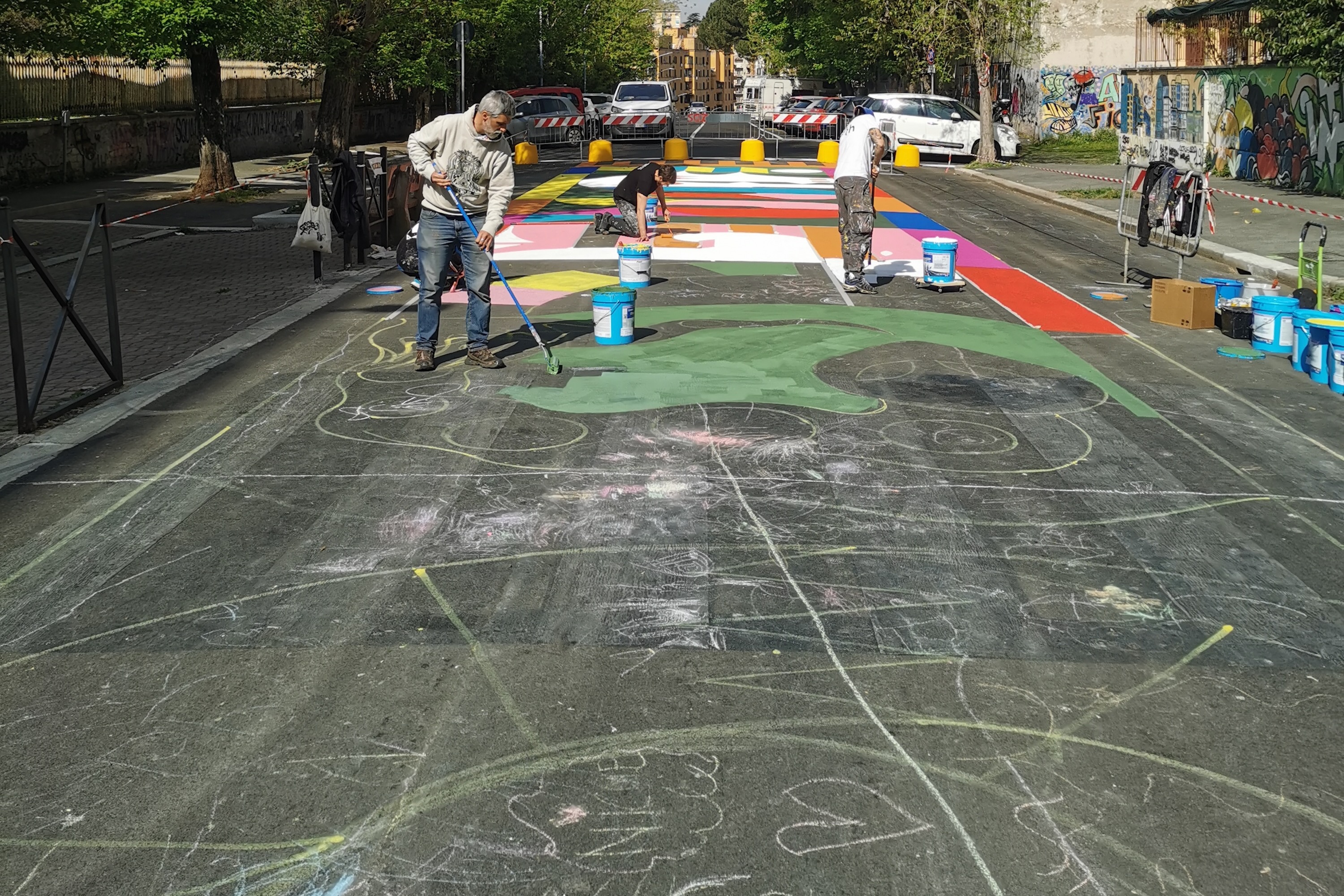
Via Monte Ruggero marks Rome’s first “school street” to integrate asphalt art as a tool for safer, more people-centered public space. In the heart of Tufello, where several schools, a library, and community facilities converge, the street had long been a fast-moving corridor that posed daily risks for children and families. In response, the City partnered with artist Gio Pistone to reimagine the corridor as a pedestrian-priority zone.
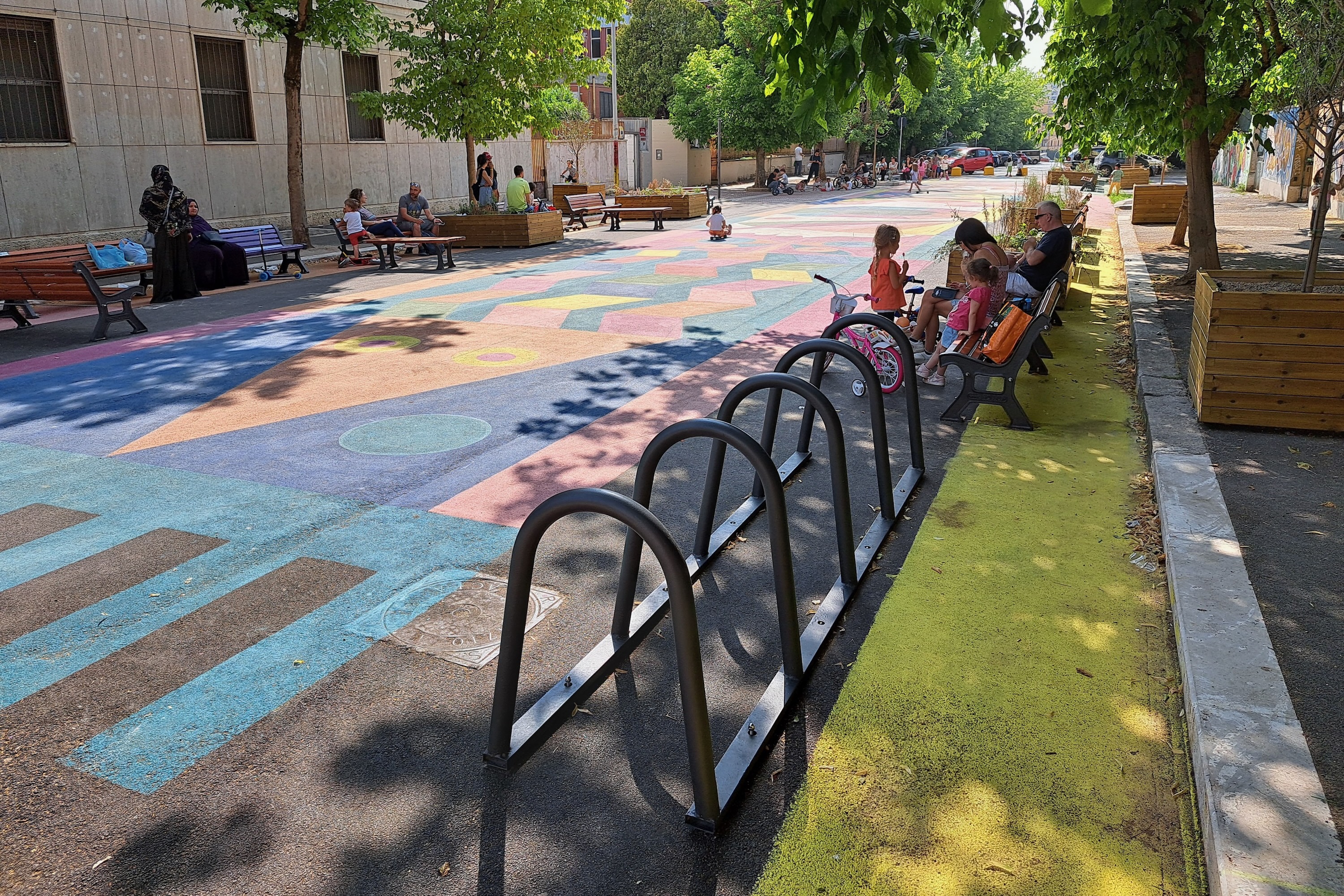
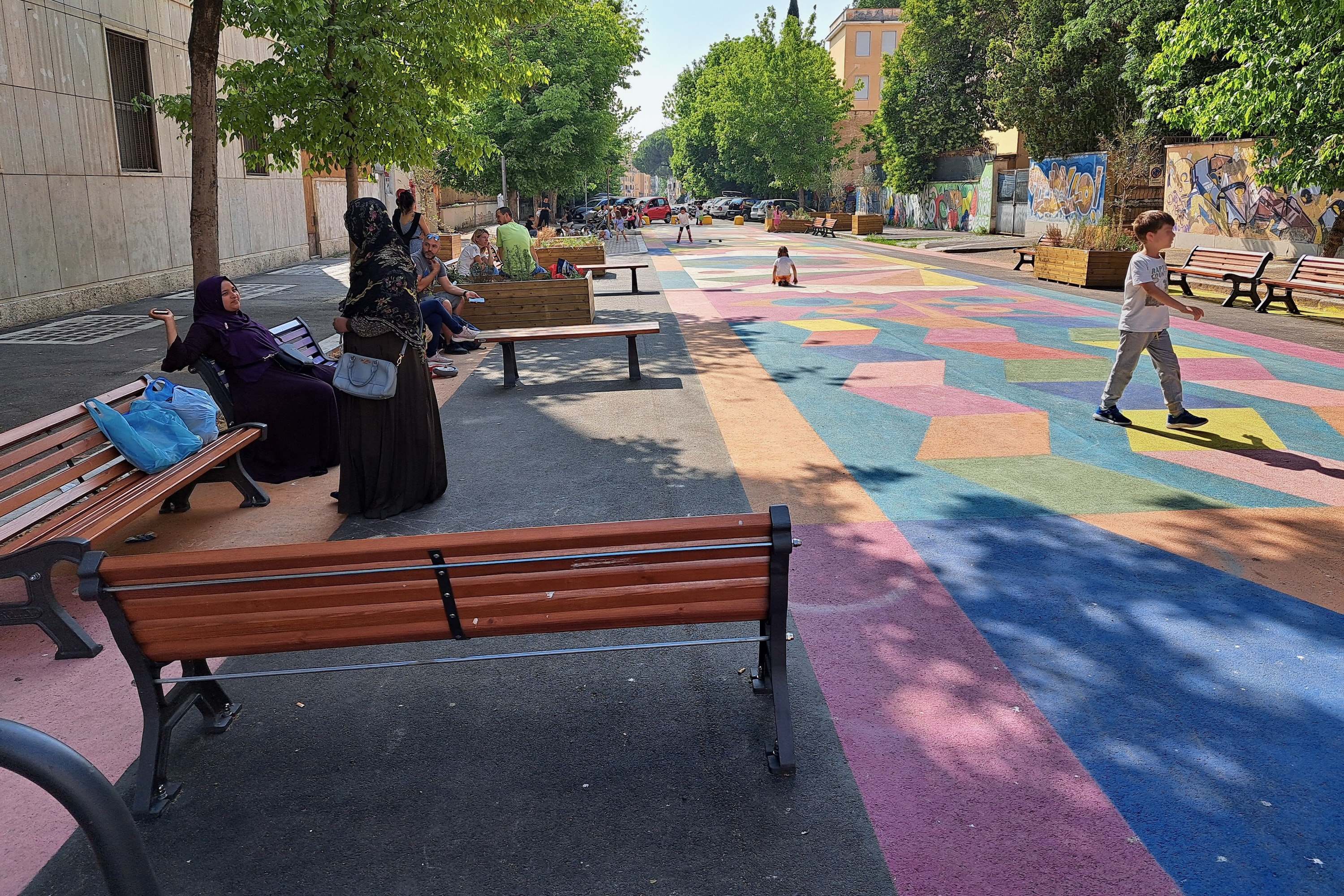
Through an online survey with more than 2,000 participants, residents selected Pistone’s Flying Carpet design, a vibrant mural that signals to drivers that they are entering a shared, low-speed environment. Paired with new benches, plantings, and bicycle racks, the artwork supports Rome’s broader goals for sustainable mobility and safer school access. The transformed Via Monte Ruggero now functions as a joyful public space where students and neighbors can walk, play, and gather.
“Flying Carpet represents an inclusive gathering place, a comfortable square where neighborhood communities all hang out together. People walk, children play, teenagers chat, all together in a cozy square on a carpet of colors to fly together.”
Gio Pistone, artist
Use the slider to see the transformation
Press
Roma, al Tufello un «tappeto magico» sulla strada per la sicurezza degli studenti (Corriere delle Sera – Roma, April 29, 2025)
Rome’s first “Artistic” school street inaugurated on Via Monte Ruggero (AGR, April 29, 2025)
A work of art on the asphalt: Rome has the first “artistic” school street (Il Faro, April 29, 2025)
«Asphalt art», a Roma parte dal Tufello l’iniziativa americana di colorare le strade per renderle più sicure (Corriere delle Sera – Roma, April 15, 2025)
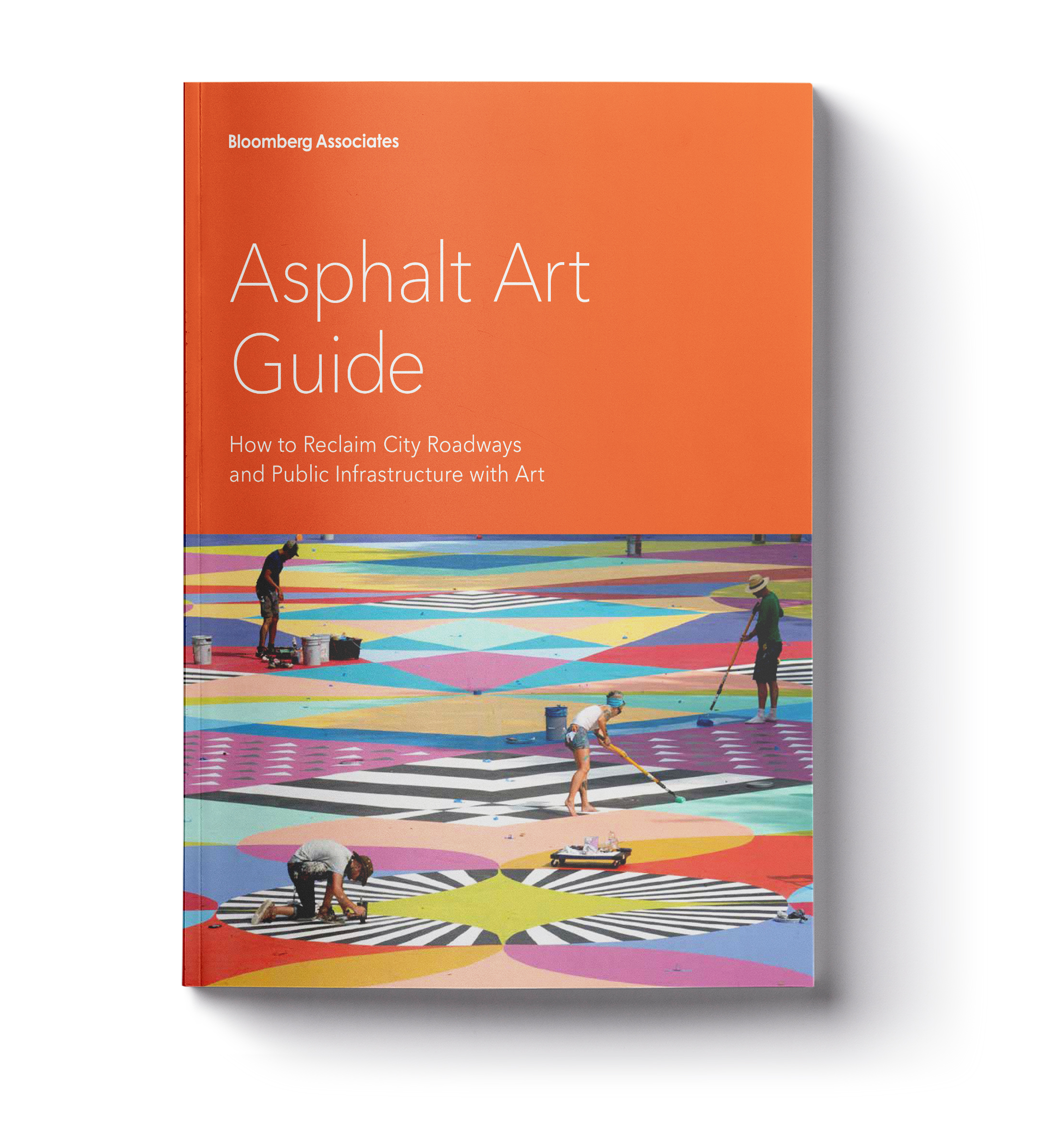
For inspiration and tips for the creation of art on roadways and public places, download the Bloomberg Associates Asphalt Art Guide which features successful plaza and roadway art activations around the world, as well as key steps for developing such projects.

Prato, Italy
Reclaiming a parking lot for neighborhood life
The Project
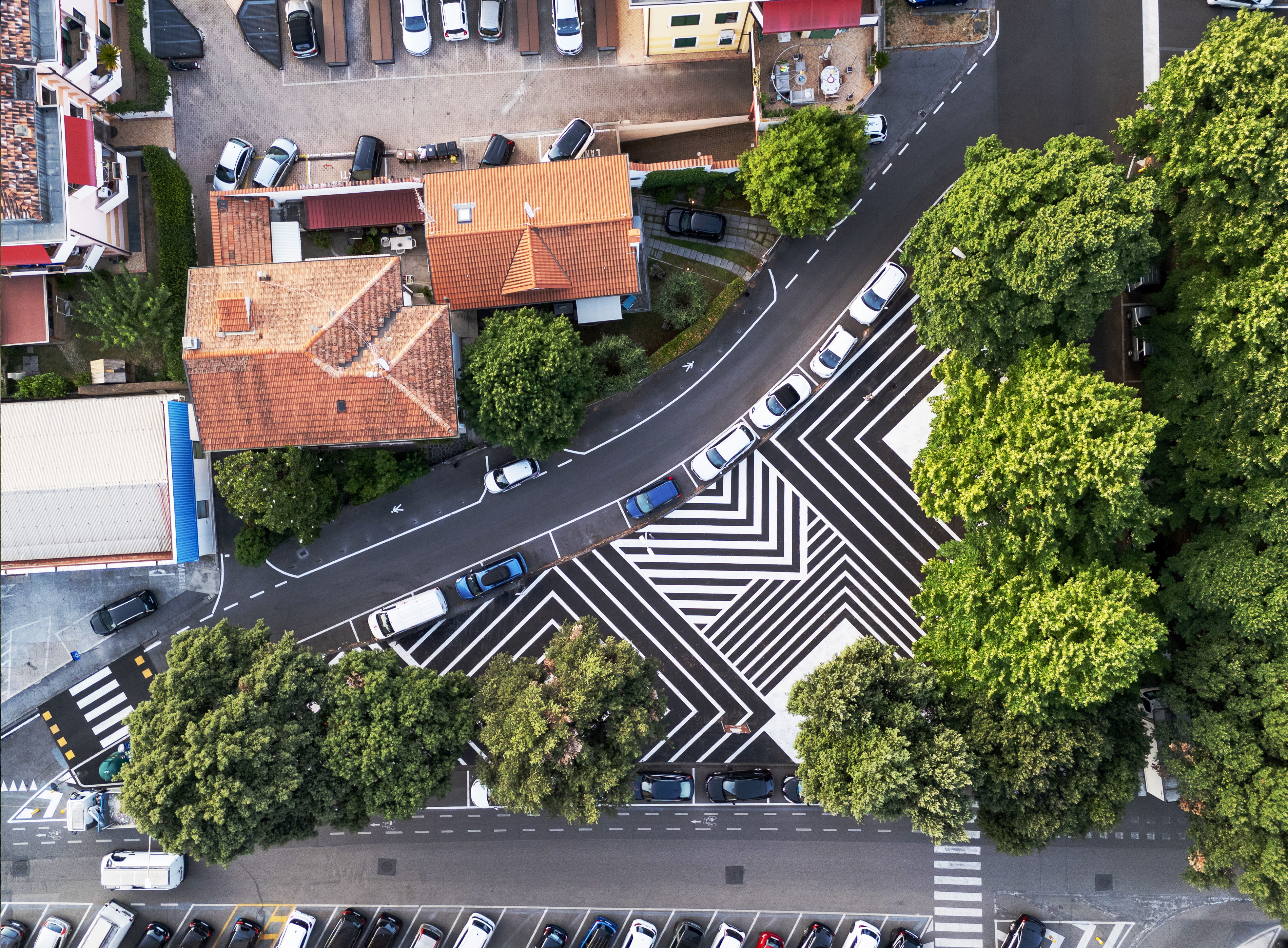
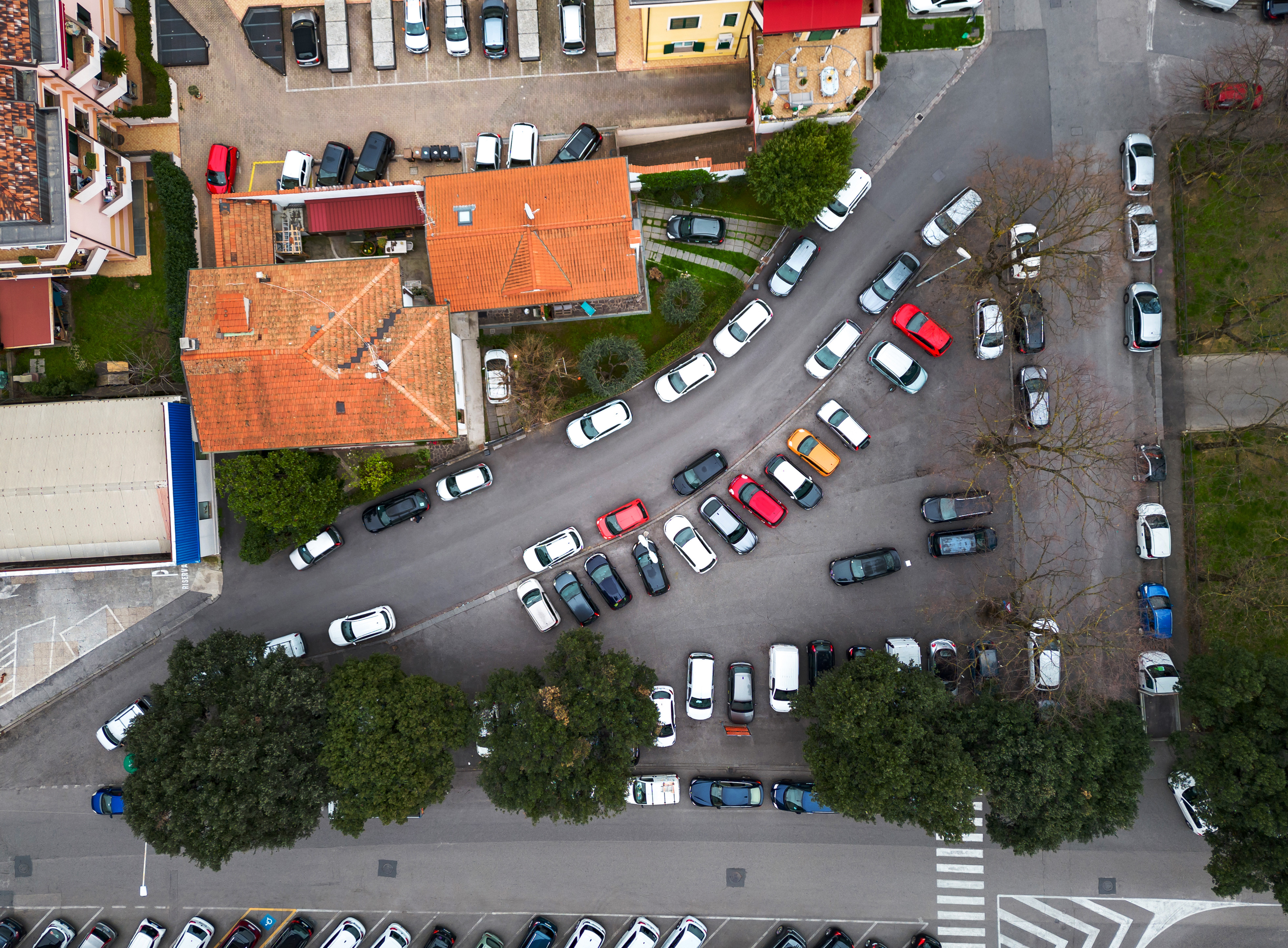
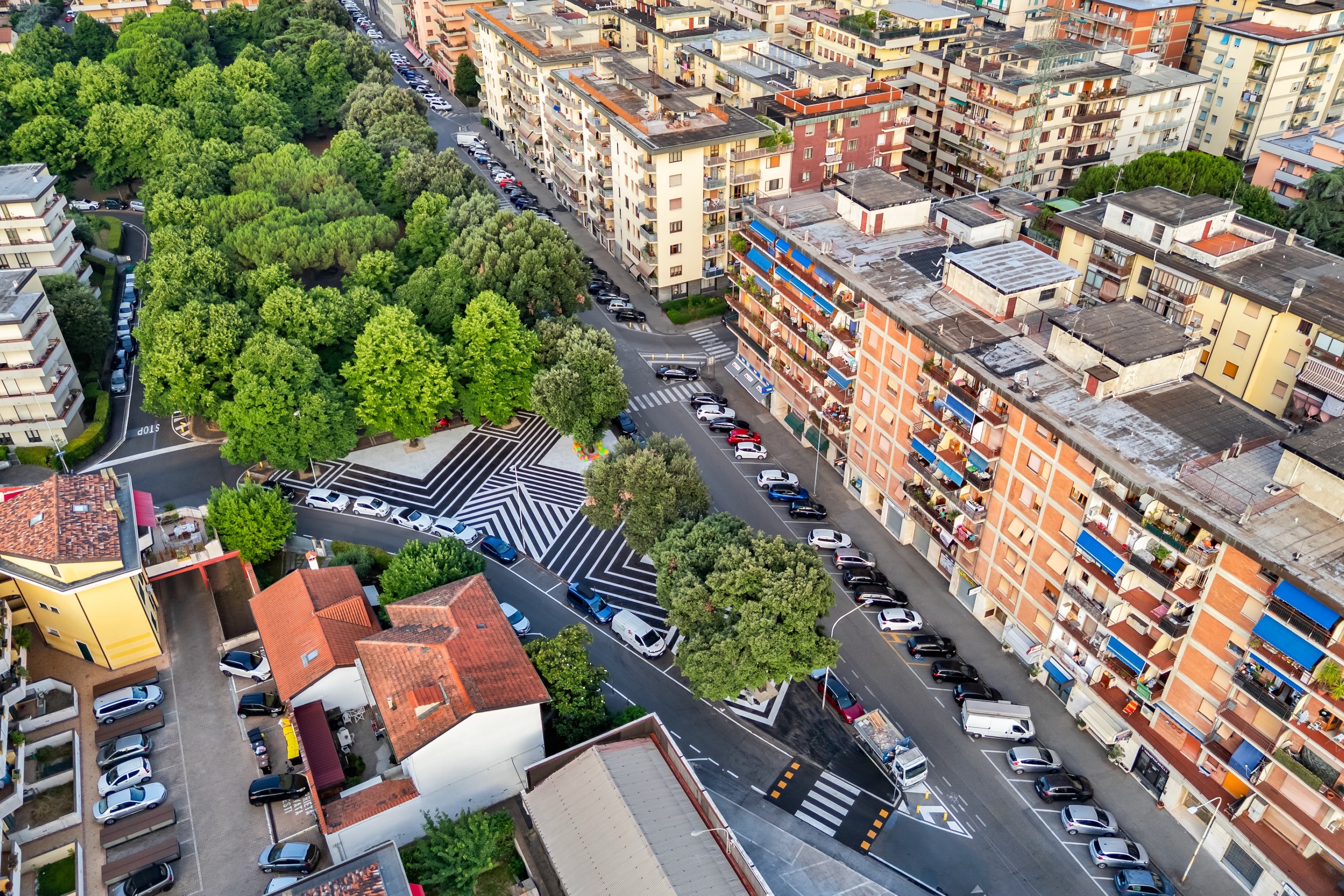
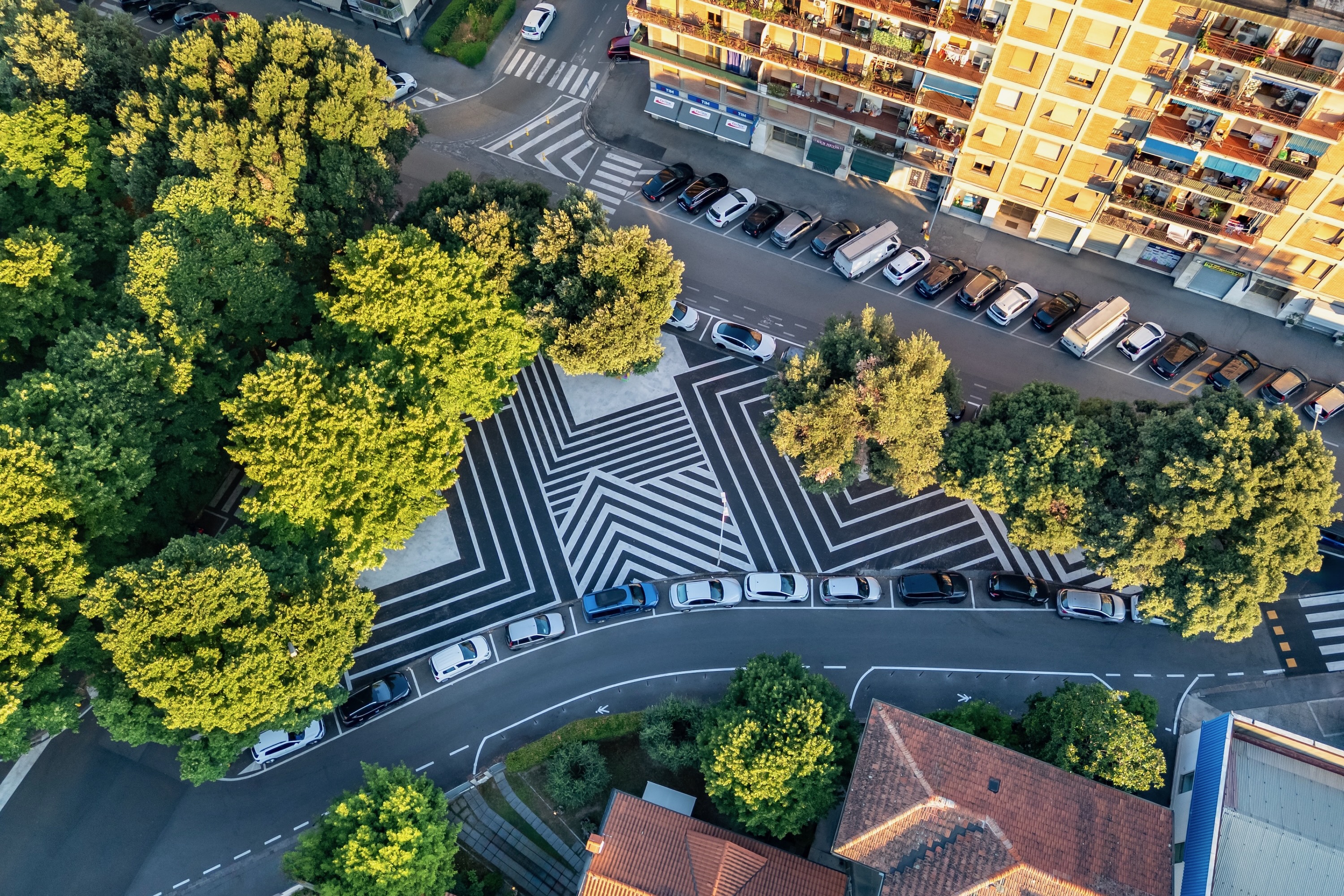
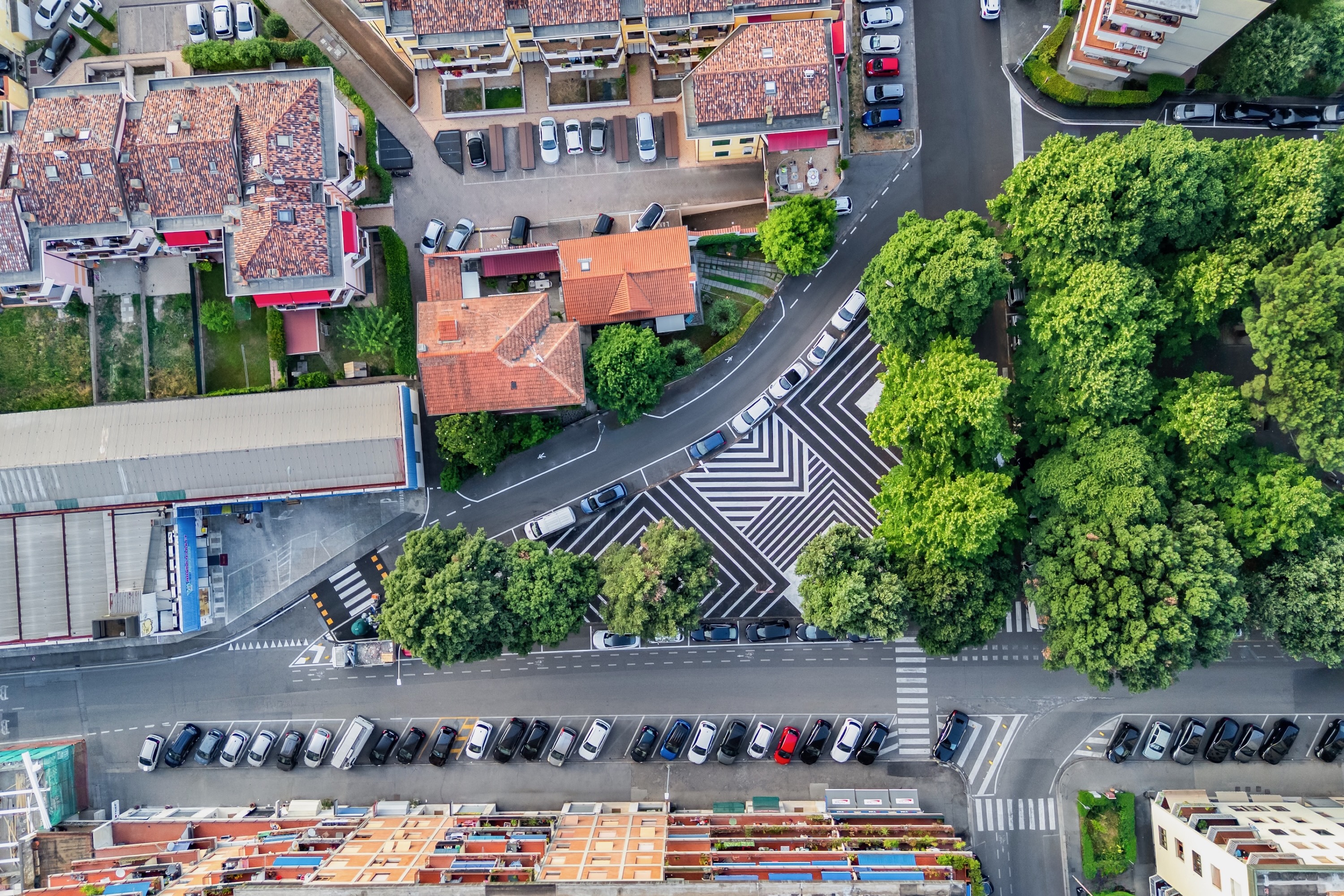
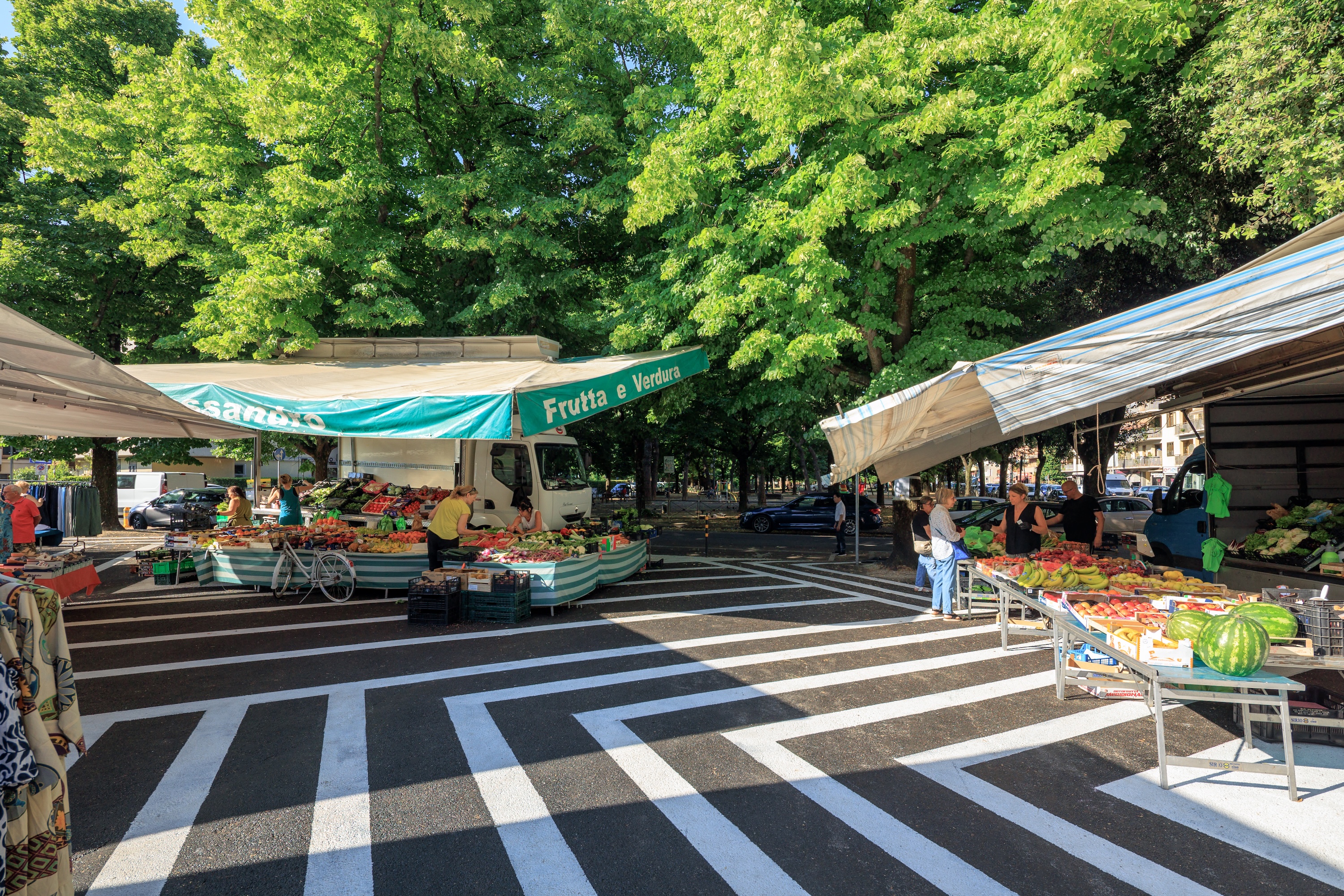
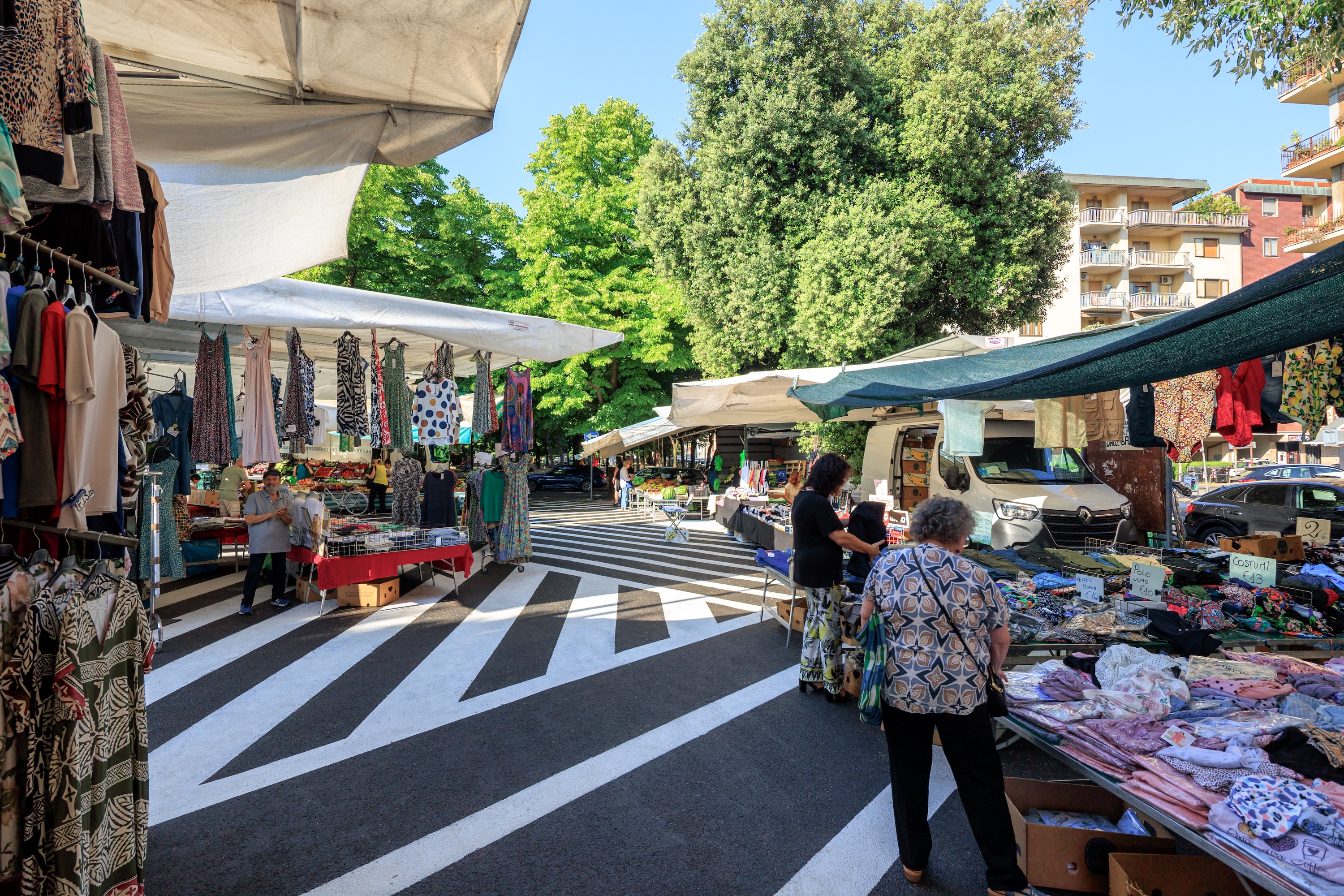
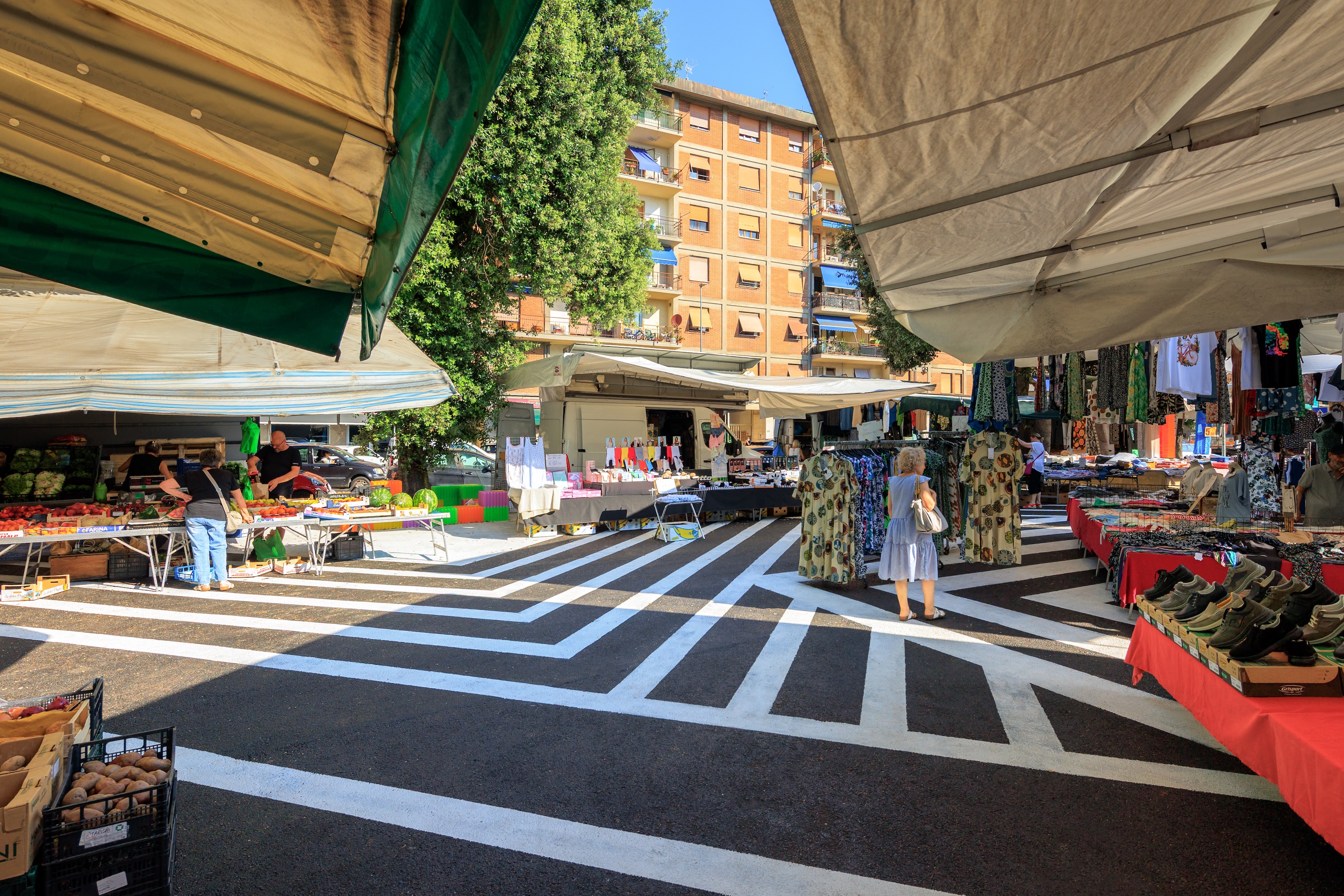
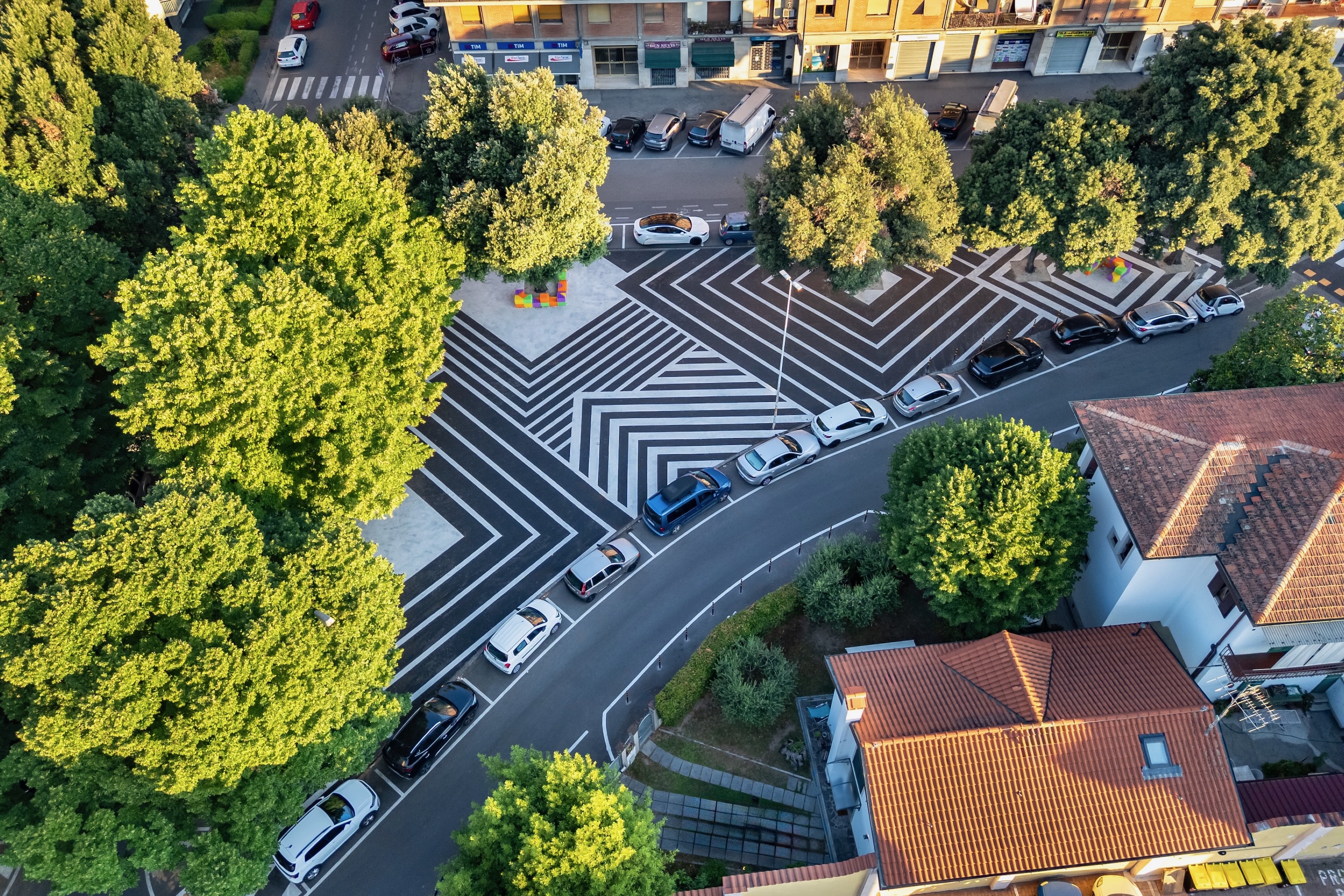
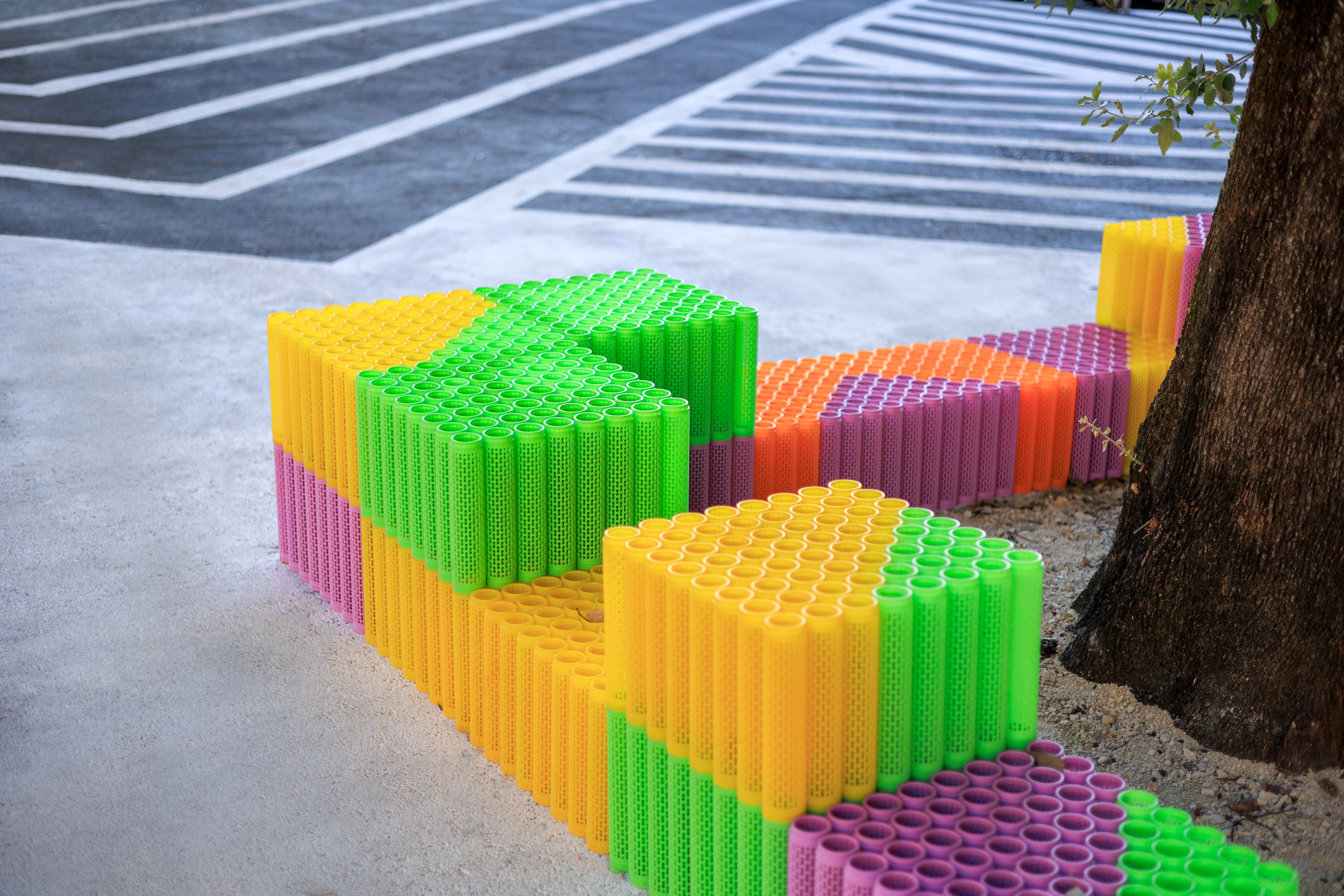
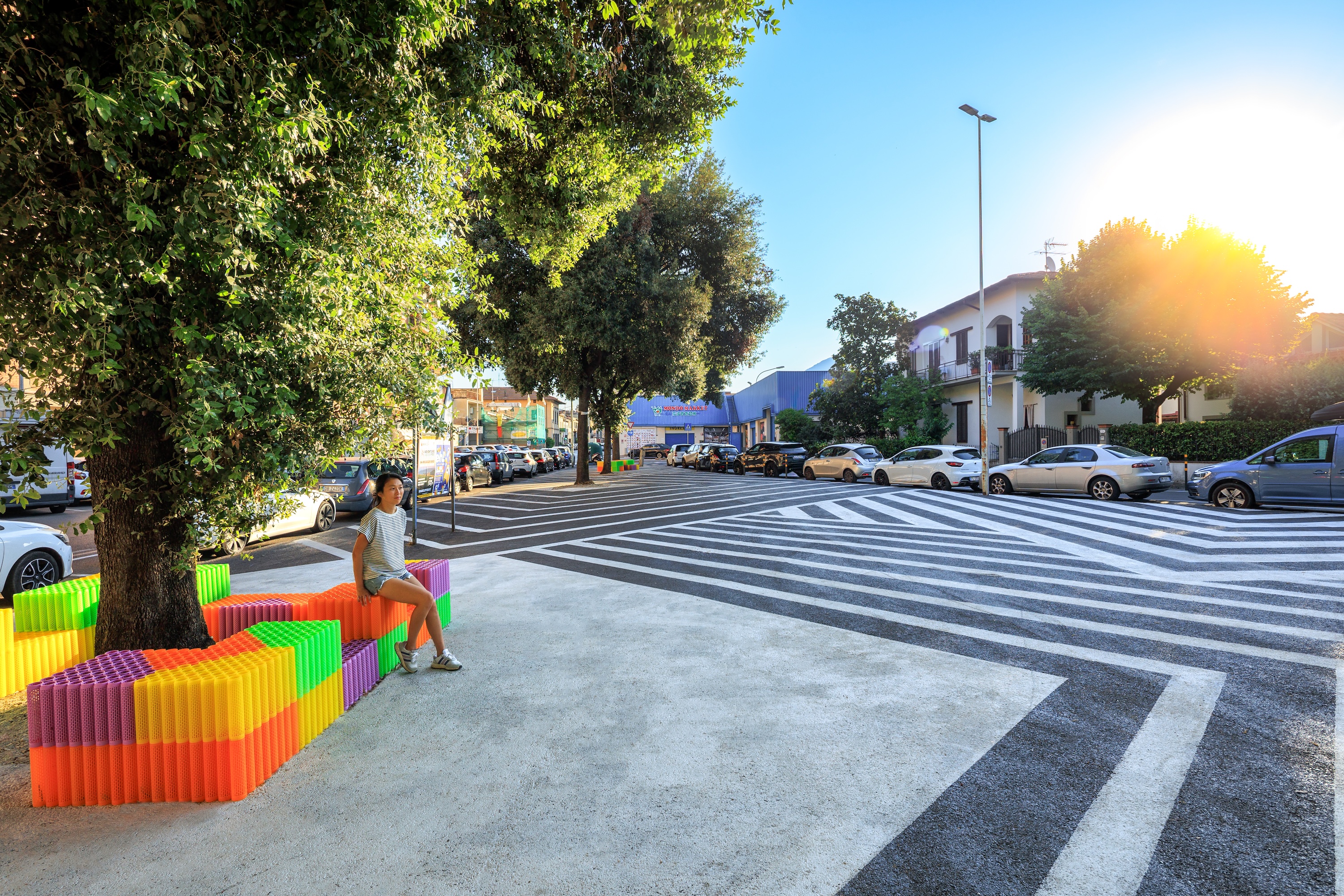
Along bustling Via Marx, this project reimagined an informal parking lot that had long posed challenges for pedestrian safety, livability, and public space access. Situated in a densely populated district with limited green areas, the site functioned as a vehicle-dominated void—disconnected from nearby pedestrian routes and lacking any inviting community infrastructure. The intervention transformed the space into a safe, welcoming extension of the neighborhood’s public realm, reconnecting residents to key walking paths leading toward the city center and demonstrating how underused asphalt can be reclaimed for people rather than cars.
The installation introduced a vibrant ground mural, shaded seating made from repurposed materials, and new crosswalks that organized circulation and slowed vehicle movement. The renewed space now also offers a more comfortable, dynamic setting for the neighborhood’s weekly farmers’ market. Developed through public workshops, the project doubled as a catalyst for community participation. Volunteers—including students of architecture and design, with residents and design students joining the painting process and helping shape the space. By testing a new layout for Via Marx and sparking dialogue about its long-term future, the project not only delivered immediate improvements but also catalyzed ongoing stewardship.
Use the slider to see the transformation
Best Practice Highlight: Turning temporary urbanism into long-term stewardship
This project demonstrates how a temporary intervention can lead to lasting forms of community participation when it is built on an existing ecosystem of local actors. The project team intentionally worked within a network of cultural organizations, neighborhood groups, and municipal partners whose relationships shaped both the design process and the outcomes. Workshops led by CUT (Circuito Urbano Temporaneo), together with public events curated by La Cultura Nuova and The Loom, created multiple entry points for residents to test new uses of the space, express concerns, and build a shared vision for the site’s future. These collaborations strengthened community ownership and generated momentum that extended beyond installation week.
This groundwork ultimately led to the signing of a Patto di Collaborazione, an agreement between the community and the municipality to care for the new square. By aligning the design process with civic collaboration and everyday participation, the project illustrates how asphalt art can serve not only as a spatial improvement but as a catalyst for governance, empowering communities to take responsibility for public space over time.
Press
Asphalt Art Initiative: Funding for regeneration projects and pedestrian spaces in Rome, Florence, and Prato, (Habimat, November 18, 2022)
For inspiration and tips for the creation of art on roadways and public places, download the Bloomberg Associates Asphalt Art Guide which features successful plaza and roadway art activations around the world, as well as key steps for developing such projects.


Amsterdam, Netherlands
Bringing a neighborhood market to life
The Project
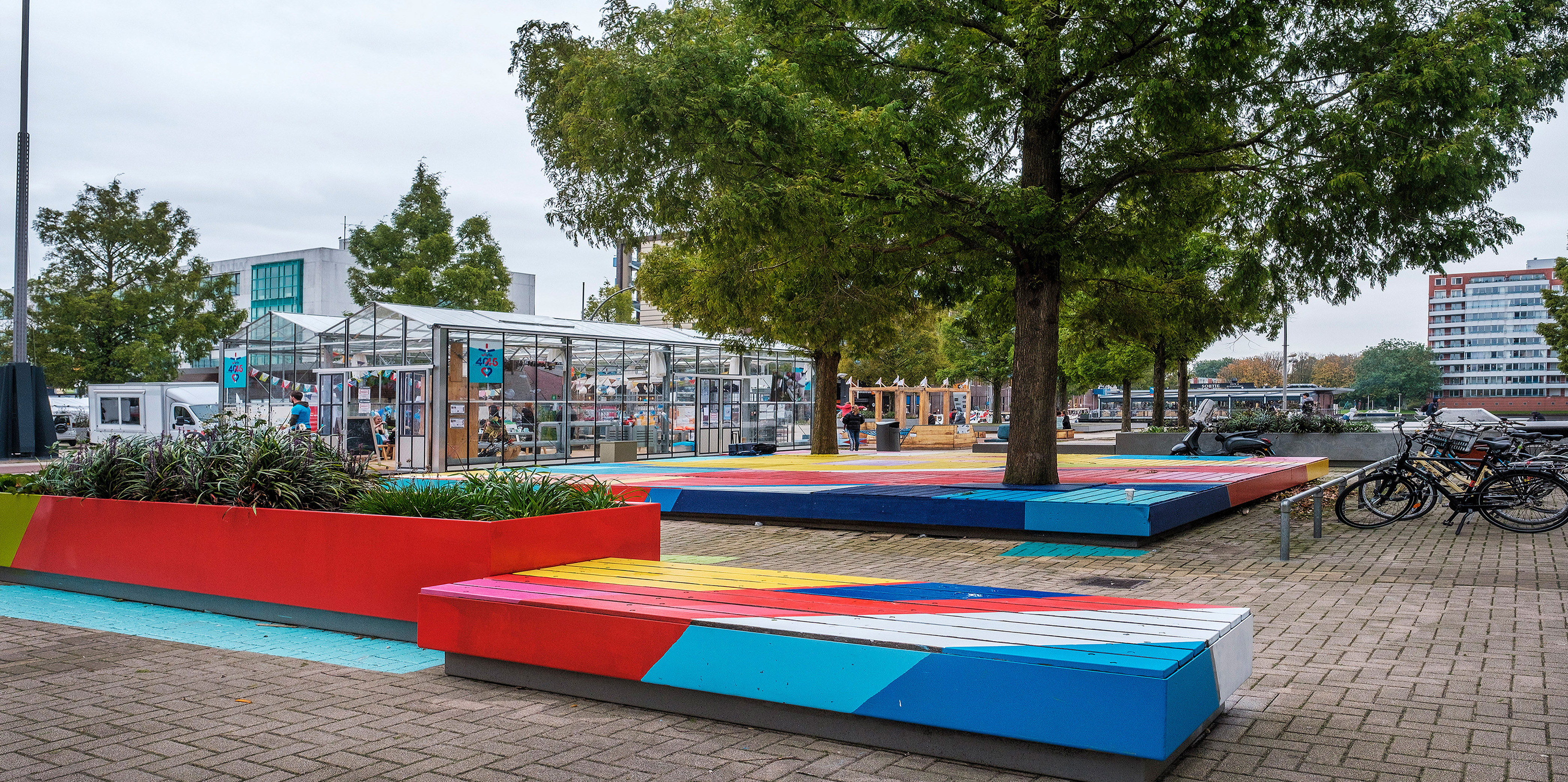
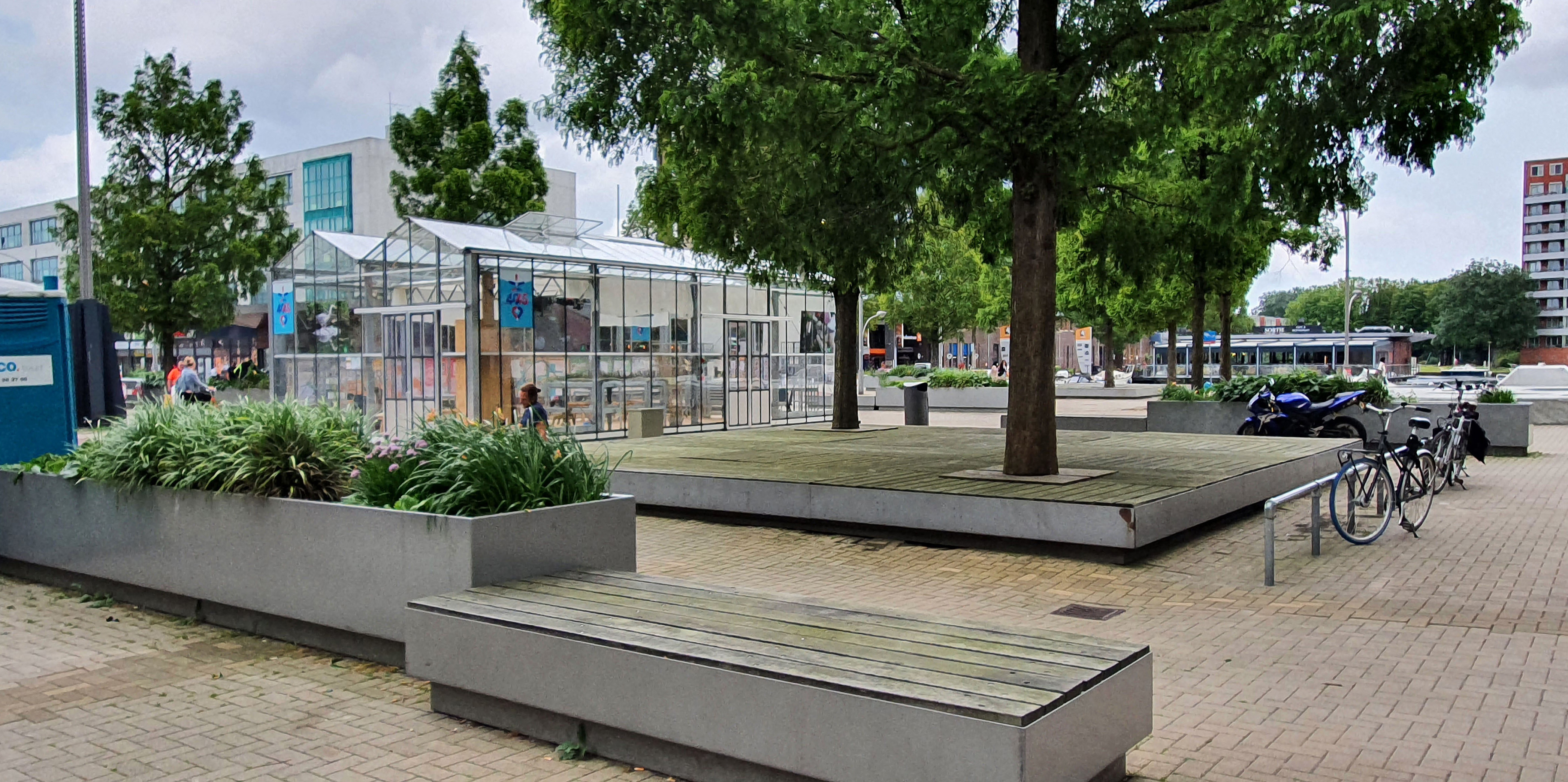
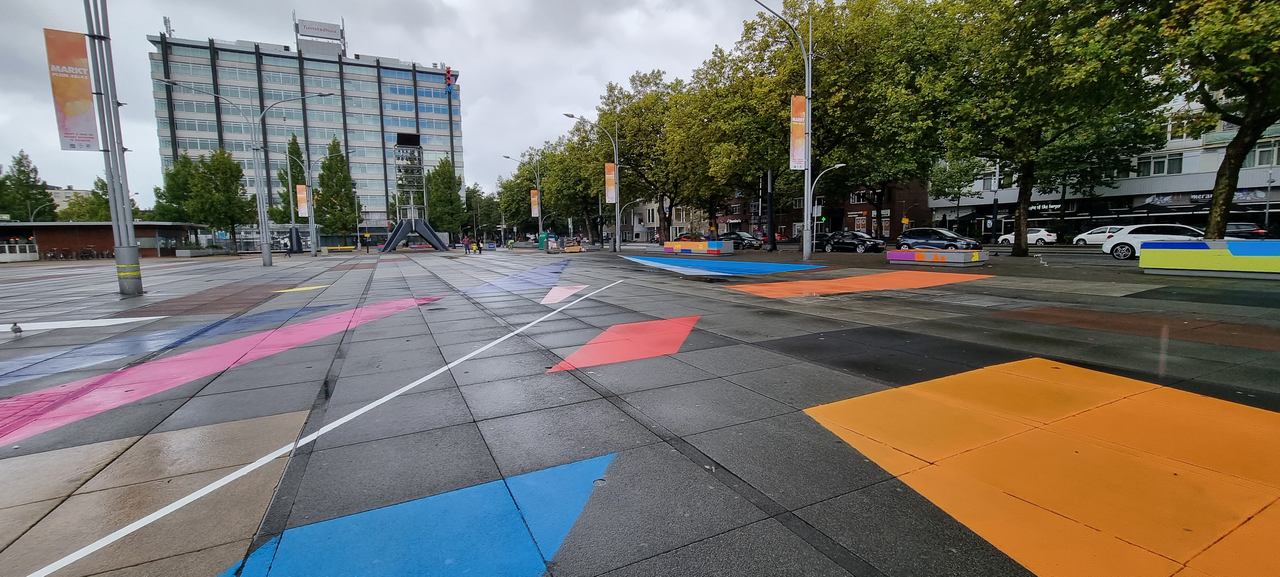
Amsterdam’s Asphalt Art Initiative project, “Surround Sound,” was designed to build connections between the city’s vibrant street art community and residents in the Nieuw-West district, a mixed-income area in the far west of the city with a diverse immigrant population. A unique partnership between the central city district government, Nieuw-West, the Street Art Museum Amsterdam and the Spanish City-Designated Artist Kenor, the project brings bright splashes of color to benches, planters, and portions of the sidewalk near the vibrant local marketplace at Plein 40-45, drawing customers on market days and enlivening the neighborhood for residents year-round. The “Surround Sound” design was later adapted into a design scheme for the global cities summit Bloomberg CityLab held in Amsterdam in October 2022.
Asphalt Art Is Revitalizing This Amsterdam Neighborhood
“I hope that our artwork will really connect everybody. It’s a showstopper that makes you think about your surrounding environment and hopefully, eventually, brings you closer to a place where you live, so you become, not a consumer, but an actual member of the community”
Anna Stolyarova, Director, Street Art Museum Amsterdam
Use the slider to see the transformation


For inspiration and tips for the creation of art on roadways and public places, download the Bloomberg Associates Asphalt Art Guide which features successful plaza and roadway art activations around the world, as well as key steps for developing such projects.


Glasgow, Scotland
Using public art to reimagine a transportation hub
The Project
“Waterworks,” designed by Scottish artist Gabriella Marcella in partnership with the Glasgow City Council and Civic Engineers, reimagines the forgotten space just outside of downtown at the entrance to Anderston Station, a major commuter hub and the nexus of major bike and pedestrian routes underneath the imposing M8 highway bridge above. Timed with the city’s hosting of the Conference of the Parties (COP), the UN’s annual global gathering of climate change representatives from around the world, Waterworks uses Gabriella’s colorful, eye-catching artwork, benches and other placemaking elements to enliven the area and improve navigation through the once-forgotten public space and encourage more people to walk, bike and take transit.
Tackling Climate Change with Asphalt Art
“For a reasonably small amount of money, you can actually make a space much more pedestrian and cyclist friendly. And hopefully that will attract people out of cars, which is what needs to happen in order to tackle climate change.”
Isla Jackson, Director, Civic Engineers Glasgow
Use the slider to see the transformation


Best Practice Highlight – Aligning with City Priorities: Sustainability
In addition to traditional public space elements, Waterworks includes an innovative rain garden feature designed to funnel rainfall from the highway above into a planted area in order to support native species and reduce flooding and harmful stormwater run-off. By incorporating efforts to reduce some of the most harmful impacts of climate change into an Asphalt Art Initiative project, Glasgow hopes to establish a new model for public space interventions elsewhere in the city and around the world.


For inspiration and tips for the creation of art on roadways and public places, download the Bloomberg Associates Asphalt Art Guide which features successful plaza and roadway art activations around the world, as well as key steps for developing such projects.


London, England
Catalyzing economic recovery through public art
The Project
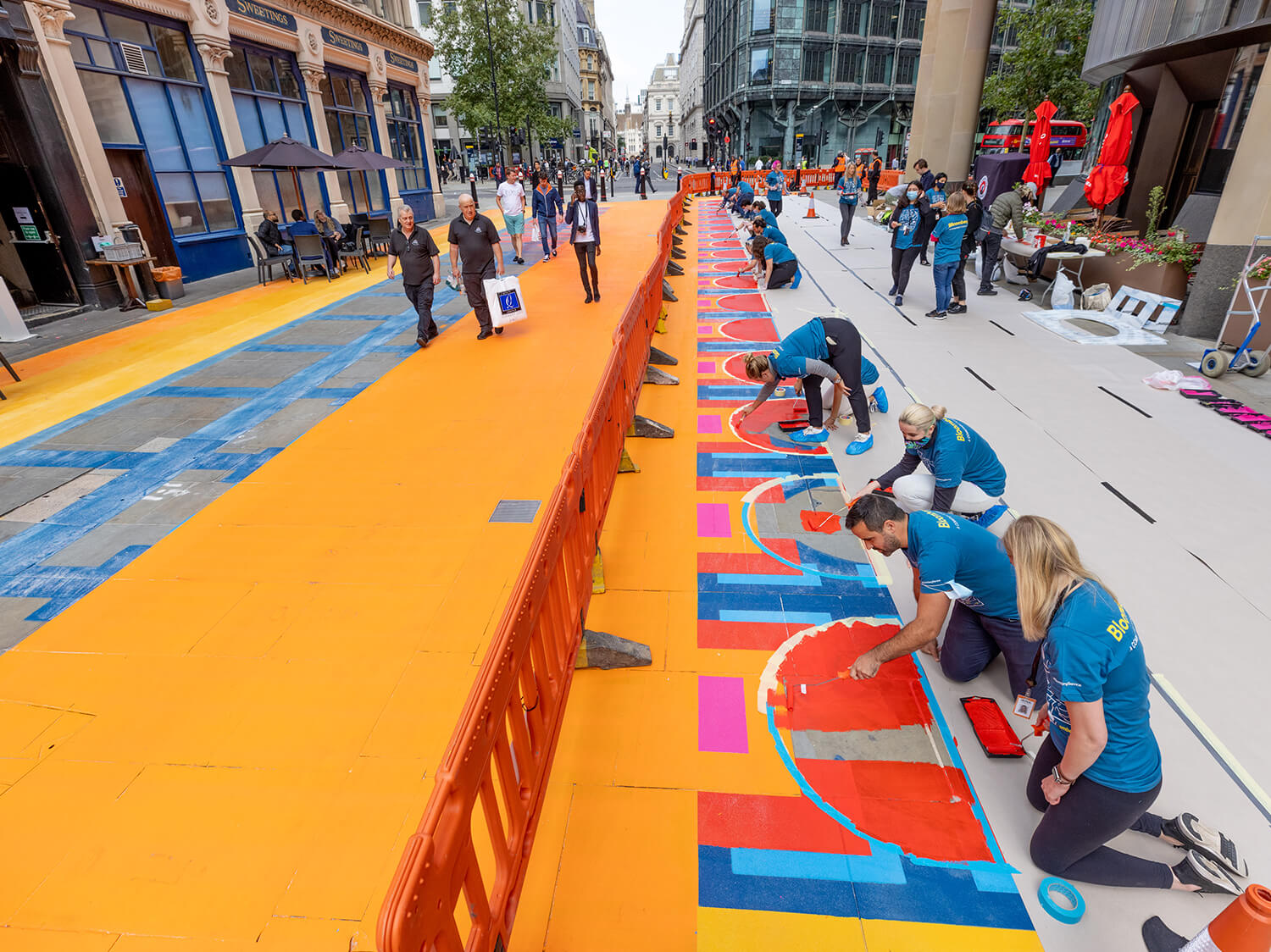
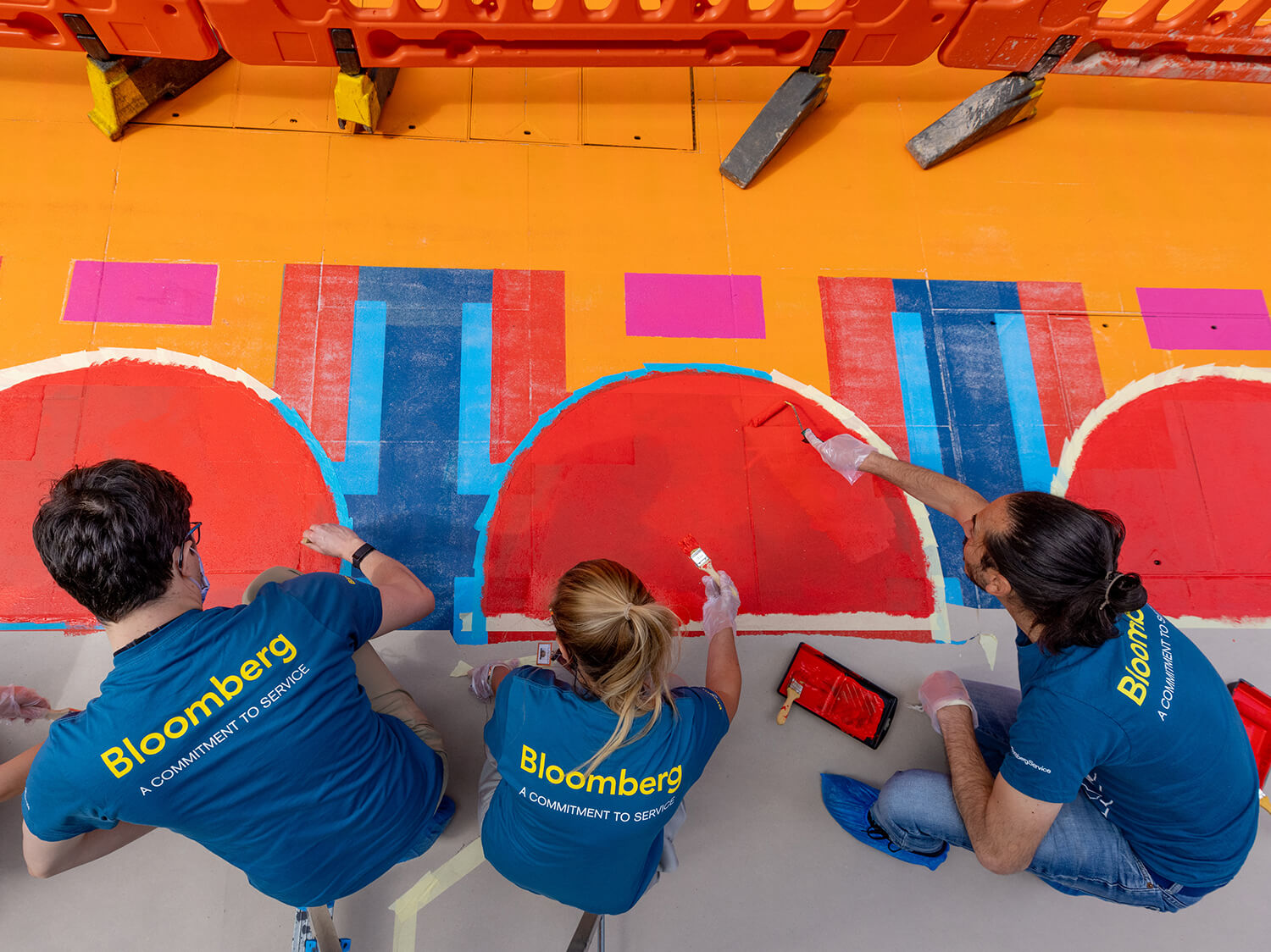
As part of London Design Festival, 11 crosswalks on Tottenham Court Road and a pedestrian plaza and crosswalk in the City of London were reimagined with distinctive, playful designs featuring bright colors and shapes. The artistic direction for the project was led by London-based artist Yinka Ilori, who worked with three art students from the University of the Arts London to develop some of the crosswalk designs, as well as community members invited to help paint the Queen Street pedestrian area. As the UK prepared to host the United Nation’s meeting on Climate Action, COP26, this project is one of several installations in international cities supported by the Asphalt Art Initiative to encourage more sustainable transportation and transform and revitalize public spaces through the power of art.
- 79% of pedestrians said these colorful crossings improve the local environment and feel of the street.
- Over half of pedestrians feel safer using these colorful crossings compared to normal pedestrian crossings.
Use the slider to see the transformation


“This is the joy the city needs after the past year, and what better way to see London reopen but to have one of the capital’s most exciting talents, Yinka Ilori, paint one of London’s most iconic streets.”
Ben Evans CBE, London Design Festival Director
Use the slider to see the transformation


Best Practice Highlight – Aligning with City Priorities: Recovery
The ‘Bring London Together’ project sought to aid the reopening and recovery of London after the height of the Covid-19 pandemic, bringing colour, life, and vibrancy to the streets of the City. The asphalt art installation was launched as part of Mayor Sadiq Khan’s “Let’s Do London” tourism campaign to support the capital’s creative, retail and hospitality sectors which were disproportionately affected by the pandemic. The domestic tourism campaign was the largest in London’s history, bringing together London’s leading hospitality, culture and retail organizations to offer an autumn season of design, fashion, film, art, and photography events welcoming City workers, Londoners and visitors back to the capital.






For inspiration and tips for the creation of art on roadways and public places, download the Bloomberg Associates Asphalt Art Guide which features successful plaza and roadway art activations around the world, as well as key steps for developing such projects.


Brno, Czech Republic
Sparking public dialogue about the future of a public space
The Project
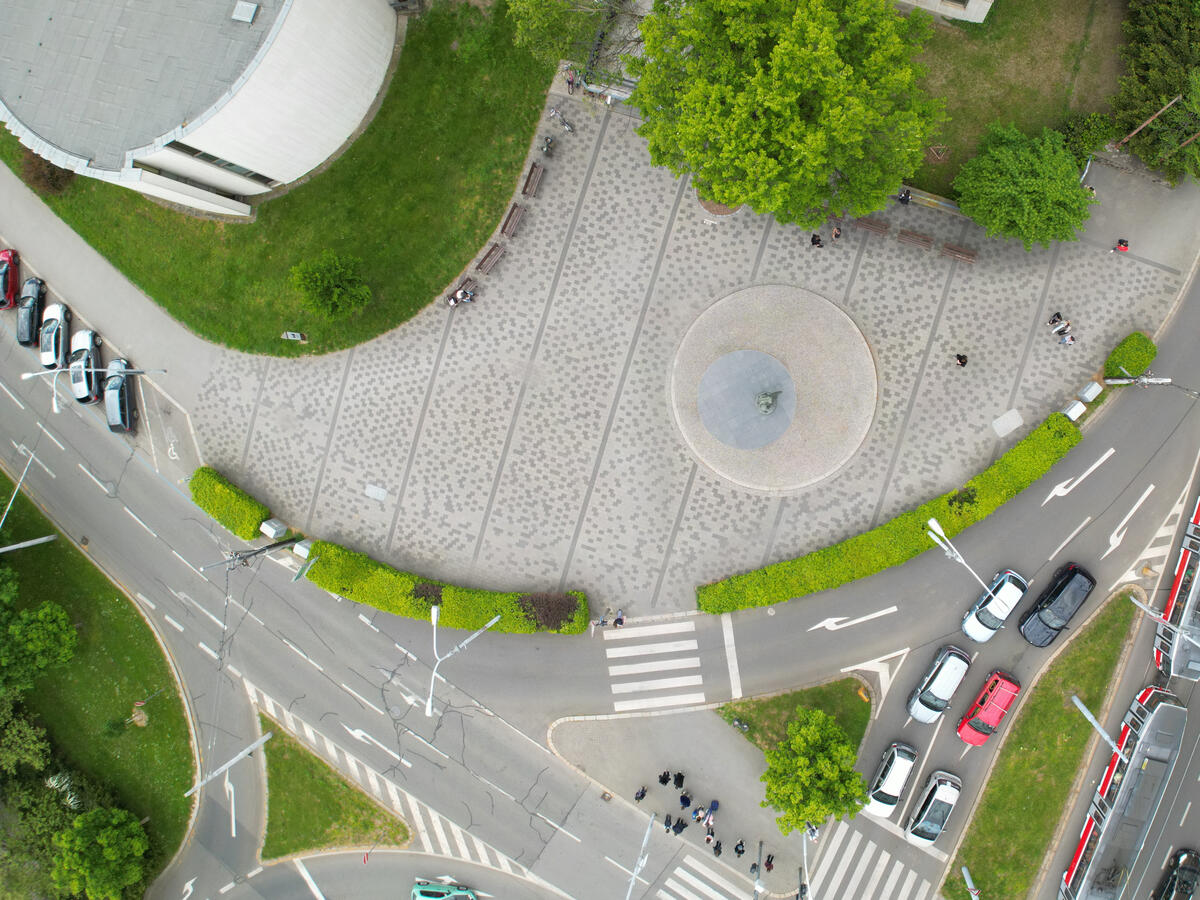
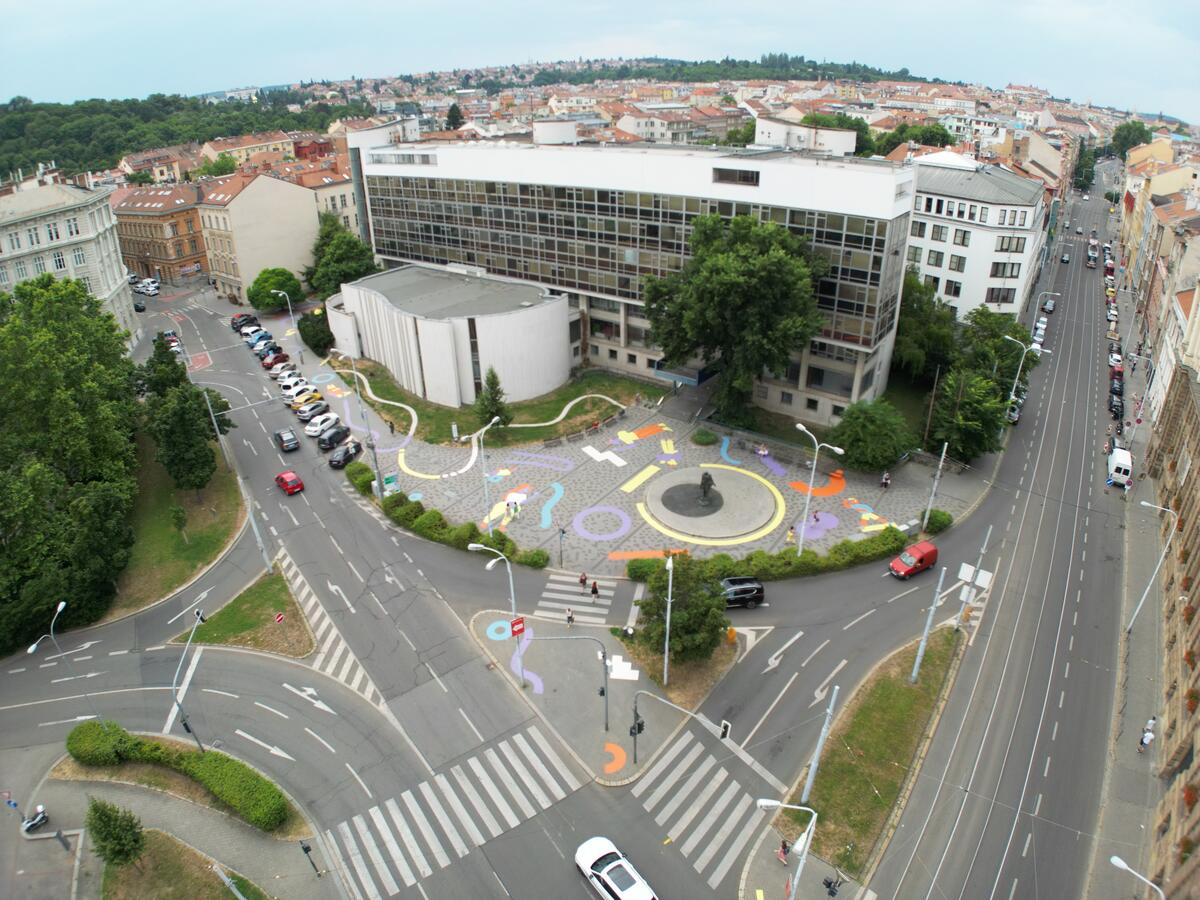
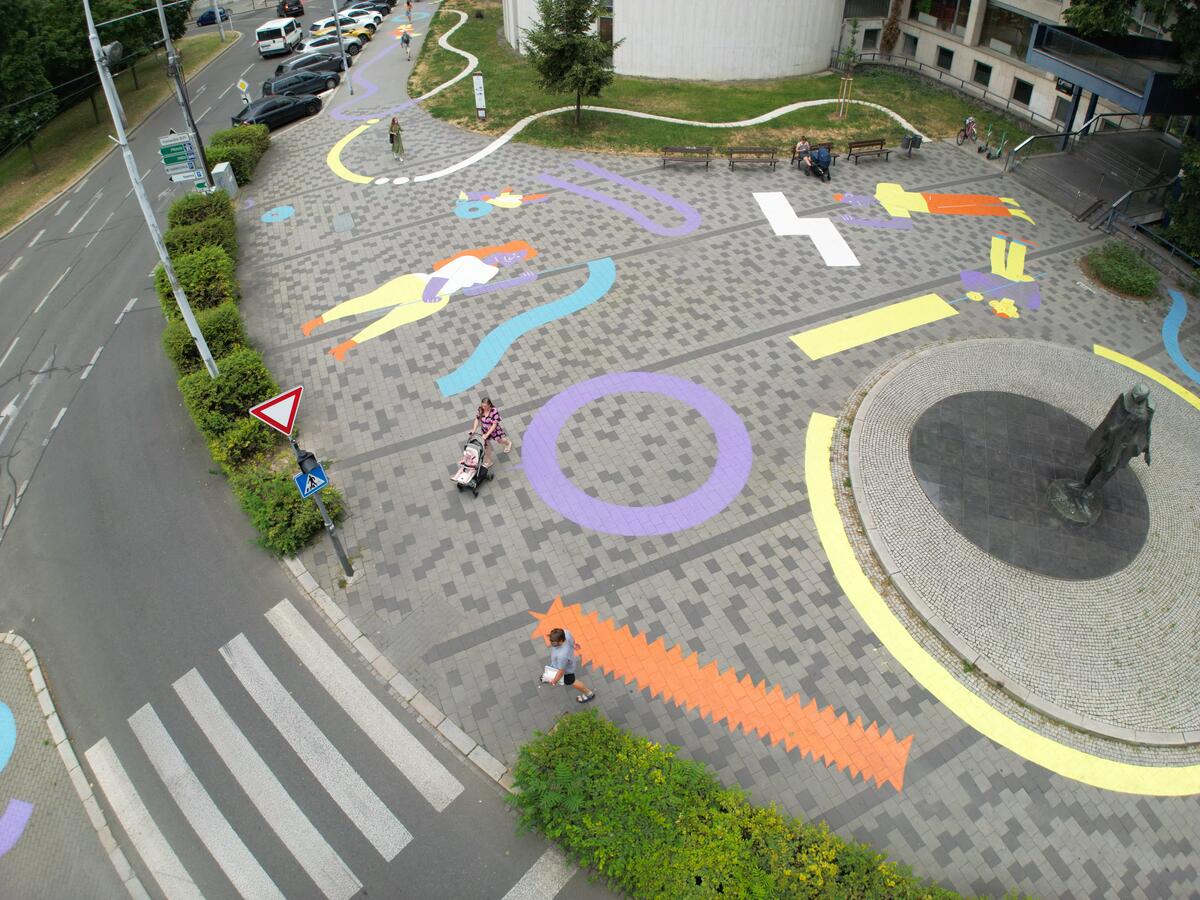
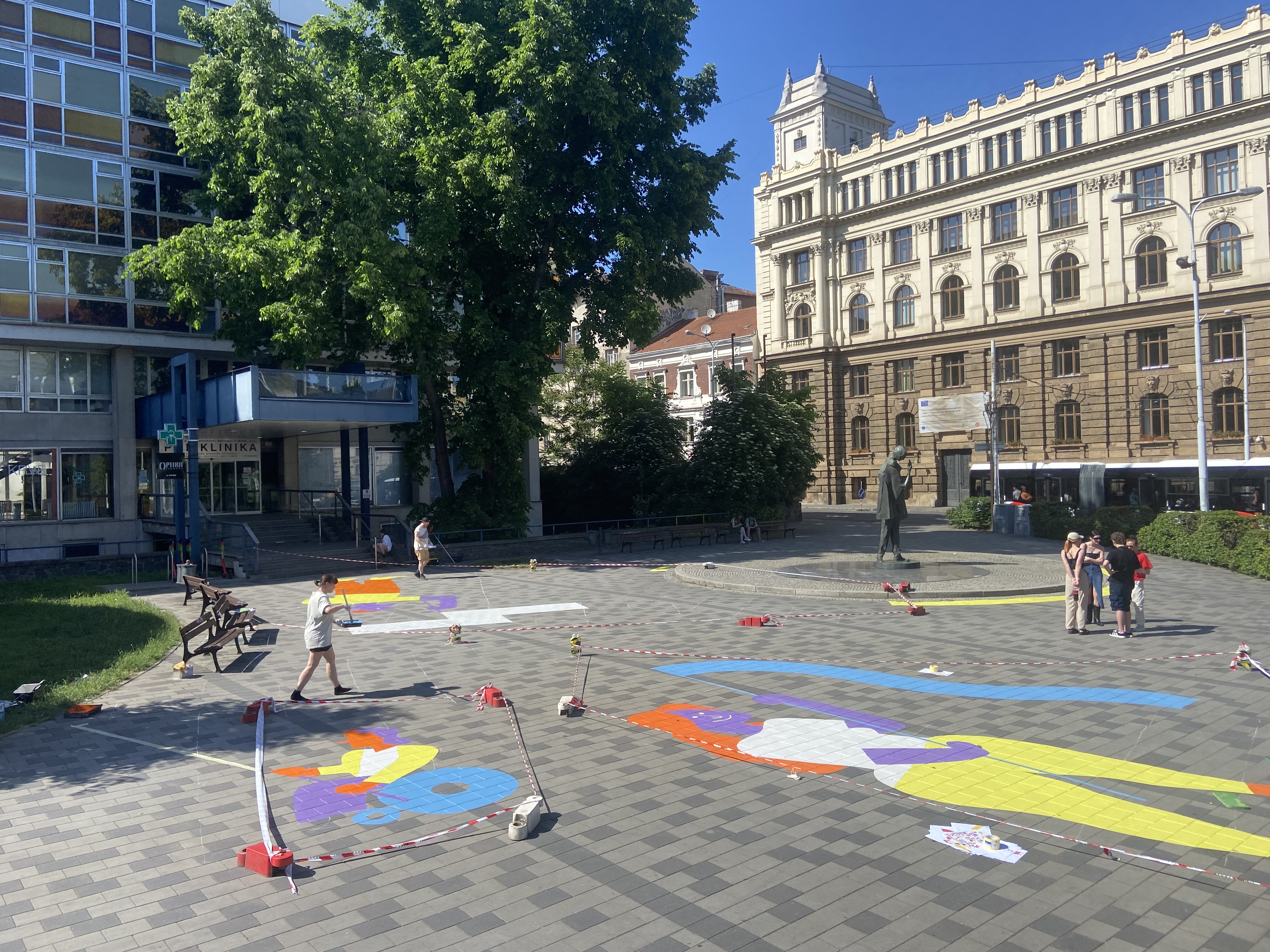
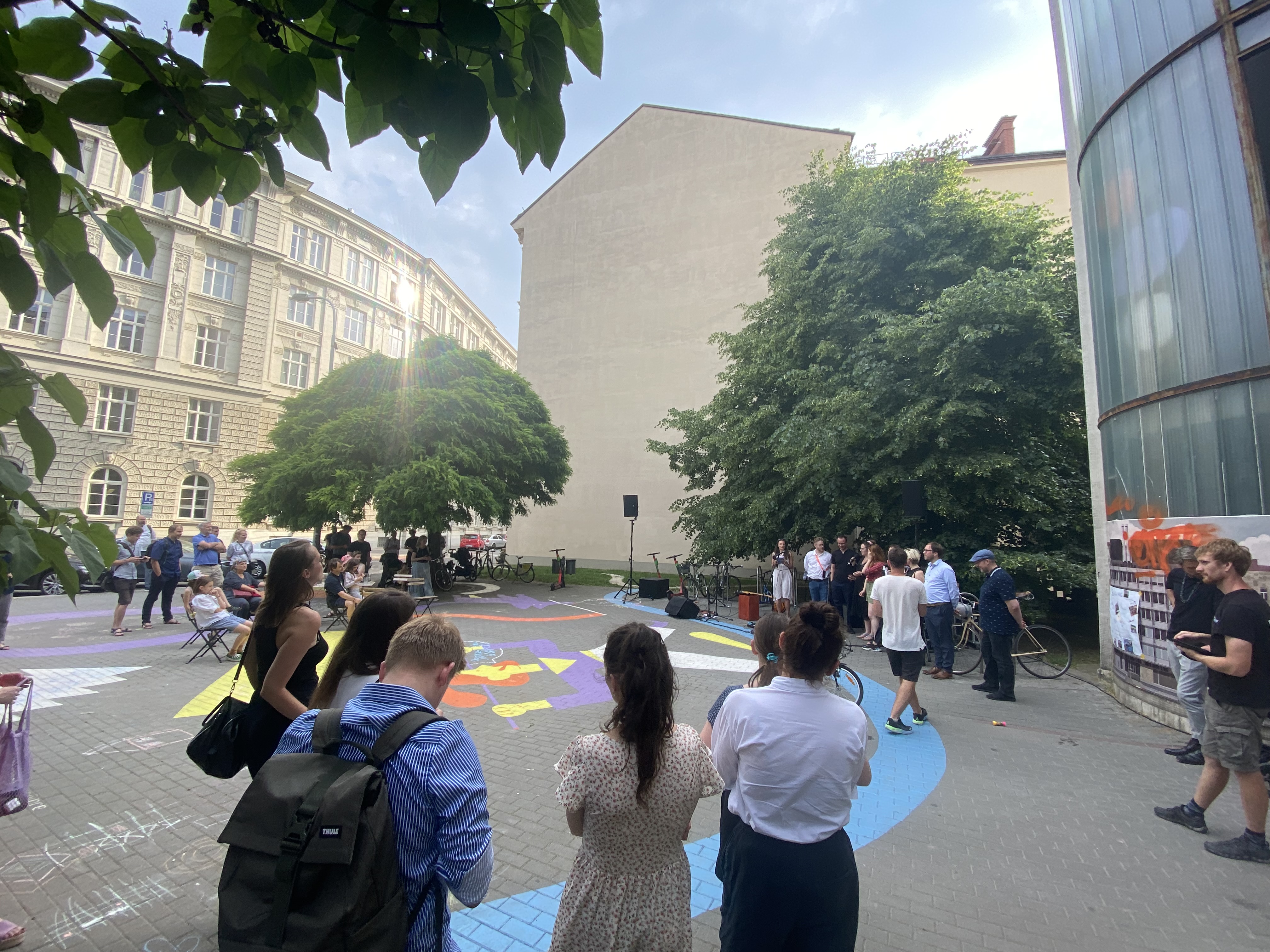
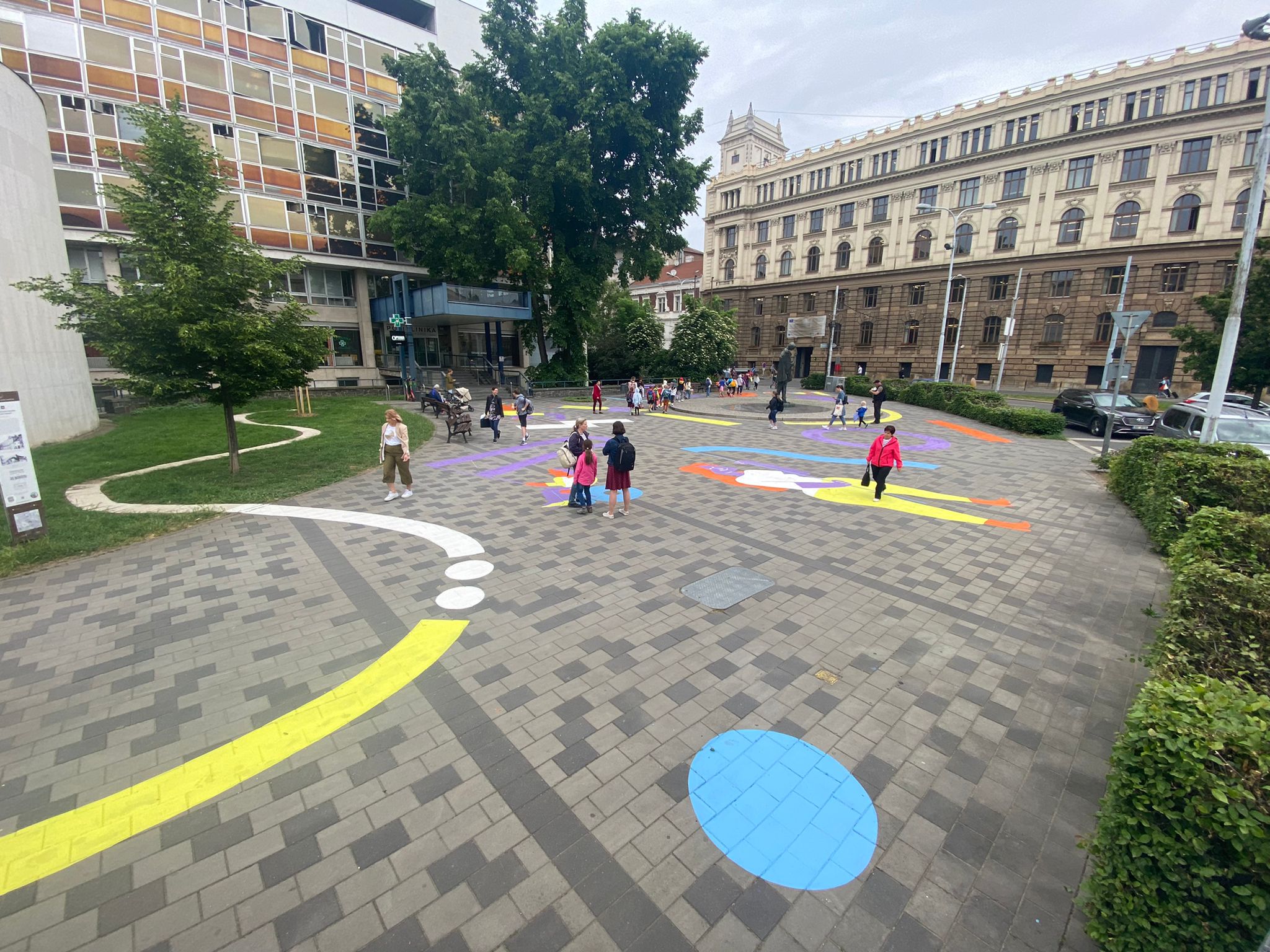
Brno is the Czech Republic’s second largest city, with a vibrant and youthful culture. The historic Bílý dům building at Žerotín square is the former administrative building of the Municipal Committee of the Communist Party, and the site has become a topic of contention in recent years, with some officials believing the building should be demolished. However, the area has also been identified as a good public space for organizing culture events and is seen as a location with opportunities to be further developed.
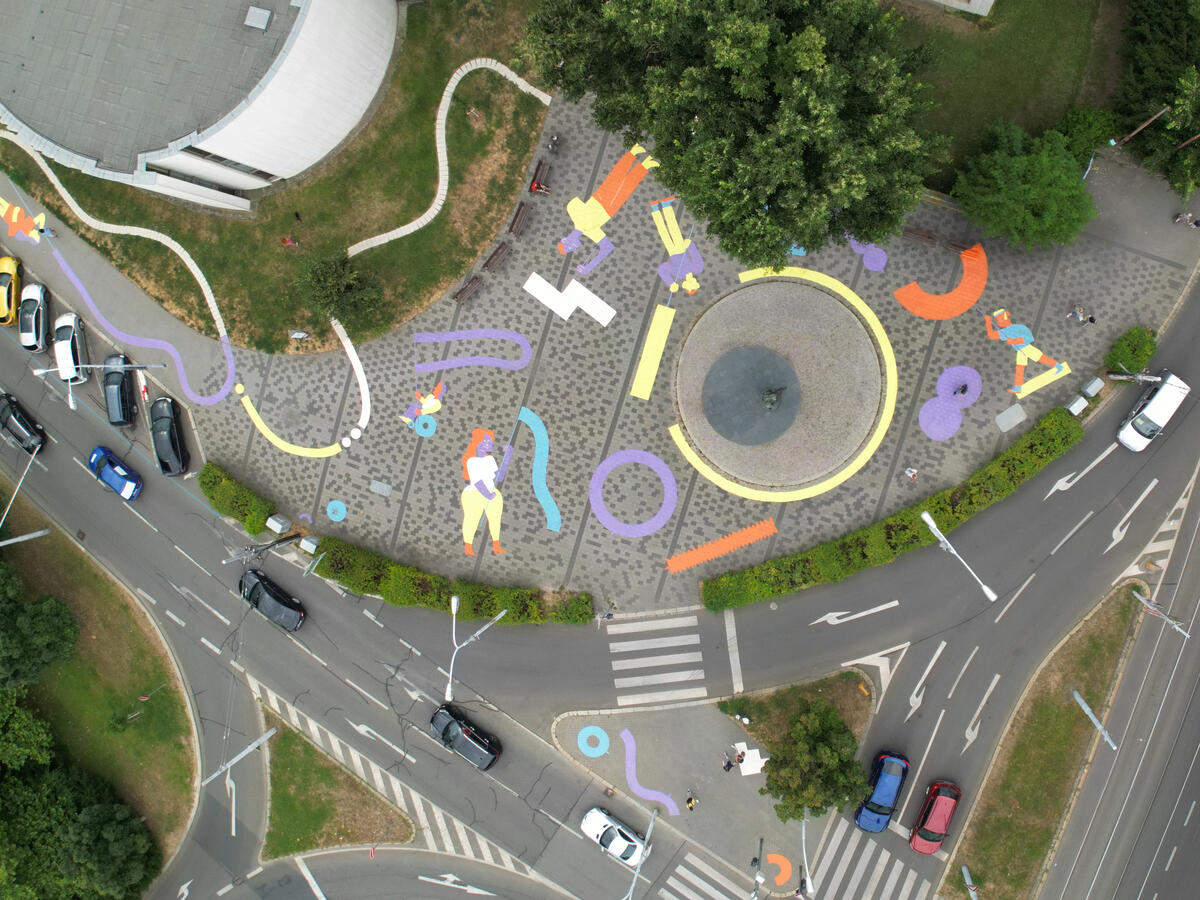
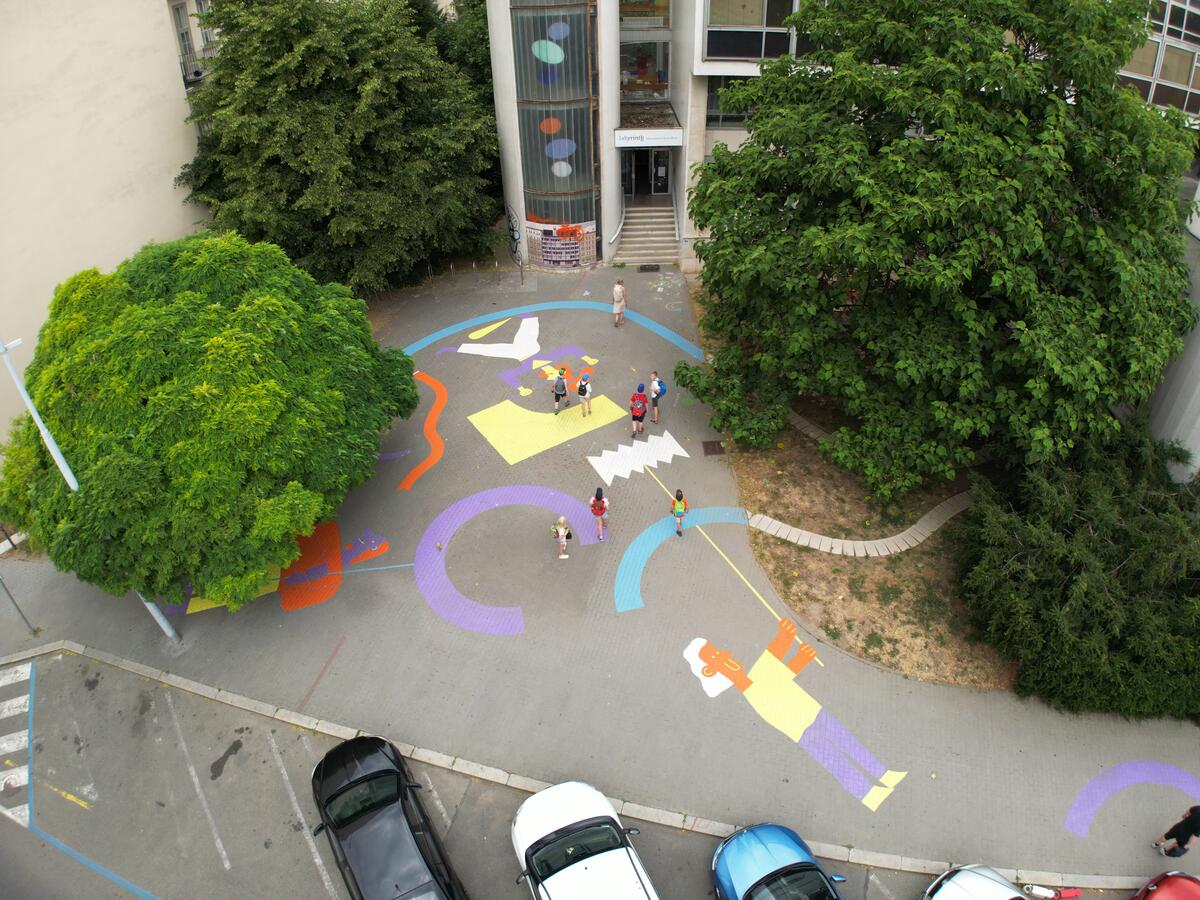
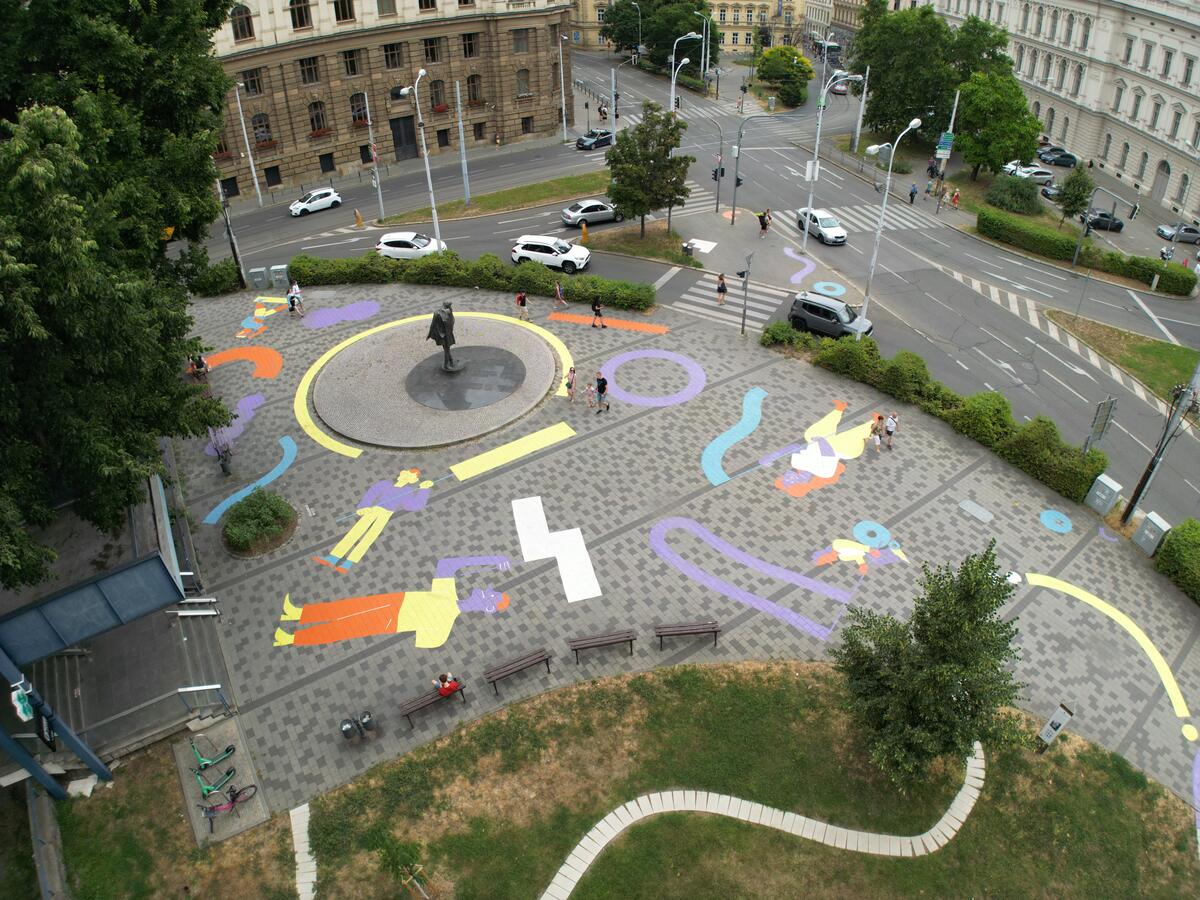
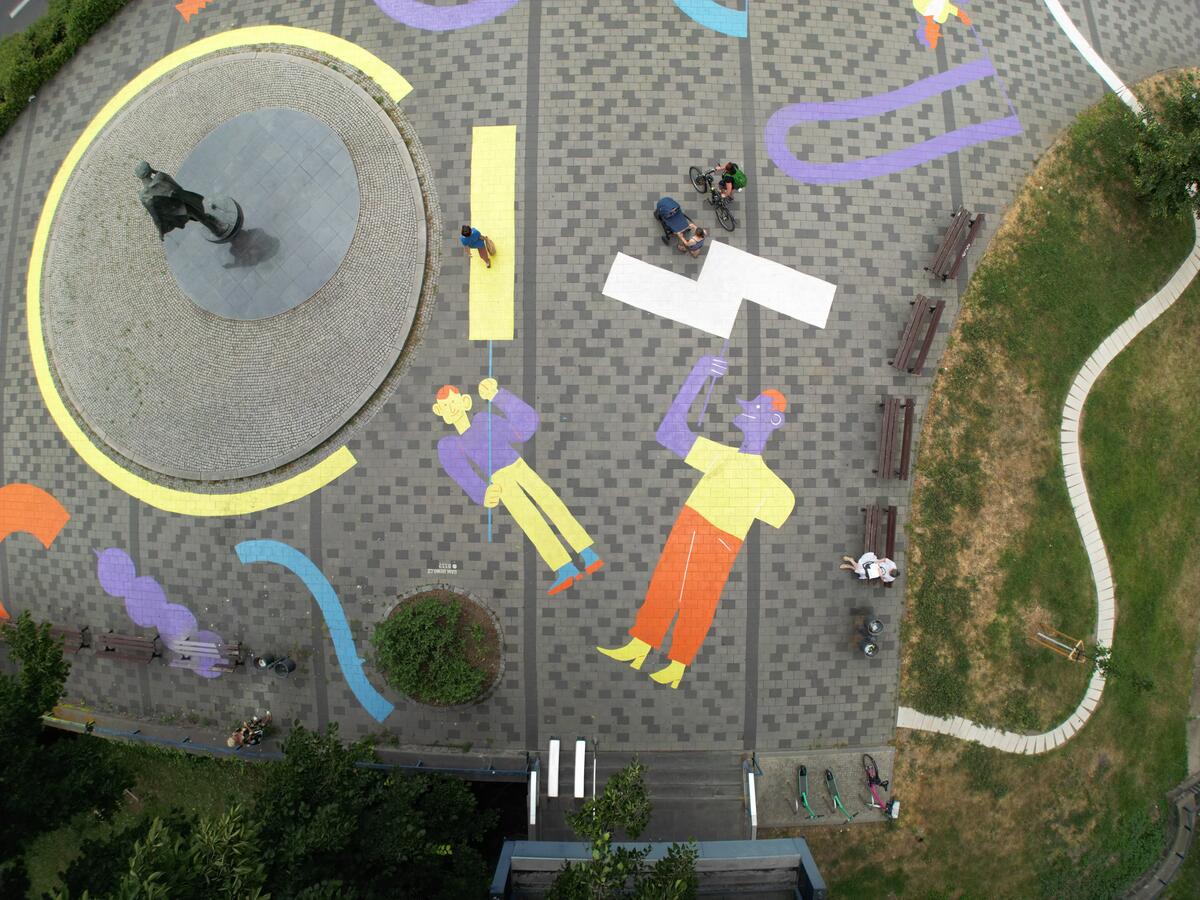
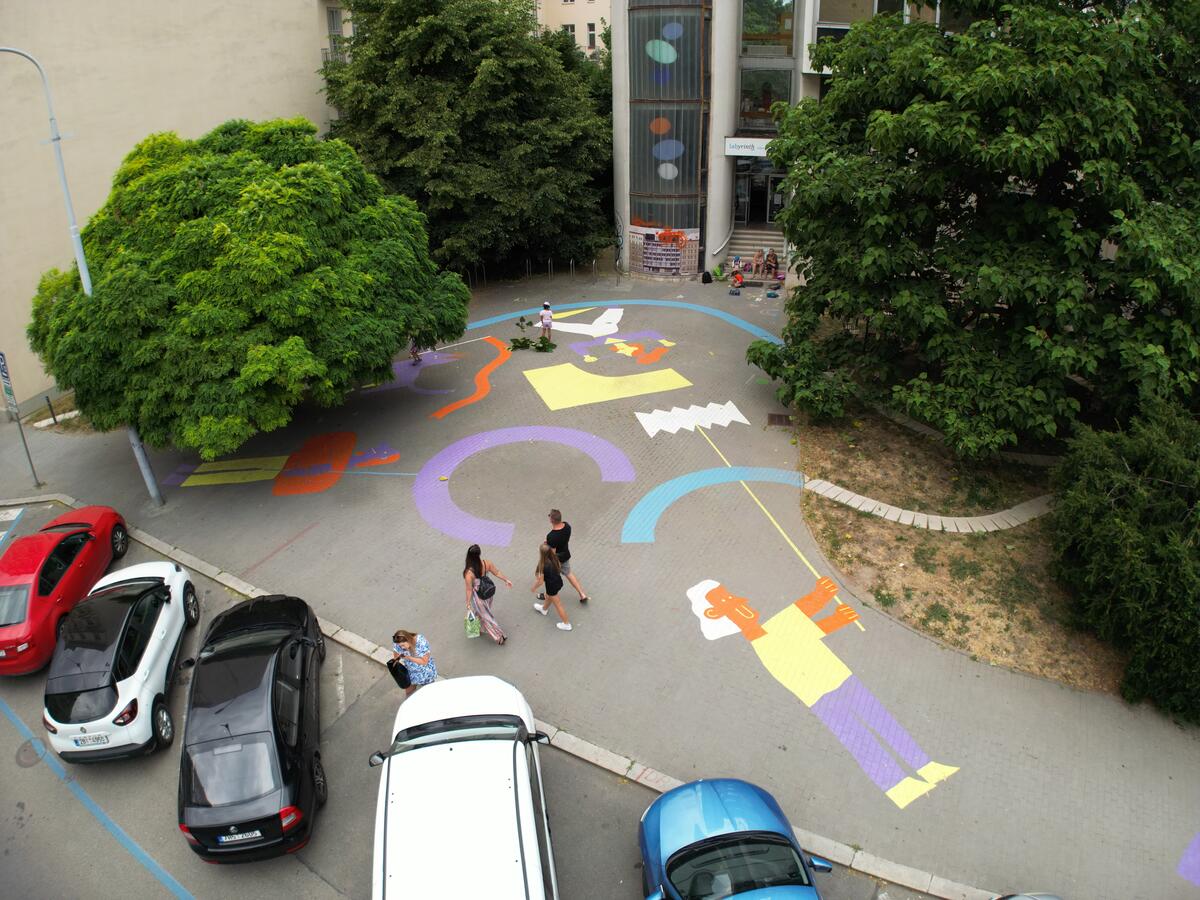
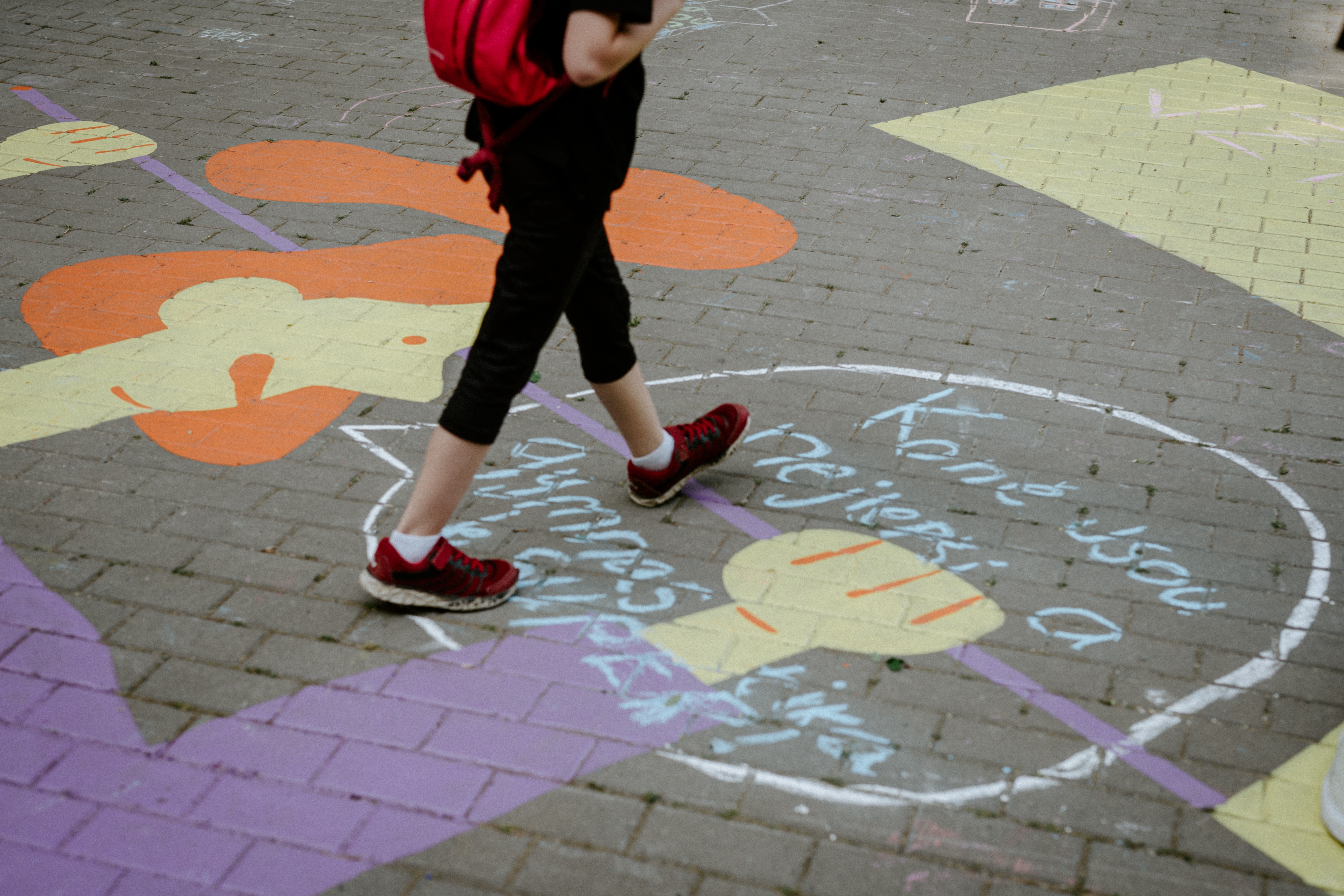
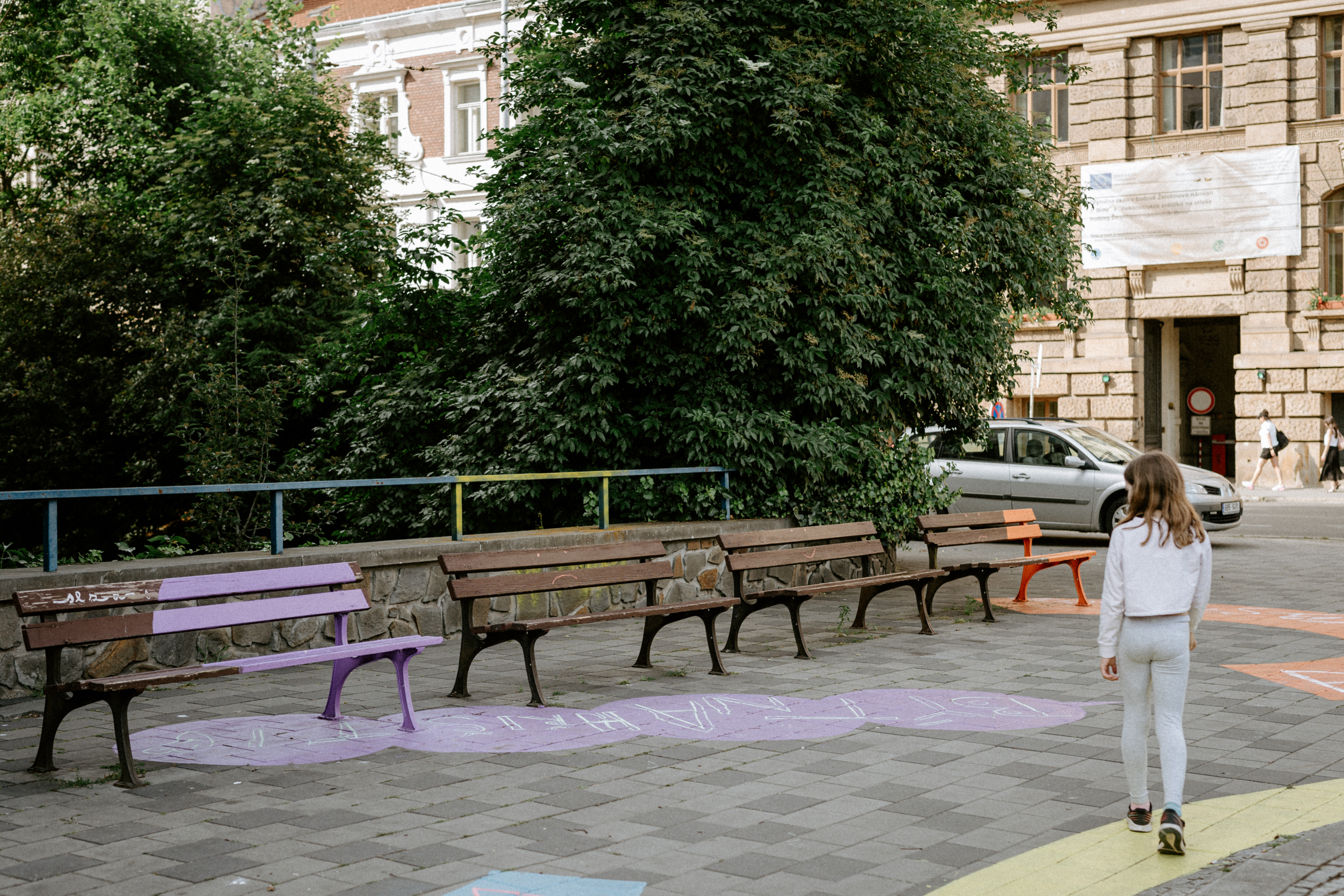
With the future of the building and the surrounding area remaining uncertain, the project’s goal is to draw the public to the newly activated space and bring forward questions of sustainability, citizen engagement, and increasing safety of a congested traffic junction. After holding an open call competition for artists, a winning design was chosen by a jury of three leading Czech artists and two city representatives. The finished artwork encourages public participation by allowing children to write messages in chalk in the bubbles which the painted characters are holding, which will fade away over time to give way for new messages to be continuously added.
- 94% of survey respondents state the intervention has positively affected their perception of the site
“The new painting has made the space on Žerotín square more pleasant. I hope this is the beginning. We can continue this on the streets of Brno and generally calm the traffic.”
Filip Chvátal, Chairman of the Commission for Construction and Spatial Development, Municipality of Brno Centre
Use the slider to see the transformation
Press
Žerotín Square in Brno begins to be decorated with a painting symbolizing diversity (Archiweb, June 2, 2023)
Žerotínovo Náměstí To Be Brought To Life Thanks To New Artwork (Brno Daily, April 25, 2023)
The space in front of the White House in Brno comes alive with large-scale paintings that purify the air (Zpravy Z Moravy, April 25, 2023)
The surroundings of the so-called White House in Brno will be brightened up by a large-scale colorful painting on the pavement (Brnan, April 14, 2023)



For inspiration and tips for the creation of art on roadways and public places, download the Bloomberg Associates Asphalt Art Guide which features successful plaza and roadway art activations around the world, as well as key steps for developing such projects.

Ferizaj, Kosovo
Offering safe pedestrian passage with artful underpasses
The Project
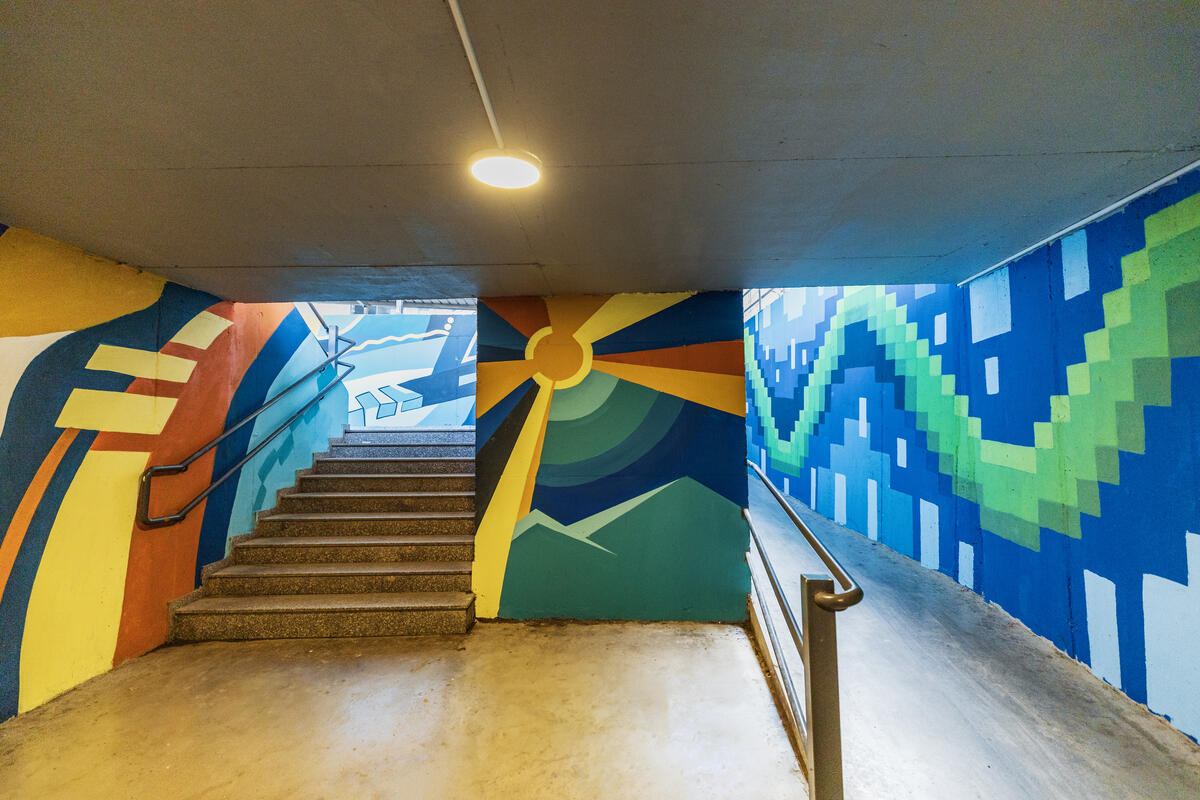
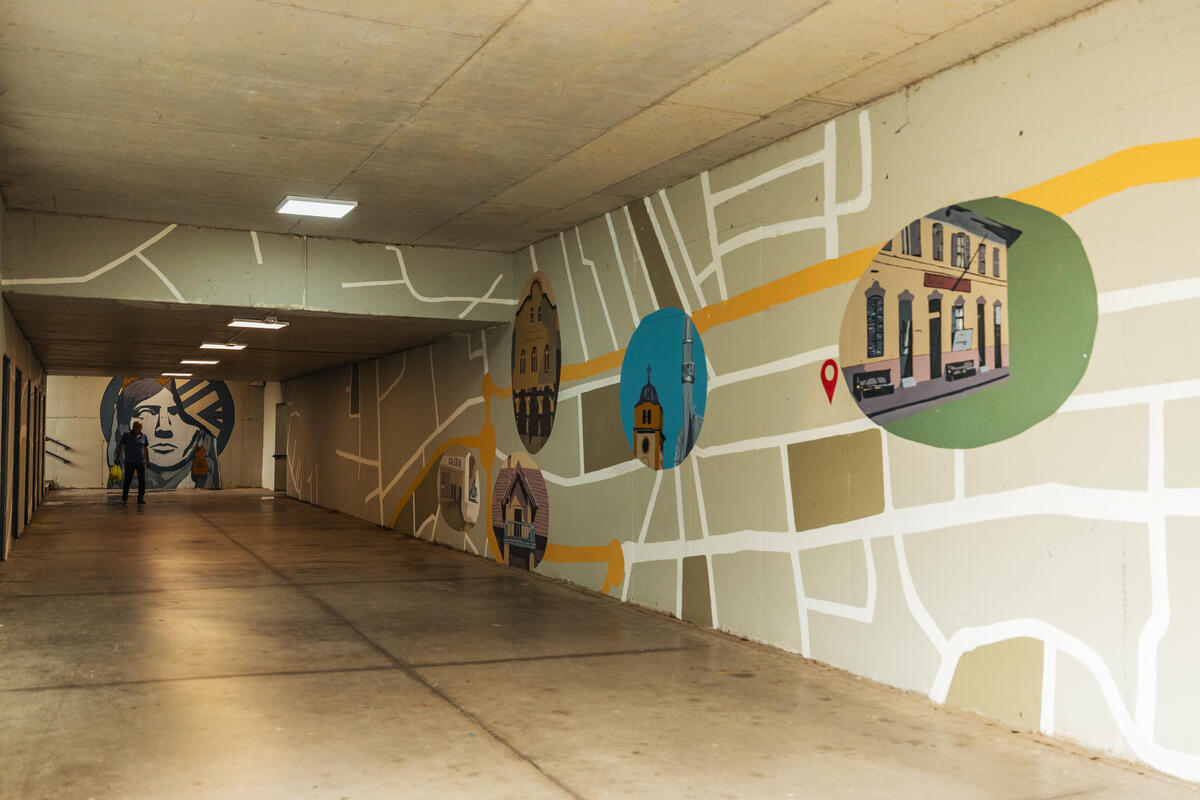
Ferizaj is a small city in Kosovo that has grown dramatically. As part of recent construction, several pedestrian underpasses were built to allow people on foot to safely cross major roads and rail lines. However, some of the underpasses are unwelcoming and poorly lit, and so many people end up crossing the dangerous roads and tracks directly. Two pedestrian underpasses were transformed by teams of artists into urban galleries, encouraging residents to use the safe passages. This project also catalyzed the local government to add additional lighting to create a safer site for the pedestrians. Aligned with the city’s 150th Anniversary, this project helps further MuralFest Kosova’s efforts to improve public space and mobility in Ferizaj, and to make it a “city of murals.”
- The volume of pedestrians using the underpass increased by 23%
- The average duration of visit doubled in length
- The percentage of pedestrians who feel safe using the underpass increased from 37% to 84%
“What was once a mundane passage is now a journey through color, culture, and creativity, a testament to the power of art and the community to turn the ordinary into the extraordinary.”
Fortuna Haziri, Project Manager, MuralFest Kosova
Use the slider to see the transformation


Best Practice Highlight: Asphalt Art Design Bootcamp
MuralFest selected 15 young local artists from an open call to participate in a 4-day “bootcamp” to develop possible designs for the underpass. The artists were divided into 3 groups, each of which would come up with a design. On the first day, the participants took measurements of the underpass and created a 3D model. They conducted over 300 interviews of people passing through or near the underpass to ask what themes they would like to see in the artwork. During the remainder of the camp, MuralFest staff worked with the artist teams to create their designs. The 3 designs were voted on by the public, and catalyzed an additional grant from a local partner to pay for a second needy underpass to be painted with the runner-up design.
Press
“Fragments of Utopia” for change through art (KOHA, June 23, 2023)
Ferizaj underpass one step closer to transformation into “urban gallery” (KOHA, April 21, 2023)
“MuralFest Kosova”, Ferizaj among 19 European cities, selected by Bloomberg Philanthropies (Gazeta Metro, October 11, 2022)
Ferizaj, part of the Asphalt Art global initiative for coloring the walkways (Zëri, October 10, 2022)





For inspiration and tips for the creation of art on roadways and public places, download the Bloomberg Associates Asphalt Art Guide which features successful plaza and roadway art activations around the world, as well as key steps for developing such projects.


Florence, Italy
Rejuvenating a plaza as a neighborhood focal point
The Project
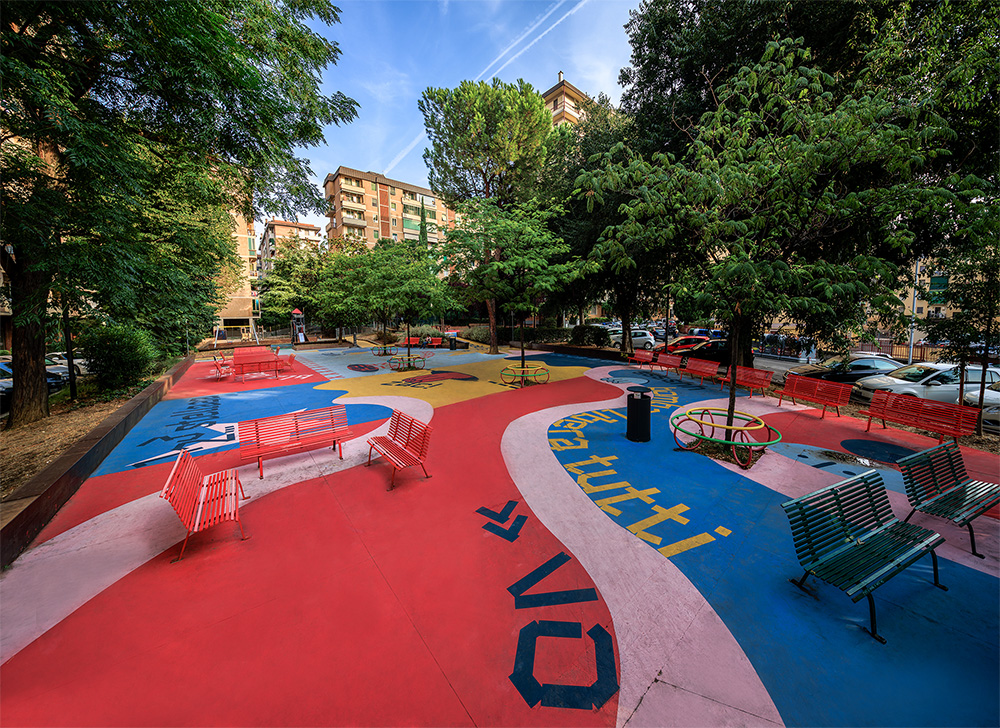
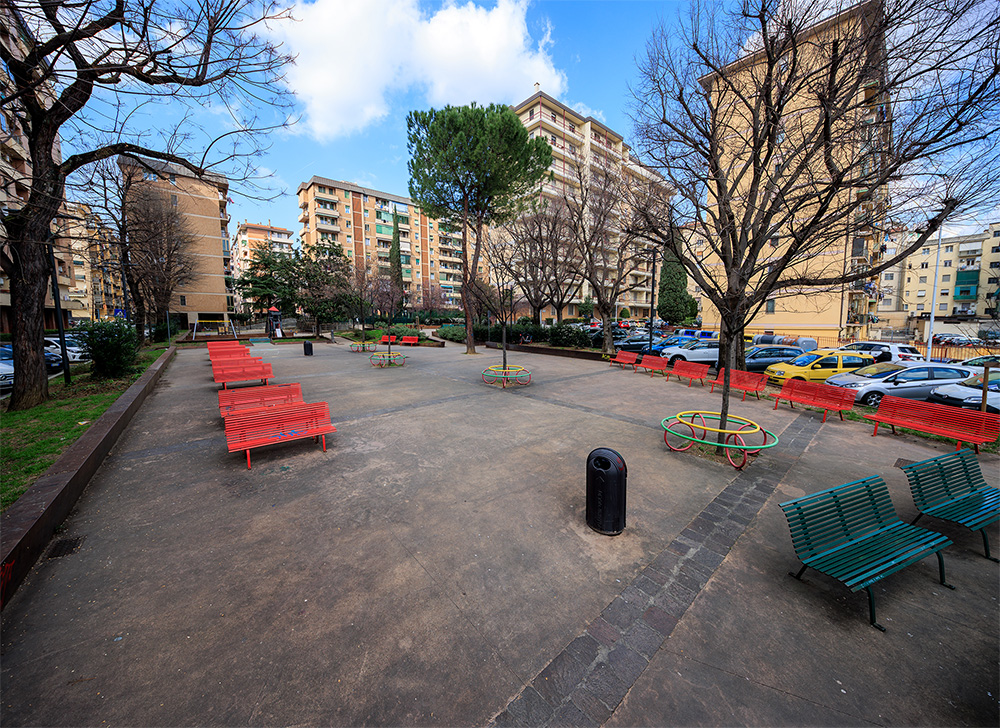
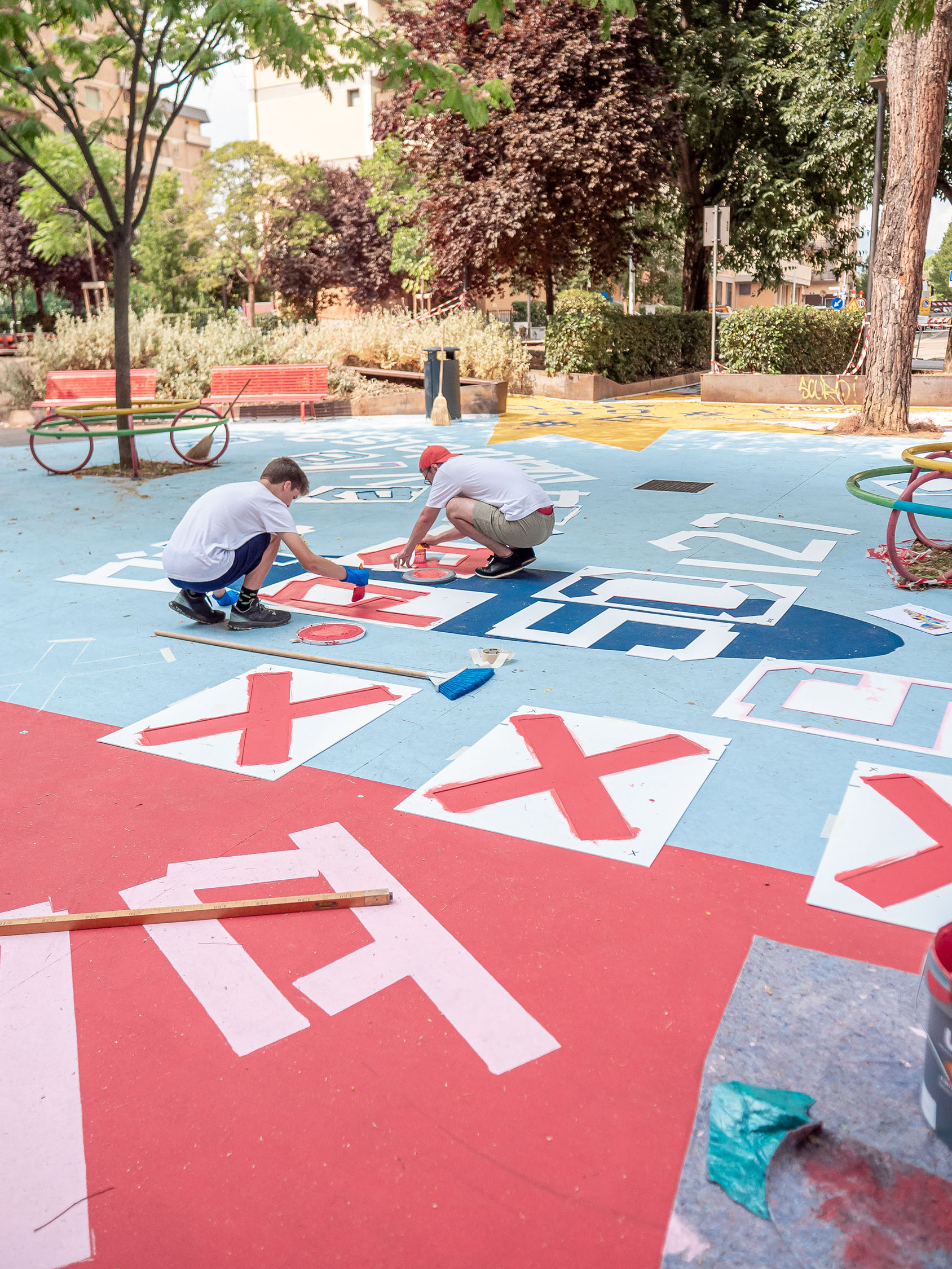
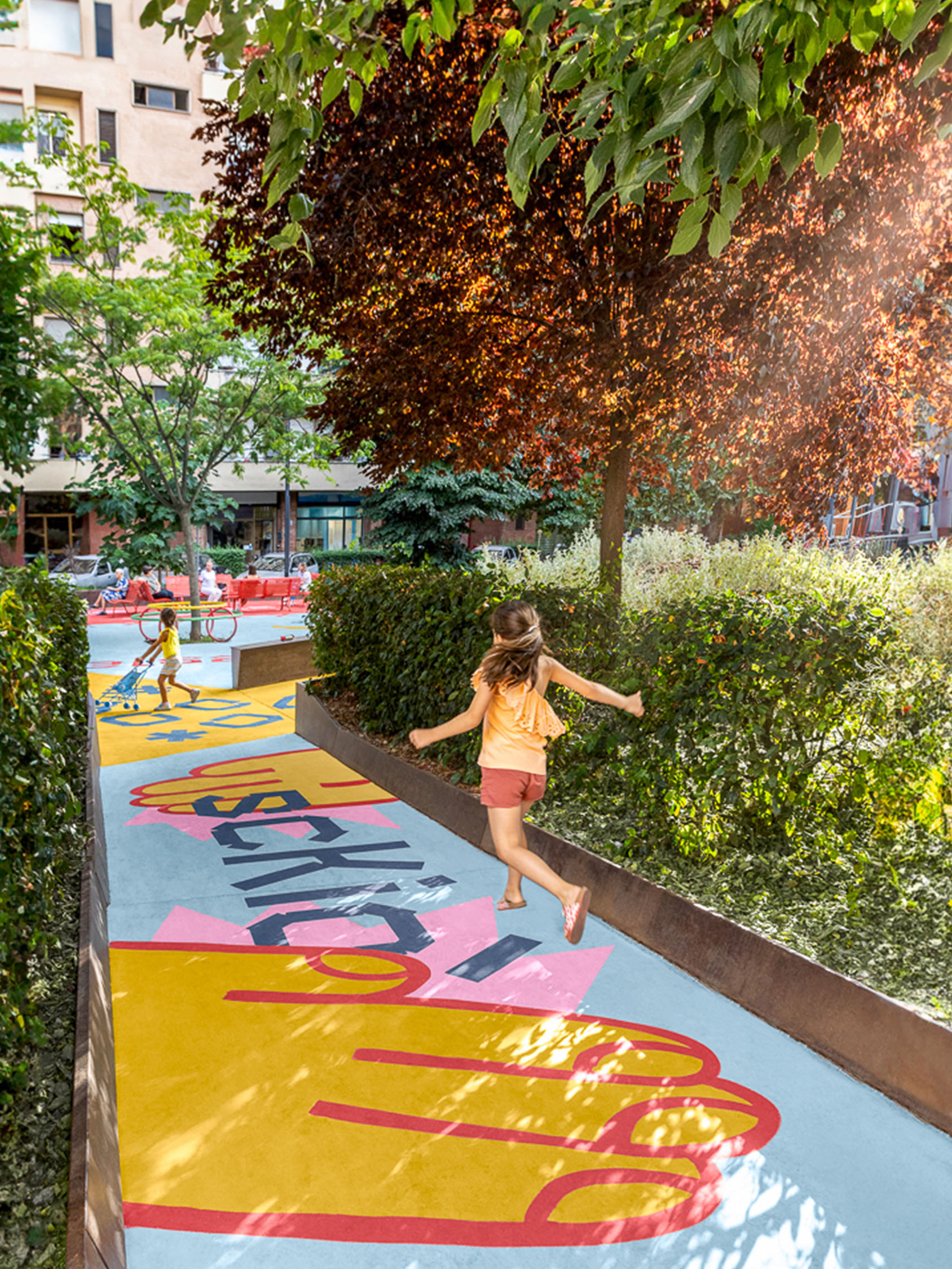
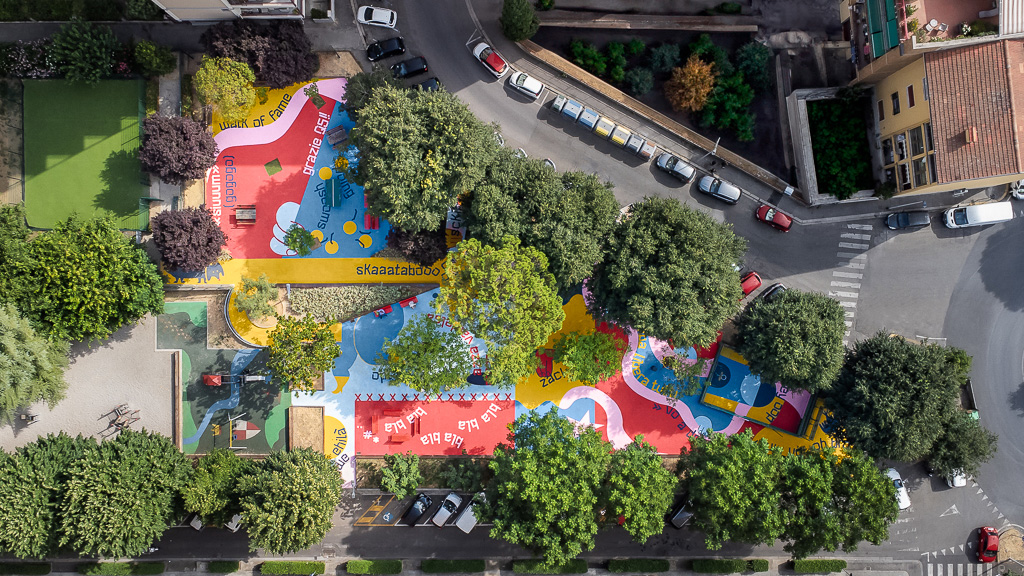
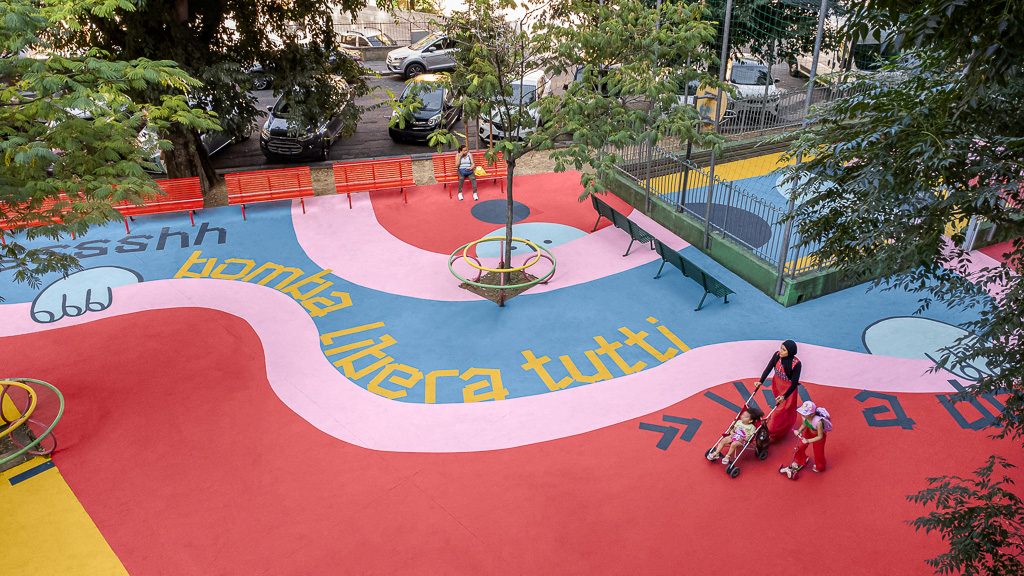
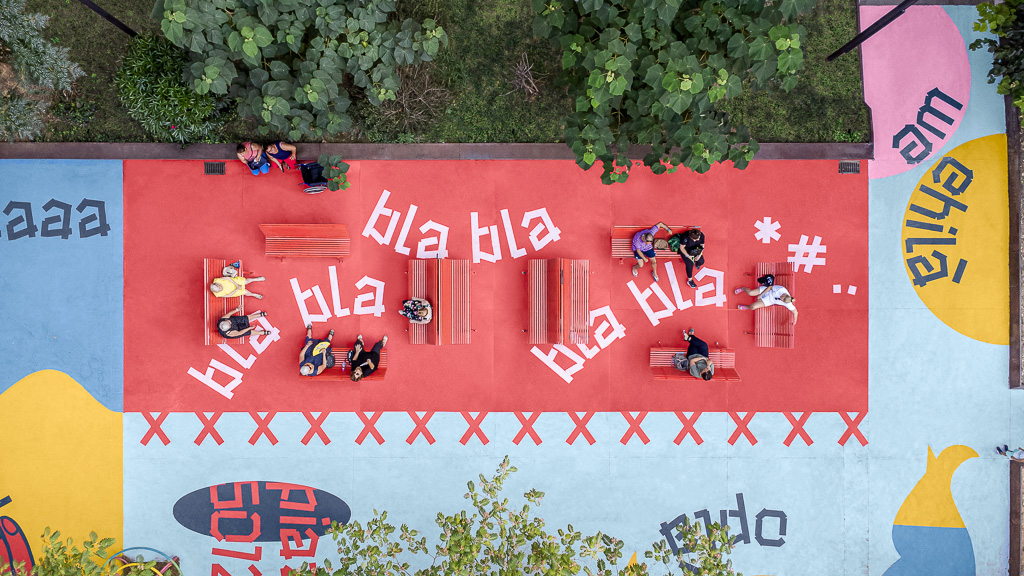
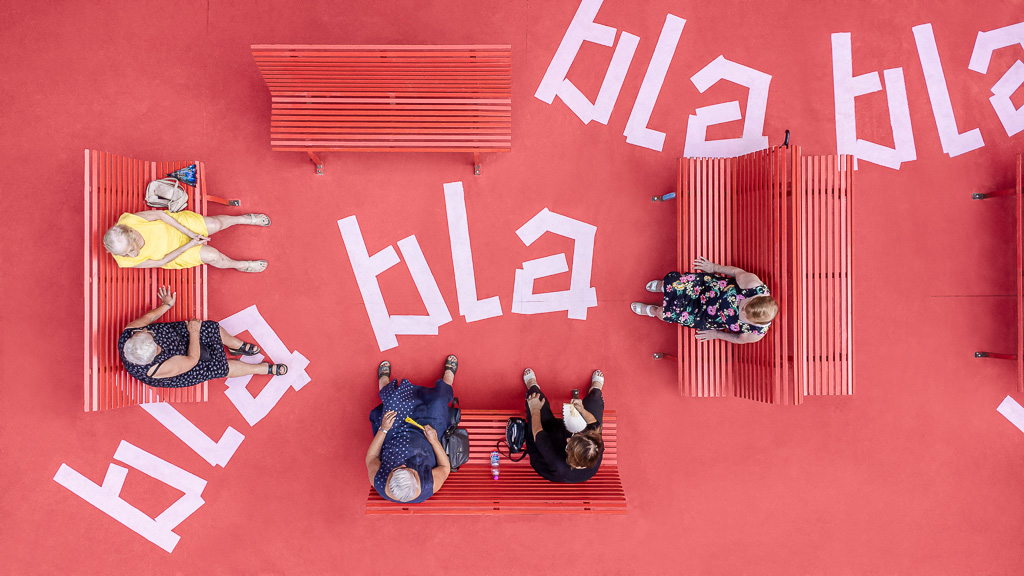
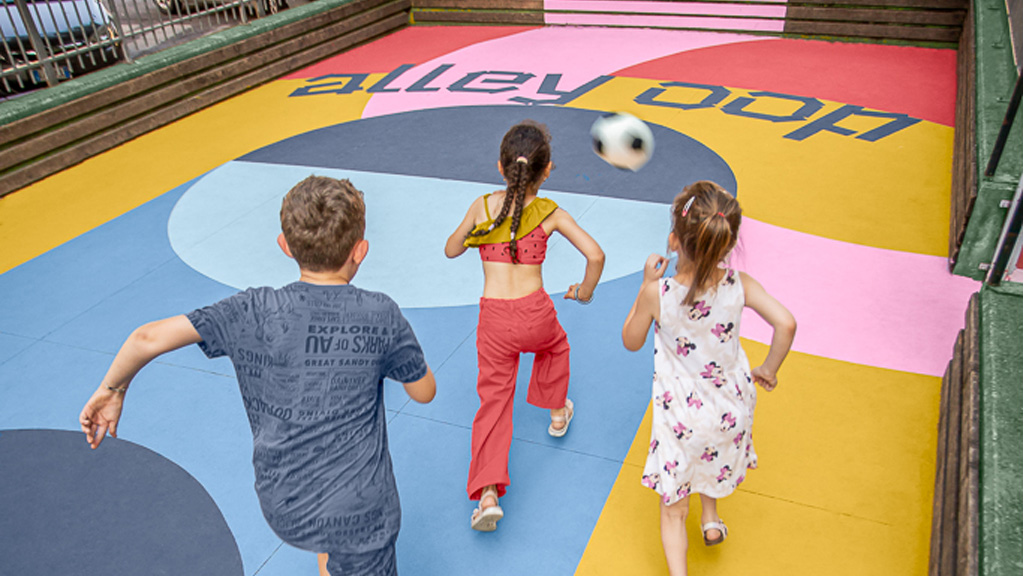
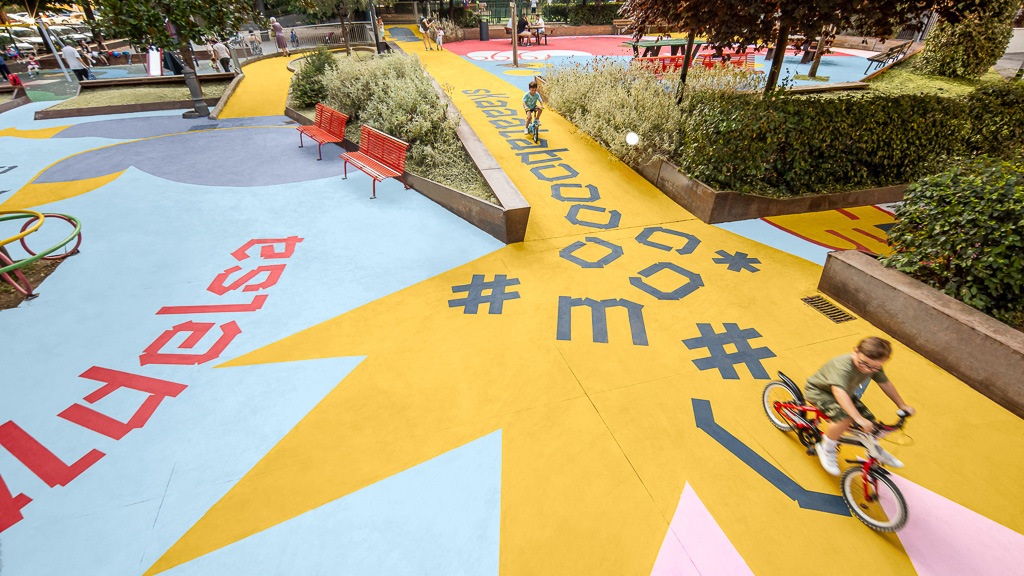
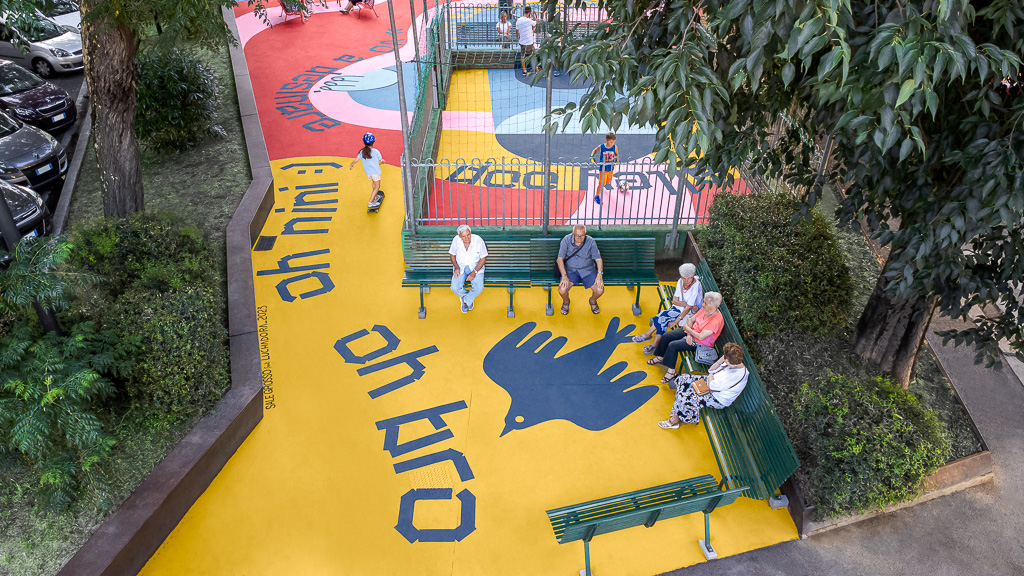
In July 2023, Piazza Valdelsa was transformed from a large swath of concrete into a colorful focal point for the Quartiere 5 neighborhood in Florence. Designed by graphic design studio Sale Grosso and local artist Luchadora, the large-scale mural tells the life of the square, its many interaction possibilities, and the intergenerational and cultural coexistence. A river of onomatopoeic sounds, alliterations, and community slang represented graphically with lettering and images floods the ground, signaling the re-appropriation of the space. The aim of the project is to increase a sense of belonging for neighborhood residents and to mitigate an unsafe feeling at certain times of day. Since the mural was installed, the space has become more active with people of all ages playing and interacting with the graphics. Through graphics and various design adjustments, interaction spaces have been enhanced: the rearrangement of seats has created new conversation areas; the basketball court has been designed to be versatile enough for playing soccer as well; and a new space has been created for free play.
“Where there is art, there is community. A revitalized public space creates a sense of belonging and unites the generations.”
Dario Nardella, Mayor of Florence
Use the slider to see the transformation
Best Practice Highlight: Engaging Local Residents
Approximately 240 residents near Piazza Valdelsa were engaged throughout a process coordinated by a local company Avventura Urbana. The process was structured into three main phases:
- Phase 1: Listening and diagnosis through outreach activities aimed at intercepting and identifying the needs of the local community
- Phase 2: Co-design through community workshops aimed at defining the content of the artwork
- Phase 3: Volunteer painting days under the direction of the designers
In Phase 3, the artist team worked with 130 community volunteers over the course of a week to install themural. During the installation process, many other residents came to watch the progress and bring refreshments to the painters. The coordinating team planned strategic breaks each day to share food with the volunteers and explain the purpose of the project and its design, which ended up being particularly meaningful bonding moments for the participants. During the opening event the following month, a calligraphy artist was commissioned to add the names of everyone who contributed to the project onto the mural.
Press
In Florence, urban art changes the face of a suburban square (Art Tribune, September 1, 2023)
“Parole in Piazza” – A tactical urban planning project in Florence (Art Vibes, August 31, 2023)
Philanthropy, the square rebuilt with the “square”: the urban art project (Firenze Today, August 29, 2023)
Piazza Valdelsa is reborn with urban art (Florence TV, August 10, 2023)
Piazza Valdelsa, art becomes horizontal (La Nazione, January 16, 2023)
Florence, an urban art project to give a new look to Piazza Valdelsa (055 Firenze, January 16, 2023)
Art on asphalt, Florence is among the European cities selected for innovative urban projects (gonews.it, October 10, 2022)
For inspiration and tips for the creation of art on roadways and public places, download the Bloomberg Associates Asphalt Art Guide which features successful plaza and roadway art activations around the world, as well as key steps for developing such projects.
Bratislava, Slovakia
New public space encouraging students to walk to school
The Project
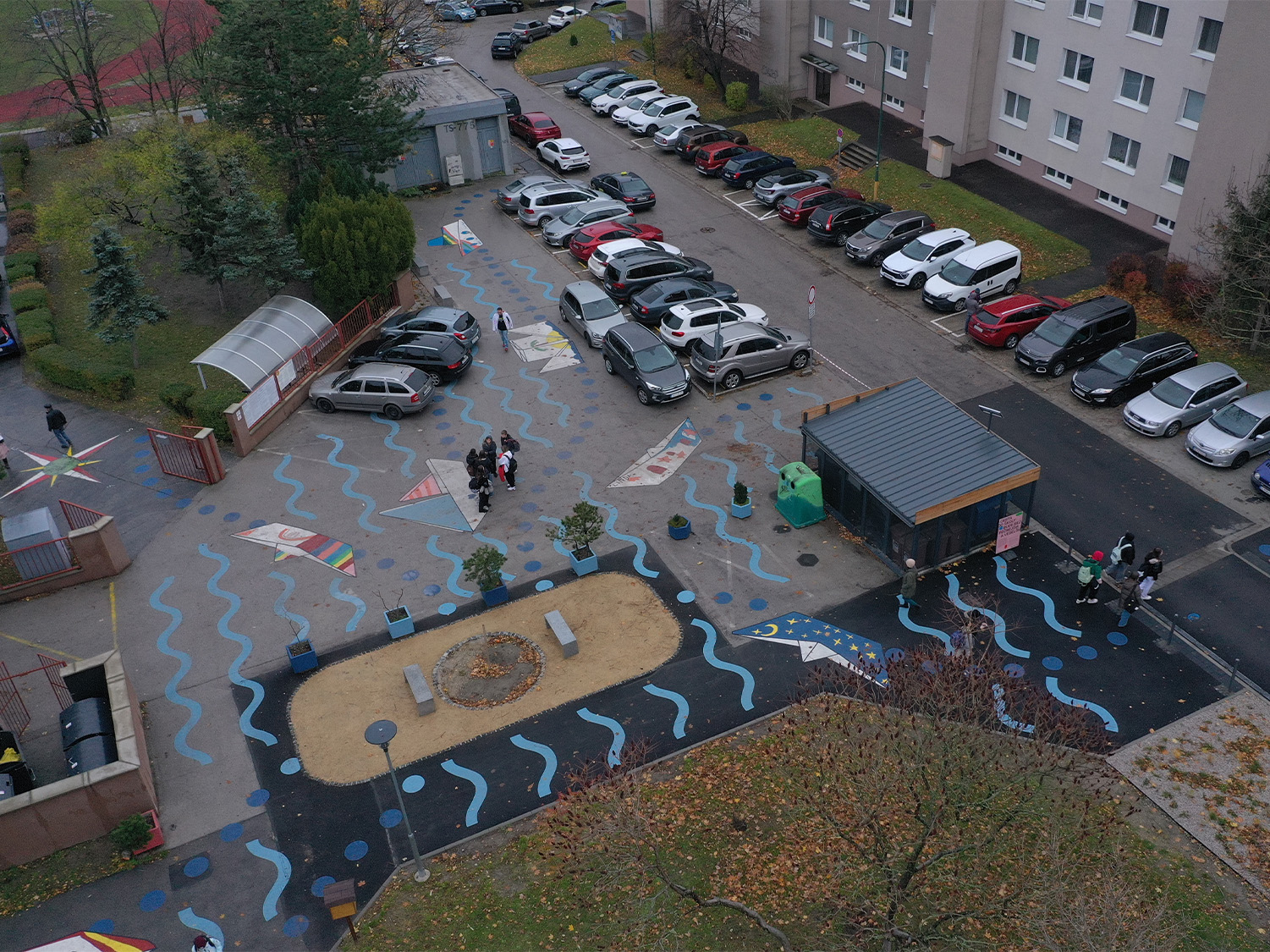
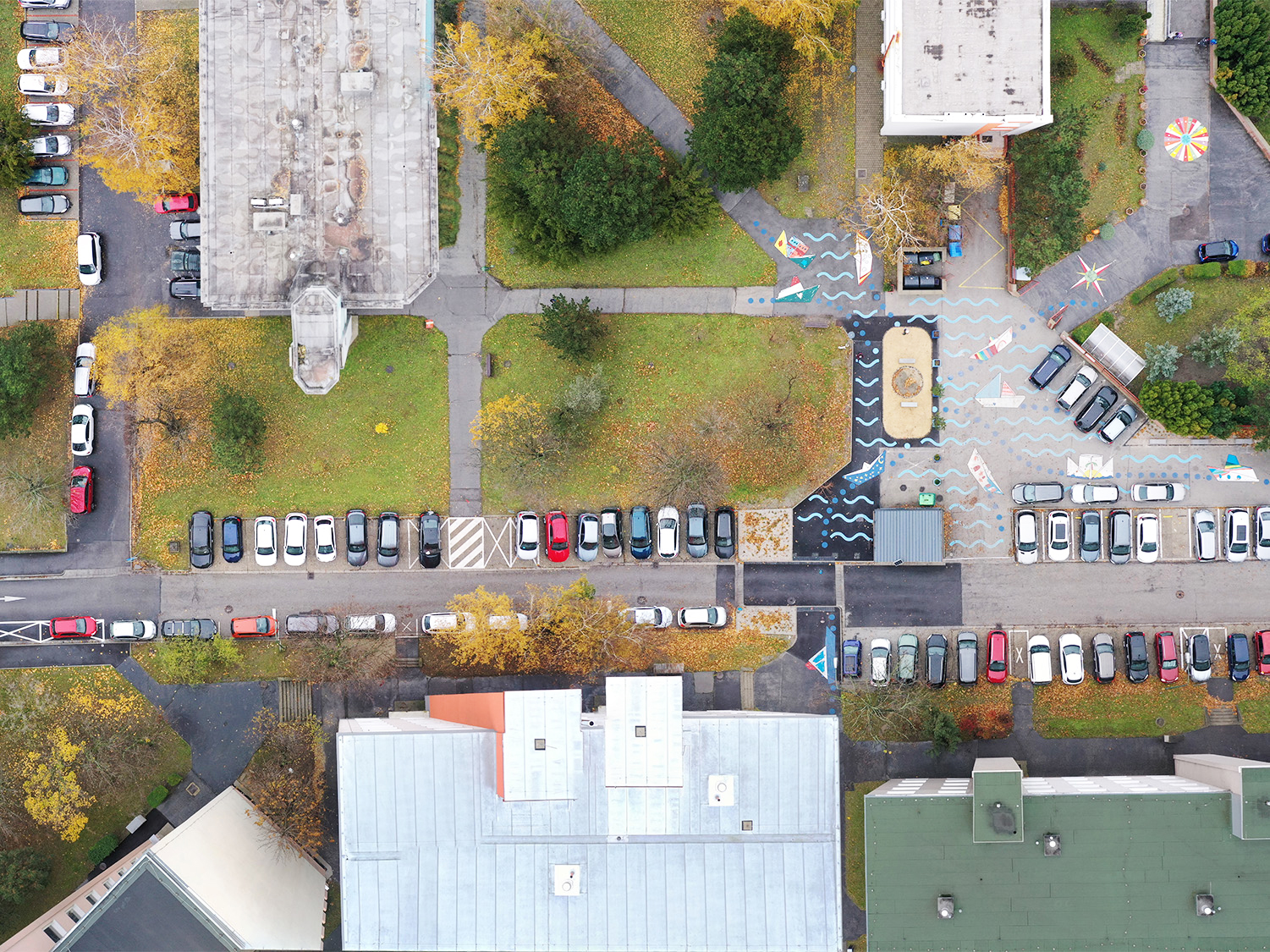
Bratislava’s goal with their Asphalt Art project was to motivate students to walk to their school, instead of being driven. To accomplish this, they worked with students from Tbiliská Elementary School and Oto Hudec – an artist known for using art as a force for social change – to create a visual intervention that made the public space surrounding their school safer, more appealing and more fun. For the visual inspiration, the team chose sailing and ships as a symbol of traveling to the safe harbor of the school yard. The project uses artwork to enhance the pedestrian space outside of the school entrance as well as nearby crosswalks, in addition to replacing informal parking spaces with new street furniture and vegetation. Students also had the opportunity to contribute directly to the design through a collaborative workshop with the City and artist.
“Our school is a place where almost 900 children come every day. We try to make it a place where they learn everything necessary for life, feel good and make friends for life. For school to be such a place, it is essential that children get to it safely, so that they can talk and laugh along the way.
The Metropolitan Institute project helped us a lot in this. The way to school is now safer and more cheerful thanks to the asphalt art on the sidewalk on Tbiliska Street.”
Principal Hirschnerova, Tbiliská Street Elementary School
Use the slider to see the transformation


Best Practice Highlight: School Mobility Plan
In addition to the project, the City also worked directly with school leadership, parents and students to develop a mobility plan for the school and will be able to track the impact of the project over time. The goal is to encourage students and families to walk, bike or take other safe, sustainable transportation options to school whenever possible.


For inspiration and tips for the creation of art on roadways and public places, download the Bloomberg Associates Asphalt Art Guide which features successful plaza and roadway art activations around the world, as well as key steps for developing such projects.

Varna, Bulgaria
Reconnecting the city center with public art
The Project
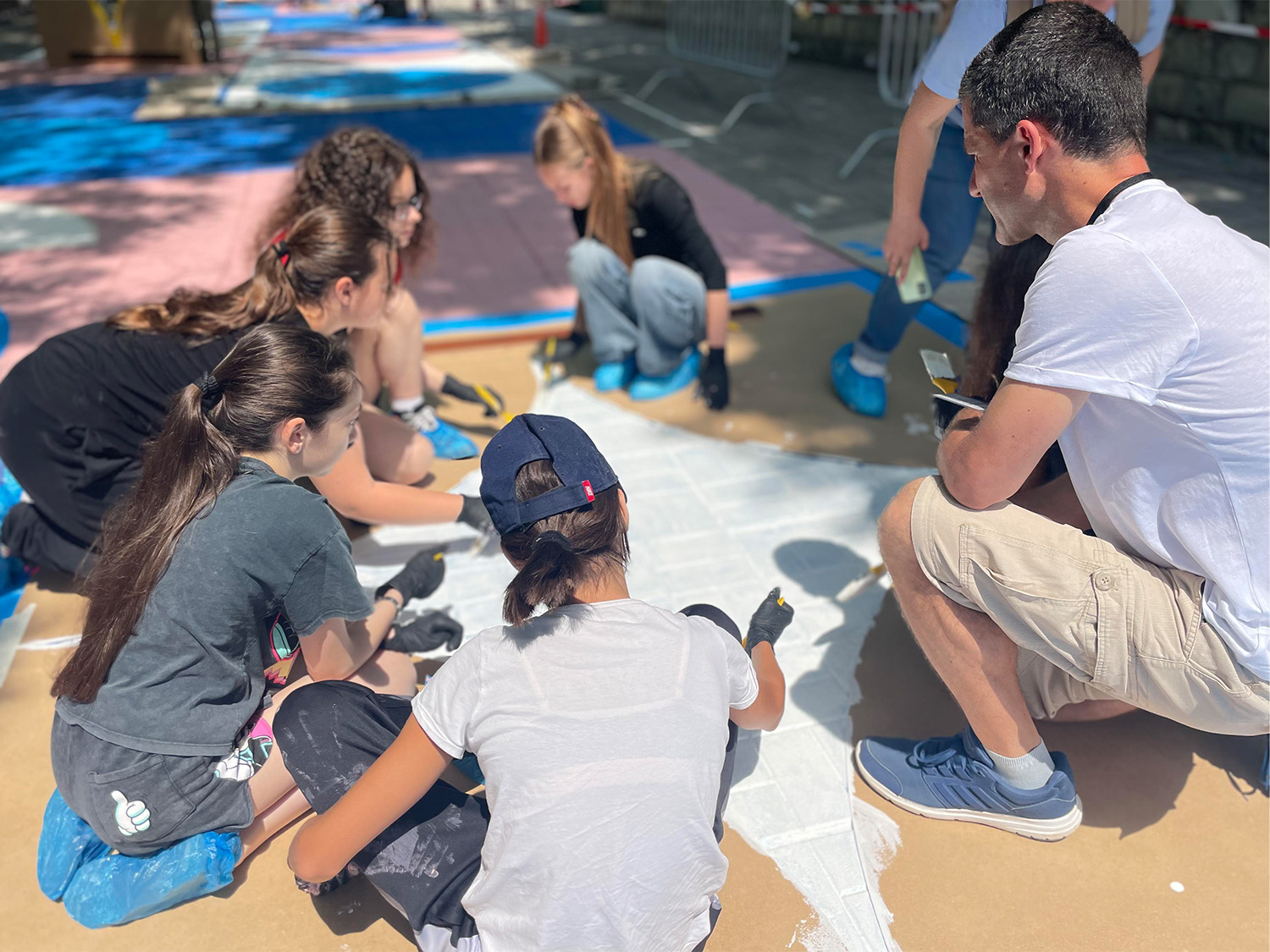
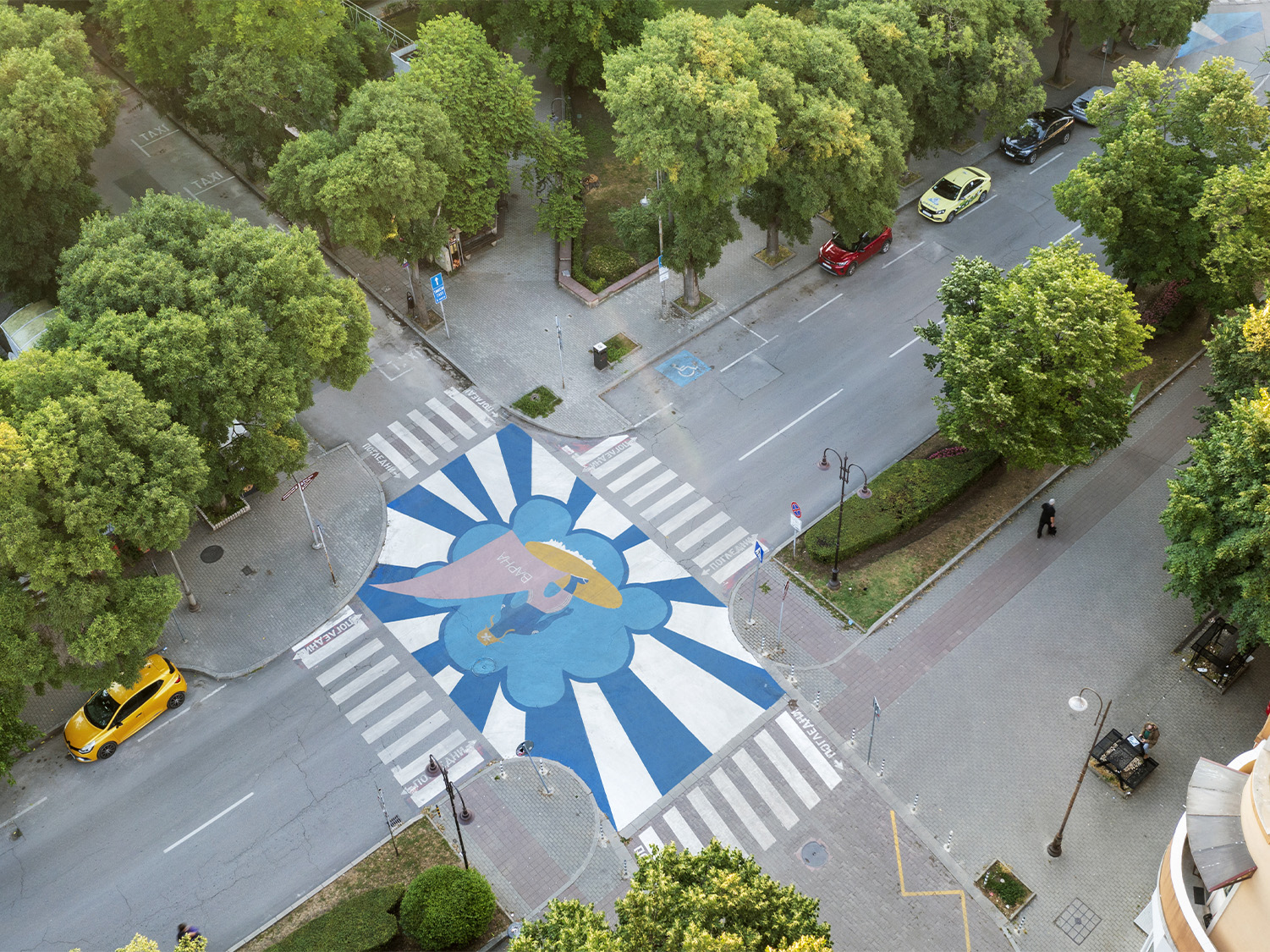
Located in the heart of the city of Varna, Sevastopol Square serves as the city’s most popular meeting space but has long been separated from surrounding streets by heavy vehicular traffic. By enhancing four pedestrian crossings and one portion of the interior park with vibrant murals, this project reconnects the main public space in Varna to the rest of the city center. Aptly named, “Reconnect the City,” the project had a robust community engagement component: over 300 people and 20 institutional partners took part in the realization of the project, and over 11,000 people voted for the artistic designs. An informational campaign at the schools located close to the intervention also reached over 500 schoolchildren.
The newly activated pedestrian zone is now a more colorful and vibrant space close to the City Art Gallery, two schools, and an urban park. After studying the benefits of the temporary intervention, the municipality will explore the next step of creating car-free streets around Sevastopol where only public transport will be allowed. “Reconnect the City” is designed to be a community initiative for a safer and more beautiful city where people and public art are central to Varna’s future.
“A beautiful dream came true – a project by the people for the people. And today we see Varna more beautiful, more vibrant and more colorful.”
Ivan Portnih, Mayor, Varna Municipality
Use the slider to see the transformation


Press
The Drawings of the Project Reconnect the City are Ready (CityBuild, June 6, 2023)
Drawings with Sea Scenes Decorated the Center of Varna (Bulgarian News Agency, June 4, 2023)
Look at the Finalists’ Proposals from the First Stage of the Asphalt Art Open Call in Varna – Sevastopol (CityBuild, April 10, 2023)
A Competition for an Artistic Idea, Giving a New Look to a Central Area, is Being Held in Varna (Bulgarian News Agency, February 28, 2023)
Varna Will Activate Public Spaces Through a Competition for Asphalt Art (Stroiinfo, February 27, 2023)
The Three Amigos Who Want to Change Varna (Capital Bulgaria, January 6, 2023)
Varna Wins $25,000 Grant from Bloomberg Philanthropies to Increase Street Safety (Bulgarian News Agency, October 10, 2022)


For inspiration and tips for the creation of art on roadways and public places, download the Bloomberg Associates Asphalt Art Guide which features successful plaza and roadway art activations around the world, as well as key steps for developing such projects.

